This site is supported by our readers. We may earn a commission, at no cost to you, if you purchase through links.

That papery ring clinging to your snake’s tail tip isn’t a cosmetic issue. Left alone for even a day or two, retained shed at the tail tip can cut off circulation and cause permanent damage to tissue that won’t regenerate.
Most keepers catch it during a routine handling session. The tail feels slightly rougher than usual, maybe a bit swollen below the tip.
That’s your window.
Snake tail tip stuck shed responds well to early, gentle intervention. The steps are straightforward, but the order and technique matter more than most people realize.
Table Of Contents
- Key Takeaways
- Identify Stuck Shed on Tail Tip
- Rehydrate The Tail Before Removal
- Remove Stuck Shed Without Injury
- Know When Veterinary Care is Needed
- Prevent Future Tail Tip Retention
- Frequently Asked Questions (FAQs)
- What to do for a stuck shed snake?
- What to do if a snake is struggling to shed?
- My corn snake has stuck shed. What should I do?
- How do I get stuck shed off my snakes’ eyes?
- Can retained tail shed affect my snakes behavior?
- Does tail tip retained shed resolve on its own?
- What substrate works best for shedding corn snakes?
- Conclusion
Key Takeaways
- A papery ring clinging to your snake’s tail tip isn’t just cosmetic — it can act like a tourniquet, cutting off circulation and causing permanent tissue damage within just a day or two.
- Your first move is always a 15–20 minute soak in 80–85°F water, followed by gentle rubbing with a damp washcloth toward the tail tip — never pull, peel, or cut.
- Cold or blackened tissue, spreading discoloration, foul odor, or shed that won’t budge after two gentle attempts all mean it’s time to call your vet, not try again at home.
- Preventing recurrence comes down to matching humidity to your snake’s species needs, adding a moist hide with sphagnum moss, and using a digital hygrometer to catch dips before the next shed begins.
Identify Stuck Shed on Tail Tip
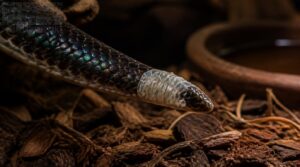
Stuck shed on a tail tip can be easy to miss until it becomes a real problem. Your snake’s body gives you clear warning signs before things get serious. Here are the five you need to recognize.
Knowing what a healthy boa constrictor looks and acts like makes it much easier to spot when something’s off after a shed.
Dry, Papery Skin Ring
A dull, papery ring at the tail tip is your first sign of stuck shed, a common form of dysecdysis. Watch for:
- A whitish or grey band that feels ridged
- Dry, peeling texture like sunburn skin
- Tightness as the tail slides through your fingers
That ring is retained shed drying into a tourniquet. A lukewarm soak is your first move. Left untreated, retained shed causing necrosis can result from restricted blood flow when constricting shed is not removed promptly.
Swelling Below Retained Shed
That papery ring does more than sit there. As retained shed tightens, it slows blood returning from the tail tip. Fluid builds below the constriction, and swelling below retained shed concentrates right at the tip, the zone under the most pressure.
Swelling that worsens over hours, not just after handling, signals ongoing restriction. A lukewarm soak is urgent then.
Darkening or Unusual Discoloration
When retained shed tightens around the tail tip, circulation slows and color changes follow. You may notice the area shift from its normal tone to muted gray or something darker.
Sharply localized darkening right at the shed ring is the key clue. Normal pre-shed color shifts spread evenly. A confined, worsening dark patch signals restriction. Start a lukewarm soak soon.
Tail Sensitivity During Handling
Color changes often signal a behavioral shift. When shed tightens around the tail tip, even light contact can trigger flinching or sudden retraction. That’s pain, not aggression.
Watch for stress signals: body stiffening or sharp tail withdrawal. These cues mean handling reduction is needed. Noninvasive handling means supporting the body without gripping the tail tip, giving gentle assistance without added friction.
Signs of Restricted Circulation
The real danger of tail tip retention isn’t cosmetic. A constricting tail tip ring acts like a tourniquet. Watch for:
- Cold or blackened tail tip below the shed
- Narrowing at the ring with swelling just beneath
- Behavioral rubbing or stress signals during handling
- A sharp boundary between healthy and damaged tissue
These signs mean tissue necrosis may already be starting.
Rehydrate The Tail Before Removal
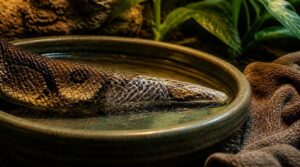
Before you attempt any removal, rehydration comes first. Softening the retained shed makes it far easier to work with and greatly reduces the risk of tearing delicate tail tissue. Here are the steps to do it safely.
A damp cloth wrapped gently around the affected area can soften retained shed in minutes, making removal far safer for your snake’s delicate skin.
Prepare a Warm, Quiet Space
A calm setup makes all the difference. Place your snake in a low-traffic, quiet area before soaking begins. Use a stable, slip-resistant container with warm water nearby to keep the body well supported and the environment consistent.
| Setup Factor | Why It Matters |
|---|---|
| Quiet location | Reduces stress response |
| Stable surface | Prevents slipping |
| Ambient warmth | Slows tail cooling |
| Minimal handling | Limits agitation |
Use 80–85°F Lukewarm Water
Fill a shallow container with lukewarm water at 80–85°F. That range softens stuck shed and allows gentle assistance without stressing or shocking your snake. A digital aquarium thermometer takes the guesswork out of hitting that 80–85°F sweet spot every time.
- Use a thermometer; don’t guess by touch.
- Stay below 90°F to avoid heat stress.
- Make the water deep enough to fully submerge the tail tip.
- Skip soap, oils, or additives entirely.
- Refresh if water cools below 78°F.
Soak for 15–20 Minutes
Fifteen to twenty minutes is your window. Soaking sessions shorter than that won’t soften dry shed deeply enough. Use lukewarm water at 80–85°F and, for container safety, choose a lidded, ventilated tub.
| Soak Duration | Expected Result | Next Step |
|---|---|---|
| Under 10 min | Shed stays stiff | Re-soak |
| 15–20 min | Shed softens noticeably | Gentle assistance |
| Over 25 min | Risk of maceration | Stop, dry tail |
A moisture-retaining substrate like damp paper towels works for snakes that resist water. After soaking, test whether the papery ring shifts with light touch. If it doesn’t, gentle assistance from a vet is safer.
Support Your Snake While Soaking
Think of the container as your snake’s support system. Gentle assistance during soaking sessions keeps the tail submerged in lukewarm water without stress.
- Keep the body cradled, not dangling
- Check container safety — no sharp edges
- Rest the tail naturally in the water
- Use a damp washcloth over the tip if needed
Minimize Handling and Stress
Once the soak starts, step back. Your snake is already working hard, and every peek or poke resets its stress response. Minimize handling entirely during the soak. Keep the room quiet, dim the lights if possible, and let the warm water do the work.
Sudden movement from a startled snake can tear loosened shed before it’s ready to release.
Remove Stuck Shed Without Injury
Once the tail has soaked, you’re ready for the most critical part: getting the shed off safely. The steps below walk you through exactly what to do, and just as importantly, what not to do. A light touch and the right materials make all the difference here.
Use a Damp Washcloth
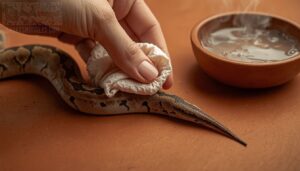
A damp washcloth is the right tool once your snake has soaked well. Shedding difficulty often worsens without proper humidity levels, so targeted moisture matters here.
- Dampen the cloth with lukewarm water
- Wring it out until barely damp
- Press gently against the tail tip
- Hold for about 20–30 seconds
Brief, focused dampness softens the retained shed before gentle assistance begins.
Rub Gently Toward Tail Tip
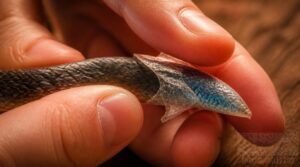
Once the cloth has softened the area, your fingertips take over for gentle assistance. Rub toward the tail tip, following the natural scale direction, using light rolling pressure.
Move slowly. If the shed starts to loosen, keep that same steady contact. Rubbing against the scale grain can catch edges and cause injury, so work with it, not against it.
Apply Oil Only Sparingly
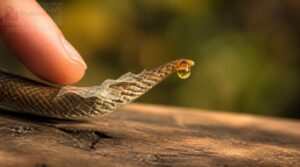
If gentle fingertip pressure hasn’t shifted the ring, natural oils can reduce friction at the scale edges. Add a single small drop of reptile-safe oil to the tail tip only.
Oil creates slip, not force. It helps the shed loosen, but it can’t do the work alone. If the ring begins to move, stop and switch back to a damp wipe.
Never Pull, Peel, or Cut
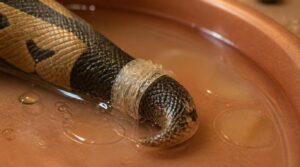
The oil buys slip, not strength. If the stuck shed still won’t shift, the urge to pull, peel, or cut can feel like the logical next step. It isn’t. Forcing retained shed off tears healthy scales and can turn a manageable constricting tail tip ring into an open wound. The living tissue underneath has no margin for error.
Forcing retained shed off tears healthy scales and turns a manageable problem into an open wound
Pause if Shed Remains Stubborn
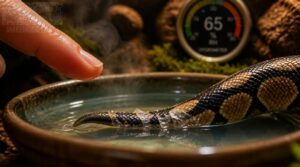
Stop and reassess if the shed won’t budge after gentle fingertip pressure and a second soak. Forcing it risks tearing live tissue.
A softbristled baby toothbrush can help, but only if the skin moves freely.
Persistent resistance usually signals that proper humidity levels weren’t quite right. Correct the humidity gradient first, then try again tomorrow.
Know When Veterinary Care is Needed
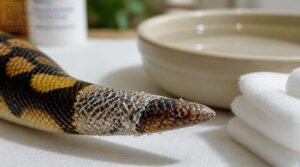
Home care works well for mild cases, but some situations call for a vet. Certain warning signs mean the tail tip is in serious trouble and needs professional attention fast. Here’s what to watch for before the problem gets worse.
Swelling or Worsening Discoloration
Worsening discoloration tells you that constricting tail tip rings are already cutting off normal circulation. Swelling that grows over hours isn’t just inflammation.
- Track skin color changes every few hours
- Watch for swelling spreading past the shed site
- Recognize darkening patches as early tissue necrosis signs
- Know bacterial infection can develop fast under trapped shed
See your vet right away.
Cold or Blackened Tail Tissue
When a tail tip feels cold or looks black, constricting tail tip rings have likely cut off blood flow long enough to cause tissue necrosis. Dead tissue won’t recover at home.
Tail necrosis risk escalates once circulation fails, and bacterial infection can follow within hours. Low humidity levels may have contributed, but fix that later. See a vet now.
Blood, Pus, or Foul Odor
A foul smell from retained shed skin is never normal. It likely means bacterial infection has taken hold. Dysecdysis breaks the skin barrier, opening the door to cutaneous infection. Don’t attempt removal if you notice:
- Blood or discharge at the tip
- Pus under the stuck shed
- Persistent foul odor
- Swelling with visible drainage
- Discoloration spreading past the retained shed skin
Torn Scales or Open Wounds
Ragged scale edges or exposed raw skin at the tip mean retained shed skin has already caused real damage. Irregular edges and broken skin signal you’re well past simple shedding difficulty.
A damp washcloth and proper humidity levels can’t reverse an open wound. Contact your vet promptly. Continuing at home risks widening the tear and deepening the injury.
Shed Remains After Gentle Attempts
If the stuck shed won’t move after a proper soak and gentle wiping, stop and contact your vet. Ongoing attempts risk tearing live tissue beneath.
Watch for these escalation signs:
- Discoloration spreading past the retained shed skin
- Unusual coldness at the tail tip
- Discharge or odor developing near the site
- Shed that resists two separate shedding assistance techniques
Prevent Future Tail Tip Retention
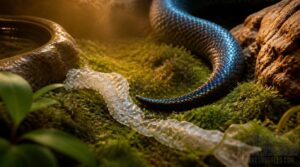
Getting a stuck shed off your snake’s tail is a relief, but the real win is not having to do it again. A few simple changes to your snake’s enclosure can make the next shed go smoothly from start to finish. Here’s what to adjust to keep tail tip retention from becoming a pattern.
Check Species-specific Humidity Needs
Start by looking up your snake’s specific natural habitat. A corn snake thrives around 40–60% humidity, while a ball python needs closer to 60–80%. These numbers aren’t interchangeable.
Matching humidity to species needs prevents the dry, papery shed that causes retention. Check a reputable care sheet or ask your vet for the correct enclosure microclimate range before adjusting anything else.
Add a Properly Moist Hide
Once you know your snake’s humidity range, a properly moist hide gives them a reliable retreat during pre-shed.
Place it on the warm side of the enclosure. Fill it with a moisture-retaining substrate like sphagnum moss, dampened to feel moist but not dripping. This creates a localized humidity gradient inside the hide, softening retained skin before it tightens around the tail.
Monitor Humidity With Digital Hygrometer
The moist hide helps, but you won’t know if it’s working without a digital probe hygrometer. Place it near the hide entrance to track humidity levels accurately.
Aim for 40–60% RH for most snakes. Log readings over several days to catch dips before a shed starts. Consistent data tells you when to mist more or adjust your moisture retention substrate.
Provide Safe Textured Surfaces
Humidity tracking is just one piece. Natural rubbing surfaces let shed release along scale direction.
Cork bark and slate serve as safe environmental enrichment. Avoid anything sharp or snag-prone. Hollow cork bark reptile hides are especially popular because they mimic natural hollows, giving snakes a secure, snag-free retreat during the shedding process.
- Place a shedding box where your snake rests
- Moisture-retaining substrate keeps the shed layer pliable
- Keep textured items stable to prevent seam gaps
- Rotate decor regularly to break hotspot friction patterns
Investigate Repeated Incomplete Sheds
Repeated incomplete sheds at the same tail tip aren’t coincidence. Shedding environmental factors like a dry hide or inconsistent moisture can cause retained shed skin to adhere in the same spot every cycle, a condition called dysecdysis.
Log each shed, note where your snake rests most, and adjust your reptile husbandry until that pattern finally breaks.
Frequently Asked Questions (FAQs)
What to do for a stuck shed snake?
Shedding light on dysecdysis: soak your snake in 80–85°F water for 15–20 minutes, then gently rub retained shed skin toward the tail tip with a damp washcloth. Worsening discoloration or swelling warrants urgent veterinary care.
What to do if a snake is struggling to shed?
If your snake is struggling to shed, place it in a shedding box lined with moistened sphagnum moss. Wipe gently with a damp washcloth, then address humidity regulation and check carefully for retained eye caps.
My corn snake has stuck shed. What should I do?
Congratulations — your corn snake has officially decided to be dramatically difficult today. Soak its tail in 80–85°F water for 15 to 20 minutes, then use a damp washcloth to gently rub the stuck shed loose.
How do I get stuck shed off my snakes’ eyes?
Retained eye caps need skin hydration first. Soak your snake in lukewarm water at 80–85°F for 15 to 20 minutes. Then gently press a damp washcloth over each eye. Still stuck? See a reptile veterinarian.
Can retained tail shed affect my snakes behavior?
Yes. Localized discomfort from retained shed can make your snake noticeably more defensive during handling, particularly near the tail tip. Poor circulation may also gradually reduce normal tail movement and overall exploratory behavior over time.
Does tail tip retained shed resolve on its own?
Sometimes it can, but tight constriction rarely self-resolves on its own. When the dry shed ring restricts blood flow, tissue damage accumulates much faster than the next shedding cycle can naturally loosen and clear it.
What substrate works best for shedding corn snakes?
Ironically, the driest setups cause the most shedding problems. Coconut coir or sphagnum moss works best as a moisture-retaining substrate, keeping humidity stable. Add a damp shedding box so your corn snake sheds more cleanly.
Conclusion
A keeper once described noticing the retained ring three full days too late. By then, the tip was already compromised, and nothing could undo that damage.
Snake tail tip stuck shed sounds minor until it isn’t. Caught early, a warm soak and a damp cloth are all you need. Caught late, no amount of technique brings dead tissue back.
Check every shed. Every single one. Your snake’s tail depends on the habit you build today.
- https://britexotics.co.uk/blog/corn-snake-shedding-problems-uk
- https://thetyedyediguana.com/blog/stuck-shed-why-it-happens-and-how-to-safely-help-your-reptile
- https://www.furrycritter.com/pages/health/snakes/tail_necrosis.htm
- https://www.reddit.com/r/cornsnakes/comments/1pzpehx/corn_snake_tail_injury
- https://community.morphmarket.com/t/baby-peppermint-w-necrotic-tip-of-tail/49626