This site is supported by our readers. We may earn a commission, at no cost to you, if you purchase through links.

Your snake ate on schedule. Yet the scale says she’s lighter, and the stool in her enclosure looks like pond water with bits of fur floating in it.
That’s not a fast. Fasting snakes shed weight slowly and stay tidy. A snake that eats and still wastes away isn’t turning meals into muscle, and every week you wait costs her reserves she can’t easily rebuild.
So why is my snake not absorbing nutrients? The cause usually hides in a cold basking spot, a bad prey choice, or a gut parasite. You can check each one yourself, starting with your enclosure.
Table Of Contents
- Key Takeaways
- Is My Snake Fasting or Malabsorbing Nutrients?
- Can Habitat Conditions Impair Snake Digestion?
- Could Feeding Practices Cause Nutrient Deficiencies?
- Which Diseases Cause Poor Nutrient Absorption?
- When Should a Vet Assess My Snake?
- Frequently Asked Questions (FAQs)
- How to fix malabsorption?
- What color are stools that indicate malabsorption?
- What are the causes of the intestines not absorbing water?
- What is canine malabsorption syndrome?
- How long can a snake go without eating?
- What does malabsorption poop look like in snakes?
- Can probiotics help improve my snakes digestion?
- How can I help my snake gain weight?
- Are some snake species prone to absorption problems?
- Conclusion
Key Takeaways
- If your snake eats on schedule but keeps losing weight and passes watery, pale, or undigested stool, you’re not looking at a fast, so treat it as a real digestive problem and don’t wait it out.
- Check your enclosure first, because a cold basking spot or the wrong humidity can leave food rotting in her gut instead of digesting, and a thermometer on both ends of the tank tells you more than a guess.
- Make sure your feeding routine isn’t the culprit by offering whole prey no wider than her thickest point, thawing it only once, and keeping meals steady instead of swinging between long fasts and big feasts.
- If you’ve fixed her setup and diet and she’s still declining, book a reptile vet and bring a fresh fecal sample, since parasites, gut inflammation, or impaction can block absorption from the inside.
Is My Snake Fasting or Malabsorbing Nutrients?
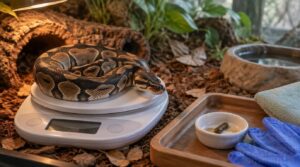
How can you tell a snake that’s skipping meals from one that can’t use them? Look at the output. Fasting snakes lose weight slowly, yet their digestive health stays steady. Malabsorption looks different.
If your snake’s refusal drags on past a few weeks, this guide on what to do if your snake won’t eat walks through when to adjust husbandry and when to call a vet.
Check your snake’s feces. Undigested prey remains, watery stools, or a sharp odor despite regular feeding point to a gut problem. Fasting alone won’t do that.
Now score your snake. Body condition scoring tells you whether the spine and ribs are showing. Weigh weekly and log it. Ongoing weight loss while your snake eats means something’s wrong, possibly parasites or metabolic disorders.
Lethargy plus weeks of decline? Treat it as medical. Don’t wait and hope it passes. Your vet can run diagnostic tests and discuss treatment options.
Can Habitat Conditions Impair Snake Digestion?
Yes, and it’s often the first thing to fix. If your snake’s stools look off, check the enclosure before you blame a disease.
Because color, texture, and timing each point to different causes, this guide to abnormal snake stool symptoms can help you narrow down what’s behind the change.
Start with the temperature gradient. Snakes need a warm side and a cool side so they can heat up after eating. Too cold, and food sits in the gut and spoils instead of breaking down. Use a thermometer on both ends, not a guess.
Next, check humidity levels. Too dry stresses the gut lining. Too damp, with stale air, invites bacteria and fungus. Aim for the range your species needs and keep air moving.
Look at the rest of your habitat setup too. Spot-clean feces fast, swap soiled bedding, and skip loose substrate that gets swallowed. Keep lights on a steady cycle, and leave your snake alone for a couple of days after meals.
Poor digestive health often starts with a small husbandry slip, and metabolic disorders can follow.
Could Feeding Practices Cause Nutrient Deficiencies?
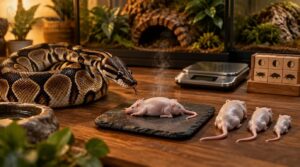
Absolutely, your habitat can be spotless and your snake can still fall short. Look at your feeding practices next. A gut that works perfectly can’t absorb what never arrives.
Check three things first:
- Prey size. Offer items no wider than the thickest part of your snake’s body. Oversized meals get refused or half eaten.
- Prey variety. Rotating species is fine, but keep each item whole. Muscle alone skips the organs and bones.
- Storage. Thaw once, never refreeze, and toss anything that smells off.
Gaps matter too. Long fasts, then sudden feasts, make intake swing wildly. Over time, those swings feed nutrient deficiencies and, eventually, metabolic disorders.
When irregular feeding leaves your snake backed up, a few safe snake constipation remedies like warm soaks and gentle hydration can help restore healthy digestion.
Supplements won’t patch a shaky diet. Fix the meals first. Then ask yourself: is your schedule steady?
Which Diseases Cause Poor Nutrient Absorption?
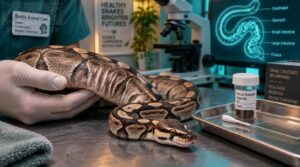
You’ve fixed the heat, the humidity, and the diet, but your snake still isn’t thriving. Now it’s time to look at root disease, because some health problems block absorption from the inside. Here are the two main culprits to rule out.
Intestinal Parasites and Infections
A vet once told me about a ball python that ate every week and still dropped a third of its weight. The culprit? Intestinal parasites.
A ball python that ate weekly still lost a third of its weight, and intestinal parasites were the hidden culprit
Intestinal parasites damage your snake’s gut lining, so food passes through without feeding it. Wild-caught snakes carry the highest risk. Watch for gastrointestinal symptoms like runny stool or slow growth. Book a fecal analysis. Shedding is intermittent, so repeat it. Then ask about deworming treatment.
Gut Inflammation and Blockages
When your snake’s gut is inflamed or blocked, food can’t move or absorb properly. Watch for regurgitation, a swollen belly, and weight loss.
Impaction is a common culprit. Substrate, oversized prey, or dehydration can all cause it. Left alone, it may trigger metabolic anorexia and invite internal parasites to thrive.
Don’t wait. Call your vet for a prompt exam today.
When Should a Vet Assess My Snake?
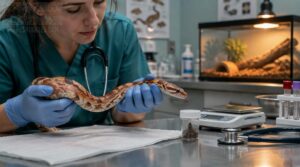
When should you stop waiting and book a veterinary consultation? Sooner than you think. If your snake is eating but still losing weight, don’t wait. Weight loss despite regular feeding points to malabsorption or illness.
Call for an exam if stools turn watery, mucus-like, frequent, or vanish despite feeding. Same goes for a snake that refuses food for weeks. Appetite rarely returns on its own.
Look for sunken eyes, visible ribs, lethargy, or odd shedding.
Husbandry changes followed by poor digestion? Get checked once the pattern shows.
Your vet can run fecal tests, palpate the belly, and check bloodwork. They’ll rule out parasite infestations, respiratory infections, and mouth rot, which often travel with a struggling gut. Don’t guess. Act early.
Frequently Asked Questions (FAQs)
How to fix malabsorption?
Fix the cause first. Book a veterinary consultation for a health and husbandry evaluation, because digestive problems usually trace back to root issues. In dogs and cats, poor nutrient absorption can result from exocrine pancreatic insufficiency or small intestinal disease, which shows why a vet needs to identify the specific cause.
Correct temperatures, use hydration strategies, and treat exactly what your vet finds.
What color are stools that indicate malabsorption?
One owner swore her ball python’s poop looked like putty. It was. Pale, clay-colored, greasy stool color signals malabsorption. Black or tarry means bleeding instead.
Watch closely for regurgitation, dehydration, and other digestive problems too.
What are the causes of the intestines not absorbing water?
Your snake drinks constantly, yet stays parched. Funny, right? Internal parasites, inflammation, blockages, or metabolic disease wreck the gut lining, causing dehydration, digestive problems, and regurgitation.
Check temperatures too. Cold enclosures slow everything down fast.
What is canine malabsorption syndrome?
Canine malabsorption syndrome is one of those gastrointestinal disorders where a dog’s gut can’t handle nutrient absorption. You’ll see chronic diarrhea, weight loss, and other digestive problems.
Root issues need veterinary diagnostics, so don’t guess.
How long can a snake go without eating?
Healthy adult ball pythons can fast up to six months. How long can a snake go without eating? Their fasting abilities rely on metabolic adaptation, but watch weight loss.
Natural fasting cycles are completely normal.
What does malabsorption poop look like in snakes?
Look at your snake’s stool. Chalky, pale urates and watery, mucus-filled feces signal digestive problems. Undigested food bits, weight loss, or regurgitation point to hidden issues. Don’t guess. Get expert advice, bring a fresh sample.
Can probiotics help improve my snakes digestion?
Maybe, but don’t count on it. Probiotics may support gut health, yet snake evidence is thin. Fix your temperatures first. If digestive problems persist, see your vet.
How can I help my snake gain weight?
Weigh your snake weekly, and write it down. Fix your heat gradient first. Then offer appropriately sized prey, roughly as wide as the thickest part of its body. Try offering different prey if it stalls. Any weight loss? Book a vet visit.
Are some snake species prone to absorption problems?
Yes, some are. Species differences matter. Wild-caught snakes and those eating tough prey often struggle on captive diets. These digestive problems can signal hidden issues, so match nutritional needs to your species. That’s preventative medicine.
Conclusion
Think it’s just a picky eater phase? It isn’t. A snake that eats but keeps losing weight needs answers, not patience.
Ask why is my snake not absorbing nutrients, then work down the list. Check your basking temperatures, confirm the prey fits, and watch the stool. If the problem persists, book a reptile vet and bring a fresh fecal sample. Fix the cause early, and she’ll finally turn meals into muscle, not into pond water.