This site is supported by our readers. We may earn a commission, at no cost to you, if you purchase through links.
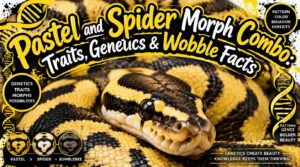
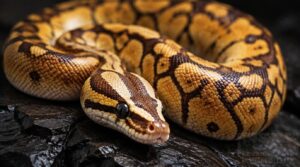
The pastel and spider morph combo produces one of the most visually striking ball pythons in the hobby: a snake with intense yellow coloring, fragmented dorsal patterning, and a sharply contrasted head that experienced keepers recognize immediately as the Bumblebee.
Getting there requires understanding two codominant genes that behave very differently from each other. Pastel brightens the base color; Spider breaks apart the dorsal pattern into thin, lace-like banding. Together, they boost each other’s visual output without changing the genetics behind either.
Spider wobble is non-negotiable to understand before you breed or buy. This article covers everything you need.
Table Of Contents
- Key Takeaways
- What is a Pastel Spider Ball Python?
- What Does The Bumblebee Morph Look Like?
- How Do Pastel and Spider Genes Combine?
- What Offspring Can a Spider × Pastel Pairing Produce?
- How Does Spider Wobble Affect Ownership and Breeding?
- Frequently Asked Questions (FAQs)
- What is the rarest morph of ball python?
- What does pastel mean in ball pythons?
- What is the prettiest ball python morph?
- What ball python morphs to avoid?
- How much do Bumblebee ball pythons typically cost?
- Which pairings must be avoided with Spider morphs?
- Can recessive genes increase the value of offspring?
- How long does a Spider Pastel breeding project take?
- How do you track het status across generations?
- Conclusion
Key Takeaways
- Combining the Pastel and Spider genes creates the Bumblebee morph, delivering intensified yellow coloring, fragmented dorsal patterning, and high-contrast head markings that neither gene produces alone.
- Every Spider-carrying snake has neurological wobble — Pastel doesn’t reduce or modify it, so roughly half of any Spider × Pastel clutch will be affected.
- A Spider × Pastel pairing yields predictable 25% odds of producing a Bumblebee per egg, but natural clutch variance means you should track ratios across multiple seasons rather than relying on single-clutch results.
- Disclosing wobble grade before every sale isn’t just ethical — skipping it damages your reputation, exposes you to legal risk, and directly harms buyers who can’t provide appropriate husbandry without that information.
What is a Pastel Spider Ball Python?
You’re working with a Pastel Spider Ball Python when you stack two distinct codominant mutations in a single animal. Pastel is a codominant gene that elevates base color, pushing yellows and oranges toward higher saturation levels. Spider is also codominant, adding a web-like tiling effect that breaks and shifts the typical ball python pattern. A good ball python morph genetics guide makes it easier to predict how combos like Pastel and Spider will express together.
When these two codominant genes combine, the result is the striking Pastel Spider—better known as the Bumblebee Ball Python, a morph celebrated for its vivid yellows and intricate, web-like patterning.
When these two combine, the Spider Pastel shows intensified head contrast and a reduced, more fragmented dorsal pattern. Genetic compatibility here is clean since neither gene needs a paired allele to express visually in the animal.
What you need to account for early is Spider morph head wobble, a neurological trait tied directly to the Spider gene. It appears in every Spider-carrying snake, including this combination.
What Does The Bumblebee Morph Look Like?
The Bumble Bee is the trade name for the Spider Pastel combination. Once you’ve seen one, the look is unmistakable.
Three visual traits define these phenotypes:
Each of these traits follows distinct inheritance patterns, as explored in this guide to ball python morph temperament and visual characteristics.
- Bright yellow base color driven well above standard ball python yellows by the Pastel gene.
- Fragmented dorsal banding where the Spider gene breaks solid saddles into irregular, web-edged shapes across the back.
- High-contrast head markings with a darkened crown and lighter facial scales that produce a masked facial appearance.
Visual animals from a Spider x Pastel pairing also tend to show tighter scale spacing than single-gene morphs, giving the dorsal surface a cleaner, more uniform look. Juveniles read lighter overall, and you’ll usually see color contrast deepen noticeably as they mature.
How Do Pastel and Spider Genes Combine?
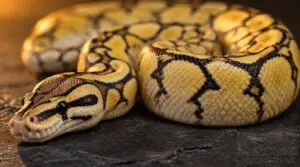
That visual appearance comes from how these two genes interact.
The Pastel morph is codominant: one copy dilutes the base color by reducing melanophore density, pushing it toward yellow. The Spider morph is also codominant but targets pattern instead, fragmenting saddle banding into thin, web-like lines. In a Spider x Pastel pairing, both codominant genes act simultaneously, altering color and pattern at once. Understanding how codominant genes like these stack and interact becomes clearer with a deeper look at ball python genetics and inheritance patterns.
When both genes combine, the resulting offspring showcase striking visual complexity—explore how combinations like these are catalogued in this ball python morph identification guide.
Here’s how the combination breaks down:
- Pastel lifts the ground color, producing a brighter, more uniform yellow base.
- Spider’s thin striping layers over that pale field, creating visible lace-like webbing.
- The combined effect reads as higher contrast across the dorsal surface.
Spider wobble isn’t affected by Pastel. It’s neurological, tied strictly to the Spider morph gene alone.
What Offspring Can a Spider × Pastel Pairing Produce?
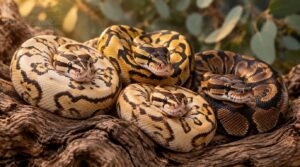
A Spider x Pastel pairing consistently produces four possible phenotypes because both are codominant genes that work on separate traits. Neither is sex-linked, so your phenotypic ratios stay predictable across pairings, regardless of which parent carries which allele.
Digging into pastel ball python genetics and breeding ratios helps you map out exactly what offspring to expect before your animals even pair up.
| Offspring Type | Expected Rate |
|---|---|
| Spider-carrying hatchlings | ~50% |
| Non-Spider hatchlings | ~50% |
| Spider Pastel specifically | ~25% |
About half your hatch will carry Spider wobble risk. The other half, normals and Pastels, won’t show any neurological signs. With a typical clutch sitting at 6 to 12 eggs, you can realistically plan for 1 to 3 Spider Pastels per hatch on average. Natural variance is real, so don’t treat those numbers as guaranteed. Track your actual ratios across multiple seasons to calibrate your breeding odds accurately.
A reptile breeding record log makes it far easier to spot meaningful patterns in your clutch ratios across multiple seasons.
How Does Spider Wobble Affect Ownership and Breeding?
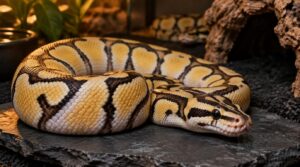
For any breeder running a Spider x Pastel pairing, wobble disclosure isn’t optional. Spider wobble affects balance and mobility, so enclosures need non-slip surfaces and secure hides. Calm, low-stimuli handling reduces stress during routine care. Pairing a non-slip mat and snug hide gives wobble-affected animals the traction and security they need to navigate their enclosure confidently.
Spider wobble disclosure is non-negotiable—every pairing demands it, every buyer deserves it
Wobble severity directly shapes breeding eligibility decisions. Test phenotypic ratios across offspring and use lineage data to avoid compounding wobble intensity. Recessive genes don’t eliminate risk, so backcrossing may help stabilize traits.
Ethical breeding practices mean you’re not mass-producing wobble animals without solid care plans. Always document wobble grade before every sale. A dedicated snake breeder record notebook makes it far easier to log wobble grades consistently across every clutch before animals ever reach a buyer.
What’s at stake without proper disclosure:
- Your reputation with serious collectors suffers
- Legal liability rises in welfare-conscious jurisdictions
- Resale value drops without documented wobble grades
- Buyers make uninformed husbandry mistakes that harm animals
Frequently Asked Questions (FAQs)
What is the rarest morph of ball python?
There’s no fixed answer. Rarity shifts as genetic lines develop. The rarest morphs often stack multiple recessive genes, like albino pied or clown combos, where commercial value spikes because breeding timelines can stretch many years.
What does pastel mean in ball pythons?
It’s not just a color filter. Pastel ball python uses codominant inheritance to suppress black pigment, boosting yellows and oranges. Understanding Pastel and Super Pastel helps you predict how two copies will intensify these traits.
What is the prettiest ball python morph?
Prettiness is subjective, but the Pastel ball python wins consistently on warmth and brightness. Pair it with the Spider ball python and you’ll get crisp, citrusy, high-contrast markings that most other morphs simply can’t match.
What ball python morphs to avoid?
Avoid Spider ball python lines carrying confirmed wobble. Spider wobble syndrome and neurological wobble syndrome are both common in Spider Pastel combos. In morph breeding, skip double-dose pairings and any lineage with a wobble history.
How much do Bumblebee ball pythons typically cost?
You’ll see Bumblebee morphs listed absolutely everywhere, but prices still vary quite wildly.
Hatchlings usually run $300 to $600. Proven adults with solid lineage, strong flame traits, and clean pattern clarity push $800 to $1,500+.
Which pairings must be avoided with Spider morphs?
Reports of near-zero hatch rates don’t lie. Don’t pair Spider with Spider under any circumstances. Skip high-contrast pastel lines and dominant color alleles too, since both raise your risk of severe wobble syndrome in hatchlings.
Can recessive genes increase the value of offspring?
Recessive genes can raise commercial value when they reveal rare phenotypes that serious buyers can’t easily source elsewhere. Thorough genetic documentation proves your line’s purity, and breeding away from Spider wobble syndrome protects hatchling desirability.
How long does a Spider Pastel breeding project take?
Expect at least 2 to 4 years. Females take 600-800 days to reach breeding weight; incubation runs 55-60 days, and stabilizing your Spider Pastel breeding odds across consecutive clutches takes 1-2 more generations to confirm.
How do you track het status across generations?
Each generation cuts certainty by half. Use pedigree tracking and genetic diversity records alongside offspring counts. Genetic testing for recessive alleles confirms what lineage tracking alone can’t. Document sire, dam, and clutch outcomes every season.
Conclusion
A breeder pairing a visual Pastel Spider to a normal produced four clean Bumblebees in one clutch, each with tighter pattern fragmentation than either parent. That’s the pastel and spider morph combo delivering exactly what its genetics promise.
Understand the wobble before you commit. Some animals manage it well; others don’t. Selecting for milder neurological expression over generations is responsible practice, not optional idealism. Know your genes, know your animals, breed with intention.