This site is supported by our readers. We may earn a commission, at no cost to you, if you purchase through links.
The pastel ball python is one of the most widely bred morphs in the hobby, yet plenty of keepers still confuse it with normals or misread what the gene does. That confusion costs money at purchase and creates unrealistic expectations at the breeding table.
The pastel gene is co-dominant, meaning one copy visibly shifts base coloration toward creamy yellows and faded saddle edges. Two copies produce a Super Pastel, a noticeably different animal with stronger contrast and reduced dark pigment.
Understanding the genetics, care requirements, and selection criteria gives you real control over outcomes, whether you’re keeping one snake or building a collection.
Table Of Contents
- Key Takeaways
- What is a Pastel Ball Python?
- Pastel Ball Python Genetics and Breeding
- Pastel Ball Python Care Requirements
- Pastel Ball Python Temperament and Handling
- Pastel Ball Python Health and Buying Guide
- Frequently Asked Questions (FAQs)
- How much does a pastel ball python cost?
- What makes a ball python a pastel?
- What is the rarest color of ball python?
- Are pastel ball pythons good pets?
- What is a pastel ball python?
- How to identify a Super Pastel Female Ball Python?
- What does a Super pastel ball python look like?
- Are Super pastel ball pythons good pets?
- What is the average lifespan of a pastel ball python?
- Can I house pastel ball pythons together?
- Conclusion
Key Takeaways
- The pastel gene is co-dominant, so even one copy visibly brightens your snake’s coloration—two copies produce a Super Pastel with stronger contrast and reduced dark pigment.
- Breeding outcomes are fully predictable: a pastel-to-pastel pairing gives you 25% super pastel, 50% pastel, and 25% normal offspring every time.
- Unlike spider or woma morphs, the pastel gene carries no linked health risks—any problems your snake develops will come from husbandry, not genetics.
- Pastel ball pythons are low-maintenance, docile pets with a 20–30 year lifespan, so the enclosure setup and care habits you establish early have long-term consequences.
What is a Pastel Ball Python?
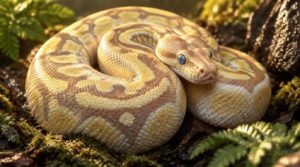
The pastel ball python is one of the most recognizable morphs in the hobby, built around a co-dominant color mutation that brightens base tones and shifts eye color.
When combined with the spider morph, this mutation produces the iconic pastel spider ball python Bumblebee combo, a snake prized for its vivid yellows and striking pattern contrast.
Breeders often pair pastels with other co-dominant morphs to amplify these traits, producing offspring with striking contrast and pattern variation—explore the full range of ball python color morphs and pattern combinations to see how pastel genetics interact across generations.
Whether you’re buying your first pastel or planning a breeding project, knowing what to look for matters.
Here’s what sets this morph apart visually and genetically.
Identifying Pastel Coloration
Although pastels vary slightly, the defining trait is boosted yellow pigment that shifts the base color from typical brown-gold toward a creamy, lighter yellow.
Dorsal saddles fade at the edges, and the head usually shows pale facial markings. Because pastel relies on codominant genes, you don’t need two copies to see noticeable high contrast coloration in the Pastel Ball Python.
Pastel Vs. Super Pastel
Taking that boosted yellow a step further, Super Pastels express when a snake inherits two copies of the Pastel gene.
Because codominant genes work this way in ball python genetics, you get a much stronger cream background, higher contrast, and more uniform brown tones where red-based patterning fades. The Pastel Ball Python morph carries one copy; Super Pastels carry two.
Pastel Ball Python Genetics and Breeding
Understanding pastel ball python genetics shapes every breeding decision you’ll make. The pastel gene follows a co-dominant pattern, which gives you predictable offspring ratios when you plan pairings.
Those three outcomes—normal, pastel, and super pastel—are explained in depth in this guide to pastel ball python genetics and breeding outcomes.
Below, you’ll find the key inheritance patterns, expected ratios, and popular combinations worth knowing.
Pastel Inheritance Patterns
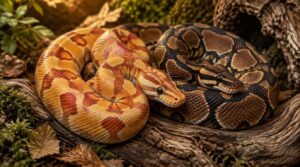
Say you pair a pastel to a normal ball python. About half the offspring will carry the Pastel gene. That’s codominant inheritance.
In reptile genetics, codominant means one copy visibly changes the animal’s appearance. A heterozygous pastel shows lightened coloration, while two copies produce a super pastel. This genetic inheritance is autosomal, so sex doesn’t determine which offspring carry it.
Expected Breeding Ratios
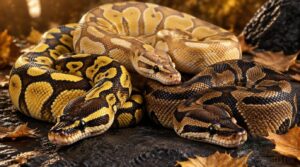
From codominant inheritance come predictable ratios. Know each parent’s Pastel gene status, then use these pairings as your baseline:
- Pastel x Normal: 50% pastel, 50% normal
- Pastel x Pastel: 25% super pastel, 50% pastel, 25% normal
- Super Pastel x Normal: 50% pastel, 50% normal
- Normal x Normal: no pastel offspring produced
- Super Pastel x Pastel: 50% super pastel, 50% pastel
Popular Morph Combinations
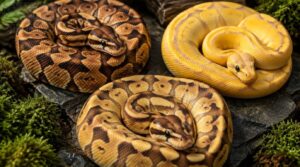
Breeders often use the Pastel Ball Python as a foundation for morph stacking, pairing it with Mojave, Fire, or Banana to test different genetic combinations. Pastel Mojave caramelizes midbody tones and sharpens the overall pattern contrast. Pastel Fire deepens yellow saturation and reduces dark pigment.
These popular morph combinations show how ball python genetics layer predictably across multiple gene pairings.
Pastel Ball Python Care Requirements
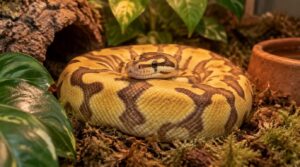
Pastel ball pythons share the same care needs as any other ball python morph, so no specialized equipment is required. Getting the basics right, starting with their enclosure setup, makes the biggest difference in how well your snake settles in. Here’s what you need to set up a proper living space for your pastel.
Enclosure and Substrate
A pastel ball python needs more floor space than you’d expect. Adults do best in a 40-gallon enclosure, ideally 24 by 18 inches, with enough room for a temperature gradient and secure hides placed on both ends.
For substrate, Cypress mulch stays lightly moist without getting soggy, which helps during sheds. Avoid cedar, as it can irritate their respiratory system.
Temperature and Humidity
A temperature drop above 5°C overnight can stress your snake and disrupt its thermoregulation. Your temperature gradient should run 28-32°C on the warm side and 25-28°C on the cool side. A good thermostat keeps your basking spot consistent so you’re not dealing with dangerous temperature swings. A programmable reptile thermostat controller can automatically adjust heating output to hold your warm side steady, even as ambient room temperatures dip overnight.
For humidity control, target 50-60% and use a shallow water dish to maintain it.
A reptile digital hygrometer gauge takes the guesswork out of monitoring humidity, giving you real-time readings so you can adjust before levels drift out of range.
Feeding and Shedding
Milky eyes and dull skin signal your snake’s shedding cycle has begun. Offer juveniles a fuzzy mouse every five to seven days, but hold feedings until the shed finishes to avoid impaction.
Ball pythons can be picky eaters, so if yours refuses, try switching prey type first. Raise humidity during shed to prevent a poor shed or retained eye caps.
Switching to frozen-thawed mice and rats is often the easiest way to tempt a reluctant ball python without the hassle of live prey.
Pastel Ball Python Temperament and Handling
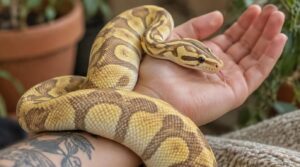
Ball pythons are one of the most docile snake species available, and the Pastel variant is no different. Their ball python temperament leans calm, especially when you handle them consistently from a young age.
Keep these handling habits in mind:
- Support the mid to posterior third of the body to avoid neck stress
- Approach from the side slowly to reduce startle responses by up to 30%
- Limit sessions to 5-10 minutes until your snake is fully acclimated
- Watch for tail flicking or a gaping mouth, both signal stress within seconds
Snake taming takes patience. With Pastel Ball Pythons, running 2-3 handling sessions per week over 4-6 weeks noticeably reduces defensive coiling. You’ll see calmer behavior as the routine sets in.
Pastel Ball Python Health and Buying Guide
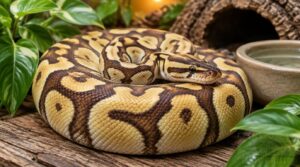
Pastels are generally hardy, low-maintenance snakes, but a few genetic health concerns are worth knowing before you buy. Knowing what to look for protects you from taking home an animal with preventable problems.
This section covers potential health risks, current pricing, and how to pick a healthy snake with confidence.
Potential Genetic Health Issues
Good news: the pastel gene carries no meaningful health risks. You won’t see skeletal malformations, spinal kinks, duckbills, or bug eyes linked to this mutation. Those issues belong to genes like spider or woma.
The pastel gene carries no meaningful health risks—no kinks, no malformations, none of the issues tied to spider or woma
Pastel is a dominant, not recessive, gene, so super pastels are healthy and viable. Any health problems your snake develops will come from husbandry, not genetics.
Price and Availability
Pastel ball python hatchlings generally sell for $40-$150, with high-contrast specimens from top lineages reaching $200-$350 through established reptile vendors. Neonates run 20-40% higher than juveniles, so your budget and timing both matter.
The reptile market peaks in late spring. Expect thinner captive bred stock by late summer. Southern U.S. buyers often find snake pricing 10-25% below coastal market rates.
Choosing a Healthy Snake
Once you’ve narrowed your budget, shift focus to pet snake health before buying. A healthy Pastel Ball Python holds its body steadily, flicks its tongue regularly, and has clear eyes.
Watch for these snake stress indicators:
- Open-mouth breathing or audible wheezing
- Retained shed patches near the head or tail
- Visible mites or unusual lumps
- Lethargy that persists after gentle handling
Frequently Asked Questions (FAQs)
How much does a pastel ball python cost?
Wondering what you’ll actually pay? A standard Captive Bred Pastel Ball Python usually sells for $150-$ Breeders with verified lineage charge $350-$700, and special combo morphs on the ball python market can easily exceed $1,
What makes a ball python a pastel?
A single co-dominant genetic mutation causes reduced melanin production and heightened yellow pigmentation in Python regius, producing a desaturated, warm cream-to-yellow base color with noticeably thinner and lighter dorsal patterning spread across the entire body.
What is the rarest color of ball python?
Finding a blackhead ball python is like spotting a four-leaf clover in reptile breeding. This snake color mutation appears in roughly 1-2% of hatchlings, making it one of the rarest ball python variations you’ll encounter.
Are pastel ball pythons good pets?
Pastel ball pythons are solid pets for intermediate keepers. They’re docile, relatively low maintenance, and manageable long term. A proper Care Guide helps, since their pet snake lifespan can easily reach 25 to 30 years.
What is a pastel ball python?
Ever noticed how some ball pythons seem almost lit from within? A pastel ball python is a co-dominant morph that replaces dull brown pigments with vivid yellows and oranges, brightened eyes, and distinctive blushed patterning.
How to identify a Super Pastel Female Ball Python?
Super Pastels display brighter yellows, a visibly faded head, reduced dark speckling, and strong purple-haze blushing. But color alone can’t confirm sex; probing or physical inspection is the only reliable way to identify a female.
What does a Super pastel ball python look like?
Oddly enough, what makes Super Pastels stand out is what they lack. You’ll see a cream to pale yellow base, muted saddles, softened oranges and pinks, and golden or copper eyes, with creamy pale bellies.
Are Super pastel ball pythons good pets?
What makes a snake genuinely worth owning? Super Pastels answer that question clearly. They’re docile, feed consistently, and thrive well in basic setups, making them a practical and rewarding addition to your ball python care.
What is the average lifespan of a pastel ball python?
Calling this a short-term commitment would be a bit ironic. Your pastel ball python will usually live 20 to 30 years in captivity, so the reptile husbandry choices you’ll make early on really do matter.
Can I house pastel ball pythons together?
Ball pythons need 20 to 40 gallons of space per individual. Caring for a Pastel Ball Python means keeping each one in separate enclosures to prevent feeding aggression, stress, and serious ball python health issues.
Conclusion
That creamy yellow patterning and those softened saddle edges aren’t purely cosmetic. They mark a gene that stacks predictably, passes cleanly, and opens real breeding potential.
A pastel ball python rewards keepers who understand what they’re actually working with, because the genetics don’t guess and they don’t lie, they follow rules. Learn those rules, set up the enclosure right, source from a reputable breeder, and your outcomes will start looking a lot less like luck.