This site is supported by our readers. We may earn a commission, at no cost to you, if you purchase through links.
A ball python can sit on a forgotten pile of urates for three days before you notice the smell. By then, bacteria have already moved into the substrate.
A solid cleaning schedule for ball python enclosure care stops that slide. Spot clean daily, handle upkeep weekly, and deep clean every 4 to 8 weeks. Skip the routine and you risk scale rot, respiratory infections, and mold in the humid hide.
Your snake can’t tell you the tank has turned. The schedule does that for you. Here’s exactly what to scrub, what to skip, and which disinfectants keep your python safe.
Table Of Contents
- Key Takeaways
- Ball Python Enclosure Cleaning Schedule
- Daily and Weekly Ball Python Cleaning Tasks
- Choosing Safe Disinfectants for Ball Python Enclosures
- How to Deep Clean Ball Python Enclosures
- Adjusting Your Ball Python Cleaning Schedule
- Frequently Asked Questions (FAQs)
- How often do I clean my ball python enclosure?
- What to clean a ball python enclosure with?
- What are the common causes of death in ball pythons?
- Do ball python enclosures need to be misted?
- How often should ball pythons be handled after cleaning?
- Can cleaning supplies stress or harm my snake?
- What should I do if my snake refuses food after cleaning?
- How do I clean a ball pythons shed skin properly?
- Should I wash my hands before and after cleaning?
- Conclusion
Key Takeaways
- Spot clean daily, reset the water bowl and hides weekly, and deep clean every 4 to 8 weeks so bacteria never get a foothold.
- Disinfect with reptile-safe products like F10SC or diluted chlorhexidine, rinse everything, and never use phenols, pine oils, or citrus cleaners, which can harm your snake’s skin and lungs.
- Move your python to a secure container for a deep clean, scrub and rinse every surface, replace the substrate, and check temperatures before your python goes back in.
- Adjust the routine for special cases: stretch cycles for bioactive setups, check the humid hide daily for mold, and discard porous items and disinfect weekly if your vet confirms mites.
Ball Python Enclosure Cleaning Schedule
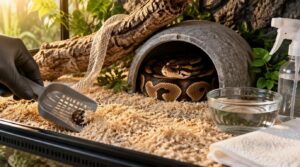
You’ll keep a ball python healthy with a cleaning schedule that runs in layers: quick daily checks, a weekly reset, and a full deep clean every few weeks. Skip the layers and waste, bacteria, and mites get a head start.
Since a clean enclosure only works if the heat and humidity are right, double-check your ball python temperature requirements whenever you swap substrate or reset the tank.
Most keepers work on three tiers. Daily spot cleaning removes visible waste and shed skins before they foul the enclosure. Weekly work covers the water bowl and a closer look at hides and substrate. The deep clean happens every 4 to 8 weeks in a standard setup, depending on how soiled the substrate gets.
Bioactive enclosures follow a longer cycle. Established cleanup crews break down waste, so you can stretch those intervals.
Don’t treat these dates as strict, fixed rules.
Daily and Weekly Ball Python Cleaning Tasks
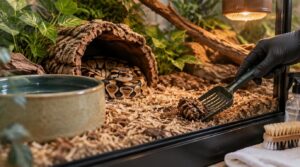
Daily work takes about five minutes. Walk the enclosure and look for feces, urates, and wet spots. Remove them within 24 hours so bacteria don’t get a foothold. Replace only the contaminated substrate, not the whole bed. Scoop spilled water or urine right away.
Empty, scrub, and refill the water bowl every day. Biofilm builds fast, so a quick rinse won’t cut it. Keep the bowl away from heat sources, since warmth drives evaporation and soaks the substrate. Pull any uneaten thawed rodent after 4 hours.
Once a week, check every hide, branch, and decor piece for waste or shed skin. Look at the substrate corners and the base of the warm hide for trapped moisture. Replace damaged or heavily soiled hides. Top up thin substrate spots and mix the new material in well.
Choosing Safe Disinfectants for Ball Python Enclosures
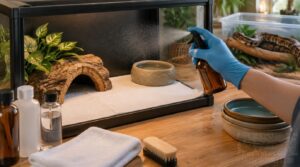
Daily scooping and bowl scrubbing remove mess, but they don’t kill germs. That’s a disinfectant’s job, and the wrong one can burn your snake’s skin or irritate its lungs.
Placement matters too, so check this guide on whether a snake’s water bowl belongs on the warm or cool side to slow bacterial growth between cleanings.
Scooping and scrubbing clear the mess, but only the right disinfectant kills germs, and the wrong one can harm your snake
These options work when used as directed:
- F10SC kills bacteria, fungi, and viruses.
- Chlorhexidine works well when diluted properly and rinsed fully.
- Rescue breaks down into water and oxygen.
- Bleach at 1:32 needs heavy rinsing and full drying.
- A reptile safe cleaner costs more but removes the guesswork.
Skip phenols, pine oils, and citrus cleaners. They’re toxic through skin contact or fumes. Vinegar is safe, but it’s not a true disinfectant.
Never mix products, especially bleach and ammonia. Always wear gloves. Bioactive setups need gentler choices, so ask your vet first.
How to Deep Clean Ball Python Enclosures
Plan a deep clean every one to three months, or sooner if the enclosure smells or you spot mold. Pick a disinfectant from the list above. F10SC works well here.
Choosing a baby boa enclosure with smooth, non-porous surfaces and removable furnishings makes each deep clean faster and the disinfectant far more effective.
- Move your snake to a secure container with water and a hide.
- Empty everything, including substrate, decor, and the water bowl.
- Scrub walls, floors, and vents with your disinfectant. Let it sit 10 minutes, then rinse until no odor remains.
- Soak plastic items in 1:32 bleach for 10 minutes, rinse, and air dry. Bake wood and cork bark at 250°F (121°C) for 2 to 3 hours.
- Finish with substrate replacement, 2 to 4 inches deep, and check temperatures before returning your snake.
Don’t reuse old bedding. Bioactive setups work differently.
Adjusting Your Ball Python Cleaning Schedule
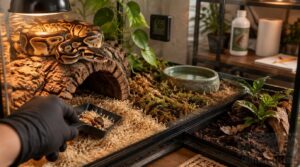
A set schedule works for most ball pythons, but some setups need extra attention. Your enclosure type and your snake’s health decide how much more you’ll do. Here are the three situations where you should adjust your routine.
Bioactive Substrate and Cleanup Crew Care
Your bioactive substrate cleans itself, but only if the cleanup crew survives. Remove solid waste immediately and sift weekly for food remnants and shed fragments. Spot-treat soiled patches instead of replacing everything.
Mist bioactive zones daily or every other day. Your cleaning schedule stays light: a full deep clean comes every 12 to 18 months, or after a crew collapse.
Mold and Humid Hide Maintenance
Check your humid hide every day for mold, especially along the lid and moss line. Green or black fuzz means it’s time to act.
Pull the hide, toss the moss, and scrub with a reptile-safe disinfection product. Rinse well. Then remake it:
- Use a non-porous plastic hide
- Keep a small entrance hole
- Add fresh damp sphagnum moss
- Skip pine and cedar
- Stick to your weekly cleaning schedule
Keep the moss damp rather than soaking wet, since a humid hide works best as a localized humidity source while the rest of the enclosure stays around 50-60%.
Bioactive setups need extra watching.
Cleaning After Illness or Parasites
Say your ball python’s vet confirms mites. Discard all substrate and porous hides immediately.
| Task | Frequency | Detail |
|---|---|---|
| Spot clean | Daily | Remove waste |
| Disinfectant | Weekly | 10 minutes contact |
| Deep clean | Weekly | Rinse thoroughly |
Choose a vet-approved disinfectant like F10SC or chlorhexidine. Don’t relax until your vet confirms parasites are gone.
Keep the snake quarantined separately and check it daily during treatment.
Frequently Asked Questions (FAQs)
How often do I clean my ball python enclosure?
Check your enclosure daily and remove feces, urates, and spilled water right away.
Spot clean soiled substrate two to three times a week. Replace paper substrate every one to two weeks, and deep clean every three to four months.
What to clean a ball python enclosure with?
Use reptile-safe cleaners like F10SC (1:250) or 1% chlorhexidine to disinfect.
Wipe glass with white vinegar and water to remove residue. Soak heavily soiled decor in a 10% bleach solution, then rinse well. Avoid ammonia entirely.
What are the common causes of death in ball pythons?
Healthy ball pythons rarely just die, so look at your enclosure first. Respiratory infections, thermal burns, impaction, chronic stress, and inclusion body disease kill most. Always clean it well, since Salmonella and aspergillosis follow neglect.
Do ball python enclosures need to be misted?
Think your ball python needs daily misting? Not always. Misting depends on your enclosure’s humidity needs. Hold 50-60%, raising it to 65-70% during shedding. Skip misting if your hygrometer already reads right.
How often should ball pythons be handled after cleaning?
Ball pythons can carry Salmonella, so wash up. Handle after daily cleaning, but wait 24 hours after deep cleaning. Good ball python care follows your cleaning schedule, and calm ball python behavior shows it’s working.
Can cleaning supplies stress or harm my snake?
Yes, they can. Phenols like Lysol, alcohol sprays, and undiluted bleach cause neurological, skin, and respiratory damage. Use F10SC at 1:250 or chlorhexidine at 1:30 to 1: Move your snake out, rinse, dry fully.
What should I do if my snake refuses food after cleaning?
A clean enclosure can feel like a stranger’s house to your ball python. Stop deep cleaning, spot clean only, and remove uneaten prey items within hours. Skip the feeding area handling. Wait a week, then offer food again.
How do I clean a ball pythons shed skin properly?
Yes, it’s worth your time, even though shed skin looks harmless. Remove the whole piece within 24 hours with tongs or gloved hands. Check around the water bowl and hide entrances. Seal it in the trash.
Should I wash my hands before and after cleaning?
Picture a thin film of oil from your palm, invisible, smeared across the glass. Yes, wash your hands before and after cleaning. Good hygiene protects your snake from your skin and protects you from Salmonella. Use unscented antibacterial soap and warm water for 20 seconds.
Conclusion
Would you rather scrub a tank for twenty minutes or treat a sick snake for six weeks? A reliable cleaning schedule for ball python enclosure care makes that choice easy.
Spot clean daily, tidy weekly, and deep clean every 4 to 8 weeks. Use only reptile-safe disinfectants, rinse everything, and let it dry before your python goes back in.
Adjust the routine after illness or mold. Then trust the schedule, because your snake already does.