This site is supported by our readers. We may earn a commission, at no cost to you, if you purchase through links.
Packing for a reptile road trip means obsessing over humidity levels, substrate depth, and whether your enclosure smells like a swamp by hour three. Waste builds fast in tight spaces, and a travel tub offers nowhere for odors or bacteria to hide.
The wrong cleaners make it worse: harsh chemicals linger in poorly ventilated carriers, stressing your animal before you reach the highway. Knowing which reptile cleaning sprays work safely in travel enclosures—without toxic residue, suffocating fumes, or surface damage—separates a smooth trip from a stressful one.
Table Of Contents
- Key Takeaways
- Top 5 Reptile Cleaning Sprays
- Choosing Sprays for Travel Enclosures
- Using Cleaning Sprays on The Go
- Travel Cleaning Mistakes to Avoid
- Frequently Asked Questions (FAQs)
- Is Dawn dish soap safe for snake enclosure?
- How often should travel enclosures be fully disinfected?
- Can cleaning sprays harm reptile eggs or hatchlings?
- Are travel sprays safe for humidity-sensitive species?
- Do cleaning sprays affect beneficial enclosure bacteria?
- Which pathogens do travel sprays actually eliminate?
- Conclusion
Key Takeaways
- Harsh chemicals like bleach and ammonia are truly dangerous in small travel spaces—they create toxic fumes that can harm your reptile’s respiratory system for hours, so always choose reptile-safe, low-odor formulas instead.
- Not every cleaner does the same job: F10 SCXD handles heavy-duty disinfection, Oxyfresh tackles everyday odors, Exo Terra targets mineral buildup, and enzyme-based options like Absolutely Clean break down protein waste—matching the right spray to the task matters.
- Travel enclosures demand compact, leak-proof, ready-to-use bottles with residue-free formulas that dry fast, since you’re often working against the clock at a rest stop with no sink nearby.
- Never return your reptile too soon—wet residue in a closed enclosure can cause respiratory irritation and stress, so always ventilate fully, wipe with microfiber, and confirm zero moisture before re-housing.
Top 5 Reptile Cleaning Sprays
Finding the right cleaning spray for travel doesn’t have to be a guessing game. These five products stand out for their safety, ease of use, and reptile-friendly formulas.
Each of these picks is covered in depth over at reptile-safe cleaning sprays for classroom pets, so you can compare formulas before you pack.
Here’s what made the cut.
1. F10 SCXD All Purpose Disinfectant Cleaner
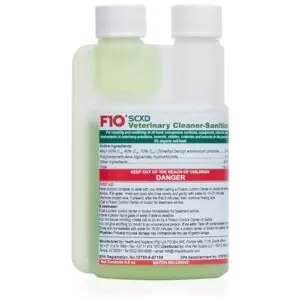
F10 SCXD is a go-to for reptile keepers seeking veterinary-grade clean without harsh chemicals.
It combines quaternary ammonium and biguanide actives—a powerful duo that combats bacteria, fungi, and tough viruses like parvoviruses.
You dilute it yourself: 1:500 for routine surfaces, 1:250 for deeper disinfection.
Chlorine-free and aldehyde-free, it causes no respiratory irritation for your animal.
Compatible with plastic, glass, and metal enclosures, it rinses clean and air-dries safely.
At $35.99 for 200 ml, the concentrate stretches far.
| Best For | Pet care professionals and reptile keepers who need a vet-grade disinfectant that’s tough on germs but gentle enough for use around animals. |
|---|---|
| Volume | 200 ml (6.8 oz) |
| Price | $35.99 |
| Surface Type | Hard, non-porous |
| Animal Safe | Yes, after rinsing |
| Rinse Required | Yes |
| Chemical-Free | Biodegradable, pine-scented |
| Additional Features |
|
- Kills bacteria, viruses, and fungi — solid broad-spectrum coverage for high-risk environments like kennels, clinics, and terrariums
- Super-concentrated formula means a small 200 ml bottle goes a long way, making the $35.99 price tag easier to justify
- Low-odor pine scent won’t stress out sensitive animals or bother users who can’t handle strong smells
- Measuring lines aren’t precise for small batches, so getting the dilution right takes a bit of guesswork
- Only works on hard, non-porous surfaces — wood, fabric, and similar materials are out
- The 200 ml size runs out fast in busy multi-animal facilities, meaning frequent reorders
2. Oxyfresh Reptile Amphibian Terrarium Cleaner
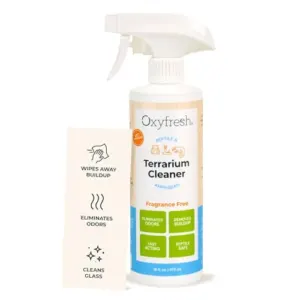
If F10 SCXD is your heavy-duty option, Oxyfresh is the everyday workhorse. It’s built around Oxygene technology — an oxidizing formula that breaks down sulfur-based waste odors instead of just covering them up. No bleach, no fragrances, no harsh residue.
Leaping Bunny certified and made in the USA, it’s safe for glass, acrylic, and plastic surfaces. The product is practical and budget-friendly for regular travel cleanups.
Simply spray, wait a few minutes, rinse, and dry. That’s it. At $17.95 for a 16 oz bottle, it offers affordability without compromising effectiveness.
| Best For | Reptile and amphibian owners who want a safe, no-fuss cleaner they can use regularly without worrying about harsh chemicals or residue. |
|---|---|
| Volume | ~540 g (1.19 lb) |
| Price | $17.95 |
| Surface Type | Glass, acrylic, plastic |
| Animal Safe | Yes, direct contact safe |
| Rinse Required | Single rinse |
| Chemical-Free | No bleach, dyes, or parabens |
| Additional Features |
|
- Breaks down pet waste odors at the source instead of just masking them — so the tank actually smells clean
- Leaping Bunny certified and free of bleach, fragrances, and dyes, making it safe around sensitive species
- Works on glass, acrylic, plastic, and carpet, so you can clean the whole enclosure with one product
- Not a disinfectant, so it won’t cut it if you need to fully sanitize after illness or contamination
- Struggles with hard-water mineral deposits — you’ll need an acidic cleaner for that
- The spray bottle has a small plastic piece that can detach, so give it a quick check before you start
3. Zilla Terrarium Cleaner Spray
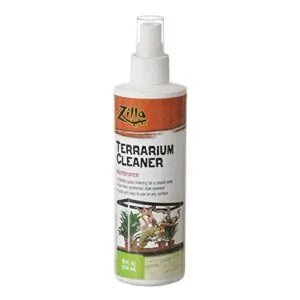
Oxyfresh manages odors brilliantly, but sometimes you just need something quick for the glass. That’s where Zilla Terrarium Cleaner Spray earns its spot. At $13.57 for 8 fl oz, it’s compact enough to toss in your travel bag without second-guessing.
It delivers a streak-free shine on glass and acrylic, includes anti-static agents to reduce dust buildup, and deodorizes between full cleanings.
The almond-scented formula uses natural ingredients — no harsh chemicals. Spray, wipe with a lint-free cloth, and you’re done.
| Best For | Reptile owners who want a fast, no-fuss cleaner that’s gentle enough for regular use inside terrariums. |
|---|---|
| Volume | 8 fl oz |
| Price | $13.57 |
| Surface Type | Indoor, non-metallic |
| Animal Safe | Yes, natural ingredients |
| Rinse Required | Not specified |
| Chemical-Free | Natural ingredients only |
| Additional Features |
|
- Natural, almond-scented formula keeps things smelling fresh without harsh chemicals
- Works great on glass and acrylic for a quick, streak-free wipe-down
- Compact 8 oz size is easy to store and grab on the go
- Small bottle means you’ll be restocking more often if you’re cleaning frequently
- Not safe for all surfaces — skip it on metal, certain plastics, or painted areas
- Anyone with an almond allergy should patch test before using it around the enclosure
4. Exo Terra Terrarium Glass Cleaner
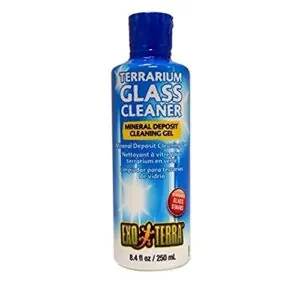
Glass stains from misting systems are a different beast than odors or bacteria. That’s where Exo Terra Terrarium Glass Cleaner (PT2668) steps in. This 250 ml gel targets calcium and lime deposits — the white crusty buildup that clouds your view and collects on glass and smooth plastic surfaces.
For stubborn mineral deposits that won’t budge, pairing this gel with natural vinegar-based cleaning methods for snake tanks can give you a one-two punch against buildup.
Apply it, let it sit for a few minutes, scrub gently, then rinse clean. The formula contains no ammonia, no alcohol, no synthetic fragrances.
At $12.99, it’s a solid pick for maintaining clear sightlines between deep cleans.
| Best For | Reptile and amphibian keepers dealing with hard-water stains from misting systems who want a safe, chemical-free way to keep their enclosure glass clear. |
|---|---|
| Volume | 250 ml (8.4 oz) |
| Price | $12.99 |
| Surface Type | Glass, plastic, smooth |
| Animal Safe | Yes, minimal toxicity |
| Rinse Required | Yes |
| Chemical-Free | No ammonia, alcohol, or dyes |
| Additional Features |
|
- Gel formula clings to glass and dissolves calcium and lime deposits without harsh chemicals
- Free of ammonia, alcohol, dyes, and synthetic fragrances — safe around sensitive animals
- Works on glass, plastic, and smooth surfaces in both terrariums and aquariums
- Stubborn or old mineral buildup may need multiple rounds to fully clear
- Incomplete rinsing can leave a sticky residue or slight film on the glass
- A handful of users found it underwhelming on severe, set-in stains
5. Absolutely Clean Reptile Terrarium Cleaner Deodorizer
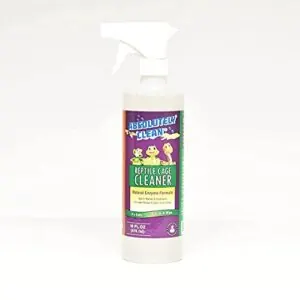
Sometimes the simplest approach wins. Absolutely Clean uses a natural enzyme formula that breaks down protein-based waste — think turtle excrement, shed skin, and urates — without leaving any greasy or filmy residue behind.
Spray it on, wait 3–5 minutes, wipe, then rinse with hot water.
If odors linger after cleaning, check this guide to the best way to disinfect reptile enclosures for stronger options, and press the pump top firmly on first.
It’s veterinarian-approved, free of harsh chemicals, and safe for glass, plastic, vinyl, and wood surfaces.
At $16.99 for a ready-to-use 16 oz bottle, it’s a practical grab for travel days.
| Best For | Reptile and amphibian owners who want a safe, no-fuss cleaner that actually kills odors without worrying about harming their pets. |
|---|---|
| Volume | ~0.52 kg (1.15 lb) |
| Price | $16.99 |
| Surface Type | Metal, wood, glass, vinyl, plastic |
| Animal Safe | Yes, after rinsing and drying |
| Rinse Required | Yes, with hot water |
| Chemical-Free | No harsh chemicals or fumes |
| Additional Features |
|
- Natural enzyme formula breaks down protein-based waste like shed skin and urates without leaving any greasy residue
- Safe on almost every surface — glass, plastic, vinyl, wood — and vet-approved with no harsh fumes
- Dead-simple to use: spray, wait a few minutes, wipe, rinse, done
- At $16.99, it costs more than generic cleaners, which adds up if you’re cleaning frequently
- Animals have to be fully removed before use, and the enclosure needs to dry completely before they go back in
- Stubborn stains still need manual scrubbing — the enzymes alone won’t do all the heavy lifting
Choosing Sprays for Travel Enclosures
Not every cleaning spray that works great at home is going to pull its weight on the road.
Travel enclosures come with their own set of demands—tight spaces, quick turnarounds, and materials that aren’t always glass.
Here’s what to look for before you throw a bottle in your bag.
Reptile-safe Ingredients for Temporary Setups
Not all cleaners are built the same — and in a travel setup, the wrong formula can cause real harm. Look for pH-neutral formulas, biodegradable actives, and non-corrosive surfactants that won’t off-gas in a confined space.
Odorless preservatives and low-toxicity solvents keep things safe around reptiles without the fumes. Nontoxic, natural ingredients make reptile-safe cleaning methods practical even on the road.
Remember that proper cleaning removes organic debris.
Compact Bottle Sizes for Packing Light
Most travel cleaners come in 15–30 mL bottles — right in line with Bottle Volume Standards and TSA’s Travel Regulation Limits for carry-ons. That’s enough to spot clean daily without hauling bulk.
Look for Lightweight Materials like BPA-free plastic with Leak-proof Design caps. These features ensure durability and portability during travel.
Smart Labeling on each bottle keeps your mite-killer spray and general reptile husbandry cleaners sorted quickly, streamlining your cleaning routine.
Glass, PVC, and Plastic Compatibility
Not every cleaner plays nicely with every surface. Glass tolerates most water-based sprays well — scratch resistance is rarely an issue with soft cloths — but PVC and polycarbonate need a noncorrosive, nonstaining formula to avoid fogging and prevention failures over time.
Seal swelling becomes a real problem if solvents sneak into gaskets. Solvent compatibility and UV degradation resistance also matter significantly.
Exo Terra’s Terrarium Glass Cleaner reliably addresses water-safe surfaces for thorough surface decontamination.
Ready-to-use Sprays Vs Concentrated Formulas
Ready-to-use sprays win on convenience — grab, spray, wipe, done. That matters when you’re spot-cleaning a travel tub at a rest stop. Concentrates offer better cost per use, longer shelf life, and less packaging waste, but dilution accuracy is on you.
For choosing safe cleaning products for reptile enclosures, always check ingredient transparency and confirm the dilution ratio matches your setup’s contamination level.
Residue-free Drying for Quick Re-housing
Drying time is where re-housing plans succeed or fail. Choose a fast-acting formula that’s nontoxic after drying, so contact action does the work without leaving a residual film.
- Open airflow channels on all vents immediately after wiping
- Use microfiber wiping to pull moisture in one pass
- Apply heat-assisted drying with gentle warm air
- Focus spot-cleaning on corners for condensation prevention
Low-odor Options for Cars and Hotel Rooms
Sealed spaces trap odors fast. That’s why low-odor cleaners aren’t optional—they’re smart.
Neutral pH cleaners and enzymatic formulas stay nontoxic after drying and won’t overwhelm a confined space.
Activated charcoal and carbon filtration options absorb residual smells without releasing VOCs.
Pet-safe picks like Naturasil and EcoPest also double as mite killer sprays, keeping things clean and low-impact.
Contact Time and Wipe-down Convenience
Low odor matters—and so does knowing how long your cleaner actually needs to work. Contact time isn’t guesswork; it’s your disinfection protocol.
- Check Dwell Time Indicators on the label before buying
- Use an Adjustable Spray Nozzle for even, controlled coverage
- Try Pre‑wet Wipe Packs—they hold moisture longer for reliable contact kill
- Follow Timer‑Based Application, especially with Zoo Med Wipe Out
- Pick Fast‑Dry Formulations and follow Dilution guidelines for reptile cleaning products
Using Cleaning Sprays on The Go
Cleaning on the road is a different kind of challenge — you’re working with limited space, no sink nearby, and a snake that needs to get back into its enclosure soon.
The good news is that with the right approach, it’s actually pretty manageable. Here’s how to handle each step without stressing yourself or your reptile out.
Removing Your Snake Before Spraying

Before you reach for that spray bottle, your snake must be out of the picture. Use snake handling tools like tongs or a padded carrier to relocate your reptile calmly. A solid temporary containment setup with a secure lid and soft lining keeps stress low and escape risk lower.
Run through your pre-spray relocation checklist: snake out, enclosure cleared, lid locked.
Spot Cleaning After Spills and Waste
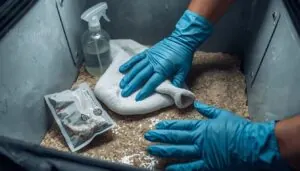
Once your snake is safely out, tackle waste fast. Use the Absorbent Towel Technique — pat from the edges inward using the Containment Patting Method to stop spreading.
Bag solids using Waste Bag Disposal pouches, then apply a reptile-safe, nontoxic disinfectant with your Glove Hygiene Protocol in place.
Spot cleaning here beats a full teardown every time.
Disinfecting Hides, Bowls, and Travel Tubs
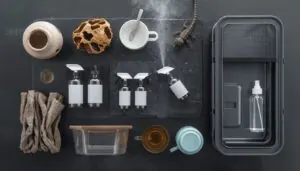
Cleaning hides, bowls, and travel tubs requires a specific method. Start with pre‑rinse protocols — warm water first to flush debris before any disinfectant touches the surface.
Run material compatibility checks to ensure your plastic tubs and ceramic bowls remain intact.
Apply reptile‑safe disinfectants, such as F10SC Veterinary Disinfectant or hypochlorous acid, and verify contact time, then finish with residue-free rinsing and rapid drying methods.
Rinsing Surfaces Before Reptile Re-entry
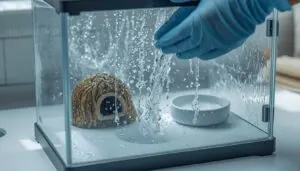
After disinfecting, rinsing is non-negotiable. Use lukewarm water — never cold — to avoid surface condensation. Perform a visual check of the runoff on walls, hides, and bowls until water flows clear with zero suds.
Wipe down with a microfiber cloth, then conduct a quick residue inspection checklist before returning your snake to the enclosure.
Drying The Enclosure During Travel Stops
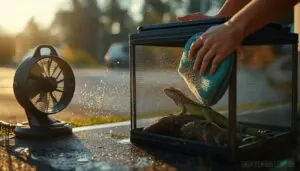
Once rinsing is done, drying needs to move fast — you’re working against the clock at a rest stop. Aim to finish within 15 to 20 minutes. Start with a Microfiber Quick‑Wipe across all surfaces, then use Fan‑Assisted Airflow from a Portable Hand Fan.
Apply the Layered Drying Technique on corners and seams, finishing with a Moisture Spot Inspection before your reptile goes back in.
Ventilation Tips for Enclosed Spaces
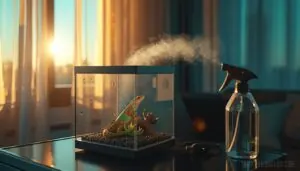
Chemical fumes in a closed car or hotel room build up fast — and that’s a real risk for your reptile. Cross‑Flow Ventilation is your first move: open windows on opposite sides to flush air quickly.
- Aim for Air‑Change Frequency of at least two full cycles per hour
- Use Exhaust‑Fan Placement near exits to pull fumes outward
- Practice Humidity Management — keep levels between 40–60%
- Time Ventilation Timing during cleaning and 10 minutes after
Packing Leak-resistant Cleaners Safely
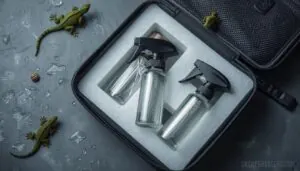
Use temperature-stable containers with gasketed bottle caps, then place each in secondary containment bags to prevent leaks. Surround bottles with absorbent packing inserts to capture drips, and attach leak detection labels for immediate visibility of spills.
Maintain safety by ensuring dilution ratios for reptile cleaning products are clearly written on every bottle—eliminating guesswork during travel.
This structured approach minimizes chemical hazards and ensures preparedness on the go.
Travel Cleaning Mistakes to Avoid
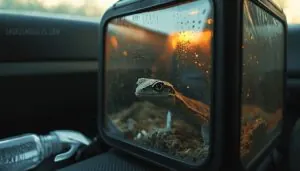
Even the best cleaning routine can go sideways when you’re traveling, putting your reptile at real risk. Small spaces like cars and hotel rooms make the wrong products or approaches more dangerous than they would be at home.
Here’s what to watch out for before reaching for that spray bottle.
Using Bleach or Ammonia in Small Spaces
Bleach solutions and ammonia-based cleaners are a hard no for travel setups. Mixed together, they trigger toxic gas formation that lingers for hours — a serious air quality risk in enclosed spaces like hotel rooms or cars.
Bleach and ammonia don’t just clean badly in small spaces — they create toxic gas that endangers your reptile for hours
Even when used separately, their fumes harm your reptile’s respiratory system. Always prioritize reptile-safe alternatives with verified dilution ratios. Wear protective gear, ensure proper ventilation, and avoid confined areas during use.
If exposure occurs, emergency response means fresh air immediately. Move the reptile to a well-ventilated space and monitor for distress.
Spraying Around The Reptile Directly
Never spray cleaners while your reptile is still inside the enclosure. Direct misting causes Misting Humidity Shock, sudden stress behaviors like hissing or rapid retreating, and Respiratory Distress Potential from inhaled chemicals. Additional risks include Skin Absorption Hazard and Eye Irritation Risk.
Always move your reptile out first — no exceptions, no shortcuts.
Leaving Wet Residue in The Enclosure
Removing your reptile is just step one. What you do after spraying matters just as much. Wet cleaning that leaves chemical residues behind is a real hazard.
Within 24–48 hours, damp surfaces in a travel enclosure trigger mold proliferation, sticky film buildup, and metal corrosion on hardware. These conditions also drive dust attraction, compounding risks.
Respiratory irritation follows fast in confined spaces — don’t rush the dry time.
Ignoring Label Directions and Dilution Ratios
Labels aren’t just legal formalities — they’re your safety roadmap. Dilution mistakes cut both ways: excess concentration releases fumes that irritate eyes and airways in confined spaces, while insufficient dilution leaves pathogens alive on surfaces.
Misreading units like mL versus L causes real dosing errors. Follow manufacturers’ instructions exactly, apply proper dilution and ventilation guidelines, and your chemical safety risk drops considerably.
Choosing Heavily Scented Household Cleaners
That same attention to dilution applies to what you pick off the shelf. Heavily scented household cleaners are a real trap — fragrance toxicity is a genuine concern because those "fresh linen" or "citrus burst" blends often mask chemical odors without neutralizing them.
Reptiles are far more vulnerable to respiratory irritation than we are, and allergen sensitivity in small travel spaces compounds the risk quickly.
Overcleaning Delicate Travel Enclosure Materials
Even the safest cleaners can quietly damage your travel enclosure when used too often. Material crazing, surface fogging, and plasticizer leaching happen gradually — you won’t notice until the damage is done.
- Repeated cleaning causes abrasion damage on acrylic panels
- Thermal swelling weakens seals in warm travel conditions
- Overcleaning strips protective finishes, increasing odor retention
Spot cleaning versus deep cleaning in reptile husbandry makes all the difference — choose reptile-safe cleaning methods and space out your routine accordingly.
Returning The Snake Too Soon After Cleaning
Rushing the rehousing timeline is one of the easiest ways to undo an otherwise solid cleaning routine. Wait at least 24 hours before returning your snake — insufficient drying can leave residue exposure that triggers respiratory irritation and stress behaviors.
Pathogen control means nothing if the enclosure isn’t fully safe. Insufficient drying leaves residue exposure, risking harm despite disinfection efforts.
Ventilate well, confirm zero moisture, and follow disinfection protocols with safe cleaning solutions for real reptile health protection. Safe cleaning solutions are essential to ensure genuine protection.
Frequently Asked Questions (FAQs)
Is Dawn dish soap safe for snake enclosure?
Dawn isn’t designed for snake enclosures. Its soap surfactant toxicity poses real ingestion risks when residue lingers on surfaces, and repeated skin contact causes irritation.
Stick to safe cleaning alternatives made specifically for reptile health.
How often should travel enclosures be fully disinfected?
Skip a cleaning once, and you’re gambling with your reptile’s health. Disinfect after every trip, after any spill-triggered cleaning event, and always before re-housing following an illness quarantine protocol.
Can cleaning sprays harm reptile eggs or hatchlings?
Yes, they can. Egg exposure to residue or hatchling inhalation of fumes from thermal volatilization, substrate contamination, or material incompatibility can cause serious harm.
Always clean thoroughly, rinse completely, and dry fully first to prevent such risks.
Are travel sprays safe for humidity-sensitive species?
Humidity-sensitive species face higher risk from mist inhalation and skin irritation. Residues linger longer in moist enclosures due to temperature-humidity interaction and seal absorption.
Always follow safety guidelines and choose rinse-required, fragrance-free formulas.
Do cleaning sprays affect beneficial enclosure bacteria?
Yes — most cleaning sprays do disrupt beneficial bacteria. Antimicrobial agents cause biofilm disruption, and aerosol exposure spreads residue inhibition beyond wiped zones, delaying recovery timeline for bioactive enclosures.
Which pathogens do travel sprays actually eliminate?
Most travel sprays manage bacterial reduction and viral inactivation well. Quaternary action targets Staph and Enterobacter, while alcohol’s efficacy manages enveloped viruses.
Fungal control varies by label. Always check EPA claims before trusting any antimicrobial agents.
Conclusion
Your reptile’s comfort on the road is only as solid as your prep work. The right reptile cleaning sprays for travel enclosures don’t just fight odors—they remove the bacteria that stress your animal before a single mile passes.
Spray smart, rinse thoroughly, and never rush re-entry.
A clean enclosure isn’t just about hygiene; it’s the foundation of a safe, low-stress journey for the animal trusting you to get it right.