This site is supported by our readers. We may earn a commission, at no cost to you, if you purchase through links.

Most snake keepers don’t realize their hygrometer is lying to them—sometimes by as much as 8%. That margin sounds small until a ball python gets stuck in a bad shed because humidity read 65% when it was actually 57%. The tool measuring your enclosure matters as much as the enclosure itself.
Analog and digital hygrometers work on completely different principles, age differently, and fail in different ways. Choosing between them isn’t about preference—it’s about matching the right instrument to your setup, your budget, and how much precision your animals actually need.
Table Of Contents
- Key Takeaways
- What a Hygrometer Measures
- How Analog Hygrometers Work
- How Digital Hygrometers Work
- Analog Vs Digital Accuracy
- Calibrating Hygrometers The Right Way
- Price, Power, and Lifespan
- Best Uses for Snake Keepers
- Top 10 Humidity Control Products
- 1. Google Nest Learning Thermostat 4th Gen
- 2. AEOCKY Smart Energy Star Dehumidifier
- 3. GE 6000 BTU Window Air Conditioner
- 4. Coway Airmega True HEPA Air Purifier
- 5. EconoHome Infrared Fanless Wall Heater
- 6. HEPA Air Purifier with Turbo Mode
- 7. MAGZO Magnetic Thermal Insulated Door Curtain
- 8. Kasa Mini Smart Plug HomeKit
- 9. Frost King Indoor Shrink Window Film
- 10. Levoit Small Room Air Purifier
- How to Choose Your Hygrometer
- Frequently Asked Questions (FAQs)
- Do analog hygrometers need batteries?
- Are inexpensive hygrometers accurate?
- Should I use analog or digital?
- Can hygrometers measure humidity in outdoor environments?
- Do hygrometers affect the humidity they measure?
- Are wireless hygrometers more accurate than wired ones?
- Can extreme cold damage a hygrometers accuracy?
- How do I store a hygrometer when not in use?
- Conclusion
Key Takeaways
- Digital hygrometers hold a clear accuracy edge over analog—±2–3% RH versus ±5–8%—and that gap is wide enough to mean the difference between a clean shed and a stuck one.
- Calibration isn’t optional for either type: analog units need checking every one to three months, while digital models can stretch to quarterly, but skipping it on either means your readings are quietly lying to you.
- Matching the tool to the job matters more than brand loyalty—analog holds up fine in dry, simple setups, while tropical or multi-enclosure racks genuinely need the precision, data logging, and remote alerts that digital delivers.
- Running both types together isn’t overkill; it’s smart redundancy—analog keeps reading through power outages while cross-checking both sensors catches drift before it stresses your animals.
What a Hygrometer Measures

A hygrometer does one job: it tells you how much moisture is floating in the air around your snake. That number matters more than most keepers realize, especially when shedding season rolls around.
Getting the humidity dialed in properly takes some trial and error, but this snake habitat maintenance guide walks you through the sweet spots for different species.
Here’s what you need to understand before picking a gauge.
Relative Humidity Vs Absolute Humidity
Not all humidity readings tell the same story. Relative humidity measures vapor pressure against temperature-dependent air capacity — it shifts when temperatures change, even if no moisture moves. Absolute humidity tracks actual moisture load, temperature independence included.
Key differences worth knowing:
- RH rises as temperatures drop — condensation risk spikes
- AH reflects true moisture content regardless of temperature
- Humidity sensor accuracy affects both readings differently
- Mold potential correlates more directly with sustained AH levels
Understanding the trade‑offs is similar to evaluating arbitration versus litigation.
Why Humidity Matters in Snake Enclosures
For snakes, getting humidity wrong isn’t just uncomfortable — it’s a health risk. Too dry, and your snake faces stuck sheds, cracked skin, and respiratory issues from drying nasal passages. Too wet without ventilation, and mold growth becomes a real threat.
Respiratory health, hydration management, and metabolic stability all hinge on stable microclimate zones. Maintaining proper humidity is critical to prevent these dangers and ensure your snake’s well-being.
Species humidity requirements vary widely, making accurate analog vs digital hygrometer tradeoffs worth understanding. Choosing the right tools helps create a tailored environment that meets your snake’s specific needs.
Humidity Targets for Different Habitat Styles
Different species require very different humidity levels.
- Tropical Humidity Range: 70–90% RH — similar to what greenhouses and laboratories maintain for sensitive specimens
- Desert Humidity Range: 20–40% RH — dry conditions, airy like open-air enclosures
- Mixed-Habitat Humidity: 40–60% RH for semi-arid species
- Aquatic Terrarium Moisture: 70–85% RH in closed setups
- Open-Air Enclosure Humidity: 40–60% RH with ventilation-driven humidity control
How Hygrometers Help Prevent Shedding Issues
Once you’ve nailed those species-specific targets, the next step is catching drift before it costs you a shed. Shedding Cycle Monitoring isn’t passive—your hygrometer acts as the early warning system.
Humidity Trend Alerts flag creeping dryness before skin tightens, enabling Rapid Humidity Adjustments to maintain Moisture Stress Reduction. This proactive approach ensures you stay ahead of issues.
That’s the essence of Enclosure Microclimate Mapping: prioritizing prevention over reaction to avoid a stuck shed.
How Analog Hygrometers Work

Analog hygrometers have been around for decades, and their core mechanics remain largely unchanged—a design consistency that is a good thing. This reliability means users can trust in time-tested functionality.
Understanding how these devices operate ensures you know exactly what you’re getting before making a purchase. By examining the key elements that drive analog models, you gain insight into their enduring practicality and performance.
Hygroscopic Coils and Hair Elements
Think of the sensing element as the engine behind every analog hygrometer—no electronics required. Hygroscopic coils and hair elements drive the whole mechanism through pure mechanical principles. Coil geometry directly controls sensitivity, while fiber crosslinking determines how consistently the material responds.
Key characteristics worth knowing:
- Hair tension adjusts with moisture absorption kinetics, expanding slightly in diameter as humidity rises.
- Hysteresis reduction depends on selecting low-drift keratin-based filaments for repeatable readings.
- Temperature sensitivity affects coil response, since heat alters moisture uptake rates noticeably.
Metal coils handle the analog vs. digital divide by translating physical swelling into measurable movement.
Needle-and-dial Readout Basics
Once the hygroscopic element moves, everything else follows mechanical principles of analog hygrometers right up to the dial. Scale graduations mark the arc, and needle friction keeps the needle steady between readings.
You rotate the bezel for zero positioning, then track full sweeps using the revolution counter.
Dial visibility matters most in low-light enclosures—you need to read that needle accurately, without requiring power.
Why Analog Models Need No Batteries
No batteries, no problem — that’s the beauty of passive mechanical sensing. Analog hygrometers run entirely on humidity-driven movement, so energy-free operation isn’t a feature; it’s the whole design.
The zero power design means:
- No battery swaps mid-cycle
- No dead readings during power outages
- No electronic failure points
- Durable mechanical components built to last years
Pure mechanical design. Total power independence.
Main Advantages of Analog Hygrometers
Analog hygrometers bring a kind of rugged simplicity that’s hard to argue with. Battery independence means one fewer thing to manage in your maintenance routine. The mechanical gauge gives you an instant visual cue the moment you glance at the enclosure.
Passive operation keeps long-term reliability intact for years. Low maintenance cost and durability make analog mechanics a smart, no-fuss baseline.
Common Limits of Mechanical Designs
Mechanical design has real limits you can’t ignore. Material fatigue and thermal expansion wear down the hygroscopic hair element over time, shifting internal clearances enough to throw off your readings.
Manufacturing tolerances mean the mechanical gauge ships with up to ±5% RH error straight out of the box.
Space constraints inside tight enclosures can restrict airflow to the sensor, compounding drift.
Regular calibration is non-negotiable.
How Digital Hygrometers Work
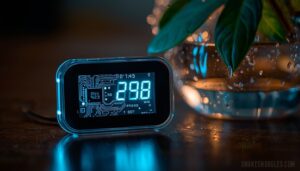
Digital hygrometers work differently from their mechanical counterparts — they rely on electronic sensors and a small microprocessor to detect and display humidity. Understanding what’s happening inside the unit helps you trust the reading and know when something’s off.
Here is a closer look at how each part does its job.
Capacitive and Resistive Humidity Sensors
Digital hygrometers rely on two core sensor types—capacitive and resistive—and understanding their differences is crucial for interpreting enclosure data accurately. Here’s a breakdown of their distinguishing features:
- Capacitive sensors use dielectric materials that absorb moisture, shifting capacitance as humidity climbs.
- Resistive sensors track changes in conductivity through a hygroscopic film between interdigital electrodes.
- Electrode geometry directly influences sensor accuracy and response time.
- Hysteresis effects are lower in capacitive designs, resulting in fewer lag-related misreadings.
- Capacitive sensor technology generally outperforms resistive options in analog versus digital precision comparisons.
Temperature Compensation and Microprocessors
Once your sensor detects moisture, a microprocessor takes over—and that’s where digital hygrometers pull ahead. On-chip sensors apply temperature compensation in real time, using temperature-dependent biasing and calibration drift correction to maintain accurate readings. This ensures quiet precision working constantly behind the scenes.
Multi-zone thermal mapping prevents hotspots from skewing data, addressing potential distortions caused by uneven heat distribution. Without such measures, localized overheating could compromise measurement integrity.
Without continuous thermal throttling inside the chip, the accuracy gap between analog and digital devices would narrow significantly. This internal regulation is critical for sustaining the performance edge of digital hygrometers.
Numeric Displays and Easier Reading
All that processing power shows up right where it counts — the digital display. Large font digits with high contrast colors ensure humidity readings are easy to catch at a glance, even in low-light conditions. The adjustable backlight maintains visibility without washing out the screen.
Iconic status indicators instantly flag out-of-range levels, while the overall ease of use eliminates the need to squint at an analog dial.
Main Advantages of Digital Hygrometers
Digital hygrometers give you instant alerts when humidity drifts outside your customizable thresholds, so you’re never caught off guard.
Data logging builds a record you can actually use.
Wireless syncing, smartphone apps, and cloud integration make remote alerts practical.
Smart-home automation ensures your enclosure practically runs itself.
Common Drawbacks of Electronic Models
Those smart features come at a cost, though. Battery life becomes a real maintenance consideration — expect replacements every 6–12 months. And humidity sensor drift is genuine; readings can quietly shift without warning.
Watch for these common drawbacks:
- Power draw shortens battery life faster in high-humidity enclosures
- Calibration complexity increases with wireless interference affecting sensor accuracy
- Component overheating can corrupt readings in warm setups
- Firmware updates occasionally reset calibration settings
- Electronic waste disposal adds long-term ownership costs
Analog Vs Digital Accuracy

Accuracy is where the real gap between analog and digital hygrometers shows up. A few percentage points might not sound like much, but inside a snake enclosure, that margin can mean the difference between a clean shed and a stuck one.
Here’s what you need to know about how these two types actually compare.
Typical Accuracy Ranges for Each Type
Accuracy isn’t just a spec sheet number — it’s the difference between a thriving snake and a stressed one. Analog units usually land within ±5–8% RH across the full range, while digital capacitive sensors hit ±2–3% RH in midrange tolerance zones. Temperature compensation further tightens digital sensor precision bands.
Analog hygrometers drift within ±5–8% RH, while quality digital sensors hold to ±2–3% — a gap that separates thriving snakes from stressed ones
| Type | Midrange Accuracy | Extreme Humidity Error |
|---|---|---|
| Analog | ±5–8% RH | ±10% RH |
| Digital (budget) | ±5–7% RH | ±7% RH |
| Digital (quality) | ±1–2% RH | ±3–5% RH |
In analog vs. digital accuracy comparisons, digital wins on measurement precision every time.
Sensor Drift Over Time
Even a well-calibrated hygrometer drifts—and analog vs digital models age differently. Over time, Temperature Drift, Component Aging, and Environmental Exposure degrade baseline readings. These factors collectively undermine accuracy, requiring ongoing attention to maintain reliability.
Population Variability ensures identical units drift at different rates. While Drift compensation and Predictive Maintenance offer partial solutions, adherence to Calibration Frequency Guidelines remains critical. Regular recalibration counters gradual inaccuracies before they escalate.
Recommended calibration intervals are outlined below, reflecting the distinct aging patterns of analog and digital systems:
| Drift Factor | Analog Impact | Digital Impact |
|---|---|---|
| Temperature Drift | Coil distortion | Baseline shift |
| Component Aging | Gear/hair wear | Capacitor drift |
| Calibration Frequency | Every 1–3 months | Quarterly |
Proactive calibration prevents humidity drift from quietly harming your snake, safeguarding both equipment and environments.
Response Speed to Humidity Changes
When humidity shifts inside an enclosure, not every hygrometer keeps pace. Digital sensors—especially thin-film capacitive types—respond rapidly, often in 2–10 seconds, due to Material Porosity and minimal Sensor Layer Thickness. In contrast, analog coils exhibit noticeable delays, requiring 30–60+ seconds to stabilize.
Factors like Airflow Effects and Temperature Influence further shape these disparities. Digital sensors integrate built-in Temperature Compensation, ensuring accuracy across varying conditions, while analog variants lack such adjustments.
| Factor | Analog | Digital |
|---|---|---|
| Response Time | 30–60+ seconds | 2–10 seconds |
| Temperature Compensation | None | Built-in |
Readability and Precision Differences
Reading analog dials presents challenges like estimation bias and parallax distortion, which can skew readings by 2–3% RH depending on viewing angle. Squinting between tick marks introduces uncertainty, making precise measurements difficult.
Digital models resolve these issues entirely, offering decimal precision (e.g., 47.3% RH) and eliminating distortion. Features like backlit displays further enhance clarity in low-light conditions, ensuring accurate interpretation.
| Feature | Analog | Digital |
|---|---|---|
| Readout Format | Needle on dial | Numeric display |
| Parallax Distortion | Yes | None |
| Decimal Precision | No | Yes |
| Backlit Clarity | No | Yes |
Why Small Errors Matter in Enclosures
A 5% variance sounds minor until you realize it can double your condensation risk during temperature swings. That kind of cumulative error quietly destabilizes the microclimate your snake depends on.
Humidity drift causes animal stress, triggers unnecessary control actions, and wastes energy correcting problems that didn’t need fixing.
| Error Type | Real Enclosure Impact |
|---|---|
| 5% variance | Doubles condensation risk |
| 2–3% humidity drift | Microclimate instability |
| Cumulative error | Animal stress, poor sheds |
| 1–2% margin of error | Energy waste, over-correction |
Calibrating Hygrometers The Right Way
A hygrometer is only as reliable as its last calibration — even a great sensor drifts if you ignore it.
Getting this right isn’t complicated, but skipping it means your readings could be lying to you the whole time. Here’s what you need to know to keep yours accurate.
Salt Test Calibration Method

The salt test is the definitive method for calibrating hygrometers using the salt test method — simple, cheap, and surprisingly reliable. Here’s how to do it right:
- Solution preparation: Dissolve table salt in distilled water until crystals remain at the bottom.
- Sealed chamber: Place your hygrometer inside without letting it touch the liquid.
- Equilibration period: Wait 6–12 hours minimum for the reading to stabilize near 75% RH.
- Temperature control: Keep the chamber at a steady 20°C — even a 1°C shift affects your reference point.
- Calibration log: Record the date, target RH, actual reading, and any offset applied.
This comparison between digital and analog hygrometers is relevant here — both benefit equally from this process.
How Often Analog Units Need Calibration

Once your salt test confirms a baseline, the real question is how long that baseline holds. For analog hygrometers, plan a seasonal calibration schedule—every three months in high-humidity enclosures, every six months in stable rooms.
Temperature swing checks matter too; a sharp thermal shift resets your drift. Dust-driven recalibration applies if your enclosure gets dusty fast.
Set calibration reminder systems so nothing slips.
How Often Digital Units Need Calibration

Digital hygrometers hold their readings longer, but do not skip your calibration schedule. Most units require sensor calibration every six months—adjust this to every three months in high-humidity enclosures. Environmental drift happens faster than expected, so adhere to these intervals to maintain accuracy.
Maintain a log documenting dates and offset adjustments. This record is critical for tracking consistency and ensuring reliability over time.
Compliance intervals matter if you operate a research or breeding facility. Consistent sensor scheduling protects your animals by safeguarding environmental conditions. Prioritize these practices to avoid regulatory risks and maintain habitat integrity.
Placement Mistakes That Skew Readings

Even a perfectly calibrated sensor gives you bad data if it’s in the wrong spot. Top shelf bias is real — warm air pockets push readings several points higher than actual enclosure averages.
Direct light effect skews numbers fast. Airflow obstruction behind décor stagnates readings.
Water source proximity causes transient spikes.
Sensor height variance, humidity gradients, and environmental factors affecting sensor performance all compound placement and reading skew.
Signs Your Hygrometer is Inaccurate
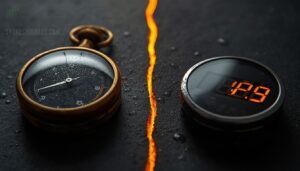
Bad placement skews readings — but a faulty sensor makes things worse. Watch for cross-meter variance above 5 percentage points between side-by-side units, slow sensor response during humidity fluctuations, or rapid reading spikes that don’t settle.
Condensation inside the housing, humidity drift after calibration, and battery low drift on digital models all signal sensor drift you can’t ignore.
Price, Power, and Lifespan

Once you move past accuracy and calibration, the next question is pretty practical: what does it actually cost to own one of these things long-term? Price is just the starting point — power needs, upkeep, and how long the unit holds up all factor into the real value.
Here’s how analog and digital hygrometers stack up in each category.
Upfront Cost Comparison
Analog units are the low-cost instrument option — usually under $20, with minimal Sensor Component costs and no Display Technology pricing or Power Requirement expenses.
Digital models start around $10–$25 for basic versions, climbing to $120-plus for high-accuracy instruments.
Factoring in Packaging Accessories fees and Calibration Kit pricing clarifies the cost versus accuracy tradeoff in hygrometers.
Battery Needs for Digital Hygrometers
Running on batteries means planning ahead. For battery considerations for digital hygrometers, here’s what to keep in mind:
- Battery Type Compatibility — Most units use AA, AAA, or coin cells
- Low-Power Modes — Enable these to optimize battery life
- Battery Replacement Indicators — Don’t ignore low-battery alerts
- Battery Replacement Schedule — Plan for every 6–12 months
Maintenance Needs for Analog Models
Keeping an analog hygrometer reliable is mostly about staying consistent. Regular upkeep prevents minor issues from compounding into major inaccuracies.
Dust removal from the coil and dial prevents needle friction that skews readings, while seal inspection every few months catches humidity ingress before it disrupts internal calibration. These routine checks form the foundation of short-term reliability.
Coil aging represents the primary long-term concern, as hygroscopic elements gradually lose sensitivity over time. This degradation necessitates periodic reassessment to maintain accuracy.
| Maintenance Task | Service Interval |
|---|---|
| Dust removal | Monthly |
| Seal inspection | Quarterly |
| Calibration check | Every 1–3 months |
| Full coil assessment | Annually |
Durability in High-humidity Environments
High humidity is where the differences really show. Analog hygrometers, built around corrosion-resistant materials and simple mechanical parts, handle extreme conditions without flinching — no circuit boards to corrode, no sensors needing moisture shielding.
Digital units rely on sealed enclosure design, protective coating performance, and humidity-proof fasteners to survive. Weakening any of these defenses allows environmental factors to start degrading sensor performance fast.
Long-term Value and Replacement Costs
Think long-term, and the numbers tell a clear story. Your total cost of ownership goes beyond the sticker price. Here’s what shapes your replacement budget planning over time:
- Analog units last a decade-plus with minimal upkeep.
- Digital battery replacement schedule adds $5–10 annually.
- Lifecycle cost analysis favors analog for low-maintenance setups.
- Salvage value impact is negligible on both types.
- Long-term cost savings with accurate humidity measurement justify digital in precision enclosures.
Best Uses for Snake Keepers

Picking the right hygrometer comes down to what your snake actually needs — and that changes a lot depending on the setup. A ball python’s humid hide is a completely different challenge from a sand boa’s dry burrow.
Here’s how each type holds up across the most common snake-keeping scenarios.
Analog Hygrometers for Simple Setups
If your snake’s enclosure is straightforward — a basic ball python setup, a corn snake tub, nothing fancy — an analog hygrometer does the job without complication. Its passive sensing and durable mechanics mean no batteries, no software, and no fuss.
The compact footprint fits neatly inside smaller enclosures, and aesthetic integration is simple.
Easy recalibration keeps it reliable, and passive operation ensures durability and power independence of analog hygrometers long-term.
Digital Hygrometers for Precise Monitoring
Digital hygrometers excel when precision is non-negotiable. Their high-tech features—such as data logging, Bluetooth connectivity, and remote alerts—deliver accuracy in labs and storage environments that analog tools cannot achieve.
Cloud logging enables trend analysis over time, while dew point calculation proactively identifies condensation risks. Firmware updates ensure sensors maintain calibration, preserving long-term reliability.
Multi-zone monitoring allows simultaneous oversight of every critical area, ensuring comprehensive environmental control without blind spots.
Best Choice for Tropical Snake Enclosures
Tropical species demand tight temperature humidity pairing — usually 75–90% RH — where a ±5% swing can stress shedding cycles. Digital hygrometers excel here, providing humidity accuracy, ventilation and integration readings, and redundant monitoring across substrate moisture management zones, keeping you ahead of drift.
Pairing these with power backup solutions ensures coverage when conditions shift rapidly.
Best Choice for Arid Snake Enclosures
Arid setups flip the script entirely. When your target range is 25–40% RH, analog hygrometers hold their ground — the tolerance gap matters less at lower humidity levels. Their budget-friendly price, minimal maintenance, and durability make them practical for desert enclosures.
Digital hygrometers win on humidity accuracy and microclimate placement, especially with low-power devices supporting remote monitoring across multiple heat-resistant design zones.
Using Multiple Hygrometers in Large Habitats
Large enclosures demand more than a single sensor. Deploy a grid placement strategy — at least four to six units per 100 square meters — using vertical sensor layers at both floor and canopy height to map real humidity gradients.
Mix analog and digital for data fusion techniques and redundancy planning.
Calibration synchronization across all units before installation keeps your multi-zone humidity management consistent and reliable.
Top 10 Humidity Control Products
Getting the right humidity means more than just measuring it — you need the tools to actually control it.
These products cover everything from smart thermostats to insulated door curtains, giving you real options at different price points and use cases.
Here are ten worth knowing about.
1. Google Nest Learning Thermostat 4th Gen
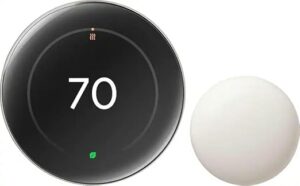
The Google Nest Learning Thermostat 4th Gen isn’t just a thermostat — it’s a climate command center. It learns your schedule and adjusts automatically, ensuring less manual fiddling and more consistent conditions. The built-in humidity sensor pairs with real-time weather data to maintain a stable indoor environment.
This device offers remote control via the Google Home app, empowering users to manage settings from anywhere. It also delivers energy savings averaging around 12–15% on heating and cooling costs.
For serious keepers who prioritize total environmental control, this thermostat represents a genuinely smart investment.
| Best For | Homeowners who want a hands-off, energy-efficient thermostat that learns their routine and plays nicely with Alexa, Siri, or Google Assistant. |
|---|---|
| Coverage Area | Whole home (HVAC) |
| Noise Level | Not specified |
| Power Source | 24V AC |
| Energy Efficiency | ~12–15% bill savings |
| Smart/Auto Control | AI adaptive scheduling |
| Safety Features | C-wire protection |
| Additional Features |
|
- Learns your schedule and adjusts on its own — no constant tweaking needed.
- Saves around 12–15% on heating and cooling bills through smart, adaptive scheduling.
- Works with most 24V HVAC systems and typically doesn’t need a C-wire for installation.
- Needs a stable Wi-Fi connection and a Google account for full functionality.
- Won’t work with high-voltage or proprietary HVAC systems.
- Non-retail packaging may be missing mounting hardware or protective accessories.
2. AEOCKY Smart Energy Star Dehumidifier
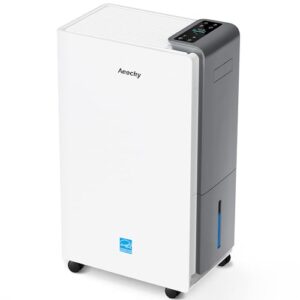
The AEOCKY Smart Energy Star Dehumidifier handles large enclosure rooms up to 4,500 square feet, removing 80 pints of moisture daily under peak conditions.
Its built-in humidistat maintains indoor RH within 1–2% of your target, critical for managing humid tropical environments.
Operating at just 44 dB, it ensures quiet performance without disturbing animals.
Convenience features include a continuous drain option to reduce maintenance and power-off memory to retain settings after outages.
| Best For | Homeowners, basement dwellers, or anyone dealing with serious moisture problems in large spaces up to 4,500 sq ft who want a quiet, energy-efficient unit that basically runs itself. |
|---|---|
| Coverage Area | 4500 sq ft |
| Noise Level | 44 dB (min) |
| Power Source | 120V AC |
| Energy Efficiency | ENERGY STAR Most Efficient 2025 |
| Smart/Auto Control | Smart humidistat |
| Safety Features | Defrost sensors |
| Additional Features |
|
- Pulls up to 80 pints of moisture a day and covers huge spaces, so it actually keeps up in humid conditions without breaking a sweat.
- At 44 dB on the lowest setting, it’s quiet enough to run in a bedroom or living room without being annoying.
- The continuous drain option and power-off memory mean you’re not babysitting it — set it and forget it.
- The water tank capacity isn’t listed, so without a drain hose connected, you could be emptying it every 8–12 hours under heavy load.
- It’s a premium product with a premium price tag, which might be hard to justify if your moisture issues are minor.
- A few early users noticed the humidity readings were slightly off at first, so give it a little time to dial itself in.
3. GE 6000 BTU Window Air Conditioner
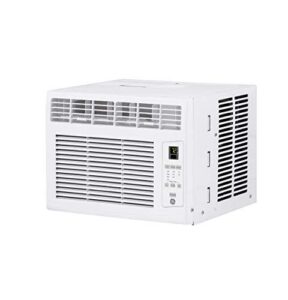
When room temperature climbs, humidity control gets harder — and that’s where the GE 6000 BTU Window Air Conditioner earns its place. It cools spaces up to 250 square feet while pulling moisture out of the air simultaneously, helping stabilize room humidity during warm months.
Installation fits standard double-hung windows without professional help. Three fan speeds, a 24-hour timer, and an energy-saver mode give you real control.
At roughly 55–61 dBA, it’s noticeable but manageable for most keeper setups.
| Best For | Small room owners — think bedrooms, guest rooms, or home offices up to 250 sq ft — who want a quiet, easy-to-install AC without a big electricity bill. |
|---|---|
| Coverage Area | 250 sq ft |
| Noise Level | 55–61 dBA |
| Power Source | 120V AC |
| Energy Efficiency | Energy Saver mode |
| Smart/Auto Control | 24-hr timer |
| Safety Features | Auto restart |
| Additional Features |
|
- Simple DIY install fits most standard double-hung windows, no professional needed
- Remote control and 24-hour timer let you set it and forget it
- Energy-saver mode keeps power draw low, which adds up over a whole summer
- Struggles in larger spaces or when it’s really hot outside (90°F)
- Thermostat can run inaccurate, so the room may get colder than you actually set it
- Some users have reported the unit failing after just 6–12 months of regular use
4. Coway Airmega True HEPA Air Purifier
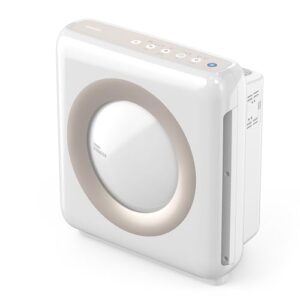
Air quality and humidity go hand in hand—and the Coway Airmega True HEPA Air Purifier manages air quality seriously. Its four-stage filtration captures 99.97% of particles down to 0.3 microns, including dust, pollen, and smoke. Auto mode adjusts fan speed based on real-time sensor data, eliminating the need for constant monitoring. Coverage extends up to 361 square feet, while Eco mode ensures energy efficiency during prolonged use.
For keepers managing enclosure rooms, cleaner air translates to more stable overall conditions. This reliability supports both animal health and environmental consistency in controlled spaces.
| Best For | People dealing with allergies, asthma, or wildfire smoke — and anyone who wants reliable, mostly hands-off air purification for a medium-sized room. |
|---|---|
| Coverage Area | 361 sq ft |
| Noise Level | 24.4–53.8 dB |
| Power Source | 120V AC |
| Energy Efficiency | ENERGY STAR certified |
| Smart/Auto Control | Auto sensor mode |
| Safety Features | Filter-life indicator |
| Additional Features |
|
- Four-stage filtration (including True HEPA) catches 99.97% of particles, so dust, pollen, and smoke don’t stand a chance.
- Auto and Eco modes do the thinking for you — the fan adjusts itself, then backs off when the air is already clean.
- Quiet enough at low speed to run in a bedroom all night without bothering anyone.
- Some users see filter-change alerts as early as two months in, well ahead of the six-month estimate.
- At full speed, it gets loud — roughly as noisy as a window AC unit, which isn’t great in quiet spaces.
- The coverage area is a bit murky (247 vs. 361 sq ft depending on where you look), and app control only comes with the pricier HHS model.
5. EconoHome Infrared Fanless Wall Heater
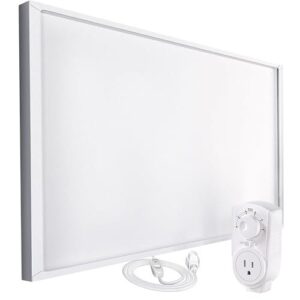
Stable heat means stable humidity — and the EconoHome Infrared Fanless Wall Heater delivers both without disrupting your enclosure’s room air. Its fanless infrared design warms objects directly rather than cycling air, preventing humidity spikes from airflow disturbance.
The slim, wall-mounted panel stays out of the way, while silent operation keeps stress levels low for sensitive animals.
With built-in overheat protection and a plug-in thermostat included, you get controlled, consistent supplemental heat right out of the box.
| Best For | Reptile and exotic pet owners who need quiet, consistent supplemental heat in small-to-medium enclosure rooms without disrupting humidity or air circulation. |
|---|---|
| Coverage Area | Small/medium rooms |
| Noise Level | Silent (fanless) |
| Power Source | 120V AC |
| Energy Efficiency | 250–600W rated |
| Smart/Auto Control | Plug-in thermostat |
| Safety Features | Overheat protection |
| Additional Features |
|
- Fanless infrared heating keeps air still, so humidity stays steady — great for humidity-sensitive animals
- Silent operation means no stress for light-sleeping pets (or their owners)
- Slim, wall-mounted design saves floor space and blends right into the room
- The frame gets hot during use, so you’ll need to keep it clear of curious animals, kids, or anything flammable
- There’s a confusing watt discrepancy (600 W vs. 250 W) that makes it hard to know the real heat output
- Not powerful enough to heat larger open spaces on its own — think of it as a supplement, not a primary heat source
6. HEPA Air Purifier with Turbo Mode
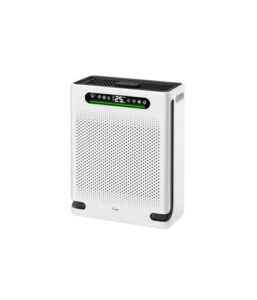
Airborne particles don’t just affect human lungs — they can settle into enclosures and compromises the air quality your animals breathe. This HEPA Air Purifier with Turbo Mode addresses that directly.
Its true HEPA filter captures 99.97% of particles at 0.3 microns, while the activated carbon layer neutralizes odors and VOCs.
Pair it with one of the best thermostats for allergies to manage humidity and automate cleaner air circulation.
Turbo mode ramps up fan speed fast when the PM2.5 sensor detects a spike, then backs off automatically. Sleep mode drops noise to around 20 dB, so nearby reptiles won’t stress.
| Best For | Pet owners and allergy sufferers who want quiet, effective air purification without needing smart home features. |
|---|---|
| Coverage Area | 2600 sq ft |
| Noise Level | 20 dB (min) |
| Power Source | 120V AC |
| Energy Efficiency | Not specified |
| Smart/Auto Control | Auto PM2.5 mode |
| Safety Features | Filter indicator |
| Additional Features |
|
- Turbo Pet Mode tackles pet hair, dander, and odors fast, and the PM2.5 sensor adjusts fan speed automatically so you’re not constantly fiddling with settings.
- Sleep Mode runs at around 20 dB with indicator lights off after 3 seconds — genuinely quiet enough for bedrooms or nurseries.
- The washable pre-filter catches the big stuff (dust, hair, dander) and helps your main HEPA filter last longer, which saves money over time.
- No Wi-Fi or app control — everything runs through onboard buttons, so don’t expect smart home integration.
- Some users report the filter replacement indicator staying red even after a fresh filter swap, which points to a possible sensor or firmware issue.
- The 2,600 sq ft coverage claim is for open floor plans — in a typical multi-room home, one unit probably won’t cut it.
7. MAGZO Magnetic Thermal Insulated Door Curtain
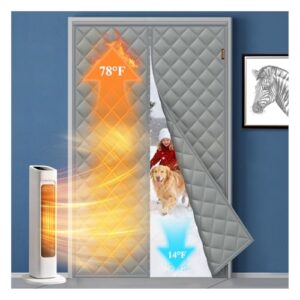
Keeping humidity stable starts at the room level — and that means sealing gaps where climate-controlled air escapes. The MAGZO Magnetic Thermal Insulated Door Curtain achieves this without drills or contractors.
Its triple-layer Oxford fabric construction blocks drafts, moisture, and ambient temperature swings that disrupt enclosure readings. The magnetic center seam automatically reseals after use, preventing gaps when entering or exiting. At 34″ × 82″, it fits most standard doorways and installs via adhesive Velcro in minutes.
| Best For | Anyone who wants a quick, tool-free way to cut drafts and keep a room’s temperature and humidity more stable — especially renters who can’t drill into walls. |
|---|---|
| Coverage Area | Single door |
| Noise Level | Silent |
| Power Source | N/A |
| Energy Efficiency | Reduces HVAC costs |
| Smart/Auto Control | No automation |
| Safety Features | Magnetic auto-seal |
| Additional Features |
|
- The magnetic center seam snaps shut automatically, so you’re not constantly losing heat or cool air through a gap you forgot to close.
- Triple-layer Oxford fabric pulls double duty — it blocks drafts and moisture while also dampening outside noise.
- Velcro install takes minutes and needs zero tools, which is a big deal if you’re renting or just hate home improvement projects.
- The adhesive tape can peel paint or wall finish if you need to reposition it, so measure carefully before you commit.
- Tall people and anyone moving large items through the door may find the magnetic seal a bit of a wrestle to get past.
- At least one buyer got a curtain missing the cotton insulating layer entirely, so quality control isn’t perfectly consistent.
8. Kasa Mini Smart Plug HomeKit
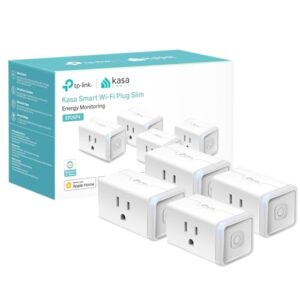
Once your door is sealed, the next piece is automating what’s inside. The Kasa Mini Smart Plug brings scheduling and remote control to any humidifier or misting system you’re running. It handles up to 15A and 1800W, so it won’t flinch under load.
You can set timers through the Kasa app or use voice commands via Alexa, Google, or Siri. HomeKit is also compatible, though you’ll want a hub nearby for reliable performance.
At $42.99, it’s a practical upgrade for automation.
| Best For | Anyone running humidifiers or smart appliances in a grow tent who wants easy scheduling and voice control across Alexa, Google, and Apple HomeKit. |
|---|---|
| Coverage Area | Single outlet |
| Noise Level | Silent |
| Power Source | 120V AC |
| Energy Efficiency | 15A / 1800W max |
| Smart/Auto Control | App + voice control |
| Safety Features | UL certified housing |
| Additional Features |
|
- Works with all the major voice assistants — Alexa, Google, and Siri — so it fits whatever ecosystem you’re already in
- Tracks real-time energy usage, so you can see exactly how much power your humidifier or misting system is pulling
- Compact size keeps the outlet next to it free, which matters in tight spaces
- HomeKit can be flaky without a HomePod or Apple TV hub nearby — expect "No Response" errors if you skip that
- 2.4 GHz Wi-Fi only, so if your router pushes 5 GHz by default, you’ll need to dig into your settings before setup
- Energy monitoring data stays inside the Kasa app and never shows up in Apple Home, which is frustrating if you live in that ecosystem
9. Frost King Indoor Shrink Window Film
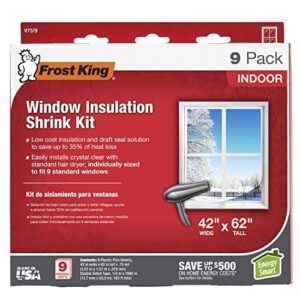
Sealing air leaks is one of the fastest ways to stabilize indoor humidity, and Frost King’s Indoor Shrink Window Film addresses this at the window level. The product targets drafts that disrupt indoor humidity balance before they reach your space.
Each kit includes nine 42×62-inch sheets designed to shrink tight with a standard hair dryer, requiring no special tools. The double-sided tape ensures secure bonding to metal, vinyl, or painted wood frames, making installation straightforward.
At under $20, the solution effectively cuts heat loss and stops cold drafts, providing an affordable way to maintain comfort and humidity control.
| Best For | Homeowners with drafty single-pane or older windows who want a cheap, easy DIY fix before winter hits. |
|---|---|
| Coverage Area | Single window |
| Noise Level | Silent |
| Power Source | N/A |
| Energy Efficiency | Reduces heat loss |
| Smart/Auto Control | No automation |
| Safety Features | Seasonal removal |
| Additional Features |
|
- Nine generously sized sheets cover most standard windows, and a hair dryer is all you need to get a smooth, tight seal.
- Keeps cold air out while still letting light through — no dark, bulky look.
- Super affordable at under $20, so it’s easy to do the whole house without breaking the bank.
- The adhesive tape can lose its grip in extreme cold or after sun exposure, so you might need to reinforce it with painter’s tape.
- Creases and fold lines from the packaging can be hard to get rid of and may leave the film looking a little rough around the edges.
- Big or high windows are tricky to tackle solo — the tape tends to sag, and pulling it off carelessly can take paint with it.
10. Levoit Small Room Air Purifier
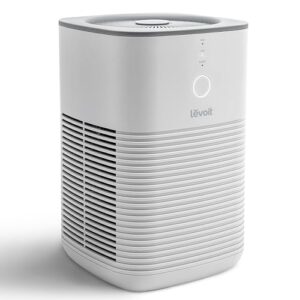
After tightening air leaks, the next step is addressing existing air quality. The Levoit Core Mini efficiently manages this in small spaces (up to 47 square feet) using a three-stage filtration system with a true HEPA filter that captures particles as small as 0.3 microns.
Its operation is exceptionally quiet, running at just 27 dB in sleep mode, and energy-efficient, drawing only 10 watts. This makes it ideal for desktop or small room use, offering targeted air quality control without noise or complexity.
Ultimately, it delivers efficient, reliable performance for compact environments.
| Best For | Anyone in a small bedroom or home office who wants cleaner air without the noise, bulk, or tech fuss. |
|---|---|
| Coverage Area | 47 sq ft |
| Noise Level | 27–44 dB |
| Power Source | 100–240V AC |
| Energy Efficiency | 10W rated power |
| Smart/Auto Control | Manual one-button |
| Safety Features | Filter-status LED |
| Additional Features |
|
- True HEPA filtration catches particles down to 0.3 microns — great for allergy and asthma sufferers
- Whisper-quiet at 27 dB in sleep mode, so it won’t disrupt rest or focus
- Compact and lightweight at 3.3 lbs, easy to move wherever you need it most
- Coverage tops out at 47 sq ft, so it won’t cut it for larger rooms
- No smart features or app control — everything is manual, one button only
- Some users report premature filter-change alerts and limited effectiveness on larger pet hair
How to Choose Your Hygrometer
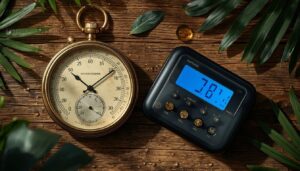
Picking the right hygrometer comes down to a few practical factors — your budget, how precise your readings need to be, and what your enclosure actually demands. There’s no single right answer, but once you know what to weigh, the choice gets a lot cleaner.
Before you buy, focus on these critical considerations: what to keep in mind to ensure your selection aligns with your specific needs.
Budget Vs Accuracy Priorities
Your purchase price tells only half the story. Analog units run $10–$30 with no battery costs, but their ±5% accuracy tolerance can mask real humidity swings. Digital models cost $20–$60, with better performance payoff at ±1–2% RH.
For snake keepers, that cost versus accuracy tradeoff in hygrometers is straightforward — a high-accuracy instrument justifies the budget when your animal’s shed cycle depends on it.
Matching Features to Enclosure Needs
Not every enclosure needs the same tool. Match your hygrometer’s feature set to what your setup actually demands.
- Target humidity band: Tight tropical ranges (75–90%) need ±1–2% accuracy — digital wins here.
- Fast response needs: Digital sensors update in 2–8 seconds, critical during night cycles.
- Remote monitoring: Battery-powered digital units with app connectivity scale well across multi-enclosure racks.
- Battery-free operation: Analog’s durability and power independence make it reliable in off-grid or secondary enclosures.
When Analog is The Better Buy
Analog wins when simplicity is the priority. If your enclosure doesn’t demand ±1–2% precision, mechanical simplicity and battery-free operation make analog a smart, durable choice.
| Scenario | Analog Fit | Reason |
|---|---|---|
| Off-grid enclosure | ✅ Strong | No power needed |
| Budget secondary setup | ✅ Strong | Long-term cost savings |
| Decorative display tank | ✅ Strong | Instant visual readout |
When Digital is Worth The Upgrade
Digital pulls ahead when accuracy and control actually matter. If you’re managing a tropical setup or sensitive species, features like ±2% precision, data logging, remote monitoring, and automated alerts aren’t just nice extras — they’re your safety net. These tools provide critical oversight for maintaining stable environments.
Trend analysis helps you catch humidity drift before it causes a shed, while precision measurement and smart home integration ensure long-term reliability. For serious digital versus analog hygrometer comparisons, the cost versus accuracy trade-off clearly favors digital solutions, especially where consistency and data-driven adjustments are non-negotiable.
When Using Both Types Makes Sense
Sometimes the smartest move isn’t choosing — it’s running both. Redundancy planning and cross-type validation give you a reliable hybrid monitoring solution that catches what one unit alone might miss. Think of it as data fusion in action.
- Gradient Sampling – Mount each type at different heights to map vertical humidity shifts
- Power Outage Backup – Your analog unit keeps reading when batteries die or power drops
- Cross-type Validation – Diverging readings immediately flag sensor drift before it harms your system
Frequently Asked Questions (FAQs)
Do analog hygrometers need batteries?
No, analog hygrometers don’t need batteries. Their battery-free operation relies on a hygroscopic element that mechanically drives the needle —
Pure passive operation, zero-power reliability, and no battery maintenance ever required.
Are inexpensive hygrometers accurate?
Budget Model Limits are real — most low-cost instruments claim ±3% accuracy, but unexpected reading variability often pushes that closer to ±5%.
Simplified testing methods and solid user calibration skills can close that gap considerably.
Should I use analog or digital?
It depends on your priorities. If you want visual charm and installation simplicity with no batteries, go analog. Need data connectivity and precision? Digital wins every time.
Can hygrometers measure humidity in outdoor environments?
Yes, hygrometers can measure outdoor humidity — but placement and weatherproof housing matter more than sensor type.
Sunlight shielding, remote probe placement, and microclimate sensors keep readings accurate despite shifting environmental factors.
Do hygrometers affect the humidity they measure?
No — a well-placed hygrometer won’t meaningfully affect the humidity it measures. The sensor heating effect and sample volume impact are negligible.
Just avoid blocking airflow, which can cause slight measurement self-loading.
Are wireless hygrometers more accurate than wired ones?
Not really. Wireless capabilities don’t inherently boost accuracy — signal integrity, battery voltage drift, antenna placement, data latency, and environmental interference all affect reliability just as much as the sensor itself.
Can extreme cold damage a hygrometers accuracy?
Extreme cold can absolutely damage a hygrometer’s accuracy.
Ice formation impacts the sensing element, freeze-thaw damage affects internal components, and cold battery performance issues all push readings beyond reliable tolerance quickly.
How do I store a hygrometer when not in use?
Store it in a protective pouch, away from humidity exposure and heat sources. A stable environment — like a cool indoor drawer — keeps both types accurate and ready for pre-use conditioning.
Remove the battery before long breaks to maintain functionality.
Conclusion
It’s no coincidence that the keepers who rarely deal with problem sheds are also the ones who actually trust their readings. That trust doesn’t come from luck—it comes from choosing the right tool and knowing how to use it.
Whether you land on an analog or digital hygrometer depends on your setup, your species, and how tightly you need to manage conditions. Pick the one that fits your situation, calibrate it, and your animals will tell you it was the right call.