This site is supported by our readers. We may earn a commission, at no cost to you, if you purchase through links.
Most reptile deaths from toxic exposure happen at home—not from escaped prey or temperature crashes, but from the wrong cleaner sprayed inside the enclosure. A product perfectly safe for dogs or kitchen counters can trigger respiratory distress in a bearded dragon within minutes. Reptiles breathe air that pools at the bottom of their habitat, which means chemical residues hit them harder and faster than you’d expect.
Choosing reptile cleaning sprays for beginners isn’t just about convenience—it’s one of the first real safety decisions you’ll make as a keeper.
The ten sprays reviewed here cut through that confusion with clear use cases, honest ingredient breakdowns, and guidance on when to clean, deodorize, or fully disinfect.
Table Of Contents
- Key Takeaways
- Beginner Reptile Spray Basics
- 10 Best Beginner Reptile Cleaning Sprays
- 1. Oxyfresh Reptile Amphibian Terrarium Cleaner
- 2. Fluker Super Scrub Terrarium Cleaner
- 3. Absolutely Clean Reptile Terrarium Cleaner Deodorizer
- 4. Zoo Med Terrarium Cage Cleaner
- 5. No Scent Reptile Tank Cleaner
- 6. Zoomed Wipeout Terrarium Cleaner
- 7. TetraFauna AquaSafe Reptile Amphibian Conditioner
- 8. Miracle Care Habitat Cleaner Deodorizer
- 9. Exo Terra Terrarium Glass Cleaner
- 10. F10 All Purpose Disinfectant Spray
- Features Beginners Should Compare
- Safe Spray Use in Enclosures
- Ingredients, Safety, and Common Mistakes
- Frequently Asked Questions (FAQs)
- Is Dawn dish soap okay for reptiles?
- Can I use rubbing alcohol to clean a snake enclosure?
- How to keep a lizard cage from smelling?
- Can I clean reptile decor in a dishwasher?
- How often should I replace my cleaning spray bottle?
- Do cleaning sprays expire or lose effectiveness over time?
- Can I use the same cleaner for multiple reptile species?
- Should I clean new enclosures before first use?
- Conclusion
Key Takeaways
- Most reptile cleaning accidents happen at home due to using the wrong product, so always check that your cleaner is specifically labeled as safe for reptiles before spraying anything near their enclosure.
- Match the product to the problem — a simple enzyme cleaner handles daily waste, while veterinary-grade disinfectants like F10 are reserved for illness, parasites, or new animal arrivals.
- Never mix bleach and ammonia near an enclosure, and always follow exact dilution ratios — guessing leads to either chemical burns or a solution too weak to kill anything.
- Over-cleaning is a real risk, especially in bioactive setups, where stripping the enclosure too often destroys the microbial balance your reptile depends on.
Beginner Reptile Spray Basics
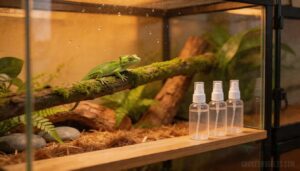
Picking the right cleaning spray is one of the first real decisions you’ll make as a reptile keeper. Not every product on the shelf is actually safe — and a few can do serious harm.
Before you buy anything, it’s worth browsing a curated list of reptile-safe cleaning supplies to know exactly what to look for — and what to avoid.
Here’s what you need to know before we get into the top picks.
What Makes a Cleaner Reptile-safe
Not every cleaner labeled ‘natural’ is actually safe for reptiles. A truly reptile-safe product starts with a simple ingredient list: water, mild non‑corrosive surfactants, or veterinary-grade disinfectants like chlorhexidine or hypochlorous acid.
Skip anything containing phenols, pine oil, or citrus, as these can be harmful. Prioritize formulations with quick evaporation, a neutral pH level, and metal-friendly properties to prevent corrosion of screen lids or lamp fittings over time.
When using bleach, always follow the proper bleach dilution guidelines to ensure safety.
Spray Cleaners Vs Concentrated Disinfectants
Ready-to-use sprays win on application speed—grab, spray, wipe, done. Concentrates cost less per use but demand mixing accuracy to stay safe and nontoxic.
Following dilution guidelines for reptile enclosures matters more than people expect:
- Under-diluting risks chemical burns
- Over-diluting kills nothing
- Wrong ratios shorten shelf-life stability
Veterinary-grade disinfectants like F10SC reward patience with broader environmental impact and better pathogen coverage.
When Beginners Need a Cleaner, Deodorizer, or Disinfectant
Knowing which product to reach for saves time and keeps your animal safe. Not every mess needs a disinfectant.
| Situation | Right Tool |
|---|---|
| Daily feces or spills | Cleaner or deodorizer |
| Illness or contamination | Disinfectant |
| Odor source identification | Deodorizer, nontoxic formula |
| Post-parasite deep clean | Broad-spectrum disinfectant |
Rapid spill management calls for a simple, safe-for-reptiles cleaner. Save the stronger stuff for real contamination thresholds.
Why Low-odor Formulas Help New Keepers
Low-odor sprays make a real difference when you’re just starting out. Products like No Scent Reptile Tank Cleaner Spray support odor-free, fragrance-free simple daily upkeep without overwhelming your nose or your animal’s senses.
Minimal chemical fumes mean a more comfortable home environment for both of you. They also support enhanced scent monitoring—so you’ll actually notice when something’s off—and build a calm cleaning routine naturally.
10 Best Beginner Reptile Cleaning Sprays
These ten sprays cover everything from quick daily wipe-downs to deeper disinfection when things get messy.
Each one is beginner-friendly, widely available, and safe for reptiles once used correctly.
Here’s what made the cut.
1. Oxyfresh Reptile Amphibian Terrarium Cleaner
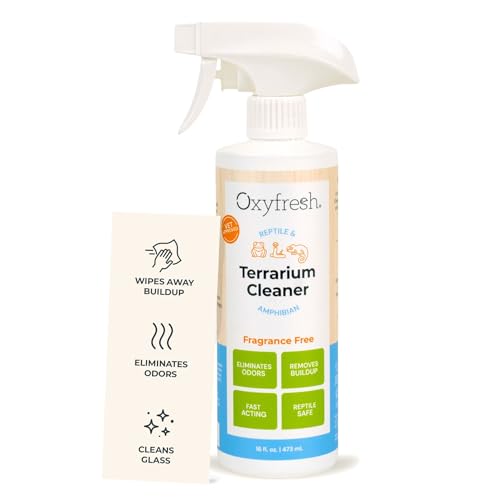
Oxyfresh is one of the cleanest options for a beginner setup, built around stabilized chlorine dioxide—an oxidizing agent that breaks down waste odors instead of masking them with fragrance. This is particularly important when learning how often to spot-clean.
The formula is bleach-free, dye-free, and Leaping Bunny certified. Application is straightforward: spray it on, wait 2–3 minutes, rinse, and let it dry.
It works effectively on glass, acrylic, plastic, and decor without leaving streaks or residue.
For a deeper look at which formulas work best in a classroom setting, this guide to reptile-safe cleaning sprays for classroom pets breaks down the top options that are tough on bacteria but gentle on enclosure surfaces.
| Best For | Beginner reptile and amphibian owners who want a safe, no-fuss cleaner that actually kills odors without exposing their pets to harsh chemicals. |
|---|---|
| Form Factor | Spray bottle |
| Odor Control | Oxidizing agents |
| Toxic-Free Formula | Yes |
| Animal Safe | Yes, multi-species |
| Surface Compatibility | Glass, acrylic, plastic, carpet |
| Approx. Price | $17.95 |
| Additional Features |
|
- Breaks down pet waste odors at the source instead of just covering them up — makes a real difference in a small enclosure
- Totally free of bleach, dyes, fragrances, and parabens, so it’s gentle enough for sensitive species like frogs and snakes
- Leaves glass and acrylic crystal clear with no streaks or greasy residue left behind
- It’s not a disinfectant, so if you need to fully sanitize after illness or contamination, you’ll need something stronger
- Hard water mineral deposits are tough for this formula — you’ll likely need an acidic cleaner to tackle those
- The spray bottle has a small plastic part that can detach, so it’s worth giving it a quick check before first use
2. Fluker Super Scrub Terrarium Cleaner
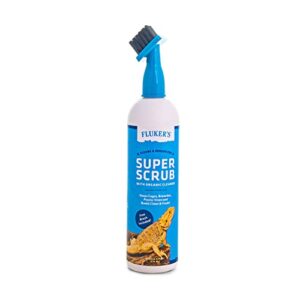
Fluker Super Scrub takes a different approach by integrating a stiff-bristle brush directly into the bottle, allowing you to scrub and clean in one step. This design proves genuinely useful for navigating tight corners around hides, bowls, or décor.
The enzyme-based formula effectively breaks down organic waste without relying on harsh chemicals, while also deodorizing as it cleans. At $8.71 for a 16-oz ready-to-use bottle, it offers a practical, cost-effective solution.
However, it won’t disinfect against parasites. If this is a concern, pair it with F10 for comprehensive sanitation.
| Best For | Reptile owners who want a quick, chemical-free way to spot-clean tanks without juggling multiple tools. |
|---|---|
| Form Factor | Brush bottle |
| Odor Control | Enzymatic action |
| Toxic-Free Formula | Yes |
| Animal Safe | Yes, reptiles only |
| Surface Compatibility | Glass, décor, bowls |
| Approx. Price | $8.71 |
| Additional Features |
|
- Brush is built right into the bottle, so scrubbing and cleaning happen in one pass
- Enzyme formula breaks down waste and odors without harsh chemicals — safe for your animals
- At $8.71, it’s an easy buy for regular maintenance cleaning
- Bottle can drip and leak when partially full, which wastes product
- Won’t kill parasites or pathogens — you’ll still need something like F10 for deep sanitizing
- Stiff bristles can scratch delicate glass if you’re not careful with pressure
3. Absolutely Clean Reptile Terrarium Cleaner Deodorizer
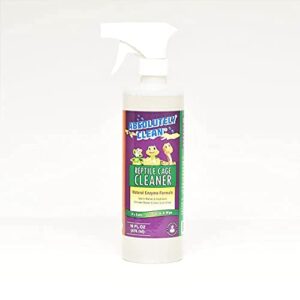
Absolutely Clean takes a natural enzyme approach to habitat hygiene, breaking down protein-based messes like urate and shed skin without harsh chemicals or strong fumes. That matters when you’re working in a small room with an enclosed tank.
Spray it on, wait 3–5 minutes, wipe, then rinse thoroughly with hot water.
If odors linger after cleaning, check this guide on the best way to disinfect reptile enclosures for deeper methods, and press the pump’s white top down firmly before spraying.
At $16.99 for a 16-oz bottle, it’s pricier than some options, but the vet-approved, residue-free formula makes it a reliable pick for routine terrarium upkeep.
| Best For | Reptile and amphibian owners who want a safe, chemical-free cleaner that tackles tough odors and protein-based messes without risking their pet’s health. |
|---|---|
| Form Factor | Spray bottle |
| Odor Control | Enzyme formula |
| Toxic-Free Formula | Yes |
| Animal Safe | Yes, vet-approved |
| Surface Compatibility | Metal, wood, glass, vinyl, plastic |
| Approx. Price | $16.99 |
| Additional Features |
|
- Natural enzyme formula breaks down waste, shed skin, and urate without harsh chemicals or fumes
- Works on just about any surface — metal, glass, wood, vinyl, plastic, you name it
- Vet-approved and residue-free, so you’re not leaving anything sketchy behind in your pet’s home
- At $16.99, it costs more than generic enclosure cleaners on the market
- Animals have to be fully removed before use, and the tank needs to be rinsed and dried before they go back in
- Won’t do all the work for you — stubborn stains still need some manual scrubbing
4. Zoo Med Terrarium Cage Cleaner
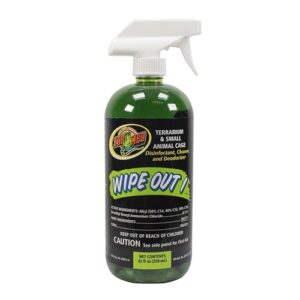
Zoo Med’s Terrarium Cage Cleaner is one of the most recognized names in reptile keeping for a reason. It’s an EPA-registered, ready-to-use antibacterial spray requiring no mixing or guesswork.
The active ingredient, alkyl dimethyl benzyl ammonium chloride, effectively targets harmful bacteria like Salmonella and Pseudomonas aeruginosa.
To use: Spray, wait five minutes, wipe, then ventilate thoroughly before reintroducing your reptile. Note: Skipping rinsing may leave a greenish tint on glass.
The 8.75 oz bottle serves as the ideal starter size for reptile keepers.
| Best For | Reptile and small-animal owners who want a reliable, no-mix disinfectant for deep cleaning enclosures and tackling serious bacterial buildup. |
|---|---|
| Form Factor | Spray bottle |
| Odor Control | Deodorizing formula |
| Toxic-Free Formula | Yes |
| Animal Safe | Yes, after drying |
| Surface Compatibility | Substrates, carpet, surfaces |
| Approx. Price | Not listed |
| Additional Features |
|
- Kills tough bacteria like Salmonella and Pseudomonas aeruginosa without any mixing required
- Unscented formula is safe for reptiles and small animals once the enclosure is dry and ventilated
- Softens dried waste and debris, making scrubbing a lot easier than bleach-based cleaners
- Not great for quick spot cleans — you need to remove animals, wait five minutes, then fully ventilate before they go back in
- Can leave a greenish residue on glass if you skip the rinse step
- Has a strong initial smell that some users find overpowering, especially in enclosed spaces
5. No Scent Reptile Tank Cleaner
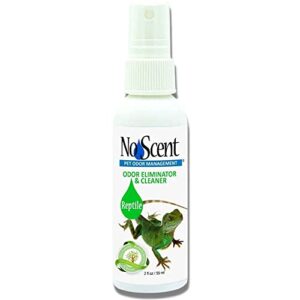
If you’ve got a nervous reptile or a sensitive nose yourself, this one’s worth a look. No Scent Reptile Tank Cleaner uses a probiotic formula — tens of millions of live cultures — to break down waste odors at the source rather than masking them.
It matches reptile-compatible pH levels, so it’s safe for snakes, geckos, bearded dragons, and turtles. You don’t need to relocate your animal before spraying.
The 2 fl oz bottle is compact but runs out quickly with daily use.
| Best For | Reptile owners who want a safe, no-fuss cleaner they can use around their animals without moving them or worrying about harsh chemicals. |
|---|---|
| Form Factor | Spray bottle |
| Odor Control | Probiotic-based |
| Toxic-Free Formula | Yes |
| Animal Safe | Yes, in-habitat use |
| Surface Compatibility | Hard and porous surfaces |
| Approx. Price | Not listed |
| Additional Features |
|
- Probiotic formula actually breaks down odors instead of just covering them up
- Safe to use in occupied tanks — no need to relocate your snake, gecko, or bearded dragon
- Works on all kinds of surfaces, including porous ones like substrate and décor
- The 2 fl oz bottle is small and goes fast if you’re cleaning daily or managing multiple enclosures
- A bit pricey for how little you get
- Won’t do much against heavy buildup — you’ll need to scrub first before it can work effectively
6. Zoomed Wipeout Terrarium Cleaner
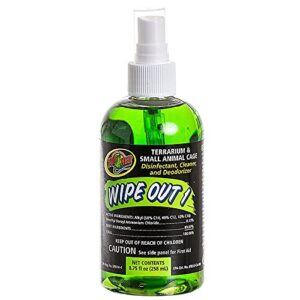
Zoomed Wipeout by DBDPet is a solid pick if you want something straightforward right out of the box. The 8.75 oz ready-to-use spray needs no mixing — just point, spray, and wipe. What sets it apart for beginners is the included Pro-Tip guide, which walks you through exactly how to use it. No guesswork.
The active ingredient, dimethyl benzyl ammonium chloride, targets bacteria like Salmonella and Pseudomonas. Just remove your reptile first, let it sit for five minutes, then wipe dry.
| Best For | New reptile owners who want a no-fuss, ready-to-use cleaner with clear instructions included. |
|---|---|
| Form Factor | Liquid bottle |
| Odor Control | Not specified |
| Toxic-Free Formula | Not specified |
| Animal Safe | Yes, small reptiles |
| Surface Compatibility | Glass, acrylic, accessories |
| Approx. Price | Not listed |
| Additional Features |
|
- Comes ready to use — no mixing or diluting needed
- Includes a Pro-Tip guide, great for beginners who want step-by-step help
- Targets real threats like Salmonella, so you know it’s doing something useful
- At 8.75 oz, it won’t last long if you’re cleaning multiple enclosures
- No ingredient or safety info in the listing, which makes it hard to fully evaluate
- Barely any customer reviews to go on, so real-world performance is still a bit of a question mark
7. TetraFauna AquaSafe Reptile Amphibian Conditioner
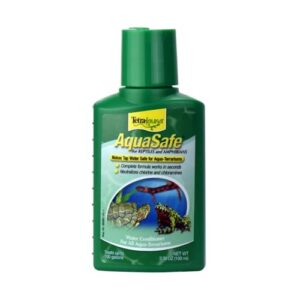
TetraFauna AquaSafe conditions tap water for aquatic setups, offering a unique solution beyond surface cleaning.
Tap water contains chlorine and heavy metals that can quietly stress or harm turtles, frogs, or newts. AquaSafe neutralizes those threats instantly, creating a safer environment for delicate aquatic life.
The formula incorporates seaweed biopolymers, which protect sensitive amphibian skin and turtle shells from irritation or damage.
Dosing is simple: use one teaspoon per 10 gallons. Despite its small size, the bottle covers a lot of water changes, ensuring long-term convenience for pet owners.
| Best For | Anyone keeping aquatic turtles, frogs, newts, or salamanders who wants a quick, reliable way to make tap water safe for their tanks. |
|---|---|
| Form Factor | Liquid concentrate |
| Odor Control | Not applicable |
| Toxic-Free Formula | Yes |
| Animal Safe | Yes, amphibians/turtles |
| Surface Compatibility | Water only |
| Approx. Price | Not listed |
| Additional Features |
|
- Instantly neutralizes chlorine, chloramines, and heavy metals — no waiting around
- Seaweed biopolymers actively support amphibian skin and turtle shell health, not just water chemistry
- Small bottle, simple dosing — one teaspoon per 10 gallons makes it easy to use regularly
- The built-in cap measures for 10 gallons, so smaller tanks will need a separate syringe or tool for accurate dosing
- Won’t handle nitrates, phosphates, or other long-term water quality issues — you still need proper filtration
- Not tested for well water, so results may vary if you’re not on a municipal water supply
8. Miracle Care Habitat Cleaner Deodorizer
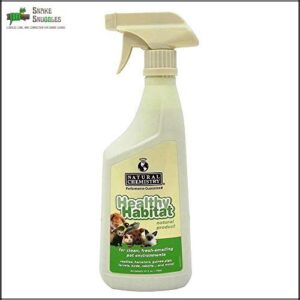
Miracle Care Healthy Habitat combats the buildup of waste, odor, and organic residue on enclosure surfaces, unlike products that merely mask smells. Its SmartZyme enzyme formula actively breaks down feces, urine, and food debris for thorough cleaning.
The solution requires no dilution—simply spray and wipe. It is safe to use with your reptile present, streamlining maintenance routines.
One 24-oz bottle effectively cleans glass, gravel, hides, and artificial plants without leaving harsh residue behind.
| Best For | Pet owners and reptile keepers who want a safe, chemical-free cleaner that actually eliminates odors and waste buildup instead of just covering them up. |
|---|---|
| Form Factor | Spray bottle |
| Odor Control | Scent marker removal |
| Toxic-Free Formula | Yes |
| Animal Safe | Yes, all pets |
| Surface Compatibility | Bedding, carpet, cage surfaces |
| Approx. Price | Not listed |
| Additional Features |
|
- Enzyme-based formula breaks down urine, feces, and food debris at the source — no more lingering smells
- Safe to use around all pets, including reptiles, while they’re still in their habitat
- No mixing or diluting needed — just spray and wipe, which makes cage cleaning quick and easy
- Some batches have been reported to smell strongly of ammonia, which is a bit ironic for an odor eliminator
- The spray bottle can leak or drip, so you might need to swap it out for a better nozzle
- Only comes in a 24-oz bottle — no bulk or gallon option if you’re cleaning large enclosures regularly
9. Exo Terra Terrarium Glass Cleaner
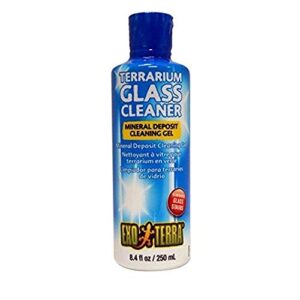
Miracle Care tackles waste and odor well, but hard-water stains are a different problem — and that’s where Exo Terra Terrarium Glass Cleaner earns its place. Formulated specifically to dissolve calcium and mineral buildup left by misting systems, this lime-scented gel addresses a common challenge in terrarium maintenance.
Apply it to the glass, let it sit briefly, scrub gently in circles, then rinse. At $12.99 for 250 ml, the cleaner is free from ammonia, alcohol, and dyes, ensuring safety for glass, plastic, and smooth enclosure surfaces.
| Best For | Reptile and amphibian keepers dealing with stubborn hard-water spots and mineral buildup on terrarium or aquarium glass. |
|---|---|
| Form Factor | Gel bottle |
| Odor Control | Neutral lime scent |
| Toxic-Free Formula | Yes |
| Animal Safe | Yes, minimal toxicity |
| Surface Compatibility | Glass, plastic, smooth surfaces |
| Approx. Price | $12.99 |
| Additional Features |
|
- Gel formula clings to glass and dissolves calcium and lime deposits without harsh chemicals
- Free from ammonia, alcohol, dyes, and synthetic fragrances — safe around sensitive animals
- Works on glass, plastic, and other smooth surfaces, so it’s not just a one-trick product
- Heavy or old mineral stains may need more than one application to fully clear
- Incomplete rinsing can leave a residual film or sticky surface
- A handful of users found it didn’t cut through severe buildup as well as expected
10. F10 All Purpose Disinfectant Spray
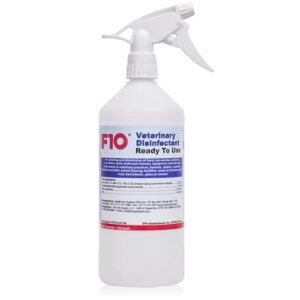
Hard-water stains are one problem — but full-scale disinfection after illness or a new animal arrival demands a stronger solution. F10 All Purpose Disinfectant Spray addresses these challenges effectively.
It arrives pre-diluted at 1:250, eliminating guesswork. Simply spray, let it dry, and the job is complete — no rinsing needed. The formula is odorless and EPA-registered, ensuring safety and compliance.
This disinfectant is effective against bacteria, fungi, and viruses, providing comprehensive protection. With 1 liter per bottle, it offers ample coverage for thorough cleaning without overwhelming beginners.
| Best For | Vets, shelters, and breeders who need a reliable, no-fuss disinfectant that works hard without harming sensitive animals. |
|---|---|
| Form Factor | Spray bottle |
| Odor Control | Odorless formula |
| Toxic-Free Formula | Yes |
| Animal Safe | Yes, after drying |
| Surface Compatibility | Plastic, resin, rock, tile |
| Approx. Price | Not listed |
| Additional Features |
|
- Pre-diluted and ready to go — just spray, let it dry, and you’re done
- EPA-registered and effective against bacteria, viruses, and fungi
- Odorless formula is easy on animals and handlers alike
- Costs more than most standard household disinfectants
- Can’t ship to certain U.S. states due to veterinary product regulations
- A bit overkill if you just need everyday cleaning
Features Beginners Should Compare
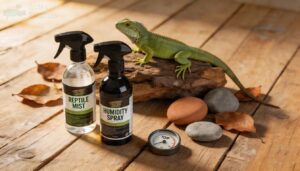
Not all sprays are built the same, and this gap really shows once you start comparing labels. Knowing which features actually matter will save you from buying the wrong thing twice.
Here’s what to look at before you pick one.
Odor Control Without Harsh Fragrance
Strong reptile odors indicate that bacteria are still active — masking them with fragrance merely conceals the issue. True odor elimination requires ingredients that target waste at its source.
- Enzyme Cleaning agents digest organic matter completely
- Baking Soda Neutralizer neutralizes acidic odor compounds
- Charcoal Odor Traps absorb molecules without adding scent
Choose Fragrance-Free Sprays for a safe, nontoxic, chemical-free cleaner that maintains a genuinely odor-free environment for your reptile.
Residue-free Formulas for Glass and Decor
Residue on terrarium glass sneaks up on you — a few cleanings in, and your front panel looks perpetually foggy. Look for reptile terrarium cleaners that use low-film surfactants and fast-drying alcohols, which support a clear drying process without chalky buildup.
Mineral spot control matters too. Pair any glass cleaning solution with the microfiber wipe technique for genuinely streak-free glass every time.
Broad-spectrum Disinfecting Power
Not all antimicrobial agents are created equal. F10SC Veterinary Disinfectant and hypochlorous acid both offer genuine spectrum breadth — hitting bacteria, viruses, fungi, and spores through oxidizing action rather than a single pathway.
That rapid kill kinetics and organic load tolerance matter for real enclosures, not lab conditions.
If you want a vet-grade disinfectant safe for reptiles, prioritize verified microbial coverage over marketing claims.
Safe Use Around Reptiles and Amphibians
Wash up every single time and use glove protocols when handling amphibians, since their permeable skin absorbs chemicals easily.
Good ventilation management keeps fumes from stressing your animals during cleaning.
Store safe cleaning products out of reach, and choose non-toxic cleaning agents to prevent cross-contamination.
Bottle Size, Spray Nozzle, and Ease of Use
Bottle size matters more than you’d think. Compact bottle options, like 250 ml sprayers, are easy to store near the enclosure, while 500 ml refill-friendly capacity cuts down on constant topping off.
Look for an adjustable nozzle—a twist nozzle lets you switch between wide coverage and a targeted jet.
Ergonomic grip design and consistent spray output make routine terrarium maintenance noticeably easier.
Best Options for Routine Cleaning Vs Outbreaks
Not all cleaners belong in the same routine. For daily spot-clean tasks—glass wipes, bowl rinses, hide touch-ups—a low-residue spray with surface compatibility manages the job without overcomplicating things.
Save veterinary-grade disinfectants like F10SC for outbreaks. These products address critical scenarios where pathogens demand targeted intervention.
Factors like pathogen targeting, application frequency, and shelf life shift depending on the situation. Always prioritize solutions tailored to the specific challenge at hand.
Match the product to the problem, not just the enclosure. This ensures effectiveness without unnecessary complexity or waste.
Safe Spray Use in Enclosures
Knowing which cleaner to buy is only half the job — using it correctly is what actually keeps your reptile safe. A few simple steps make the whole process faster and less stressful for both of you.
Here’s what every beginner should know before spraying anything inside the enclosure.
Removing The Reptile Before Cleaning
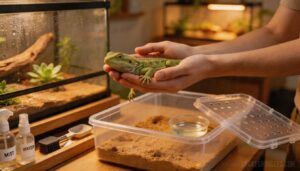
Before you move your reptile out first, set up a temporary habitat setup with an escape-proof container and warm holding water to keep it calm and safe.
This separate holding space also doubles as a pre-clean health check opportunity — watch for anything unusual while you work. Keep all safe cleaning products for reptile habitats well away from that area.
Spot Cleaning Between Full Habitat Cleans
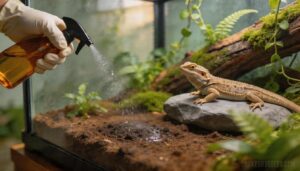
Once your reptile is safely settled, you don’t need to tear down the whole enclosure every time something looks off. Spot cleaning frequency matters — a quick daily check for targeted debris like waste and uneaten food keeps microbial buildup from getting out of hand with minimal disturbance to your setup.
- Use your reptile terrarium cleaner only on soiled areas
- Non-toxic cleaning agents work well for routine wipe-downs without stressing the habitat
- Spot clean daily to bridge the gap between full deep cleans
How to Clean Glass, Hides, Bowls, and Tools
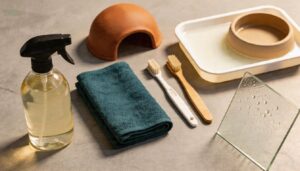
Glass requires a 1:1 vinegar-water spray and microfiber cloth for streak-free cleaning, using straight vertical wipes. For stubborn mineral deposits, scrape with a razor blade at a shallow angle while the surface is wet.
Hides and bowls should undergo a soak-and-rinse cycle in a reptile-safe solution for 10–15 minutes. Use a soft brush for gentle scrubbing during rinsing.
Tongs and tools demand weekly disinfectant soaks followed by air-drying. A toothbrush helps remove residue from crevices.
| Surface | Method | Tool |
|---|---|---|
| Glass | Vinegar spray + wipe | Microfiber cloth |
| Hides & Bowls | Soak 10–15 min, rinse | Soft brush |
| Tongs & Tools | Disinfectant soak, air-dry | Toothbrush |
Your brush selection guide: soft bristles for hides, bottle brushes for bowls, and microfiber for glass.
Contact Time, Rinsing, and Full Drying
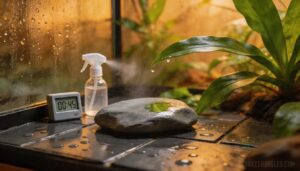
Once the surfaces are clean, the real work isn’t over. Contact Time Verification matters — your disinfectant needs to stay visibly wet for its full dwell period.
Even Wet Application ensures no dry patches are missed. Rinse Water Quality affects the final result, so use dechlorinated water.
Factor in Humidity Effects and Residual Moisture Risks — don’t rush.
Proper Drying Times After Disinfection protect your reptile completely.
Safe Cloths and Brushes for Terrarium Surfaces
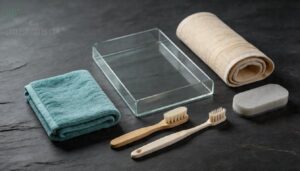
The tools you reach for matter just as much as the cleaner itself. Scratched glass and cracked decor create hiding spots for bacteria — so choose wisely.
- Microfiber cloth benefits: streak-free, non-scratch wiping on glass and acrylic
- Bamboo fiber cloths: excellent particle-lifting without damaging tempered panels
- Toothbrush crevice cleaning: reaches seams, nooks, and corners soft cloths can’t
A soft-bristle brush selection manages decor, scrubbing safely, while non-abrasive sponge tips tackle floor buildup. Skip abrasive materials entirely — they’re not safe for reptiles or enclosure surfaces.
Deep-clean Steps for Beginner Keepers
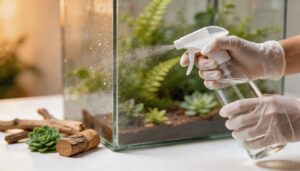
A deep clean isn’t just spot cleaning turned up a notch — it’s a full reset. Begin by staging decor outside the enclosure to ensure unobstructed surface scrubbing.
Wash first, then apply your reptile terrarium cleaner and allow proper contact time — that’s your disinfection check.
Finish with a humidity check before returning your reptile, and conduct a quick post-clean observation to confirm everything looks right.
Ingredients, Safety, and Common Mistakes
Knowing what’s in your cleaner matters just as much as how you use it. Some ingredients that seem harmless can seriously stress or even harm your reptile.
Here’s what to watch for, what actually works, and the mistakes worth avoiding before they become a problem.
Ingredients to Avoid in Reptile Cleaners
Not every cleaner labeled "natural" or "pet-safe" is actually safe for reptiles.
Phenol compounds, aldehyde disinfectants like formaldehyde, and ammonia-based cleaners can harm or kill reptiles even at trace levels.
Residue surfactants, phosphates, strong perfume additives, and essential oil vapors linger on glass and décor — irritating eyes and airways in enclosed spaces.
Always read the ingredient list before spraying anything near your enclosure.
Bleach and Ammonia Risks for Enclosures
Bleach and ammonia are the two cleaners you absolutely want to keep away from your enclosure. Used together — or even back-to-back without rinsing — they trigger toxic gas formation, releasing chloramine fumes that cause serious respiratory irritation in both you and your reptile.
Never mix bleach and ammonia near reptile enclosures — together, they release toxic fumes that harm everything breathing nearby
Terrariums trap vapors fast.
Always follow cleaning sequence safety: one product, full rinse, completely dry. Ventilation requirements aren’t optional here.
Vinegar, Chlorhexidine, and F10 Use Cases
Think of these three as your cleaning toolkit — each with its own job.
White vinegar manages calcium removal and surface pre-clean work at a 1:1 ratio.
Chlorhexidine, diluted 1:30 to 1:40, is your go-to for bowl sanitizing and hides.
F10 at 1:250 covers routine disinfection; bump it to 1:100 for outbreak disinfection.
All are safe for reptiles once dry.
Hypochlorous Acid for Low-residue Cleaning
HOCl — hypochlorous acid — might be the cleanest option in your reptile terrarium cleaner lineup. It’s one of the truly non-toxic cleaning agents, offering no residue, no fragrance, and crystal-free drying on glass and decor.
Spray uniformity ensures easy application, while material compatibility is excellent across plastic, metal, and coated surfaces.
However, shelf-life preservation requires storing it away from light, as HOCl degrades fast.
Mistakes Beginners Make With Dilution Ratios
Dilution trips up new keepers due to common mistakes in preparation. Ratio measurement errors are the most prevalent issue—guessing instead of measuring, wrong final volume, incorrect mixing order, and misreading label ratios all contribute to inconsistency.
These errors lead to two critical failures: over-concentrated sprays that leave harmful residue or weak mixes that fail to disinfect properly.
To avoid these risks, follow dilution guidelines exactly for reptile cleaners.
Over-cleaning Bioactive Setups
Getting over-cleaning creates a different problem entirely—especially in bioactive setups. Stripping the enclosure too often causes Microbial Balance Loss, Nutrient Cycling Disruption, and Substrate Moisture Depletion. This leads to your cleanup crew declining without leaf litter to eat, and plant root stress follows.
Stick to spot vs deep cleaning routines: perform daily spot removal, and reserve full disturbance only when something’s actually wrong.
When to Choose Heat-based Sterilization Instead
Sometimes sprays just won’t cut it. For porous surface sterilization—wood branches, cork hides, or natural rocks—heat versus sprays isn’t even a contest. Sprays sit on the surface, while high heat penetrates deep.
Reach for heat-based pathogen elimination in enclosures when dealing with:
- Moisture-sensitive items like substrate powders or oils
- Heat-stable materials like ceramic hides, stone decor, or metal tools
- Pathogen resistance cases—cryptosporidium and coccidia die reliably at 176–212°F
Steam cleaning works well for non-porous items. Oven baking manages the rest.
Frequently Asked Questions (FAQs)
Is Dawn dish soap okay for reptiles?
Dawn dish soap isn’t safe for reptiles. Soap residue risks are real — dish soap’s toxicity from lingering surfactants can cause skin irritation.
If used accidentally, rinse thoroughly. However, better alternatives exist.
Choose safe and nontoxic reptile-labeled cleaners instead.
Can I use rubbing alcohol to clean a snake enclosure?
Rubbing alcohol is a double-edged sword here.
It can disinfect glass and small accessories, but fume exposure, skin irritation, and porous limitations make safer disinfectants a smarter choice for snake enclosures.
How to keep a lizard cage from smelling?
Daily waste removal, dry substrate, and good ventilation keep lizard cages odor-free.
Clean water bowls every day and fix humidity fast — damp air is the quickest path to a musty smell.
Can I clean reptile decor in a dishwasher?
Hand washing beats the dishwasher for most decor. Heat tolerance varies by material, and seal integrity risks rise fast — warped plastic or loosened glue isn’t worth the convenience.
How often should I replace my cleaning spray bottle?
Replace your spray bottle every 5 years, sooner if you notice plastic brittleness, sprayer seal wear, or residue contamination. Pump wear rate increases with frequent use, so inspect regularly.
Do cleaning sprays expire or lose effectiveness over time?
Yes, cleaning sprays do expire. Active ingredient decay is real — shelf life indicators like odd smell, separation, or weak spray signal performance decline. Always check the label date before use.
Can I use the same cleaner for multiple reptile species?
Often, yes — one cleaner can work across species if it’s labeled for reptiles and amphibians, fully rinsed and dried.
But always check species-specific toxicity first, especially with amphibians or aquatic turtles.
Should I clean new enclosures before first use?
New enclosures still need an initial wash. Dust removal and packaging residue are real — rinse thoroughly, inspect surfaces, and let everything dry before setup. Clean once, set up right.
Conclusion
The cleanest enclosure isn’t always the safest—over-cleaning strips beneficial bacteria, stresses your animal, and introduces more chemical residue than the mess you were trying to remove. That’s the quiet irony hiding inside every bottle.
Choosing the right reptile cleaning sprays for beginners means knowing when to spray, when to spot-clean, and when to simply leave things alone. Master that balance, and your reptile’s habitat becomes genuinely safe—not just visibly spotless.