This site is supported by our readers. We may earn a commission, at no cost to you, if you purchase through links.
Keeping a reptile changes a household in ways nobody warns you about. The feeding schedules, humidity checks, substrate changes—and then there’s the cleaning, which hits differently when you’ve got curious kids who touch everything. Most standard disinfectants carry chemical combinations that reptile keepers and pediatricians would both flag: fumes that linger, residues that absorb through sensitive skin, compounds that stress cold-blooded animals whose respiratory systems can’t tolerate what a dog might shrug off.
Choosing reptile cleaning sprays for families with kids isn’t just a product preference—it’s a safety decision with real stakes on both sides of the enclosure glass.
Table Of Contents
- Key Takeaways
- Top 5 Kid-Safe Reptile Sprays
- What Makes a Spray Family-Safe
- Cleaners to Avoid in Terrariums
- Safe Spray Use Around Children
- Frequently Asked Questions (FAQs)
- What disinfectant is safe around kids?
- Is Dawn dish soap okay for reptiles?
- Can reptile sprays irritate pets with respiratory conditions?
- How often should terrarium cleaning products be replaced?
- Are reptile cleaners safe for amphibian enclosures too?
- Do cleaning sprays affect reptile skin or scales?
- What cleaning tools work best with these sprays?
- Conclusion
Key Takeaways
- Standard household cleaners like bleach and ammonia can seriously harm reptiles and kids, so you need purpose-made sprays that are non-toxic and low-fume.
- Your best picks—F10 SCXD, Oxyfresh, Zilla, Exo Terra, and Absolutely Clean—each handles a different problem, from deep disinfection to odor control, so match the spray to your actual need.
- Always remove your reptile and kids before cleaning, scrub debris first, follow the dilution instructions exactly, then rinse and ventilate fully before anyone goes back in.
- Don’t mix cleaners—combining bleach and ammonia creates toxic gases fast, especially in the enclosed space of a terrarium.
Top 5 Kid-Safe Reptile Sprays
Finding a cleaner that’s safe for your kids and your reptile doesn’t have to feel like a guessing game. These five sprays have earned their place in family homes for good reason.
If you’re just starting out, this guide to reptile-safe cleaning sprays for beginners walks you through exactly what to look for before you buy.
Here’s what made the cut.
1. F10 SCXD All Purpose Disinfectant Cleaner
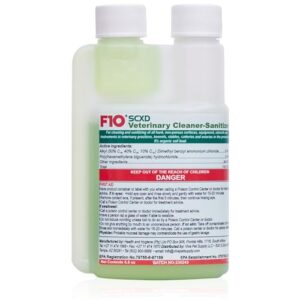
F10 SCXD punches well above its weight for a 200 ml bottle. It’s EPA-registered, biodegradable, and dilutes to a solution gentle enough for zoos and vet clinics worldwide. At a 1:250 ratio, it eliminates bacteria, viruses, fungi, and spores — without leaving corrosive residues on terrarium glass or plastic.
No chlorine, no aldehydes, no harsh fumes drift toward little ones nearby. This ensures safety in environments where children or sensitive individuals may be present.
Simply rinse thoroughly after contact time, and you’re done.
| Best For | Pet owners, vet clinics, animal shelters, and zoos that need a reliable, animal-safe disinfectant for everyday cleaning and sanitation. |
|---|---|
| Form Factor | Liquid concentrate |
| Volume | 200 ml (6.8 oz) |
| Price | $35.99 |
| Safe for Pets | Yes, after rinsing |
| Harsh Chemical Free | Biodegradable formula |
| Surface Compatibility | Hard non-porous surfaces |
| Additional Features |
|
- EPA-registered broad-spectrum formula that kills bacteria, viruses, and fungi — so you know it actually works
- Super-concentrated and versatile — one small bottle dilutes into a lot of usable solution across mops, sprays, and scrubbers
- Biodegradable with a mild pine scent, making it easy to use around animals and people without harsh fumes
- The 200 ml bottle runs out fast in busy, high-volume facilities that go through cleaner daily
- Dilution markings aren’t great for small batches, so getting the ratio right takes a little extra care
- Only works on hard, non-porous surfaces — won’t do the job on wood, fabric, or anything that absorbs liquid
2. Oxyfresh Reptile Amphibian Terrarium Cleaner
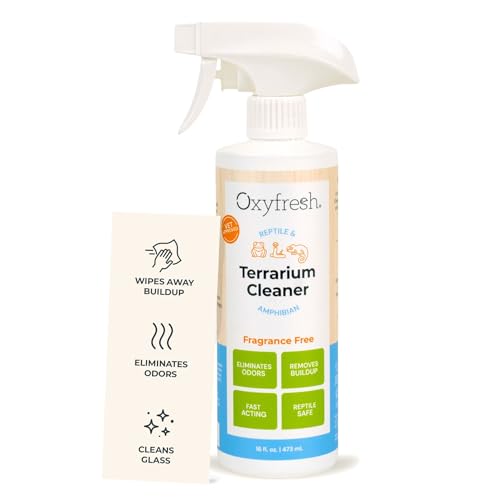
Where F10 SCXD leads with heavy-duty disinfection, Oxyfresh takes a gentler approach — and that’s exactly what some families need.
Its Oxygene formula uses stabilized chlorine dioxide to break down waste odors at the source, not just cover them up. No bleach, no ammonia, no synthetic fragrances.
It’s Leaping Bunny certified and safe around frogs, lizards, and snakes alike.
Spray, wait a couple minutes, rinse — and the glass comes out streak-free. Simple enough for a busy parent.
| Best For | Families with reptiles, amphibians, or fish who want a safe, no-fuss cleaner that’s gentle enough for sensitive species but still tackles odors and grime effectively. |
|---|---|
| Form Factor | Spray |
| Volume | ~540 g (1.19 lb) |
| Price | $17.95 |
| Safe for Pets | Yes, direct contact safe |
| Harsh Chemical Free | No bleach or dyes |
| Surface Compatibility | Glass, acrylic, plastic, carpet |
| Additional Features |
|
- Breaks down pet waste odors at the source instead of masking them, keeping enclosures genuinely fresh
- Leaping Bunny certified and free of bleach, ammonia, and synthetic fragrances — safe around frogs, lizards, snakes, and more
- Leaves glass and acrylic streak-free with a simple spray-wait-rinse routine
- Not a disinfectant, so it won’t cut it if you need to fully sanitize after illness or contamination
- Struggles with heavy mineral deposits and hard-water stains without extra treatment
- A small plastic part on the spray bottle can detach, so a quick inspection before use is a good habit
3. Zilla Terrarium Cleaner Spray
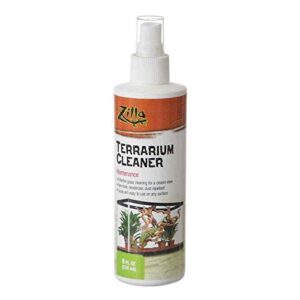
Oxyfresh keeps things odor-free, but sometimes you need something that also addresses grime, streaks, and static buildup. That’s where Zilla steps in.
This 8 oz spray breaks down organic waste and neutralizes pet smells without harsh chemicals. It’s safe on glass, acrylic, plastic plants, and food dishes. The anti-static formula repels dust between cleanings — a quiet win for busy households.
No fumes, no residue, and at $13.57, it’s easy on the budget too.
| Best For | Reptile owners who want a safe, natural way to keep their terrarium clean and smelling fresh without reaching for harsh chemicals. |
|---|---|
| Form Factor | Spray |
| Volume | 8 fl oz |
| Price | $13.57 |
| Safe for Pets | Yes, natural ingredients |
| Harsh Chemical Free | Natural ingredients |
| Surface Compatibility | Indoor non-metallic surfaces |
| Additional Features |
|
- Made from natural ingredients, so no nasty fumes or chemical residue to worry about
- The almond scent actually does something — it knocks out musty odors instead of just masking them
- At $13.57 for a ready-to-use spray, it’s an easy addition to your cleaning routine without breaking the bank
- The 8 oz bottle goes fast if you’re cleaning regularly — you’ll likely be reordering more than you’d like
- Not ideal for all surfaces, so you’ll want to double-check before spraying on certain plastics or painted items
- Anyone with an almond allergy in the household should do a quick test before using it freely
4. Exo Terra Terrarium Glass Cleaner
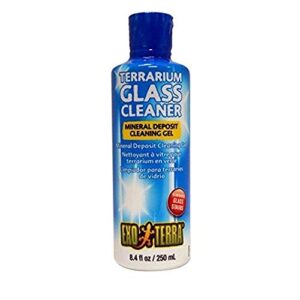
Zilla manages grime well, but what about those stubborn white streaks left behind by your misting systems? That’s exactly what Exo Terra’s Glass Cleaner was made for.
It’s formulated specifically for reptile enclosures, so you won’t have to guess whether it’s safe—check out these snake enclosure cleaning tips and safe product guidelines before reaching for just any bottle.
This gel formula targets calcium and lime deposits without ammonia, alcohol, dyes, or petrochemicals — so it’s genuinely safe near curious little hands. Apply it with a cloth, let it sit briefly, scrub in gentle circles, then rinse clean. At $12.99 for 8.4 oz, it keeps your enclosure looking crystal clear.
| Best For | Reptile and amphibian keepers dealing with hard-water buildup from misting systems who want a safe, chemical-free cleaning option. |
|---|---|
| Form Factor | Gel |
| Volume | 250 ml (8.4 oz) |
| Price | $12.99 |
| Safe for Pets | Yes, minimal toxicity |
| Harsh Chemical Free | No ammonia or alcohol |
| Surface Compatibility | Glass, plastic, smooth surfaces |
| Additional Features |
|
- Gel formula clings to glass and breaks down calcium and lime deposits without harsh chemicals
- Free of ammonia, alcohol, dyes, and petrochemicals — low toxicity risk around sensitive animals
- Works on glass, plastic, and smooth surfaces across terrariums and aquariums
- Stubborn or older mineral stains may need multiple rounds to fully clear
- Can leave a residual film if not rinsed thoroughly after scrubbing
- A handful of users found it less effective on severe, long-set deposits
5. Absolutely Clean Reptile Terrarium Cleaner Deodorizer
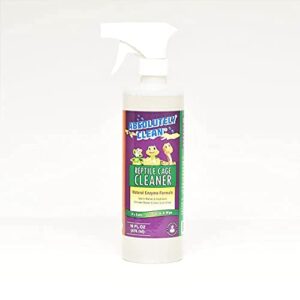
When odors are the main problem, Absolutely Clean steps up. This Colorado family-owned, vet-approved formula uses natural enzymes to break down waste, shed skin, and urates without harsh chemicals or fumes. It’s safe around kids and sensitive noses alike, leaving no residue or sticky film.
To use, spray it on, wait 3–5 minutes, scrub, then rinse with hot water. The process neutralizes odors at their source, ensuring a thorough clean without lingering traces.
If your reptile’s enclosure has stubborn smells this spray can’t fully mask, a step-by-step guide to disinfecting reptile enclosures can help you finish the job.
At $16.99 for a 16-oz bottle, it’s a reliable weekly weapon against stubborn smells tied to pets or hobbies. The formula’s effectiveness and safety make it ideal for maintaining fresh, odor-free spaces.
| Best For | Reptile and amphibian owners who struggle with strong habitat odors and want a vet-approved, chemical-free cleaner that’s safe for sensitive pets. |
|---|---|
| Form Factor | Spray |
| Volume | ~0.52 kg (1.15 lb) |
| Price | $16.99 |
| Safe for Pets | Yes, after rinsing |
| Harsh Chemical Free | No harsh chemicals |
| Surface Compatibility | Metal, wood, glass, vinyl, plastic |
| Additional Features |
|
- Natural enzyme formula breaks down waste, shed skin, and urates without harsh chemicals or fumes
- Works on a wide range of surfaces — metal, wood, glass, vinyl, plastic, and more
- Leaves zero greasy or sticky residue behind after rinsing
- Pets must be fully removed before use, and the enclosure needs to dry completely before they return
- Stubborn stains still need manual scrubbing — the spray alone won’t do all the work
- At $16.99, it costs more than most generic cleaners on the shelf
What Makes a Spray Family-Safe
Not every cleaner on the shelf is safe for a home with kids and reptiles under the same roof. The right spray does more than just clean — it needs to check a few important boxes first.
Here’s what to look for before you reach for a bottle.
Non-toxic Formulas for Reptile Enclosures
Not every cleaner labeled ‘safe’ actually is. When shopping for reptile enclosure sprays, ingredient transparency matters more than clever marketing. Look for non-toxic, biodegradable formulas with eco-friendly surfactants and non-allergenic fragrances — these are the true child-safe cleaners your family needs.
pH-balanced, residue-free sprays and enzyme-based cleaning solutions protect both your reptile and your kids without hidden risks. Avoid residues that disrupt substrate moisture regulation, which is indispensable for your pet’s health.
Low-fume Cleaners for Homes With Kids
Fumes are the hidden problem most families don’t think about until it’s too late.
A child-safe cleaner like Oxyfresh or F10SC uses scent-free formulations and quick-dry technology—both dry in under 10 minutes with no harsh vapors.
Open a window, run a fan for airflow optimization, and keep kids 10 feet back.
They are safe for use around pets and children, always.
Biodegradable Ingredients and Residue Concerns
Biodegradable doesn’t automatically mean residue-free — and that’s worth knowing before you spray anything near your gecko’s home.
Feedstock purity matters because plant-based ingredients can carry pesticide traces into the finished product. NIAS Migration, Biodegradation Byproducts, and uncontrolled Supply Chain Controls all affect what’s actually left on surfaces after cleaning.
Key residue concerns to watch:
- Always choose pet-safe cleaning spray with verified Residue Testing
- Biodegradable formulas still need proper rinsing before reptile reentry
- NIAS Migration can occur even with "natural" labels
- Cleaning residue lingers longer on porous surfaces like wood
- Safe cleaning products for pets and children need documented feedstock sourcing
Safe Disinfection Vs Odor-control Performance
Not every spray does both jobs well — and that gap matters when you have kids and reptiles under the same roof.
Kill time and odor elimination speed are different things. F10SC knocks out pathogens fast, but it’s not an odor neutralizer.
Enzyme-based, nontoxic, biodegradable options like Absolutely Clean tackle smells slower but leave minimal residue after rinsing.
Know your performance trade-offs before you choose.
When Veterinary-grade Dilution Matters Most
Getting the dilution right isn’t just a technicality — it’s what separates safe from sorry.
- Heavy soil scenarios call for pre-cleaning before any non-toxic disinfectant works properly.
- High-risk pathogens like fungal spores need stronger ratios and longer surface contact time.
- Small batch accuracy prevents over-concentration in closed enclosures — protecting reptile health and kids alike.
- Family safety control means using child-safe cleaner at label-recommended safe dilution practices, then following ventilation guidelines.
Cleaners to Avoid in Terrariums
Not every cleaner on the store shelf belongs anywhere near your reptile’s home.
Some common household products can seriously harm your pet — and your kids without you even realizing it.
Here’s what to keep out of your cleaning routine.
Why Bleach is Unsafe for Reptiles
Bleach might seem like the obvious choice for a deep clean, but it’s one of the worst things you can use in a terrarium. Chlorine bleach causes respiratory irritation, skin and scale burns, and ingestion toxicity if your reptile licks treated surfaces.
Residue persistence means fumes linger for hours, and environmental contamination can affect your whole household. Skip it — there are far better pet safe cleaning sprays.
Why Ammonia-based Sprays Are Risky
Ammonia-based cleaners carry just as many risks. Ammonia fumes cause serious respiratory irritation in both reptiles and kids — even low levels trigger wheezing in asthmatic children. These aren’t risks you can see coming. Watch for these hazards:
- Skin burns from residue on scales and tiny hands
- Lingering vapors that persist hours after application
- Ingestion hazard when reptiles lick treated surfaces
- Immune suppression from chronic low-dose exposure
Skip ammonia-based cleaners entirely — child-safe alternatives cost no extra.
Dangers of Mixing Bleach and Ammonia
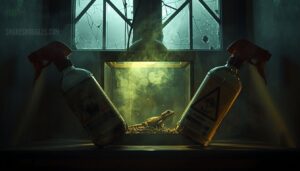
Never mix bleach solutions with ammonia-based cleaners — not even accidentally. This combination triggers chloramine gas toxicity almost instantly, and hydrazine generation danger follows in excess ammonia conditions. Both gases rapidly fill enclosed terrariums.
Never mix bleach and ammonia — the reaction creates toxic gases that fill enclosed spaces within minutes
| Reaction | Risk |
|---|---|
| Bleach + Ammonia | Chloramine gas, pulmonary edema risks |
| Excess Ammonia | Hydrazine — explosive, toxic liquid |
| Confined Space | Lethal concentration hazards within minutes |
Confined spaces amplify risks, as lethal concentrations can develop within minutes. Emergency ventilation steps may not suffice to mitigate hazards. Always store chemicals separately to prevent accidental exposure.
How Harsh Fumes Affect Children and Reptiles

Those toxic fumes don’t just smell bad — they actively harm the most vulnerable in your home:
- Respiratory Irritation double lower respiratory infection risk in young children
- Lung Development suffers lasting damage from repeated chemical toxicity exposure
- Neurological Impact includes attention, memory, and behavioral health disruption
- Skin Absorption happens fast — reptiles absorb harsh residues through permeable skin
Always follow ventilation and dilution guidelines for reptile cleaning.
Is Dawn Dish Soap Okay for Reptiles?
Dawn might seem harmless—gentle enough for wildlife rescues—but ingredient safety is the real issue here. Dawn contains surfactants that cause skin barrier damage, and its regulatory labeling never mentions reptile care.
Rinse reliability is nearly impossible to guarantee, making owner experimentation risky. For chemical toxicity concerns and pet hygiene, reptile-specific cleaners are always the best practices for safe reptile enclosure sanitation.
Safe Spray Use Around Children
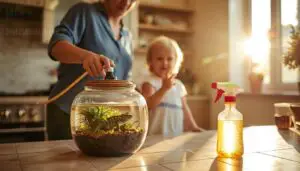
Even the safest spray needs to be used the right way, especially with little ones in the house. A few simple habits make a real difference when cleaning your reptile’s enclosure around kids.
Here’s what to keep in mind before you reach for that bottle.
Remove Kids and Reptiles Before Application
Before you reach for that spray bottle, move your kids and reptile out first — no exceptions. Set your reptile up in a secure holding container with ventilation and paper towels, and relocate it away from the spray zone. Follow a simple safety checklist: child exclusion protocol first, then pre-spray relocation.
A reptile-safe cleaner is still a cleaner — ventilate the area and keep little ones out until everything’s dry.
Scrub Debris Before Disinfecting Surfaces
Scrubbing debris away before spraying isn’t just a good habit — it’s the step that makes everything else actually work. Organic waste, urates, and shed skin create a debris barrier that can cut your child-safe cleaner’s effectiveness in half.
Use soft bristle brushes with an S-shaped scrub motion, top to bottom, for biofilm disruption.
Enzyme-based cleaning solutions help with urate dissolution during spot-cleaning and deep-clean sessions.
Follow Dilution and Contact-time Directions
Getting the dilution ratio right is non-negotiable. F10SC requires a precise 1:250 mix—too weak, and pathogens survive; too strong, and it irritates reptiles.
Warm rooms accelerate evaporation, shrinking contact time rapidly. Always use measuring syringes, not guesswork, for child-safe cleaner preparation.
Label every bottle clearly to ensure kid-proof mixing and maintain reptile safety. Strictly follow instructions to uphold protective measures.
Rinse, Dry, and Ventilate The Enclosure
After spraying, your work isn’t done yet — rinsing, drying, and ventilating are what make a child-safe cleaner truly safe.
- Extended Rinse – Flush every surface with lukewarm water for at least 60 seconds, hitting corners where residue hides.
- Microfiber Drying – Wipe down surfaces immediately, then air-dry 4–8 hours.
- Airflow Optimization – Run a low fan 30 minutes to clear lingering fumes.
- Humidity Management – Keep interior humidity below 60% to stop mold growth.
- Residue Testing – Sniff for any odor; if present, ventilate two more hours before reintroducing your reptile.
Following ventilation and dilution guidelines for reptile cleaning protects everyone — drying time importance is real, and a bone-dry enclosure is simply safer for reptiles and kids alike.
Spot-cleaning and Deep-cleaning Schedules
Think of cleaning your reptile’s home like tidying your own — little efforts daily prevent big messes later.
Your Daily Spot Cleaning Routine involves removing waste and rinsing bowls every day.
The Weekly Maintenance Checklist covers decor and liners.
A Monthly Deep Clean requires full substrate replacement.
Using child-safe cleaner and safe-for-reptiles products ensures worry-free spot-cleaning and deep-clean cycles for everyone.
When DIY Vinegar or Hydrogen Peroxide Helps
For light routine cleaning between deep cleans, a vinegar acetic acid solution—one part white vinegar to one part water—manages mineral film and mild mold control beautifully. Follow this with hydrogen peroxide using the two-step sequence: vinegar first for surface pH reduction, peroxide second for disinfection.
Both are child-safe cleaning options and safe for reptiles.
Soak accessories with the accessory soaking method, then rinse them completely.
Frequently Asked Questions (FAQs)
What disinfectant is safe around kids?
HOCl and enzyme-based cleaning solutions top the list of safe options. They are Certified Pediatric Safe, carry low Dermal Irritation Ratings, and adhere to Child Exposure Limits.
These features make them genuinely child-safe cleaners with non-volatile ingredients families can trust.
Is Dawn dish soap okay for reptiles?
Dawn dish soap is not suitable for reptiles. Its surfactants cause skin irritation, leave residue risks on enclosure surfaces, and can affect the reptile respiratory system. Veterinary guidance consistently recommends purpose-made alternative grease removers instead.
Can reptile sprays irritate pets with respiratory conditions?
Yes, they can. Sprays with high VOC concentration or ammonia are a real potential asthma trigger for cats, dogs, and small mammals — vapor inhalation risk spikes quickly in poorly ventilated rooms.
How often should terrarium cleaning products be replaced?
Replace terrarium cleaners when they expire or change smell or color.
Keep up with Expiration Date Logging and Storage Condition Checks.
Diluted solution turnover is also important — toss old mixes and make fresh batches each cleaning day.
Are reptile cleaners safe for amphibian enclosures too?
Not every reptile cleaner works for amphibians. Their skin absorption and moisture retention make residue persistence a real risk. Always choose amphibian-specific dilution guidelines and nontoxic biodegradable disinfectants to avoid harmful chemical exposure.
Do cleaning sprays affect reptile skin or scales?
Yes, cleaning sprays can affect reptile skin. Chemical skin absorption occurs through their thin, permeable scales. Residue burn risk is real.
Wrong cleaners disrupt scale shedding and cause microbiome disturbance over time.
What cleaning tools work best with these sprays?
Got the right spray — but what about the tools? Pair it with microfiber cloths, soft scrub brushes, plastic scrapers, detailing toothbrushes, and non-scratch sponges for thorough, safe reptile habitat cleaning.
Conclusion
Picture a Saturday morning: your daughter helps mist the bearded dragon’s tank, then runs straight to the kitchen for a snack—no panic, no "don’t touch anything." That’s exactly what the right reptile cleaning sprays for families with kids make possible.
When your products are genuinely non-toxic, low-fume, and reptile-safe, the enclosure stops being a hazard zone. Clean tanks, calm animals, and kids who can be kids—that’s the real win.