This site is supported by our readers. We may earn a commission, at no cost to you, if you purchase through links.

Most new snake owners get blindsided by the same preventable mistake: they underestimate the precision required for proper snake care. A ball python that seems perfectly healthy can develop respiratory infections within days if your temperature drops just five degrees too low, or refuse food for months if humidity stays below 50 percent.
These aren’t dramatic exaggerations—they’re common scenarios that catch beginners off guard. The difference between a thriving snake and a struggling one often comes down to mastering a few fundamental care elements. Once you understand the specific environmental needs, feeding protocols, and health monitoring techniques for your species, you’ll avoid the pitfalls that lead to costly vet visits and unnecessary stress for both you and your snake.
Table Of Contents
- Key Takeaways
- Choosing The Right Pet Snake
- Setting Up an Ideal Snake Habitat
- Feeding and Nutrition Essentials
- Daily Care and Maintenance Routines
- Monitoring Snake Health and Safety
- Frequently Asked Questions (FAQs)
- Is it easy to take care of a snake?
- Can I hold my snake all day?
- What do snakes need in their tank?
- Are snakes easy to care for?
- How to take care of a snake for beginners?
- What does a snake need in its cage?
- How do I keep my snake happy?
- How do you take care of a snake?
- How to care for a snake in a natatorium?
- How do you handle a pet snake?
- Conclusion
Key Takeaways
- Snake care success depends on precision with environmental parameters—ball pythons can develop respiratory infections if temperatures drop just five degrees or refuse food for months when humidity stays below 50 percent.
- Beginner-friendly species like ball pythons, corn snakes, and king snakes are forgiving and manageable, but you’re committing to 15 to 25 years of consistent care with proper habitat maintenance.
- Your snake’s enclosure requires three critical components: appropriate terrarium size with secure lids, temperature gradients of 90°F basking spots with 78–82°F cool sides controlled by thermostats, and 60–80% humidity maintained through substrate choice and monitoring.
- Daily spot cleaning, weekly deep cleaning (replacing 25% of substrate), and immediate attention to warning signs like wheezing, skin lesions, or regurgitation prevent the costly vet visits that catch most beginners off guard.
Choosing The Right Pet Snake
Your first snake should set you up for success, not stress.
Beginner-friendly species like corn snakes and ball pythons are forgiving, adaptable, and perfect for first-time keepers.
Species vary widely in their care needs, adult size, and how comfortable they’re with handling.
Let’s look at the best beginner options and what makes each one worth considering.
Popular Beginner-Friendly Species
Your first pet snake should be forgiving, calm, and well-suited to captive life. Ball pythons, corn snakes, and king snakes are excellent beginner species because of their manageable size, docile snake behavior, and straightforward python care or boa habitat requirements. These species thrive under routine snake care and rarely pose handling challenges.
- Ball python: Hardy, tolerant of minor husbandry mistakes, and slow-moving
- Corn snakes: Active but gentle, with vibrant color patterns
- King snakes: Bold eaters and adaptable to various enclosure setups
Size and Lifespan Considerations
Before you bring home a pet snake, know what you’re signing up for. Growth patterns and lifespan factors matter as much as temperament.
Most small pet snakes reach their size limits within 12 to 24 months, averaging 3 to 5 feet in many species. Health correlations between proper snake habitat, reptile care, and age considerations mean you’re committing to 15 to 25 years of consistent snake care and maintenance.
Most pet snakes reach adult size in one to two years, but proper care means committing to 15 to 25 years of their life
Temperament and Handling Needs
Beyond size and years, snake behavior shapes your day-to-day experience. Temperament types vary widely, so handling tips matter from day one.
Here’s what you need to know about handling and animal behavior:
- Start handling after 5 to 7 days of acclimation and wait 48 hours post-feeding
- Keep sessions short—5 to 10 minutes reduces stress
- Support the entire body with both hands using gentle handling techniques
- Watch for stress signals like rapid tongue flicking or head lifting
- Corn snakes and king snakes usually accept routine contact better than skittish species
Proper snake acclimation and handling builds trust. Your pet snake will show clearer communication when you respect its comfort zones and use consistent stress reduction practices.
Consistency pays off—building trust through proper snake handling techniques helps nervous reptiles relax and become more comfortable over time.
Setting Up an Ideal Snake Habitat
Your snake’s enclosure isn’t just a container—it’s the foundation of their entire well-being. Getting the setup right from day one means fewer health issues and a calmer, more comfortable pet.
Let’s walk through the three essential components you’ll need to create a habitat where your snake can truly thrive.
Terrarium Size and Secure Lids
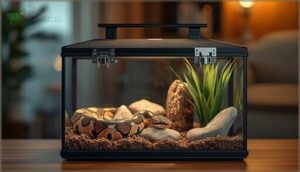
Your snake enclosure is its entire world, so getting the terrarium design right matters. Hatchlings thrive in 20-gallon setups, but you’ll upgrade to 40 gallons or more as your snake reaches 12–18 inches.
Arboreal species need taller reptile habitat designs with at least 24 inches of vertical space. Secure lid security with snap latches or hinged locks to prevent escapes—snakes are surprisingly strong. When choosing lids, exploring the range of terrarium lid material options can help you select the best fit for your snake’s needs.
| Snake Type | Minimum Terrarium Size | Lid Security Feature |
|---|---|---|
| Hatchling (small species) | 20 gallons | Snap locks |
| Adult ball python | 40 gallons (long) | Hinged lid with latch |
| Large boas | 55–125+ gallons | Spring latches, tight seal |
Weekly inspections keep your snake habitat safe—check latches after every cleaning and confirm ventilation systems aren’t blocked.
Heating, Lighting, and Humidity Control

Within your habitat terrarium, temperature gradients make all the difference—set heat sources like heating pads or ceramic emitters to create a 90°F basking spot while the cool side stays around 78–82°F.
Use thermostat settings with digital precision (±1–2°F) and confirm surface temps with a thermometer. Track humidity levels using a hygrometer, and maintain 60–80% RH for tropical species with a subtle mister.
Substrate, Hides, and Enrichment

Your habitat terrarium needs the right foundation material—choose coconut fiber or cypress mulch to buffer humidity naturally, or use paper-based substrates for easy spot cleaning.
- Add tight hides sized to your snake’s body to reduce stress
- Include vertical branches for climbing species that prefer height
- Refresh leaf litter seasonally to keep enrichment techniques varied
Monitor substrate moisture with a hygrometer to support healthy shedding cycles. Providing can further promote natural behaviors and improve your snake’s well-being.
Feeding and Nutrition Essentials
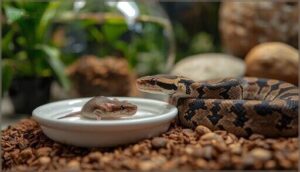
Getting your snake’s diet right is one of the most important parts of keeping them healthy. Unlike other pets, snakes have simple nutritional needs—they’re pure carnivores who thrive on whole prey items.
Let’s break down what you need to know about feeding frequency, prey selection, and water maintenance.
Types of Prey and Proper Prey Size
Most pet snakes thrive on frozen-thawed rodents—mice for smaller species, rats for larger ones. Prey size guidelines suggest offerings roughly equal to your snake’s girth at its widest point. This ensures safe swallowing and proper nutrient balance.
Juveniles usually start with pinkie mice, while adults graduate to appropriately sized rats. Gut-loading prey items beforehand enhances overall animal nutrition and promotes healthy snake diet and nutrition requirements.
Feeding Frequency and Safe Techniques
Juveniles usually eat every 1 to 2 weeks, while adults feed every 2 to 4 weeks—adjust your feeding schedules based on body condition.
Present thawed prey with tongs from the side, ensuring prey size guidelines match roughly 80 percent of your snake’s girth to prevent digestion issues. Never handle your pet snake during meals or within 48 hours afterward to avoid regurgitation.
Consistent routines support healthy snake nutrition and reduce stress.
Water Requirements and Bowl Maintenance
Fresh water isn’t optional—it’s essential for your pet snake’s hydration needs and humidity control in any reptile habitat setup. Choose a bowl 1.5 to 2 inches in bowl depth to prevent drowning while allowing comfortable soaking during sheds.
For proper snake care and snake enclosure setup, maintain water dishes with these cleaning schedules:
- Replace water daily using dechlorinated tap or bottled water to guarantee water quality.
- Scrub bowls weekly with mild soap to remove slime and bacterial buildup.
- Disinfect monthly in diluted white vinegar, then rinse thoroughly before refilling.
Position bowls away from heat sources to minimize evaporation and substrate contamination.
Daily Care and Maintenance Routines
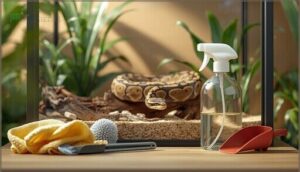
Your snake’s terrarium isn’t a set-it-and-forget-it space. Routine maintenance keeps your pet healthy and prevents disease-causing bacteria from building up in their environment.
Here’s how to establish a cleaning schedule that protects both you and your snake.
Regular Enclosure Cleaning Schedule
Keeping your snake healthy starts with consistent enclosure maintenance. You’ll handle daily spot checks to remove waste immediately, preventing bacterial blooms that threaten respiratory health. Plan a weekly deep cleaning every 7 days—replace 25 percent of substrate, rinse water bowls with reptile-safe soap, and wipe glass surfaces. This sanitation protocol controls humidity and keeps your snake’s environment clean.
| Task | Frequency | Purpose |
|---|---|---|
| Remove feces and shed skin | Daily (spot clean) | Prevents bacterial growth and odor |
| Deep clean substrate and hides | Every 7 days | Maintains airflow and reduces buildup |
| Replace partial substrate | Every 2-4 weeks | Controls humidity and refreshes bedding |
| Full substrate replacement | Every 6-12 months | Eliminates accumulated waste and mold |
| Clean accessories and decor | Every 1-2 weeks | Maintains hygiene in snake enclosure setup |
Disinfecting Surfaces and Accessories
After you spot-clean daily, surface sanitizing protects your snake from pathogens. Use quaternary ammonium disinfectants on glass and plastic—they kill microbes without harsh fumes.
Spray water bowls and hides, then let the product sit for the label’s contact time before rinsing. Wear gloves during cleaning protocols, and keep disinfectant types stored away from the enclosure to maintain safe hygiene practices.
Monitoring and Managing Waste
Beyond cleaning surfaces, waste management keeps your snake’s home healthy. Remove feces daily using gloves and paper towels—prompt disposal methods prevent odor control issues and bacterial growth.
Track waste patterns through written notes; changes signal diet or pet health and wellness concerns. Use separate containment strategies for soiled reptile substrate, and seal bags before disposal.
Consistent sanitation practices protect both you and your snake.
Monitoring Snake Health and Safety
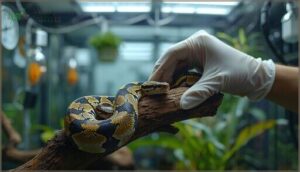
Keeping your snake healthy means staying one step ahead of health problems before they become serious.
You’ll need to recognize what’s normal for your snake and spot the red flags that signal trouble. Let’s walk through the essential health markers to monitor and the safety practices that protect both you and your pet.
Signs of Illness to Watch For
Spotting Common Snake Health Issues early makes all the difference. Your snake can’t tell you when something’s wrong, so you’ll need to watch for subtle clues:
- Respiratory Issues — wheezing, open-mouth breathing, or nasal discharge signal infection
- Skin Lesions — blisters, sores, or unusual patches need Veterinary Care for Reptiles
- Digestive Problems — regurgitation or abnormal stool lasting multiple days
Behavioral Changes or Neurological Signs like head tilting warrant immediate attention.
Shedding, Eating, and Activity Patterns
You’ll notice patterns once you tune in to your snake’s natural Shedding Cycles. Shedding Cycles run every 4 to 6 weeks in juveniles, slowing with age—watch for cloudy eyes and dull skin as signals.
Feeding Habits shift with temperature and rest periods; most healthy snakes eat once every 1 to 4 weeks. Activity Peaks occur at night when your pet explores, patrols, and climbs if enrichment is available.
When to Seek Veterinary Care
When should you rush to a reptile vet instead of waiting? Emergency Signs like open-mouth breathing, seizures, or thick nasal discharge demand same-day Veterinary Care.
Snake Injuries—deep cuts, burns, or post-accident swelling—need immediate attention even if your pet moves normally.
Health Checks catch parasites and infections early, while regurgitation, prolapses, or bloody droppings signal Medical Emergencies requiring urgent Exotic Pet Care and professional Veterinary Medicine.
Safe Handling and Hygiene Practices
After each snake session, thorough Handwashing Techniques and Personal Hygiene safeguard Disease Prevention—washing with soap for 20 seconds removes pathogens that spread through contact.
Safe Handling and Pet Safety follow four principles:
- Support your snake’s mid-body gently to reduce Handling Stress
- Use a Snake Hook for defensive individuals before lifting
- Wait 48 hours post-feeding to prevent regurgitation
- Keep snakes from your face during every session
Proper Animal Husbandry relies on these Safety habits.
Frequently Asked Questions (FAQs)
Is it easy to take care of a snake?
Taking care of a pet snake is surprisingly easy compared to many pets. With the right setup, you’ll spend just minutes daily on feeding, water changes, and quick health checks.
Can I hold my snake all day?
You shouldn’t hold your pet all day.
Most snakes tolerate handling time for ten to thirty minutes at a time, needing long periods in their enclosure to thermoregulate, digest properly, and feel secure.
What do snakes need in their tank?
What belongs inside a good snake enclosure? You’ll need proper tank size, heating options for temperature gradients, and humidity control.
You’ll also need a safe substrate choice, clean water quality, and thoughtful habitat design with hides and lighting for day-night cycles.
Are snakes easy to care for?
Compared with many mammals, reptile husbandry demands less daily attention.
You’ll spot-clean waste, check temperatures, and feed your pet snake weekly rather than multiple times per day, making exotic pet ownership manageable.
How to take care of a snake for beginners?
Your new pet snake thrives when you nail the basics: proper habitat design with thermal gradients, frozen-thawed prey sized correctly, secure snake enclosures, and consistent health checks to catch early warning signs.
What does a snake need in its cage?
Your snake enclosure needs a proper temperature gradient, humidity levels monitored by hygrometer, suitable substrate depth, at least two hide boxes, secure ventilation systems, fresh water bowl, and climbing enrichment for complete habitat management.
How do I keep my snake happy?
Your pet thrives with consistent environmental balance—stable heat gradients, proper humidity, secure hides, and brief, pressure-free handling that reduces snake stress while supporting natural reptile health and positive snake behavior.
How do you take care of a snake?
Think of reptile husbandry as a careful balance. You maintain proper habitat design with temperature gradients, feed frozen-thawed prey weekly, conduct routine health checks, and practice safe snake handling while monitoring snake behavior daily.
How to care for a snake in a natatorium?
Indoor pool environments pose serious risks to reptiles. Chloramine protection requires fully sealed terrariums placed above deck level, away from water.
Natatorium air quality, temperature management, and humidity control demand constant monitoring to prevent respiratory distress.
How do you handle a pet snake?
Don’t let your new friend give you the cold shoulder—approach from the side, support one-third of its body gently, and watch for relaxed curves.
Calm handling builds trust through stress reduction and proper snake acclimation.
Conclusion
Like the ancient ouroboros consuming its own tail, snake care creates a self-sustaining cycle: proper preparation prevents problems, and consistent attention reveals patterns.
Your success doesn’t depend on luck or intuition—it requires following proven protocols for temperature, humidity, feeding, and health monitoring.
Master these fundamentals now, and you’ll spare yourself emergency vet visits later. The snake care knowledge you’ve gained here transforms uncertainty into confidence, giving both you and your reptile a healthier future together.