This site is supported by our readers. We may earn a commission, at no cost to you, if you purchase through links.
Most snake bites happen to people who thought they knew exactly what they were looking at. A quick glance, a half-remembered rule about head shape or color, and suddenly someone’s in an emergency room arguing with a doctor about whether the snake “looked dangerous.”
The truth is, telling venomous snakes apart from harmless ones takes more than folklore—it takes knowing which details actually matter. Some reliable clues are hiding in plain sight, and a few popular “rules” are flat-out wrong in ways that could get you hurt.
Table Of Contents
- Key Takeaways
- How to Tell if a Snake is Poisonous
- Physical Traits of Poisonous Snakes
- Behavioral and Habitat Clues
- Regional Poisonous Snake Identification
- Safety Tips for Snake Encounters
- Frequently Asked Questions (FAQs)
- Are Venomous Snakes More Aggressive Than Non-Venomous Snakes?
- Are Venomous Snakes Faster Than Non-Venomous Snakes?
- Are Venomous Snakes More Difficult to Catch?
- Do All Venomous Snakes Have a Rattler?
- Can Non-Venomous Snakes Bite?
- What is the Difference Between Venom and Poison?
- What Should I Do if I Encounter a Venomous Snake?
- Are There Any Venomous Snakes in North America?
- Is It Safe to Handle the Head of a Dead Snake?
- What are 3 ways to determine if a snake is venomous?
- Conclusion
Key Takeaways
- Heat-sensing pits — tiny holes between a pit viper’s nostril and eye — are one of the most reliable identifiers, since no harmless U.S. snake has them.
- Popular rules like “triangular head means venomous” will get you in trouble, because harmless snakes mimic that shape when scared.
- No single clue is enough — smart identification stacks head shape, eye features, color patterns, and regional knowledge together.
- If you spot a snake, back away slowly to at least 6–10 feet and let it leave on its own terms; a bite is a medical emergency, not a wait-and-see situation.
How to Tell if a Snake is Poisonous
Spotting a venomous snake isn’t always as simple as people think — and bad advice gets passed around more than good information does.
A solid guide to identifying common snake species can save you a lot of guesswork — and maybe some unnecessary panic — the next time you cross paths with one.
A few key visual clues can help you make a faster, smarter call in the field. Here’s what to actually look for.
Key Visual Differences Between Venomous and Non-Venomous Snakes
Snake identification comes down to stacking clues, not relying on just one. For venomous snake characteristics, start with head shapes — pit vipers have that broad, almost arrow-like triangle sitting wide behind the jaw, while harmless snakes taper smoothly from head to neck.
Check tail features too; rattlesnakes carry an obvious rattle. Body markings, scale patterns, and eye colors add more context.
No single trait seals the deal — smart snake identification techniques layer several observations together. However, it’s important to know that even classic rhymes like the one for coral snake identification tips aren’t always reliable in different regions.
Common Myths and Misconceptions
Stacking clues helps, but first you need to ditch the dangerous myths. Snake mythbusting matters because venomous fallacies genuinely get people hurt.
The triangular head rule? Harmless grass snakes flatten their heads when scared, mimicking that exact shape. Round pupils don’t mean safe — cobras have round pupils and they’re deadly. Colorful dangers are real, but so are dull-colored killers.
These reptile misconceptions and common snake identification myths make misleading snake characteristics feel reliable. They’re not. Treat every unknown snake as a potential threat. For example, many people still believe myths such as the triangle-shaped heads myth that can put them at risk.
Physical Traits of Poisonous Snakes
When you spot a venomous snake, your brain wants a quick answer — safe or not?
The good news is that venomous snakes often wear their warning signs right on their bodies. Here are the key physical traits worth knowing.
Head Shape and Size
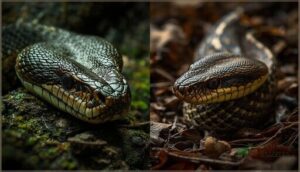
The triangular head shape myth trips up a lot of people. Yes, pit vipers have broad, blocky heads — that’s real. Venom gland size physically widens their skull, giving pit viper heads that squared “cheek” look.
But defensive posturing changes everything. Harmless rat snakes flatten into triangular head forms in seconds. For solid venomous snake identification, treat head shape as one clue, never the whole answer.
Eye Pupil Shape and Facial Pits

Head shape got you started — now look at the eyes and face.
The expression in a snake’s eyes can reveal a lot too — check out this deeper look at what snake dreams really mean to piece the full picture together.
Pupil shape variations matter, but don’t trust them alone. Many pit vipers have elliptical pupils, while coral snakes — genuinely venomous — have round ones. Snake eye anatomy misleads constantly.
Heat-sensing pits are more reliable. These facial pit functions give pit viper characteristics away fast:
- Tiny hole between the nostril and eye
- Present on both sides of the face
- Unique to pit vipers — no harmless U.S. snake has them
Thermal sensing mechanisms let pit vipers hunt in total darkness. For snake identification, a visible pit beats pupil-guessing every time.
Color Patterns and Markings
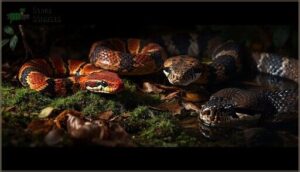
Color patterns are genuinely useful — but tricky. Snake coloration gives you visual cues, not guarantees. For venomous snake identification, focus on these pattern recognition basics:
| Snake | Pattern | Key Marking |
|---|---|---|
| Coral Snake | Red, yellow, black bands | Red touches yellow |
| Copperhead | Hourglass crossbands | Wider on sides |
| Cottonmouth | Dark crossbands (fades with age) | High contrast when young |
Marking variations and camouflage strategies mean mimics exist everywhere. Reptile identification through color patterns alone will burn you — always combine visual cues with region and other traits for reliable venomous snake identification.
Tail Features (Rattles, Buttons, Etc.)
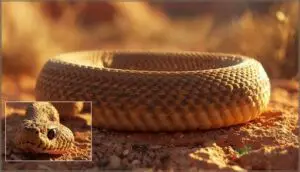
The rattlesnake’s tail is basically a built-in alarm system. Each rattle segment is hollow keratin — the same stuff as your fingernails — and vibrates dozens of times per second when the snake feels threatened.
Baby rattlesnakes carry just a single button that makes no sound at all, so silence doesn’t mean safe. For broader snake identification, pit vipers also show single-row tail scales underneath — a useful but close-range clue.
Behavioral and Habitat Clues

Physical traits are a great starting point, but behavior and habitat tell a story too.
Venomous snakes often give themselves away by how they act and where they hang out.
Here’s what to watch for.
Defensive Postures and Warning Behaviors
A snake’s body language is one of the clearest warning signs you’ll ever see. When threatened, many venomous snakes coil tight, pull their head into an S-curve, and fix their eyes on you — classic defensive postures signaling a possible strike.
Rattlesnakes buzz their tails fast, sometimes over 40 times per second. That audible cue isn’t subtle. Even hissing louder as you step closer is a deliberate defensive mechanism. Read those signals and back off.
Preferred Habitats of Venomous Snakes
Venomous snakes aren’t hiding randomly — they’re exactly where survival makes sense. Knowing their preferred snake habitat puts you one step ahead.
- Forest floors shelter timber rattlesnakes and copperheads near fallen logs and rocky outcrops
- Wetland areas are cottonmouth territory — slow streams, pond edges, flooded timber
- Desert landscapes and arid environments host rattlesnakes in burrows and rocky outcrops
- Farmland edges attract pit vipers where rodents congregate near stored grain
- Rocky hillsides offer pit vipers den sites and temperature control year-round
Practice basic wildlife safety precautions in all these zones.
Mimicry by Non-Venomous Species
Nature has a dark sense of humor — some of the best snake impersonation acts come from completely harmless species.
Batesian mimicry is the science behind it: non-venomous snakes evolve warning signals that mirror dangerous ones. Gopher snakes flatten their heads, vibrate their tails, and fool even experienced hikers.
These defensive tactics make venomous snake identification techniques genuinely tricky, so treat every unknown snake with respect.
Regional Poisonous Snake Identification

Where you live matters more than any general rule in identifying dangerous snakes. A handful of species in your region are responsible for almost every serious encounter — and knowing them by sight is your real safety net.
Your region’s few dangerous species are responsible for almost every serious encounter — know them by sight
Here’s a look at venomous snakes by continent and the key features that set the local ones apart.
Notable Venomous Snakes by Continent
Every continent has its own cast of dangerous characters — and knowing them by region makes snake identification a lot more manageable. Here’s a quick tour of the venomous animals you’re most likely to encounter:
- Africa: African vipers like the puff adder and black mamba top the danger list
- Asia: Asian cobras, kraits, and Russell’s vipers cause the most bites
- Europe: European adders are usually mild but still venomous
- Americas: American rattlesnakes and other pit vipers dominate North and South America
- Australia: Australian taipans and brown snakes — elapids, all of them — make this continent uniquely hazardous
Distinguishing Features of Local Dangerous Species
Zooming in on your local species makes snake identification way more practical. In Virginia, the regional hazards come down to three: the eastern copperhead, timber rattlesnake, and northern cottonmouth.
Copperheads are the most common — watch for their hourglass patterns and chunky snake head shapes. Timber rattlesnakes announce themselves with a buzz. Cottonmouths flash white mouths near water.
Knowing these local species — their snake body colors, pit vipers‘ broad heads — is your sharpest tool for distinguishing venomous from nonvenomous snakes confidently.
Safety Tips for Snake Encounters
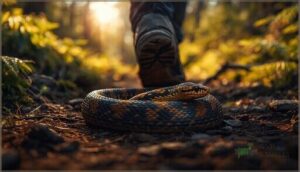
Knowing how to identify a snake is only half the battle — knowing what to do when you see one is just as important.
A few simple habits can go a long way toward keeping you safe out there. Here’s what you should keep in mind when you come across a snake.
Keeping a Safe Distance
When you spot a snake, distance is key. Most wildlife encounter protocols recommend staying at least 6 to 10 feet away — well outside typical snake strike zones. Safe distance guidelines exist for good reason: a rattlesnake can strike up to two-thirds of its body length.
Watch for these warning signs and defensive postures:
- Coiled body with raised head
- Rapid tongue flicking
- Audible rattling or hissing
Protective Clothing and Outdoor Practices
Distance helps, but the right gear takes your outdoor safety a step further. Sturdy boots are your first line of defense for avoiding snake bites — thick leather deflects fangs better than sneakers ever will.
| Protection Layer | Best Use | Key Benefit |
|---|---|---|
| Protective Footwear | Rocky or brushy trails | Deflects fang strikes |
| Gaiter Benefits | Tall grass, dense brush | Shields ankle to knee |
| Long Pants | All snake country | Adds fabric barrier |
Smart trail navigation — staying on cleared paths — and a tidy campsite setup reduce surprise wildlife encounters dramatically.
What to Do if You See a Snake
Gear helps, but snake awareness is your real edge in the field. If you spot a snake, stop moving — stay still, find your exit, then slowly back away.
Aim for at least 6 to 10 feet of safe distance. Don’t throw things, don’t chase it, and skip the snap judgment on snake identification. Let it leave — that’s good outdoor safety and smart wildlife encounter etiquette.
When to Seek Professional Help
Some situations call for more than common sense — they call for a phone call. A snake bite is a medical emergency, full stop. Don’t wait for symptoms to worsen before dialing 911 or heading to an emergency department.
For venomous snakes on your property, skip the DIY approach and contact wildlife control or a licensed snake removal service. Professional assistance keeps everyone — including the snake — safer.
Frequently Asked Questions (FAQs)
Are Venomous Snakes More Aggressive Than Non-Venomous Snakes?
Not really. Most snakes — venomous or not — would rather disappear than fight. Aggression is mostly myth. What looks threatening is usually just a defensive display, a last warning before retreat.
Are Venomous Snakes Faster Than Non-Venomous Snakes?
Not really. Snake speed comparison shows no clear edge for venomous snakes — non-venomous agility often matches or beats them.
A venomous strike, though, happens in under 2 seconds. Distance is always your friend.
Are Venomous Snakes More Difficult to Catch?
Yes — venomous snakes are generally harder to catch. Their defensive behaviors, fast strikes, and the serious catch risk factors involved mean safe venomous snake handling requires proper tools, professional training, and a healthy respect for what they can do.
Do All Venomous Snakes Have a Rattler?
No, not even close. Most venomous snakes — cobras, mambas, kraits — have no rattler at all. Rattlesnakes are the exception, not the rule, and rattles evolved only in the Americas.
Can Non-Venomous Snakes Bite?
Like a cornered cat, a non-venomous snake will absolutely bite. Snake behavior is simple: feel threatened, react fast.
Non-venomous bites rarely cause serious harm, but snake safety still means keeping your distance.
What is the Difference Between Venom and Poison?
Venom is injected — snakes deliver it through fangs. Poison harms through touch or ingestion. Technically, most “poisonous snakes” are venomous. It’s a small but important distinction in toxicology.
What Should I Do if I Encounter a Venomous Snake?
Freeze first — that old frontier instinct still works. Back away slowly, keep your distance, and don’t provoke it.
Let the snake move on its own. That’s your safest snake attack protocol.
Are There Any Venomous Snakes in North America?
Yes — North America is home to several venomous snakes, including rattlesnakes, copperheads, cottonmouths, and coral snakes. They’re found across diverse habitats, from deserts to wetlands, throughout the continent.
Is It Safe to Handle the Head of a Dead Snake?
No, it isn’t. A severed snake head can still bite — and inject a full dose of venom — hours after death.
Postmortem reflexes are no joke. Treat every dead snake head as live.
What are 3 ways to determine if a snake is venomous?
Look for three things: a broad, blocky head, heat-sensing pits between the nostril and eye, and bold color patterns. No single clue is foolproof — use all three together.
Conclusion
In the context of snakes, a little knowledge goes a long way—but half-knowledge can get you hurt. Knowing how to tell if a snake is poisonous means looking past old myths and focusing on what actually matters: pupil shape, facial pits, regional species, and context.
You don’t need to become an expert overnight. You just need enough accurate information to stay calm, keep your distance, and make smart decisions when it counts.