This site is supported by our readers. We may earn a commission, at no cost to you, if you purchase through links.
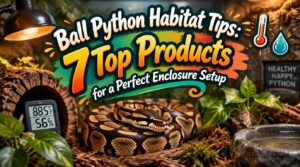
A ball python can slip through a gap just 1/4 inch wide. That’s narrower than your pinky. One loose lid, and your snake vanishes behind the couch.
Good ball python habitat tips start with security, then move to the details that keep your snake healthy. You’ll need a warm side near 90°F, humidity that climbs during shedding, and a substrate deep enough for burrowing. Get one number wrong, and your snake stops eating or struggles to shed. Get them right, and your python thrives.
Here’s how to build an enclosure that works, plus seven products that make the job easier.
Table Of Contents
- Key Takeaways
- Choose a Secure, Properly Sized Ball Python Enclosure
- Control Ball Python Temperature, Humidity, and Lighting
- Choose Substrate, Hides, and Enrichment for Natural Behavior
- Top 7 Ball Python Habitat Setup Products
- 1. ReptiSun UVB Fluorescent Light Bulb
- 2. Exo Terra Repti Glo 20 Compact Fluorescent Terrarium Lamp
- 3. Compressed Coconut Chip Reptile Bedding
- 4. aspen snake bedding for reptiles
- 5. Galapagos Natural Sphagnum Moss Terrarium
- 6. Forest Floor Animal Bedding Substrate
- 7. Flukers Repta Vines Pothos Reptile Terrarium Decor
- Maintain a Clean, Comfortable Ball Python Habitat
- Frequently Asked Questions (FAQs)
- What do ball pythons like in their habitat?
- How cold is too cold for a ball python?
- Is 90% humidity too high for a ball python?
- Do ball pythons like clutter?
- Is 70 degrees too cold for a ball python at night?
- How Often Should I Clean My Ball Python’s Enclosure?
- What is the Best Way to Feed My Ball Python?
- How Often Should I Handle My Ball Python?
- What Plants Are Safe to Have in a Ball Python Enclosure?
- Are Ball Pythons Vocal?
- Conclusion
Key Takeaways
- Lock down your enclosure first, since ball pythons can squeeze through gaps of 1/4 inch, so use secure latches, test them weekly, and size the tank to at least 1.5 times your snake’s length.
- Keep a temperature gradient with a 88–92°F warm side and a 78–80°F cool side, controlled by a thermostat that cuts off at 95°F.
- Hold humidity at 50–60% and raise it to 60–70% only during shedding, since staying above 70% for long invites mold and health problems.
- Give your snake 2–4 inches of burrowing substrate and two snug hides (one moist, one dry), then spot clean daily and deep clean monthly to keep it healthy.
Choose a Secure, Properly Sized Ball Python Enclosure
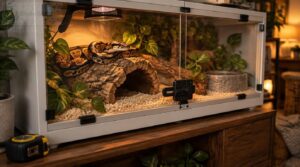
Because ball pythons are gifted escape artists, your enclosure decides how safe your snake stays. Start with enclosure size. A hatchling does fine in a 20-gallon long, while an adult needs 40 to 55 gallons. Make the length at least 1.5 times your snake’s total length.
Since a loose lid is all it takes for a ball python to slip out, pair the right size with secure latches, and check this ball python care and housing guide for escape-proofing tips.
Next, choose an escapeproof enclosure. Gaps larger than 1/4 inch are too big. Lid lock security matters, so use reptile-rated clips or magnet latches and test them weekly. A frontopening door design keeps handling stress low and makes cleaning easier. Think of a loose latch like a screen door in a hurricane.
A loose latch on a snake enclosure is like a screen door in a hurricane, so lock it tight and test it weekly
Control Ball Python Temperature, Humidity, and Lighting
Once your enclosure is locked down, you can set up the climate inside it. Your snake can’t adjust a thermostat, so you do it for them.
Build a temperature gradient across the tank. Aim for a basking temperature of 88 to 92°F on the warm side and 78 to 80°F on the cool side. Check with two thermometers at different heights. Run a thermostat with a cut-off at 95°F, and practice monthly thermostat calibration. If probes differ by more than 2°F, replace them.
Keep humidity levels near 50 to 60%, and raise them to 60 to 70% during shedding. Stay below 70% long term.
For a closer look at how these humidity and temperature needs play out day to day, see this butter ball python care guide.
Once your enclosure’s humidity is dialed in, you can start exploring the fun side of the hobby, like how the Candino ball python morph and its genetics work.
If your snake’s shed looks patchy or its belly scales turn gray, this king snake humidity guide can help you adjust the enclosure before small problems grow.
Since a good humidity setup is only part of the budget, this ball python cost and care guide breaks down what first-year and ongoing expenses really look like.
Add UVB lighting rated 5 to 10%, mounted 12 to 18 inches above the basking spot.
Choose Substrate, Hides, and Enrichment for Natural Behavior
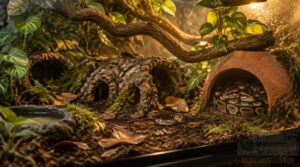
With the climate dialed in, you can furnish the inside. Start with substrate options, because they affect humidity and digging. Coconut fiber holds moisture, aspen is easy to spot-clean, and a forest floor mix gives you a true naturalistic terrarium setup. Use 2 to 4 inches so your snake can burrow.
Build the layout in this order:
- Add two hiding spots, one moist and one dry, on the warm and cool sides.
- Pick hides 3 to 4 inches wide so your python can press against the walls.
- Add a multi-entry cork log for crevice security.
- Mount climbing branches and vines for habitat enrichment.
- Rotate their locations weekly.
Size matters. Match enclosure size to your snake’s length, then keep everything secure.
Since climbing species need height and ground-dwellers need floor space, this snake cage size and layout guide shows how to arrange hides and branches inside.
Top 7 Ball Python Habitat Setup Products
You’ve set up the enclosure, so now it’s time to equip it. The seven products below cover the lighting, bedding, and decor that keep your ball python’s habitat safe and comfortable. Each one helps achieve your goal of a stable, natural setup.
1. ReptiSun UVB Fluorescent Light Bulb

Think of UVB lighting as a slice of sunlight your snake never gets indoors. The ReptiSun UVB Fluorescent Light Bulb can supply it, but it’s optional support for ball pythons, not a requirement.
Choose the 5.0 tube, mount it in a reflector hood, and check placement with a UV meter. Run reptile lighting cycles of 12 hours, then replace the tube every six months.
| Feature | Detail |
|---|---|
| Role | Optional support |
| Tube | 5.0 |
| Photoperiod | 12 hours |
| Replace | Every six months |
| Hood | Reflective |
2. Exo Terra Repti Glo 20 Compact Fluorescent Terrarium Lamp
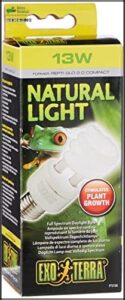
While your python needs warmth and UVB, the Exo Terra Repti Glo 20 does something simpler: bright, natural-looking daylight. It’s an ambient bulb, not a heat source.
Don’t treat it as your main UVB lighting. Match your lighting and UVB needs with these steps:
- Screw it into a standard fixture above the mesh.
- Set a timer for 12 hours, matching reptile lighting cycles.
- Add a dedicated basking lamp for warmth.
- Keep your reptile lighting photoperiod consistent daily.
Enjoy vivid color.
3. Compressed Coconut Chip Reptile Bedding
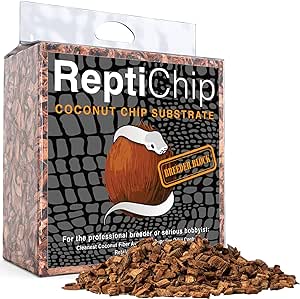
One 72 quart brick of Compressed Coconut Chip Reptile Bedding gives you steady humidity without a swampy cage. Add water, let it expand, then spread a light, even layer. Its substrate moisture retention keeps humidity near 50 to 60 percent, and it traps odor and waste between cleanups.
Don’t overdo the water. Soggy chips can mold, so spot clean often and let it dry before rehydrating. Pair humidity control with airflow in your reptile enclosure design. Bioactive terrarium elements fit.
4. aspen snake bedding for reptiles
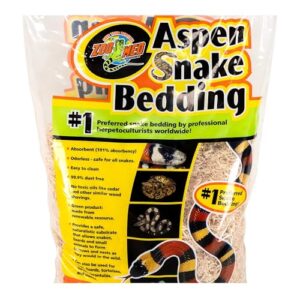
Zoo Med’s aspen snake bedding is 99.9 percent dust free, and it’s made from renewable aspen fiber with no cedar oils. You get a clean, odor-free option when coconut chips feel too damp.
Its low substrate moisture retention makes humidity control easier in dry to moderate setups. Spot clean often. The pale shavings show waste fast, and they hold tunnels well, so your ball python can burrow.
Smart reptile enclosure design still matters. Add hiding spots and watch for mold.
5. Galapagos Natural Sphagnum Moss Terrarium
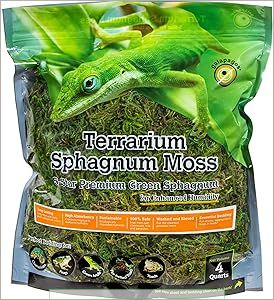
Picture a cool, dewy forest floor tucked into one corner of your reptile enclosure. That’s what a damp moss hide feels like to a shedding snake.
Galapagos Natural Sphagnum Moss Terrarium is a humidityholding substrate that soaks up water and releases it slowly, so it’s great for reptile humidity control. Rinse it first, since some keepers report dye bleed.
- Use it in one hide, not everywhere.
- Keep it damp, never soaked.
- Replace dirty moss fast.
- Maintain airflow to limit mold.
6. Forest Floor Animal Bedding Substrate
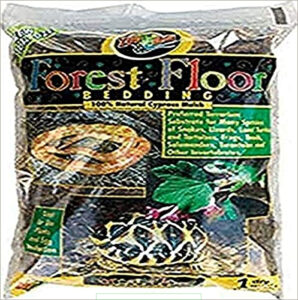
Want more coverage than moss alone? Forest Floor Animal Bedding Substrate is a humidity-holding substrate that gives your ball python a natural, tunnel-friendly floor. Among reptile substrate types, it earns its place through steady moisture retention, which helps sheds go smoothly.
Keep substrate depth around two to three inches so burrowing feels easy. Spot clean often, because waste hides between chips. Re-wet when dry.
| Task | Reason | Timing |
|---|---|---|
| Spot-clean | Waste | Daily |
| Re-wet | Dryness | Weekly |
| Depth | Burrowing | Monthly |
| Sort chips | Safety | Setup |
7. Flukers Repta Vines Pothos Reptile Terrarium Decor
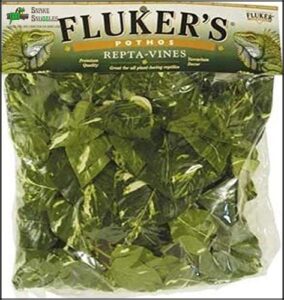
Bare glass makes a ball python feel exposed. Flukers Repta Vines Pothos fixes that fast.
This reptile terrarium decor runs about six feet, so you can bend it around hides, branches, and corners. It adds climbing structures and overhead cover, which are simple reptile enrichment techniques.
- Test the suction cups often, since glass makes them slip.
- Cover every sharp wire end.
- Rinse the vines regularly.
- Trim leaf spacing to keep your basking spot clear.
It’s reptile-safe decor with minimal effort.
Maintain a Clean, Comfortable Ball Python Habitat
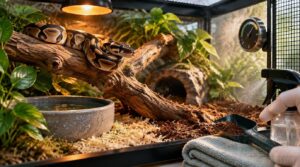
Your gear is in place, so keep it that way. A clean habitat keeps your ball python healthy.
Spot clean daily. Remove feces, shed remnants, and soiled substrate right away. Refill the water bowl with fresh, filtered water every day.
Plan to deep clean monthly. Move your snake to a secure tub, scrub every surface with a reptile-safe disinfectant, rinse well, and dry everything before returning your snake. Swap the substrate during this time.
For substrate mold prevention, keep bedding damp only where humidity needs it. Proper ventilation clears stale, wet air. Check your gauge often, because enclosure ventilation balance holds humidity steady without soggy corners. Log each cleaning, and you’ll catch problems early. That habit takes only a minute.
Frequently Asked Questions (FAQs)
What do ball pythons like in their habitat?
Your ball python likes feeling secure. Give it snug hiding spots on both sides.
It also wants a clear temperature gradient, steady humidity levels, proper ventilation, and an enclosure size that fits its whole body.
How cold is too cold for a ball python?
Anything below 75°F is too cold, and your snake turns sluggish. Keep your cool side 76–80°F and hold a steady temperature gradient. Check Thermostat Calibration, watch Nighttime Temperature Drop, and rely on reptile temperature monitoring.
Is 90% humidity too high for a ball python?
Yes, 90% is too high if it lasts. Keep humidity levels near 50–60%, with a reptile shedding humidity bump.
Trust your hygrometer usage, add airflow for ambient humidity maintenance, and check Ball Python Habitat Temperatures.
Do ball pythons like clutter?
Think a crowded tank feels cozy? It doesn’t.
Clutter blocks warm and cool zones. Keep a few hiding spots and climbing structures, leave room, and match enclosure size and proper ventilation to snake behavioral needs.
Is 70 degrees too cold for a ball python at night?
70°F is the lowest safe nighttime reading. Expect a mild nocturnal temperature drop, but keep a thermal gradient, verify thermostat calibration, add a heat mat below that, and hold humidity range 50-60 with proper ventilation.
How Often Should I Clean My Ball Python’s Enclosure?
Myth: weekly full cleanings are essential. They aren’t. Spot clean daily, rinse the water bowl weekly, and deep clean monthly, replacing soiled substrate.
Disinfect hides, then dry everything so your humidity and ventilation stay balanced.
What is the Best Way to Feed My Ball Python?
Ready to perfect your ball python diet? Offer thawed rodents at night with tongs.
Keep a feeding schedule, add a rodent tunnel simulation hide, and check water bowl placement. Refusals? Book a reptile vet consultation.
How Often Should I Handle My Ball Python?
Your snake wants a quiet life, not a cuddle. Handle your ball python once or twice weekly for 10-15 minutes, using a loose grip. Wait 24-48 hours after meals, skip sheds, and watch for balling up.
Before every session, wash and sanitize your hands, since proper handling preparation removes pathogens and food smells that could make your snake mistake you for a meal.
What Plants Are Safe to Have in a Ball Python Enclosure?
Why gamble? Pick non-toxic plants like spider plant, Boston fern, and bromeliads. Skip pothos. Quarantine first.
Since corn snakes burrow and roughly handle their setup, this list of safe plants for a corn snake terrarium helps you choose sturdy greenery that stays healthy without soggy roots.
Reptilesafe decor suits reptile naturalistic design when reptile enclosure size and reptile ventilation systems allow; UVB lighting optional here.
Are Ball Pythons Vocal?
Hissing fades within minutes. Ball pythons lack vocal cords, so sounds are glottis airflow. Wheezing signals respiratory infections. Fix your snake enclosure setup with ball python natural habitat conditions, solitary housing, and reptile stress reduction.
Conclusion
Most ball pythons live 20 to 30 years in captivity, and some pass 40. That’s a long relationship built on one good setup.
These ball python habitat tips come down to three habits. Keep the enclosure escape-proof. Hold the warm side near 90°F and let humidity rise at shedding time. Give your snake deep substrate and a snug hide.
Check the numbers weekly, and your python will reward you with decades of calm, steady health.