This site is supported by our readers. We may earn a commission, at no cost to you, if you purchase through links.

A corn snake hatches in dull tan, then spends two years turning into a molten orange-red sunset edged in black ink. That slow transformation is half the thrill of keeping one.
The colorful snake breeds for vivariums you pick decide how your enclosure looks, but they also decide how much work you’ll put in. A green tree python wants 65–75% humidity and vertical perches. A rosy boa wants dry air and decades of your time.
You’ll meet the stunning options below, from forgiving first snakes to showpieces for seasoned keepers, plus the setup and temperament rules that keep colors vivid.
Table Of Contents
- Key Takeaways
- Colorful Beginner-Friendly Snakes: Corn Snakes, Milk Snakes, and Rosy Boas
- Ball Python Morphs for a Colorful Vivarium
- California Kingsnakes: Bold Patterns and Active Personalities
- Green Tree Pythons and Boa Constrictors: Colorful Choices for Experienced Keepers
- How to Choose The Right Colorful Snake for Your Vivarium
- Frequently Asked Questions (FAQs)
- What are the most colorful pet snakes?
- What is the most colorful snake?
- What is the cutest snake breed?
- What kind of snake is rainbow colored?
- What are the best pet snakes for beginners?
- Which non venomous snakes are beginner-friendly?
- What are the best snake breeds as pets in 2024?
- Are white snakes good for a terrarium?
- Are snakes good pets?
- Can a snake live in a vivarium?
- Conclusion
Key Takeaways
- You’ll get the most color for the least effort with corn snakes, milk snakes, and rosy boas, since they’re hardy, docile, and forgiving of beginner mistakes.
- Ball python morphs give you hundreds of color choices, but you’ll need to understand how genes work (dominant versus recessive) and skip Spider morphs because of their link to wobble syndrome.
- Green tree pythons and boa constrictors deliver the most striking looks, but you’ll need vertical space, 65–75% humidity for tree pythons, and a steady routine to keep them healthy.
- Your snake’s color depends on care rather than rarity, so you’ll want to match the species to your space, climate, and patience, with an enclosure at least 1.5 times its adult length and a proper temperature gradient.
Colorful Beginner-Friendly Snakes: Corn Snakes, Milk Snakes, and Rosy Boas
Snake keepers who crave color will love these three beginner reptile pets. Each one brings stunning looks without demanding expert skills.
If space is a concern, a guide to the smallest pet snakes that stay compact can help you pick a colorful species that fits a modest enclosure.
Corn snakes lead the pack. You’ll find stunning orange-red saddles edged in black, plus color morphs like albino, lavender, and charcoal. They stay slender at 3 to 5 feet and tolerate gentle handling well.
Milk snakes wear bold red, black, and yellow bands. Hatchlings can be nervous, so you’ll handle them calmly and often. Adults settle down nicely and become calmer, steadier companions.
Rosy boas are the quiet charmers. Three stripes glide down pale bodies, and they move slowly. Keep their vivarium dry, below 60 percent humidity, and you’ll enjoy a pet that can live 30 years or longer.
Ball Python Morphs for a Colorful Vivarium
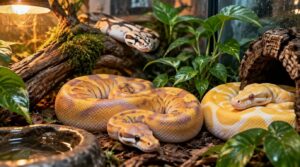
Ready for a bigger color palette? Ball pythons deliver it. Decades of captive breeding have produced hundreds of morphs, and color morph popularity keeps climbing.
Albino morphs lack melanin, so you’ll see yellow and white patterning with red eyes. Banana morphs mix yellow, orange, and lavender, and their dark freckling grows with age. Clowns trim the side pattern for a clean head and high contrast.
If you’re still deciding which morph to bring home first, this guide to the best beginner-friendly snake morphs compares temperament and care needs alongside color.
Know your genetics. Pastel is incomplete dominant, so one copy shows. Albino and Clown are recessive, so you need two copies. A het looks normal but carries the gene.
Skip Spider morphs. They’re linked to wobble syndrome, with head tremors and poor balance.
Vivarium design ignores color: 88 to 92 F warm, 78 F cool.
California Kingsnakes: Bold Patterns and Active Personalities
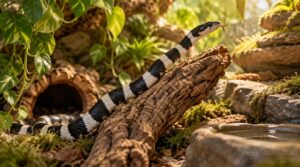
Ball pythons hide all day, but California kingsnakes put on a show. Among colorful snake breeds, they’re the ones you’ll watch roam.
You’ll see bold patterns in black, white, yellow, or orange, as crisp bands or speckles, depending on the line. Smooth, glossy scales catch the light. Adults reach 4 to 5 feet.
Active personalities need a busy vivarium. Add hides, branches, and a vertical basking spot, and you’ll get a curious snake that explores in daylight. Keep the warm side at 75 to 85 F, humidity at 40 to 60 percent, and offer full-spectrum UVB for 6 to 8 hours daily.
Feed juveniles every 5 to 7 days and adults every 7 to 14. Steady meals keep colors vivid.
Green Tree Pythons and Boa Constrictors: Colorful Choices for Experienced Keepers
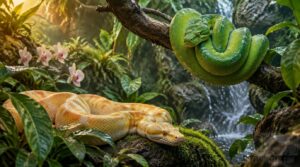
Kingsnakes keep you entertained, but some Colorful Snake Breeds ask more of you. Green Tree Pythons and Boa Constrictors reward Experienced Keepers with stunning color and real presence.
Green Tree Pythons glow emerald and stay arboreal. Boa Constrictors are heavier, calmer, and come in morphs like albino and lucistic. Both need a secure vivarium and steady care.
Here’s what you’ll want to get right:
- Give green trees vertical space and smooth, sturdy perches.
- Hold their humidity at 65 to 75 percent.
- Keep boas at 80 to 85°F, with a cooler side.
- Feed green tree adults every 7 to 14 days.
- Check lineage records before buying a morph.
Handle juveniles sparingly and gently. Stable husbandry keeps colors vivid and shedding smooth.
How to Choose The Right Colorful Snake for Your Vivarium

You’ll find a stunning snake that fits your home, and it starts with two simple questions. First, you’ll look at vivarium size and climate, because every great species needs the right space and warmth. Then you’ll match your pick to temperament and long-term care, so your colorful new pet stays a joy for years.
Vivarium Size and Climate
Your vivarium decides whether a gorgeous snake thrives or just survives. Match tank size to your snake’s adult length, aiming for at least 1.5 times its body length.
Your vivarium decides whether a gorgeous snake thrives or merely survives, so size it to at least 1.5 times your snake’s adult length
Next, build a temperature gradient: 28–32°C warm side, 24–26°C cool side, run by a thermostat-controlled heater. Do regular humidity checks, keeping 60–75% for tropical species. Habitat requirements vary, so research yours first.
Temperament and Long-Term Care
The right snake rewards patience, and temperament and handling shape everything. Beginner reptile pets like corn snakes forgive mistakes. Wait 48 hours after meals, then handle gently.
Long-term snake care pays you back with:
- Calm trust when you reach in
- Steady appetite, season after season
- Quiet confidence in every shed
- Pride in your habitat setup
Keep a vivarium maintenance routine.
Frequently Asked Questions (FAQs)
What are the most colorful pet snakes?
You’ll find the most colorful snake breeds in corn snakes, milk snakes, and ball python morphs. Their vivid snake coloration shines, while iridescent scales and emerald green scales on tree pythons steal the whole show.
What is the most colorful snake?
A living jewel box coils on a branch. You’ll meet the green tree python, the most stunning of colorful snake breeds. Vibrant emerald green scales, iridescent scales, electric blues, and fiery reds all shimmer here.
What is the cutest snake breed?
Rosy boas win most hearts. You’ll love their chunky pinkish bodies and calm nature.
Corn snakes and Milk snakes come close, Ball pythons add morph magic, and Green tree pythons charm with a stunning glow.
What kind of snake is rainbow colored?
Picture a Brazilian rainbow boa glowing copper and blue under your lamp.
That’s the Rainbow Boa, whose iridescent scale patterns make Brazilian rainbow boas standout colorful reptile pets. Plan your habitat setup around steady humidity.
What are the best pet snakes for beginners?
Corn snakes are your best first pick: hardy, calm, and stunningly patterned. Ball pythons and Milk snakes are close behind, since they’re docile and easy to handle.
Rosy boas stay small. King snakes need enrichment.
Which non venomous snakes are beginner-friendly?
That 80% figure lacks solid proof, but the advice holds.
You’ll do well with corn snakes, milk snakes, rosy boas, ball pythons, or California kingsnakes. They’re hardy, docile, and calm when you handle them gently.
What are the best snake breeds as pets in 2024?
Last spring, a first-time keeper named Mia brought home a pastel ball python, and within weeks she was handling it confidently. Beginner reptile pets like that make 2024 easy: ball pythons, corn snakes, kingsnakes, and rosy boas.
Are white snakes good for a terrarium?
White snakes do well when your terrarium setup fits the species. Albino variations and Snowwhite patterns suit beginners, while leucistic patterns need roomier hides.
Keep humidity steady during shedding, and you’ll enjoy them every day.
Are snakes good pets?
Yes, they can be, if you match the species to your lifestyle. You’ll need proper care, a secure habitat setup, and patience with handling. Beginner-friendly snakes reward you with quiet company, but they’re a 15 to 20 year commitment.
Can a snake live in a vivarium?
A well-planned vivarium gives your snake a safe, secure home. Your habitat setup needs a proper temperature gradient, steady humidity, and a locked lid.
Add hides for enclosure enrichment, and colorful snake breeds truly thrive.
Conclusion
The most dazzling snake is rarely the hardest one to keep, and the easiest one can still surprise you. That’s the quiet truth behind the best colorful snake breeds for vivariums: color comes from care, not rarity.
Match the snake to your space, your schedule, and your patience. A corn snake forgives mistakes, while a green tree python rewards precision. Get the setup right and you’ll watch scales deepen and glow for years.
Pick wisely.