This site is supported by our readers. We may earn a commission, at no cost to you, if you purchase through links.

You spot the distinctive rattle first, that telltale buzz that sends your heart racing and your mind spinning with one urgent question: can you legally kill this snake coiled up on your property? The answer isn’t as straightforward as you might expect.
Federal and state laws create a complex web of protections that vary dramatically depending on where you live and which species you’re facing—what’s perfectly legal in one state could land you with thousands of dollars in fines just across the border.
Understanding these regulations isn’t just about avoiding legal trouble; it’s about making informed decisions when you encounter one of nature’s most misunderstood reptiles in your yard, on a trail, or near your home.
Table Of Contents
- Key Takeaways
- Is It Illegal to Kill Rattlesnakes?
- Which Rattlesnake Species Are Protected by Law?
- What Are The Penalties for Killing Rattlesnakes?
- State Laws on Killing Rattlesnakes
- When is It Legal to Kill a Rattlesnake?
- Do You Need a Permit to Kill Rattlesnakes?
- What to Do if You Encounter a Rattlesnake
- Alternatives to Killing Rattlesnakes
- Ecological Importance of Rattlesnakes
- How to Report Illegal Rattlesnake Killing
- Frequently Asked Questions (FAQs)
- Why shouldn’t you kill rattlesnakes?
- In what states are rattlesnakes protected?
- Can I kill a rattlesnake in WV?
- Can you kill rattlesnakes in TX?
- Should you kill a rattlesnake in your yard?
- In what state is it illegal to kill a snake?
- What rattlesnakes are protected?
- Can I legally kill a rattlesnake in California?
- Are rattlesnakes protected in FL?
- Are you allowed to kill rattlesnakes in Arizona?
- Conclusion
Key Takeaways
- Rattlesnake killing laws vary wildly by state—what’s legal in Texas could cost you $8,000 in fines in Arizona, so you need to check your specific state’s regulations before taking any action.
- Most states only permit killing rattlesnakes when you’re facing an immediate, documented threat to yourself or livestock, not just because one’s on your property or makes you uncomfortable.
- Protected species like the Eastern Massasauga and Arizona’s Ridge-nosed Rattlesnake are federally shielded under the Endangered Species Act, making it illegal to harm them anywhere in the country regardless of state laws.
- Professional removal services and habitat modification offer safer, legal alternatives that keep you compliant with wildlife laws while protecting rattlesnakes’ critical role in controlling disease-carrying rodent populations.
Is It Illegal to Kill Rattlesnakes?

Whether you can legally kill a rattlesnake depends heavily on where you live and which species you encounter. Federal protections cover certain endangered rattlesnakes across the country, but state laws vary wildly—some states ban all snake killing, while others allow it with a hunting license.
If you’re curious about owning one instead, check the rules on keeping rattlesnakes as pets since most states have strict permit requirements.
Let’s break down the legal landscape so you know exactly what applies in your situation.
Federal Laws and Protections
Federal wildlife laws cast a protective net over certain rattlesnakes, especially those labeled as endangered or threatened. You’ll find the Endangered Species Act at the center, making it illegal to kill, harm, or possess protected species without federal permits. Environmental statutes also safeguard these venomous snakes in protected habitats, reinforcing wildlife conservation efforts:
- Federal permits are mandatory for handling listed rattlesnakes
- The Endangered Species Act prohibits harming protected species
- Wildlife laws restrict trade and interstate transport
- Protected habitats receive heightened enforcement and monitoring
General Overview of State Regulations
While federal protections cover certain species, state laws set the real ground rules for rattlesnake interactions where you live. Each state crafts regulations reflecting local priorities—some protect all snake species, others allow hunting with permits, and a few ban killing entirely.
Enforcement agencies monitor compliance, updating legislative measures as conditions shift. You’ll need to check your state’s permit requirements and protected species lists before acting.
Key Differences by Location
Understanding state laws means recognizing that where you stand shapes what you’re allowed to do. Arizona bans killing rattlesnakes except under specific emergencies, while Texas permits self-defense actions with stricter limits on unnecessary harm. California and Florida protect numerous rattlesnake populations, requiring permits for most interactions. Regional variations reflect local ecosystems and priorities:
- Arizona requires hunting licenses for most rattlesnakes and fully protects some species
- California restricts killing native rattlesnakes under state wildlife laws
- Texas allows defensive kills but penalizes excessive force
- Florida prohibits killing in protected habitats and recommends professional removal
Geographic factors and territorial differences mean you can’t assume one state’s approach applies elsewhere.
Which Rattlesnake Species Are Protected by Law?

Not all rattlesnakes face the same level of legal protection. Some species are shielded by federal endangered species laws, while others get protection only at the state level.
Let’s break down which rattlesnakes you absolutely can’t touch, no matter where you live, and which ones depend on your specific location.
Federally Endangered and Threatened Species
At the national level, you’ll find that protected species under the Endangered Species Act receive the strongest safeguards through ESA Listing, critical habitat designations, and recovery plans. The Endangered Species List drives wildlife conservation and species preservation nationwide. Here’s how federal protections work:
| Protection Element | What It Means for You |
|---|---|
| ESA Listing | Species gains take prohibitions across all states |
| Critical Habitat | Essential areas protected from harmful development |
| Recovery Plans | Targets set for population growth and delisting process |
| Public Engagement | Your input shapes conservation decisions and reviews |
State-Specific Protected Rattlesnakes
Beyond federal protections, state law often determines which rattlesnake species you can’t legally harm. Arizona lists timber rattlesnakes as protected species, while California restricts most rattlesnakes on public land through wildlife laws supporting rattlesnake conservation. Texas protects timber rattlesnakes in specific counties, and Nebraska designates them as at-risk for wildlife conservation purposes.
- Arizona’s timber rattlesnake requires permits for any interaction or possession
- California’s protected species rules cover snake habitat on state-managed lands
- Texas county-level protections restrict timber rattlesnake removal from wild populations
- Nebraska’s endangered lists include timber rattlesnakes with capture prohibitions
Understanding your state’s animal protection rules helps you stay compliant while supporting ecosystem health.
For more details on state-specific rattlesnake protection, visit the Environmental Literacy Council’s resource.
What Are The Penalties for Killing Rattlesnakes?

Killing a rattlesnake without proper authorization can hit your wallet hard, and in some cases, it might even land you in serious legal trouble. The penalties vary widely depending on where you live, which species you encounter, and whether you’ve been caught before.
Let’s break down what you’re actually risking if you decide to take matters into your own hands.
Fines and Legal Consequences
If you kill a rattlesnake illegally, you’re looking at fines that can really sting your wallet. Arizona alone charges at least $250 per unprotected snake, but protected species? That’ll cost you up to $8,000. Repeat offenders face even steeper penalties, and courts may add interest if you don’t pay promptly.
| Violation Type | Fine Range |
|---|---|
| Unprotected species (Arizona) | $250+ per snake |
| Protected species | Up to $8,000 |
| Repeat offenses | Increased penalties |
| Unpaid fines | Interest charges apply |
| Running over snakes | Animal cruelty charges |
Animal Cruelty Charges
Intentionally harming a rattlesnake can trigger animal cruelty charges in some jurisdictions, especially if prosecutors prove deliberate neglect or malicious intent. These wildlife protection laws carry penalties ranging from hundreds to thousands in fines, and serious cases might land you with misdemeanor or even felony charges.
Courts weigh the animal’s suffering, your intent, and the circumstances when determining animal welfare violations.
Repeat Offender Penalties
If you rack up multiple wildlife violations, you’ll face penalty enhancements under recidivist laws that increase fines and jail time with each illegal kill. Habitual offenses can bump misdemeanors to felonies, and sentencing guidelines often double or triple previous penalties.
Prosecutors track your record closely, though enforcement discretion means some judges weigh circumstances before applying the harshest animal cruelty law consequences.
State Laws on Killing Rattlesnakes

Rattlesnake laws vary wildly from state to state, so what’s legal in one place could land you in serious trouble somewhere else. Some states ban killing all snakes outright, while others allow it with permits or hunting licenses.
Let’s break down how Arizona, California, Texas, Florida, and a few other states handle rattlesnake protections.
Arizona Rattlesnake Laws
Arizona regulations stand out because they balance wildlife protection with practical realities. Here’s what you need to know:
- A valid hunting license is required to legally kill, collect, or possess most rattlesnakes in the state
- Fines start at $250 per snake for unprotected species, but can reach $8,000 for protected varieties
- The ridge-nosed rattlesnake is completely protected under Arizona law and can’t be taken under any circumstances
- Intentionally running over a rattlesnake can trigger animal cruelty charges
Rattlesnakes are essential to the desert ecosystem, and it’s important to be aware of regarding their protection.
California Rattlesnake Protections
California laws treat rattlesnakes as valuable parts of the ecosystem, not pests. You can’t legally kill native rattlesnake species under California’s wildlife preservation framework—the state emphasizes avoidance and professional removal instead. Violating these protections can cost you hundreds to thousands of dollars in fines, plus potential animal cruelty charges.
| Violation | Potential Penalty |
|---|---|
| Illegal killing | $500–$5,000+ in fines |
| Repeat offense | Enhanced penalties, court action |
| Animal cruelty | Criminal charges possible |
Rattlesnake conservation isn’t just about following the law—it’s about protecting California’s snake habitat and supporting rattlesnake research that benefits everyone.
Texas, Florida, and Other State Regulations
Beyond California, state laws vary wildly. Texas and Florida both enforce wildlife regulations that protect certain rattlesnakes—killing one without justification can trigger fines or animal cruelty charges.
Texas’s regulatory framework emphasizes permit requirements, while Florida’s enforcement measures focus on species protection through reptile laws.
If you’re unsure whether your state prohibits killing rattlesnakes, check with local wildlife authorities before taking action.
When is It Legal to Kill a Rattlesnake?

Most states don’t give you a free pass to kill rattlesnakes just because you don’t like them, but there are situations where it’s legally defensible.
The law generally recognizes a few narrow circumstances where lethal action won’t land you in trouble. Let’s break down when you can legally kill a rattlesnake without facing fines or charges.
Self-Defense and Immediate Threat
You can kill a venomous rattlesnake in self-defense when threat assessment shows immediate danger, but here’s the catch—most bites happen during unnecessary interaction. Safe retreat beats confrontation every time.
If the snake blocks your path or you’re cornered, adopt a protective stance, create distance, and call for professional removal. Crisis management means deescalation first, not attacking a creature just defending itself.
Property and Livestock Protection
Most states won’t let you kill rattlesnakes just because they’re near your barn or pasture—you need an actual, documented threat to livestock, not vague worry. That’s where fence security and biosecurity measures matter more than self-defense claims. Here’s what outdoor safety tips recommend:
- Electric fencing reduces snake-livestock contact by creating physical barriers around pens and water sources
- Professional snake removal beats DIY venomous snake handling when you discover rattlers in high-traffic zones
- Predator control plans and property management strategies prevent encounters without legal risk
Permit and License Requirements
Before you even think about killing a rattlesnake, check if your state requires a hunting license—Arizona Game and Fish, for instance, mandates one for most species.
License fees run $5 to $50 depending on residency, and permit types vary by species limits and hunting regulations.
The application process can include safety training, so contact wildlife management or law enforcement to confirm what you actually need.
Do You Need a Permit to Kill Rattlesnakes?

Killing a rattlesnake isn’t always as simple as grabbing a shovel and calling it a day. In most states, you’ll need the right paperwork before you even think about removing one, and the rules can vary wildly depending on where you live.
Here’s what you need to know about permits, hunting licenses, and the legal hoops you might’ve to jump through.
Hunting License Requirements by State
You’ll need a valid hunting license from the state where you’re hunting rattlesnakes, plain and simple. Each state has its own regulations, and residency rules determine whether you pay resident or non-resident license fees. Arizona Game and Fish, for example, requires hunter education for first-time buyers. Here’s what varies by state:
- Permit types available for different snake species
- Hunter education requirements before purchase
- License fees based on residency status
- State regulations governing legal hunting activities
Bag and Possession Limits
Your hunting license comes with strict Daily Bag Limits that cap how many rattlesnakes you can kill in one day. Possession Rules usually set your total at three times the daily limit, covering all snakes you’ve harvested, bought, or received. Exceeding possession limits triggers fines and possible license suspension.
Some states also require Harvest Reporting to track kills, while others mandate Snake Relocation for protected species instead of removal.
Special Permits for Protected Species
Protected species require specialized permits that go beyond standard hunting licenses. You’ll need one of three types depending on your activity:
- Incidental Take permits for unavoidable encounters during lawful operations, paired with conservation efforts to minimize harm
- Enhancement Permits supporting habitat improvements and Recovery Plans
- Interstate Commerce permits for legal cross-border movement
Federal agencies review each application against strict regulations before approval.
What to Do if You Encounter a Rattlesnake
Coming face-to-face with a rattlesnake can make your heart race, but staying calm is your best defense. Your reaction in those first few seconds matters more than you might think.
Here’s what you need to do to keep yourself safe and avoid turning a tense moment into a dangerous one.
Safe Distance and Retreat Strategies

When you spot a rattlesnake, your first move is simple: freeze, then back away slowly in a straight line. Maintain at least six to ten feet of distance—that’s your safe zone.
Watch for visual cues like coiling or rattling, and adjust your retreat techniques accordingly. Never corner the snake; give it an escape route.
These distance guidelines and movement strategies can prevent a strike and keep both you and the rattlesnake safe during the encounter.
Avoiding Provocation and Handling

Once you’ve backed away to a safe distance, resist the urge to touch or move the snake. Never attempt snake handling with tools or bare hands—most bites happen when people provoke or try removal themselves.
Watch for a defensive posture: coiling or rapid rattling signals the venomous rattlesnake feels threatened. Your best safety move? Keep your hands off and let wildlife pros handle it.
When to Seek Professional Help

If a rattlesnake lingers near your home or workspace, contact licensed wildlife removal experts immediately. Professional snake removal techniques guarantee safety protocols are followed, protecting you and the animal.
While waiting for help to arrive, moving slowly and avoiding sudden gestures keeps you safer, and this guide to safe snake removal methods explains what professionals do once they’re on site.
Venomous snake handling isn’t a DIY project.
Here’s when emotional support or crisis intervention matters after rattlesnake encounters:
- You’re experiencing ongoing anxiety, panic attacks, or trauma response symptoms lasting beyond two weeks
- Children show persistent fear disrupting sleep, school, or outdoor activities
- Stress management strategies you’ve tried aren’t calming the worry
- Mental health concerns escalate to avoidance of necessary daily routines
- Anyone mentions self-harm thoughts—contact emergency services right away
Alternatives to Killing Rattlesnakes
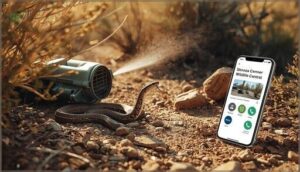
You don’t have to kill a rattlesnake to protect yourself or your property. There are safer, legal ways to handle the situation that won’t land you in hot water with wildlife authorities.
Here are three proven alternatives that work without putting you at risk or breaking the law.
Professional Removal Services
When you call a professional removal service, wildlife experts trained in venomous snake handling arrive with specialized tools for safe extraction. They’ll use proven snake removal techniques to relocate the rattlesnake without harming it or putting you at risk.
Removal costs vary by location and complexity, but professional relocation ensures both your safety and legal compliance while supporting conservation efforts.
Habitat Modification and Prevention
Beyond professional services, you can make your property unattractive to rattlesnakes through smart habitat design and yard sanitation. Prevention starts with controlling what draws these venomous snakes to your space in the first place.
- Keep grass trimmed to 3 inches or less to eliminate hiding spots
- Remove woodpiles, rock stacks, and debris within 50 meters of structures
- Seal gaps under sheds and porches up to 1 inch wide
- Install wildlife barriers or exclusion fence with buried aprons
- Use eco friendly landscaping with gravel around foundations to disrupt snake movement
These snake deterrents reduce encounters without harming wildlife.
Safe Relocation Practices
If you decide to relocate rather than call professionals, plan carefully. Relocation planning starts with a site visit to assess hazards and verify it’s legal under local wildlife management rules.
Use proper snake handling tools like long tongs and secure transport containers—never bare hands.
Release strategies should prioritize habitat assessment, placing the snake at least one mile from homes in suitable terrain that maintains reptile conservation and venomous snake control.
Ecological Importance of Rattlesnakes

Before you dismiss rattlesnakes as just dangerous pests, you should know they’re actually working hard behind the scenes in your local ecosystem. These misunderstood reptiles play a surprisingly key role in keeping nature balanced, from managing wildlife populations to supporting the health of entire habitats.
Here’s what rattlesnakes are doing for the environment, whether you realize it or not.
Role in Controlling Rodent Populations
You might be surprised how much you rely on rattlesnakes for rodent control without even knowing it. These predators naturally keep rodent populations in check around your home, supporting ecosystem balance through predator-prey relationships:
Rattlesnakes silently protect your property by consuming dozens of rodents weekly, keeping pest populations and disease risks naturally in check
- A single rattlesnake consumes dozens of mice weekly during peak feeding
- Snake habitat overlaps with high rodent density areas near properties
- Regular predation reduces rodent birth rates by limiting breeding females
- Effective rodent control lowers disease-carrying pest populations
- Wildlife management experts recognize snakes’ role in ecosystem management and natural snake control
Impact on Biodiversity and Ecosystems
The ecosystem balance you enjoy depends partly on rattlesnakes. Their predation shapes species interactions across habitats, preventing rodent explosions that degrade vegetation and soil.
When you protect snake populations, you’re supporting biodiversity conservation and habitat preservation. Loss of these predators triggers cascading effects that reduce ecosystem resilience, ultimately threatening the ecological balance and species conservation efforts your community depends on.
How to Report Illegal Rattlesnake Killing

If you witness someone illegally killing, harming, or possessing a rattlesnake, reporting it helps protect these species and enforces wildlife laws.
Each state has its own process for handling these reports, usually through wildlife agencies or conservation hotlines. Knowing where to report and what information to provide makes your report more effective and bolsters legal action when necessary.
Reporting Procedures by State
If you witness illegal rattlesnake killing, you’ll need to contact your state’s wildlife agency within 24 to 72 hours, depending on local regulations. Many states now offer online portals or toll-free hotlines for incident reporting. You’ll usually provide GPS coordinates, date, time, and photos if possible.
Some states require reports for all venomous snake kills, while others only track protected species under rattlesnake protection laws.
Supporting Conservation and Legal Compliance
Conservation efforts thrive when you actively support wildlife preservation and legal compliance. Reporting violations strengthens the legal framework protecting rattlesnakes and helps authorities track environmental impact across regions.
- You contribute to species protection by documenting illegal kills under the Endangered Species Act
- Your reports help wildlife conservation in Arizona and other states enforce rattlesnake protection laws
- You support snake species management efforts that balance safety with environmental law
- You become part of a community dedicated to preserving biodiversity
Frequently Asked Questions (FAQs)
Why shouldn’t you kill rattlesnakes?
Rattlesnakes play a critical ecological role controlling rodent populations that spread disease and damage crops. These venomous, often protected species support biodiversity and ecosystem balance—killing them disrupts wildlife preservation efforts and natural pest control.
In what states are rattlesnakes protected?
Like knights in armor from medieval times, certain rattlesnake species enjoy full protection under state law. California, Nebraska, West Virginia, New Jersey, and Vermont have enacted strict wildlife regulations designating specific rattlesnakes as endangered or protected species within their borders.
Can I kill a rattlesnake in WV?
You can’t legally kill a timber rattlesnake in WV unless it’s inside your home and poses an immediate threat.
This protected, venomous species is West Virginia’s state reptile, making wildlife protection law clear.
Can you kill rattlesnakes in TX?
In the Lone Star State, you’re walking a legal tightrope. Texas wildlife regulations don’t outright ban killing rattlesnakes, but you can’t just shoot one for sport—self-defense or immediate threat situations offer your only lawful justification.
Should you kill a rattlesnake in your yard?
You shouldn’t kill a rattlesnake in your yard. Venomous encounters call for safe rattlesnake removal by professionals, not illegal killing.
Wildlife conservation and yard modifications prevent future visits while protecting you and the ecosystem.
In what state is it illegal to kill a snake?
Understanding snake protection laws feels like walking through a legal maze. Georgia, Arkansas, Colorado, and Iowa stand out with sweeping state regulations that shield most or all native species, while Indiana and Missouri enforce strict wildlife preservation rules protecting snakes from harm.
What rattlesnakes are protected?
Several rattlesnake species enjoy legal protection. The Eastern Massasauga is federally listed as threatened under the Endangered Species Act, while Timber Rattlesnakes face state-level endangered or threatened designations.
Arizona’s Ridge-nosed Rattlesnake also receives federal protection.
Can I legally kill a rattlesnake in California?
California laws protect rattlesnakes. You can only kill one if it poses an immediate threat with no safe alternative. Otherwise, you’ll need a valid hunting license and must follow wildlife protection regulations strictly.
Are rattlesnakes protected in FL?
Florida regulations don’t broadly list native rattlesnakes as protected species, though wildlife cruelty laws apply. You’re generally allowed to defend yourself if a venomous snake poses an immediate threat, but local ordinances and conservation-minded management vary by region.
Are you allowed to kill rattlesnakes in Arizona?
You can’t kill rattlesnakes in Arizona without proper authorization. It’s illegal to harm protected species, and even common ones require a valid hunting license. Fines start at $250 per snake.
Conclusion
Before you reach for a shovel, check your state’s laws. Before you assume self-defense justifies the kill, understand what courts actually consider an immediate threat. Before you act on fear or frustration, remember that whether it’s illegal to kill rattlesnakes depends entirely on where you stand and which species you’re facing.
The smarter move? Keep your distance, contact professionals, and let these misunderstood hunters continue doing what they do best—keeping rodent populations in check.