This site is supported by our readers. We may earn a commission, at no cost to you, if you purchase through links.

A boa constrictor at 14 inches looks almost harmless. By its first birthday, that same snake can stretch past five feet. That growth rate catches a lot of new owners off guard, and it shapes every decision you’ll make as a keeper, from enclosure size to feeding schedules.
So how big do boa constrictors get? The honest answer depends on sex, subspecies, and the quality of care you provide. Females routinely outpace males by a foot or two. Some locality boas stay compact; others push past eight feet with ease. Knowing what drives that growth gives you a real edge.
Table Of Contents
Key Takeaways
- Female boa constrictors typically grow 1–2 feet longer than males, often reaching 6–8 feet, so knowing your snake’s sex early helps you plan the right enclosure before she outgrows it.
- Growth is fastest in the first three years — hatchlings can gain 6–12 inches per month — then slows significantly once sexual maturity kicks in around years three to five.
- Subspecies and geographic origin matter more than most keepers expect: a Hog Island boa tops out at 4–6 feet thanks to insular dwarfism, while a true red-tailed boa can push past 10 feet.
- Feeding frequency, temperature gradients, and stress levels are the three biggest husbandry levers you control, and getting them right (or wrong) directly shapes your boa’s final size and long-term health.
Most Boa Constrictors Reach 5–10 Feet

Most adult boa constrictors fall somewhere in the 5–10 foot range, though exactly where depends on a few key factors. Before getting into what shapes their size, it helps to understand the basics — typical length, how males and females differ, and just how big these snakes can actually get in captivity. Here’s what you can realistically expect.
The gap between the sexes is actually more dramatic than most people expect — females can grow nearly twice the size of males, as this detailed male vs. female boa size comparison breaks down with real captive and wild measurements.
Typical Adult Length and Weight
Your adult boa will most likely reach 5 to 10 feet in length. The sweet spot is 6 to 8 feet, weighing 20 to 40 pounds. Weight range shifts fast with size:
- 5–6 feet: roughly 15–20 pounds
- 6–8 feet: 20–40 pounds
- 8–10 feet: 40–60 pounds
- At maximum length: close to 60 pounds
Reaching 10 feet long is rare but possible. Just as a data-centered reading approach helps students interpret figures more accurately, tracking your boa’s measurements over time gives you a clearer picture of its growth trajectory.
Male Versus Female Size
Sex differences matter more than you’d think. Female boas usually reach 6 to 8 feet, while males stay closer to 5 to 7 feet.
| Trait | Details |
|---|---|
| Female length | 6–8 feet |
| Male length | 5–7 feet |
| Female girth | Broader, heavier midsection |
| Male tail | Longer, more slender |
That size gap is called sexual dimorphism. Females bulk up more especially, especially during breeding season.
Maximum Length in Captivity
Now, how big can they actually get in captivity? Most boas top out around 8 to 10 feet, but documented individuals have reached 12 feet under truly excellent care. That’s rare, though.
Reaching the upper limit depends heavily on husbandry quality, genetics, and consistency over years. Good care doesn’t guarantee a giant, but it gives your boa the best shot.
Boa Constrictor Growth Stages by Age

Boa constrictors don’t just wake up one day fully grown — they move through distinct stages, and each one brings noticeable changes in size and behavior.
Knowing what to expect at each age helps you stay ahead of your snake’s needs rather than scrambling to catch up.
For a closer look at one popular beginner-friendly option, the enchi ball python care guide walks you through exactly what to expect as this morph grows and matures.
Here’s how a boa grows from its very first day to full adulthood.
Hatchling Size at Birth
Newborn boas are surprisingly small. Most hatchlings measure 14 to 20 inches at birth, with a birth weight of 60 to 180 grams. Four quick neonate facts:
- Color patterns appear vivid and fully defined from day one
- Tails look proportionally longer than on adults
- Size variance between clutch siblings is completely normal
- Early growth is rapid under good husbandry
First-Year Growth Rate
That first year is a wild ride. Juvenile growth pace peaks early, with hatchlings gaining 6 to 12 inches per month under ideal care.
| Stage | Length | Weight |
|---|---|---|
| 3 months | 30-40 inches | ~200g |
| 6 months | 3-4 feet | ~500g |
| 12 months | 5-7 feet | ~900g |
Ideal feeding drives these jumps. Track your boa’s length and weight monthly to adjust feeding quickly.
Growth Through Sexual Maturity
Around years three to five, your boa hits sexual maturity. Males often get there first, showing mating behavior by year three or four. Females take longer, reaching first ovulation around year four to five, once they’ve built sufficient fat reserves. Body condition really matters here. Proper thermal gradients and seasonal light cycles both trigger breeding readiness in captivity too.
When Growth Begins Slowing
Once sexual maturity arrives, your boa’s growth rate drops noticeably. Hormonal shifts tied to reproductive readiness redirect energy away from skeletal expansion.
Growth plates gradually fuse, limiting rapid length gains. Genetics largely decide when this plateau hits, and some subspecies slow down earlier than others.
Balanced, consistent feeding keeps that slow, steady growth on track without pushing unwanted fat gain.
Lifelong Growth After Adulthood
Your boa never fully stops growing. After maturity, length changes slow dramatically, but girth and mass keep creeping upward, roughly 1 to 3 percent annually. Warmer seasons accelerate this process, while cooler periods pump the brakes. Good hydration helps tissue expansion too. Think of it as your boa quietly filling out rather than stretching up, and that’s perfectly normal.
Even after reaching maturity, your boa never truly stops growing — it simply shifts from stretching up to quietly filling out
Boa Constrictor Size by Subspecies
Not all boa constrictors are built the same — and that’s actually one of the most fascinating things about this group of snakes. Depending on the subspecies, an adult boa might top out at a compact 4 feet or stretch well past 10. Here’s how the most common subspecies compare in size.
Common Boa Imperator Size

The Boa constrictor imperator is what most keepers actually own. Three quick benchmarks help set your expectations:
- Hatchlings arrive at 12–18 inches and grow fast
- Adults average 6 to 8 feet, weighing 8–15 pounds
- Top captive individuals reach around 9 to 10 feet
Females run noticeably bigger than males. They often hit 7–9 feet, while males stay closer to 5–7.
True Red-Tailed Boa Size
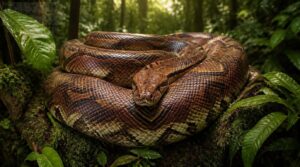
True red-tailed boas, technically Boa constrictor constrictor, are the heavyweights of the boa world. Most adults land between 6 and 10 feet, but large females regularly push past that. Some documented individuals have reached 13 feet.
Their thick, muscular build means even an 8-footer looks massive. Genetics and lineage vary noticeably, so expect 60 to 100 pounds at full size.
Hog Island Boa Size
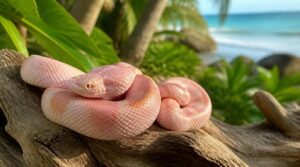
If 13 feet sounds intimidating, meet the Hog Island boa. This Boa constrictor imperator locality tops out around 4 to 6 feet in captivity, with females running slightly larger.
Island life shaped them through insular dwarfism, keeping generations compact.
Wild populations are recovering slowly, and captive specimens stay consistently small, with that pale, pinkish coloration setting them apart.
Dwarf Locality Adult Size
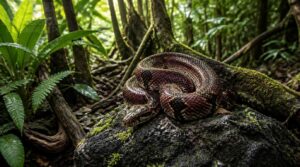
Hog Island boas aren’t alone in staying small. Other dwarf locality boas average 4 to 6 feet as adults, with females running 6 to 12 percent larger. Even in ideal captive setups, they rarely push past 7 feet.
Geographic isolation drives this, the same insular dwarfism that shapes island boas keeps dwarf subspecies compact and muscular.
What Affects Boa Constrictor Growth?

Two boas from the same clutch can end up very different sizes — and that’s no accident. A handful of key factors work together to shape how big your boa ultimately grows. Here’s what you need to know about each one.
Genetics and Geographic Origin
Where your boa comes from shapes how big it gets. Geographic DNA lineages from South America, like Colombian boas, tend to produce larger adults than island populations.
Insular dwarfism keeps island-locality boas noticeably smaller. Scale pattern variation can hint at a boa’s regional origin. Climate adaptations and prey availability drove these size differences, and that’s locked into your snake’s genetics.
Feeding Amount and Frequency
Genetics sets the ceiling, but feeding shapes how close your boa reaches it. A consistent feeding schedule matters.
- Hatchlings: 1–2 small meals per week
- Juveniles: every 7–10 days, with prey at 10–15% of body weight
- Adults: every 7–14 days, with prey matching 20–30% of body girth
Watch for overfeeding signs like a squared-off, lumpy belly right after meals.
Temperature and Humidity
Temperature and humidity work together to drive steady, consistent growth. A proper thermal gradient setup means basking spot temps of 90-92°F on the warm end, with nighttime cooling staying above 70°F.
Aim for humidity control at 50-70%, since the humidity shedding link is real. Enclosure size matters too, because a larger space helps that temperature gradient spread out evenly.
Health, Stress, and Husbandry
Stress quietly stunts growth. Watch for these behavioral stress signs:
- Tight coiling, hissing, or throat puffing during handling
- Refusing two or more consecutive feeding sessions
- Excess soaking, a clear clue that humidity or mites are off
- Lethargy outside of normal shedding cycles
Consistent husbandry and calm, deliberate handling are what keep chronic stress from quietly cutting your boa’s growth short.
Avoiding Power-Feeding Obesity
Power-feeding forces rapid growth through overfeeding, and it trades long-term health for short-term size gains.
Match prey width to your boa’s midsection, feed adults every 10-21 days, and weigh your snake monthly.
Fat rolls along the body and lethargy are both classic overfeeding warning signs.
A slight lump after meals? Perfect sizing. A huge bulge means cut back right away.
Planning for Your Boa’s Adult Size
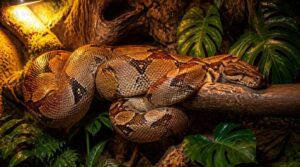
Knowing your boa’s adult size isn’t just a fun fact — it directly shapes every housing decision you’ll make. A snake that doubles in length over a few years needs a setup that grows with it, not against it. Here’s what you need to think through before your boa outgrows its current home.
Enclosure Length by Body Size
Think of it this way: your boa needs room to fully stretch out, not just coil up. Small juveniles start in 4-6 foot enclosures, while medium adults need 6-8 feet. Large boas push that to 8-12 feet. For exceptionally large individuals, plan for 12-16 feet total, and always target at least 1.5 times your boa’s body length.
Juvenile Versus Adult Housing
Juveniles don’t just need a smaller box, they need a smarter one. A hatchling thrives in a snug, hide-heavy enclosure with a tight warm gradient, around 88-90°F on the warm end. You’ll clean more often too, since young boas metabolize quickly. As subspecies and growth rate vary, upgrade enclosures gradually, shifting from vertical enrichment toward open floor space for adults.
Space for Movement and Climbing
Boas aren’t just floor animals. They use vertical space actively, especially in larger enclosures. Add thick, rough-barked branches at multiple levels, spaced so your boa’s tail can’t loop and snag mid-climb.
Connect each perch so movement stays safe and fluid. Use escape-proof mesh or glass above the highest branch, because boas will test every gap they find.
Handling Larger Adult Boas
Once your boa starts testing those upper branches, you’ll realize just how strong a large adult really is. Never handle alone, bring a second person to share the weight.
Use a padded snake hook to lift the head first, then support the full body across both forearms. Watch for hissing or thrashing, those are stress signals. Pause and try again.
Tracking Length and Weight
Good records matter as much as good handling. Measure length monthly for juveniles, snout to tail tip, using a flexible tape.
Track these three things every session:
- Length in inches, snout to tail
- Weight in grams, on a digital scale
- Date, for spotting growth trends
Hatchlings start at 18-24 inches and 25-100 grams. Watching those numbers climb tells you everything.
Frequently Asked Questions (FAQs)
How big do Baby boa constrictors get?
Tiny but surprisingly capable, baby boa constrictors arrive at 12-18 inches long and weigh just 20-60 grams at birth. Despite their small size, hatchlings hunt immediately, making neonate care both manageable and rewarding for new keepers.
How big do boa constrictor snakes get?
Most adults fall somewhere between 5 and 10 feet long. Females tend to push toward the upper end, while males average 5 to 8 feet. A handful of impressive individuals have even reached 13 feet.
How long do boa constrictors live?
With the right care, your boa can live 20 to 30 years in captivity. Nutrition, stable temperatures, and a clean enclosure all make a real difference. Wild boas, facing predators and disease, rarely reach
How big does a boa constrictor imperator get?
Don’t expect a small snake. Boa constrictor imperators, often called Colombian boas, reach 6 to 8 feet and weigh 6 to 12 pounds at full size. Females usually outsize males by 6 to 12 inches.
How fast do boa constrictors grow?
Boas grow fast in their first three years, often reaching 6 to 8 feet and around 60 pounds. Once sexual maturity hits, growth slows considerably, but diet and care still keep nudging them forward.
Conclusion
Picture that 14-inch hatchling coiled in your palm right now. Then picture a nine-foot female slowly stretching across your living room floor three years later. That contrast answers how big do boa constrictors get more honestly than any number could.
Sex, subspecies, and consistent husbandry all drive the final result. Track her growth monthly, size the enclosure before she outgrows it, and feed with real intention. The snake will reward every smart decision you make.