This site is supported by our readers. We may earn a commission, at no cost to you, if you purchase through links.

A ball python will spend up to 23 hours a day inside a hide, so that plastic cave you grabbed at the pet store matters more than any fancy backdrop.
Reptile habitat decoration does more than make a tank look good. The right pieces help your snake feel secure, regulate its temperature, and exercise natural gripping and climbing instincts. The wrong ones harbor parasites, trap bacteria, or tip over onto a coiled boa.
Whether you’re picturing a cork-bark jungle, a bioactive terrarium crawling with springtails, or a T-Rex guarding the water bowl, here’s how to build a safe, cleanable setup your snake will actually use.
Table Of Contents
- Key Takeaways
- Essential Reptile Habitat Decorations for Pet Snakes
- Comparing Reptile Decor Materials for Safety and Easy Cleaning
- Naturalistic, Bioactive, and Prehistoric Reptile Decor Ideas
- Arranging Reptile Habitat Decor for Shelter, Climbing, and Enrichment
- Choosing Reptile Decorations for Your Snake’s Species, Size, and Budget
- Frequently Asked Questions (FAQs)
- How do I safely arrange decor to prevent reptile injuries?
- What decor items are toxic or dangerous for reptiles?
- Can I mix different decor materials in one habitat?
- How often should I replace or rotate decorations?
- Which decorations work best for multiple reptile species?
- How often should reptile habitat decorations be replaced?
- Can I use decorations from outdoors in my terrarium?
- What lighting works best with reptile habitat decorations?
- How do I keep decorations from tipping over?
- Conclusion
Key Takeaways
- Give your snake two snug hides, one on the warm side and one on the cool side, so it can coil against the walls, regulate its temperature, and feel secure.
- Choose non-porous materials like resin, silicone, sealed ceramic, or PVC because they wipe clean easily, and sterilize any natural wood or outdoor finds before use while skipping cedar, pine, and treated lumber.
- Layer in climbing and enrichment pieces like cork bark, sturdy branches, and vines, and anchor or bury everything so nothing tips over or crushes your snake.
- Match your decor to your snake’s species, size, and weight, then rotate or replace pieces every few weeks to keep it curious and your habitat safe.
Essential Reptile Habitat Decorations for Pet Snakes
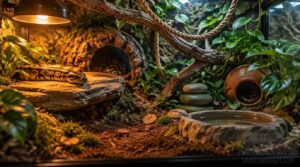
A great snake enclosure starts with smart reptile habitat decoration, and you’ll love how simple the basics are! Think of every piece as a job: shelter, climbing, or warmth.
Before you start decorating, check that your layout fits the recommended terrarium size for corn snakes, since enough floor space makes room for hides, branches, and varied textures.
Start with two hides, one on the warm side and one on the cool side. These reptile hiding spots should be snug enough that your snake can coil up and touch the walls. That’s the secret to a calm, confident pet!
Give your snake two snug hides, one warm and one cool, so it can coil against the walls and feel calm and confident
Next, add reptile basking platforms, like a flat rock or sturdy branch, under your heat source. Then layer in naturalistic reptile decor such as cork bark, vines, and rock piles for exercise and curiosity. Items like cylinders, rocks, branches, and ropes also support physical enrichment for snakes by encouraging climbing and gripping behaviors.
Keep reptile habitat safety front and center: no sharp edges, no tiny parts, and no overcrowding!
Comparing Reptile Decor Materials for Safety and Easy Cleaning
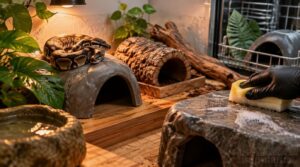
Once you’ve picked your hides and branches, it’s time to check what they’re made of, because the best Reptile Habitat Decoration is easy to clean!
Non-porous materials like resin and sealed ceramic wipe down fast, and these reptile tank decoration tips explain how to pick safe, low-maintenance pieces.
Resin and silicone are perfect Terrarium-Safe Materials. They’re non-porous, so you can scrub them with a reptile-safe disinfectant or run silicone through the dishwasher.
Natural wood and cork bark suit Naturalistic Habitat Design, but they’re porous. Oven-heat them at 200-250°F for 30 minutes to kill parasites, and seal any DIY wood with water-based Polycrylic after a full 30-day cure. Skip cedar and pine!
PVC panels are another pick for your Reptile Enclosure Setup. They resist stains, hold humidity, and wipe clean. Add Reptile Terrarium Accessories the same way: choose non-porous first, and cleanup gets simpler!
Naturalistic, Bioactive, and Prehistoric Reptile Decor Ideas
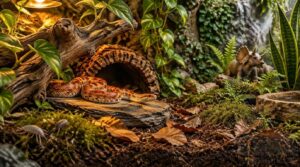
Now that your materials are sorted, let’s make them look great! Naturalistic habitat decoration copies your snake’s native terrain with rocks, branches, and cork flats, and it’s the best way to get a gorgeous, easy-to-adjust setup.
Want a living system? Bioactive terrarium design adds clean-up crew springtails and isopods, plus hardy pothos or snake plants. Quarantine new plants for 1-2 months first!
If you’re keeping a python, this step-by-step bioactive terrarium setup for ball pythons covers substrate layers, humidity, and drainage so your cleanup crew thrives.
Pick your style:
- Naturalistic: slate basking rocks and driftwood, with reptile shelter and hiding spots tucked under cork.
- Bioactive: layered soil, leaf litter, and textured surfaces for epiphytic growth like creeping fig.
- Prehistoric: a Triceratops or T-Rex as a prehistoric focal point in vivariums.
Bury stones so nothing shifts or crushes your snake, and sterilize collected wood first!
Arranging Reptile Habitat Decor for Shelter, Climbing, and Enrichment
Your materials are ready, so let’s put them to work! Great reptile habitat setup starts with layers.
Place a hide on the warm side and another on the cool side. These reptile shelter and hiding spots help your snake regulate temperature and feel secure.
Then build upward with reptile climbing structures like branches, vines, and cork flats. Mix heights, widths, and textures so your snake can grip, coil, and balance.
Try this layout:
| Zone | What to add |
|---|---|
| Warm side | Snug hide, basking branch |
| Cool side | Second hide, leaf litter |
| Middle | Cork tunnels, sturdy plants |
| Upper level | Vines, elevated perch |
Every few weeks, shuffle pieces or add a new texture. That’s reptile behavioral enrichment, and naturalistic habitat design keeps it calm.
Choosing Reptile Decorations for Your Snake’s Species, Size, and Budget
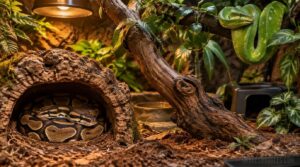
Every snake deserves a home that fits, and we’re here to help you get it right! Reptile habitat decoration starts with reptile species-specific needs.
- Ball pythons: snug hides where they feel pressed against the walls.
- Boas: thick cork bark or mopani wood, secured to support their weight.
- Green tree pythons: elevated perches and branches at the right height.
Size matters. Juveniles need smaller, lighter pieces, so plan reptile enclosure upgrades as your snake grows. Match hide dimensions to girth, and make sure every branch holds adult weight.
On a budget? Reptile habitat customization is easy! Wash dollar store plants and sanitize plastic containers for hides under $15 total. Cork bark costs more but lasts, a smart reptile habitat setup investment.
Frequently Asked Questions (FAQs)
How do I safely arrange decor to prevent reptile injuries?
Reptile habitat design starts with reptile habitat safety. During reptile enclosure setup, anchor branches, smooth rough edges, and wobble-test every hide. Protect reptile habitat functionality by keeping paths clear, then recheck after reptile habitat maintenance.
What decor items are toxic or dangerous for reptiles?
Think of your snake’s enclosure as a tiny world where every surface gets licked, rubbed and breathed in. Skip cedar, pine and treated lumber, sharp edges, and swallowable bits. Choose reptile safe decor, and your Reptile Habitat Decoration stays healthy.
Can I mix different decor materials in one habitat?
Yes, you can! In Reptile Habitat Decoration, mixing terrarium-safe materials like resin hides, stone, wood and artificial plants works. Choose non-toxic reptile terrarium accessories, keep gradients intact, and let reptile habitat design drive habitat enrichment.
How often should I replace or rotate decorations?
Wondering when it’s time for a change? Swap your Reptile Enrichment Items every 4-8 weeks, or sooner if your snake seems bored. Fresh Reptile Terrarium Accessories spark exploration. Replace soiled substrate weekly!
Which decorations work best for multiple reptile species?
Reptile habitat decoration starts with cork bark hides! Natural rock landscaping for terrariums, sturdy branches and terrariumsafe materials suit most species. Add reptile hiding and security features on warm and cool sides, then secure everything.
How often should reptile habitat decorations be replaced?
Most reptile habitat decoration lasts for years, so you’re replacing only what fails. Swap moss every 2-4 weeks, and toss rotting, splintering or cracked pieces. Reptile habitat durability means sturdy rocks and driftwood stay put.
Can I use decorations from outdoors in my terrarium?
One backyard branch can carry mites and bacteria into your snake’s home! Yes, you can use outdoor rocks and wood. Scrub with dish soap, soak in 10% peroxide, bake wood at 250°F for two hours.
What lighting works best with reptile habitat decorations?
Think of your lamps as a sunrise your snake can walk into! Reptile habitat lighting works best when a T5 HO UVB tube sits over a basking slate, with no glass between. It’s perfect for gradients!
How do I keep decorations from tipping over?
Picture a slate slab sitting like a boulder on your snake’s floor, completely unmoving. That’s smart reptile habitat décor!
Anchor pieces with reptile-safe silicone, wedge them tightly between walls, and choose wide, flat, heavy bases.
Conclusion
Picture your snake at dusk, sliding out of a snug cork hide, coiling around a sturdy branch, and settling beside a clean water bowl. That’s the payoff! Smart reptile habitat decoration turns a plain tank into a place where your snake feels safe, warm, and curious.
Start with secure hides and climbing perches, choose materials you can scrub or replace easily, and arrange everything so nothing wobbles. Your snake will thank you by quietly thriving.