This site is supported by our readers. We may earn a commission, at no cost to you, if you purchase through links.
Most people misread snakes completely. A raised head, a sharp hiss, a body pulled into a tight coil. None of that signals an unprovoked attack. It signals an animal that wants distance.
That distinction matters. Snakes don’t pursue or initiate conflict with humans. Every display you’ll see exists for one purpose: to push a perceived threat away.
Understanding what snake aggression looks like means learning to separate genuine threat from panic response. A stressed ball python and a defensively coiling boa send different signals, at different speeds, for different reasons. Knowing which one you’re facing changes everything about how you respond.
Behavioral cues can also overlap with physical ones — a snake producing unusual mucus may act more withdrawn or reactive, and knowing what abnormal nasal discharge in snakes signals helps you tell illness-driven irritability apart from simple defensive behavior.
Reading the signs of stress and illness in reptile skin and behavior helps you distinguish fear-based defensiveness from deeper health issues driving your snake’s reactions.
Table Of Contents
- Key Takeaways
- Snake Aggression Looks Like Hissing, Coiling, and Striking
- Is Your Snake Aggressive or Defensive?
- What Triggers Defensive Behavior in Pet Snakes?
- How Defensive Displays Vary by Snake
- What to Do When a Snake Acts Aggressively
- Frequently Asked Questions (FAQs)
- What time of year are snakes most aggressive?
- How to calm down an aggressive snake?
- What are the five warning signs of aggression?
- What smell does a snake hate?
- How do juvenile snakes differ in aggression?
- Can aggressive snakes be trained to calm down?
- What sounds indicate an aggressive snake nearby?
- Do venomous snakes show more aggression than non-venomous?
- How does feeding schedule affect snake aggression?
- Can snakes recognize their owners over time?
- Conclusion
Key Takeaways
- Snake “aggression” is usually defensive behavior—hissing, S-shaped coiling, flattening, tail vibration, and striking are signals that the animal wants space.
- You can distinguish fear from feeding behavior by context: defensive snakes tense, retreat, and warn, while feeding snakes focus precisely on prey scent and strike quickly to secure food.
- Stressors such as abrupt handling, poor temperature or enclosure conditions, shedding, hunger, illness, and feeling trapped commonly trigger defensive displays.
- Stop handling, move back slowly, avoid restraint, correct husbandry problems, and contact a reptile veterinarian if a sudden temperament change persists.
Snake Aggression Looks Like Hissing, Coiling, and Striking
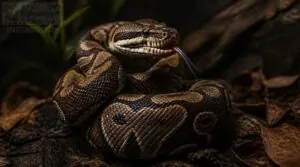
Snake aggression isn’t random — it follows a clear sequence of physical signals your snake sends before things escalate. Learning to read those signals early puts you in control of the situation. Here’s what those warning behaviors actually look like.
Once you know what to look for, building confidence handling snakes safely becomes much easier — because calm, informed responses to early warning signs prevent most bites before they happen.
Hissing, Rattling, and Forceful Exhaling
Before you spot the coil, the hiss already tells you something’s wrong. Hiss intensity scales with exhaled air speed and mouth width, from soft whisper to loud rasp.
- Rattlesnakes rattle up to 90 times per second
- Forceful exhaling and throat inflation make the display stronger
- Mouth gaping maximizes acoustic range and visual threat
- Tail vibration accompanies roughly 58% of all encounters
S-Shaped Coil and Raised Head
After the hiss, S-shaped coiling and a raised head reveal an S-Curve Threat Signal. This SCurve Strike Posture provides Coil Height Detection, while Head Elevation Mechanics shorten the bite path and stabilize the jaws.
The head elevation display, sometimes with a flattened neck, reflects defensive body posturing. These Posture Readiness Triggers prepare a precise, quick forward lunge: Defensive Strike Preparation.
Body Flattening, Inflation, and Rearing
As the neck rises, some snakes widen the rest of the body through Rib Pressing. Body flattening pins ribs outward against the ground, enlarging the silhouette, sometimes to 1.5 times normal width.
- Air Inflation enlarges the body cavity.
- Neck Lift raises the front third.
- Stillness strengthens warning signals.
These threat displays are defensive posturing, not confidence or a desire to attack.
Open-Mouth Threats and Tail Vibration
After flattening or rearing, a snake may add threat posture signals. An open mouth display exposes tissue or fangs, often with a forward head and forceful hissing warning.
Tail vibration is warning. The tail shakes rapidly while held stiff, sometimes producing tail rattling. Read these snake communication cues as defensive body language. Give space; threat displays may precede defensive strikes.
Mock Strikes and Defensive Bites
When stressed, a snake may launch a mock strike, a sub-second lunge with an open mouth but no intended contact. It tests distance and demands space.
Green tree pythons rely on similar warning behaviors, along with camouflage and stillness, as how green tree pythons protect themselves in the rainforest explains in more detail.
- Head darts forward, then retreats
- S-coil stays tight
- Tail vibrates rapidly
- Hissing warning intensifies
A defensive bite follows forced restraint, usually quick and shallow. Stop handling, back away slowly, and wash prey scent from your hands. A data-centered observation approach can help you identify recurring triggers and warning signs.
Is Your Snake Aggressive or Defensive?
Most snakes aren’t aggressive in the human sense; they’re responding to fear, stress, food cues, or a perceived threat. Your job is to read the pattern behind the display, not just react to the hiss or strike. These signs help you tell defensive behavior from a true feeding response.
Understanding what triggers a hiss — like sudden movement or noise — can help you respond calmly, and this guide on why ball pythons hiss and what it means breaks down the most common scenarios.
Snakes don’t act out of malice — they respond to fear, and learning to read why changes everything
Defensive Strikes Versus Feeding Strikes
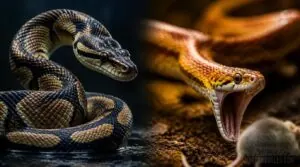
Defensive strikes repel you, while feeding strikes secure a target. A defensive snake often pulls its head back, forms an S-curve, and may use body flattening before a slower lunge.
Feeding strikes are faster, with directed upper-body propulsion and neck extension toward prey. Target selection is precise. Defensive strike mechanics conserve energy, often ending in retreat. False strike frequency rises when the snake wants distance, not contact.
Fear, Stress, and Escape Behavior
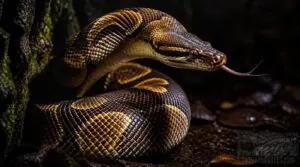
When a snake feels cornered, escape is the goal. Rapid tongue flicking signals active threat assessment. Watch for these stress indicators:
- Increased tongue flicking
- Body thickening and flattening
- Quick tail flicks before withdrawal
- Lateral head swipes before retreat
- Sudden forward dash in S-curve
Flight runs span several body lengths per second.
Calm Curiosity Versus Threat Tracking

Both behaviors share a fixed gaze, but body tension tells you everything. Curious snakes advance slowly, tongue flicking in relaxed, wide sweeps, body loosely coiled and evenly distributed across the surface.
Threat tracking looks sharply different: rapid head snaps, tighter coils, and a higher front elevation held stiffly. One seeks enrichment; the other is monitoring exit routes and your hands.
Musking, Hiding, and Tight Curling
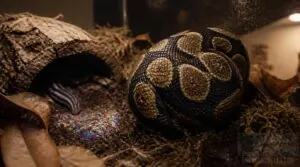
Three signals tell you a snake is defensive, not angry:
- Cloacal musk release – a foul secretion expelled when cornered
- Tight defensive curl – head tucked inward, body held stiff
- Hiding behavior – retreating to cover to reduce exposure
Juveniles musk and curl far more often than adults do. Enclosure stress limits retreat options, quickly intensifying all three defensive displays.
Signs a Bite May Follow
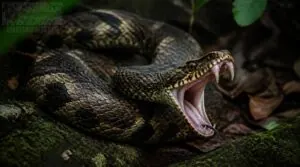
A jaw snapping lunge with minimal hesitation is your clearest pre-bite signal. Watch for the head tilt strike, where the snake angles sideways before snapping again. Body flattening stabilizes the strike.
A mouth open pause signals continued aggression, not retreat. If you hear a tail thump warning, don’t move. Calm to tense in under a second ends in contact.
What Triggers Defensive Behavior in Pet Snakes?
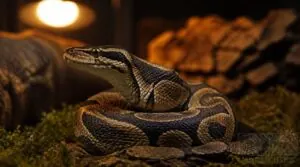
Most defensive behavior has a cause—and usually, you can identify it before a strike ever happens. Your snake isn’t acting out randomly; something in its environment or biology has crossed a threshold. Here are the most common triggers you need to know.
Handling Stress and Feeling Cornered
Every time you reach into the enclosure unannounced, you trigger a startle response. Snakes can’t signal "I need space," so defensive body posturing is their only language.
Approach from the side, never head-on, and use calm, slow movements. If the snake coils tightly or attempts to retreat, that’s a cornered retreat signal.
Pause handling and give space before trying again.
Incorrect Temperature or Enclosure Setup
Temperature matters more than most keepers realize. If your enclosure runs 5 to 10°F too hot, your snake’s stress response activates fast. Cool zones below 75°F slow digestion and raise irritability.
A single thermometer can’t capture microclimates, so place sensors at basking, middle, and cool zones. Small enclosures and humidity mismatches strip the snake’s ability to self-regulate naturally, turning avoidable setup errors into daily triggers.
Hunger and Prey Scent
Hunger sharpens olfactory sensitivity fast. Prey scent on your hands can trigger a strike even mid-handling.
Five hunger-driven warning signs:
- Rapid tongue flicking directed toward you
- Head raising with slow, tight coiling
- Increased muscle tension before striking
- Unprompted strike without a defensive display
- Pupils slightly dilated on approach
Wash your hands before handling. Feed on a consistent schedule.
Shedding, Breeding, and Seasonal Changes
Shedding sharpens defensive responses. When melatonin and thyroid hormones shift with season and temperature, your snake’s shed cycle begins, clouding its vision and raising its threat sensitivity.
During the breeding season, rising testosterone drives males toward restless movement and shorter fuses. Brumation periods reset these cycles entirely. Handle your snake less during both phases; it isn’t angry, it’s hormonally overloaded.
Pain, Illness, or Injury
Pain doesn’t always look like pain. A snake with oral infection signs may gape defensively; respiratory distress drives hissing and defensive strikes past 43%.
Watch for:
- Open-mouth threats from mouth rot or injury
- Hissing or body flattening from burns or fractures
- Illness-induced aggression from systemic infection
- Any defensiveness needing veterinary care
Temperament shifts lasting days demand immediate attention.
How Defensive Displays Vary by Snake
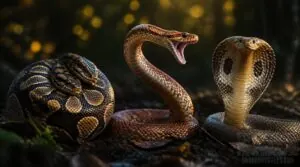
No two snakes respond to a threat the same way — species, age, and time of day all shape how that defensiveness shows up. What reads as extreme aggression in one snake might be a mild warning in another. Here’s how defensive displays break down across some of the most common pet species you’re likely to encounter.
Ball Python Defensive Curling
Ball pythons don’t bluff with hissing or dramatic mouth gaping the way other species do.
When threatened, they pull into a tight defensive spiral, tucking the head toward the center and pressing against enclosure walls for security. Stressed juveniles display this most intensely. The curl isn’t aggression; it’s an energy conservation posture that shields essential organs while the snake waits.
Boa Constrictor Warning Postures
Boas are built differently from hissing species. When threatened, a boa pulls into an S-shaped coil, raises its head, and lifts the front third of its body to make itself look as big as possible.
Body flattening follows. If you don’t create distance, expect tail vibration and an open mouth threat, fangs visible. Mock strikes come last, a final warning before snake aggression escalates.
Corn Snake Tail Vibration
Corn snakes mimic rattlesnakes without a rattle. When cornered, they shake their tails rapidly, and on dry substrate that buzz carries clearly across a quiet room.
- Defensive tail shake with head partially raised
- Substrate sound amplification through dry leaves or plastic surfaces
- Tight defensive coil held throughout the display
That vibration frequency signals handling stress. Pause and back off.
Juvenile Versus Adult Responses
Age changes everything about how a snake defends itself. Juveniles react to threats within 0.25 to 0.45 seconds and escalate to biting faster when cornered, often misreading handling as a prey cue. Adults respond in 0.35 to 0.60 seconds, hold defensive postures longer, and delay escalation when escape routes exist. Recovery time differs sharply: juveniles calm in under 30 seconds, while adults retreat much more slowly.
| Feature | Juvenile | Adult |
|---|---|---|
| Threat Reaction Speed | 0.25–0.45 seconds | 0.35–0.60 seconds |
| Posture Hold Time | Relaxes in under 30 seconds | Extended, slower return |
| Strike Force and Reach | Short, lower force | Longer reach, greater force |
Nocturnal Versus Daytime Defensiveness
Timing matters. Nocturnal snakes peak defensively after dark, guided by heat-sensing pits and sound, not sight.
Five key contrasts:
- Night species use rapid tail flicks, not prolonged coiling.
- Daytime snakes show broader threat displays during human approach.
- Dim conditions sharpen movement sensitivity at night.
- Nocturnal snakes usually retreat faster when suddenly startled.
- Temperature drops at night limit sustained defensive energy.
What to Do When a Snake Acts Aggressively
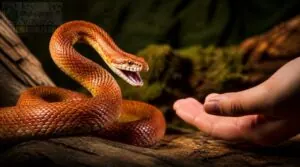
Knowing the signs is only half the equation—what you do in the next few seconds determines whether the situation escalates or resolves. Your response matters more than the snake’s behavior. Here’s what to do when aggression surfaces.
Stop Handling and Create Distance
The moment your snake raises its head, stop. Don’t reach toward the head or body.
| Signal | Action | Goal |
|---|---|---|
| S-coil, raised head | Step back | Safe retreat space |
| Open-mouth threat | Use a barrier | Block contact |
| Flattened body | Withdraw slowly | Ease defensive posture |
Back away in a straight, slow line, keeping one full body-length between you and the snake until it settles.
Avoid Sudden Movements or Restraint
Don’t rush back in after creating distance. Sudden movement spikes defensive behavior every time.
- Slow approach when re-engaging
- Steady posture, nothing jerky
- Gentle support under the body
- Continuous motion, no abrupt stops
Warning signs like a sudden fast slither toward your hand mean stop. A snake keeping its head elevated and still before striking won’t tolerate restraint.
Use Hooks Only When Appropriate
Once you’ve kept your movements slow and created distance, you may still face a snake that won’t settle. That’s when snake hooks earn their place, but only as a last option, not a default.
| Situation | Use Hook? |
|---|---|
| S-coil with raised head visible | Yes |
| Snake moves freely, posture relaxed | No |
| Large species during transfer or exam | Yes |
| Snake reacts to calm guidance | No |
Hold at the midpoint. Guide with smooth, steady motions. The instant the snake relaxes, set it down.
Improve Husbandry and Reduce Stress
Once the hook is away, address what’s been driving the behavior.
Temperature regulation is the starting point. A thermostat should hold the warm side between 28 and 30°C at all times.
Add two snug hides, one on each side of the enclosure.
Feed your snake weekly rather than biweekly. That single schedule change reduces defensive strikes by up to 17%.
Contacting a Reptile Veterinarian
When husbandry changes don’t resolve persistent aggression, seek reptile veterinary care. The Association of Reptile and Amphibian Veterinarians "Find a Vet" tool helps you locate a specialist nearby.
Before your visit, gather past medical records and note appetite or shedding changes. Ask about reptile experience and clinic equipment. For illness-driven strikes, most snakes improve within 48 to 96 hours of treatment.
Frequently Asked Questions (FAQs)
What time of year are snakes most aggressive?
Strike while the iron is hot." Snakes operate on the same principle. Late spring through early summer, when temperatures rise consistently above 20°C, marks the sharpest aggression window, driven by breeding season and corticosterone surges.
How to calm down an aggressive snake?
Back off slowly and stay quiet. Give it space and remove prey scents before next handling. Warm its enclosure to 25-30°C. If defensiveness persists, schedule a vet checkup.
What are the five warning signs of aggression?
Watch for hissing or rattling, S-shaped coiling, body flattening, open-mouth gaping, and tail vibration. Each display escalates in intensity as the snake tracks your movement. Ignoring these early signs puts you directly in striking range.
If you keep a ball python, this guide to ball python defensive behavior signs shows how to spot the warnings and back off before a strike.
What smell does a snake hate?
Ammonia avoidance, citrus scent deterrents, clove oil repellent, peppermint oil effect, and garlic smell barriers can deter some snakes.
Hunger, resource competition, feeding schedule, prey size affect responses; remove prey scents before handling.
Results vary.
How do juvenile snakes differ in aggression?
Juvenile snakes favor rapid retreat, but may deliver brief defensive bites when stressed; their lower bite force reduces injury.
Rapid temperature shifts, feeding schedules, and stress monitoring matter.
Hatchlings shift curiosity quickly, yet habituate readily.
Can aggressive snakes be trained to calm down?
Steady signals, safe spaces can condition calmer responses through gradual low-stress handling, positive reinforcement, enrichment, and consistent feeding. But you can’t erase temperament inheritance or domesticate a snake; monitor stress and prioritize welfare.
What sounds indicate an aggressive snake nearby?
Hissing often grows louder as a snake feels cornered. Listen for faster tail rattling, dry scale rustling, jaw pops, and abrupt exhalations. An open-mouth display with rapid, jerky movements or mock strikes means create distance immediately.
Do venomous snakes show more aggression than non-venomous?
Venomous vs nonvenomous snakes aren’t inherently more aggressive. Defensive displays, warning signals, and strike mechanics reflect species-specific temperament differences, escape likelihood, confinement, and pain-induced strikes. Venomous snakes may escalate faster when cornered, but most prefer withdrawal.
How does feeding schedule affect snake aggression?
If cage aggression appears just before feeding, your schedule is often the clue.
Regular, species-appropriate meals curb hunger-driven food motivation; correct prey size, clean hands, and calm tong-feeding prevent prey-scent confusion and lower feeding responses.
Can snakes recognize their owners over time?
Through owner scent recognition, tongue flicks, handling familiarity cues, and consistent feeding association, snakes often develop scent memory.
Over time, species-specific patterns include calmer body language, distance awareness, and fewer defensive moves or warning signs.
Conclusion
A snake can strike up to one-third of its body length in a fraction of a second, which is why distance is safer than reflexive restraint.
What does snake aggression look like? It looks like fear with nowhere to go. Read posture, check heat, shelter, health, and feeding cues, then remove pressure rather than forcing contact. When you respect those signals, the snake stops being a mystery and becomes a conversation between predator and keeper.
- https://snake-identifier.app/blog/are-snakes-aggressive-defensive-behavior
- https://californiaherps.com/behavior/snakelifehistorydefense.html
- http://CAESlwEB6zswFY7h6Mr6-Gg3Vl1WuKUo1vyzwxis7ypmFeOECOYpusCQLS1sHZDON8S5ruv-01AwMrFRRAceDO7BNfB4hLAu07CFPIq5aSwq_L7iriSMPMHV0z3-wzcBdlnD5dRupcdUP_IwB4_VkPQaHzBVp6o0c_P1TDdqLUJzdSGoF6OB7LjYw2JzT_OXBm3zQAVWrL5xCWp-