
This site is supported by our readers. We may earn a commission, at no cost to you, if you purchase through links.

Most ball python hatchlings arrive looking like a dare—coiled tight, tail rattling against the glass, ready to strike at a shadow.
That defensiveness isn’t aggression.
It’s a survival reflex from an animal that hatched knowing the world wanted to eat it.
The good news: that reflex fades with the right approach, and faster than most keepers expect.
Ball python hatchling socialization isn’t about forcing trust—it’s about earning it through consistent, low-pressure interactions built on a stable environment.
Get the enclosure dialed in first, learn to read the snake’s signals, and the rest follows a logical sequence that transforms a defensive hatchling into a calm, handleable animal.
Table Of Contents
- Key Takeaways
- Prepare The Enclosure for Socialization
- Start Handling at The Right Time
- Use Gentle Hatchling Handling Techniques
- Read Stress Signals During Socialization
- Top 10 Hatchling Socialization Supplies
- 1. Leoterra Reptile Hide Snake Lizard Gecko
- 2. BSRESIN Reptile Thermometer Humidity Gauge
- 3. Venicor Ball Python Aluminum Sign
- 4. WOLEDOE Snake Feeding Tongs
- 5. MiceDirect Frozen Hopper Mice Food
- 6. MiceDirect Frozen Hopper Mice for Snakes
- 7. RunXF Large Resin Reptile Rock Bowl
- 8. FCALIVV Reptile Hide Box
- 9. Ball Python Care Log Book
- 10. Ball Python Care Manual
- Frequently Asked Questions (FAQs)
- Do ball pythons have social behavior?
- How do ball pythons breed?
- How do you handle a ball python?
- How do ball pythons communicate?
- How to socialize a baby ball python?
- How often should I socialize my ball python?
- Do pythons get attached to their owners?
- Can ball python hatchlings recognize their owners over time?
- How do you introduce a hatchling to other household pets?
- What morph traits affect a hatchlings temperament?
- Conclusion
Key Takeaways
- A stable enclosure — snug hides, warm side between 86–92°F, and 60–80% humidity — does most of the socialization work before you ever pick up your hatchling.
- Wait until after the first shed and at least two consistent meals before handling begins, and never handle within 48 hours of a feeding.
- Always approach from the side at snake level, support the full body with both hands, and keep early sessions to just 2–5 minutes to build trust without pressure.
- When your hatchling balls up, hisses, or darts away, that’s your cue to end the session — pushing through stress signals sets back weeks of progress.
Prepare The Enclosure for Socialization

Before your hatchling ever meets your hand, the enclosure has to do its job. A well-set-up space is what turns a defensive little snake into a curious one.
Getting those details right from the start makes all the difference, and preparing your baby snake’s enclosure properly can save you a lot of guesswork along the way.
Here’s what you need to get right.
Secure Hides and Low-traffic Placement
Your hide placement strategy shapes everything. A Tight Hide Fit — snug enough for the snake to touch walls on all sides — makes a hatchling feel genuinely safe, not just covered.
Place hides on both warm and cool sides, tuck them near Visual Barriers like cork bark, and keep the enclosure in a Low Traffic Zone.
Quiet Enclosure Area placement removes unpredictable stress before socialization even starts.
Make sure the tank uses secure lid locks for safety.
Warm-side and Cool-side Temperature Targets
Once your hides are locked in, temperature is next. Keep the warm side between 86–92°F and the cool side around 72–80°F. That temperature gradient lets your hatchling self‑regulate without stress.
Thermometer placement matters — read temps at snake level, not above it.
At night, a nighttime gradient of 70–78°F works well.
Ceramic emitters are reliable heat source types that won’t disrupt sleep cycles.
Humidity Ranges for Daily Care and Shedding
Baseline humidity should sit at 60–80% for daily ball python hatchling care. When shedding starts — eyes go blue, skin looks dull — boost shedding humidity to 90–95%. That’s where a microclimate hide earns its place, holding moisture right where your hatchling needs it.
Track humidity monitoring frequency daily; gradual humidity adjustments beat sudden swings every time.
Substrate, Ventilation, and Escape-proof Setup
Now that humidity is dialed in, what you put on the floor matters just as much. A Moisture Retaining Substrate — coconut fiber, cypress mulch, or a topsoil blend — keeps Airflow Humidity Balance steady without constant misting.
- Aim for 2–4 inches of Substrate Depth Guidelines
- Choose substrate selection that packs well and holds shape
- Apply Ventilation Mesh Design — cover part of any screen top to cut moisture loss
- Lock every lid using Escape-proof Lid Mechanisms like binder clips or locking latches
Why a Stable Enclosure Reduces Defensive Behavior
Think of your enclosure as the foundation for trust. Microclimate Consistency — hitting your temperature gradient utilization targets daily — tells your hatchling nothing’s wrong.
A Low Disturbance Zone with Minimal Vibrations, a Stable Light Cycle, and a Predictable Routine all work together inside a secure enclosure to deliver the stress reduction strategies new owners need most. Stability prevents defensive behavior before it starts.
Start Handling at The Right Time

Timing your first handling session isn’t just a suggestion — it genuinely shapes how your hatchling feels about people for the long haul. Rush it, and you’re fighting an uphill battle with a snake that thinks hands mean danger.
Rush your hatchling’s first handling session, and you’ll spend weeks undoing the damage
Here’s how to read the right moment and start things off on solid ground.
Why New Hatchlings Need an Adjustment Period
Your new hatchling isn’t being dramatic — it’s running on pure survival instinct. Stress hormone stabilization, scent territory mapping, and thermal preference learning all take time. So does hydration skin recovery after transport.
Give it two quiet weeks to acclimate to its new surroundings.
Predation risk habituation happens naturally when you keep disturbances minimal. That patience is one of the most effective stress reduction strategies for new owners.
Waiting Until The First Shed and Steady Feeding
Wait for shed completion and at least two consistent meals before handling begins.
Here’s what to track during the first two weeks:
- Watch for pre-shed indicators: cloudy eyes, dull coloration
- Raise pre-shed hydration by boosting humid hide moisture
- Confirm post-shed appetite returns with steady meal size
- Log weight weekly for growth monitoring
Feeding schedule consistency matters as much as patience.
When to Avoid Handling After Meals
A full meal is a signal to step back, not pick up. Skip handling for at least 48 hours after feeding — Regurgitation Risk spikes the moment you jostle a digesting hatchling.
| Timing | Action |
|---|---|
| 0–48 hrs post-meal | No handling |
| Cold enclosure detected | Extend wait; Digestive Cooling stalls gut motility |
| Large prey fed | Add extra time; Meal Size Impact increases strain |
| Enclosure Disturbance noticed | Pause; monitor Hydration Monitoring and resume carefully |
Your postfeeding handling protocol is simple: wait, watch, and verify.
Why Shedding Makes Hatchlings More Sensitive
Shedding turns your hatchling into a raw nerve. Visual impairment from clouded eye caps reduces how well it tracks movement, so your hand reads as a threat. Skin irritation from incomplete shed raises tactile hypersensitivity — even gentle contact triggers defensive behavior.
Add temperature instability or humidity fluctuations, and pre‑shed behavior escalates quickly.
Pause handling protocols entirely during shed cycles. Stress signals spike. Socialization techniques can wait.
Signs a Hatchling is Ready for First Handling
Your hatchling sends clear green lights before the first session.
- Post Shed Readiness — clean shed, no retained scales, eyes fully clear
- Feeding Stability — at least one accepted meal on schedule
- Hiding Utilization — moving between hides normally, not hiding 24/7
- Steady Movement and Body Balance — calm exploration, no stress signals, no defensive coiling
First two weeks? Hands off.
Use Gentle Hatchling Handling Techniques
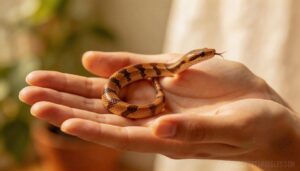
How you pick up your hatchling matters more than most beginners expect. Small mistakes — like lifting from above or skipping a hand wash — can set back weeks of progress.
Here are the core techniques that make every session safer and less stressful for both of you.
Washing Hands to Prevent Food-response Bites
Before you pick up your hatchling, wash your hands thoroughly — this is non-negotiable pre-handling hygiene. Soap residue removal matters: scrub fingertips, between fingers, and under nails. Rinse completely, then follow a dry hand protocol using a clean towel.
Skip scented lotions, and fragrance free sanitizer isn’t always enough.
If you’ve handled feeders, use dedicated feeding gloves instead.
Food scent triggers food response. Simple as that.
Approaching From The Side Instead of Above
Once hands are clean, how you reach in matters just as much.
Ball pythons read overhead movement as a threat — their heat pits flag a warm hand dropping from above as a predator. Visual Threat Perception kicks in fast. Try these gentle handling techniques for Reduced Startle Response and stress reduction:
- Open the enclosure and enter from the side
- Keep your hand at the snake’s level — Low-Level Hand Position
- Move slowly and steadily, never suddenly
- Use Consistent Side Entry every session for building trust
- Let the hatchling track your hand before contact — Heat Pit Avoidance in action
Same angle, every time. Socialization depends on predictability.
Supporting The Full Body With Two Hands
Once you’re in from the side, your grip has to match the moment. Use Front-Back Hand Placement: one hand under the front third, one under the rear.
That’s Even Weight Distribution — no single point carries the load. The Level Lift Technique keeps the body horizontal.
Minimize Twisting by syncing both hands with Hand Position Synchronization. Support its body fully. That’s how trust gets built.
Why Tail-only Lifting Should Be Avoided
Even with solid two-hand support, one mistake undoes everything: lifting by the tail.
It causes real Spine Traction Injury, pulls nerve endings, and risks Joint Strain in a body too small to absorb that force.
Fear Conditioning sets in fast — Hatchling Vulnerability means a single painful pickup can make your ball python associate your hands with danger for weeks.
Starting With Short Sessions and Increasing Slowly
Your first session should run for just 2 to 5 minutes — no longer. That’s the Gradual Exposure Protocol in action.
Incremental Time Steps mean adding only a minute or two once your hatchling stays calm across several short handling sessions.
Inter-Session Rest of 1 to 2 days lets it reset.
Behavioral Tolerance Tracking confirms when it’s actually ready for more.
Best Handling Frequency for Building Tolerance
Most hatchlings do well with 1 to 3 sessions per week — that’s your Handling Cadence sweet spot. Weekly Rhythm matters more than session count.
Feeding Gaps: no handling within 48 hours of a meal. Use Stress Monitoring to guide your Gradual Increase.
Dropped appetite means scale back. Consistent, gentle handling builds trust with a ball python faster than daily pressure ever will.
Using Calm, Quiet, Low-light Sessions
Think of it as setting the stage. Dim Light Handling works because ball pythons are naturally tuned to dusk light cues — bright overhead lights create visual stress before you even reach in.
Use a Quiet Room Setup with phones silenced and foot traffic gone. Keep sessions brief. Gentle Motion and a quiet voice signal safety.
Low Light Approach plus Brief Sessions make ball python socialization techniques actually stick.
Read Stress Signals During Socialization
Your hatchling can’t tell you when it’s had enough — it shows you. Learning to read those signals is one of the most important skills you’ll build as a keeper.
Here’s what to watch for during every session.
Tight Balling, Hissing, and Striking
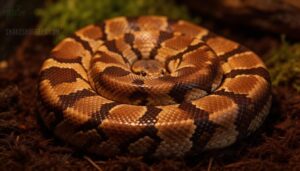
Your hatchling’s body language cues don’t lie. A tight defensive coil with the head tucked means one thing: back off.
Balling duration can stretch several minutes if you keep pushing. Hissing signals rising stress — hiss intensity tells you how close to the strike threshold you’re getting.
Ball python socialization techniques means recognizing these defensive postures early and ending the session before a strike happens.
Fleeing, Rapid Movement, and Defensive Coiling
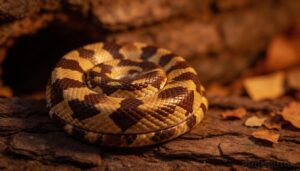
When a ball python darts toward the nearest hide, that’s Escape Path Design in action — instinct, not attitude.
Rapid movement and defensive coiling are Vibration Trigger Responses; even tapping the tank can set them off.
Light Level Effects matter too — bright overhead lighting increases fleeing.
Thermal Choice Behavior means a chilled hatchling stays tense.
Tight defensive coil duration shortens when handling techniques stay calm and brief.
Calm Tongue Flicks and Relaxed Exploration
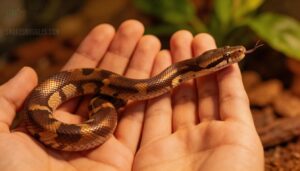
Steady tongue flicks and smooth body tone tell you the session is going well. Long, calm flicks mean your hatchling is sampling the environment — not panicking.
Gentle head movement paired with loose muscle tone signals genuine Low Light Exploration, not escape behavior. Quiet Enclosure Atmosphere facilitates this.
Stress reduction through calm handling and consistent socialization training develops this relaxed response over time.
When Prolonged Hiding Signals a Husbandry Issue

Not every hide session is innocent. When your hatchling stays tucked for days — skipping nighttime movement entirely — that’s a red flag worth investigating.
Check these common culprits:
- Improper Hide Fit or gap-heavy entrances that leave hatchlings feeling exposed
- Uneven Heat Distribution disrupting thermal comfort and pre‑shed behavior
- Insufficient Humidity blocking smooth pre‑shed hide preference and triggering signs of stress
- Irritating Substrate or Irregular Feeding compounding enclosure setup problems
When to Pause Handling and Reassess

Sometimes the right move is to put the snake down and walk away.
Use this quick-reference guide:
| Pause Trigger | Recommended Action |
|---|---|
| Post‑Meal Interval | Skip handling for at least 48 hours |
| Shedding Pause | Wait until shed is fully complete |
| Feeding Refusal Signal | Stress‑Triggered Break plus Enclosure Check |
| Signs of stress or discomfort | Stop session immediately, reassess husbandry |
Stress indicator detection early prevents bigger problems later.
When Stress Signs Require Veterinary Help

Not every stress sign resolves with a quieter room or a longer break. Some symptoms point past husbandry and straight and straight to a vet.
- Respiratory distress — wheezing, open-mouth breathing, or visible mucus — signals a possible respiratory infection, not a cortisol response to handling.
- Cloacal prolapse, dehydration signs like sunken eyes or wrinkled skin, and neurologic signs such as head tremors need immediate health assessment.
- Feeding refusal lasting multiple consecutive meals, combined with weight loss, requires professional evaluation.
Top 10 Hatchling Socialization Supplies
The right gear makes socialization a whole lot smoother for both you and your hatchling. Having the correct supplies from day one helps you stay consistent with temperatures, feeding, and handling routines.
Here are ten products worth keeping in your setup.
1. Leoterra Reptile Hide Snake Lizard Gecko
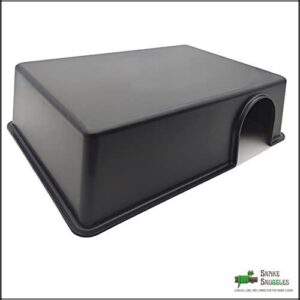
A good hide is one of the cheapest wins in your enclosure setup. The Leoterra Reptile Hide measures 10.23" × 7.48" × 2.75" — compact enough for hatchlings, with a 2.75" × 2.36" entrance that’s easy to slip through but still snug enough to feel secure.
The top-seal design holds humidity right where your snake needs it. Smooth, rounded plastic edges won’t snag shedding skin.
At $12.99, it’s an affordable first hide that pulls its weight.
| Best For | Small to medium reptile owners — especially those keeping ball pythons, corn snakes, geckos, or similar species — who want an affordable, easy-to-clean hide that helps maintain humidity. |
|---|---|
| Price | $12.99 |
| Primary Material | Plastic |
| Package Quantity | 1 |
| Target User | Reptile keeper |
| Ease of Cleaning | Rinse or wipe |
| Indoor Use | Yes |
| Additional Features |
|
- Top-seal design traps moisture right where it matters, great for species that need a humid hide
- Smooth, rounded plastic edges mean no snagged skin during shedding
- Easy to rinse clean and budget-friendly at $12.99 — practical if you need multiple hides
- Too small for snakes over 200g; larger animals will need an L or XL size
- Lightweight enough that a bigger snake can push or flip it out of place
- Some buyers feel the actual size runs a bit smaller than the listed dimensions suggest
2. BSRESIN Reptile Thermometer Humidity Gauge
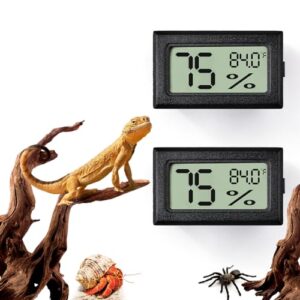
Temperature and humidity are the two numbers that determine whether your hatchling thrives or struggles. The BSRESIN gauge tracks both simultaneously on one compact LCD screen, updating every 5 seconds. Accuracy sits at ±1°F and ±5% RH — close enough for ball python care.
The pack includes two units, so you can monitor warm and cool sides at once. Stick them inside the tank using the adhesive dot.
Replace the 1.5V battery around the three-month mark.
| Best For | Ball python and reptile keepers who want an easy, affordable way to track both temperature and humidity across multiple enclosures at once. |
|---|---|
| Price | $8.99 |
| Primary Material | Resin |
| Package Quantity | 2 |
| Target User | Reptile keeper |
| Ease of Cleaning | Wipe surface |
| Indoor Use | Yes |
| Additional Features |
|
- Comes in a two-pack, so you can monitor warm and cool sides of the tank simultaneously
- Updates every 5 seconds and shows temp and humidity on one screen — no switching between devices
- Compact with an adhesive backing, making it easy to mount right inside the enclosure
- Humidity readings can vary by up to 10% between the two units, which isn’t ideal for sensitive species
- The adhesive dot can be weak, and there’s no suction cup backup if it fails
- Battery life tops out around three months, and some packs arrive without batteries included
3. Venicor Ball Python Aluminum Sign

Not every supply in your reptile room has to be serious. The Venicor Ball Python Aluminum Sign is a fun nod to the hobby — and a practical one.
Mount it on your door, fence, or enclosure wall using the pre-drilled holes.
It’s lightweight aluminum with a weather-resistant finish, so humidity won’t warp or rust it. At roughly 8 by 12 inches, it’s a small but clear statement.
Consider it a conversation starter for anyone who walks into your snake space.
| Best For | Ball python owners who want to add a little personality to their reptile room or give a fun, practical gift to a fellow snake enthusiast. |
|---|---|
| Price | $12.99 |
| Primary Material | Aluminum |
| Package Quantity | 1 |
| Target User | Reptile enthusiast |
| Ease of Cleaning | Wipe surface |
| Indoor Use | Yes |
| Additional Features |
|
- Made from rust-proof aluminum, so humidity and outdoor conditions won’t wreck it over time.
- Pre-drilled holes make hanging it quick and easy — no extra hardware needed.
- It’s a great conversation piece and a thoughtful novelty gift for reptile lovers.
- It’s pretty small, so don’t expect it to grab attention from across the room.
- The thin aluminum feels light — almost flimsy — compared to heavier metal signs.
- Color may fade if it gets a lot of direct sunlight over time.
4. WOLEDOE Snake Feeding Tongs
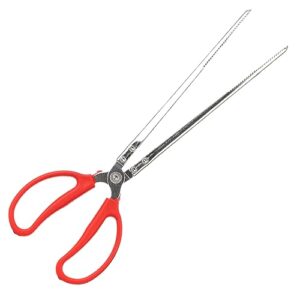
Feeding tongs are one of those tools you don’t realize you need until a hatchling tags your fingers. The WOLEDOE Snake Feeding Tongs stretch 15 inches — enough distance to keep your hand well outside the strike zone.
Stainless steel construction means they won’t rust after repeated cleaning. The serrated jaws hold prey securely, which helps mimic natural movement and trigger feeding responses in reluctant eaters. Non-slip grips give you control without fatigue.
At $7.99, it’s a low-cost habit that prevents accidental bites.
| Best For | Snake owners who feed small to medium constrictors like ball pythons or corn snakes and want a safe, affordable way to avoid accidental strikes during feeding. |
|---|---|
| Price | $7.99 |
| Primary Material | Stainless Steel |
| Package Quantity | 1 |
| Target User | Reptile keeper |
| Ease of Cleaning | Hand wash |
| Indoor Use | Yes |
| Additional Features |
|
- 15-inch length keeps your hand comfortably out of strike range
- Serrated jaws grip prey firmly and can help trigger feeding in picky eaters
- Stainless steel build resists rust and holds up to repeated cleaning
- Can tear delicate frozen prey if you squeeze too hard
- Feels a bit stiff and bulky compared to lighter competing options
- Longer than some users expect — not the most compact choice for smaller setups
5. MiceDirect Frozen Hopper Mice Food
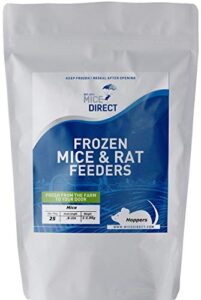
What goes into the mouse matters as much as the mouse itself. MiceDirect raises their hoppers on Mazuri zoological-grade feed — the same formula professional zoos use — so your hatchling gets complete nutrition from day one.
Each mouse weighs 7 to 13.99 grams, which matches hatchling girth without regurgitation risk.
CO₂ euthanasia keeps stress hormones out of the prey.
dry ice shipping locks in freshness, with farm-to-door delivery averaging about one week.
At 25 mice per pack, you’ve got consistent feeding covered for months.
| Best For | Owners of baby ball pythons, baby red-tail boas, or small juvenile snakes who want a nutritious, humanely sourced feeder mouse they can trust. |
|---|---|
| Price | $19.99 |
| Primary Material | Organic |
| Package Quantity | 25 |
| Target User | Reptile keeper |
| Ease of Cleaning | N/A |
| Indoor Use | Yes |
| Additional Features |
|
- Fed a Mazuri zoo-grade diet, so your snake gets solid, consistent nutrition with every meal
- CO₂ euthanized and shipped on dry ice, keeping things fresh and low-stress from farm to your door
- 25 mice per pack means you’re stocked up for a good stretch of regular feedings
- At around $4 a mouse, it’s pricier than buying in bulk from other sources
- Size can vary, and some mice run smaller than you’d expect for a hopper
- Only works for small or juvenile snakes — growing reptiles will outgrow this size pretty quickly
6. MiceDirect Frozen Hopper Mice for Snakes
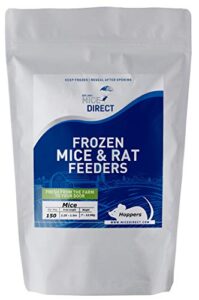
Bulk buying makes sense when you’re feeding on a schedule. This 150-pack from MiceDirect gives you roughly five months of consistent meals for a hatchling ball python, at about $1.20 per mouse.
Each hopper weighs 7 to 12 grams — right in the safe zone for small snakes.
They’re CO₂-euthanized, irradiated to cut Salmonella risk, and shipped frozen on dry ice.
No artificial additives. No middlemen. Just clean, ready-to-thaw prey that keeps your feeding routine predictable and stress-free.
| Best For | Snake owners feeding hatchling ball pythons, baby red-tail boas, or sub-adult milk snakes who want a reliable bulk supply without the hassle of sourcing locally. |
|---|---|
| Price | $179.97 |
| Primary Material | Organic |
| Package Quantity | 150 |
| Target User | Reptile keeper |
| Ease of Cleaning | N/A |
| Indoor Use | Yes |
| Additional Features |
|
- CO₂-euthanized and shipped frozen on dry ice, so you’re getting clean, fresh prey without any artificial additives or sketchy middlemen
- At around $1.20 per mouse, bulk buying locks in a predictable feeding routine for roughly five months of meals
- No live prey means less stress for you and zero risk of your snake getting scratched or bitten during feeding
- Several buyers report some mice coming in smaller than expected for hopper size, which could mean less nutrition per feeding
- 150 mice is a lot — if you only have one or two small snakes, you might struggle to use them all before quality drops
- No weight or size specs upfront, so it’s tough to know exactly what you’re getting before the box shows up at your door
7. RunXF Large Resin Reptile Rock Bowl
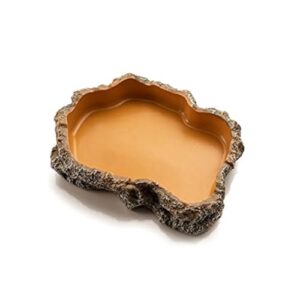
Water matters more than most new keepers realize. The RunXF rock bowl keeps things simple — it’s 9 inches long, stable, and heavy enough that your hatchling won’t tip it mid-soak.
The resin mimics natural stone, so it doesn’t look out of place in a carefully built enclosure. Smooth interior means no scale snags. Rough outer edges can actually help during shedding.
One rinse before first use, and it’s ready. Clean it with warm water. Done.
| Best For | Reptile owners with medium to large snakes, lizards, or turtles who want a stable, natural-looking bowl that pulls double duty for food and water. |
|---|---|
| Price | $18.99 |
| Primary Material | Resin |
| Package Quantity | 1 |
| Target User | Reptile keeper |
| Ease of Cleaning | Rinse with water |
| Indoor Use | Yes |
| Additional Features |
|
- The rock-like look blends right into a terrarium without feeling out of place
- Heavy, stable base means your reptile can climb or soak without flipping it
- Smooth interior is easy to rinse clean, and rough outer edges can help with shedding
- Only comes in yellow/brown, so it might clash with certain enclosure setups
- One bowl per pack means you’ll need to buy extra if you want separate food and water dishes
- Resin can chip or crack if dropped, so handle it carefully during cleaning
8. FCALIVV Reptile Hide Box
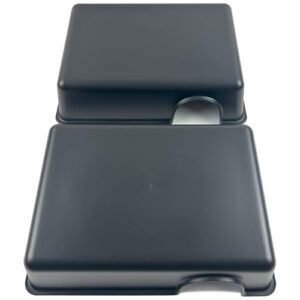
Security is just as important as hydration. The FCALIVV Reptile Hide Box gives your hatchling exactly what it needs — a dark, enclosed space to decompress.
At 9.45 × 6.89 × 2.17 inches, it fits juveniles well. The textured exterior adds climbing interest.
Best part? You get two hides in one package — one for the warm side, one for the cool side. Plastic cleans fast.
A tight, opaque hide isn’t optional for a ball python. It’s the difference between a calm snake and a defensive one.
| Best For | Juvenile ball pythons, leopard geckos, and other small reptiles that need a secure, enclosed hide to feel safe and stress-free. |
|---|---|
| Price | $15.99 |
| Primary Material | Plastic |
| Package Quantity | 2 |
| Target User | Reptile keeper |
| Ease of Cleaning | Disassemble and wash |
| Indoor Use | Yes |
| Additional Features |
|
- Comes as a two-pack, so you can cover both the warm and cool sides of the enclosure without buying extra
- Easy to clean — just rinse, wash, and dry, no fuss
- Textured exterior gives curious reptiles something to climb and explore
- The entrance opening runs small, so adult ball pythons or larger snakes likely won’t fit
- Plastic doesn’t have the natural look of cork or wood hides, which some keepers prefer
- The black color can be hard to spot against dark substrate, making it easy to lose track of the entrance
9. Ball Python Care Log Book
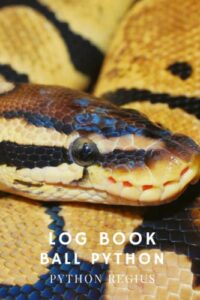
Tracking your hatchling’s care is where good keeping becomes great keeping. The Ball Python Care Log Book manages that work for you.
At $9.99, it holds over 300 feeding entries, 100 shed records, and 12 months of growth charts. That’s years of data in one place — enough to spot patterns before they become problems.
It’s designed for 8–10 years of use, so you’re not replacing it anytime soon. Paper-based, simple, and built specifically for ball pythons.
| Best For | Ball python owners who want a simple, long-term way to track feeding, shedding, and growth without juggling spreadsheets or apps. |
|---|---|
| Price | $9.99 |
| Primary Material | Paper |
| Package Quantity | 1 |
| Target User | Reptile keeper |
| Ease of Cleaning | N/A |
| Indoor Use | Yes |
| Additional Features |
|
- Fits years of data in one book — 300 feeding entries, 100 shed logs, and monthly growth charts all in one place.
- Built to last 8–10 years, so you buy it once and you’re done.
- Covers everything from daily care to breeding records, making it useful whether you’re new to ball pythons or have kept them for years.
- Paper-only means no backups — if it gets damaged, that data is gone.
- Heavy keepers or breeders with multiple snakes could hit the entry limits faster than expected.
- The 6×9 format is compact, which is great for storage but can feel tight when you’re trying to write detailed notes.
10. Ball Python Care Manual
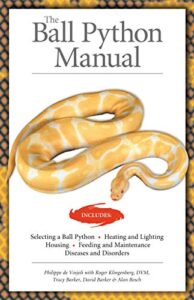
Your log book captures the data — this manual explains what it means. Ball Python Care Manual by Philippe de Vosjoli runs only 88 pages and $9.99, but it covers selection, housing, feeding, handling, morph genetics, and disease identification in one place.
For new keepers, that range matters. It won’t cover every recent husbandry update, so pair it with current sources.
Think of it as your foundation — a reliable starting point before experience fills in the gaps.
| Best For | New ball python owners who want a compact, affordable guide covering the basics of care, morphs, and breeding in one easy-to-read reference. |
|---|---|
| Price | $9.99 |
| Primary Material | Paper |
| Package Quantity | 1 |
| Target User | Reptile keeper |
| Ease of Cleaning | N/A |
| Indoor Use | Yes |
| Additional Features |
|
- Covers the full care journey in one place — selection, housing, feeding, morphs, and disease troubleshooting
- Written by respected herpetologists, so the foundational info is solid and trustworthy
- Compact and lightweight, easy to keep on hand for quick reference
- Published in 2004, so newer husbandry practices and morph developments aren’t included
- Some topics get brief treatment, meaning you’ll need extra resources to go deeper
- Leans toward imported specimens, with limited focus on captive-bred ball python specifics
Frequently Asked Questions (FAQs)
Do ball pythons have social behavior?
Ball pythons aren’t strictly solitary — they show limited, context-dependent social behavior.
A 2024 study found juveniles forming clusters and using "home base" areas, proving some social awareness exists, though it’s simpler than in more gregarious species.
How do ball pythons breed?
Breeding starts when a female reaches about 1,200 grams and a male hits 700 grams, usually around age three. Cooler winter temps trigger the cycle, and eggs hatch after roughly 55 days.
How do you handle a ball python?
Wash your hands, approach slowly from the side, and support the full body with both hands. Keep sessions short, stay calm, and avoid sudden movements.
How do ball pythons communicate?
Your ball python talks through body language and chemical signals. Tongue flicks gather scent data. A tight ball means back off. Slow, loose movement means all is well.
How to socialize a baby ball python?
Socialization starts with a calm setup, the right timing, and gentle handling. Read stress signals, keep sessions short, and stay consistent. Patience is the whole game here.
How often should I socialize my ball python?
Aim for 2 to 3 times per week once your hatchling is eating consistently. Skip sessions during shedding and for 24 hours after meals. Brief, calm contact beats long, stressful ones every time.
Do pythons get attached to their owners?
Not exactly. Your python won’t seek you out like a dog does.
What they learn is that you’re not a threat. That’s tolerance — and over time, it can feel a lot like trust.
Can ball python hatchlings recognize their owners over time?
Not in the way a dog does — but yes, over time, your hatchling builds a scent-based map of you. Consistent, calm interactions make you familiar, not threatening.
How do you introduce a hatchling to other household pets?
Keep the snake fully enclosed and let other pets observe from a distance first. Never allow direct contact. Supervised, barrier-separated exposure is the only safe starting point.
What morph traits affect a hatchlings temperament?
Morph labels don’t predict personality. Spider morphs may show wobble — a balance issue that mimics anxiety.
individual snake, its enclosure stability, and early handling matter far more than color or pattern.
Conclusion
Imagine thinking ball python hatchlings are just tiny, slithery landmines waiting to release their fury. Ridiculous, right? Yet, many new keepers unwittingly fuel their defensiveness.
The truth is, with ball python hatchling socialization, you can transform that initial wariness into calm, handleable charm.
Get the enclosure dialed in, read their stress signals, and use gentle handling techniques. Before long, you’ll be enjoying serene interactions with your little serpent friend, not wrestling a stressed-out snake.