This site is supported by our readers. We may earn a commission, at no cost to you, if you purchase through links.

Your new ball python sits frozen in a tight coil, head buried deep, and you wonder if you did something wrong. You didn’t. That tiny ball is a snake doing exactly what a nervous baby should do.
A young ball python personality runs from bold explorer to quiet watcher, and most snakes land somewhere in the middle, even among clutchmates. Shedding cycles, hunger, and handling history all nudge the mood from week to week.
Once you can read the tongue flicks, the coils, and the S-shaped warnings, your snake stops being a mystery. Here’s how to decode what it’s telling you.
Table Of Contents
- Key Takeaways
- What is a Young Ball Python’s Personality Like?
- How to Read Your Young Ball Python’s Body Language
- What Shapes a Young Ball Python’s Temperament?
- How to Build Trust With Your Young Ball Python Through Gentle Handling
- How a Low-Stress Enclosure Supports Your Young Ball Python’s Confidence
- Frequently Asked Questions (FAQs)
- What are the signs that a ball python is happy?
- What age is considered a juvenile ball python?
- Do pythons take care of their young?
- Do ball pythons get attached to their owners?
- What is the temperament of a baby ball python?
- What is the friendliest snake for beginners?
- Can two young ball pythons share an enclosure?
- How long do juvenile ball pythons typically live?
- When should a juvenile see a reptile vet?
- How do ball pythons communicate with their owners?
- Conclusion
Key Takeaways
- A tight coil or a hiss is a fear response, not aggression, so back off and give your snake space instead of pushing harder.
- Your snake’s temperament isn’t fixed, because genetics and morph set only a loose baseline while your handling history, shed and feeding cycles, and age shape the mood you see.
- You’ll build trust with short, calm sessions of five to ten minutes that you end at the first stress signal, and you’ll wait 24–28 hours after meals before handling.
- A low-stress enclosure with multiple hides, a steady temperature gradient, 50–60 percent humidity, and a quiet spot helps your snake feel secure enough to explore and eat.
What is a Young Ball Python’s Personality Like?

Some young ball pythons explore everything the moment you open the lid. Others tuck their head under a coil and stay put. Both are normal.
Defensive habits vary by species, so a look at the differences between popular pet snake species helps you know what to expect.
Think of it as a personality spectrum. Bold and curious snakes sit at one end, quiet and cautious ones at the other, and most land somewhere in between. Even clutchmates differ.
Your snake’s mood can also shift with juvenile shedding and feeding cycles. Expect a shy week before a shed, or a pushy appetite after a missed meal. That’s normal, so don’t judge personality on one day.
Patience pays off. With steady, calm trust building techniques, many reserved juveniles slowly grow noticeably more confident and curious. You’re learning their body language as they learn you.
How to Read Your Young Ball Python’s Body Language
Your snake is already talking to you. You just need to learn the language. Snake body language is subtle, so watch the whole animal, not one signal.
- Relaxed exploring: slow tongue flicks, loose neck, smooth movement.
- Defensive ball coiling: head tucked deep, body wound tight.
- Hissing and posturing: S-shaped neck, puffed body, quick strikes.
A tight ball or a hiss is almost always a fear response, not true aggression. Your snake isn’t mean. It’s protecting itself. Respond by backing off, not pushing harder.
Once your snake has calmed down, learning how to handle a hissing snake safely will help you rebuild trust through slow, patient, low-stress interactions.
A hissing or balled-up snake is simply frightened, not mean, so back off and give it space instead of pushing harder
Give a nervous snake space, then try again later. Calm, predictable trust building techniques work best, like short quiet sessions and slow, supported handling. Over time, you’ll learn to spot stress early and respond calmly before it escalates.
What Shapes a Young Ball Python’s Temperament?

Your young ball python’s personality isn’t fixed. Two things shape it most: genetics, morphs, and handling history, and how temperament changes with age. Let’s look at each one so you know what to expect from your snake.
Genetics, Morphs, and Handling History
Genes load the dice. Handling history rolls them.
Your snake’s genetics set a baseline, but handling history shapes what you actually see. Morphs hint at temperament, yet only loosely.
If you’re curious how much color really tells you about attitude, this breakdown of corn snake morph temperament differences shows why consistent, patient handling matters more than the pattern on your snake’s scales.
| Morph | Common Reputation | Your Move |
|---|---|---|
| Banana | Calm | Handle gently |
| Mahogany | Spicy | Go slower |
Husbandry matters too. A cold or hungry snake acts defensive, whatever its genes. Keep your trust building steady.
A digital reptile thermostat keeps heat mat temperatures steady, helping your corn snake stay warm, digest well, and feel calm during handling.
How Temperament Changes With Age
Your snake won’t stay nervous forever. Behavioral maturation over time softens most hatchlings, so run a fresh temperament assessment every few months.
Early handling and progressive desensitization pay off. Social bonding grows with every calm session. You’ll notice:
- Fewer strikes, more curiosity
- A relaxed, steady grip on your hand
- Pride when it finally explores
- Calm tongue flicks
- Trust you earned
How to Build Trust With Your Young Ball Python Through Gentle Handling
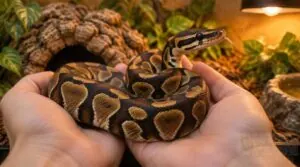
How do you earn a nervous snake’s trust? Slowly. Start with short consistent handling sessions once your ball python is eating regularly, usually after the first two weeks. A small, ventilated snake handling tub gives a nervous ball python a secure, familiar space during sessions and quick transport.
Think progressive desensitization. Rest your still hand in the enclosure, let your snake approach, then lift it gently with two hands supporting the whole body. Every calm session builds positive human association. Keep sessions to five or ten minutes and end them at the very first stress signal. If your juvenile feels skittish, a snake handling hook lets you guide it out of the enclosure without startling it before hands-on sessions.
Handling mistakes to avoid:
- Grabbing or chasing your snake
- Lifting by the tail
- Handling more than once daily
- Ignoring hissing, balling up, or fleeing
- Handling while it’s cold, so keep a proper temperature gradient
Stay patient. Trust grows one quiet session at a time. Waiting at least 24-28 hours after meals before handling also prevents stress and regurgitation.
How a Low-Stress Enclosure Supports Your Young Ball Python’s Confidence

You can build confidence into your young ball python’s home. A calm enclosure setup does most of the work. Stress shrinks. Trust grows.
Start with these five basics:
- Offer multiple secure hides, at least one on each side.
- Hold a steady temperature gradient: 88–92°F warm, 76–80°F cool.
- Keep humidity between 50 and 60 percent.
- Choose a right-sized tub or PVC enclosure, not a huge bare tank.
- Place it in a quiet, low-traffic spot.
Add branches and foliage too. Cover helps your snake feel safe enough to explore and eat.
Keep your routine predictable. Feed, clean, and check in at the same times. Skipping this is one of the handling mistakes to avoid, since a nervous snake won’t settle or feed.
Frequently Asked Questions (FAQs)
What are the signs that a ball python is happy?
Happy isn’t measurable, so look for steady, species-typical behavior. A loose, unhurried snake isn’t showing defensive behavior.
Stress signal monitoring matters. Bold or shy temperament, reptile temperament traits vary. Reptile trust building starts with noticing.
What age is considered a juvenile ball python?
Most keepers call a ball python a juvenile from about 6 months to 3 years, though sources differ.
Don’t stress over the number. Track juvenile snake development closely through feeding, sheds, and growth instead.
Do pythons take care of their young?
Ever wonder what a python mother actually does? She guards and warms her eggs, but that’s where maternal care ends.
Hatchlings hunt alone. A breeder removes eggs, so temperament, handling, and socialization start with you.
Do ball pythons get attached to their owners?
Many owners believe their snake loves them. Not quite. Your ball python learns your scent and routine, but that’s trust building through habituation, not affection.
Keep handling frequency steady and reward calm sessions with patience.
What is the temperament of a baby ball python?
Picture a hatchling balling up when you lift the lid. That’s baby ball python temperament: shy first, curious later, rarely aggressive. Gentle handling tips and stress reduction in reptiles help your young ball python settle.
What is the friendliest snake for beginners?
Ball pythons are the most laid-back snakes you’ll ever meet, bar none. Their calm ball python temperament shows in how they curl up when nervous, never lash out. Proper handling techniques keep stress low.
Can two young ball pythons share an enclosure?
Think they’ll cuddle happily? Don’t risk it.
Separate enclosures give you full control: temperature gradient, humidity control, and stress signal monitoring, plus safer proper handling techniques. Shared housing invites competition, so enclosure conditions impact health.
How long do juvenile ball pythons typically live?
With proper care, your ball python can live 15 to 30 years. That’s a long commitment.
Steady enclosure conditions, regular feeding, gentle handling, and quick attention to health problems keep stress low and temperament calm.
When should a juvenile see a reptile vet?
Picture a coiled hatchling, calm and bright-eyed, until one skipped meal hints otherwise.
Book a vet visit within two weeks of homecoming, then yearly. Go sooner for appetite changes, wheezing, weight loss, or stuck shed.
How do ball pythons communicate with their owners?
Ever wonder what your snake is saying? Body language tells all. Slow tongue flicks mean curiosity, while hissing and posturing signal defensive behaviors.
Follow these handling tips, respect the signals, and trust building follows naturally.
Conclusion
Remember that frozen little coil from day one? It wasn’t a verdict, just a starting point.
Your young ball python personality will keep unfolding as it grows, shaped by genetics, age, and every calm interaction you offer.
Keep handling sessions short, keep the enclosure secure, and watch the tongue flicks and coils. Patience builds trust faster than any trick.
Do that, and your snake will uncurl, explore, and relax in your hands. That’s the win.