
This site is supported by our readers. We may earn a commission, at no cost to you, if you purchase through links.
A normal ball python hatchling costs about thirty dollars. The same animal carrying a BEL complex gene can hit four thousand. That price gap isn’t arbitrary—it reflects genetic rarity, breeding difficulty, and the explosive demand driving the current morph market.
If you’re shopping for your first ball python or adding to your collection, understanding what separates a fifty-dollar Pastel from a fifteen-hundred-dollar Clown Pied determines whether you’re making a smart investment or overpaying for hype. Morph pricing follows patterns rooted in supply, breeder reputation, and market trends that shift faster than many newcomers expect.
Table Of Contents
- Key Takeaways
- Ball Python Morphs: Types and Rarity
- Current Price Ranges by Morph Category
- Key Factors Influencing Morph Pricing
- Popular Ball Python Morphs Price Comparison
- Breeder Impact on Ball Python Morph Prices
- Market Trends Affecting Ball Python Prices
- Tips for Buyers Comparing Morph Prices
- Frequently Asked Questions (FAQs)
- What permits or licenses are required to own ball pythons?
- How do I verify morph genetics before purchasing?
- Are there hidden costs in ball python ownership?
- Whats the resale value of common morphs over time?
- Can I breed my ball python for profit legally?
- How often do ball python morphs reproduce?
- Can morphs develop new traits over time?
- What permits are required for breeding morphs?
- Do certain morphs have specific health issues?
- How are new ball python morphs discovered?
- Conclusion
Key Takeaways
- Ball python morph pricing follows a clear four-tier structure, starting with normals at $20–40 and scaling to ultra-rare morphs like BEL and Scaleless that command $3,000–11,000 based on genetic rarity and breeding complexity.
- Your total cost extends far beyond the purchase price—expect $10,000+ over a 20–30 year lifespan when factoring monthly feeding, equipment upgrades, and veterinary care into your ownership budget.
- Proven adult females cost 40–100% more than hatchlings or males because they’re the limiting factor in breeding projects, making sex and documented genetics critical price drivers in the morph market.
- Social media trends can spike morph prices 20–40% within days when genetics go viral, while common single-gene morphs typically depreciate 15–40% over 3–5 years as market saturation increases breeder supply.
Ball Python Morphs: Types and Rarity
Understanding morph types and rarity levels gives you the foundation for making smart buying decisions. Ball pythons fall into categories based on how many genes shape their appearance and how often those traits show up in the market.
If you’re choosing a pet for kids, check out which snake morphs are best suited for children to find beginner-friendly options with gentle temperaments.
Here’s how morphs break down by genetics, availability, and visual impact.
The science of ball python genetics and visual traits determines everything from pattern intensity to color saturation across different morph combinations.
Single-Gene Vs. Multi-Gene Morphs
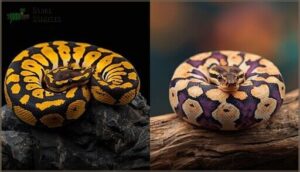
Single-gene morphs in ball pythons carry one mutation at a specific locus, producing a clear, predictable shift in color or pattern. Multi-gene morphs blend two or more mutations, creating dramatic combinations with layered visuals and complex inheritance ratios.
Breeders often rely on visual identification guides for rare ball python morphs to distinguish subtle genetic markers that separate high-value combinations from standard variations.
Understanding gene expression and trait dominance helps you anticipate breeding outcomes and evaluate morph prices. Recessive genes add another layer, requiring careful breeding strategies to reveal ultra-rare phenotypes in your collection.
Common, Rare, and Ultra-Rare Morphs
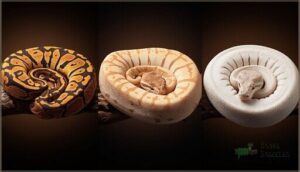
Normal wild types establish the baseline for ball python morphs, selling for 20 to 40 USD in most markets.
Common single-gene variants like Pastel or Pinstripe bring brighter pattern variation and cleaner color genetics, running 50 to 150 USD.
Rare morphs such as Axanthic or Pinstripe push prices higher due to limited genetic mutations and breeding complexity.
Ultra-rare morphs—BEL, Scaleless, Sunset—command premium morph pricing from collectors chasing extreme rarity in snake breeding circles.
To better understand how genetic mutations influence rarity and pricing, consider reviewing this rare snake morph identification guide.
How Morphs Impact Appearance
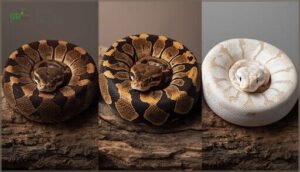
Ball python morphs shift color patterns from wild-type banding to marbled or striped arrangements, with some introducing metallic gold or pearlescent finishes. Scale texture ranges from glossy to matte, altering how light reflects across body proportions.
Seeking out reputable ball python breeders ensures you’re getting accurate morph genetics and health documentation alongside your chosen pattern variation.
Head shapes appear wider or narrower depending on facial pigmentation, while brightness contrast between dorsal and ventral scales enhances visual depth in genetic color variations.
Current Price Ranges by Morph Category

Ball python morph prices fall into four distinct tiers based on genetic complexity and market availability. You’ll find entry-level animals starting under $100, while ultra-rare specimens can push well past $10,000.
Here’s how the pricing breaks down across each category.
Entry-Level Morphs (Normals, Pastels, Spiders)
If you’re starting your journey into ball python morphs, you’ll find the most accessible price points with normals, pastels, and spiders. Normals generally run 40 to 150 USD for hatchlings, serving as your baseline in morph genetics and color patterns.
Pastels shift into the 150 to 350 USD range with warmer tones, while spiders match that bracket at 150 to 300 USD, offering distinctive web-like patterns ideal for breeding tips exploration.
Mid-Range Morphs (Mojaves, Pinstripes, Lessers)
Climbing into the mid-tier bracket, you’ll encounter morphs with stronger genetic power and broader breeding potential. Mojave genetics deliver lavender-gray bases with brighter head accents, while Pinstripe patterns create sleek lines that reduce busy dorsal barring. Lesser traits lighten overall pigment for cleaner backgrounds.
Pricing Breakdown:
- Mojave: 200 to 600 USD for hatchlings, jumping to 4,000 USD for proven adults
- Pinstripe: 50 to 150 USD standard range, increasing with proven lineage
- Lesser: 100 to 2,000 USD depending on sex and pedigree documentation
- Midrange Breeding Projects: Multi-gene combos exceed 2,000 USD in the morph market
Breeder reputation and genetic proof shift these morphs toward premium territory, especially when lineage documentation ensures consistent offspring quality in the ball python morph market.
Trusted sellers offering documented ball pythons for sale near you typically provide health guarantees and transparent breeding records that protect your investment.
High-End Morphs (Clowns, Pieds, Bananas)
At the high-end tier, clown genetics, pied patterns, and banana combinations command serious attention. Clowns showcase bold white accents and pronounced pattern disruption, while pieds deliver large white sections across the body. Banana traits bring vivid orange-yellow tones with reduced black pigment.
Expect 400 to 1,500 USD for hatchlings in the ball python morph market, with proven adults and multi-gene banana-clown projects pushing well above 2,000 USD when breeder ethics and lineage documentation verify morph rarity.
Ultra-Rare Morphs (BEL, Scaleless, Axanthic)
At the pinnacle of ball python morphs, BEL Morph (Banana Enhanced Lavender) genetics, scaleless variations, and axanthic lines define ultra rare care standards. These genetic mutations demand specialized husbandry and verified morph identification due to restricted breeder supply.
Rare morph breeding programs maintain strict pedigrees to preserve signature color patterns—scaleless individuals show smooth flesh tones, while axanthic genetics strip yellow pigment for dramatic grayscale contrast.
Expect 3,000 to 11,000 USD for proven genetic variations with documented lineage.
Key Factors Influencing Morph Pricing
You can’t pin down a morph’s price tag without understanding what drives it. Some factors hit harder than others, shifting value by hundreds or even thousands of dollars between nearly identical-looking animals.
Let’s break down the four elements that determine what you’ll actually pay.
Rarity and Market Supply
Supply directly shapes morph pricing in ways you can track. Single-gene ball python morphs flood breeder networks year-round, keeping prices accessible. Ultra-rare morphs with population counts under a few dozen individuals drive market trends upward fast.
Seasonal breeding cycles tighten supply chains temporarily, spiking prices even for popular genes. Limited availability from single-line breeding means rare morphs command premium price tags you’ll notice immediately.
Demand and Popularity Trends
Viral posts and trending hashtags reshape the reptile market trends faster than you think. Social influence drove a 55 percent year-over-year spike in ball python morph searches in 2025, with buyer behavior shifting toward high-contrast genes like black pastel and leopard.
Demand patterns you’ll see right now:
- Bela, Mojave, and clown projects saw 3x interest spikes after Instagram features
- North American inquiries jumped from 58 to 62 percent in one year
- Millennials and Gen Z make up 70 percent of mid-range morph purchases
- Engagement time rose 28 percent for viral feeding videos
- Spring and summer hatchling demand climbs 15 percent consistently
Prices fluctuate with these trends, so timing matters in the pet trade.
Breeder Reputation and Lineage
Lineage quality separates top-tier ball python breeders from hobbyists throwing pairings together. Multi-generation pedigree verification and genetic testing let you predict outcomes, while breeding standards backed by vet records justify premium prices. Reputable breeders provide written lineages, feeding logs, and guarantees—tools that protect your investment and signal serious breeding ethics.
| Breeder Tier | Documentation | Price Impact |
|---|---|---|
| Premium | Multi-gen pedigree + genetic tests | +20–60% |
| Mid-tier | Basic lineage + feeding records | +10–30% |
| Entry-level | Minimal or verbal claims | Baseline |
| Low-rated | No records or guarantees | −15–40% |
| Top-line projects | Proven genetics + vet files | +50–200 USD |
Age, Sex, and Proven Genetics
Once you know the lineage behind your ball python, factors such as maturity and sex influence what you’ll pay. Adult females near breeding readiness often cost double what males of the same morph do, because you can pair one male to several females each season. Proven genetics backed by genetic testing removes guesswork—you’re buying certainty, not a gamble.
For those budgeting, it’s useful to review typical enclosure and care costs before committing to a new ball python.
- Hatchlings start cheap, but proven lineage adults save you years of waiting.
- Females command premiums because they’re the limiting factor in any breeding project.
- Genetic testing results add 50 to 200 dollars but confirm your pet reptile carries the traits you need.
Popular Ball Python Morphs Price Comparison
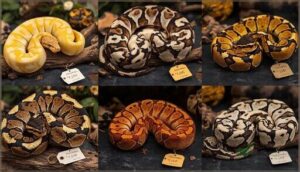
You’ll find significant price variation across ball python morphs, even among animals that look similar at first glance. The market separates into clear tiers based on genetics, breeder reputation, and regional availability.
Here’s a breakdown of what you can expect to pay for the most commonly traded morphs in 2026.
Price Table of Top Morphs in 2026
Here’s what you’ll see across the breeder market for popular ball python morphs in 2026:
| Morph | Hatchling Price (USD) | Proven Adult Price (USD) |
|---|---|---|
| Normal | 20–40 | 60–100 |
| Pastel | 50–150 | 120–300 |
| Mojave | 200–600 | 400–1200 |
| Banana | 400–1500 | 800–3000 |
| Pied | 1500–4000 | 3000–8000 |
| Scaleless | 5000–11000 | 8000–15000+ |
Price forecasting for rare morph costs depends on genetic variations and proven lineage.
Price Differences by Breeder and Region
Your morph’s price tag shifts dramatically across breeders and borders. Established U.S. operations charge 20–50% premiums over new sellers for identical genetics, while European marketplaces often list the same morphs 30–50% lower than American equivalents. Import costs and shipping fees—often $50–80 domestically or hundreds internationally—can erase any regional savings fast.
| Region | Clown Morph | Blue Eyed Leucistic | Shipping Impact |
|---|---|---|---|
| U.S. | $450 | $800–1000 | $50–80 |
| Europe | $260–270 | ~$400–500 | Variable |
| South Africa | ~$410 | Near U.S. prices | High import fees |
| Local Expos | 10–30% less | 10–30% less | Free pickup |
| Premium Breeders | +20–50% | +20–50% | Often bundled |
Hatchlings Vs. Adult Pricing
Age factors impact your wallet more than most buyers anticipate. Hatchling prices for a Banana morph start around $400–600, while proven adult females command $800–1,200—sometimes double for breeding-ready stock. You’re paying for reproductive potential and confirmed genetics, not just age.
| Life Stage | Banana Morph | Proven Female Premium |
|---|---|---|
| Hatchling | $400–600 | N/A |
| Juvenile | $500–800 | +10–20% |
| Adult Male | $600–900 | N/A |
| Adult Female (Unproven) | $700–1,000 | N/A |
| Adult Female (Proven) | $800–1,200 | +40–100% |
Price volatility smooths out as ball python morphs saturate the market, but breeding costs and morph demand keep driving premiums on proven adults. Gender and pedigree documentation separate casual pet snake purchases from serious genetic investments.
Breeder Impact on Ball Python Morph Prices
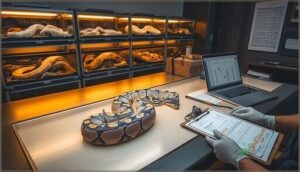
Where you buy matters just as much as what you buy. The breeder behind your ball python shapes both the animal’s genetics and the price you’ll pay, along with the support you’ll receive after the sale.
Let’s break down how different breeder types, documentation standards, and customer policies directly impact what you should expect to spend.
Established Vs. New Breeders
You’ll notice established breeders command higher ball python morph prices because they bring 5 to 12+ years of reptile breeding experience, proven breeding strategies, and solid customer support networks.
New breeders often launch with introductory pricing to build breeder reputation, relying on limited morphs and growing market experience.
Both can maintain business ethics, but track record and documented breeding history directly influence what you pay.
Genetic Proof and Pedigree Documentation
You’ll pay 50 to 200 USD more when breeders attach genetic testing and pedigree verification to an animal. DNA analysis confirms lineage tracking through microsatellite panels or SNP markers, tying each individual to its dam and sire.
Breeder authentication relies on standardized documentation—signed lab certificates, time-stamped studbooks, and unique identifiers—that proves ball python genetics and reduces morph mislabeling across the animal genetics market.
Health Guarantees and Customer Support
Assurance drives your buying decision when a breeder backs the animal with a 7 to 30 day health guarantee covering undisclosed defects. Health certificates verify pre-shipment veterinary checks, while return policies let you replace or refund a ball python that fails within the coverage window.
Breeder support extends through care sheets, feeding guidance, and direct contact—warranty options that protect your investment in pet reptile health and wellness beyond the transaction.
Market Trends Affecting Ball Python Prices

The ball python market doesn’t sit still. Prices shift based on what’s trending on social media, where you’re buying, and when you’re buying.
Here’s what’s driving values right now and where the market’s likely headed.
Social Media Influence and Viral Morphs
Social media drives ball python morphs from obscurity to demand faster than any other market force. A single viral reel on Instagram or TikTok can spike inquiries within days, pushing prices up 20 to 40 percent for trending genetics.
Influencer marketing and online communities boost digital engagement, turning niche morphs into mainstream must-haves. Breeder collaborations validate new color combinations across platforms.
Seasonal and Regional Price Fluctuations
Regional demand shapes ball python morph prices faster than you’d expect. Spring and summer lift prices as breeders stock for shows, while winter slows movement and triggers discounts.
Southeast markets run competitive due to breeder density, but Northeast shipping costs and West Coast regulations create geographic trends that boost local prices.
Price volatility peaks during reptile expos when seasonal shifts and market fluctuations collide.
Future Predictions for Morph Values
Recessive gene combos will anchor the genetic market as single-gene morphs drift toward pet-level prices. Combo projects like Clown Pieds hold value longer because clutch odds stay low, while breeder consolidation concentrates key lines.
Investment strategies now favor patient, multi-generation builds over quick flips.
Morph value trends suggest flashy simplicity fades while genetic variation with strong morphology commands premium ball python morph prices long-term.
Tips for Buyers Comparing Morph Prices

You’ve compared the morphs, checked the market trends, and narrowed down your options. Now comes the part that separates smart buyers from those who overpay or end up with problems down the line. Here’s what you need to evaluate before handing over your cash.
Assessing Health and Authenticity
Before you commit to a purchase, verify the ball python’s health and genetics through professional channels. Request veterinary care records and health guarantees from the breeder, then confirm morph verification with clear photos or genetic testing results.
Snake authentication matters—examine eye clarity, skin condition, and feeding behavior directly. Legitimate morphs come with lineage proof, so don’t skip the documentation step.
Calculating Total Cost of Ownership
Your ball python’s purchase price is just the starting line. Factor in monthly feeding strategies averaging $10 to $15, equipment upgrades as your snake grows, and annual veterinary care around $50 per wellness check.
Across a 20 to 30 year lifespan, lifetime expenses and ongoing animal care costs can reach $10,000 or more—understanding total ownership costs protects you from budget surprises down the road.
Over a 20- to 30-year lifespan, ball pythons can cost $10,000 or more when you factor in feeding, equipment, and veterinary care
Negotiating and Finding Reputable Sellers
Before you hand over your cash, verify your seller through active reptile enthusiast community forums, MorphMarket reviews, and direct questions about lineage. Breeder ethics matter—transparent health guarantees and pedigree documentation separate professionals from backyard operations.
Market research arms you with comparable pricing data for confident price negotiation. Buyer protection starts with vetting reputation, demanding records, and walking away from pressure tactics in the reptile market.
Frequently Asked Questions (FAQs)
What permits or licenses are required to own ball pythons?
In the United States, ownership rights depend heavily on state regulations and local ordinances.
Some states require wildlife permits for exotic pet ownership, while others impose zero restrictions on keeping ball pythons as pets.
How do I verify morph genetics before purchasing?
Request detailed pedigree documentation and high-resolution photos from multiple angles. Insist on genetic testing results when available, verify breeder reputation through reviews, and include a genetics verification clause in your purchase contract for protection.
Are there hidden costs in ball python ownership?
Yes. Initial setup runs $300 to $ Ongoing expenses include monthly feeding, substrate, electricity, and veterinary care.
Emergency funding and long-term budgeting for ball python care matter over a 20- to 30-year lifespan.
Whats the resale value of common morphs over time?
Like currency in a shifting economy, common ball python morphs depreciate 15 to 40 percent over 3 to 5 years. Market saturation and price fluctuation drive resale trends downward as breeding genetics expand availability.
Can I breed my ball python for profit legally?
You can breed ball pythons for profit, but business licensing, breeding regulations, tax compliance, and animal welfare laws apply.
Check local reptile breeding and sales permits before starting your investment in ball python morphs.
How often do ball python morphs reproduce?
Ironically, breeding cycles don’t vary by morph. Ball pythons usually breed once yearly, with females ovulating around 1,500–2,000 grams.
Mating frequency, reproductive health, and egg laying remain consistent across all genetic variations.
Can morphs develop new traits over time?
Yes, morphs can develop new traits through selective breeding strategies and genetic variation. Trait expression shifts over generations as breeders combine genes, though environmental influence and morph stability depend on consistent lineage documentation and proven genetics.
What permits are required for breeding morphs?
Traversing the permit maze isn’t optional. You’ll usually need a reptile breeding permit, business registration, and facility inspections.
Some jurisdictions also require genetic compliance documentation and proof of proper animal husbandry standards.
Do certain morphs have specific health issues?
Yes. Spider morphs can show neurological wobble affecting coordination. Enigma lines sometimes display skeletal and movement issues. Axanthic and BEL morphs may develop skin problems under stress.
Linebreeding ultra-rare genetics increases defect risks in offspring.
How are new ball python morphs discovered?
New ball python morphs surface through random genetic mutations in wild-caught imports, selective line breeding for polygenic traits, or strategic multi-gene combinations.
Breeders test inheritance patterns over multiple clutches to confirm stable, reproducible morph genetics.
Conclusion
The morph you buy today might triple in value—or plateau entirely—depending on how well you read the market’s direction. Your ball python morph price comparison doesn’t end at checkout.
Track breeder announcements, watch hatch rates, and stay connected to online communities where trends shift before price tags catch up.
The collectors who profit aren’t just buying snakes—they’re studying supply chains, anticipating demand, and positioning themselves at the forefront of trends.
- https://www.morphmarket.com/
- https://www.worldofballpythons.com/morphs/butter/
- https://ghostconstrictors.com/blogs/news/top-10-beginner-ball-python-morphs?srsltid=AfmBOopJV-ANKNHQ1VgLhBD4g6SV0nFZ1GsfMGc7uR7D1XKldN1jBo48
- https://www.cbreptile.com/ball-python-breeders-5/
- https://www.xyzreptiles.com/how-much-does-a-ball-python-cost/