This site is supported by our readers. We may earn a commission, at no cost to you, if you purchase through links.
Two ball pythons can carry the exact same recessive gene and look nothing alike. That’s the puzzle new breeders run into within their first season: a snake with hidden genetics sitting right next to its visual twin, showing zero outward sign of what it’s packing. The difference comes down to 36 chromosomes, 16 macro and 20 micro, arranging themselves into pairs that decide which traits surface and which stay tucked away as invisible carriers.
Understanding ball python genetics and visual traits turns guesswork into math. Once you grasp how dominant, recessive, and co-dominant genes behave, you can predict clutch outcomes before the first egg ever drops.
The same inheritance rules apply to other species too, and this guide to corn snake breeding and genetics shows how those patterns play out in real pairings.
Table Of Contents
- Key Takeaways
- Ball Python Genetics: Genes, Alleles, and Inheritance
- How Visual Ball Python Traits Appear
- Het Ball Pythons and Hidden Genetics
- Predicting Ball Python Breeding Outcomes
- Morph Health, Ethics, and Market Value
- Frequently Asked Questions (FAQs)
- What are the genetics of ball pythons?
- What is a holy grail ball python?
- What are the prettiest ball python morphs?
- What is the rarest ball python color?
- Can ball pythons show incomplete or partial dominance?
- How do polygenic traits affect visual outcomes?
- What health issues link to specific morphs?
- How accurate are visual identification methods for hets?
- How many genes are in one snake?
- Can two different morphs be combined safely?
- Conclusion
Key Takeaways
- Two ball pythons can look identical yet carry completely different genetics, since recessive traits stay invisible until you pair two carriers together and let the math play out.
- Breeding odds follow predictable ratios—25% visual from het-to-het pairings, 50% from visual-to-het crosses, and just 6.25% for stacking two recessive traits at once—so knowing these numbers beforehand saves you from costly guesswork.
- Visual clues for spotting het carriers are unreliable enough that serious breeders rely on DNA testing instead, since guessing wrong happens roughly a third of the time.
- Some flashy morphs come with real health costs, like wobble syndrome in Spider lines or spinal kinking in Super Cinnamon, which means responsible breeders weigh looks against welfare before choosing a pairing.
Ball Python Genetics: Genes, Alleles, and Inheritance
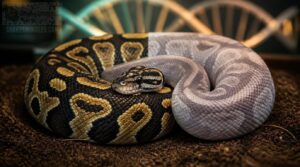
Every visual morph you’ll ever breed traces back to a handful of fundamental genetic concepts working together on a molecular level.
If you’re weighing which pairings might actually work, this guide to corn snake morph compatibility and breeding breaks down how those genetic building blocks translate into predictable offspring.
Understanding how chromosomes carry alleles, and how those alleles pair up, gives you the foundation for predicting what shows up in the clutch.
Here’s what you need to know before we get into genotypes, dominance, and the rest.
Chromosomes and Genetic Inheritance
Before predicting any morph, you need the blueprint: ball pythons carry 36 chromosomes, 16 macro and 20 micro, arranged in pairs. Males show XY sex chromosomes, females XX, mirroring mammalian patterns. Each pair holds two alleles per gene, one from each parent.
This mirrors the same patterns of inheritance seen across species, where dominant and recessive alleles interact to produce observable traits. This structure drives every inheritance pattern you’ll calculate later, from simple Punnett squares to complex genotype predictions.
Genotype Versus Phenotype
That chromosome pairing sets up a distinction every breeder must master: genotype versus phenotype. Genotype is the genetic code itself; phenotype is what you see. A snake’s genotype may carry hidden alleles that don’t surface visually.
Before pairing any two morphs, a boa constrictor morph and genetics guide can help you confirm which super forms are safe and which are lethal.
- Genotype: inherited genetic material
- Phenotype: observable traits from expression
- Environment can shift expression
- Same genotype can yield different phenotypes
Homozygous and Heterozygous Genes
Every gene exists as a pair, and how those alleles match up determines what you’ll actually see. Homozygous means identical alleles; heterozygous means mismatched, creating carrier status without visual traits.
| Pairing | Genotype | Visible? |
|---|---|---|
| Homozygous dominant | AA | Yes |
| Heterozygous carrier | Aa | No |
| Homozygous recessive | aa | Yes |
Gene copy number shapes Mendelian inheritance and, eventually, your breeding odds.
Dominant and Recessive Traits
That AA/Aa/aa table sets up the real question: which allele wins? A dominant gene masks its recessive partner, so heterozygous carriers look normal while homozygous recessive snakes show full expression.
Two het parents (Aa x Aa) plotted on a Punnett square yield 25% visual, 50% carrier, 25% clean, the ratio forming the basis of nearly every recessive-morph project you’ll plan.
Co-Dominant and Super Forms
Where dominant and recessive traits play an all-or-nothing game, co-dominant genes split the difference. One copy produces a distinct heterozygote phenotype, stable and visible, like Pastel. Two copies push into super forms, an overexpression of that same allele.
If you’re trying to predict what a clutch might actually produce, this ball python morph genetics breakdown walks through how co-dominant pairings stack up on the Punnett square.
This heterozygous advantage shows carriers, not just hiders. Some supers carry real health risks, so breeders weigh genetic identity against welfare before pairing.
How Visual Ball Python Traits Appear
Once you understand how genes get passed down, the next step is seeing what they actually produce. Every visual morph traces back to a mutation affecting color or pattern in a specific, identifiable way. Here’s what you’ll want to know to start recognizing these traits with confidence.
Color and Pattern Mutations
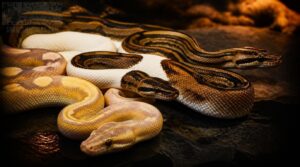
What turns a normal ball python into a showpiece morph? A single mutated gene, altering pigment type production or distribution. Melanin reduction lightens blacks and browns, while pattern disruption zones break dorsal bands into blotches. White patch formation occurs where pigment cells simply never develop. Whether recessive or codominant, each color mutation and pattern mutation shifts intensity, creating the visual morphs breeders prize.
Once you know how each gene is inherited, a guide to snake color and pattern inheritance helps you predict which hatchlings will show the trait and which will carry it.
Identifying Common Visual Morphs
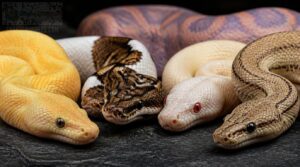
Spotting morphs starts with trained observation, not guesswork. Pastel brightens yellow tones; Piebald breaks pattern into bold white patches; Albino strips melanin, leaving cream skin and red eyes; Spider webs lateral markings into reduced, wispy lines.
Coral Glow adds lavender bodies flecked with coral. Genotype drives these outcomes, but phenotype is what you’re reading. When patterns blur, genetic testing confirms what your eyes can’t.
Single-Gene Visual Traits
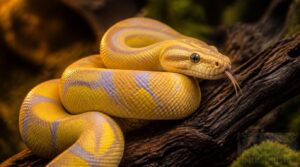
One gene, one trait: that’s the elegance of single-gene morphs. Color mutations alter pigment, pattern genes redraw banding edges, and scale variants shift texture or shine.
The vibrant yellow banana morph blends color and pattern beautifully. These inheritance patterns stay stable across molts and generations, giving breeders reliable, predictable results from hatchling to adult.
Designer Morph Gene Combinations
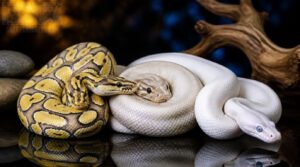
Stacking two visual genes creates a compound morph with a fused look. Zygosity requirements matter: Bumblebee needs Pastel plus Spider, while Blue-eyed Leucistic demands Mojave crossed with Lesser, Butter, or Phantom.
- Bumblebee: Pastel × Spider
- Ivory: Yellowbelly × Yellowbelly
- Blue-eyed Leucistic: Mojave × Lesser/Butter/Phantom
Gene stacking outcomes depend on precise allele combinations, not guesswork.
Polygenic Trait Variation
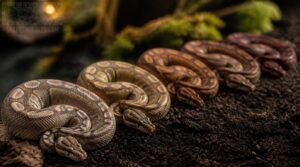
Not every trait obeys a clean dominant-recessive script. Polygenic inheritance patterns govern continuous variation, like subtle saturation gradients, through additive genetic effects across many loci rather than one gene. Environmental influence adds further variation on top of allele expression.
While single-gene morphs dominate breeding projects, polygenic interactions shape the fine phenotypic expression differences you’ll notice between individual snakes carrying identical named genes.
Het Ball Pythons and Hidden Genetics
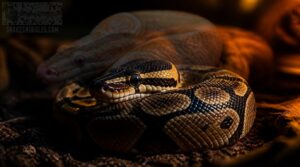
Not every important gene shows up on the outside of your snake. Het carriers hide their genetics in plain sight, passing down traits you can’t see just by looking. Here’s what you need to know before you start breeding around them.
How Het Carriers Work
You can’t tell a het by looking at it. Carrier animals hold one normal allele and one recessive allele, yet phenotype stays unaffected. Genotype verification requires either documented breeding history or genetic testing, since visual traits offer no reliable window into carrier status. That’s the puzzle every serious breeder learns to work around early.
Recessive Gene Transmission
So how does a hidden allele actually move through a bloodline? Recessive gene transmission requires two copies for expression, meaning het carriers pass their single allele roughly 50% of the time per clutch. Pair two hets, and carrier probability shifts fast:
- Silent genes waiting generations to surface
- Punnett squares revealing hidden risk
- Pedigree analysis exposing ancestry patterns
- Independent inheritance across separate genes
- Homozygous recessive pairings producing visual traits
100%, 66%, and 50% Hets
Those percentages aren’t decoration, they’re carrier confidence levels. 100% het comes from a visual-by-normal pairing, guaranteed.
66% het emerges from het-to-het outcomes among non-visual siblings.
50% het results from het-by-normal crosses.
Each figure reflects genetic probability, not certainty, guiding offspring prediction and breeding outcomes until testing confirms which recessive genes an animal truly carries.
Visual Het Markers Limitations
Some breeders swear by tail-tip white or faint dorsal blushing to spot hets. Don’t trust it.
Phenotype overlap across morphs makes visual calls unreliable, and lineage variability only compounds the guesswork. Environmental influence during development can mask or exaggerate subtle traits. What looks like a marker in one bloodline means nothing in another, which is exactly why genotype confirmation matters more than eyeballing.
Genetic Carrier Testing
Since visual ID fails so often, DNA analysis settles the question. qPCR testing uses blood, saliva, or cheek swabs to measure gene copy number directly, distinguishing carriers from normals with confidence eyeballing can’t match.
Test before pairing projects, not after. Results carry limits, though: screening targets known variants, so a clean result narrows risk without eliminating it entirely.
Predicting Ball Python Breeding Outcomes
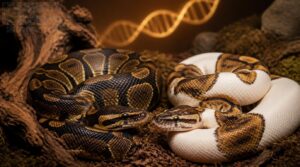
Once you understand how genes travel from parent to offspring, the real work begins: predicting what actually shows up in the clutch. Every pairing carries its own math, and knowing those numbers before you breed saves you from guesswork later. Here’s how the odds break down across the pairings you’re most likely to plan.
Het-to-Het Breeding Odds
Pair two het carriers, and math takes over: Punnett squares put visual odds at 25% every time, following the classic 1:3:1 breeding ratio. Litter size skews results, so genotype probabilities need verification.
- 25% homozygous visual
- 50% het carriers
- 25% unaffected
- Odds hold each generation
- Testing confirms recessive trait probability
Visual-to-Het Breeding Odds
Cross a visual snake with a het, and the genotype ratio shifts sharply: 50% visual, 50% het, no normals produced.
| Pairing | Offspring Ratio |
|---|---|
| Visual × Het | 50% visual, 50% het |
| Visual × Non-het | 0% visual, 100% het |
That’s double the visual yield compared to het-to-het pairings, which is why breeders favor this cross for producing sellable visual phenotype animals faster.
Double-Recessive Trait Probabilities
Stacking two recessive traits multiplies your odds against you. Pairing double-het parents (Aa/Bb × Aa/Bb) yields just 6.25% double-visual offspring, homozygous recessive for both genes.
Run the Punnett square: sixteen combinations, only one produces both traits visually.
- Months of feeding
- Enclosure costs
- One shot at a rare double-recessive morph
That’s the gamble double-recessive projects demand.
Planning Multi-Generation Projects
A single double-recessive gamble is just one move in a longer chess game. Real projects span generations with generational goal setting, pedigree tracking, and health screening built in.
| Generation | Focus |
|---|---|
| F0 | Select healthy multigene hets |
| F1 | Pair for target visual traits |
| F2 | Verify, improve, screen |
Ethical pairing guidelines and market trend analysis keep the plan grounded, not gambled.
Morph Health, Ethics, and Market Value
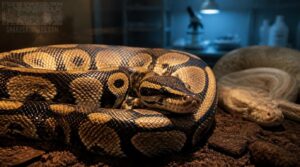
Genetics don’t stop at appearance—they carry real consequences for price tags and, more importantly, for animal welfare.
Some morphs command premium dollars for good reason, while others hide serious health trade-offs beneath a striking pattern.
Here’s what every breeder needs to weigh before pairing genes for looks alone.
Visual Versus Het Pricing
Why does a visual Albino fetch $250–$400 while its het sibling settles for $75–$150? Guaranteed expression versus genetic potential.
- Visuals sell faster with proven resale value
- Hets price on breeding odds, not certainty
- Rarity and demand widen or narrow that gap
Confirmed genotypes justify premiums; undisclosed het status erodes buyer trust and slows transactions.
Morph Rarity and Demand
Genetic rarity alone doesn’t set price. Ultra morphs with proven lineage command attention at major shows, while Fire’s steady breeder demand keeps values firm.
Sunset’s yellow-to-orange gradient pulls premiums, and red-eyed Albino variants fetch top dollar in serious collections.
Leopard-pied combos swing widely, pricing tied to show wins and provenance rather than genetics alone.
Gene-Linked Health Conditions
Provenance and show wins tell only half the story. Certain genes carry real physical costs that every breeder should weigh:
- Wobble syndrome from inner ear malformation, seen in Spider and Champagne lines
- Spinal kinking affecting Super Cinnamon and Super Black Pastel
- Eye abnormalities like bug eyes in 8 Ball morphs
- Fertility issues in Caramel Albino and Desert females
Avoiding High-Risk Pairings
Knowing which genes cause harm is only useful if you act on it. That means running genetic risk assessment before every pairing, using carrier tracking systems and lineage verification to catch overlap.
Never combine two Spider carriers (wobble, neurological issues) or stack Champagne genetics, a lethal combination. Health-conscious pairing, backed by documented ethical breeding practices, keeps clutches viable and buyers protected.
Never pair two Spider carriers or stack Champagne genetics—responsible breeding means avoiding known lethal and neurological gene combinations
Ethical Breeding and Disclosure
Risk assessment means nothing without transparent documentation. Responsible breeders provide health records, lineage verification, and heritable disease testing results upfront, no exceptions.
Disclosure builds trust: buyers deserve full genetic history before purchase. Ethical pairing guidelines, paired with real welfare standards (proper enrichment, vet care, species-appropriate housing), separate legitimate breeding projects from profit-driven shortcuts that sacrifice animal health for market trends.
Frequently Asked Questions (FAQs)
What are the genetics of ball pythons?
Your snake’s traits trace back to 36 chromosomes carrying alleles that follow Mendelian inheritance. Dominant, recessive, and co-dominant genes interact through homozygous and heterozygous states, shaping genotype into visible phenotype and giving you predictable tools for planning morphs.
What is a holy grail ball python?
The rarest snakes are often the ones bred on purpose. A holy grail morph stacks multiple recessive traits and visual morphs into one flagship animal, commanding serious market premium pricing among breeders chasing genetic mastery.
What are the prettiest ball python morphs?
Beauty’s subjective, but Coral Glow, Sunset, and Banana morphs stand out for vibrant hues and smooth color gradients. Piebald’s stark pattern contrast and Enchi’s earthy lateral patterning round out any list of eye-catching visual morphs worth breeding toward.
What is the rarest ball python color?
Common Pastels flood the market while Edgarine and Mirage stay whisper-rare. Polygenic rarity and years of backcross stabilization make these ultra rare genetics genuinely exclusive, commanding tens of thousands per snake in a demand-driven market.
Can ball pythons show incomplete or partial dominance?
Yes. Genes like Pastel and Mojave show incomplete dominance, where heterozygotes display a blended, intermediate phenotype distinct from both homozygous forms, reflecting allele expression balance rather than a simple dominant-recessive switch in pigment and pattern outcomes.
How do polygenic traits affect visual outcomes?
Many small genes, one visible outcome: dozens of loci quietly combine to shape color intensity and pattern density, producing a continuous visual outcome spectrum rather than fixed morph categories, which makes breeding predictions inherently probabilistic.
What health issues link to specific morphs?
Spider wobble syndrome causes head tilts and poor coordination.
Caramel albinos risk spinal kinking and egg binding.
Desert females face fertility issues.
Super Cinnamon can produce cleft palates and bug eyes, signaling deeper neurological defects.
How accurate are visual identification methods for hets?
Guessing wrong roughly a third of the time isn’t a fluke, it’s the norm. Visual marker reliability stays weak, so genetic testing necessity overrides phenotype hunches whenever certainty about hidden genetics actually matters for breeding decisions.
How many genes are in one snake?
A single snake genome carries roughly 20,000 to 25,000 protein-coding genes, similar to most vertebrates. Exact counts shift slightly with assembly quality, and gene number alone doesn’t determine how many visible morphs or traits a species can express.
Can two different morphs be combined safely?
Roughly 25% of double-het pairings produce visual double-recessive offspring, a number every breeder should memorize. Yes, combining morphs works when you screen lineage, avoid lethal combinations like Champagne supers, and verify genetics before pairing.
Conclusion
A Punnett square is a loom, and every pairing threads recessive strands into a pattern only time reveals. Master ball python genetics and visual traits, and you stop gambling on hatchlings and start weaving outcomes with intent.
That double-recessive het, the one hiding behind an ordinary phenotype, isn’t a dead end. It’s potential waiting for the right cross.
Breed with precision, disclose honestly, and your collection becomes proof that genetics rewards patience far more than luck.