This site is supported by our readers. We may earn a commission, at no cost to you, if you purchase through links.

A snake’s belly turning pink, then fading to a ghostly gray isn’t a sign of illness—it’s one of the most reliable signals that your snake is growing. The belly color change during shedding follows a predictable biological sequence, driven by fluid separating the old skin from the new layer forming underneath.
Most keepers notice the shift and immediately worry something’s wrong when the opposite is true. Understanding what each color phase means gives you a clear window into your snake’s health, and knowing the difference between normal progression and a warning sign can make every shed a confident, informed experience rather than a guessing game.
Table Of Contents
- Key Takeaways
- What Causes Belly Color Change During Shedding?
- Identifying Shedding Stages by Belly Appearance
- Managing Humidity for Proper Shedding
- Common Shedding Issues Linked to Belly Color
- Tips for Supporting Your Snake Through Shedding
- Frequently Asked Questions (FAQs)
- Why is my dog’s stomach changing color?
- How to get rid of discoloration on belly?
- When to worry about hyperpigmentation in dogs?
- How long does a snakes shedding process last?
- Can shedding affect my snakes appetite or feeding?
- Should I handle my snake during shedding?
- Does belly color change vary by snake species?
- How often do snakes shed throughout the year?
- Conclusion
Key Takeaways
- A pink or reddish belly is one of the first signs that your snake is entering a healthy shed cycle, not a sign of illness.
- Humidity between 65–80% is the single most effective way to prevent stuck shed and scale damage.
- Stuck shed, hyperpigmentation, and burns can all look similar, so watch for uneven patches, tenting skin, or color that doesn’t progress through normal stages.
- Discoloration, swelling, or lethargy persists beyond three weeks, don’t wait—get your snake to a vet.
What Causes Belly Color Change During Shedding?
When your snake starts shedding, its belly is usually the first place that tells the story. The color shift you’re seeing isn’t random — it’s tied to specific biological changes happening just beneath the surface.
That pinkish belly, along with increased hiding, are both covered in detail among the signs of a healthy ball python shedding worth knowing before your first shed cycle.
what’s actually driving those changes.
Natural Shedding Cycle in Snakes
Shedding is one of the most reliable signs that your snake is healthy and growing.
Juvenile snakes shed every 2 to 6 weeks because their growth rate influences frequent skin renewal. Adults slow down to 2 to 4 times yearly as metabolic demands stabilize.
Environmental stressors and hormonal triggers also shape seasonal shedding patterns, making each cycle unique to your snake.
Shedding also helps in removing parasites and maintaining sensory organs.
Physical Changes in Belly Scales
As your ball python enters shed, its belly scales go through a quiet but telling shift. A color gradient moves across the ventral surface, turning the normally clear scutes dull or milky due to opacity variation beneath the skin.
Scale elasticity softens as fluid builds up, and surface integrity holds steady.
You’ll also notice a subtle scale texture shift — smooth scales turning faintly ghostly.
Differences Between Normal and Abnormal Color Changes
Not every color change your ball python shows is part of a normal shed. Here’s how to tell the difference:
- Pink Phase Duration: Normal pink lasts 7–10 days before progressing to gray
- Scale Rot Indicators: Spotty yellow or black patches that darken over 3–5 days
- Dehydration Color Signs: Dull pink locked in place for 12+ days, no shedding stages advancing
- Burn Mark Timeline: Localized red streaks persisting 5–7 days post-shed
Hyperpigmentation patterns and stuck shed look similar, so humidity is your clearest diagnostic tool. Maintaining proper humidity and clean water helps snakes shed in one piece.
Identifying Shedding Stages by Belly Appearance
Your snake’s belly is basically a progress tracker for the entire shed cycle. As shedding approaches, the skin goes through a series of visible changes that tell you exactly where things stand. Here’s what to look for at each stage.
If you want a deeper breakdown of each stage, safe snake shedding assistance and belly change signs walks you through exactly what to expect and when to step in.
Early Signs of Shedding (pink or Reddish Belly)
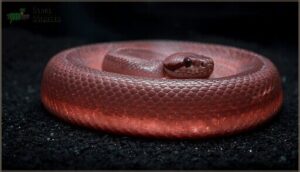
One of the earliest signals in the snake shedding process and care routine is a uniform pink or reddish shift across your snake’s ventral scales. This pink belly timing usually appears 1–2 days before skin dulling begins, spreading evenly rather than in patches.
| Sign | Timeframe | What to Watch |
|---|---|---|
| Ventral hue uniformity | Days 1–2 | Even pink across belly |
| Scale color gradient | Days 3–4 | Dullness spreading upward |
| Pre‑shed behavior | Days 4–7 | Reduced appetite, hiding |
Unlike burns, this even belly tone confirms healthy pre‑shed behavior — not injury.
Progression to Ghostly or Opaque Skin
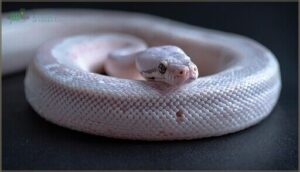
A few days after first pink flush, fluid separation timing kicks in — a thin layer forms between the old and new skin, triggering the opaque phase.
Your snake’s belly loses visual contrast, turning milky and ghost-like within 24–48 hours. This opaque phase duration usually lasts 2–4 days, though temperature influence and species morph variations, like ball python morphs, can shift that window noticeably.
Visual Cues of Healthy Vs. Problematic Sheds
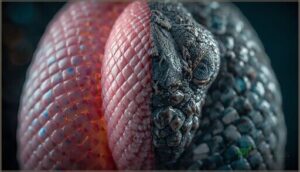
Spotting the difference between a healthy and problematic shed isn’t complicated once you know what to look for. Healthy snake skin shedding shows color uniformity metrics — pink spreads evenly across belly scales, with no isolated spots. Post‑shed color recovery completes within 2–3 days, restoring vibrant patterns.
Stuck shed leaves ghostly skin patterns, rough belly scale texture, and eye cap retention that makes eyes look bulged.
Managing Humidity for Proper Shedding

Humidity is the quiet variable that can make or break a shed.
Get it right, and your snake glides out of its old skin cleanly — get it wrong, and you’re dealing with stuck patches and stressed animals.
Get humidity right and your snake sheds cleanly; get it wrong and you face stuck patches and stress
Here’s what you need to know to keep moisture levels where they should be.
Ideal Humidity Levels for Shedding
Humidity isn’t one-size-fits-all — species-specific humidity needs vary widely.
Ball pythons need a pre-shed humidity boost to 70–80%, while corn snakes only require 60–75%.
Tropical species like boas push even higher.
Think of it as seasonal humidity shifts your snake’s body expects.
Post-shed humidity reset back to baseline prevents respiratory issues and keeps humidity management for shedding snakes consistent year-round.
Tools for Monitoring Humidity
Tracking humidity doesn’t have to be guesswork. Digital Hygrometer gives you accurate readings within ±3% RH, updating every 10 seconds — reliable enough for serious reptile husbandry. Analog Hygrometer works on a budget but needs monthly Salt Calibration to stay trustworthy.
For hands‑off humidity management for shedding snakes, a Bluetooth Monitor sends alerts straight to your phone, while an External Probe reaches inside hides for spot‑on humidity control.
Creating a Humid Hide for Your Snake
A humid hide is one of the simplest upgrades in reptile husbandry. Choose a container size that lets your snake curl snugly inside — around 0.5 to 2 liters for most small to medium snakes.
For substrate choice, damp sphagnum moss works best. Your placement strategy matters too: position it on the warm side.
Check it every few days as your maintenance routine.
Common Shedding Issues Linked to Belly Color
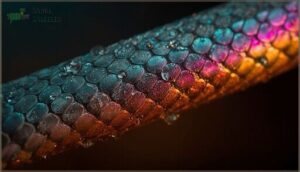
Even with good humidity, shedding doesn’t always go smoothly—and your snake’s belly is often the first place that tells you something’s off.
A few common issues tend to show up around shed time, and knowing how to read them can save you a lot of guesswork.
Here’s what to watch for.
Stuck Shed and Retained Belly Scales
When a stuck shed clings to your snake’s belly, it’s a red flag you don’t want to ignore. Retained belly scales often mean your humidity gradient dropped too low.
You’ll notice grayish-white flakes caught between ventral scales. Soak techniques — 20 to 30 minutes in lukewarm water — help loosen stubborn patches.
Left untreated, retained shed risks scale rot and restricted circulation.
Hyperpigmentation Versus Normal Color Change
Not every dark patch on your snake’s belly signals a shedding problem — but some do.
Normal color change lightens progressively across all scales, then fully reverts after the shed. Hyperpigmentation stays dark across multiple cycles, clusters irregularly, and affects scale texture noticeably.
Melanin pathways behave differently here.
Identifying shedding stages in snakes helps you catch this skin discoloration early.
Recognizing Signs of Dehydration or Burns
Two conditions mimic shedding discoloration but require immediate attention: dehydration and burns. Gently pinch the belly skin — if it tents and won’t snap back, that’s a classic dehydrated look signaling poor reptile hydration. Burns show localized pinkish-red patches with blister formation underneath scales, no tenting involved.
Dry urates, eye cap denting, and lethargy signs confirm dehydration as the root cause.
Tips for Supporting Your Snake Through Shedding

Shedding doesn’t have to be stressful — for you or your snake.
A few simple adjustments to how you care for them during this time can make a real difference.
Here’s what you can do to help things go smoothly.
Adjusting Enclosure Conditions
When shedding begins, your enclosure’s conditions matter more than ever. Bump humidity to 65–80%, keep the warm side between 85–90°F, and make sure your temperature gradient stays balanced with a cooler zone around 75–80°F.
Ventilation balance prevents stagnant, moisture-heavy air. Place a damp-moss hide on the warm side, and keep substrate moisture consistent — small adjustments now protect your snake’s health throughout the shed.
Safe Ways to Assist With Stuck Shed
Once your enclosure is dialed in, you can tackle stuck shed directly. A Lukewarm Soak softens retained scales in 15–20 minutes.
Follow with a Damp Cloth Massage, rubbing gently head-to-tail. Natural Oil Use or a Shed Aid Spray loosens stubborn edges.
For eye cap retention, a warm wet cotton swab rolled carefully works well.
When to Seek Veterinary Help
Sometimes home care isn’t enough. If your snake shows persistent discoloration beyond three weeks, swelling and pus under belly scales, or respiratory distress like wheezing and open‑mouth breathing, it’s time to call a vet.
Watch for:
- Severe lethargy lasting more than 10 days
- Retained eye caps unresponsive to humidity adjustments
- Blisters or foul odor from belly scales
Don’t wait.
Frequently Asked Questions (FAQs)
Why is my dog’s stomach changing color?
Your dog’s stomach changing color is usually tied to an Allergy Reaction, Skin Infection, or Hormonal Imbalance.
Hyperpigmentation causes range widely, so a Veterinary Evaluation helps pinpoint whether dog belly discoloration needs treatment or monitoring.
How to get rid of discoloration on belly?
Soak your snake in lukewarm water for 15–20 minutes, then gently rub with a damp cloth. Apply coconut oil for stubborn patches. Repeat every other day until discoloration fades.
When to worry about hyperpigmentation in dogs?
sudden darkening when you notice paired with persistent itching, skin odor changes, or rapid lesion spread.
These signs of dog skin pigmentation disorders demand immediate veterinary consultation, as endocrine signs often indicate serious underlying conditions.
How long does a snakes shedding process last?
The shed cycle usually lasts 9 to 14 days from start to finish. Species variance matters — ball pythons take 6 to 8 days, while corn snakes complete the molting process in just 4 to
Can shedding affect my snakes appetite or feeding?
Yes, shedding directly affects appetite. Most snakes, especially ball pythons, refuse food during the shed cycle due to blue-eye fasting and discomfort. Post-shed hunger returns within 24–48 hours.
Should I handle my snake during shedding?
Avoid handling your snake during shedding. Vision impairment, new skin fragility, and salmonella risk make it stressful and unsafe. Use handling alternatives like visual checks instead.
Does belly color change vary by snake species?
Belly color change during shedding depends on species-specific tint, morph-based hue, and geographic color variation.
For example, ball pythons show pinking, hognose snakes lighten, and milk snakes turn blue. Age-related changes and captive vs wild patterns also influence pigmentation.
How often do snakes shed throughout the year?
How often your snake sheds depends on age, species, and environment. Juveniles shed every three to six weeks, while adult ball pythons usually cycle every two to three months.
Conclusion
Think of shedding like a map being redrawn—the belly color change during shedding marks each phase of that process, guiding you from pink to gray to a clean, finished layer. Once you recognize what each shift means, you stop second‑guessing and start reading your snake with confidence.
Healthy humidity, a good hide, and a calm hand are all it takes. Your snake already knows what to do—your job is simply to not get in the way.
- https://thetyedyediguana.com/blog/stuck-shed-why-it-happens-and-how-to-safely-help-your-reptile/
- https://wholeeartheducation.com/snakes-shedding-skin/
- https://reptifiles.com/heterodon-hognose-snake-care/hognose-snake-health/shedding/
- https://www.wildlifedemonstrations.com/post/scale-rot-how-to-identify-and-treat
- https://vetster.com/en/wellness/what-causes-skin-color-changes-in-dogs