This site is supported by our readers. We may earn a commission, at no cost to you, if you purchase through links.
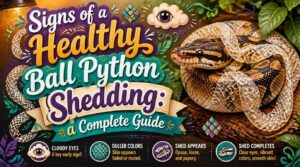
Your ball python goes milky-eyed and refuses food, and your first instinct says something’s wrong. It’s not. That blue, cloudy stare is one of the clearest signs of a healthy ball python shedding, not a symptom to panic over.
I’ve had new keepers call me convinced their snake was going blind. Nine times out of ten, they were watching a textbook shed cycle unfold right on schedule.
Once you know what to look for, from the first belly blush to that final glossy stretch of fresh skin, you’ll read your snake’s shed like an old pro instead of a worried beginner.
Table Of Contents
- Key Takeaways
- What Healthy Ball Python Shedding Looks Like
- Early Signs of a Healthy Shed
- Signs The Shed is Progressing Normally
- Signs of a Complete, Healthy Shed
- Supporting Healthy Shedding and Spotting Problems
- Frequently Asked Questions (FAQs)
- How do I know if my ball python is shedding correctly?
- How long does ball python shedding take?
- Is it okay to feed a ball python while it is shedding?
- How can I tell if my ball python is healthy?
- How to tell if a snake is going to shed soon?
- How do ball pythons act before shedding?
- How long does shedding typically take?
- Can shedding frequency indicate overall health?
- Do ball pythons shed at specific times of year?
- How to handle stuck shed near the eyes?
- Conclusion
Key Takeaways
- A healthy shed follows a predictable 9-14 day cycle, starting with dull skin and a pink belly, moving into milky "blue" eyes, then clearing before the skin comes off.
- Cloudy blue eyes and a dropped appetite aren’t warning signs, they’re just your snake’s body redirecting energy toward growing new skin.
- Keeping humidity in the right range (50-60% normally, climbing to 80-90% during active shedding) is the single biggest factor in getting a clean, one-piece shed.
- Once the shed is done, check that the eye caps and tail tip came off completely, since retained skin in those spots can cause real problems if ignored.
What Healthy Ball Python Shedding Looks Like
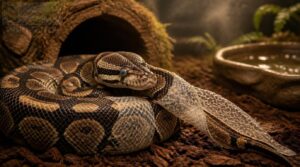
A healthy shed isn’t random—it follows a pattern you can actually learn to read. Once you know what’s normal, you’ll stop panicking every time your snake looks a little off. Here’s what that timeline and rhythm usually look like in a well-cared-for ball python.
Young, actively growing snakes tend to shed every four to six weeks, while adults often stretch that out to once every couple of months—for a clearer breakdown, this guide on how often ball pythons shed walks through what’s typical at each life stage.
Typical Nine-to-Fourteen-Day Timeline
A full shed follows a nine-to-fourteen-day cycle, broken into distinct phases. Days 1-2 bring dull skin, then eyes cloud over during the "blue phase" (days 3-7). Clearing starts around day 7-10, with the actual shed happening days 10-14. Duration varies by snake, but this timeline holds true across most healthy sheds.
A complete shed in one piece is the goal, and it depends on maintaining adequate humidity throughout the cycle.
Juvenile Versus Adult Frequency
That nine-to-fourteen-day cycle isn’t fixed forever, though. Juvenile ball pythons shed every 7-14 days thanks to rapid growth spurts and monthly size jumps. Adult ball pythons slow to every 4-6 weeks once growth levels off.
Feeding schedule alignment matters too. Growth rate impact, environmental sensitivity, and seasonal variation all hit youngsters harder, so don’t panic if your baby sheds constantly. It’s normal.
Normal Individual Shed Variations
Even snakes on the same rack won’t shed in lockstep. Some breeze through the blue phase and finish in 7 days flat, especially in warm, dry setups with steady temps.
Others stretch past 14 days if humidity dips. As long as appetite stays normal, irregular timing usually isn’t cause for worry.
Early Signs of a Healthy Shed
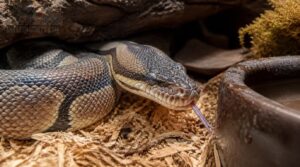
Before your ball python ever shows visible skin cracking, its body starts sending smaller signals that shed time is near. These early cues show up gradually, usually a week or so before the big event, and they’re easy to miss if you’re not watching closely. Here’s what to look for first.
Dull or Faded Skin
Picture your snake wearing a faded old t-shirt that’s been through too many washes. That’s dull skin, simply put.
- Side dulling and pattern obscuration
- Fluid buildup between skin layers
- Colors appear 20-30% darker
- Lasts just 1-2 days early on
Watch for that leathery, worn-paint look. It’s normal, not something to worry about.
Pinkish Belly Color
Right around the time your snake’s skin dulls, you’ll notice the belly blushing pink, usually within that first day or two. Some morphs flash it edge to edge, others just a few pink flecks.
Within a day or so, those pink hues fade as your snake enters the blue phase of the boa constrictor shedding cycle, when the eyes cloud over.
| Pattern | What It Means |
|---|---|
| Full pink | Normal, especially juveniles |
| Patchy pink | Also normal |
| Lingering past a week | Get it checked |
Fading skin with pink belly together confirms shedding’s begun.
Cloudy Blue Eyes
About three to five days after that first belly blush, eyes cloud over into a milky haze, what keepers call the opaque or "in-blue" phase. Fluid builds between old and new skin as a protective cushion, causing temporary blindness.
- Milky, hazed-over eyes
- Faint blue undertone building
- Snake relying on tongue-flicks over sight
Eyes usually clear within a week before the actual shed.
Reduced Appetite
Right around the same time those eyes turn milky, your snake’s appetite abates too. This pre-shed fasting can last anywhere from a week to eighteen days, since digestion slows as energy redirects toward skin renewal.
Don’t panic if a normally hungry eater gets picky. It’s just feeding suppression, and a normal part of the process.
Increased Hiding
Your snake vanishing for days isn’t worry, it’s instinct. Ball pythons seek out dark, cramped hides with wall contact on all sides (thigmotaxis) for security.
They’ll favor humid hides with damp sphagnum moss over dry ones, staying tucked away 3-14 days. Expect shyness and defensiveness if disturbed.
Keep humidity at 70-80% and don’t force interaction.
Signs The Shed is Progressing Normally
Once your snake’s been in the blue for a few days, you’ll start watching for the shift back the other way. This middle stretch has its own set of clues, and they’re just as telling as the early ones. Here’s what to look for as the shed moves along.
Eyes Clear Before Shedding
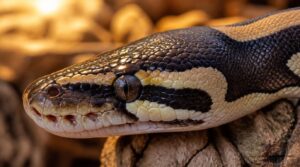
Ever notice your snake’s eyes go from milky to almost see-through right before shed day? That’s the clearing stage.
Eyes clear before shedding as caps separate at the edges first, lubricating fluid softens things, and your snake blinks to help detach it. Pupils stay visible throughout, and clarity returns fully within days post-shed.
Loose, Rough-Feeling Scales
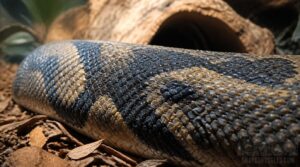
Run a finger along your snake’s side now, and you’ll feel it: rough, slightly raised scales instead of smooth ones. This starts 3-5 days before shedding, peaking during days 3-7. Fluid buildup between old and new skin causes wrinkles and lifted edges. Dry air below 50% humidity makes it worse. That belly turns dull and slightly pink too, right on schedule.
Rubbing Against Enclosure Surfaces
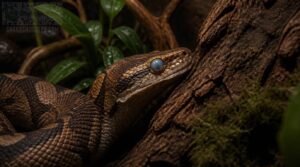
Once those scales roughen up, watch for your snake press its nose against cork bark or rough branches, working to create the first tear. Rubbing happens mostly at night, in short five-to-fifteen-minute bursts. With proper humidity, this substrate rubbing stays purposeful, not frantic. Low humidity makes rubbing ineffective and can signal stress instead of normal shedding.
Brief Restlessness or Soaking
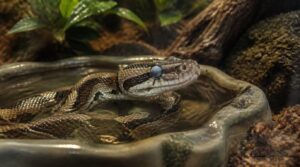
That rubbing session often triggers a case of restless wanderlust, your snake pacing the enclosure hunting for the water bowl.
Soaking usually lasts 30 to 60 minutes, with heads poking above water. This usually peaks 12-24 hours before shedding. Low humidity worsens it.
Rapid tongue flicking or repeated escape attempts, though, signal something’s off.
Skin Loosens Without Injury
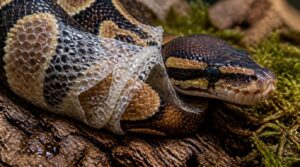
All that soaking and rubbing isn’t random. Underneath, a fluid layer develops between old and new skin, and enzymes break down the connections holding them together, loosening scales from head to tail.
Healthy skin folds gently, never taut or stuck. No redness, no swelling, just natural separation working exactly as it should within 24 hours.
Signs of a Complete, Healthy Shed
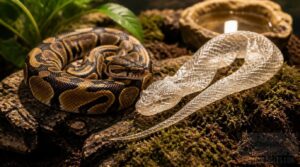
Once the old skin finally lets go, you’ll want to know if the job got done right. A truly complete shed leaves clues in a few specific spots, not just a pile of skin in the corner. Here’s exactly what to check before you give your snake the all clear.
Skin Comes Off Whole
Picture a sock turned inside out in one smooth pull, that’s what a successful shed should look like.
A successful shed comes off like a sock turned inside out in one smooth pull
Ecdysis completion means your python’s old skin comes off in one continuous piece, head to tail tip, not scattered patches. This single piece shedding confirms your humidity and enclosure setup worked.
Anything less signals it’s time to check conditions.
Eye Caps Shed Completely
Check your snake’s eyes once shedding wraps up. Those brilles, the clear scales covering each eye, should look bright and glassy again, no cloudy blue leftover.
That opaque phase happens when fluid builds up between old and new skin. A retained eyecap stays milky. Healthy detachment means clear vision returns immediately, with intact eye caps stuck to the shed itself.
Tail Tip Fully Clear
That little pointed tip at the end of your snake’s tail deserves a look too, not just the eyes. Tail tip fully clear means no dull, wrinkled patches remain on that last inch or so.
Retained skin here restricts circulation fast, risking tissue loss.
Inspect it, keep post-shed humidity around 60-80%, and confirm the shed came off in one piece.
Bright, Glossy Skin Returns
Once epidermal desquamation finishes, your ball python looks like a different animal. Bright, glossy skin replaces that dull pre-shed haze, with scale patterns snapping back into sharp focus.
This natural sheen recovery isn’t subtle. Run your hand along the body and you’ll notice smoother texture too, proof of healthy epidermal renewal doing its job.
Normal Appetite and Activity
Hunger’s back, and so is that curious wandering energy. Most snakes take that first post-shed meal within 2-3 days, though a week’s wait is still normal.
Watch activity levels too. Lethargy and defensive striking should fade completely, replaced by the calm, exploratory behavior that’s typical for your individual snake between sheds.
Supporting Healthy Shedding and Spotting Problems
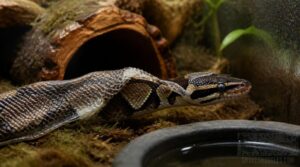
Knowing what a good shed looks like is half the battle, but your setup plays a huge role in getting there. A few small habits, done consistently, make the difference between a smooth shed and a stuck one. Here’s what to check in your enclosure and on your snake along the way.
Maintain Shed-Appropriate Humidity
Humidity makes or breaks a shed. Keep baseline at 50-60%, then bump to 65-70% once eyes go blue, and push toward 80-90% during active shedding. This gradient control matters more than any single number, so watch daily and adjust with misting, substrate moisture, and hide placement rather than chasing one "perfect" reading.
Provide Water and Humid Hide
Think of the water bowl and humid hide as your snake’s shedding toolkit.
Place a bowl big enough for full soaking, and pack a hide with damp sphagnum moss nearby.
| Setup Item | Purpose |
|---|---|
| Water bowl | Soaking, humidity boost |
| Moist hide | Stable moisture pocket |
| Sphagnum moss | Slow-release humidity |
| DIY humidity box | Backup for dry rooms |
Avoid Handling During Blue
Once those cloudy eyes show up, put the handling gloves away. Ocular clouding means your snake can’t see threats clearly, so defensive behavior during shed spikes fast.
The opaque phase brings real stress, hormonally and physically. Give your ball python privacy now:
- Skip handling entirely during blue
- Expect strikes from vision loss
- Let recovery happen undisturbed
- Reduce enclosure disturbances
- Resume handling only after clearing
Check Eyes and Tail
Once the blue phase clears, do a quick eye and tail check. Eyes should look bright and fully open, no leftover haze from that opaque blue eyes stage.
Then check the tail tip, since it sheds last and sticks first. Run your fingers gently down those last two inches, feeling for any retained cap still clinging on.
Recognize Retained Shed Early
So that eye and tail check isn’t a one-time thing, it’s your early warning system. Watch for skin coming off in pieces, stuck patches near the tail, or belly discoloration lasting past normal pink. Excessive rubbing in one spot means trouble.
A humidity drop during shedding often causes this. Fix it with a warm soak and better humidity levels before stuck shed turns into a real problem.
Frequently Asked Questions (FAQs)
How do I know if my ball python is shedding correctly?
Watch for dull skin with a slightly pink belly, then opaque, milky eyes from fluid buildup between skin layers. Appetite drops, hiding increases, eyes clear, and the old skin peels off in one piece.
How long does ball python shedding take?
Here’s a fun fact: a full shedding cycle duration runs 9-14 days start to finish. Humidity influence and temperature effects drive that range, with proper enclosure humidity (70-80%) keeping it on the shorter end.
Is it okay to feed a ball python while it is shedding?
Best to hold off. Cloudy eyes mean poor vision, raising strike risk at tongs. Most snakes lose appetite anyway during shed, so skipping one feeding won’t hurt, just wait until eye caps clear.
How can I tell if my ball python is healthy?
A healthy ball python shows steady appetite, good activity levels, clear eyes, and smooth skin texture between sheds. Normal behavior changes during the shedding process, like brief clouding, are expected, but persistent lethargy or dullness deserves a closer look.
Since ball pythons hunt mostly by heat and scent, it helps to understand how well ball pythons can actually see when judging whether cloudy or dull eyes are normal.
How to tell if a snake is going to shed soon?
Think of old wallpaper curling at the edges: that’s your snake’s skin. Look for skin texture change, a pinkish belly, eye clouding onset, appetite suppression, and rubbing against décor as humidity-driven shed cues.
How do ball pythons act before shedding?
Your snake goes quiet and cagey. Expect preshed anorexia, more hiding, eye darkening, side dulling, and restlessness that sends it soaking in the water bowl or tucked into its favorite humid hide.
How long does shedding typically take?
Like a slow-brewing pot of tea, shedding takes patience. The full cycle runs 9-14 days start to finish, but the actual shed itself wraps up in just 24-72 hours, often overnight.
Can shedding frequency indicate overall health?
Yes, but frequency alone isn’t the full picture. Sudden changes, paired with poor shedding consistency or retained skin, often point to dehydration, stress, or humidity problems rather than normal growth-related variation.
Do ball pythons shed at specific times of year?
Calendars don’t matter to a snake that never checks one. Growth-based shedding drives the schedule, not seasons. Humidity and temperature nudge timing, but individual variation, feeding, and metabolic rate determine your ball python’s actual shed frequency.
Just like shed cycles, the right age to breed corn snakes depends more on physical development and health than a number on a calendar.
How to handle stuck shed near the eyes?
Start with a gentle steam soak and moisten the eye caps, never pull them. Try a humid hide first. If stuck shed lingers, don’t force it, seek veterinary care right away.
Conclusion
The blindest your ball python looks is the moment it’s actually closest to seeing clearly again, one paradox that sums up the whole cycle. That’s the quiet lesson behind every one of the signs of a healthy ball python shedding: discomfort signaling growth, not distress.
Watch the eyes clear, the scales loosen, the old skin slide off whole. Trust the process. Your snake isn’t struggling. It’s simply becoming new.