This site is supported by our readers. We may earn a commission, at no cost to you, if you purchase through links.

A snake that regurgitates its meal two days after eating isn’t sick. It’s telling you the prey was too large, the handling started too soon, or the thawing was rushed. Most feeding problems trace back to one of those three mistakes.
Getting the best diet for pet snakes right comes down to species biology, prey sizing, and a feeding schedule matched to your snake’s age. A corn snake thriving on adult mice and a water snake refusing anything that doesn’t smell like fish are both behaving normally. Knowing the difference between those patterns and a genuine health problem is what confident keepers track.
Table Of Contents
- Key Takeaways
- What is The Best Diet for a Pet Snake?
- How Do You Choose The Right Prey Type and Size?
- How Often Should You Feed a Snake by Age?
- Is Frozen-Thawed Prey Safer Than Live Prey?
- How Do You Spot Feeding Problems and Know When to Call a Vet?
- Frequently Asked Questions (FAQs)
- What is the best food for a pet snake?
- Do snakes need to be fed every day?
- What are signs that a snake is hungry?
- What food is toxic to snakes?
- What to feed a pet snake?
- Should a pet snake eat whole prey?
- What do snakes eat?
- What is the best diet for a snake?
- How do you feed a snake at PetSmart?
- Do snakes need a balanced diet?
- Conclusion
Key Takeaways
- Whole prey — not supplements or mixed diets — is the only feeding approach that delivers the complete nutrition snakes need, since their digestive systems evolved to process fur, bone, organs, and muscle together.
- Match prey girth to the widest point of your snake’s body and adjust feeding frequency by life stage: hatchlings every 5–7 days, juveniles every 7–10, adults every 10–14 days or less.
- Frozen-thawed prey is safer than live because it eliminates bite wounds and parasites — but only when thawed overnight in the fridge and warmed to 100°F before you offer it with tongs.
- A single skipped meal is normal; repeated refusals paired with weight loss, regurgitation, or lethargy are signals to call a vet before the situation deteriorates.
What is The Best Diet for a Pet Snake?

Why does diet matter more than almost any other husbandry decision you’ll make? Because snakes are obligate carnivores, and their entire physiology is built around processing whole prey efficiently.
Getting prey size, frequency, and variety right directly shapes your snake’s long-term health, as outlined in this guide to snake husbandry best practices.
A solid pet snake diet starts with one non-negotiable principle: feed complete animals. Whole prey delivers the precise nutritional balance your snake needs, including muscle meat, organs, bone, and fur or feathers. No supplement stack can fully replicate that.
Unlike dogs or cats, snakes don’t need dietary variety. Most thrive eating a single prey type with consistent prey item sizing matched carefully to their body. Consistency beats culinary creativity every time.
In fact, frozen whole prey options are widely recommended over live prey due to their safety, convenience, and reduced risk of parasite transmission.
Use this snake diet guide as your foundation. Get these fundamentals right, and everything else in feeding falls into place.
How Do You Choose The Right Prey Type and Size?
Getting this right starts with knowing your snake’s species and size. Prey type, sizing, and safety vary depending on what you’re keeping, and the wrong call on any of them can cause real harm. Here’s what to look at before the next feeding day.
Species-Specific Prey

Three factors drive species-specific prey selection: scent, movement, and evolutionary fit. A garter snake refusing rodents isn’t broken; it’s wired for fish. Feed outside the correct prey class and you’ll see refusals, poor condition, and proper nutrition gaps.
Match your snake’s natural prey type:
- Water snakes need fish or amphibians
- Colubrids will usually accept rodents
- Arboreal insectivores require gut-loaded insects
Prey Sizing Guidelines

Prey size follows species selection logic: the girth-to-prey ratio sets your baseline. Match prey girth to the thickest point of your snake’s body. Anything visibly thicker increases regurgitation risk fast.
As a rule of thumb, if you’re ever second-guessing whether a prey item is too large, this ball python feeding guide covers sizing, frequency, and refusal troubleshooting in one place.
| Snake Stage | Target Prey Size |
|---|---|
| Hatchling | Pinky |
| Juvenile | Fuzzy |
| Sub-adult | Hopper |
| Adult | Adult mouse |
Use body weight and condition, not age alone, to confirm prey selection readiness at each shed.
A digital gram scale for reptiles takes the guesswork out of weight tracking, making it easy to confirm your snake is ready to move up in prey size.
Foods to Avoid

Once sizing is locked in, food type still matters. Wild-caught prey carries parasites, bacteria, and pesticide residues, so use captive-bred feeders only. Skip toxic foods coated with seasonings, oils, or bait chemicals.
Sticking to captive-bred rodents eliminates most of these risks, and understanding what corn snakes eat in the wild versus captivity explains exactly why that distinction keeps your snake healthier long-term.
Plant matter and dairy won’t prevent nutritional deficiencies or support a balanced diet. For snake health, avoid non-reptile mineral supplementation. Wrong formulas disrupt your snake’s metabolism, sometimes fatally.
How Often Should You Feed a Snake by Age?

Generally, your feeding schedule should reflect where your snake is in its growth arc, not just how hungry it seems.
Hatchlings grow fast and burn through energy quickly, so they need to eat more often. Here’s the standard breakdown by developmental stage:
- Hatchlings: every 5–7 days
- Juveniles: every 7–10 days
- Adults: every 10–14 days (or less often for larger species)
As snakes mature, their metabolism slows and body weight stabilizes, so gradually extending intervals is both normal and necessary. Overfeeding juveniles who are already at a healthy body condition pushes excessive growth rates and taxes the digestive system.
Also, skip feeding during active shed cycles. Once the eyes clear and your snake’s behavior returns to normal, resume your usual schedule.
Is Frozen-Thawed Prey Safer Than Live Prey?

Yes, frozen-thawed prey is the safer choice, and the difference isn’t minor. Live rodents can inflict serious bite wounds, and they carry parasites your snake doesn’t need.
Frozen prey eliminates the bite wounds and parasites that live rodents bring to every feeding
Getting this right comes down to three non-negotiable steps: proper thawing, clean presentation, and post-meal hands-off time.
Safe Thawing and Warming
Sloppy prey thawing is where keepers slip up. Thaw frozen-thawed prey in the refrigerator overnight, since refrigerator thaw safety keeps thawing temps low enough to slow bacterial growth and fully defrost the center.
Once it’s thawed, warm it in a sealed bag in warm water until the thickest point hits 100°F. Use a thermometer. Wash your hands to prevent cross-contamination.
Feeding With Tongs
Think of tongs as a waiter’s tray: they deliver the meal without you becoming part of it. Tong feeding keeps your hands out of strike range and lets you control every cue your snake keys on.
- Offer frozenthawed prey at the snake’s front third, then hold still.
- Keep movement small and intermittent; don’t wave dinner around.
- When the strike lands, release tension. Yanking makes snakes let go.
- Once constriction starts, back the tongs out and let your snake reposition.
If your snake refuses, change the presentation angle before blaming prey size or your feeding schedule.
Post-Meal Handling
Picture your snake coiled tight, methodically processing a meal it just swallowed whole. That’s not the moment to pick it up.
Postfeeding care is simple: leave it completely alone for 48-72 hours. Handling during digestion raises regurgitation risk and, over time, chips away at body condition score. Your handling protocols need a firm post-meal window. Stress management here isn’t optional.
How Do You Spot Feeding Problems and Know When to Call a Vet?
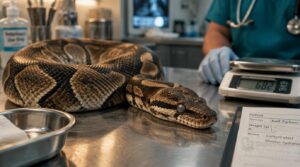
A single skipped meal is normal. Repeated refusal across consecutive feeding sessions is a different story entirely, and knowing the difference matters here.
Watch for these feeding-related warning signs:
- Persistent refusal over multiple feeding attempts
- Regurgitation after a meal
- Visible weight loss or sunken eyes
- Lethargy paired with refusing meals
- Swelling after eating or abnormal posture
If your snake’s refusing meals two or three times in a row, track it closely. Weight loss alongside reduced intake is more alarming than either alone. Add loose or absent feces, escalating agitation, or difficulty swallowing prey, and you’re past "wait and see."
Seek veterinary attention promptly if regurgitation, dehydration, or weakness appear. Don’t let rapid deterioration set in before you make that call.
Frequently Asked Questions (FAQs)
What is the best food for a pet snake?
Whole prey animals are the best option, full stop. They deliver the complete nutritional balance no supplement stack can replicate. For most pet constrictors, that means correctly sized rodents matched to your snake’s body width.
Do snakes need to be fed every day?
No. Feeding frequency isn’t daily for most pet snake species. Juveniles eat more often because their rapid growth demands it, but adults settle into natural fasting behavior, going several days to weeks between meals comfortably.
What are signs that a snake is hungry?
Watch for increased tongue flicking, a raised head, and regular movement toward the enclosure front.
When you offer prey, a hungry snake approaches and strikes fast. Persistent refusal across multiple attempts signals something beyond appetite.
What food is toxic to snakes?
Dairy, alcohol, raw or spoiled meat, and salted processed foods are all toxic to snakes. Avocado and garlic pose a real risk too. Never offer prey that’s been exposed to pesticides, rodenticides, or chemical treatments.
What to feed a pet snake?
Your snake lives on whole prey, and rodents are the go-to for most species. Match prey size to body width. Any good snake diet guide backs frozen rodents since the calcium-phosphorus ratio is built in.
Should a pet snake eat whole prey?
Whole prey is the right call, always. Your snake’s digestive system evolved to swallow prey whole, so that’s how it extracts complete nutrition, including the fat and protein that a hand-modified diet can’t reliably match.
What do snakes eat?
Your snake’s carnivorous diet centers entirely on whole prey: fur, bones, and organs all go down together. Rodents dominate, but certain species naturally take birds or fish. Match prey size to their widest body point.
What is the best diet for a snake?
A prey rodent delivers calcium and phosphorus in a ratio near 5:1, which is precisely what snake nutrition requires. Your snake’s balanced diet is whole prey matched to species and correctly sized to its girth.
How do you feed a snake at PetSmart?
Ever wonder why your snake won’t even look at its meal? Match prey size to your snake’s widest point, fully warm frozen prey to body temperature, then present it with feeding tongs from the side.
Do snakes need a balanced diet?
Yes, but not how you think. Reptile nutrition doesn’t mean variety; it means the right prey. One correctly sized rodent covers calcium and phosphorus, fat, protein, and hydration all at once. That’s a balanced diet.
Conclusion
A keeper who switched from live to frozen-thawed prey watched her ball python accept every meal without hesitation for three straight months. That kind of consistency didn’t come from luck. Finding the best diet for pet snakes means pairing the right prey size to each life stage, thawing prey correctly, and reading what your snake’s behavior actually tells you.
Trust the patterns your snake shows you. They’re reliable data, and confident, consistent feeding starts there.