This site is supported by our readers. We may earn a commission, at no cost to you, if you purchase through links.
A hairline gap along a door seam looks harmless until your gecko is found behind the couch. Cracked tile, a loose heat lamp mount, and a bowl scratched deep enough to harbor bacteria cause quieter damage, and they build for weeks before anyone notices.
Most health problems in captive reptiles trace back to the enclosure itself, not the animal. Temperatures drift two degrees, humidity slides ten percent, and waste sits one day too long. Your reptile can’t tell you any of it is happening.
This reptile habitat maintenance guide walks you through each check in order, from a five-minute daily routine to a full deep clean.
Table Of Contents
- Key Takeaways
- Inspect The Enclosure and Equipment
- Check Temperature, Humidity, and Lighting
- Spot-Clean Waste and Refresh Water Daily
- Clean Hides and Decor; Replace Substrate as Needed
- Deep-Clean and Disinfect The Enclosure Safely
- Frequently Asked Questions (FAQs)
- What is the hardest reptile to care for?
- Where should you not touch a bearded dragon?
- Do bioactive enclosures need to be cleaned?
- Do lizards need to be fed every day?
- How to care for reptiles?
- How do I Keep my reptiles happy and healthy?
- What makes a good reptile habitat?
- How do you care for a captive reptile?
- Do Reptiles need a home?
- What is a substrate for a reptile?
- Conclusion
Key Takeaways
- Most reptile health problems start with the enclosure, so check latches, seams, flooring, heat and UV mounts, and bowls first, because small failures build quietly for weeks.
- Keep temperature within ±2°C of your target, correct humidity that drifts more than 10% for a day, and replace UVB lamps every 6 to 12 months since their output fades before the glow does.
- Spot-clean waste and replace the water (never just top it off) daily, wash hides and decor weekly, and refresh substrate every one to three months or within 24 hours of a spill.
- Scrub with soap and hot water before disinfecting, because leftover organic matter neutralizes bleach, then avoid toxic cleaners like Lysol, phenols, and pine or cedar products, and rinse and air-dry everything before your reptile goes back in.
Inspect The Enclosure and Equipment
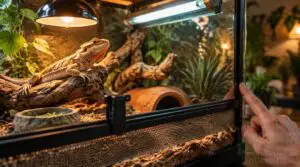
You should start every maintenance session with a close look at the enclosure itself, before you touch anything inside it. Check that door latches close firmly, since a loose closure is the quickest route to an escape. Run your fingers along seams, corners, and ventilation openings for gaps where a limb or tail could wedge. Confirm the flooring has no cracks, because leaks create lasting moisture and sanitation problems.
Once the enclosure is secure, it helps to know how to move a heavier animal safely, so these large snake handling techniques are worth reviewing before your next session.
Next, review your equipment. Inspect heat and UV mounts, wiring, and reflectors for looseness or damage, since a shifted fixture can quietly disrupt your temperature gradients and lighting requirements.
Examine bowls, dishes, and hides for cracks that harbor debris. Judge whether your vivarium setup and substrate options allow full washing access.
Check Temperature, Humidity, and Lighting
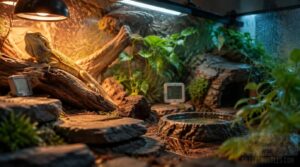
Once the hardware checks out, confirm it’s delivering the conditions your animal needs. Read your probe thermometer at the basking spot and again at the cool end, then compare both to your species’ targets. Temperature should hold within ±2°C of setpoint, and nighttime drops shouldn’t exceed 5°C.
Check humidity on a digital hygrometer near the enclosure’s center. If it drifts more than 10% off target for a day, adjust misting, your water dish, or ventilation.
Inspect your lighting. Replace flickering bulbs and swap UVB lamps every 6 to 12 months, since output fades before the glow does.
Watch thermoregulation behavior. A reptile that’s hiding or gaping is telling you something’s off. Reptile habitat enrichment, like extra basking perches, can help.
Spot-Clean Waste and Refresh Water Daily
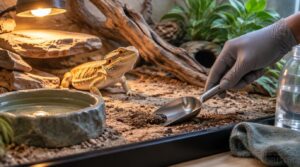
Once your conditions are dialed in, keep them that way with a daily mess check. Good reptile habitat maintenance starts with small, consistent habits, and your reptile cleaning schedule should anchor them to the same time each day.
A custom snake enclosure build guide can help you design a layout that makes daily spot-cleaning and monitoring much easier to manage.
Remove feces, urates, and shed skin with a dedicated scoop, working from the cleanest zones toward the dirtiest so you don’t spread debris. Don’t stir the whole substrate.
Then handle your reptile water refresh: dump the old water, scrub the dish, and refill. Never just top it off.
- Check damp substrate pockets near the water dish first.
- Remove uneaten food before it rots.
- Wipe spills around basking and soaking spots.
- Preserve reptile temperature gradients while working.
- Reposition reptile habitat enrichment gently afterward.
Clean Hides and Decor; Replace Substrate as Needed
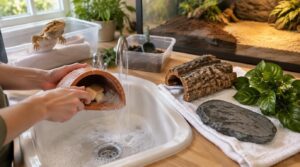
Daily scooping won’t catch everything, so give hides and decor a weekly pass. Scrub them with warm water and reptile-safe soap, rinse with hot water (50 to 60°C), and air-dry.
Inspect as you go. Replace hides with cracks over 2 mm or peeling coatings, and any reptile habitat enrichment that still smells after reptile cleaning or shows biofilm. Mold means excess moisture, so lower humidity.
Replace substrate within 24 hours of a spill, or when over 25% of it looks compacted or smells foul. Refresh it every one to three months, sooner for omnivores. Sand and soil need a 3 to 5 cm layer. Weigh substrate options against your vivarium setup, and log replacement dates to improve reptile habitat maintenance.
Deep-Clean and Disinfect The Enclosure Safely
A deep clean resets your reptile’s habitat, and it’s worth doing carefully so the products you use never harm your animal. The process follows three steps: moving your reptile to a secure spot, scrubbing every surface, and returning everything in a safe, dry state. Here’s what each step involves.
Move Your Reptile Safely
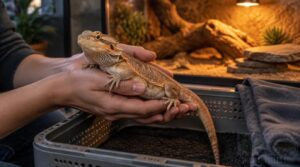
Your reptile’s safety matters most before any husbandry task begins.
Move it into a ventilated, escape-proof container lined with non-slip substrate, and keep it dark:
- Support the whole body; never grab the tail.
- Cover the container to steady humidity and temperature.
- Keep it away from drafts and chemical cleaners.
- Keep handling brief; calm care limits stress.
Pre-warm the vivarium first.
Wash Before Disinfecting
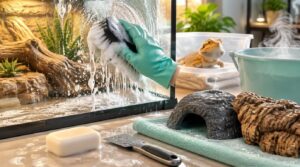
Soap removes the organic matter that inactivates disinfectants, so wash first. Strong cleaning procedures protect substrate hygiene and overall reptile care.
Scrub with hot water and soap:
| Target | Method |
|---|---|
| Feces | Scrub |
| Biofilm | Soap |
| Minerals | Hot water |
| Debris | Scrape |
Skipped washing undermines habitat maintenance, because organic matter neutralizes bleach. Your disinfection protocol only works on visibly clean, residue-free surfaces. Don’t rush. Avoid toxic household disinfectants like Lysol, phenols, and pine or cedar cleaners, since they can harm reptiles even after the enclosure is cleaned.
Rinse, Dry, and Reset
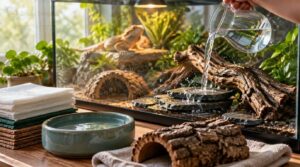
Think of this stage as a clean slate, a quiet exhale after the scrubbing. Rinse, Dry, and Reset closes out reptile enclosure cleaning, and it’s where reptile habitat maintenance either holds or fails.
Rinsing, drying, and resetting is the quiet exhale after scrubbing, where a clean slate either holds or fails
Pour clean water gently over every surface until no residue remains. Then wipe seams with paper towels and air-dry completely before returning decor, fresh liners, and water.
Frequently Asked Questions (FAQs)
What is the hardest reptile to care for?
You’ll find aquatic turtles and chameleons hardest. A reptile husbandry specialist will tell you reptile habitat maintenance never pauses: water quality, humidity, reptile lighting requirements, reptile substrate options, and reptile care all demand constant precision.
Where should you not touch a bearded dragon?
Keep your hands off a bearded dragon’s mouth and nose, and don’t touch basking surfaces or soiled areas.
Good reptile care means reading reptile behavior; a reptile husbandry specialist avoids contamination during reptile habitat maintenance.
Do bioactive enclosures need to be cleaned?
Does a living habitat let you skip chores? Not quite.
Bioactive enclosures still need reptile enclosure cleaning: remove feces, uneaten food, and stale water promptly; wipe hides. Skip it, and reptile health monitoring gets harder.
Do lizards need to be fed every day?
Lizards rarely need daily meals.
Adult insectivores eat every 2–3 days, while juvenile bearded dragons eat daily. Feeding schedules support reptile nutrition, and reptile health monitoring through steady weight keeps your reptile care on track.
How to care for reptiles?
Your reptile’s world is a finely tuned clock, and every gear matters. Reptile care starts with a warm-to-cool gradient, UVB lighting, species-appropriate reptile nutrition, and steady reptile habitat maintenance. Watch early for stress or illness.
How do I Keep my reptiles happy and healthy?
Good reptile care starts with reptile habitat maintenance: temperature gradients, UVB, and humidity.
Support reptile nutrition, reptile habitat diversity, and climbing decor. Know your species’ reptile conservation status, and watch behavior for early warning signs.
What makes a good reptile habitat?
A terrarium is a small borrowed sun, and you’re its keeper. Strong reptile habitat setup means a measured heat gradient, daily UVB, secure space, ventilation, and species-specific décor.
If you’re running more than one tank, a well-planned terrarium lighting system for multiple enclosures makes it easier to keep every habitat’s heat and UVB consistent.
Meet reptile environmental needs; your animal thrives.
How do you care for a captive reptile?
Your scaly roommate will judge every mistake!
Master reptile care through disciplined reptile habitat maintenance, accurate reptile feeding schedules, and routine reptile veterinary care. You’ll also research reptile breeding thoroughly before ever attempting it yourself.
Do Reptiles need a home?
Think of the enclosure as your animal’s kingdom, with walls that mark safety.
A reptile home setup must safely regulate temperature gradients, shield your pet, and support natural behavior. Meeting reptile habitat needs lowers stress.
What is a substrate for a reptile?
Picture a leopard gecko tunneling through dry sand.
That’s substrate: the ground material in your terrarium setup that shapes humidity, comfort, and enclosure cleaning. Choose safe options like coconut fiber, never cedar, for reptile care.
Conclusion
A lamp bracket slipped half an inch, and one keeper’s bearded dragon basked at the wrong temperature for three weeks.
Small failures hide in plain sight, so let this reptile habitat maintenance guide become routine rather than reference. Check equipment, confirm your readings, remove waste, and disinfect on schedule. Do that, and you’ll catch drift before it becomes illness. Your reptile can’t report a problem, but a steady habitat tells you it doesn’t have one.