This site is supported by our readers. We may earn a commission, at no cost to you, if you purchase through links.

A snake eating whole prey should, in theory, get everything it needs. In practice, captive feeding schedules, limited UVB exposure, and the nutritional gaps between farmed feeder rodents and wild prey create real shortfalls that build quietly until your animal shows symptoms you can’t ignore.
Tremors, rubber jaw, retained sheds, and stargazing aren’t random. They’re what nutritional failure looks like once it’s already set in. The best vitamins for healthy snakes close those gaps before the damage starts.
This guide reviews the top-rated products by category and walks you through dosing protocols and safety thresholds worth knowing before you open any supplement jar.
Table Of Contents
- Key Takeaways
- Best Vitamins and Supplements for Healthy Snakes
- When Do Snakes Need Vitamin Supplements?
- How to Choose a Safe Snake Vitamin Product
- How to Dose and Administer Snake Supplements Safely
- Vitamin Deficiency Signs, Overdose Risks, and Veterinary Care
- Frequently Asked Questions (FAQs)
- What are the healthiest vitamins to take daily?
- What are the top 10 healthiest snacks?
- What is the best vitamin for fingernails and hair?
- What are 7 healthy snacks?
- What vitamins do snakes need?
- What is a healthy snake nutrition guide?
- Do snakes need vitamin D?
- Do snakes need minerals?
- Do hognose snakes need supplements?
- What is the best diet for a snake?
- Conclusion
Key Takeaways
- Captive snakes frequently develop calcium, vitamin A, and D3 deficiencies not from neglect, but from the compounding gaps between farmed feeder prey, limited UVB access, and irregular feeding schedules.
- Symptoms like tremors, rubber jaw, and stargazing signal nutritional failure that’s already advanced, so targeted supplementation before symptoms appear is far more effective than reactive treatment.
- Fat-soluble vitamins D3 and A accumulate in tissue, making dosing frequency and product overlap the most common causes of toxicity—never stack supplements without auditing them for shared ingredients.
- Whether your snake needs calcium with or without D3 depends entirely on its UVB access, life stage, and prey diet, so a reptile vet’s assessment should drive your supplement choices, not label marketing.
Best Vitamins and Supplements for Healthy Snakes
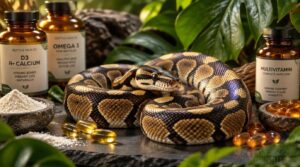
Not all supplements are created equal, and the wrong product can do more harm than good. The picks below focus on safety, bioavailability, and correct dosing for snake physiology specifically. Each one fills a distinct nutritional role, so you’re not doubling up or leaving gaps.
Reviewing common snake husbandry mistakes can help you spot gaps in your current routine before adding any supplement to the mix.
Best Overall Multivitamin
When choosing essential vitamins for pet snakes in captivity, Zoo Med ReptiVite is the top pick. Originally developed for the San Diego Zoo, it comes in with-D3 and without-D3 versions, giving you precise control based on your snake’s UVB setup. It supplies pre-formed retinol, not beta-carotene, which matters for obligate carnivores. Its calcium-based formula also maintains the correct mineral ratio.
The supplement also promotes healthy bone growth benefits while helping prevent liver disease and aiding in protein digestion.
Best Calcium Without D3
Zoo Med Repti Calcium without D3 is the right pick for snakes with reliable UVB access, avoiding accidental vitamin D3 overdose.
- Corrects calcium to phosphorus ratio imbalances
- Prevents Metabolic Bone Disease development
- Avoids vitamin D3 toxicity risk
- Safe alongside consistent UVB lighting
Without adequate UVB exposure, calcium absorption doesn’t meaningfully improve even when dietary calcium and phosphorus are both adequate.
Best Calcium With D3
If your snake doesn’t have reliable UVB access, calcium and vitamin D3 together fill that gap. Zoo Med Repti Calcium with D3 is a dependable reptile supplement for these setups, pairing both nutrients to support bone mineralization.
Watch dosing carefully, though. Since D3 compounds accumulate, combining this calcium supplement with a multivitamin or additional D3 sources raises toxicity risk quickly.
Best Trace Mineral Supplement
Beyond D3 and calcium, trace mineral balance directly affects your snake’s health. Repashy SuperVite offers a well-rounded micronutrient profile without overloading any single element.
These risks shape nutrient bioavailability in snake supplements:
- Zinc-copper competition reduces copper absorption
- Iodine excess disrupts thyroid function
- Selenium operates within narrow safe ranges
- Calcium phosphorus ratio shifts mineral uptake
- Chelated forms outperform basic inorganic salts
When Do Snakes Need Vitamin Supplements?
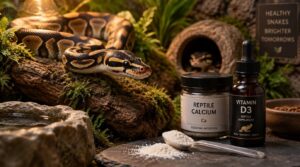
When your snake’s diet, environment, or life stage creates a genuine nutritional gap, that’s when snake supplements become relevant. Essential vitamins for pet snakes in captivity aren’t a daily routine; they’re a targeted response to documented risk.
Understanding exactly which deficiencies to watch for—and when to act—is easier with a focused guide to essential vitamins and supplements for pet snakes.
| Situation | Supplement Need |
|---|---|
| Growing or juvenile snake | Higher calcium demand |
| Reproductive female | Increased calcium handling |
| Inadequate UVB exposure | Vitamin D3 supplementation |
| Inconsistent or limited prey variety | Multivitamin consideration |
| Recent illness or appetite loss | Short-term nutrient support |
Relying on looks alone is unreliable; vitamin deficiency often develops before visible signs appear. If you’ve recently switched prey, adjusted lighting, or changed feeding frequency, your snake’s status may have shifted. Choosing the right supplementation methods and monitoring reptile health together helps you address each gap precisely.
How to Choose a Safe Snake Vitamin Product

Not all supplement labels are created equal, and what’s safe for reptiles broadly isn’t always appropriate for snakes specifically. Before picking a product off the shelf, it helps to know what separates a well-formulated supplement from one that could cause more harm than good.
The six criteria below will help you evaluate any product with confidence.
Appropriate Vitamin Forms
The chemical form of a supplement shapes everything about how it works. Fat-soluble vitamins like vitamin D3 and vitamin A don’t flush out quickly; they accumulate in tissue, so the wrong form at the wrong dose builds up. B-complex vitamins are more forgiving, but formulation still affects absorption.
For any calcium supplement you buy, always confirm the product specifies D3.
Balanced Mineral Ratios
A ball python fed mostly boneless prey can develop calcium phosphorus balance problems faster than you’d expect. Mineral balance depends on what’s already in the diet before you start supplementing.
- The calciumtophosphorus ratio should favor calcium for adequate mineral bioavailability
- Excess phosphorus competes with calcium, raising metabolic bone disease risk
- Trace minerals like copper and zinc must be included proportionally
Safe Dosage Levels
Imagine dusting every meal with calcium D3 on top of a weekly multivitamin. That habit causes vitamin D3 toxicity faster than most owners expect.
| Supplement | Max Frequency |
|---|---|
| Multivitamin | Every 2 weeks |
| Calcium with D3 | Once weekly |
| Calcium without D3 | Every other feeding |
| Trace minerals | Monthly |
Always follow dosage guidelines by meal frequency, not calendar. Audit overlapping products to prevent oversupplementation.
Species-Specific Needs
No single formula covers species-specific needs across all snakes. A corn snake eating whole rodents gets trace minerals very differently than a rough green snake relying primarily on fish or insects.
Your snake’s natural diet, UV exposure history, and current life stage determine which essential vitamins for pet snakes in captivity actually matter, so don’t supplement blindly without that context.
Quality Testing Standards
A label claim means nothing if the manufacturer never actually verified it.
For reptile supplement safety, look for products backed by third-party potency testing and a published Certificate of Analysis. These documents confirm that vitamin concentrations match stated label values and that heavy metals aren’t present. Independent verification matters most in herpetoculture, where small dosing errors cause real vitamin toxicity.
Brands like Repashy and Zoo Med that publish full Certificates of Analysis are worth comparing alongside other third-party tested reptile vitamins before committing to a supplementation routine.
Veterinary Guidance
Third-party testing tells you what’s in a product, but a reptile veterinarian tells you whether your snake needs it. Without that step, even a verified supplement can worsen a metabolic bone disease case.
A vet visit usually includes:
- Reviewing diet and UVB history
- Using physical exam for veterinary diagnosis
- Calculating a safe supplement dosage
- Planning reptile health monitoring over time
How to Dose and Administer Snake Supplements Safely
Once you’ve chosen a well-formulated product, administration matters as much as formulation. Poor technique undermines even the best supplement.
Dusting techniques work well for whole prey: lightly coat the prey item before feeding so moisture doesn’t cause the powder to fall off. For liquids, spray applications onto prey surfaces distribute more evenly than syringe dosing.
Four rules that protect your snake:
- Tie each dose to a specific feeding, not an approximate schedule
- Weigh your snake monthly and adjust supplement dosage by body weight
- Never stack two "complete" products without veterinary approval
- Record the start date and product lot to catch schedule drift
Nutritional bioavailability drops when powder sits on uneaten prey, so always remove uneaten food promptly when supplementing diet.
Vitamin Deficiency Signs, Overdose Risks, and Veterinary Care
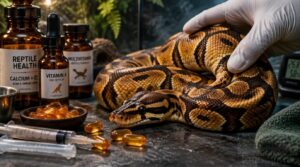
Knowing how to read your snake’s body is just as important as knowing what to give it. Too little or too much of the right vitamin can each cause serious harm, and the signs aren’t always obvious at first glance. The sections below walk you through what to watch for, when supplementation crosses into toxicity, and when it’s time to call a vet.
With vitamins, both too little and too much can seriously harm your snake
Recognizing Deficiency Signs
If your ball python is refusing food with dull skin and cloudy eyes, it isn’t just due for a shed. That may signal vitamin deficiency.
| Deficiency | Signs | System Affected |
|---|---|---|
| Calcium | Tremors, rubber jaw | Skeletal, neuromuscular |
| Vitamin A | Retained shed, dull skin | Integument, ocular |
| Thiamine | Ataxia, stargazing | Neurological |
Both metabolic bone disease and hypovitaminosis cause lasting damage. Watch for skeletal deformities.
Catching these conditions early and supplementing with a quality reptile calcium and vitamin D3 can prevent irreversible skeletal damage before it takes hold.
Identifying Overdose Symptoms
Deficiency isn’t your only real concern. Vitamin overdose can strike fast, sometimes within hours of a single high-dose feeding. Watch for these signs:
- Sudden lethargy or refusal to move
- Abnormal posture or muscle weakness
- Swelling or discharge around the mouth
- Rapid deterioration following supplementation
Excess preformed vitamin A and D3 remain the most common vitamin toxicity culprits in reptile health.
Preventing Supplement Toxicity
The most reliable way to prevent vitamin toxicity is strict adherence to your product’s stated dosing schedule. Never improvise the frequency or amount.
If you’re using multiple supplements, audit them for ingredient overlap, since fat-soluble vitamins like supplemental Vitamin D3 accumulate in tissue. Vitamin A toxicity and hypervitaminosis D develop gradually, making consistent reptile supplementation protocols your best ongoing defense.
Veterinary Care Triggers
Beyond supplement schedules, some signs demand urgent care from a reptile veterinarian. Sudden lethargy, open-mouth breathing, repeated regurgitation, or spasms can signal Metabolic Bone Disease or severe hypovitaminosis that worsens quickly without veterinary intervention.
Nutritional deficiencies rarely resolve on their own once symptoms appear. If you notice neurologic signs, reproductive straining, or rapid decline over hours, contact your vet immediately.
Frequently Asked Questions (FAQs)
What are the healthiest vitamins to take daily?
Think of daily snake care vitamins as a short list: for your snake, calcium is the cornerstone, paired with a reptile vitamin package. Most key vitamins for pet snakes in captivity don’t require daily dosing.
What are the top 10 healthiest snacks?
If you’re asking about snacks for your snake, there aren’t any. Whole rodents or appropriate prey provide complete reptile nutrition. Offer nothing else: muscle meat, fillets, or treats lack skeletal minerals and cause deficiencies.
What is the best vitamin for fingernails and hair?
Biotin gets the most attention for nails and hair because it fuels keratin production, but vitamin C, zinc, iron, and B12 each contribute meaningfully. A deficiency in any one of them can set you back.
What are 7 healthy snacks?
Healthy snake snacks include pinkie mice, mealworms, feeder guppies, waxworms, small crickets, appropriately sized fuzzies, and small feeder fish. Always match prey width to your snake’s mid-body and keep each portion smaller than regular meals.
What vitamins do snakes need?
Even when your snake eats whole prey, you can still have gaps. Vitamins for healthy snakes like calcium and Vitamin D3, A, and E address reptile vitamin requirements, preventing vitamin deficiency and Metabolic Bone Disease.
What is a healthy snake nutrition guide?
A healthy snake nutrition guide centers on whole prey feeding, dusted with calcium and Vitamin D3 when UVB is absent. This balanced diet prevents Metabolic Bone Disease and promotes proper growth throughout your snake’s life.
Do snakes need vitamin D?
What happens when your snake can’t absorb calcium? It develops metabolic bone disease. Vitamin D3 drives calcium absorption, and without UVB lighting, your snake can’t make it efficiently, no matter how well you feed it.
Do snakes need minerals?
Snakes absolutely need minerals to function properly.
Calcium and phosphorus are most critical, ideally at a 2:1 or 3:1 ratio. Without vitamin D3, calcium absorption fails.
Trace minerals like iron, zinc, and copper also matter.
Do hognose snakes need supplements?
Most hognose snakes don’t need vitamin supplements when they’re eating appropriately sized whole prey regularly. The exception is calcium supplementation when fish makes up a significant portion of the diet, since fish disrupts calcium-phosphorus balance.
What is the best diet for a snake?
Your snake’s best diet centers on whole prey matched to its body girth. Rodents or birds deliver fairly complete nutrition, but a targeted calcium supplement and vitamin D3 can help close any remaining nutritional gap.
Conclusion
Most deficiencies in captive snakes develop over months, not days, making early supplementation far more effective than reactive treatment.
The best vitamins for healthy snakes aren’t a cure. They’re maintenance. Pair them with appropriate lighting, realistic feeding intervals, and feeder prey from quality sources, and you’ve built a foundation that keeps symptoms like tremors, rubber jaw, and stargazing from ever becoming your reality.
Supplement strategically. Dose precisely. Get your vet involved early.