
This site is supported by our readers. We may earn a commission, at no cost to you, if you purchase through links.

A snake owner checks their enclosure one morning and discovers something unsettling: patches of discolored scales, blistered skin, or darkened tissue where their pet coiled near a heat source overnight. Burns on snake skin rank among the most common—and most preventable—injuries in captive reptiles, yet they continue to occur in even well-intentioned setups.
Unlike mammals, snakes lack the nerve density to immediately register thermal pain, which means they won’t instinctively move away from dangerous heat until tissue damage has already begun. The resulting injuries range from superficial redness that resolves within days to full-thickness burns requiring months of intensive care.
Understanding how these injuries develop, what warning signs to watch for, and how to respond quickly can mean the difference between a minor setback and a life-threatening infection.
Table Of Contents
- Key Takeaways
- What Causes Burns on Snake Skin?
- Recognizing Burn Symptoms in Snakes
- Diagnosing Burns on Your Snake
- Treating Burns on Snake Skin
- Preventing Burns and Supporting Recovery
- Frequently Asked Questions (FAQs)
- How do I treat a burn on my snake?
- What happens when you burn a snake?
- Can snake skin burn?
- Can burns affect a snakes ability to shed properly?
- Are certain snake species more vulnerable to burns?
- How long does complete burn recovery typically take?
- Do burns cause permanent changes in scale coloration?
- Should humidity levels be adjusted during burn recovery?
- Conclusion
Key Takeaways
- Snakes lack the nerve density to feel thermal pain immediately, so they won’t move away from dangerous heat sources until tissue damage has already occurred—making burns one of the most common yet preventable injuries in captive reptiles.
- Most thermal burns result from preventable setup errors like malfunctioning thermostats, improper heat source placement, or inadequate temperature monitoring, with injuries ranging from superficial reddening to full-thickness burns requiring months of intensive veterinary care.
- Early detection is critical since snakes hide pain silently, so watch for visual changes like skin discoloration, blistering, or charring alongside behavioral shifts such as appetite loss, hunched posture, or reluctance to bask.
- Prevention centers on maintaining proper thermal gradients (one warm side at 28–32°C with a cooler retreat), using thermostats with daily temperature checks, positioning heat sources to prevent direct contact, and conducting routine equipment inspections to catch failures before they cause injury.
What Causes Burns on Snake Skin?
Thermal burns in snakes don’t happen by accident—they’re almost always the result of preventable setup errors or equipment failures in your enclosure. Understanding where these injuries come from, whether it’s a malfunctioning heat lamp or poor temperature monitoring, is the first step in keeping your snake safe.
Most of these accidents trace back to misunderstanding proper snake lighting needs, which directly impacts how heat sources should be positioned and regulated.
Let’s break down the main culprits behind burn injuries so you can spot and eliminate these risks before they harm your scaly friend.
Common Heat Sources in Enclosures
Inside your snake’s enclosure, several heat sources can pose burn risks if mismanaged. Heat mats and thermal panels placed beneath substrate provide steady warmth, while radiant sources like heat lamps and external lamps deliver overhead heating through convection heaters or direct radiation.
Though essential for thermoregulation, these heat sources can cause thermal burns and heat stress when temperatures climb unchecked—your reptile enclosure design must balance comfort with safety.
Equipment Malfunctions and Risks
Even perfectly chosen heat sources can betray your scaly friend when equipment fails. Short circuits trigger electrical fires that ignite substrates, while heating failures create scorching hot spots or abrupt thermal overload.
Sensor errors mask dangerous zones, and water damage corrodes components—leading to uncontrolled thermal burns. For reptile burn prevention, routine inspections of heat lamps and all heat sources catch malfunctions before thermal injury strikes.
Improper Temperature Regulation
Malfunctions aside, the real culprit behind thermal burns is often hands-off temperature control. Without a reliable thermostat or consistent monitoring, your enclosure’s thermal gradient can spiral into hazardous territory.
Consider these burn prevention essentials for proper temperature regulation:
- Install a high-quality thermostat to maintain stable heat source output
- Map your enclosure’s thermal gradient weekly with an infrared thermometer
- Set basking zones below species-specific maximums (usually 88–95°F)
- Calibrate temperature probes monthly to catch sensor drift
- Document daily highs and lows to detect dangerous thermal injury patterns before burns occur
Environmental Factors Leading to Burns
Beyond thermostats and timers, your enclosure’s physical layout and air quality play a decisive role in thermal burn prevention. Poorly designed enclosures with inadequate ventilation systems trap radiant heat, creating localized hot zones where your snake rests.
Uneven thermal gradients from misplaced heat sources force reptiles onto dangerous surfaces, while humidity control failures—too dry or too damp—alter heat conduction and push snakes toward prolonged basking that scorches scales.
Understanding the significance of partial-thickness and full-thickness burns can help guide both prevention and treatment strategies in reptile care.
Recognizing Burn Symptoms in Snakes
Spotting a burn early can make all the difference between a quick recovery and a serious infection that threatens your snake’s health.
Watch for behavioral changes like defensive postures or stress signals that often indicate your snake is experiencing pain from a burn.
The signs aren’t always obvious at first—snakes don’t cry out in pain the way mammals do, and their thick scales can mask damage until it progresses. You’ll need to watch for visual changes on the skin itself, along with shifts in how your snake moves and eats.
Snakes hide burn pain silently behind thick scales, so you must watch for skin changes and behavioral shifts to catch injuries early
Skin Reddening and Discoloration
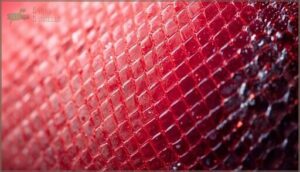
Reddening is often your first clue that thermal damage has occurred—capillaries dilate beneath the scales, creating pink to bright red patches where heat met skin.
These discoloration types range from mild inflammation in first-degree burns to deeper hues signaling tissue injury. If the area feels warmer than surrounding scales or darkens over days, you’re likely witnessing the early stages of thermal injuries that demand close attention and proper burn care.
Recognizing these changes is important, as certain skin redness causes may require different treatment approaches and indicate more serious underlying issues.
Blisters, Oozing, and Crusting

Blisters signal second-degree thermal burns, where fluid-filled pockets form between separated skin layers—your snake’s body cushioning deeper tissue from further injury.
When oozing begins, clear serum may leak from ruptured blisters (blood-tinged fluid means capillaries broke), eventually drying into protective crusts as wound healing advances.
Watch for honey-colored crusting or foul odor, both red flags for infection control needs demanding immediate veterinary intervention.
Scale Damage and Charring
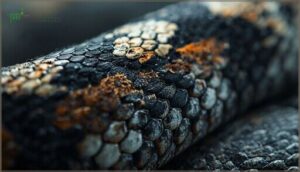
Charring marks the most severe thermal injuries—third-degree burns where scale surfaces darken from light brown to deep black depending on char depth and heat exposure duration.
You’ll notice burned tissue turns brittle, cracks along natural grooves, and lifts from underlying skin as thermal scars form. Unlike minor reddening, these irreversible changes demand immediate reptile burn care since scale regeneration won’t fully restore damaged areas.
Behavioral and Appetite Changes

Pain from burns often triggers hunched posture, restlessness, and reluctance to bask—all behavioral cues that your snake is struggling.
You’ll also see appetite drop sharply as stress reduction becomes the body’s priority over feeding strategies.
During pain management and recovery, watch for gradual appetite recovery; when your snake resumes normal feeding and exploration, that signals improved reptile health and wellness.
Diagnosing Burns on Your Snake

Once you’ve spotted the signs, figuring out exactly what you’re dealing with comes next.
A proper diagnosis means looking at your snake’s skin, understanding what you’re seeing, and knowing when a vet needs to step in.
Let’s walk through how to assess burns accurately and rule out anything else that might be going on.
Physical Examination and Owner Observations
When you bring your snake to the vet, a thorough physical examination—combined with what you’ve witnessed at home—forms the diagnostic foundation for burn injuries.
Visual inspection checks skin assessment markers like redness, blistering, and scale integrity, while you provide vital observation techniques such as recent temperature spikes or behavioral shifts.
This burn documentation and owner education partnership in reptile health and reptile care strengthens veterinary medicine outcomes, helping your scaly friend recover faster.
Assessing Burn Severity
Once your vet completes the physical exam, burn depth evaluation and wound severity classification determine how aggressive treatment needs to be. Thermal injury assessment for snake burn diagnosis categorizes tissue damage analysis into three levels:
- First-degree burns show reddening across the epidermis with minimal scale disruption
- Second-degree burns penetrate deeper dermis, producing blisters and oozing fluid
- Third-degree burns destroy all skin layers, leaving charred or white tissue
- Mixed-depth thermal burns display red and white patches across affected zones
- Sensation testing helps distinguish superficial from full-thickness injuries
When to Seek Veterinary Evaluation
Understanding burn severity helps you recognize when emergency care escalates from optional to critical. Veterinary guidance becomes non-negotiable when urgent symptoms appear, so let’s map out the precise thresholds that demand immediate veterinary medicine for reptiles.
| Burn Injury Indicator | When to Act | Level of Urgency |
|---|---|---|
| Burn covers >2% of body or ventral surface | Within hours | Urgent veterinary emergency care |
| Deep tissue injury, exposed tissue, non-healing ulcers | Immediately | Requires immediate veterinarian evaluation |
| Systemic signs: lethargy, refusal to eat, rapid breathing | Right away | Contact reptile veterinarian now |
| Widespread redness, swelling, pus drainage | ASAP | Schedule appointment immediately.” |
Snake behavior shifts like fever, dehydration, pale gums, or sunken eyes signal reptile burn treatment can’t wait—seek emergency veterinary care now.
Ruling Out Other Skin Conditions
Burns share visual overlap with dermatitis, fungal infections, and other reptile skin lesions, so differential diagnosis relies on pattern recognition—uniform damage without satellite spots rules out contagious issues, while blister formation with clear fluid distinguishes thermal burn injury from psoriasis plaques.
Layer depth assessment, checking tissue erythema and sloughing, separates superficial infection signs from deep wounds requiring specialized reptile medicine intervention.
Treating Burns on Snake Skin

Once you’ve identified a burn on your snake, quick action can make the difference between a straightforward recovery and a serious complication.
The treatment approach depends on burn severity, ranging from simple at-home first aid for minor injuries to intensive veterinary intervention for deep tissue damage. Here’s what you need to know about each stage of burn treatment, from those vital first moments to professional medical care.
Immediate First Aid Steps
When you discover thermal burns on your scaly friend, swift emergency response makes all the difference in wound stabilization and recovery. Before attempting snake handling, assess the situation carefully—burns, whether first-degree burns or deeper thermal burns, demand a methodical burn assessment rather than panic.
- Secure the environment first: Move your snake to a clean, escape-proof container away from the heat source, minimizing stress during this critical moment
- Observe without touching: Examine the affected scales from a safe distance, noting redness, blistering, or charring patterns
- Skip home remedies: Don’t apply ice, ointments, or water directly to burns—improper wound care can worsen tissue damage and complicate pain management
Contact your veterinarian immediately if the burn covers significant body area or shows signs of deep tissue involvement.
Wound Cleaning and Infection Prevention
Once your snake is stable, proper wound hygiene becomes the foundation of infection control and healing. Clean hands thoroughly before touching burn sites—soap and water for twenty seconds prevents bacterial transfer during wound care. Use sterile saline or clean lukewarm water to gently rinse debris from affected scales, moving from the center outward with single-use gauze pads.
| Cleaning Agent | Safe for Wound Bed | Best Use |
|---|---|---|
| Normal saline | Yes | Debris removal, wound debridement support |
| Mild soap | No (skin only) | Surrounding healthy scales |
| Hydrogen peroxide | No | Avoid—delays healing |
Biofilm management matters because bacteria colonies hinder tissue repair. Your vet may recommend antimicrobial therapy through topical ointments or systemic antibiotics if infection signs appear—increased redness, swelling, or unusual discharge. Change dressings per veterinary guidance, maintaining a moist environment that promotes healing without trapping contaminants. Don’t skip wound cleaning sessions; consistent care prevents the cascading complications that transform manageable burns into life-threatening infections.
Pain Management and Fluid Therapy
Your scaly friend needs more than wound care—pain assessment guides whether analgesic options like NSAIDs or opioids are warranted, supporting wound healing while thermal comfort stays optimized.
Fluid resuscitation through crystalloid therapy restores tissue perfusion lost during thermal burn treatment, preventing shock. Pain management and fluid therapy work together, addressing immediate distress while your veterinarian monitors hydration status and adjusts pain relief protocols throughout wound care recovery.
Professional Veterinary Treatments
When home remedies aren’t enough, veterinary medicine and surgery step in with specialized burn care and management—general anesthesia ensures safe restraint during wound debridement, while broad-spectrum antibiotic therapy targets infection risks that threaten healing tissue.
Your vet combines fluid management to restore hydration with topical treatments and dressings customized to reptile burn treatment needs, monitoring recovery at every stage of thermal burn treatment.
Preventing Burns and Supporting Recovery

Preventing burns in the first place is always easier than treating them, and it starts with getting your enclosure setup right from day one.
Once a burn does occur, recovery depends heavily on how well you manage both the wound and the environment around your snake. Let’s walk through the key steps for keeping your scaly friend safe and supporting them through healing if an injury happens.
Safe Enclosure Setup and Heat Source Placement
Creating a fortress against thermal burns starts with thoughtful enclosure design and strategic heat source placement. Your snake’s habitat should mimic nature’s wisdom, allowing safe thermoregulation through proper thermal gradient construction.
- Position heat sources on one side only, establishing a warm zone of 28–32°C while maintaining a cool retreat 2–4°C lower
- Use ceramic heat emitters or radiant heat panels instead of direct-contact devices to prevent skin injury
- Install heat mats exclusively beneath substrate layers, never where your snake can rest directly on them
- Incorporate reliable thermostats with probes in warm zones to maintain temperature control within ±1°C
These safety features transform reptile husbandry from guesswork into precision care.
Regular Temperature and Equipment Checks
Vigilance is your best defense against thermal burns. You’ll need daily visual checks to confirm heating pads and probes remain secure, plus temperature logs recorded twice daily to track fluctuations.
Set alarm thresholds on every device, perform monthly calibration checks with a reference thermometer, and inspect all equipment biweekly for wear, faulty wiring, or sensor drift that threatens safe thermoregulation.
Best Practices for Wound Care at Home
Once your veterinarian has established a wound care plan, consistent home treatment becomes the cornerstone of burn recovery. You’ll need to gently cleanse thermal burn sites with saline solution or mild soap and water—never scrub—then pat dry before applying a fresh, breathable dressing daily or whenever soiled, keeping infection at bay and supporting ideal reptile health throughout the healing process.
- Stock first aid kits with sterile gauze, saline, and antimicrobial ointment
- Wash hands thoroughly before each reptile wound care session
- Document changes in wound size, discharge, or surrounding scale condition
Monitoring Healing and Preventing Recurrence
After your snake’s wound closes, you’ll need to photograph the area weekly for at least a month, watching for shifts in color, texture, or swelling that signal stalled healing progress or burn scarring.
Track appetite and behavior daily—early infection flags—and schedule veterinary follow-ups at two and six weeks to catch recurrence risks before they escalate, safeguarding long-term reptile health and wellness through diligent post healing care.
Frequently Asked Questions (FAQs)
How do I treat a burn on my snake?
Cool the area with lukewarm water, then gently clean with dilute chlorhexidine.
Apply silver sulfadiazine for burn wound care, monitor closely for infection, and consult your reptile vet for pain meds and thermal burn rehab guidance.
What happens when you burn a snake?
When a snake experiences thermal trauma, heat causes direct tissue damage, ranging from superficial reddening to deep charring.
Burn severity determines wound healing timelines, skin regeneration potential, and the snake’s behavioral response during recovery.
Can snake skin burn?
Yes, your scaly friend’s integument is vulnerable to thermal injury when heat exposure limits are exceeded, especially from unregulated equipment—creating burn risk factors that threaten snake skin health and demand proper thermal burn prevention and treatment protocols for reptile safety.
Can burns affect a snakes ability to shed properly?
When thermal damage disrupts the moisture barrier and scale integrity, wound recovery becomes vital—shedding issues often arise as injured tissue interferes with skin regeneration, making proper reptile care and management essential for restoring normal ecdysis.
Are certain snake species more vulnerable to burns?
Burrowers like ball pythons show higher burn risk from ventral contact with heat mats, while juveniles and thin-skinned species suffer faster thermal damage than larger reptile patients with thicker integuments and better thermal tolerance.
How long does complete burn recovery typically take?
Watch your snake’s scales regenerate like time-lapse photography—superficial thermal burns heal in 2 to 4 weeks with proper wound care, while deeper tissue damage demands 4 to 12 weeks before scar formation stabilizes and recovery patterns normalize.
Do burns cause permanent changes in scale coloration?
Heat-injured scales often develop lasting pigment shifts—some areas lighten, others darken—depending on melanocyte damage and scar tissue formation, with color stabilization usually occurring within the first year post-burn.
Should humidity levels be adjusted during burn recovery?
Like tuning a vintage radio, you’ll want to dial humidity control between 30 and 50 percent during burn recovery—maintaining wound moisture and a healing environment without excess that risks infection or compromises moisture balance.
Conclusion
A single moment of miscalculated heat can unravel months of careful husbandry, transforming a safe refuge into a site of injury.
Yet burns on snake skin remain entirely preventable when you pair vigilance with proper equipment and temperature monitoring. Check your enclosure’s thermal gradients daily, inspect heating elements for wear, and never assume everything’s functioning correctly.
Your snake’s inability to vocalize pain makes you its only advocate—a responsibility that demands consistent attention, not just good intentions.