
This site is supported by our readers. We may earn a commission, at no cost to you, if you purchase through links.

Most people picture snakes as unpredictable, coiled hazards waiting to strike. The truth? Some breeds are so laid-back they’ll drape across your arm like they’ve known you for years.
That reputation gap is exactly why first-time owners often choose the wrong species—and end up with a stressed snake and a bruised hand.
Temperament varies wildly between breeds, and picking the right one shapes everything from daily handling to how confident you feel six months in. The calmest snake breeds for beginners share a handful of traits that make the whole experience genuinely enjoyable rather than nerve‑wracking—and knowing what to look for changes everything.
Table Of Contents
Key Takeaways
- Corn snakes and ball pythons top the list for beginners because they’re naturally calm, rarely bite, and forgive rookie mistakes.
- Captive-bred snakes are always the smarter pick — they’re already used to people, so you skip the stress of taming a wild-caught animal.
- Consistent short handling sessions (5–10 minutes) build real trust over time, making your snake noticeably calmer the more you practice.
- Simple care wins with gentle breeds — basic heating, clean water, and frozen-thawed mice every 1–2 weeks are genuinely all that most of them need.
What Makes a Snake Breed Calm?
Not every snake is created equal regarding handling.
Some species are naturally calm and easy to work with, while others demand extra caution — so brushing up on safe snake handling techniques before you start can make a real difference.
Some are naturally calm, curious, and comfortable around people — while others stay stressed no matter how gently you approach them.
A few key traits separate the easygoing breeds from the rest, and knowing what to look for makes all the difference.
Key Traits of Gentle Snakes
Calm, predictable behavior is the heart of what makes a snake truly beginner‑friendly. Look for a docile temperament — snakes with low musk frequency, rare defensive curling, and smooth, unhurried calm movements. Easy to handle snakes also show minimal stress indicators, like tense posturing or erratic activity levels.
Social buffering, or gentle regular interaction, helps reinforce that trust over time.
Maintaining a proper thermal gradient setup is essential for their health and comfort.
Importance of Temperament for Beginners
Temperament shapes your entire experience as a new keeper. A docile temperament means fewer surprises — and that confidence building starts on day one. Here’s why it matters:
- Bite Prevention — calm snakes for pets tolerate beginner mistakes without striking
- Stress Reduction — relaxed snake temperament and behavior keep both of you comfortable
- Long-Term Commitment — beginner‑friendly snake species make the learning curve feel manageable, not overwhelming
Ensuring the proper minimum enclosure size helps keep juveniles healthy.
Captive-Bred Vs. Wild-Caught Snakes
captive-bred snakes are almost always the better pick for beginners. They grow up around people, so their docile temperament is built in — not something you have to work for over months.
Wild-caught snakes bring parasite risks, feeding refusals, and legal regulations that complicate things fast. ethical sourcing also matters here. Choosing captive-bred helps responsible cost comparison and keeps your beginner-friendly snake species healthy from day one.
Top Calmest Snake Breeds for Beginners
Not all snakes are created equal regarding temperament, and that difference really matters for a first-time owner. Some breeds are just naturally easygoing — calm during handling, slow to stress, and quick to settle into home life.
Here are five of the best options to evaluate.
Corn Snake

Few beginner-friendly snake species earn their reputation quite like the corn snake. Their docile temperament makes handling feel natural almost immediately. Adults reach 3–5 feet — easy to manage and house. Plus, their stunning color morphs and predictable shedding patterns make them fascinating to watch grow.
- Lifespan factors average 15–20 years with proper care
- Habitat preferences: 75–85°F gradient with climbing space
- Accept frozen‑thawed mice readily — low‑maintenance care at its best
- Forgiving of beginner mistakes
- Excellent snake handling tips apply here: handle regularly, move slowly
Ball Python

Ball pythons are the definition of easygoing. When stressed, they curl into a ball instead of striking — making them one of the safest beginner-friendly snake species around.
If you’re just getting started, a good snake handling hook for beginners can make those first interactions even smoother and less stressful for both of you.
Ball pythons curl into a ball when stressed instead of striking, making them the safest choice for beginners
They grow 3–5 feet, live 20–30 years, and thrive with simple humidity management (60–80%).
Feeding frequency is every 1–2 weeks.
Watch for shedding cycle changes as health cues.
Follow basic snake handling tips: move slowly, stay consistent.
California Kingsnake

California kingsnakes bring a bit more personality to the table.
They’re a beginner friendly species with a calm temperament once handled regularly — though juveniles can be nippy, especially if your hands smell like food.
Adults reach 3–5 feet with impressive color morphs.
Their snake care requirements include escape prevention (they’re natural escape artists), weekly feeding, and a secure 4×2 enclosure.
Lifespan reaches 15–20 years.
Rosy Boa
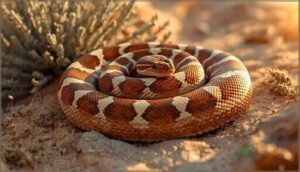
Rosy boas are one of those gentle pet snake breeds that make you wonder why anyone ever felt nervous around snakes.
They stay small — usually 2 to 4 feet — and their slow, relaxed temperament makes handling feel easy once they’ve settled in.
- Color Variations: Earthy stripes in orange, brown, or cream
- Lifespan Expectations: 25+ years with proper care
- Feeding Schedule: Every 7–10 days for juveniles, bi‑weekly for adults
- Molting Patterns: Regular, clean sheds signal good health
Their low‑maintenance care and beginner‑friendly snake species status make them a perfect first reptile.
Garter Snake

burst of wild energy into your home. beginner-friendly snake species stay small — just 1.5 to 3 feet — and their Seasonal Activity makes them fun to watch during the day.
Their Water Needs are simple, and Lifespan Variability runs 6 to 10 years. Active but tameable, they’re a surprisingly docile companion once comfortable with you.
Benefits of Choosing a Calm Snake

Picking a calm snake isn’t just about avoiding bites — it’s about making your whole experience easier and more enjoyable.
A gentle snake means less stress for both of you, and that makes a real difference day-to-day.
Here’s a look at the key benefits you’ll actually notice.
Reduced Bite Risk and Stress
One of the biggest worries new owners have is getting bitten — and honestly, it’s a fair concern.
But with docile companion species like corn snakes and ball pythons, bites are rare and feel more like a light pinch than anything serious.
Proper hide placement, temperature regulation between 75–90°F, and noise reduction all keep stress low, making these beginner-friendly snake species genuinely safe handling partners.
Easy Handling and Socialization
Handling frequency matters more than you’d think. Gentle pet snake breeds like corn snakes and ball pythons have impressive handling tolerance — short, consistent sessions of 5–10 minutes build real trust over time.
Gradual acclimation through trust building techniques, quiet environments with environment enrichment, and reading body language cues make snake socialization surprisingly smooth.
Snake temperament improves noticeably with patience and beginner-friendly snake species reward that effort quickly.
Ideal for Families and Children
That calm demeanor you’ve been building with consistent handling. It pays off when kids are involved.
Corn snakes and ball pythons are genuinely great family pets — their gentle pet snake breeds reputation holds up in real life.
Age-appropriate handling with clear safety guidelines, handwashing protocols after every session, and educational activities around feeding make pet integration smooth.
Most kids eight and older do really well.
Low-Maintenance Care Requirements
Good news — gentle snakes don’t demand much from you daily. Their calm temperament means less stress all around, and their simple dietary needs keep routines manageable.
Here’s what low-maintenance care actually looks like:
- Minimal lighting — basic fixtures work fine
- Simple substrate — aspen shavings or paper towels
- Basic humidity — light misting keeps levels right
- Easy water — fresh bowl, changed regularly
- Low-cost heating — under-tank heaters do the job
Beginner-friendly snake species really are easy to care for.
How to Choose The Right Gentle Snake

Picking the right snake isn’t just about looks — it’s about finding one that actually fits your life. A few key things will help you make a smart, confident choice.
Here’s what to look at before you bring one home.
Assessing Temperament Before Purchase
Before you bring a snake home, spend time watching how it actually behaves.
Ask the seller pointed Seller Questions — how often it’s handled, whether it strikes during routine care.
Run quick Handling Tests yourself: a relaxed snake flows through your hands loosely.
Read Body Language Cues like slow tongue flicks versus tight S-coils.
Captive-Bred Indicators and low Stress Signs confirm a genuinely docile snake species.
Finding Reputable Breeders
Once you’ve spotted a calm snake, finding the right source matters just as much.
Look for Breeder Transparency — someone who freely shares hatch dates, feeding records, and health guarantees.
Community Reputation counts too; MorphMarket reviews and reptile forums quickly reveal who’s trustworthy.
Ethical sourcing means captive bred snakes only, full Legal Compliance, and open Facility Tours.
Shady sellers dodge questions. Good breeders don’t.
Size, Lifespan, and Care Needs
Size is the first thing worth thinking about. Corn snakes reach 4–6 feet, while rosy boas stay under 3 feet — so your enclosure volume and snake enclosure setup needs vary considerably.
Snake lifespan runs long too; ball pythons can live 30+ years.
Feeding frequency, temperature gradient, growth rate, and health monitoring all stay manageable with these beginner-friendly snake species, making low‑maintenance care genuinely achievable.
Tips for Caring for Docile Snake Breeds
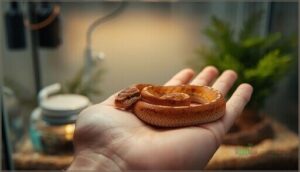
Getting the care basics right makes all the difference for a happy, healthy snake. It’s easier than you might think once you know what to focus on. Here’s what every new snake owner should keep in mind.
Proper Enclosure Setup
Think of your snake’s enclosure as its whole world — so set it up right.
Aim for at least a 48x24x24 cm space, with a temperature gradient from a warm side (28–32°C) down to a cooler zone.
Humidity control, substrate variety like aspen or coconut husk, and enrichment structures keep your snake comfortable and curious.
Don’t forget two hiding spots.
Handling and Building Trust
Building trust with your snake starts slow — and that’s a good thing. A first-contact routine means leaving your new snake unhandled for five to seven days first.
Then use the side-approach technique, moving calmly from the side rather than above.
The slow-lift method, supporting its whole body smoothly, keeps docile snake species relaxed.
Consistent timing and positive enclosure presence make handling feel predictable, not stressful.
Feeding and Diet Considerations
Feeding your snake doesn’t have to feel complicated.
Stick to frozen-thawed rodents — they’re safer than live prey and reduce injury risk for both of you.
Follow these feeding basics:
- Match prey size to your snake’s girth — no bigger than 1.5x its widest point
- Feed juveniles every 5–7 days; adults every 10–14 days
- Always thaw prey in lukewarm water, never a microwave
Monitoring Health and Wellbeing
Your snake can’t tell you when something’s wrong — so you have to learn to read the signs. Watch for wheezing, nasal bubbles, or open‑mouth breathing as key Respiratory Signs.
Do regular Parasite Checks for tiny moving dots on scales. Track Shedding Indicators like cloudy eyes and stuck skin. Weight Tracking monthly catches problems early. Stick to a Vet Schedule — annual checkups keep your snake thriving.
Frequently Asked Questions (FAQs)
What is the least aggressive snake to own?
Corn snakes earn the top spot for being the least aggressive.
They’re docile snake species that almost never bite, preferring retreat over defense — making them the go-to beginner-friendly snake species for building owner confidence.
How long do calm snake breeds typically live?
Calm temperaments actually come with a bonus: longevity. Most captive snakes outlive their wild counterparts by years. Ball pythons can reach 30 years, while corn snakes comfortably hit 15–
Can gentle snakes coexist with other household pets?
gentle snakes can coexist with other pets — but it takes real effort.
Enclosure security, supervision guidelines, and smart pet training make all the difference in keeping everyone safe and stress‑free.
How often do beginner snakes need veterinary checkups?
Your snake needs an Initial Vet Visit within the first week. After that, an Annual Health Review keeps things on track.
Young Snake Exams and Parasite Screening Schedule checks help catch issues early.
Conclusion
Funny how snakes got stuck with a villain reputation — when most of them just want a warm perch and a quiet life.
The calmest snake breeds for beginners prove that the dangerous exotic pet story was never really accurate. Pick the right species, handle consistently, and respect their signals.
What you’ll actually get isn’t a coiled hazard — it’s a surprisingly chill companion who asks for very little and delivers something genuinely unexpected: peace.
- https://reptifiles.com/corn-snake-care-guide/
- https://www.thebiodude.com/blogs/snake-caresheets/care-guidelines-for-corn-snakes
- https://www.petmd.com/reptile/corn-snake-care-sheet
- https://ghostconstrictors.com/blogs/news/best-snakes-for-handling
- https://www.thecritterdepot.com/blogs/news/kenyan-sand-boa-care-guide-the-critter-depot