This site is supported by our readers. We may earn a commission, at no cost to you, if you purchase through links.
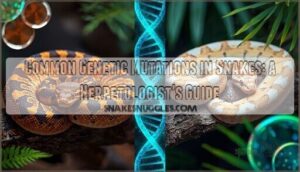
A single nucleotide change in a melanin pathway gene transforms a brown corn snake into a vibrant albino, its scales glowing amber and cream instead of earth tones. These common genetic mutations in snakes don’t just alter appearance—they rewrite the biological instruction manual encoded in deoxyribonucleic acid sequences, affecting everything from pigment production to neural development.
While captive breeding programs have amplified mutation visibility, creating the stunning morphs you’ll encounter at reptile expos, these genetic variations carry implications that extend beyond aesthetics. Understanding the molecular mechanisms, inheritance patterns, and health consequences of snake mutations allows you to make informed breeding decisions, recognize potential complications, and appreciate the delicate balance between creating desirable traits and maintaining genetic integrity in both captive populations and wild conservation efforts.
Table Of Contents
- Key Takeaways
- What Are Genetic Mutations in Snakes?
- Key Genetic Principles in Snake Breeding
- Common Color and Pattern Mutations
- Popular Snake Morphs by Species
- Health and Ethical Implications of Mutations
- Frequently Asked Questions (FAQs)
- What are the most common genetic mutations?
- What are the most common diseases in snakes?
- What are the genetics of a snake?
- Do snakes have mutations?
- What are the 4 major types of genetic mutations?
- What are 5 genetic mutations?
- Is a two headed snake a genetic mutation?
- How do snake mutations affect venom production?
- Can genetic mutations improve a snakes immune system?
- Do weather conditions influence mutation expression in snakes?
- Conclusion
Key Takeaways
- Genetic mutations in snakes arise from DNA alterations, such as point mutations, insertions, and deletions, that affect pigment production, pattern expression, and neural development, with inheritance following predictable Mendelian patterns through dominant, recessive, and co-dominant mechanisms.
- Common color morphs, including albinism, hypomelanism, axanthic, and piebald traits, result from specific melanin pathway disruptions, each requiring particular allele combinations (homozygous recessive or heterozygous) to manifest visibly in offspring.
- While captive breeding has amplified desirable aesthetic mutations in species like ball pythons, corn snakes, and boa constrictors, certain genetic variations carry serious health consequences, including immune deficiencies, metabolic disorders, neurological impairments, and cranial malformations, that demand careful screening.
- Responsible breeding practices require maintaining genetic diversity through detailed pedigree tracking, implementing outcrossing strategies to prevent inbreeding depression, and prioritizing wild population conservation over commercial morph production to ensure long-term species resilience.
What Are Genetic Mutations in Snakes?
When you examine a snake’s vibrant color or unusual pattern, you’re witnessing the visible expression of genetic mutations, alterations in deoxyribonucleic acid sequences that change how proteins are produced and, ultimately, how physical traits manifest.
Understanding these genetic changes is key to mastering python snake morph identification, helping you recognize how specific mutations create the stunning morphs breeders and enthusiasts seek.
These mutations arise through various mechanisms during cellular replication and gametogenesis, creating the foundation for the diverse morphs you encounter in both wild populations and captive breeding programs. Understanding what these mutations are, how they occur within snake genomes, and the principles governing their inheritance will equip you with the knowledge to recognize, predict, and work responsibly with these fascinating genetic variations.
Definition of Genetic Mutations
A genetic mutation is a permanent alteration in the deoxyribonucleic acid sequence of a snake’s cells, affecting nucleotide arrangements through substitutions, insertions, or deletions.
You’ll encounter germline mutations, which are heritable changes present in every cell and passed to offspring, and somatic mutations, which occur in body cells but aren’t inherited.
These DNA alterations create the genetic variations and morphs you observe in captive populations. Changes like these can affect protein production and cellular function, ultimately influencing a snake’s physical traits and health.
How Mutations Occur in Snake DNA
Understanding the origin of these alterations requires examining several molecular mechanisms that drive snake genetics and genome evolution. Point mutations arise when DNA replication errors or chemical damage change a single nucleotide base, altering codons and potentially affecting gene expression in proteins.
You’ll also find:
- Insertion and deletion mutations that shift reading frames
- Copy number variations affecting coloration gene dosage
- Transposable elements disrupting regulatory regions
- Epigenetic factors influencing mutation rates through environmental stresses
These chromosome mutations collectively shape genetic variation and molecular genetics in captive populations, demonstrating how genetic drift operates at the cellular level.
Breeders and enthusiasts can explore common genetic mutations in snakes to better understand their effects on traits, health, and breeding practices.
Inheritance and Transmission of Mutations
Once mutations embed themselves in the germ line—that’s, in eggs or sperm—they become heritable and follow predictable patterns you can map with a Punnett square.
Genes controlling traits pass from parent to offspring according to Mendelian rules, with dominant mutations requiring only one copy for gene expression while recessive variants demand two. Mutation rates, heritability, and even epigenetics influence genetic drift in captive lineages, shaping genetic inheritance across generations.
Key Genetic Principles in Snake Breeding
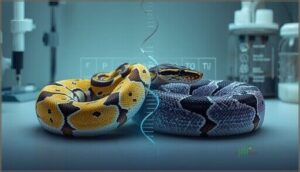
Before you start pairing snakes to chase that perfect morph, you need to understand how genes actually work.
You’ll also want to get familiar with how snake breeding cycles work so you can time your pairings right.
The mechanics of inheritance aren’t mysterious—they follow predictable patterns that determine which traits show up in your hatchlings and which stay hidden.
Let’s break down the three fundamental principles that govern every breeding outcome you’ll encounter.
Dominant Vs. Recessive Genes
When you’re breeding snakes, understanding allele interactions and gene dominance determines which traits appear in offspring. A dominant allele produces its characteristic trait when present in just one copy of the chromosome pairing, while a recessive allele requires two copies—one from each parent—to express itself in the genotype.
This fundamental principle of genetic expression governs trait inheritance across generations, shaping the genetic mutations you’ll observe in your breeding programs.
Homozygous and Heterozygous Traits
Your snakes carry genes in matched pairs, and zygosity testing reveals whether those chromosome pairing arrangements are identical or different. When you breed for specific traits, you’ll encounter three fundamental patterns of genetic expression.
- Homozygous dominant individuals possess two identical dominant alleles, consistently producing offspring that display the dominant phenotype.
- Homozygous recessive snakes carry two recessive alleles, requiring both copies for trait inheritance to manifest visible genetic mutations.
- Heterozygous specimens harbor one dominant and one recessive allele, displaying the dominant trait while potentially passing hidden recessive genes to future generations.
Co-dominance and Polygenic Inheritance
When codominant alleles interact, you’ll observe both traits expressed simultaneously in heterozygous snakes, creating distinctive combined phenotypes that differ from simple dominance patterns.
Polygenic inheritance involves multiple genes contributing additive effects to produce continuous trait variation, where epistasis analysis reveals how gene expression at different loci modifies final outcomes. This genetic complexity generates the impressive spectrum of color and pattern mutations you encounter in modern herpetoculture.
Common Color and Pattern Mutations
When you start working with snake genetics, you’ll quickly notice that mutations affecting color and pattern are among the most common and visually dramatic variations in captive populations.
These mutations result from alterations in melanin production, pigment deposition, or pattern expression during embryonic development. Let’s examine three fundamental mutation categories that form the foundation of modern snake breeding programs.
Albinism and Hypomelanism
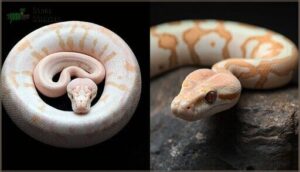
When pigment fades to near absence, you’re witnessing two fascinating manifestations of melanin reduction in reptile genetics: albinism and hypomelanism. Albino genetics involves complete loss of melanin, producing pale scales, pink or red irises, and pronounced eye sensitivity to ultraviolet light.
Hypomelanistic traits, by contrast, represent partial melanin loss that yields:
- Lighter base coloration with preserved pattern outlines
- Cream or pale yellow tones instead of dark pigments
- Reduced contrast compared to wild-type individuals
- Maintained scale pigmentation integrity
- Less severe visual impairment than full albinism
Both follow autosomal recessive inheritance, requiring two copies of mutant alleles for phenotypic expression.
Axanthic and Anerythristic Traits
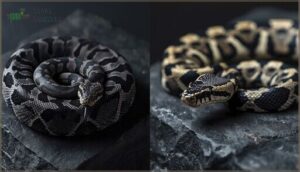
When xanthophores and erythrophores disappear from your snake’s chromatic palette, you’re observing axanthic and anerythristic genetic expression—two recessive mutations that strip warm tones and leave behind monochromatic elegance.
| Mutation Type | Pigment Effect |
|---|---|
| Axanthic | Removes yellow and red pigments, retaining melanophores and iridophores for gray-black-brown tones |
| Anerythristic | Eliminates red pigments while preserving blacks, browns, and yellows depending on species |
| Combined | Produces snow-like morphs with high-contrast monochrome patterns through dual recessive inheritance |
Both require homozygous allele pairs for phenotypic expression, making pedigree tracking essential in reptile genetics and trait inheritance programs.
Pied and Pattern Morphs
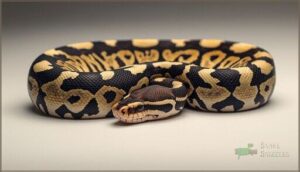
When irregular white patches interrupt your snake’s typical melanin distribution, you’re witnessing pied genetics—a recessive mutation that suppresses pigment cells in localized dermal regions, producing striking pattern morphs with unique genetic markers.
- Ball pythons exhibit classic piebald patterns where homozygous individuals display extensive white areas contrasting sharply with base coloration, demonstrating how traits intensify through morph breeding
- Pattern expression varies considerably due to modifier genes influencing white coverage, creating unpredictable color variance even within identical genotypes
- Combining pied with other genetic mutations produces complex phenotypes that showcase the interplay between multiple recessive genes affecting chromatic development
Popular Snake Morphs by Species
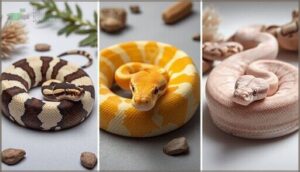
Now that you understand the fundamental genetic mechanisms behind snake mutations, you can explore how these principles manifest across different species in the hobby. Each species presents its own unique palette of morphs, shaped by specific genetic mutations that have been selectively bred and refined over decades.
The following sections examine three of the most popular species in herpetoculture, highlighting the distinctive morphs that have captivated breeders and collectors worldwide.
Ball Python Genetic Morphs
Ball pythons represent one of the most genetically diverse species in captive snake breeding, with hundreds of morphs documented through systematic genetic testing.
You’ll encounter dominant traits like Mojave and Pastel, recessive genes such as albinism, and co-dominant patterns including the Pied morph. Understanding color genetics and pattern inheritance allows you to develop targeted breeding strategies, predicting offspring outcomes by tracking allele combinations across generations.
Corn Snake Color Variations
While ball pythons dominate designer breeding, Pantherophis guttatus offers equally impressive genetic color variations through well-documented reptile genetics. You’ll observe amelanistic morphs eliminating dark pigments to reveal vibrant reds and oranges, anerythristic variants producing grayscale bodies with checkered bellies, and Snow morphs combining both traits for high-contrast white appearances.
Corn snakes demonstrate how targeted herpetology genetics creates predictable color patterns across multiple generations.
Boa Constrictor Mutation Examples
Boa constrictors showcase equally compelling genetic mutations in snakes through lineage-specific breeding techniques. You’ll recognize Albino Boas by their creamy yellow bodies with pinkish patterning and complete melanin loss, while Snow Morphs present frosted appearances through reduced contrast and near-white ground coloration.
Key boa constrictor variants include:
- Hypo Jungle morphs blending lighter base tones with irregular saddle connectivity
- Anerythristic specimens lacking red pigment, displaying dark brown to black patterns
- Motley Pattern variations creating circular spots with alternating belly bands
- Lavender phenotypes carrying subtle lilac tints across pattern edges
These genetic mutations in reptiles demonstrate how targeted snake breeding techniques produce predictable morphological outcomes across successive generations.
Health and Ethical Implications of Mutations
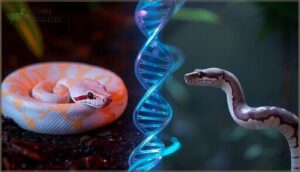
While genetic mutations create the stunning morphs that captivate hobbyists and researchers alike, you can’t ignore the biological consequences that sometimes accompany these alterations in deoxyribonucleic acid sequences. Certain mutations carry inherent health complications, while others raise questions about maintaining genetic diversity and long-term population viability in both captive and wild settings.
Understanding these implications allows you to make informed decisions that balance aesthetic preferences with animal welfare and conservation responsibilities.
Health Issues Linked to Genetic Mutations
You need to understand that genetic mutations in snakes carry real consequences beyond beautiful patterns. Certain morphs show heightened disease susceptibility due to immune pathway alterations, while others face metabolic disorders when enzyme function becomes impaired.
Neural development mutations can trigger tremors or uncoordinated movement, and cranial malformations sometimes accompany pigment pathway disruptions. These breeding consequences demand your careful attention to reptile development and overall genetic health.
Responsible Breeding Practices
Recognizing health risks associated with genetic mutations in snakes, you must prioritize animal welfare and breeder ethics in your reptile breeding and genetics programs. Genetic testing protocols identify carrier animals before pairing, while breeding regulations increasingly require documented health screenings to prevent propagation of detrimental traits in snake breeding and genetics.
- Maintain detailed pedigrees tracking ancestry across at least three generations to monitor inheritance patterns
- Screen offspring for heritable defects including neurological, skeletal, and integumentary abnormalities
- Collaborate with veterinarians to establish humane breeding plans addressing species-specific physiological needs
- Provide prospective buyers with transparent information regarding known lineage health concerns and ongoing care requirements
- Implement outcrossing strategies to introduce new genetic material, preventing inbreeding depression while preserving desirable morphological characteristics
Conservation and Genetic Diversity
Genetic conservation demands balancing captive breeding programs with species preservation in natural habitats, ensuring evolutionary biology and conservation principles guide population genetics decisions. Habitat restoration initiatives maintain gene flow between fragmented populations, while biodiversity management protocols prevent allelic erosion that threatens reptile conservation outcomes.
| Conservation Strategy | Primary Benefit | Implementation Focus |
|---|---|---|
| In situ protection | Maintains natural selection | Corridor establishment between habitats |
| Ex situ breeding | Preserves rare alleles | Genetic screening and lineage tracking |
| Cryopreservation | Long-term germplasm storage | Future restoration potential |
Genetic diversity sustains species resilience, requiring your commitment to conservation efforts that prioritize wild population viability over morph production for commercial markets.
True conservation prioritizes wild population viability over commercial morph production, ensuring genetic diversity sustains species resilience
Frequently Asked Questions (FAQs)
What are the most common genetic mutations?
You’ll encounter albinism, hypomelanism, and axanthic traits most frequently in captive-bred populations, each altering pigment deposition through distinct biochemical pathways that modify melanin, xanthophore, or erythrophore expression in developing epidermal tissues.
What are the most common diseases in snakes?
Your snake’s health can plummet faster than you’d imagine—respiratory issues, mouth infections, skin disorders, parasite infestations, and septicemia pose serious threats, while some genetic mutations in reptiles may predispose individuals to systemic illnesses requiring immediate veterinary intervention.
What are the genetics of a snake?
You inherit traits through paired chromosomes carrying the genetic code that determines coloration, pattern, and physiology. Snake genetics follows heredity patterns where gene expression in the genome produces observable morphs.
Do snakes have mutations?
Yes, snakes do have mutations—natural DNA changes that produce new traits like altered coloration, pattern variations, or scale modifications.
These genetic variations arise from replication errors, environmental factors, or inherited diversity across generations.
What are the 4 major types of genetic mutations?
Genetic mutations fall into four major categories: point mutations that alter single base pairs, insertions and deletions causing frameshift mutations, chromosomal changes affecting large DNA segments, and copy number variations modifying gene duplications.
What are 5 genetic mutations?
You’ll encounter point mutation, frameshift error, nonsense mutation, missense effect, and copy variation most frequently when examining deoxyribonucleic acid alterations that produce albinism, melanism, bicephaly, cyclopia, and scale abnormalities in reptilian specimens.
Is a two headed snake a genetic mutation?
A two-headed snake results from bicephaly, a developmental anomaly during embryo development rather than a heritable genetic mutation, occurring when embryonic cells fail to separate completely, creating conjoined twins sharing one body.
How do snake mutations affect venom production?
Venom gene expression doesn’t stand still—mutations drive toxin variation through gene duplication, regulatory shifts, and positive selection, reshaping snake venom evolution across species, populations, and even individual lifetimes in response to ecological pressure.
Can genetic mutations improve a snakes immune system?
You might wonder whether mutations can boost immunity—and they sometimes do.
Genetic variation in immune receptor genes can strengthen pathogen recognition, adaptive immunity, and overall snake health, though mutation effects aren’t always beneficial to evolutionary adaptation.
Do weather conditions influence mutation expression in snakes?
Weather patterns don’t rewrite genetic mutations, but temperature effects during incubation can shift gene expression in developing embryos, influencing how certain coloration traits manifest—environmental influence shapes phenotype without altering underlying DNA.
Conclusion
The double helix stands as nature’s most intricate blueprint, holding instructions that can shed light on scales in unexpected brilliance or burden organisms with hidden vulnerabilities.
Your grasp of common genetic mutations in snakes prepares you to navigate the intersection of aesthetic possibility and biological responsibility, whether you’re evaluating breeding stock, examining morph health risks, or contributing to conservation genetics.
Knowledge transforms observation into stewardship, ensuring these exceptional variations augment rather than compromise serpentine diversity.