This site is supported by our readers. We may earn a commission, at no cost to you, if you purchase through links.
A snake with cloudy eyes, swollen jaws, and sloughing scales isn’t just having a bad shed. It’s fighting a fungal pathogen, Ophidiomyces ophiodiicola, that invades living tissue and doesn’t stop on its own.
Snake fungal infection spreads fast, and visual diagnosis gets it wrong 42% of the time. By the time most keepers recognize the signs, the disease has already progressed past early intervention.
The good news: a snake fungal infection cure exists, but it demands the right diagnostics, precise antifungal protocols, and enclosure management that eliminates reinfection. Here’s exactly what that looks like.
Table Of Contents
- Key Takeaways
- Can Snake Fungal Infection Be Cured?
- Snake Fungal Disease Symptoms and Diagnosis
- Veterinary Treatment for Snake Fungal Infection
- Enclosure Disinfection and Husbandry During Treatment
- Preventing Reinfection and Monitoring Long-Term Recovery
- Frequently Asked Questions (FAQs)
- Can snake fungal disease be cured?
- What kills a fungal infection naturally?
- Can cryptococcus be cured?
- How to get rid of chytrid fungus?
- How do you treat snake fungal disease?
- How do you cure fingernail fungus?
- Does antifungal treatment work for colubrid snakes?
- Can snake fungus be eradicated?
- What is snake fungal disease?
- What happens if a snake gets fungus?
- Conclusion
Key Takeaways
- Visual diagnosis alone misses snake fungal disease nearly half the time, so always confirm with PCR testing or skin biopsy before committing to a treatment protocol.
- Terbinafine nebulization is the safest and most evidence-backed antifungal option, while voriconazole can be outright lethal in vipers — knowing your snake’s species before choosing a drug isn’t optional.
- Treating the snake without disinfecting the enclosure guarantees reinfection, since Ophidiomyces ophiodiicola spores survive in substrate and surfaces long after your snake appears healed.
- Clinical recovery doesn’t mean the pathogen is gone — post-treatment full-body qPCR swabs are the only reliable way to confirm you’ve actually cleared the infection.
Can Snake Fungal Infection Be Cured?
Snake fungal disease doesn’t have a guaranteed cure, and you need to understand that upfront. Antifungal medications can suppress the pathogen and make it undetectable, but clinical disease often persists even after therapy. Success depends heavily on early detection and the severity of infection at the time of diagnosis.
Catching the infection before it spreads gives you a real fighting chance, so knowing early warning signs of snake fungal disease can make the difference between manageable treatment and an uphill battle.
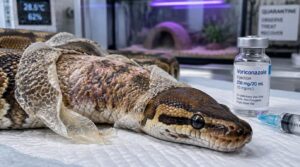
Your treatment options range from prescription antifungals like voriconazole or itraconazole to nebulized terbinafine, each carrying specific requirements and risks. Triazoles require careful monitoring for liver toxicity, especially during the long courses fungal infections demand. Research into voriconazole and itraconazole efficacy has shown that therapeutic plasma concentrations are difficult to achieve consistently across pitviper species, highlighting how much dosing protocols still need refinement.
Quarantine is non-negotiable the moment you suspect infection. It protects your other animals and reduces environmental contamination. Successive molts help shed infected tissue, so actively supporting that process matters. Recovery is possible, but it takes commitment.
Snake Fungal Disease Symptoms and Diagnosis
Catching SFD early is the difference between a full recovery and a losing battle. Knowing what to look for puts you ahead of the disease before it takes hold. Here’s what the progression looks like, when to act fast, and how a vet confirms the diagnosis.
Early and Advanced Symptoms
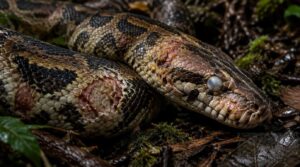
Because early detection is critical, inspect your snake weekly. Look for swollen, white, or cloudy scales at the tips and margins. These skin lesions progress from pale to yellow-brown crusts, then slough off, exposing raw tissue. If lesions are caught early, gently cleaning the affected scales with a reptile-safe antiseptic spray can help prevent secondary bacterial infection while you arrange veterinary care.
Cloudy eyes and facial swelling mark late-stage disease. Abnormal shedding, retained molt bunching on new skin, confirms deep compromise. Use PCR testing to confirm.
For a deeper look at identifying these fungal infections early, this guide on snake skin fungal infections covers symptoms and treatment options.
Emergency Warning Signs
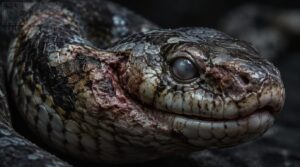
Once skin lesions crust over and start sloughing, act fast. These signs demand immediate veterinary care now:
- Open-mouth breathing or audible wheezing
- Red-tinged ventral scales (petechiae) with lethargy and anorexia
- Facial swelling that visibly misaligns the jaws and occludes the nares
- Cloudy eyes paired with complete food refusal
Don’t rationalize any of these away. Your snake is in serious crisis.
Tests That Confirm SFD
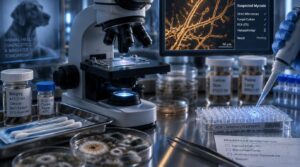
Your vet can’t rely on looking at lesions alone. Visual diagnosis gets it right only 58% of the time, so you always need confirmed results.
Since misdiagnosis is so common, comparing your snake’s symptoms against a guide to skin lesions in pet snakes can help you spot warning signs early.
Mycological diagnostics starts with a skin swab for PCR diagnosis, targeting fungal DNA directly. A skin biopsy drives histopathology examination, revealing hyphal invasion in tissue. Fungal culture with genetic sequencing then confirms the exact pathogen.
Veterinary Treatment for Snake Fungal Infection
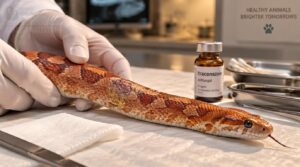
Getting your snake the right veterinary care fast is what separates a manageable infection from a fatal one. Treatment for SFD runs on three fronts: antifungal medication, surgical wound management, and supportive care. Here’s what each one involves.
Prescription Antifungal Therapy
No antifungal medication works instantly against Ophidiomyces ophiodiicola. Terbinafine nebulization is the most evidence-backed treatment option, delivering a 2 mg/mL solution for 20-30 minutes daily across 30-day courses. It won’t erase clinical signs fast, but it sharply reduces fungal load over multiple courses.
Azoles like itraconazole often fail to reach therapeutic concentrations, and voriconazole kills vipers outright. Know your species.
Lesion Debridement and Wound Care
Removing necrotic tissue drives effective therapeutic management. Your vet uses surgical debridement to excise dead material, clearing the wound bed so antifungals reach viable tissue. Don’t rush it. Lesion debridement often requires multiple sessions as margins demarcate.
After each debridement technique, irrigation clears loosened slough. Keep skin lesions moist but not macerated to support granulation. Bandaging must secure without constricting.
Supportive Care During Recovery
Lethargic snakes actually survive treatment at higher rates than alert ones. That’s not a coincidence.
Lethargic snakes outlive their alert counterparts in treatment—and that survival gap is no accident
Supportive care holds everything together. Maintain precise temperature gradients for thermoregulation support, administer fluid therapy to prevent dehydration, and prioritize nutritional support throughout recovery. SFD drains your snake’s metabolic reserves fast.
Stress reduction isn’t optional. A compromised snake in a chaotic enclosure simply won’t recover.
Enclosure Disinfection and Husbandry During Treatment
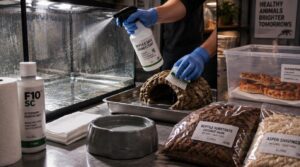
Your enclosure is a battlefield. While you’re treating your snake, that habitat is quietly harboring spores in damp corners, porous hides, and stale water. Environmental control isn’t optional here, it’s critical to snake health.
- Remove your snake first, then strip every hide and soft substrate.
- Clean all organic debris before applying disinfectant, as residue kills its effectiveness.
- Maintain the full labeled dwell time with your chosen solution, then rinse thoroughly.
- Replace standing water between every treatment cycle to cut the microbial load.
Biosecurity during treatment means dedicated tools per enclosure, gloves disinfected between snakes, and handling SFD cases last. Poor habitat hygiene undoes every dose of medication your snake receives. Keep surfaces dry. Keep airflow targeted. Don’t let moisture win.
Preventing Reinfection and Monitoring Long-Term Recovery
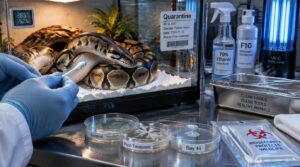
Treatment isn’t the finish line. Environmental spore persistence means Ophidiomyces can survive soil, freezing temperatures, and drought long after your snake appears clear. Clinical remission doesn’t equal eradication.
Run full-body qPCR swabs post-treatment, sampling ventral, dorsal, head, and cloacal surfaces. Visible healing means nothing if fungal hyphae still persist in the deeper epidermis, ready to resurface after molting.
| Monitoring Checkpoint | Action Required |
|---|---|
| Post-treatment confirmation | Full-body qPCR swab |
| New animal intake | 90-day quarantine minimum |
| Handling equipment | 70% ethanol, 5-minute contact |
Apply strict biosecurity measures and maintain habitat hygiene between every animal. Quarantine protocols shield your collection from environmental contamination. Avoid wild-caught prey or substrate. Watch for reduced movement or excessive basking; both signal active infection costs. Epizootic surveillance means staying ahead. A dedicated reptile quarantine tub enclosure makes it far easier to maintain strict separation and disinfect surfaces thoroughly between uses.
Frequently Asked Questions (FAQs)
Can snake fungal disease be cured?
Yes, snake fungal disease can be cured, but waiting guarantees worse outcomes. Don’t assume mild lesions will self-resolve on their own.
Early detection and the right antifungal medications give your snake a real fighting chance.
What kills a fungal infection naturally?
Nothing natural reliably cures a snake fungal infection on its own. Your snake’s immune response needs real help. Environmental factors like reduced humidity limit fungal spore survival, but only antifungal medications can eradicate the pathogen.
Can cryptococcus be cured?
Cryptococcus can be cured, but your snake’s immune status determines the outcome. Animals with localized infection can reach full eradication through targeted antifungal therapy. Immunocompromised animals will more often need ongoing suppression to prevent relapse.
How to get rid of chytrid fungus?
Antifungal baths using voriconazole or itraconazole are the standard treatment for chytrid. Raising habitat temperature above 25°C can help eliminate it too. Don’t delay, because early detection gives you the best chance of full recovery.
How do you treat snake fungal disease?
Treat this like a siege that requires two simultaneous fronts. You need prescription antifungal medications like voriconazole, surgical debridement of active skin lesions, and strict quarantine procedures. Supportive care and enclosure hygiene seal the victory.
How do you cure fingernail fungus?
Oral antifungals like terbinafine are your most reliable weapon against serious infections. They work systemically where topicals simply can’t reach. Keep your nails trimmed and dry, and pair them with a lacquer for best results.
Does antifungal treatment work for colubrid snakes?
Say your corn snake finishes a terbinafine course. Clinical prognosis stays uncertain. Antifungal medications may reduce fungal load, but consistent success treating colubrid snake fungal infection isn’t guaranteed. Always combine treatment options with veterinary supervision.
Since treatment is never a sure thing, the best protection is prevention, and this guide on preventing common snake fungal diseases through proper husbandry shows how humidity, substrate, and cleanliness keep problems from starting.
Can snake fungus be eradicated?
Think of Ophidiomyces ophiodiicola as embers buried in ash. You can suppress it with antifungal medications and early detection, but complete eradication remains out of reach. Pathogen viability in the environment outlasts most treatment efforts.
What is snake fungal disease?
Snake fungal disease is one of the most destructive fungal infections your snake can face. Caused by Ophidiomyces ophidiicola, it attacks keratin in the scales, driving skin lesions, facial swelling, and, without early detection, death.
What happens if a snake gets fungus?
Fungus doesn’t knock politely. Your snake develops skin lesions, crusty patches, and abnormal sheds. Appetite drops quickly. Without prompt antifungal medications and wound care, snake fungal infection spreads fast and becomes much harder to clear.
Conclusion
A keeper in Ohio caught soft facial swelling early, moved fast, and walked out of the clinic with a complete voriconazole protocol in hand. Her ball python recovered fully in just eleven weeks.
That’s what a real snake fungal infection cure looks like: rapid diagnosis, the right antifungals, and a properly cleaned enclosure that gives the pathogen nowhere to hide or return. Don’t wait for lesions to deepen. You have the roadmap. Use it now.