This site is supported by our readers. We may earn a commission, at no cost to you, if you purchase through links.
Your snake’s breathing should be silent. If you hear a faint click, a wheeze, or a wet gurgle with each breath, something has changed inside those lungs.
Snakes hide illness well, and by the time symptoms are obvious, a respiratory infection has often progressed. Their lungs can’t clear mucus the way ours do, so a minor problem can turn serious within days.
Learning to recognize pneumonia in snakes early gives you the best chance of a full recovery. You’ll learn which sounds, postures, and discharges matter, when a vet visit can’t wait, and what you can change in the enclosure today.
Table Of Contents
- Key Takeaways
- How to Recognize Pneumonia Signs in Snakes
- When Your Snake Needs Urgent Veterinary Care
- How Veterinarians Diagnose Pneumonia in Snakes
- What Causes Pneumonia in Pet Snakes?
- How Veterinarians Treat Pneumonia in Snakes
- How to Reduce Your Snake’s Pneumonia Risk
- Frequently Asked Questions (FAQs)
- Will a snakes respiratory infection go away on its own?
- What are the first warning signs of pneumonia?
- What is the most common cause of death in snakes?
- How to treat a respiratory infection in snakes?
- How do you treat pneumonia in snakes?
- How to tell if your snake has a respiratory infection?
- Can pnumonia go away on its own?
- Can snakes with pneumonia spread infection to others?
- How long does typical pneumonia recovery take?
- Are certain snake ages more vulnerable to pneumonia?
- Conclusion
Key Takeaways
- A healthy snake breathes silently, so you should treat any wheezing, clicking, gurgling, open-mouth breathing, mucus discharge, or raised head posture as a sign of respiratory infection.
- You’ll want to call a reptile vet the same day you notice these signs, and head to an emergency vet right away if the tissue inside your snake’s mouth looks blue or grey.
- Your vet will likely use a tracheal wash and culture or PCR testing to pick the right antibiotic, and you’ll need to finish the full 3 to 6 week course even after symptoms fade.
- You can prevent most cases by keeping temperature and humidity correct for your species, checking your thermostat daily, cleaning the enclosure often, and quarantining new snakes for 60 to 90 days.
How to Recognize Pneumonia Signs in Snakes
Snakes hide illness well, so you’ll need to know what to watch for. Most signs of pneumonia fall into two groups, and each one tells you something different about how your snake is coping. The points below walk through breathing changes first, then the physical and behavioral shifts that often follow.
If you’re unsure whether what you’re seeing is serious, this guide to snake respiratory infection symptoms can help you tell mild irritation from a true infection.
Breathing Changes and Unusual Sounds

Silence is normal. A healthy snake breathes quietly, so any audible sound deserves attention. Watch and listen for:
- Wheezing, clicking, or gurgling sounds during breathing.
- Open-mouth breathing, often with a stretched neck.
- Visible effort with breathing, like heaving ribs.
These signs often point to a respiratory infection, especially after a temperature drop. Note when sounds start. Timing helps your vet.
Mucus, Posture, and Behavior Changes

Check your snake’s face and body next. Mucus bubbles or discharge from the nose or mouth, especially if it’s stringy and doesn’t clear up, often signals infection.
You may also see head elevation or a stretched neck posture, as your snake tries to open its airway. Elevated posture like "stargazing," along with open-mouth breathing and gurgling, is usually a sign that a respiratory infection has progressed.
Lethargy and reduced activity often follow, along with poor appetite or refusing food altogether.
When Your Snake Needs Urgent Veterinary Care

Once you’ve spotted the signs above, the next question is how fast you need to act. Some changes can wait for a regular appointment. Others can’t.
If you also see mucus around your snake’s mouth, this guide to snake mucus around the mouth and its common causes can help you tell a minor irritation from a real infection.
Call a vet today if you see any of these:
- Open-mouth breathing that continues at rest
- Wheezing, clicking, or gurgling sounds with each breath
- Mucus bubbles or discharge from the nose or mouth
- Head elevation or a stretched neck posture
- Lethargy and reduced activity alongside any breathing change
Blue or grey tissue inside the mouth means your snake isn’t getting enough oxygen. Go to an emergency vet immediately.
Snakes often look stable while an infection spreads. Don’t wait for a clear diagnosis, and don’t try to match your snake to photos online. Early treatment often prevents a much longer illness.
Snakes often look stable while infection spreads, so don’t wait for a diagnosis, because early treatment prevents a much longer illness
How Veterinarians Diagnose Pneumonia in Snakes
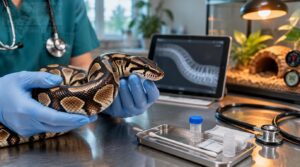
A vet can’t diagnose pneumonia in your snake by listening alone, so expect a step-by-step workup. You’ll play a bigger part than you might think, starting with the history you bring to the appointment. Here’s what to prepare and what testing usually follows.
Preparing Your Snake’s Symptom History
Your ball python refuses a meal, then clicks softly while you handle her. Write that down.
| Sign | What to record | When |
|---|---|---|
| Noisy breathing | Wheezing, clicking, open mouth posture | After handling |
| Discharge | Mucus bubbles from mouth, glottis, nostrils | Color, time |
| Behavior | Head and neck elevated to breathe, refusing meals | Since shedding |
Video clips help, so film episodes and bring temperature logs.
If you’re still gathering supplies, a corn snake starter kit for first-time reptile owners can make it easier to set up a safe, easy-to-clean enclosure from day one.
Imaging, Airway Samples, and Laboratory Tests
You’ll usually begin with an oral exam and radiographs, though early pneumonia often looks normal on film. Then three steps may follow:
- Tracheal wash procedure under sedation to collect deep airway samples.
- Culture or PCR testing identifies the organism and guides antibiotic choice.
- Further imaging or repeat radiographs helps if your snake isn’t improving.
Ask about costs.
What Causes Pneumonia in Pet Snakes?

Pneumonia rarely appears out of nowhere in a pet snake. It usually builds from a handful of problems you can find and fix. Here are the four main causes to check first, starting with infection and moving through your snake’s enclosure setup.
Bacterial Infections
Most pneumonia in pet snakes starts as a bacterial infection, often from gram-negative bacteria like Pseudomonas and Klebsiella. These germs usually live in your snake’s environment and take hold when its defenses drop.
You may hear wheezing, clicking, or gurgling sounds. Your vet will do an oral exam and may order culture or PCR testing before choosing the right antibiotics.
Inadequate Enclosure Temperatures
Say your ball python’s enclosure drops to 72°F overnight after a heater fails. Within two days, you may hear wheezing, clicking, or gurgling sounds and see head elevation or stretched neck posture.
Low enclosure temperatures weaken immune defenses while bacteria keep growing. Check your temperature gradient with two thermometers. Make a temperature adjustment, and call your vet if symptoms appear.
Humidity Imbalances
Humidity works like a thermostat for your snake’s airways. Set it wrong in either direction and the lining suffers.
- Too dry: mucus thickens and tissue abrades.
- Too damp: bacteria and spores multiply.
- Excess humidity for the species invites infection.
- Poor sanitation worsens both extremes.
Good humidity control starts with a hygrometer, enclosure microclimate management, and temperature adjustment when readings drift.
Poor Hygiene And Ventilation
Your snake’s lungs react quickly to the air it breathes. Poor sanitation lets waste break down into ammonia, which irritates the airway and makes infection more likely. A reptile-safe terrarium disinfectant](https://everysimply.com/reptile+terrarium+cleaner+disinfectant+safe+for+snakes/search/snakesnuggles0s-20/) breaks down ammonia-causing waste without leaving harsh fumes that could irritate your snake’s airway.
Add excess humidity for the species and poor ventilation, and stale, damp air traps bacteria. Dirty substrate feeds the problem. Clean the habitat regularly, and remove waste daily. Your snake depends on it.
How Veterinarians Treat Pneumonia in Snakes
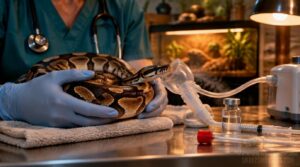
Pneumonia in snakes rarely clears up on its own, so treatment starts fast and runs long.
Your vet will often begin with antibiotic sensitivity testing, using an airway sample to pick a drug that actually works. Injectable antibiotics like ceftazidime or amikacin often run three to four weeks.
Treatment usually includes:
- Nebulized medication, such as gentamicin or F10, to reach infected airways directly
- Fluid therapy, given under the skin or by vein, to correct dehydration
- Meloxicam, carefully dosed, to ease inflammation and pain
- Oxygen therapy in severe cases
Hospitalization may be needed if your snake struggles to breathe.
At home, keep the enclosure within your snake’s preferred temperature zone, adjust humidity to the species, and clean often. Daily lukewarm soaks may also help.
An under tank heater with thermostat holds the warm side of the enclosure steady, so your recovering snake never gets chilled overnight.
How to Reduce Your Snake’s Pneumonia Risk
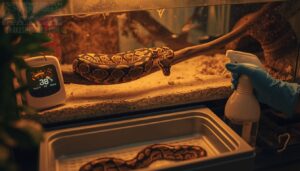
Treatment works, but prevention spares your snake the stress of it. Most cases trace back to husbandry deficiencies you can fix at home.
Start with temperature regulation and humidity control, since both shape how well your snake fights off infection. Then build the habits that protect it:
- Quarantine protocols for new snakes: keep them apart for 60 to 90 days.
- Check your thermostat daily. A faulty one can quietly cook or chill your animal.
- Practice strict enclosure hygiene. Remove waste promptly and sanitize the substrate on schedule.
- Wash your hands before and after handling. You’d hate to carry a pathogen in yourself.
- Learn your snake’s normal breathing, then write down any change.
Small, steady habits often prevent the illness you’d otherwise dread treating.
Frequently Asked Questions (FAQs)
Will a snakes respiratory infection go away on its own?
Hoping it’ll just clear up? It rarely does. Once wheezing or mucus appears, the respiratory infection is established, usually a bacterial infection fed by husbandry stress. Supportive care helps, but you’ll likely need veterinary antibiotics.
What are the first warning signs of pneumonia?
A snake’s breath should be silent, like still water. Ripples mean trouble.
Listen for wheezing, clicking, or gurgling sounds, watch for open-mouth breathing, a head and neck held elevated to breathe, refusing meals, or dehydration.
What is the most common cause of death in snakes?
What actually kills most captive snakes? Septicemia, a bloodstream infection, often follows husbandry deficiencies like poor temperature regulation and weak humidity control.
Immune suppression lets bacteria spread, and pneumonia in snakes often progresses to it.
How to treat a respiratory infection in snakes?
Most bacterial infections need 4 to 6 weeks of treatment.
Your vet combines injectable medications, nebulization therapy, oxygen therapy, supportive care, and enclosure correction. Don’t stop early, even after symptoms improve, since relapse is very common.
How do you treat pneumonia in snakes?
Wondering what actually works? Your vet starts with antibiotic therapy, often injectable enrofloxacin or ceftazidime, plus nebulization therapy, fluids, oxygen therapy when needed, and supportive care like correct temperatures.
Expect treatment to last 3-4 weeks.
How to tell if your snake has a respiratory infection?
Watch for open-mouth breathing, wheezing, clicking, or gurgling sounds, and mucus bubbles or discharge from the mouth, glottis, or nostrils. If your snake’s refusing meals, losing weight, or looking dehydrated, call a reptile vet soon.
Can pnumonia go away on its own?
You may hope it’s a cold, but snake pneumonia rarely clears alone. Untreated snake pneumonia recovery is unlikely, and bacterial, viral, or fungal infections worsen without antibiotics or antifungals. Call your vet within 48 hours.
Can snakes with pneumonia spread infection to others?
Yes, pneumonia in snakes can be contagious, especially when viruses like nidovirus are involved. Isolate sick animals, wash hands between animals, and quarantine new snakes. Bacteria and fungi linger on bowls and substrate, so disinfect everything.
How long does typical pneumonia recovery take?
Think a snake bounces back in days? That’s a myth. Your recovery timeline usually runs 4–6 weeks, since vet-prescribed antibiotics, supportive care, and enclosure correction work slowly in reptiles.
Severe cases may even take months.
Are certain snake ages more vulnerable to pneumonia?
You might think only juveniles get pneumonia. Not quite. Age matters, but husbandry deficiencies drive most cases.
Juveniles and geriatric snakes, whatever the species, often show more immune suppression when enclosure temperatures or humidity slip.
Conclusion
A ball python’s warm side should sit near 90°F, and a drop of just a few degrees may weaken its defenses. Small gaps like that are how respiratory disease often begins.
Now you know how to recognize pneumonia in snakes: listen for clicks and wheezes, watch for mucus and a raised head, and call your vet quickly when breathing changes. Treatment works best when it starts early.
Check your thermometer tonight, then listen for silence.