This site is supported by our readers. We may earn a commission, at no cost to you, if you purchase through links.

A reptile left in a tank that drops below 50°F overnight isn’t sleeping—it’s shutting down. Cold-blooded animals can’t generate their own warmth, so when room temperatures fall, their digestion stalls, their immune system weakens, and their behavior turns sluggish.
Most keepers notice the basking lamp but overlook what happens after it switches off. That’s where the real risk lives.
A good reptile heating pad for overnight temperature drops keeps belly heat stable while your lights are out, giving your animal the thermal floor it needs to stay healthy through the night. The right pad makes that easy.
Table Of Contents
- Key Takeaways
- Best Overnight Reptile Heating Pads
- Why Overnight Heat Matters
- Choosing The Right Pad Size
- Thermostats and Temperature Control
- Safety Features to Compare
- Installation and Heat Placement
- Costs, Efficiency, and Value
- Frequently Asked Questions (FAQs)
- How to keep a lizard tank warm at night?
- Can I leave a heating pad on low overnight?
- Should I turn my geckos heat mat off at night?
- How to heat a reptile enclosure at night?
- Can heating pads work with ceramic heat emitters?
- How long do reptile heating pads typically last?
- Are heating pads safe for aquatic turtle tanks?
- Do heating pads raise electricity bills significantly?
- Can two heating pads run in one enclosure?
- How do I heat stacked enclosures overnight safely?
- Conclusion
Key Takeaways
- Without a thermostat, your heat pad is just a fire hazard waiting to happen—always pair them together.
- Cold nights don’t just make your reptile sluggish; they shut down digestion, weaken immunity, and disrupt hormones.
- Cover one-third to one-half of your tank floor with the mat, keeping the substrate above it thin so that heat actually reaches your animal.
- The REPTI ZOO is the only all-in-one option worth grabbing if you want built-in temperature control without buying extra gear.
Best Overnight Reptile Heating Pads
Not every heat pad holds up when the temperature drops at 2 a.m. These five options cover different tank sizes, budgets, and safety needs — so you can find the right fit without guessing.
Here’s what stood out in 2026.
1. Exo Terra Reptile Heat Mat
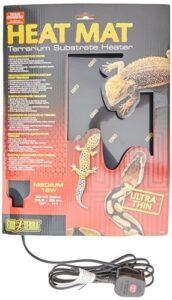
If you’re setting up a small enclosure, this mat is a solid starting point. It runs at just 4 W, measures about 6 × 4.6 inches, and uses a self-regulating carbon fiber element for even heat.
Pair it with a thermostat and check out this ball python lighting and heating setup guide to dial in the right temperature gradient for your enclosure size.
The silicone build is thin, so heat transfers well through the glass. Adhesive backing keeps it locked in place.
Just know it’s single-use placement — pull it off and you’ll likely damage it. Always pair it with an external thermostat.
| Best For | Reptile owners setting up small enclosures for geckos, snakes, frogs, or small turtles who want a simple, low-profile heating solution. |
|---|---|
| Power Draw | 4 W |
| Adhesive Backing | Yes |
| Thermostat Required | Yes |
| Waterproof | Not specified |
| Heating Material | Silicone element |
| Color | Black |
| Additional Features |
|
- Thin silicone build transfers heat efficiently through the tank bottom
- Adhesive backing makes installation clean and hassle-free
- Low 4 W draw keeps energy use minimal for small setups
- Single-use placement — removing it will likely damage the mat and kill the adhesive
- No built-in temperature control, so a separate thermostat is a must
- 4 W may not cut it for larger or heavily insulated tanks, and warm-up can take around 30 minutes
2. iPower Reptile Heat Mat LCD Thermometer
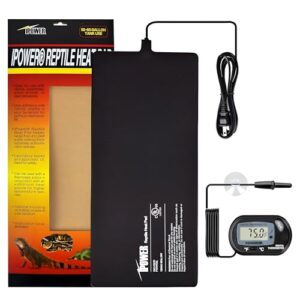
If you need something bigger, the iPower steps up nicely.
The 8×18-inch, 24 W mat covers a solid stretch of floor — great for 50-gallon tanks and larger setups.
It comes with an LCD thermometer, so you can actually see what’s happening under the substrate.
That’s genuinely useful overnight.
The 3M adhesive holds well, and the 6-foot cord gives you flexibility in placement.
One heads-up: the LCD only reads temperature.
You’ll still need an external thermostat to actually control heat.
| Best For | Reptile and amphibian keepers with larger tanks (50 gallons and up) who want reliable floor heat and a built-in way to monitor temps. |
|---|---|
| Power Draw | 24 W |
| Adhesive Backing | 3M adhesive |
| Thermostat Required | Yes |
| Waterproof | Yes |
| Heating Material | PTC element |
| Color | Black |
| Additional Features |
|
- Big 8×18-inch surface covers a lot of ground — solid for larger enclosures
- 3M adhesive keeps it firmly in place for even heat distribution
- Comes with an LCD thermometer so you can actually see what the temperature is doing
- No thermostat — the LCD only reads temp, so you’ll need a separate controller
- Can’t be placed directly on a table or carpet; you have to use the rubber feet or side-mount it
- Not submersible, so you have to be careful around high-moisture setups
3. REPTI ZOO Reptile Heat Mat Thermostat
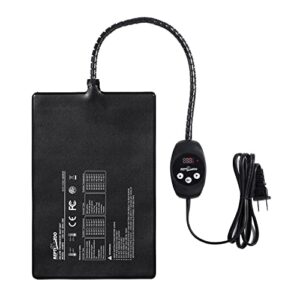
pad that comes with the thermostat? REPTI ZOO is worth a look.
It runs a built-in smart chip that cuts off at 122 °F, plus an independent adjustable controller with a digital display.
Two sizes — 6×8 inches at 11 W or 8×12 inches at 23 W — cover 10‑ to 40‑gallon tanks well.
Carbon film heats evenly, and the 3M adhesive sticks to glass without fuss.
One kit, no extra purchases.
| Best For | Reptile and small animal owners who want an all-in-one heat mat and thermostat combo for glass terrariums in the 10–40 gallon range. |
|---|---|
| Power Draw | 11 W or 23 W |
| Adhesive Backing | 3M adhesive |
| Thermostat Required | No (built-in controller) |
| Waterproof | Not specified |
| Heating Material | Carbon film |
| Color | Black |
| Additional Features |
|
- Dual protection from the built-in smart chip and adjustable controller keeps temps from getting dangerously high
- Carbon film heats evenly and fast, and the 3M adhesive makes setup dead simple
- Digital display shows both Fahrenheit and Celsius, so you’re not guessing
- Some units ship without the 3M adhesive, which kind of defeats the "no extra purchases" appeal
- The Fahrenheit readout can stop working on certain units, leaving you stuck reading Celsius only
- Instructions for switching units and setting the thermostat are thin, so expect a little trial and error
4. Zoo Med Reptitherm Undertank Heater
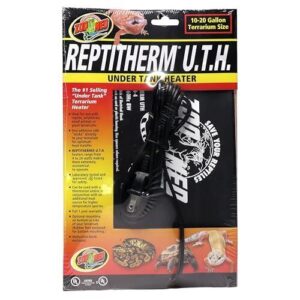
Zoo Med takes a different approach — no bundled controller, but serious build quality.
The ReptiTherm uses a nichrome heating element that sticks permanently to glass, plastic, or wood. It’s UL/cUL listed, which matters for long-term safety. Sizes range from small 8 W pads up to 24 W for larger tanks.
You’ll need a separate thermostat, but that’s the only catch. Pair it with one, and this pad runs reliably for years without much fuss.
| Best For | Reptile and invertebrate owners who already have a thermostat (or plan to buy one) and want a reliable, long-lasting heat pad they can set and forget. |
|---|---|
| Power Draw | 8 W |
| Adhesive Backing | Yes |
| Thermostat Required | Yes |
| Waterproof | Not specified |
| Heating Material | Standard element |
| Color | Black |
| Additional Features |
|
- Heats up fast — usually at full temp within 10–20 minutes, so no long waits during cold snaps
- Low 8 W power draw keeps electricity costs down compared to heat lamps
- UL/cUL listed with a nichrome element that users report running strong for two-plus years
- No thermostat included, and you really can’t skip it — the pad can hit 120°F on its own, which is a burn and fire risk
- Adhesive backing can be finicky on certain surfaces and may need extra tape to stay put
- Some users find it doesn’t always hit the exact temperature set on a regulator, so heating performance can vary a bit
5. iPower Reptile Terrarium Heating Pad
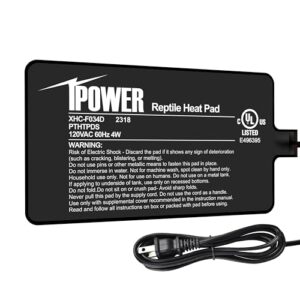
The iPower Terrarium Heating Pad keeps things simple — and that’s the point. It comes in four sizes, from 4 W for nano tanks up to 24 W for 50–60 gallon setups.
Edge insulation channels heat downward where it counts, and understanding how reptile heating pads regulate temperature helps you pick the right wattage for your setup.
The PTC heating film warms up fast, spreads heat evenly, and the 3M adhesive sticks firmly. Even with a quality film like this, pairing it with a thermostat keeps temperatures in the safe range, and you can see our top picks in this guide to the best reptile heat mats for young snake keepers.
Waterproof construction accommodates humid enclosures without issue.
No thermostat included, so you’ll need to grab one separately. But at this price point, it’s hard to argue with the value.
| Best For | Reptile and amphibian owners who want a reliable, affordable heat source and don’t mind pairing it with a separate thermostat. |
|---|---|
| Power Draw | 4–24 W |
| Adhesive Backing | 3M adhesive |
| Thermostat Required | Yes |
| Waterproof | Yes |
| Heating Material | PTC film |
| Color | Black |
| Additional Features |
|
- Heats up fast and spreads warmth evenly thanks to the PTC film
- Four size options mean you can match it to almost any tank
- Waterproof build handles humid enclosures without worry
- No built-in thermostat — you’ll need to buy one or risk overheating
- The strong adhesive makes it tough to move or reuse on a different tank
- Bottom-mounting is a fire risk, so placement options are a bit limited
Why Overnight Heat Matters
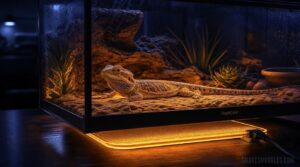
overnight temperature drops are one of the quietest threats to a reptile’s health. When the room cools down, your animal’s digestion, immune system, and energy all take a hit.
Here’s what’s actually happening inside that enclosure after dark — and when a heat pad makes all the difference.
How Nighttime Temperature Drops Affect Reptiles
A 5–10°C overnight drop triggers real metabolic slowdown in your reptile. Digestion slows, digestive efficiency drops, and gut transit stretches by days.
Immune suppression creeps in with chronic cold exposure. Hormonal disruption follows extended cool spells, stalling appetite and growth. Behavioral stress shows up too — watch for sluggishness or refusal to eat.
Overnight temperature maintenance isn’t optional; it’s foundational. Lizards become cold‑stunned near 45 °F (7 °C) as indicated by the cold‑stunning temperature threshold.
Why Reptiles Rely on External Heat
Unlike mammals, your reptile is an ectothermic animal — it can’t generate its own body heat. Every process, from enzyme activity to digestive efficiency, depends on an external heat source. Behavioral thermoregulation kicks in when your pet moves toward warmth to fuel its ectothermic metabolism.
Reptiles can’t generate their own heat — every vital process depends entirely on warmth from the outside
Without overnight temperature maintenance, circadian rhythm breaks down. Consistent heat isn’t a luxury in reptile husbandry — it’s survival.
Signs Your Enclosure Gets Too Cold Overnight
Your reptile tells you when it’s too cold — you just have to know what to look for.
Reduced activity and lethargic posture in the morning are the first red flags. Cold substrate, condensation build-up on enclosure walls, and shallow breathing all signal failing nighttime heating.
Temperature monitoring across your thermal gradient reveals the full picture. Catch these early, and reptile health stays on track.
When Heat Pads Work Best as Nighttime Support
Heat pads shine brightest when overnight heating fills the gap left by basking lamps. They’re ideal for seasonal temperature variation in cooler months, especially when room temperatures dip unexpectedly.
Pair one with a thermostat for energy efficiency and steady output.
Place it near the basking spot side to support behavioral thermoregulation cues.
Good heat retention materials in your setup do the rest.
Choosing The Right Pad Size
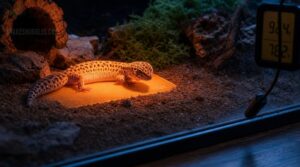
Getting the size right is honestly half the battle with heat mats. Too small, and your reptile won’t get enough warmth; too large, and you risk overheating the whole enclosure.
Here’s what to look for based on your tank size and setup.
The One-third to One-half Floor Coverage Rule
Think of your enclosure like a two-room house — your reptile needs a warm room and a cool one. The heat zone ratio rule says your mat should cover one-third to one-half of the floor. This coverage calculation builds a natural thermal gradient, balancing warm and cool zones without overheating.
Deeper substrate insulation blocks heat transfer, so lean toward half coverage when your bedding runs thick.
Matching Heat Mat Dimensions to Tank Size
Once you know the ratio, dimensions are next. Aspect ratio matching means aligning mat length with your tank’s longest internal side — not the outer frame.
For mid-to-large tanks, proportional width scaling keeps heat distribution modeling even across the warm zone.
Always check mat edge clearance too; a few centimeters of bare glass around the pad prevents hotspots.
Tank shape considerations matter — wide, shallow tanks need wider under tank heating pad coverage than tall, narrow ones.
Wattage Guidelines by Enclosure Volume
Once dimensions line up, wattage selection is next. A rough volume wattage ratio to remember: small enclosures under 2 cubic feet do well with 6–8 watts.
Mid-sized tanks around 3 cubic feet need 15–25 watts. Larger setups above 5 cubic feet often require 20–40 watts total.
Substrate insulation impact matters too — thick bedding absorbs heat, so sizing and wattage guidelines for reptile enclosures should always account for that.
Why Wattage Does Not Equal Safe Temperature
Wattage tells you how much power a pad draws — not how warm your enclosure gets. Heat Transfer Factors, like substrate insulation impact, airflow, and enclosure material, all shape the final temperature.
- Ambient Temperature Influence shifts results nightly
- Thermostat Calibration Importance prevents dangerous overshoots
- Heat Distribution Uniformity varies by pad design
- Thermal gradient depends on placement, not wattage
- Temperature control requires a thermostat, not more watts
Adjusting Size for Deep or Insulating Substrate
Substrate depth quietly steals heat before it ever reaches your reptile. That’s why Deep Bedding Sizing matters — substrate over 3 inches demands a larger mat for proper Surface Warmth Distribution.
Insulation Thickness Guidance: increase pad area 10–20% for every extra 2 inches of bedding.
Pad Length Matching to tank width enhances Thermal Gradient Optimization, keeping Size and wattage selection for heat mats aligned with actual heat transfer needs.
Thermostats and Temperature Control
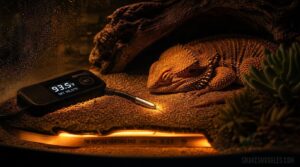
heat pad without a thermostat is just a gamble. Getting the temperature right overnight means knowing how to control it, not just set it and forget it.
Here’s what you need to understand before we break down each option.
Why Every Heat Pad Needs a Thermostat
A heat pad without a thermostat is basically a fire waiting to happen. Without temperature control, pads run constantly, risking thermal runaway, prevention failures, and burning your reptile’s belly.
A digital thermostat or adjustable thermostat cycles power to support metabolic health support and temperature drift mitigation. Auto shutoff safety and alert system integration add backup protection, extending pad longevity extension for years of reliable overnight warmth.
On/off Thermostats Versus Adjustable Controllers
On/off thermostats use binary relay logic — power fully on or fully off. Simple, but that means bigger temperature swings.
Adjustable controllers use proportional control, benefits to modulate output, giving you better setpoint accuracy and real temperature swing reduction. Response time differences matter overnight too — adjustable units react faster and smoother.
For energy consumption and efficiency of heating mats, adjustable thermostat and controller options for heat mats win every time.
Proper Thermostat Probe Placement
Where you put your thermostat probe makes or breaks your overnight setup. Get it wrong, and your digital thermostat reads phantom temperatures.
Follow these three rules:
- Probe Height — rest it 2–4 cm into substrate, never on glass
- Hot Spot Alignment — center it above the mat, where your reptile actually sits
- Substrate Interaction — recheck after any bedding shifts
That’s real temperature monitoring.
Safe Belly-heat Temperature Ranges
Belly heat limits aren’t one-size-fits-all. target temperature range sits between 28°C and 32°C (82°F–90°F) on the warm side, with nighttime variance staying under 2°C.
Species temperature bands matter — leopard geckos and ball pythons both need 88–92°F belly heat.
Never let hotspot detection reveal anything above 35°C. Gradient stability and thermostat safety keep your thermal gradient working exactly as it should.
Using Thermometers to Verify Overnight Stability
Your digital thermometer does the overnight detective work a thermostat can’t. Use two probes — warm side and cool side and log every 30 minutes into a simple log spreadsheet.
Watch for temperature drift beyond ±2°C across consecutive nights. Probe calibration keeps readings honest.
Track overnight trends against species thresholds, and you’ll know exactly whether your heat mat safety setup is holding steady.
Safety Features to Compare
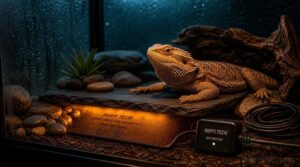
Not all heating pads are built the same for keeping your reptile safe overnight. Some have built-in shutoffs, stronger adhesives, and better waterproofing than others.
Here’s what actually matters when you compare them side by side.
Automatic Shutoff and Overheat Protection
Not every heat pad will protect your reptile if temperatures spike overnight. Only REPTI ZOO and Zoo Med offer a true built-in thermostat cutoff — their thermal cutoff threshold kicks in around 119–122°F.
real fail-safe design. Dual-sensor redundancy, auto shutoff, and proper sensor calibration all matter here.
Without these safety features and overheat protection, you’re relying on a temperature controller alone.
Adhesive Strength and Long-term Durability
A pad that won’t stay stuck is a safety problem, not just an annoyance.
Exo Terra uses a permanent carbon-film adhesive backing, while iPower’s 3M paper adhesive can lose shear strength retention over time — especially with moisture ingress protection being minimal.
Surface roughening benefits installation substantially.
Thermal cycling resilience and UV embrittlement effects matter too.
Heat mat durability depends heavily on adhesive durability from day one.
Waterproof or Water-resistant Construction
Adhesive holding strong is step one — but moisture resistance keeps it safe long-term. Most pads use moisture barrier materials like sealed silicone and polyurethane sealing gaskets along the edges.
Cables exit through waterproof conduits, so cable waterproofing isn’t an afterthought. Many meet IP rating standards around IP44.
Durability under humidity stays solid up to 90% relative humidity — genuinely reassuring for tropical setups.
Safe Use With Glass, Plastic, and Wood Enclosures
Moisture resistance matters — but so does what your enclosure is made of.
Glass tanks need the mat placed away from corners for Glass Crack Prevention. Plastic needs a thin-profile pad for Plastic Warping Mitigation. Wooden vivarium builds require Thermal Barrier Placement between the heat mat and wood for Wood Char Protection.
PVC material pads handle all three well.
Temperature Gradient Management and temperature control keep every surface safe.
Fire-risk Precautions for Wooden Vivariums
Wood is the one material that turns a heat pad into a real fire hazard overnight. Always place non-flammable barriers between the pad and wood, seal enclosure seams with heat-resistant sealants, and swap bare panels for fire-rated wood in heat zones.
Run electrical safety checks on cords regularly, keep a fire extinguisher nearby, and never skip thermostat safety with wooden builds.
Installation and Heat Placement
Getting the mat installed correctly makes a bigger difference than most people expect.
A simple steps before you even plug anything in will determine how well your reptile holds heat overnight.
Here’s what you need to know to do it right.
Following a proper substrate liner cleaning routine ensures every step is covered, from removing waste to fully disinfecting the surface.
Cleaning The Tank Base Before Application
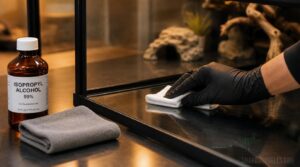
A dirty surface is the number one reason heat mat adhesive fails early. Surface preparation takes five minutes but saves you a lot of headaches.
Follow these installation guidelines for heat mats:
- Wipe the base using the Alcohol Wipe Technique — 70% isopropyl only
- Run the Degreasing Process with a non-abrasive cleaner for oily residue
- Complete Moisture Elimination — air-dry for at least 15 minutes
- Do a quick Residue Inspection under bright light before applying
Attaching Pads Without Air Bubbles
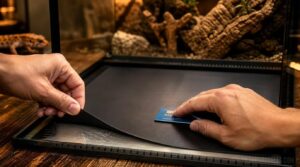
Once the base is dry, bubble-free adhesion starts with one corner. Peel and press slowly, using the Squeegee Application method — a credit card works fine. Push from center outward with the Edge Press Technique to force air out. Do a quick Visual Bubble Check after.
Temperature curing takes 15–20 minutes. Good heat mat adhesive and proper adhesive mounting mean solid adhesive durability long‑term.
Placing The Mat Under One Enclosure End
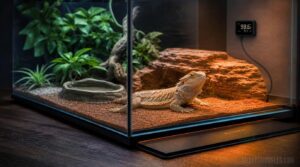
Slide your heat mat under one end only — never the center. This single choice drives Gradient Optimization and facilitates Species Preference for natural thermoregulation.
Keep it toward the back wall for better Airflow Management and Ventilation Clearance away from vents.
Edge Insulation helps maintain stable belly heat.
Your under tank heater and thermostat work best when the temperature gradient has room to breathe.
Creating a Warm Side and Cool Side
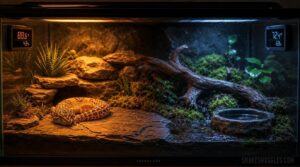
Once your heat mat is in place, the thermal gradient builds itself — warm side up front, cool zone at the far end. Aim for a 10–20°C difference between both sides.
Good Airflow Management and Substrate Thermal Conductivity keep that spread stable overnight. Digital thermometers at each end give you real Gradient Visualization, so temperature regulation stays consistent and your reptile stays in control.
Avoiding Heat Loss From Thick Substrate
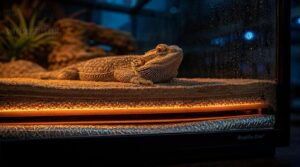
Thick substrate is basically a heat thief. If bedding runs deeper than 3 inches, your heat mat struggles to keep the warm side warm.
substrate thin above the pad — around 1–2 cm works best. Add an insulating underlay placement beneath the mat and consider reflective barrier use to bounce warmth upward.
air gap implementation and smart thermal conductivity selection protect your thermal gradient all night.
Costs, Efficiency, and Value

Running a heat pad overnight doesn’t have to cost much—most setups run less than $3 a month. But the upfront price difference between a basic mat and a thermostat bundle can catch you off guard if you don’t know what to look for.
Here’s a breakdown of real costs, energy use, and which features are actually worth paying for.
Monthly Electricity Costs by Wattage
Running a heat mat overnight costs less than you’d think. A simple Wattage Pricing Model makes it easy to estimate: multiply your mat’s wattage by hours used, then apply your Rate Tier Effects.
An 8W pad running 24/7 uses roughly 5.76 kWh monthly — about $0.69 at $0.12/kWh.
Higher wattage pads cost $1.40–$3.40 monthly.
Thermostat Duty Cycle cuts that further.
Budget Pads Versus Thermostat Bundles
Budget heating solutions start around $15–$40, but you’ll still need a separate digital thermostat — so factor that in. Bundles with an adjustable thermostat cost $50–$150 upfront, yet handle energy consumption and cost of heat mats more efficiently through better cycling.
For long-term reliability and thermostat compatibility, bundles win. User feedback and warranty support tend to be stronger too, with a lower environmental impact overall.
When a Higher-priced Pad is Worth It
Sometimes spending more upfront actually saves you trouble later. Premium reptile heating pads offer real longevity benefits and heat consistency that budget options simply can’t match.
- Heat mat durability — premium material quality resists wear 6–12 months longer
- Thermostat integration — professional calibration with under a 2°C variance across the surface
- Warranty advantages — 2–3 years versus the typical one-year coverage
Those thermal inertia and energy efficiency make premium reptile heating worth every dollar.
Energy-saving Tips for Overnight Heating
Good insulation strategies cut overnight costs fast. Insulate enclosure sides with foam, and thermostat cycling does the rest — no constant full-blast heat needed.
Substrate conductivity matters too; dense, thick layers trap heat inefficiently and spike wattage demand. ambient temperature buffer keeps swings under 5°F.
energy-efficient wiring with steady temperature monitoring, and you’ll realistically trim consumption by up to 30%.
Best Value Features for Safe Nighttime Warmth
Saving money and keeping your reptile safe don’t have to be a tradeoff. The best value pads hit a sweet spot — energy efficient design, reliable temperature control, and heat pad safety built in from the start.
Here’s actually matters at night:
- Carbon Fiber Emission for Heat Distribution Uniformity across the floor
- Rapid Warm-up under 5 minutes for stable nighttime heating
- Fire-retardant Backing with a Modular Power Supply for safe, consistent output
- Bundle options covering budget vs premium heating pad options
- Waterproof, durable builds lasting 3–5 years
Frequently Asked Questions (FAQs)
How to keep a lizard tank warm at night?
Use a heat mat on one side, pair it with a digital thermostat, and seal enclosure gaps. Zoned heating strategy keeps warm and cool sides stable all night without overheating.
Can I leave a heating pad on low overnight?
You can, but only with a thermostat controlling the surface temperature. Without one, heat distribution gets uneven and long-term health suffers.
Always monitor ambient fluctuations and keep temperature control consistent overnight.
Should I turn my geckos heat mat off at night?
It depends on your room temp. If it stays above 18°C at night, you can turn it off. Below that, keep it on with your thermostat set to maintain 72–75°F.
How to heat a reptile enclosure at night?
Place a heat mat under one end of the tank and connect it to a thermostat.
This keeps your nighttime habitat gradient stable, maintains an ambient temperature buffer, and provides energy efficient supplemental heating without overheating.
Can heating pads work with ceramic heat emitters?
Yes, they work great together.
The heat mat manages Conductive Pad Support from below, while ceramic heat emitters provide Radiant Heat Complement from above — giving you solid Heat Gradient Management across the whole enclosure.
How long do reptile heating pads typically last?
Most reptile heating pads last 3–5 years. Premium builds with silicone or reinforced materials push past
Budget options? Expect 2–
Thermostat use, dry conditions, and a basic maintenance routine make all the difference.
Are heating pads safe for aquatic turtle tanks?
Heat pads can work, but only under the basking platform — never submerged.
Look for waterproof or water-resistant models with corrosion resistance.
Always use a thermostat for safe temperature monitoring and reliable heat distribution uniformity.
Do heating pads raise electricity bills significantly?
Most pads run 4–24 watts — barely a blip on your bill. A quick energy audit shows monthly costs of $70–$ Smart usage scheduling and off-peak savings keep it lower.
Can two heating pads run in one enclosure?
You can run two pads in one enclosure. Use separate thermostats for each — that’s your Dual Pad Wiring safety net.
It creates a solid Heat Gradient Placement without hotspots or Circuit Load Balancing issues.
How do I heat stacked enclosures overnight safely?
Stacked enclosures share walls, so one pad can quietly heat two cages at once.
Use barrier placement and insulation layers between units to control heat bleed prevention and maintain separate temperature zoning for each animal.
Conclusion
It’s no coincidence that reptiles in well-heated enclosures eat better, shed cleaner, and stay active longer.
Overnight cold is quiet, but the damage it causes isn’t.
The right reptile heating pad for overnight temperature drops gives your animal a stable thermal floor while you sleep—no guessing, no risk.
Pair it with a thermostat, check your temps, and your setup works while you rest.
That’s not luck. That’s just good husbandry.