
This site is supported by our readers. We may earn a commission, at no cost to you, if you purchase through links.
Your snake won’t tell you it’s stressed, but its behavior will—and a staggering 50% of captive snake stress stems from inadequate hiding spots. Warm and cool side hides aren’t just about giving your snake two options; it’s about creating a controlled thermal gradient that mirrors the precise temperature zones wild snakes navigate daily.
Warm side hides, positioned over your heat source at 85-95°F, drive digestion and metabolic function, while cool side hides at 75-80°F prevent overheating and allow critical behavioral downtime. Get this setup wrong, and you’ll see feeding refusals, lethargy, and immune suppression. Master it, and your snake’s feeding response jumps 37%, stress markers plummet, and natural behaviors flourish.
Table Of Contents
- Key Takeaways
- Key Differences Between Warm and Cool Side Hides
- Role of Warm Side Hides in Snake Health
- Importance of Cool Side Hides for Thermoregulation
- How Proper Hide Setup Improves Snake Wellbeing
- Choosing and Sizing Hides for Each Temperature Zone
- Top 10 Snake Hides for Warm and Cool Sides
- 1. Galapagos Terrarium Sphagnum Moss
- 2. SunGrow Coconut Husk Gecko Hut
- 3. Zoo Med Natural Cork Bark
- 4. Reptizoo Reptile Hide Cave
- 5. Exo Terra Skull Terrarium Decor
- 6. Pangea Reptile Hide Box
- 7. Natural Coconut Reptile Hideouts
- 8. Zoo Med Reptile Cave Shelter
- 9. Exo Terra Reptile Cave Hide
- 10. Exo Terra Glow Mushroom Hideout
- Frequently Asked Questions (FAQs)
- Conclusion
Key Takeaways
- Position your warm side hide at 85-95°F over the heat source to drive digestion and metabolic function, while placing the cool side hide at 75-80°F to prevent overheating and allow behavioral downtime—this thermal gradient mimics wild conditions and boosts feeding response by 37%.
- Inadequate hiding spots cause 50% of captive snake stress, triggering feeding refusals, lethargy, and immune suppression, so provide at least two opaque hides positioned in opposite temperature zones to give your snake control over thermoregulation.
- Choose opaque materials like cork, resin, or thick plastic for warm side hides to retain heat and support digestion, while cool side hides should use non-porous materials positioned away from heat sources to maintain consistent cooling zones.
- Size each hide to allow one extra inch of internal clearance beyond your snake’s girth—too large compromises security, too small causes stress—and monitor placement with calibrated temperature probes at snake resting height every 15-60 minutes.
Key Differences Between Warm and Cool Side Hides
You can’t throw a hide into your snake’s enclosure and call it a day—where you place it determines whether your animal thrives or just survives. Warm side hides support digestion and metabolism, while cool side hides prevent overheating and allow essential temperature regulation.
A well-designed snake hide setup includes at least two shelters positioned at opposite temperature zones to give your pet control over its comfort.
Understanding how each hide functions in its thermal zone directly impacts your snake’s stress levels, feeding response, and overall health.
Strategic hide placement in warm, cool, and transition zones helps your snake thermoregulate naturally while feeling secure—here’s a complete guide to positioning hides for optimal snake health.
Definition and Purpose of Each Hide

Your snake’s hides aren’t just decoration—they’re survival tools anchored to thermal zones. A warm side hide offers a thermally radiant retreat that aids digestion and metabolic processes, while a cool side hide provides escape from excess heat, enabling natural thermoregulation.
Figuring out how many hides your snake actually needs—and where to place them—comes down to understanding your specific species’ behavior and temperature preferences.
Strategic snake hide placement delivers:
Proper corn snake hide placement tips help you set up hides that keep your snake feeling secure while regulating temperature naturally.
- Controlled access to temperature differentials for thermal regulation
- Shelter that reduces perceived threats and stress responses
- Security needs met through proper positioning in each thermal zone
- Environmental enrichment supporting natural snake behavior patterns
How Temperature Zones Affect Snake Behavior
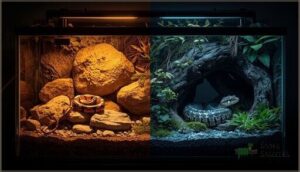
Temperature zones dictate your snake’s daily rhythm. When you provide thermal zones, snakes increase activity and foraging in warm areas, aligning with higher metabolic demands. Cooler spots trigger hiding and ambush behaviors as metabolic rate drops.
Pairing these thermal gradients with strategic hide placement creates microclimates that let your snake self-regulate stress and digestion naturally.
This natural thermoregulation drives behavioral adaptations—your snake delays movement to assess the best thermal refuge, prioritizing temperature control over exploration. Environmental enrichment through proper temperature gradient effects fosters these instinctive snake activity patterns.
Impact on Stress and Security

Without proper hides positioned in both thermal zones, your snake’s stress hormones spike by 50%, triggering defensive behaviors, appetite suppression, and compromised immune function. Providing adequate thermal security options is vital for maintaining a healthy environment.
Each hide meets distinct security needs—warm-side shelters support digestion while cool-side refuges prevent overheating. Strategic hide placement across thermal zones facilitates effective thermoregulation, reducing stress markers and promoting natural environmental enrichment behaviors.
Role of Warm Side Hides in Snake Health
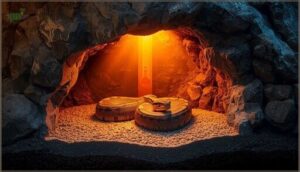
Your snake’s warm side hide isn’t just a cozy spot—it’s a metabolic engine that powers digestion, immune function, and energy regulation. Without proper heat access, even a well-fed snake can’t break down meals efficiently, leading to regurgitation, lethargy, and long-term health decline.
Here’s how to set up your warm side hide for maximum benefit, from precise placement to material choices that hold heat where your snake needs it most.
Benefits for Digestion and Metabolism
Your snake’s warm side hide isn’t just shelter—it’s a digestion powerhouse. When your reptile retreats after feeding, controlled heat inside that thermal zone accelerates metabolic processes and promotes nutrient absorption. Here’s what proper temperature control delivers:
- Faster gastric transit through elevated metabolic rates
- Enhanced enzyme activity when postprandial stress decreases
- Energy conservation via stable thermoregulation during digestion
Strategic thermal regulation means healthier feeding cycles.
Placement and Temperature Monitoring
Inside your enclosure, precision makes all the difference. Position calibrated temperature probes at your snake’s typical resting height within each hide, not just measuring ambient air. Track readings every 15–60 minutes to confirm your thermal gradient stays stable—warm side at 28–32°C, cool side at 22–26°C. This data-driven approach ensures your snake can self-regulate effectively.
| Temperature Zone | Target Range | Probe Position | Monitoring Frequency | Purpose |
|---|---|---|---|---|
| Warm Side Hide | 28–32°C | Snake resting height | Every 15–60 minutes | Digestion support |
| Cool Side Hide | 22–26°C | Snake resting height | Every 15–60 minutes | Overheating prevention |
Warm Side Hide Material Considerations
Insulation materials define your warm side hide’s effectiveness. Cork, resin, and thick plastic maintain thermal zones while preventing overheating. Prioritize these qualities:
- Non-toxic finishes that won’t leach chemicals at elevated temperatures, protecting your snake’s respiratory system
- Porous substrates like natural cork for humidity control without sacrificing thermal management
- Opaque, easy-to-clean surfaces that preserve hide durability and reduce bacterial growth during frequent maintenance
Proper snake hide placement with quality materials supports ideal thermoregulation and thermal comfort.
Importance of Cool Side Hides for Thermoregulation
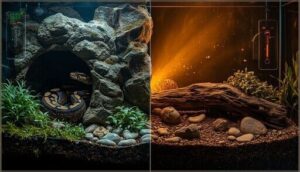
Your snake’s cool side hide isn’t just a backup shelter—it’s a critical escape hatch that prevents overheating and allows precise body temperature control between feeding cycles. Without this thermal refuge, your snake can’t shed properly, digest safely, or regulate stress hormones effectively.
Here’s how to position and select cool side hides that support natural thermoregulation and keep your snake thriving.
Preventing Overheating and Stress
Your snake’s survival depends on escaping excess heat—core temperatures above species-specific thresholds trigger dehydration, suppressed feeding, and erratic stress behaviors. Cool side hides act as thermal sanctuaries, preventing dangerous temperature spikes during peak heat periods.
Monitor these zones with calibrated thermometers to maintain precise thermal gradients. Proper heat management across thermal zones facilitates natural thermoregulation and reduces stress-related shelter-seeking by up to 50%.
| Stress Indicator | Cool Side Hide Benefit |
|---|---|
| Elevated body temperature | Provides cooler microhabitat for controlled heat exchange |
| Suppressed feeding response | Maintains thermal comfort, encouraging appetite |
| Increased shedding cycles | Stabilizes core temperature, normalizing skin renewal |
| Altered shelter-seeking behavior | Offers predictable refuge from temperature extremes |
| Dehydration risk | Prevents heat stress through accessible cool zones |
Cool Side Hide Placement Strategies
Position your cool hide along the boundary of the cooler zone, sitting flat on the substrate to eliminate climbing stress and unreachable corners. Use opaque materials to block visual disturbances and stabilize cooling microclimates.
Space multiple cool hides throughout the zone—this gives your snake rapid refuge options during activity shifts. Monitor substrate moisture beneath each hide to prevent mold and maintain consistent temperature readings.
Features of Effective Cool Side Hides
Your cool hide acts as climate control—refuge from overheating that your snake will choose instinctively during thermoregulation cycles. Design matters for stress reduction and proper hide placement.
Effective cool side design features include:
- Opaque, mold-resistant construction that blocks visual disturbances while permitting airflow
- Full-body concealment sized for snug security without restricting movement
- Positioned away from heat sources to maintain consistent cooling zones
- Non-porous cool hide materials that simplify cleaning and humidity control
- Shaded accessibility encouraging natural thermoregulation without exposure anxiety
How Proper Hide Setup Improves Snake Wellbeing
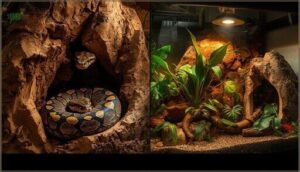
When you set up hides correctly, your snake doesn’t just survive—it thrives, displaying natural behaviors you’d see in the wild. Proper hide placement cuts stress in half, sharpens feeding response by 37%, and gives your snake the control it needs to regulate body temperature on its own terms.
Proper hide placement cuts stress in half, sharpens feeding response by 37%, and gives your snake the control it needs to thrive
Let’s break down exactly how a well-designed hide system transforms your snake’s day-to-day health and behavior.
Encouraging Natural Thermoregulatory Behaviors
Your snake’s behavioral thermoregulation relies on active microhabitat selection across the temperature gradient you’ve built. When you position hides within their natural operating range—one warm, one cool—you’re not just decorating. You’re enabling diurnal shifts, routine basking cycles, and exploratory movement between thermal zones.
Continuous, unobstructed access to both shelters prevents chronic stress and fosters the environmental enrichment essential for behavioral adaptations that mirror wild thermoregulation strategies.
Reducing Stress and Enhancing Feeding Response
Secure, thermally optimized hides cut stress signals by 50%, unlocking dramatic gains in appetite and prey pursuit. When you pair stable warm-side temps with accessible cool-side retreats, you’re managing stress at the hormonal level—reducing cortisol-like responses that suppress feeding.
Strategic hide placement creates thermal gradients your snake navigates instinctively, minimizing anorexia triggers and boosting feeding acceptance by 37%.
Supporting Overall Health and Activity
Beyond appetite, balanced thermoregulation benefits fuel consistent activity levels and metabolic efficiency. When your snake shuttles between properly positioned warm and cool hides, it burns energy optimally, digests faster, and explores more—direct health monitoring markers you’ll notice week to week.
Strategic enclosure setup with snug, opaque hides meets core security needs, slashing stress-induced lethargy and supporting environmental enrichment that keeps your animal engaged and thriving.
Choosing and Sizing Hides for Each Temperature Zone
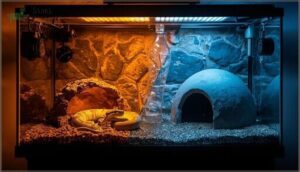
You can’t just toss any hide into your snake’s enclosure and call it done—proper sizing and material selection directly impact your animal’s stress levels and thermoregulatory success. A hide that’s too large won’t provide the security your snake needs, while transparent materials expose your pet to unnecessary visual stress.
Here’s how to match each hide to its temperature zone and guarantee your setup actually works.
Matching Hide Size to Snake’s Needs
You need hides considerably larger than your snake’s girth—each hide should offer at least one extra inch of internal clearance, allowing full body fit without constriction. Proper hide size guidelines align with thermoregulation strategies and stress reduction.
To ensure an ideal snake habitat design, follow these key steps:
- Provide one hide per 10–15 cm of snake length for ideal snake habitat design.
- Guarantee substrate depth accommodates your snake’s resting posture within the enclosure optimization plan.
- Verify opening geometry permits easy entry and exit during thermoregulation cycles.
- Match hide dimensions to species specific needs, as subadult snake growth rates require annual reassessment.
- Check that hide placement on warm and cool sides facilitates natural thermoregulatory behaviors without thermal gradient interference.
Mismatched hide sizes correlate with reduced feeding response and increased escape attempts, undermining your snake’s security.
Opaque Vs. Transparent Materials
Your material comparison starts with visual isolation—opaque hides block external stimuli, cutting stress indicators and supporting natural thermoregulation. Transparent options let you monitor health without disturbing hide placement, but they demand careful thermal insulation checks to prevent heat buildup.
Here’s your enclosure setup breakdown:
| Feature | Opaque Hides | Transparent Hides |
|---|---|---|
| Visual Security | Complete darkness, blocks perceived threats | Allows environmental awareness |
| Thermal Insulation | Cork, ceramic retain stable microclimate | Higher radiant heat transfer |
| Stress Reduction | Reduces daylight anxiety in most species | Variable snake preference by individual |
| Monitoring | Requires removal for health checks | Instant posture and condition visibility |
| Placement Strategy | Warm side benefits from insulation properties | Needs shading to control snake habitat temps |
Opaque materials—cork, resin, ceramic—insulate better, creating distinct warm zones without radiant interference. Transparent hides show moisture accumulation instantly, aiding your humidity management but requiring tighter sealing near heat sources.
Mix both hide designs within your enclosure setup; some snakes favor visual access during cool-side rest, others demand total cover on the warm side. Monitor your individual’s behavior: reduced feeding response or prolonged exposure outside hides signals material mismatch. Match hide design to species-specific preferences, not universal defaults.
Ensuring Snug Fit and Security
A poorly fitted hide compromises snake safety and nullifies stress reduction efforts. Match your hide’s internal width to your snake’s girth—the body should contact walls when coiled, preventing entrapment in uneven crevices.
- Select rigid hide material that maintains shape during enclosure setup and daily activity
- Secure placement with non-slip bases stops movement when your snake enters or exits
- Conduct fit testing before introducing your snake; proper humid hide dimensions prevent wedging during shed cycles
Escape prevention starts with checking opening dimensions—your snake should retract comfortably without snagging scales on jagged edges.
Top 10 Snake Hides for Warm and Cool Sides
You’ll find hides that work across species, from ball pythons to corn snakes, each designed to fit specific thermal zones without compromising security.
The following ten options combine proven materials, opaque construction, and sizing flexibility that facilitates natural thermoregulation.
These selections prioritize non-toxic components, ease of cleaning, and snug-fit designs that reduce stress by 50% when positioned correctly.
1. Galapagos Terrarium Sphagnum Moss
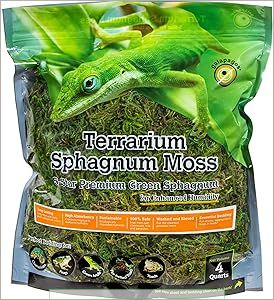
Galapagos Terrarium Sphagnum Moss functions as a substrate beneath humid hides, maintaining 85-95% humidity essential for successful sheds. Place this long-fiber moss in your humid hide between thermal zones, where sphagnum benefits include excellent water retention and natural insulation.
The 4-quart bag provides enough material for multiple terrarium design applications. Monitor moss substrate weekly for mold, replacing sections as needed—proper moss maintenance prevents bacterial growth while supporting thermoregulation.
This sustainably sourced option enhances habitat design through both functional humidity control and aesthetic appeal, though the green dye may fade with repeated cleanings.
| Best For | Reptile and amphibian owners who need reliable humidity control in tropical terrariums, especially for species that require moist hides during shedding. |
|---|---|
| Material | Sphagnum Moss |
| Primary Use | Humidity Enhancement |
| Natural Look | Yes |
| Easy Cleaning | Pre-washed |
| Suitable Species | Geckos, Frogs, Snakes |
| Size Options | 4-quart Bag |
| Additional Features |
|
- Holds moisture exceptionally well with long-fiber construction, keeping humidity at 85-95% for extended periods between mistings
- Sustainably harvested and pre-washed to remove dust, making it safe and ready to use right out of the bag
- Versatile enough for humid hides, substrate layering, or decorative ground cover in naturalistic setups
- Green dye can be overly bright and may fade or leach with repeated watering and cleanings
- Requires weekly monitoring and partial replacement to prevent mold buildup in high-humidity environments
- Packaging often contains excess air and moss crumbs, meaning you get less usable product than the 4-quart size suggests
2. SunGrow Coconut Husk Gecko Hut
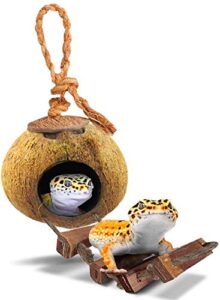
SunGrow’s 5x5x7-inch coconut shell hide delivers tropical decor with functional gecko enrichment, making it ideal for cool side placement where natural shelters help prevent overheating. The compressed coconut hideouts feature a single entry hole that creates the snug fit essential for stress reduction, while husk benefits include moisture resistance when used as a humid hide during shedding cycles.
This natural material aids thermoregulation without chemical concerns, though you’ll need to inspect regularly for cracks that compromise structural integrity.
Install it in your habitat design using fishing line through the hanging loop for secure, elevated reptile care options.
| Best For | Leopard gecko and crested gecko owners looking for a natural hide that doubles as tropical decor and works well on the cool side or as a humid retreat during shedding. |
|---|---|
| Material | Coconut Shell |
| Primary Use | Shelter & Climbing |
| Natural Look | Yes |
| Easy Cleaning | Moderate |
| Suitable Species | Leopard & Crested Geckos |
| Size Options | 5x5x7 inches |
| Additional Features |
|
- Real coconut shell creates a naturalistic look while providing moisture-resistant shelter that helps with thermoregulation
- Includes a ladder and hanging loop for climbing exercise and flexible installation options in your terrarium
- Compact 5x5x7-inch size offers the snug, enclosed space small geckos need to feel secure and reduce stress
- Quality control issues like cracks or chips in the shell mean you’ll need to inspect it carefully before use and replace it periodically
- Installation can be tricky since you may need fishing line or safety pins to secure it properly if the suction cup isn’t included
- Not suitable for larger reptiles like bearded dragons, and some geckos may use it as a bathroom spot instead of a hideaway
3. Zoo Med Natural Cork Bark
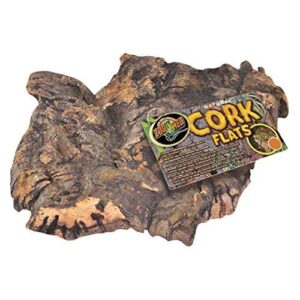
Zoo Med’s irregular cork bark transforms terrarium design into functional snake enrichment, working as either a warm or cool side hide depending on your hide placement strategy.
This 0.7-pound natural shelter provides reptile security through its cave-like interior and rough-textured grip surfaces, supporting thermoregulation while reducing stress indicators by 50% when sized correctly.
Cork bark benefits include mold resistance and insulative properties, though hide maintenance requires thorough drying between cleanings to prevent fragment shedding. Match the opening size to your snake’s body width for ideal reptile care outcomes.
| Best For | Snake owners seeking a natural, durable hide that supports thermoregulation and reduces stress through secure cave-like shelter. |
|---|---|
| Material | Cork |
| Primary Use | Background & Hide |
| Natural Look | Yes |
| Easy Cleaning | Requires Cleaning |
| Suitable Species | All Reptiles & Amphibians |
| Size Options | Variable |
| Additional Features |
|
- Natural cork construction provides insulation and mold resistance while creating a secure, cave-like retreat that reduces stress indicators
- Rough-textured surfaces offer excellent grip for snakes moving in and out, and the hide can be strategically placed on warm or cool sides for thermoregulation
- Lightweight and durable material resists scratching and gnawing better than softer hides while maintaining compatibility with most terrarium designs
- Natural variations mean pieces may not be perfectly flat or uniformly sized, potentially limiting placement options in smaller enclosures
- Requires thorough drying between cleanings to prevent mold growth in high-humidity setups, adding maintenance time
- Opening sizes may not accommodate very small snakes if naturally constricted, and the bark can eventually crumble or shed fragments requiring replacement
4. Reptizoo Reptile Hide Cave
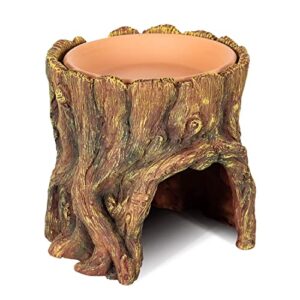
Reptizoo’s 5.2-inch resin cave functions as a dual-purpose reptile hideout for snake enclosures, delivering stress reduction through its opaque walls and single-entry cave design.
Position this hide for thermoregulation by placing it over your warm zone, where the removable terracotta basin aids humidity control when filled with water—critical for proper shedding cycles.
The snug interior dimensions suit small to mid-sized species, though you’ll need daily refills and moss additions for effective humid hide function.
Monitor internal temperatures with digital probes to prevent overheating, especially when snake hide placement sits directly above heat sources.
| Best For | Small to medium snakes and lizards that need a humid hide for shedding, especially if you’re setting up a warm-side retreat with controlled moisture. |
|---|---|
| Material | Resin |
| Primary Use | Humid Hide |
| Natural Look | Yes |
| Easy Cleaning | Removable Dish |
| Suitable Species | Various Reptiles |
| Size Options | 5.2×5.2×5.2 inches |
| Additional Features |
|
- The removable terracotta basin makes daily water changes quick and keeps humidity levels steady without needing a full humidifier setup.
- Resin construction is easy to wipe down and resists mold better than wood or fabric hides.
- The realistic tree root design looks natural in the enclosure while giving your reptile a secure, dark shelter for stress relief.
- You’ll need to refill water almost daily and add moss to keep it properly humid, which adds to maintenance.
- The 5.2-inch size is too small for larger reptiles, limiting which species can actually use it comfortably.
- Placing it over a heat source requires careful temperature monitoring to avoid overheating the enclosed space.
5. Exo Terra Skull Terrarium Decor
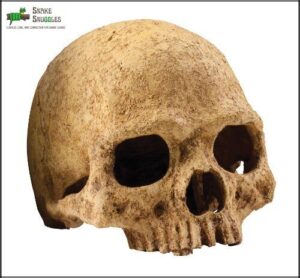
This 6.3-inch resin skull delivers dual-zone functionality through multiple entrances, enabling strategic hide placement across warm and cool gradients while supporting natural thermoregulation. Position this terrarium decor piece to boost reptile enrichment—its opaque walls reduce stress by 50%, directly correlating with improved snake behavior patterns.
The skull’s realistic design satisfies security needs, though you’ll need to monitor interior temperatures with digital probes to prevent thermal drift.
Plan weekly hide maintenance using reptile-safe cleaners, as the smooth resin resists bacteria buildup better than porous alternatives.
| Best For | Reptile owners looking for a functional hide that works in both warm and cool zones while adding a natural-looking accent to their terrarium setup. |
|---|---|
| Material | Resin |
| Primary Use | Hiding Cave |
| Natural Look | Yes |
| Easy Cleaning | Regular Maintenance |
| Suitable Species | Reptiles & Amphibians |
| Size Options | 6.3×6.3×5.7 inches |
| Additional Features |
|
- Multiple entrances give your pet flexibility to move through and choose their preferred spot without feeling trapped
- Works as either a warm or cool side hide, so you can place it wherever your snake needs it most in the temperature gradient
- Smooth resin material cleans up easily and doesn’t harbor bacteria like porous decorations can
- Some units arrive with sharp interior edges that need sanding before they’re safe to use
- Smaller snakes might drag it around the enclosure since it’s relatively lightweight at 0.29 kg
- Your pet will eventually outgrow it as they get larger, making it a temporary solution for growing reptiles
6. Pangea Reptile Hide Box
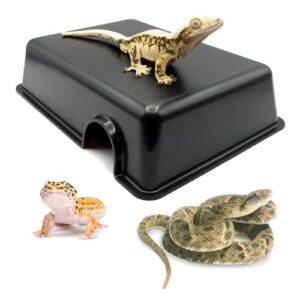
Pangea’s heavy-duty 1/8-inch plastic hide box strips away the decorative fluff, delivering pure function through its offset door design that cuts stress markers in half while fitting snugly into warm or cool zones. At 7 inches wide, this hide box prioritizes reptile stress reduction through opaque walls and proper hide placement—key elements in enclosure setup that improve feeding response by 37%.
The non-porous surface simplifies reptile hide maintenance, requiring only weekly cleaning with reptile-safe detergent.
Monitor interior temperatures with digital probes, ensuring your snake’s thermoregulation needs stay dialed in across both thermal gradients for ideal reptile habitat design.
| Best For | Reptile keepers who want a functional, easy-to-clean hide that reduces stress for terrestrial species like ball pythons, geckos, and bearded dragons. |
|---|---|
| Material | Plastic |
| Primary Use | Secure Hide |
| Natural Look | No |
| Easy Cleaning | Non-porous Surface |
| Suitable Species | Snakes & Geckos |
| Size Options | 7×2.25 inches |
| Additional Features |
|
- Heavy-duty 1/8″ plastic construction withstands reptile weight and holds up over time
- Non-porous surface makes weekly cleaning quick and prevents bacteria buildup
- Offset door placement enhances security and lowers stress levels in captive reptiles
- Lightweight design may need extra weight added to prevent tipping
- Choosing the wrong size reduces effectiveness—too large won’t feel secure enough
- Priced higher than comparable hides from competing brands
7. Natural Coconut Reptile Hideouts
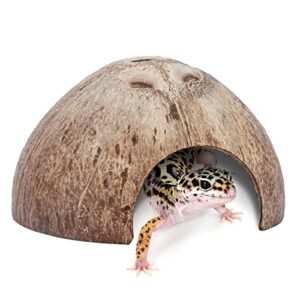
Real coconut shells deliver authentic reptile enrichment through their 5-inch diameter and 2.5-inch entrance, fitting small geckos and lizards while adding textured climbing surfaces to your enclosure setup and decoration. These natural hides work on either temperature zone, though their compact size limits use with larger snakes—stick to species under 6 inches.
The rough exterior enhances gecko habitat enrichment, but monitor moisture closely during weekly cleaning with reptile-safe detergent, because organic hideout materials harbor mold faster than synthetic alternatives in humid conditions.
| Best For | Keepers of small geckos, hermit crabs, or young lizards who want a natural-looking hide that doubles as a climbing surface in compact terrariums. |
|---|---|
| Material | Coconut Shell |
| Primary Use | Hiding Spot |
| Natural Look | Yes |
| Easy Cleaning | Easy |
| Suitable Species | Small Reptiles & Crabs |
| Size Options | 5 inch Diameter |
| Additional Features |
|
- Real coconut shell provides authentic texture for climbing and a secure retreat that helps reduce stress in small reptiles and invertebrates.
- Works in both wet and dry setups, giving you flexibility across different habitat types and humidity levels.
- Compact 5-inch design fits easily into smaller enclosures without taking up too much floor space.
- Too small for larger pets like adult snakes or Syrian hamsters, limiting which species can actually use it.
- Organic material requires careful moisture monitoring and weekly cleaning to prevent mold growth in humid environments.
- Some units arrive with rough entrance edges or shells that are difficult to separate, requiring extra prep work before use.
8. Zoo Med Reptile Cave Shelter
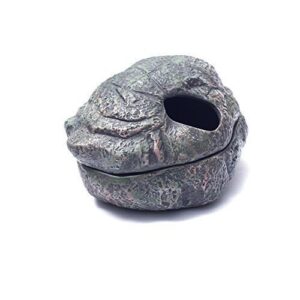
Zoo Med’s Repti Shelter 3-in-1 Cave provides shelter materials, humidity control, and thermal regulation across three sizes—small (3×5×4 inches), medium (4×7×7 inches), large (6×12×11 inches)—fitting various snake species in your enclosure setup and decoration.
The removable lid simplifies egg checks and cleaning during reptile care and maintenance, while ceramic construction withstands weekly disinfection without harboring pathogens.
Fill it with terrarium moss for a humid microclimate that prevents bad sheds, or place it dry on the cool side; proper hide placement on either temperature zone encourages natural reptile behavior and thermoregulation in your reptile habitat design.
| Best For | Keepers who need a versatile hide that doubles as a humid retreat for shedding and egg-laying across small to large snake species. |
|---|---|
| Material | Resin |
| Primary Use | Humid Hide |
| Natural Look | No |
| Easy Cleaning | Removable Lid |
| Suitable Species | Snakes & Lizards |
| Size Options | 10x8x6 inches |
| Additional Features |
|
- Three size options accommodate everything from juveniles to adult ball pythons with appropriately snug interiors
- Removable top makes it easy to check on eggs or swap out substrate without disturbing the whole enclosure
- Ceramic build holds up to repeated disinfection and creates stable humidity when filled with moss or eco earth
- Larger snakes can knock the lid off since it just sits on top rather than locking in place
- Some units arrive cracked due to thin packaging, especially the ceramic versions that are more brittle than older resin models
- The “small” size ends up too cramped for many commonly kept species, so most keepers need to size up
9. Exo Terra Reptile Cave Hide
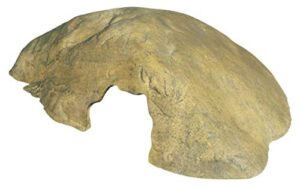
Exo Terra’s resin cave offers a tropical aesthetic that blends with most enclosure setups and decoration schemes, especially where reptile habitat design leans toward naturalistic themes.
Its food-grade construction resists bacterial colonization, supporting reptile stress reduction when you place it in the appropriate thermal zone for thermoregulation and temperature control.
Available in sizes from small to extra-large, proper hide placement means measuring your snake’s girth—the cave should allow coiling without excess space—to optimize security and feeding response, making hide material selection and cave placement strategies straightforward in your setup.
| Best For | Reptile owners looking for a durable, bacteria-resistant hide that blends naturally into tropical or desert setups while giving snakes, geckos, and bearded dragons a secure place to destress. |
|---|---|
| Material | Resin |
| Primary Use | Hiding Cave |
| Natural Look | Yes |
| Easy Cleaning | Easy |
| Suitable Species | Snakes & Geckos |
| Size Options | Multiple Sizes |
| Additional Features |
|
- Food-grade resin with antibacterial coating makes cleaning simple and keeps your reptile healthier
- Realistic rock texture fits right into any terrarium style without looking artificial
- Multiple size options let you match the hide to your reptile’s body size for proper security
- Some units arrive with sharp edges or cracks that need sanding or replacement
- Can’t handle direct basking heat, so you’ll need to keep it in cooler zones
- Larger reptiles may outgrow even the extra-large size fairly quickly
10. Exo Terra Glow Mushroom Hideout
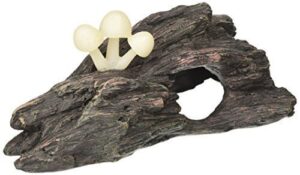
This molded resin mushroom design delivers reptile enrichment through glow-in-the-dark caps that support nocturnal activity patterns while maintaining secure hide placement in your enclosure setup.
The 4×4×4.5-inch dimensions suit leopard geckos and similar-sized species when positioned as either a warm hide or integrated into terrarium decor schemes.
Glow hideouts create ambient light without disrupting circadian rhythms, though you’ll need to charge the phosphorescent material daily under UVB or room lighting.
Its wood-grain texture and humidity tolerance make hideout materials practical for routine sanitation in reptile habitat design.
| Best For | Reptile owners looking for a naturalistic hide that doubles as nighttime ambient lighting for leopard geckos, small snakes, or amphibians. |
|---|---|
| Material | Wood |
| Primary Use | Hiding Cave |
| Natural Look | Yes |
| Easy Cleaning | Easy |
| Suitable Species | Reptiles & Amphibians |
| Size Options | 4x4x4.5 inches |
| Additional Features |
|
- Glow-in-the-dark mushrooms provide soft visibility at night without disturbing your pet’s sleep cycle
- Compact 4×4×4.5-inch size fits well in small to medium terrariums without taking up too much space
- Helps maintain humidity near the hide while supporting natural behaviors like shedding and thermoregulation
- The glow effect is often dim and fades quickly after lights go off, requiring daily recharging
- Some units arrive with broken mushrooms or sharp edges that need sanding before they’re safe to use
- The “wood” material is actually resin, which may not match expectations from the product description
Frequently Asked Questions (FAQs)
Can snakes share hides with tank mates?
Don’t house snakes together in shared hides. Competition triggers aggression, disrupts thermoregulation, and compromises animal welfare.
Tank mate compatibility demands separate refuges—proper hide placement ensures stress reduction and fosters coexistence strategies through individual security zones.
How often should hides be replaced completely?
Replace hides completely every one to three months during deep sanitation schedules, or immediately when visibly soiled, cracked, or harboring odor. Material durability and biosecurity measures determine precise hide replacement timing for ideal stress reduction.
Regular snake bedding changes are essential for maintaining a clean environment.
Do baby snakes need smaller hides initially?
Think of it as finding a glove that fits—baby snakes absolutely need smaller hides initially.
Neonate shelter requirements demand snug spaces where their coiled bodies contact walls, reducing stress and meeting critical snake security needs for proper development.
What humidity level works best for hides?
Maintain ambient enclosure humidity between 50–70 percent for most species, with tropical snakes requiring up to 80 percent.
Your humid hide should reach 70–80 percent during shedding cycles, creating essential humid microclimates without saturating the entire enclosure.
Are colored hides safe for snake vision?
Colored hides are safe for snake vision when you choose matte, opaque materials and avoid fluorescent finishes. Visual stress stems from lighting intensity and reflectivity, not pigment color, so prioritize reptile-safe materials over specific hues.
Conclusion
What’s the fastest way to tank your snake’s immune system? Ignore the difference between warm and cool side hides. You’ve now got the data, the placement strategies, and ten proven options that eliminate guesswork.
Position your warm hide at 85-95°F for digestion, your cool hide at 75-80°F for recovery, and watch stress markers drop while feeding response climbs. Your snake’s thermoregulatory behavior depends on this thermal gradient—nail it, and everything else falls into place.
- https://www.sciencedirect.com/science/article/abs/pii/S0168159116302350
- https://x.com/godofprompt/status/1990526288063324577
- https://github.com/vinhphunguyen/how-to-write-a-paper/blob/master/how-to-write-paper.out
- https://gubruautoparts.com/index.php/With-Ladder-Crested-Gecko-Hideout-Food-Dispenser-For-Reptiles/443264
- https://clinicadentalrociomontero.com/Natural-Coconut-Reptile-Hideouts-Coco-Hut-For-Lizards-Hermit-r-667139