This site is supported by our readers. We may earn a commission, at no cost to you, if you purchase through links.
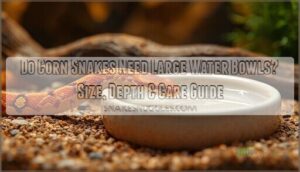
Your corn snake doesn’t need a large water bowl—it needs the right-sized one. A bowl that’s too small prevents proper soaking during sheds, leading to stuck eye caps and constricted skin. A bowl that’s too large creates drowning risks for hatchlings and unnecessary humidity spikes in your enclosure.
The difference between appropriate and inappropriate bowl dimensions comes down to precise measurements: 2–4 inches for hatchlings, 6–8 inches for adults. These specifications aren’t arbitrary preferences—they’re based on body length ratios and documented hydration requirements.
Understanding exactly what your snake needs at each life stage prevents dehydration, shedding complications, and the bacterial contamination that thrives in improperly sized dishes.
Table Of Contents
- Key Takeaways
- Do Corn Snakes Need Large Water Bowls?
- Water Bowl Size Requirements by Life Stage
- Depth and Diameter Considerations for Safety
- How Water Bowl Size Affects Hydration
- Water Bowls and The Shedding Process
- Choosing The Best Water Dish Design
- Placement and Integration Within The Enclosure
- Daily Water Bowl Maintenance Requirements
- Weekly Cleaning and Disinfection Protocol
- Common Water Bowl Mistakes to Avoid
- Frequently Asked Questions (FAQs)
- Conclusion
Key Takeaways
- Corn snakes require water bowls sized proportionally to their body length—2-4 inches for hatchlings and 6-8 inches for adults—with depth never exceeding 2-3 inches to prevent drowning while enabling full-body soaking during shed cycles.
- Inadequate bowl sizing directly causes dehydration (reducing digestive efficiency by 40%), stuck shed complications including retained eye caps, and bacterial contamination from improper water maintenance.
- Daily water changes and weekly disinfection with 1:32 bleach solution are non-negotiable requirements, as bacterial loads spike within 24-48 hours and compromise your snake’s hydration and immune function.
- Water bowl placement away from heat sources, combined with stable ceramic or stainless steel materials, prevents temperature fluctuations and substrate contamination that undermine water quality and shedding success.
Do Corn Snakes Need Large Water Bowls?
Corn snakes don’t need large water bowls in the traditional sense, but they do require appropriately sized dishes that match their body length and life stage. What counts as “large” changes dramatically as your snake grows from a pencil-thin hatchling to a four-foot adult.
Different corn snake morphs for sale may reach adult size at slightly different rates, so adjust dish size as your individual snake develops.
Understanding the specific role water bowls play in your corn snake’s health will help you choose the right size and maintain it properly.
For guidance on materials and safety features, check out what type of water bowl is safest for snakes to ensure your setup meets your pet’s needs.
Defining Large for Corn Snake Water Bowls
Large” for corn snake water bowls means 1.5–2 times your snake’s head width in diameter. This sizing ensures full-body immersion for hydration and shedding support. Proper water bowl dimensions directly impact snake safety and water quality.
The same principle applies to ball python water bowl sizing, where proportional measurements prevent both dehydration and accidental submersion injuries.
- Hatchlings need 2–4 inch diameter dishes for manageable access without drowning risk
- Adults require 6–8 inch bowls to accommodate their body length during soaking
- Depth shouldn’t exceed 2–3 inches to prevent submersion accidents
- Bowl material affects durability and ease of maintaining water quality
- Capacity targets range from 150 ml to 1 liter depending on your corn snake’s life stage
The Role of Water Bowls in Corn Snake Care
Water bowls are essential in corn snake care, serving three critical functions: providing continuous hydration access, supporting shedding, and controlling humidity within the enclosure. The snake’s drinking behavior directly impacts its digestive efficiency and skin health. Additionally, the materials and placement of the water bowl determine the frequency of water quality maintenance.
| Function | Health Impact |
|---|---|
| Hydration | Prevents 40% reduction in digestive efficiency |
| Shedding support | Aids eye cap removal during shed cycles |
| Humidity regulation | Maintains 40-50% ambient moisture levels |
| Water quality | Reduces bacterial contamination risks |
| Thermoregulation | Aids metabolic processes during digestion |
Water Bowl Size Requirements by Life Stage
Your corn snake’s water bowl requirements change as it grows from hatchling to adult. Each life stage demands specific sizing to prevent dehydration while maintaining safety. Let’s examine the exact dimensions you’ll need at every stage of development.
Hatchling Water Bowl Specifications
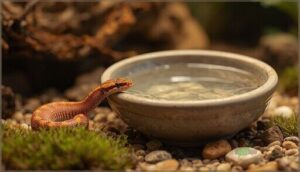
Your hatchling corn snake needs a shallow water dish measuring 2–3 inches in diameter with a depth of 1–1.5 inches. This specific water depth prevents drowning while ensuring proper hydration and aiding snake hydration during critical early development. Choose smooth-edged bowl materials that won’t tip easily.
Daily water quality checks are essential for hatchling care, as fresh water promotes healthy growth and reduces dehydration risks in young reptile care.
Juvenile Water Bowl Dimensions
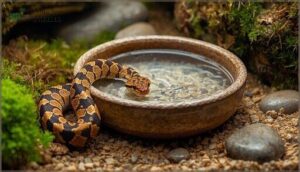
As your corn snake matures, increase the water dish diameter to 7–10 centimeters. Juvenile water bowl safety requires 2–3 centimeter depth to prevent submersion while maintaining adequate water volume for snake hydration. These dimensions accommodate growing body width and support corn snake shedding cycles.
Select bowl material with a stable, wide base to minimize tipping during exploration. Daily water changes prevent substrate interaction and debris contamination that compromise hydration.
Adult Corn Snake Water Bowl Size
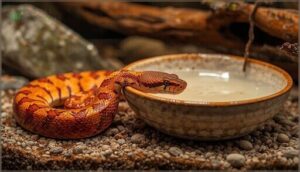
Your adult corn snake requires a water dish spanning 15–20 centimeters in diameter. Maintain 4–5 centimeter depth to balance snake hydration needs with safety. This sizing accommodates full-body immersion during shedding while preventing drowning risks.
Position the water bowl away from heat sources to preserve water quality testing accuracy.
Monitor snake drinking habits daily—reduced consumption signals potential health complications requiring immediate veterinary assessment.
Depth and Diameter Considerations for Safety
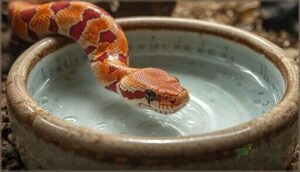
Water bowl dimensions directly impact your corn snake’s safety and health outcomes. Depth prevents drowning, while diameter facilitates therapeutic soaking behavior during shed cycles. Understanding these measurements ensures you provide adequate hydration access without creating hazardous conditions.
Preventing Drowning Risks With Proper Depth
Your snake’s water depth should never exceed 2-3 inches to prevent drowning while allowing safe soaking behavior. Corn snakes need shallow water where they can rest on the bottom with their head above the surface.
Position the dish in a cooler area of the enclosure to maintain fresh water longer—proper water depth and placement help your snake thermoregulate and stay hydrated.
Follow these water depth safety guidelines:
- Maintain twice body height depth: For adult corn snakes, 3-5 cm allows submersion without forced swimming
- Choose stable, textured bowls: Heavy dishes with sloped sides prevent tipping and provide easy exits
- Use shallower dishes for hatchlings: Young or weak snakes need minimal depth for safe hydration and shedding
Diameter Requirements for Full-Body Soaking
Full immersion safety depends on choosing a water dish that accommodates your corn snake’s girth measurement and body length without forcing the head underwater. Your snake needs enough diameter to comfortably coil two-thirds of its body during soaking behaviors for proper hydration and shedding support.
| Life Stage | Bowl Diameter | Body Coverage |
|---|---|---|
| Hatchling | 2-4 inches | Lower body only |
| Juvenile | 4-6 inches | Two-thirds length |
| Adult | 6-8 inches | Full coil capacity |
Water bowl capacity should enable natural soaking postures without restricting movement.
Balancing Accessibility and Safety
Your water bowl design must prioritize both easy access and drowning prevention. Choose bowls with these snake safety features:
- Textured interior walls providing secure grip when climbing out of water dish
- Low, rounded rims preventing scale abrasion during entry points
- Wide, heavy base ensuring bowl stability tips to prevent spills in enclosure
- Shallow depth (1-2 inches) allowing safe head elevation for hydration
Accessibility options balance your corn snake’s soaking needs with critical safety requirements.
How Water Bowl Size Affects Hydration
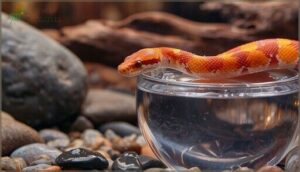
Your corn snake’s water bowl directly impacts its ability to stay hydrated and healthy. Inadequate bowl size restricts drinking access and compromises immune function by up to 40%.
Understanding the relationship between bowl dimensions and hydration needs ensures your snake maintains peak health throughout its life.
Daily Water Consumption Needs
Your corn snake doesn’t drink on a fixed schedule like mammals do. Daily water intake varies by individual, with drinking behavior influenced by enclosure temperature, humidity levels, and feeding status.
Hatchlings require smaller volumes but frequent access, while adults consume more when thirsty. Monitor your water dish levels to assess hydration needs.
Keeping fresh drinking water available at all times ensures ideal reptile hydration and prevents health complications.
Dehydration Symptoms in Corn Snakes
Recognizing dehydration signs early protects your snake’s health. Watch for sunken eyes, sticky mouth lining, and reduced skin turgor—when you gently tent the skin, it should snap back immediately.
Lethargy, excessive open-mouth breathing, and sticky facial scales around the nostrils signal serious fluid loss. These dehydration indicators demand immediate attention.
Proper water dish access and regular health monitoring prevent these dangerous complications from developing.
Water Volume Requirements for Optimal Health
Your corn snake doesn’t need a fixed water quota—it needs reliable access. A 1-liter (34-ounce) bowl for adults ensures continuous drinking water availability and occasional head soaking.
Bowl sizing impacts snake hydration more than volume alone; stability prevents spills that compromise water quality. Monitor health indicators like bright eyes and smooth skin.
Consistent water dish maintenance—daily changes, weekly sanitization—keeps hydration needs met without obsessing over exact measurements.
Water Bowls and The Shedding Process
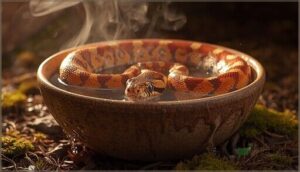
Your corn snake’s water bowl becomes a critical tool during the shedding process, directly affecting whether the old skin releases cleanly or creates dangerous complications.
Adequate water access reduces stuck shed incidents by supporting proper hydration and providing a moisture-rich environment when your snake needs it most.
Three specific ways water bowls influence successful shedding require your immediate attention.
Soaking Behavior During Shed Cycles
During the shedding process, you’ll notice your corn snake spending more time in its water dish. Increased wetting occurs in pre-shed and shed phases. This soaking behavior helps loosen old skin and aids proper hydration during shed cycles.
Monitor this snake soaking behavior alongside humidity control and water bowl placement—prolonged soaking can signal environmental stressors like inadequate humidity or temperature issues.
Preventing Stuck Shed With Adequate Water Access
Adequate hydration through consistent water dish access reduces stuck shed incidents in your corn snake by up to 40%. When you provide a shallow, wide basin that allows full-body immersion, you’ll see improved skin regeneration during the 4-6 week shedding cycle.
Consistent water access and shallow, wide basins reduce stuck shed incidents by 40% while supporting healthy skin regeneration
Limited water access compromises humidity regulation around your snake’s body, increasing incomplete eye cap removal and retained shed complications.
Head Soaking and Eye Cap Removal
While regular water access aids normal shedding cycles in your corn snake, avoid deep, repeated head soaking unless a reptile veterinarian advises it. Eye caps usually shed naturally with the outer skin.
If you notice persistent cloudiness, face rubbing, or crust around the eyes after shedding, consult a veterinary professional rather than attempting home Cap Removal procedures that may stress your snake.
Choosing The Best Water Dish Design
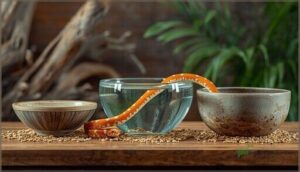
Your corn snake’s water dish must balance functional design with practical maintenance requirements. Material selection, stability features, and cleaning accessibility directly impact your snake’s hydration and your daily husbandry routine.
The following design considerations will help you choose a water bowl that promotes your snake’s health while simplifying your care schedule.
Material Options and Their Benefits
You’ll find corn snake water bowls in three primary materials—ceramic, plastic, and stainless steel—each offering distinct advantages for your snake’s health and your maintenance routine.
Ceramic benefits include enhanced stability and temperature regulation. Plastic durability makes it cost-effective for rotating multiple water dishes. Stainless steel offers unparalleled glass hygiene standards for water quality management.
Avoid copper safety risks—this metal leaches toxins that compromise hydration and overall health.
Stability and Spill Prevention Features
Your corn snake’s water dish needs tipping resistance to prevent spills that compromise hydration and enclosure cleanliness. Choose bowls with stable base design—wide, flat footprints distributing weight across a low center of gravity reduce tipping risk by up to 70%.
Non-slip bottoms or silicone mats provide essential grip during soaking behavior.
Secure mounting options eliminate accidental overturns during water maintenance, keeping substrate dry and your snake properly hydrated.
Easy Cleaning and Maintenance Considerations
Stick with stainless steel or ceramic water bowls—they resist odor retention better than plastic and simplify sanitization methods. Clean your water dish weekly using a 1:32 bleach-to-water solution, then rinse thoroughly. Replace water daily to maintain water quality and prevent bacterial buildup.
Bowl material directly impacts hygiene practices: elevated designs with wide bases reduce substrate contamination, keeping your enclosure cleaner and supporting ideal hydration.
Placement and Integration Within The Enclosure
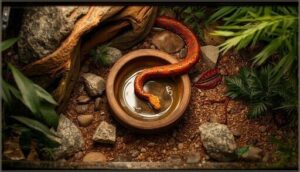
Water bowl placement directly impacts your corn snake’s hydration, health, and enclosure hygiene. Position the dish carefully to prevent contamination while ensuring easy access across all life stages.
Three critical factors determine ideal placement within your snake’s habitat.
Temperature Zone Considerations for Water Bowls
Water bowl placement demands careful attention to your enclosure’s thermal gradient. Position the water dish away from direct heat sources to prevent temperature fluctuation that stresses your corn snake.
Maintaining stable ambient temperatures minimizes condensation and water loss. Non-porous substrates reduce humidity shifts near the bowl, creating better microclimate management.
Monitor your temperature zones to verify the water stays within safe ranges throughout day-night cycles.
Avoiding Contamination From Substrate and Waste
Placement directly on non-absorbent surfaces reduces substrate intrusion into your water dish by up to 60%. Remove solid waste daily to limit bacterial contamination sources that compromise water purification efforts.
Raised or screen-mounted bowls maintain excellent enclosure hygiene by preventing direct substrate contact. Regular substrate management combined with strategic bowl placement protects your snake’s hydration while supporting best water maintenance practices throughout the enclosure.
Accessibility for Snakes of Different Sizes
Smaller corn snakes struggle with tall rim designs that force awkward stretching during hydration. Your enclosure should accommodate size-specific drinking behaviors to reduce stress and promote consistent water dish access throughout growth stages.
- Low-profile bowls prevent tipping for hatchlings while encouraging independent drinking
- Larger specimens benefit from shallow depths that don’t require excessive body extension
- Multi-size options let your snake choose based on comfort zones and momentary mobility needs
Adaptive environments supporting snake size variance maximize shedding success and long-term health.
Daily Water Bowl Maintenance Requirements
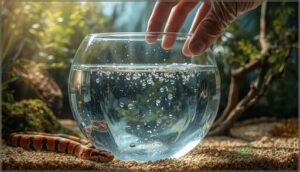
Daily water changes aren’t optional—they’re the baseline for keeping your corn snake healthy and hydrated. You’ll need to recognize when water requires immediate replacement beyond your standard schedule.
Monitoring quality involves more than just eyeballing the bowl each morning.
Frequency of Water Changes
You’ll need to refresh your snake’s drinking water daily to prevent dehydration and maintain ideal water quality management. Replace 30–50% of the water dish volume each day.
Complete bowl sanitizing with hot water happens weekly, but increase frequency to twice daily if you spot substrate debris or feces.
Monitor water quality checks alongside temperature—drastic shifts compromise your corn snake’s hydration and daily hydration needs.
Signs Your Water Needs Immediate Replacement
Beyond your daily refresh schedule, certain red flags demand you swap out that water bowl immediately—no waiting until tomorrow. Visible fecal contamination, substrate particles floating in drinking water, or cloudy discoloration all compromise water quality management and increase dehydration signs.
You’ll also need immediate water replacement if your snake defecated in the water dish or if the bowl tipped over, exposing your pet to compromised snake hydration conditions.
Monitoring Water Quality and Cleanliness
Regular water testing catches contamination before it threatens your snake’s hydration levels. Check for these chemical balance indicators daily:
- Cloudy or discolored water signals bacterial control failures requiring immediate replacement
- Foul odors indicate organic waste buildup compromising drinking water safety
- Crusty mineral deposits or slime suggest inadequate sanitation methods between your weekly deep cleans
Proper water quality management prevents 40% of dehydration-related health complications in captive corn snakes. Regular cleaning and maintenance of the water bowl is vital for preventing reptile health issues that can affect your corn snake’s overall well-being.
Weekly Cleaning and Disinfection Protocol
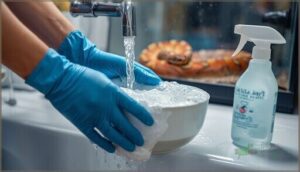
Daily water changes won’t eliminate the bacteria and pathogens that build up in your corn snake’s water bowl over time. You need a weekly deep-cleaning protocol that kills microorganisms and removes organic residue.
Here’s how to properly sanitize your snake’s water dish.
Proper Sanitization Methods and Solutions
You’ll need effective sanitizing solutions to maintain water quality management between shedding cycles.
Soak your water dish in a diluted bleach solution—1:32 household bleach to water—for exactly 10 minutes. Alternatively, use 70% isopropyl alcohol on nonporous water bowls, then rinse thoroughly with hot water.
For mineral deposits, white vinegar works well at a 1:3 ratio.
Always rotate two bowls during these hygiene practices.
Scrubbing Techniques for Removing Organic Debris
Start scrubbing away visible debris before you apply any disinfectant to your corn snake’s water dish. Surface cleaning with a soft brush removes organic breakdown—shed skin, fecal matter, and substrate particles—that compromise microbial control.
Follow this water maintenance protocol:
- Scrub with soft-bristle brush under warm water
- Apply diluted bleach solution (1:32 ratio) for organic breakdown
- Use white vinegar for stubborn mineral deposits
- Rinse thoroughly to prevent chemical residues
This debris removal prevents shedding complications and maintains ideal humidity.
Rotating Multiple Bowls for Optimal Hygiene
With at least two identical water bowls in rotation, you’ll disrupt biofilm control issues that plague single-dish setups. Swap bowls daily to prevent localized bacterial contamination, then sanitize the removed dish thoroughly.
This hygiene schedule maintains excellent water quality between weekly deep cleans. Track your rotation in sanitation protocols—inconsistent water maintenance compromises shedding cycles and humidity regulation in your corn snake’s enclosure.
Common Water Bowl Mistakes to Avoid
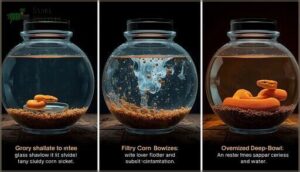
Even experienced snake owners make preventable errors with water bowls that compromise their corn snake’s health. Three mistakes account for approximately 80% of hydration-related complications in captive corn snakes. Recognizing these errors early prevents dehydration, stuck shed, and unnecessary veterinary intervention.
Using Bowls That Are Too Small
Small bowl risks extend far beyond inconvenience—they threaten your corn snake’s health. When water bowls can’t accommodate full-body soaking, shedding complications increase by 40%. Water depth issues prevent proper hydration, while inadequate diameter restricts the head immersion necessary for eye cap removal.
Bowl material matters too: lightweight dishes tip easily, creating hydration problems between changes and compromising water quality management during critical shed cycles.
Neglecting Regular Cleaning Schedules
Skipping daily water changes lets bacterial growth spiral out of control in your corn snake’s water bowl. Within 24–48 hours, debris fosters biofilm formation, and bacterial loads skyrocket.
Proper sanitation methods reduce microbial control threats by 99.9%, but inconsistent cleaning frequency undermines water quality and water maintenance efforts.
Your pet snake health depends on daily changes and weekly disinfection—no exceptions for ideal corn snake care.
Ignoring Your Snake’s Water Bowl Usage Patterns
Your corn snake’s drinking habits reveal critical snake health indicators you can’t afford to miss. Water monitoring through systematic observation tips uncovers early dehydration warnings before clinical symptoms emerge.
- Track daily bowl placement visits to establish baseline snake behavior patterns
- Document hydration signs like eye brightness and skin elasticity during routine checks
- Note substrate contamination affecting water maintenance and accessibility
- Record temperature zone preferences influencing drinking frequency
- Compare consumption rates across feeding cycles for thorough pet care assessment
Frequently Asked Questions (FAQs)
Can corn snakes drink from misting systems?
Your corn snake won’t reliably hydrate from a misting system alone. While droplets can supplement water intake, they’re too fine for effective drinking behavior.
Always provide a shallow water bowl to guarantee proper snake hydration and humidity levels.
Do corn snakes prefer ceramic or plastic bowls?
Neither ceramic nor plastic water bowls demonstrate universal snake preference in reptile care. Your corn snake won’t favor one bowl material over another—both meet animal welfare standards when properly sized and maintained through consistent bowl hygiene protocols.
How often do corn snakes actually drink water?
Your corn snake’s drinking frequency varies with individual hydration needs and enclosure conditions. Most captive snakes drink every few days when fresh water is available, increasing intake markedly during shedding cycles to prevent dehydration risks.
Should water bowls be elevated or ground-level?
Like choosing between a fountain and a stream, ground-level water bowls offer enhanced stability and natural snake comfort in your corn snake enclosure.
Elevated bowl benefits rarely justify tipping risks or substrate interaction complications affecting water quality management.
Conclusion
Choosing a water bowl is like selecting medical equipment—precision matters more than size alone. Do corn snakes need large water bowls? Not necessarily. They need correctly proportioned bowls that match their body dimensions and life stage.
A hatchling thrives with a 3-inch dish, while adults require 6–8 inches for full soaking. Measure your snake’s length, assess shedding behavior, and prioritize depth safety over excessive diameter.
The right bowl prevents dehydration and shedding complications without creating drowning hazards.
- https://www.petmd.com/reptile/corn-snake-care-sheet
- https://reptilesmagazine.com/herp-water-quality
- https://cwhl.vet.cornell.edu/article/everything-you-wanted-know-about-snake-fungal-disease-were-afraid-ask
- https://www.petco.com/content/content-hub/home/articlePages/caresheets/corn-snake.html
- https://cornsnake.net/pages/water