This site is supported by our readers. We may earn a commission, at no cost to you, if you purchase through links.

A snake’s comfort depends on more than a warm enclosure—it’s the steady, silent heat beneath their belly that keeps their metabolism humming and their stress low. If you’ve ever wondered how long to leave a heating pad on for snakes, the answer isn’t as simple as plugging it in and walking away. Too much heat risks burns, too little leaves your reptile sluggish and vulnerable.
The secret lies in balancing continuous warmth with careful control, using thermostats and regular checks to mimic nature’s gentle temperature shifts. When you know what to watch for, your snake stays safe and thriving, day and night.
Table Of Contents
- Key Takeaways
- How Long Should Heating Pads Stay on for Snakes?
- Why Continuous Heating is Essential for Snakes
- Factors Affecting Heating Pad Usage Time
- Setting Up a Safe Heating Pad System
- Risks of Leaving Heating Pads on Too Long
- Maintenance Tips for Reliable Heating Pad Operation
- Emergency Preparedness for Heating Pad Failures
- Frequently Asked Questions (FAQs)
- Should I leave the heating pad on for my snake?
- Should I turn my snakes heat mat off at night?
- How long can a snake go without a heating pad?
- Can a heating pad replace all other heat sources?
- Are heating pads safe for glass or plastic enclosures?
- Which heating pad type is best for my species?
- How do I safely introduce a new heating pad?
- Conclusion
Key Takeaways
- You should leave a snake’s heating pad on all the time, day and night, but always controlled by a thermostat and set up to create a warm side and a cooler side in the enclosure.
- Safe temperatures and timing depend on your snake’s species, the enclosure size and material, substrate thickness, and the room temperature, so you need to adjust your setup instead of copying one “universal” setting.
- A thermostat with a properly placed probe, plus regular checks with a thermometer or infrared gun, is essential to prevent burns, support digestion, and avoid stress from sudden temperature swings.
- To keep your snake safe long term, you should routinely inspect, clean, and replace worn pads, watch for behavior or skin changes that signal overheating, and keep backup heat sources and an emergency kit ready for power or equipment failures.
How Long Should Heating Pads Stay on for Snakes?
Knowing how long to run a heating pad is key to keeping your snake healthy and comfortable.
For a deeper dive into when heating pads work best versus heat lamps, see this guide to snake heating options.
There are a few important details you’ll want to think about before setting up your enclosure.
Let’s look at what guides safe, reliable heating pad use for snakes.
Recommended Duration for Continuous Use
Most snake heating pads are meant to run continuously, maintaining steady temperature control for best snake health. With the right wattage selection and a thermostat, you guarantee proper heat distribution and safety margins.
For reptile husbandry, pads last 3–5 years, supporting a thermal gradient and efficient energy consumption. Reliable pad lifespan means your snake’s comfort isn’t interrupted, keeping conditions stable.
The digital thermostat controller provides precise temperature regulation and a clear LED display.
Day Vs. Night Heating Needs
Your heating pad doesn’t need to change schedules — but temperatures should. During the day, keep Daytime Basking Zones at 30–34°C on the warm side.
At night, let the Circadian Temperature Cycle drop 2–4°C naturally. Nighttime Belly Heat should stay above 22°C to support digestion and snake health.
This Thermal Gradient Shift mimics nature without stressing your animal. Monitoring maintaining proper humidity is essential for reptile health.
Thermostat-Controlled Operation
A thermostat is your heating pad’s brain — without one, you’re guessing. Here’s what good thermostat-controlled operation looks like:
- On‑off cycling kicks in when the probe hits your target, cutting power cleanly.
- Proportional control dims output gradually, preventing sudden temperature swings.
- Alarm thresholds alert you if enclosure heat climbs past safe limits.
Regular probe calibration keeps your thermal gradient accurate and your snake safe.
Why Continuous Heating is Essential for Snakes

Snakes can’t generate their own body heat — they depend entirely on their environment to stay warm, digest food, and function normally.
Snakes are fully reliant on external heat to stay warm, digest food, and function
Turning off the heating pad at night isn’t giving your snake a break; it’s actually working against its basic biology.
Here’s why keeping that heat running consistently matters across three key areas.
Ectothermic Nature and Thermoregulation
Ever wonder how your snake decides where to curl up? Their bodies act like living thermometers, using heat gradient behavior and basking posture to find just the right spot.
Through vasodilation mechanisms, they fine‑tune body temperature—reptile thermoregulation in action. That’s why a controlled thermal gradient with a snake heating pad is essential for precise temperature control.
| Behavior | Purpose |
|---|---|
| Basking posture | Heat absorption |
| Heat gradient use | Self-regulation |
| Vasodilation | Heat gain |
| Species preference | Custom needs |
| Movement in gradient | Temperature shift |
Digestion and Metabolic Health
Nearly every meal your snake eats depends on Temperature-Dependent Digestion for safe processing. With steady thermal gradient and precise temperature control, you boost Digestive Efficiency Variance and Metabolic Rate Q10, speeding up digestion and preventing regurgitation.
A reliable thermostat, like those discussed in beginner snake housing guides, keeps this gradient stable and digestion consistent.
Postprandial Thermophily means your snake seeks warmth after feeding, so reliable reptile thermoregulation directly promotes animal health and keeps digestion running smoothly.
Stress Prevention From Temperature Fluctuations
When you keep a stable thermal gradient and manage room drafts, your snake avoids stress behaviors like pacing or glass‑hugging. Consistent temperature control, supported by regular thermostat calibration, keeps humidity and warmth steady, which prevents sudden shifts that disrupt snake health.
Watch for behavioral stress indicators—changes in routine or hiding—since these often signal issues with your heat mat or enclosure design.
Factors Affecting Heating Pad Usage Time
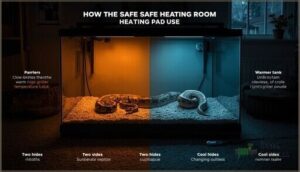
Heating pad usage depends on several important factors in your snake’s setup.
The right timing and temperature can shift based on what’s inside the enclosure and the environment around it.
Here’s what you’ll want to think about before deciding how long to keep the pad running.
Snake Species and Individual Temperature Needs
You’ll find that temperature control isn’t one-size-fits-all—snake species demand unique thermal gradients.
Ball pythons thrive with a warm hide at 88–92°F, while corn snakes prefer cool‑side preferences near 75–82°F.
Hatchling heat often stays steady overnight, and desert species’ basking needs spike higher.
Arboreal temperature zones require warm branches, making reptile care a careful exercise in thermoregulation.
Enclosure Size and Material
glass enclosures lose heat fifty times faster than PVC? That’s why heating elements work harder in glass tanks, demanding insulation strategies and higher pad coverage ratios.
Melamine thickness blocks belly heat, so enclosure design matters.
Larger volumes cool quicker, and uneven pad placement disrupts temperature gradients.
match pad size and material to your snake enclosure’s needs.
Substrate Thickness and Placement
Ever wonder why your snake’s belly heat changes with just a little extra substrate? Layer depth gradients make all the difference.
For best thermal regulation, use thin hotspot zones under warm hides, align heat mats carefully, and raise tanks on rubber feet. Spot cleaning depth keeps substrate even and prevents cold spots, supporting healthy temperature gradients in your enclosure design.
- Thin hotspot zones increase belly heat.
- Layer depth gradients shape thermal regulation.
- Heat mat alignment targets warm hides.
- Rubber foot elevation prevents trapped heat.
Ambient Room Temperature
Your room’s temperature is the hidden variable most keepers overlook. When ambient air drops below 70°F, your heat mat works harder and may still fall short — raising real risks for digestion and thermal regulation.
Seasonal temperature shifts, nighttime cooling, and poor room insulation all affect your snake enclosure’s performance. Use temperature monitoring devices to guide thermostat adjustments, and consider HVAC integration for year-round temperature control.
Setting Up a Safe Heating Pad System
Setting up your snake’s heating pad system takes careful planning and attention to detail.
You want to make sure every step is safe and reliable for your pet.
Let’s look at what matters most when choosing and installing your heating pad.
Proper Placement of Heating Pads

Attach your heating pad to the outside bottom of the enclosure, positioned over one-third of the floor on one end — never centered. This under‑tank positioning creates the thermal gradient your snake needs for thermoregulation.
For rack system integration, heat tape runs along tub bottoms instead. Keep substrate insulation to half an inch above the pad, and align your warm hide directly overhead for effective belly heat contact.
Importance of Using a Thermostat

When you set up your snake heating pad, a thermostat isn’t just optional—it’s your main tool for safe, reliable temperature control.
For instance, you gain:
- Burn Prevention—stops pads from overheating.
- Energy Efficiency—cuts power when not needed.
- Temperature Consistency—keeps Thermal Regulation for Animals steady.
- Equipment Longevity—reduces wear on reptile heating solutions for species‑specific control.
Surface Temperature Monitoring
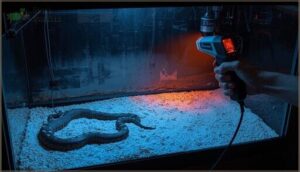
After your thermostat is set, you’ll want to check surface temperatures regularly. Use an infrared gun for quick Nighttime Spot Checks, moving aside substrate to read the heat mat’s true contact zone.
Secure probe placement above the pad and log readings daily. Substrate Impact can hide hot spots, so calibrate often—matching probe and gun values—to maintain a safe temperature gradient.
Risks of Leaving Heating Pads on Too Long

Even with a thermostat doing most of the heavy lifting, things can still go wrong if you’re not paying attention. Leaving a heating pad running without proper oversight creates real risks — for your equipment and your snake.
Here’s what you need to watch out for.
Overheating and Burns
heating pads unregulated is a real danger to your snake’s health.
Without proper temperature control, surface heat can exceed 120°F — far above the safe 85–95°F range.
Since snakes won’t pull away from damaging heat like mammals do, burns can develop quickly.
Watch for reddened belly scales or blistering as early burn symptom identification.
Substrate insulation thickness of at least two inches and heat barrier materials help prevent direct contact injuries.
Malfunctioning Equipment
When your heating pads run unchecked, risks multiply—Thermostat Relay Failure can let pads overheat, Pad Electrical Short may cause fire, and Probe Displacement sends temperature control astray.
Power Surge Risks or Backup Heat Failure during a power outage leave your snake exposed. That’s why emergency preparedness means checking all heat sources daily, watching for malfunction signs, and keeping backup options ready.
Signs of Discomfort in Snakes
Sometimes your first clues are subtle: Rapid Breathing, Cool Side Seeking, or new lethargic behavior as snakes avoid overheated spots from heating pads with poor temperature control.
Watch for Escape Attempts, nose rubbing, or constant hiding on the cool side.
Add feeding changes or regurgitation, and assume heat stress or early burns are threatening digestion and overall health over time.
Maintenance Tips for Reliable Heating Pad Operation

Keeping your heating pad in good shape isn’t complicated, but it does take a little consistency. Like any equipment that runs around the clock, things can quietly go wrong if you’re not paying attention.
Here are three maintenance habits that’ll keep your snake’s setup safe and reliable.
Regular Inspection and Cleaning
A neglected heating pad is a quiet hazard waiting to surface.
Your pad damage inspection should happen weekly — look for cracks, frayed cords, or bubbling surfaces.
For your dust removal routine, wipe pads with a dry microfiber cloth every seven days.
Use the vinegar cleaning method — one part vinegar, three parts distilled water — following a consistent cleaning frequency schedule.
Always finish with post-cleaning verification using an IR thermometer.
Thermostat Calibration Checks
Think of your thermostat as life support for your snake’s temperature regulation, not a set-and-forget gadget.
Check Probe Accuracy weekly using Secondary Thermometer Verification on the heat mat hotspot, then log results in a simple Calibration Schedule.
Once a month, perform Ice Bath Calibration, and run a quick Cycle Response Test on your digital thermostats to confirm tight temperature control.
Recognizing and Replacing Damaged Pads
Would you trust a cracked bridge to hold your weight?
Crack Inspection is your first line of defense—look for splits, bulging, or dark spots. Burn Smell Detection warns you of hidden dangers. Safety Wiring Checks catch frayed or loose cords.
Pad Replacement Timing matters; swap pads every 1–3 years.
Reliable heating pads and thermostat calibration protect snake health and wellness, preventing burns.
Emergency Preparedness for Heating Pad Failures

Heating pad failures can happen suddenly, leaving your snake without the warmth it needs.
Planning ahead gives you peace of mind and keeps your pet safe.
Here’s what you should have ready in case your heating pad stops working.
Backup Heat Sources During Power Outages
When a power outage strikes, your snake depends on you for warmth. Emergency preparedness for pet owners means knowing your backup options. For rapid response, you can rely on:
- Chemical Heat Packs for steady heat
- Insulated Shipping Boxes paired with hot water bottles
- Portable Generators or Battery Power Banks for longer outages
Don’t forget a thermal blanket or hand warmers for extra insulation.
Creating a Snake Emergency Kit
Alongside backup heating pads, you’ll want a snake emergency kit ready for any situation.
Stock sterile gauze, restraint tools like gloves and forceps, and monitoring items such as a penlight and kitchen scale.
Keep a secure transport carrier, a documentation checklist with vet contacts, and supportive supplies for thermal regulation.
This kit anchors your emergency preparedness and snake care during a power outage.
Monitoring Enclosure Temperatures in Emergencies
With your emergency kit ready, temperature control becomes your next priority. During a heating pad failure, check the enclosure every 30 minutes using infrared spot checks — no need to open it. Keep a written temperature log to track changes hour by hour.
Your rapid heat assessment tools matter most here:
- Digital probe thermometers for substrate-level readings
- Infrared non-contact thermometers for quick surface checks
- Backup sensor integration via remote-display units
Thermometer calibration keeps your readings trustworthy when reptiles need it most.
Frequently Asked Questions (FAQs)
Should I leave the heating pad on for my snake?
Think of your snake’s heating pad as a heartbeat — it needs to keep running. Yes, leave it on continuously.
Paired with a thermostat, it provides safe thermoregulation without spiking power consumption.
Should I turn my snakes heat mat off at night?
No, don’t turn it off.
Your snake relies on steady nighttime temperature control for thermoregulation. A thermostat-regulated heat mat keeps thermal gradients stable, supporting snake health and wellness around the clock.
How long can a snake go without a heating pad?
Like a lantern in a room, a snake survives power outage duration without heating pads when the room temperature buffer matches species tolerance, juvenile sensitivity, feeding cycles, by temperature control, thermoregulation, and snake health and wellness.
Can a heating pad replace all other heat sources?
In reptile enclosure design, heating pads can replace other heaters.
But species-specific feasibility, thermal gradient creation, room temperature dependence, heat source redundancy, backup power considerations, temperature control, thermoregulation, and snake health and wellness set limits.
Are heating pads safe for glass or plastic enclosures?
Hot topic: heating pads on-glass are safe when Glass Heat Transfer and Adhesive Bonding Safety meet Thermostat Placement Guidelines.
but Plastic Insulation Risks in enclosure demand Reptile Heating Solutions, temperature control, Emergency Backup Heating, thermoregulation.
Which heating pad type is best for my species?
Match reptile heating solutions to snake species: Ball python pads, Corn snake mats, and King snake tape heat the ground.
Arboreal heat panels and Boa constrictor radiators warm above; heat mat needs temperature control for thermoregulation.
How do I safely introduce a new heating pad?
Think of a sun for your pet:
Gradual temperature increase, Initial 24‑hour test with heating pads and thermostat, Probe placement testing, Safety cord inspection, Snake acclimation monitoring, protect temperature control, snake enclosure, and reptile husbandry.
Conclusion
Safe snake care is calm on the surface, built from constant watching and constant warmth beneath.
You aren’t deciding how warm a pad should be; you’re deciding how stable your snake’s world feels.
When you use a thermostat, verify surface temperatures, and adjust for species and room changes, you turn risk into routine.
Knowing how long to leave a heating pad on for snakes becomes less a guess and a practiced skill you perfect over time.
- https://reptifiles.com/corn-snake-care-guide/corn-snake-temperatures-humidity/
- https://www.xyzreptiles.com/correctly-using-reptile-heating-pad/
- https://www.reptilecymru.co.uk/corn-snake-care-guide/
- https://enviroliteracy.org/animals/is-a-heat-pad-enough-for-a-corn-snake/
- https://www.furrycritter.com/pages/articles/reptiles/under_tank_heaters.htm