This site is supported by our readers. We may earn a commission, at no cost to you, if you purchase through links.
Your ball python just escaped through a gap you didn’t know existed, or your corn snake refuses to eat because the temperature dropped five degrees overnight. These aren’t rare mishaps—they’re predictable outcomes of improvised habitats that ignore how snakes actually function.
Unlike mammals that regulate their own body temperature and adapt to varied conditions, snakes depend entirely on their environment to maintain basic physiological processes like digestion, immune function, and even movement. Understanding how to create a comfortable environment for pet snakes means recognizing that every element—from substrate choice to ventilation placement—directly impacts your snake’s health and longevity.
The difference between a thriving snake and one that develops respiratory infections or refuses food often comes down to specific, measurable habitat parameters you can control from day one.
Table Of Contents
- Key Takeaways
- Choosing The Ideal Snake Enclosure
- Selecting Safe and Comfortable Substrate
- Managing Temperature, Lighting, and Humidity
- Enriching The Snake’s Habitat
- Top 9 Products for Snake Comfort
- 1. Repti Zoo Glass Terrarium Habitat
- 2. Reptile Clamp Lamp Fixture
- 3. Exo Terra Reptile Glass Terrarium
- 4. Exo Terra Outback Terrarium
- 5. Carolina Custom Large Glass Terrarium
- 6. Natural Coconut Fiber Reptile Bedding
- 7. Organic Coconut Reptile Bedding Substrate
- 8. Natural Forest Floor Bedding Substrate
- 9. Natural Cypress Reptile Bedding Mulch
- Frequently Asked Questions (FAQs)
- Conclusion
Key Takeaways
- Snakes rely entirely on external environmental conditions to regulate body temperature, digestion, and immune function, making precise control of temperature gradients (75-90°F), humidity levels (50-60%), and ventilation critical to preventing the respiratory infections that cause 40% of veterinary visits.
- Your enclosure must provide at least 1.5 times your snake’s adult length in linear space with secure locks, proper ventilation, and material choice (glass for visibility, plastic for humidity retention, or wood for insulation) that matches your species’ specific needs.
- Substrate selection directly impacts respiratory health and digestion—stick with proven options like cypress mulch, coconut fiber, or reptile carpet while avoiding cedar, pine, and sand that cause respiratory irritation or impaction if ingested.
- Environmental enrichment through strategically placed hides on both warm and cool sides, climbing structures for arboreal species, and optional live plants reduces stress and encourages natural behaviors, but every addition must maintain proper airflow and temperature gradients.
Choosing The Ideal Snake Enclosure
Your snake’s enclosure isn’t just a box—it’s their entire world, and getting it right makes all the difference between a stressed reptile and a thriving one. The right setup depends on your snake’s size, species, and natural habitat needs, but three main factors matter most: dimensions, material, and airflow.
Your snake’s enclosure is their entire world—get the dimensions, material, and airflow right to ensure they thrive instead of stress
Let’s break down what you need to know about each one so you can make the best choice for your pet.
Determining Proper Enclosure Size
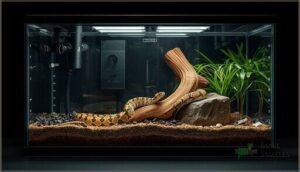
Your snake’s enclosure should provide a linear footprint at least 1.5 times its full adult length—pink corn snakes need 1.8–2.4 m, while ball pythons require 1.6–2.0 m. Proper enclosure dimensions guarantee adequate space utilization and support essential temperature gradient formation.
Larger reptile terrariums demand careful monitoring of ventilation needs and humidity control to maintain a stable, comfortable snake habitat throughout the enclosure design. Researchers rely on scientific study methods to improve animal care standards.
Comparing Glass, Plastic, and Wooden Enclosures
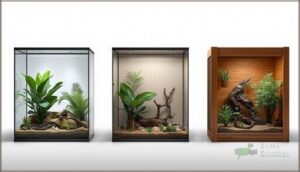
Once you’ve settled on the right dimensions, you’ll choose between three primary enclosure materials—each with distinct trade-offs.
Glass terrariums offer crystal-clear visibility and easy cleaning but tend to be heavy and require careful temperature management.
Plastic reptile enclosures are lightweight, budget-friendly, and excellent for humidity control, though they may scratch over time.
Wooden snake habitats provide enhanced insulation and aesthetic options but demand vigilant moisture monitoring to prevent warping and mold in your animal enclosure design.
Essential Ventilation and Security Features
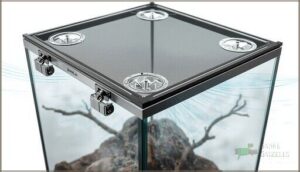
No matter which material you’ve selected, proper ventilation systems and secure locking mechanisms make the difference between a safe habitat and a potential disaster. Look for screened tops with multiple air vents that enable steady airflow management without creating drafts. Position vents at opposite ends to promote cross-ventilation and prevent humidity hotspots.
Install tamper-resistant latches that prevent curious snakes from pushing through weak spots—your escape prevention strategy depends on it.
Selecting Safe and Comfortable Substrate
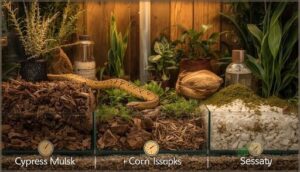
The substrate you choose directly affects your snake’s respiratory health, skin condition, and overall comfort. Some materials provide excellent humidity retention and natural burrowing opportunities, while others can cause impaction or respiratory irritation if ingested.
Let’s look at the safest substrate options that support your snake’s health and make maintenance easier for you.
Best Substrate Options for Pet Snakes
Your substrate selection directly impacts your snake’s health and your cleaning routine. Reptile carpet and paper towels offer the easiest maintenance with minimal dust exposure.
Cypress mulch excels at humidity control while providing a naturalistic appearance. Coconut fiber bedding retains moisture effectively and works well for most species.
For those seeking excellent sanitation, tile or washable smooth surfaces reduce bacteria growth markedly.
Substrate to Avoid for Snake Health
When choosing bedding, stay away from toxic substrates that compromise snake safety. Cedar and aromatic pine release terpenes causing respiratory risks and skin irritants, while sand-based materials create serious digestive hazards if swallowed. Skip calcinated substrates and splintered wood chips entirely.
Instead, stick with proven alternatives like reptile carpet, aspen shavings, cypress mulch, or coconut fiber for proper substrate selection.
Cleaning and Replacing Substrate
To keep your snake healthy, you’ll need a solid substrate maintenance routine. Most bedding needs replacing every 1-3 months, but cleaning schedules vary by species and enclosure use.
Follow these sanitation protocols for effective waste management:
- Spot-clean daily to remove feces and shed debris
- Wear gloves during substrate removal to minimize pathogen contact
- Wash enclosure surfaces with reptile-safe disinfectant between changes
- Allow complete drying before adding fresh substrate for humidity control
- Track replacement dates to monitor patterns and adjust your snake enclosure routine
Managing Temperature, Lighting, and Humidity
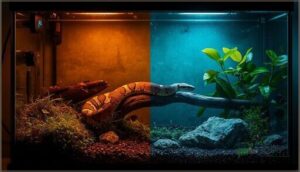
Your snake’s comfort depends on three environmental factors working in harmony: temperature, lighting, and humidity. Getting these right isn’t complicated, but it requires the right equipment and consistent monitoring.
Let’s break down how to create the thermal gradient your snake needs, choose appropriate heating and lighting tools, and maintain proper humidity levels throughout the enclosure.
Creating an Effective Temperature Gradient
Your snake’s temperature gradient creates distinct thermal zones essential for healthy thermoregulation. Establish a warm side at 28–32°C and a cooler zone around 22–26°C using precise thermal mapping with multiple thermometers.
This 10–15°C difference allows your snake to shuttle between areas, controlling its metabolism naturally. Monitor temperature fluctuations closely—stability within ±2–3°C prevents metabolic stress and aids proper digestion.
Choosing Heating and Lighting Equipment
Quality equipment makes all the difference in maintaining stable conditions and keeping your snake healthy. Here are five reliable heat source options and lighting controls every keeper should consider:
- Heat mats paired with precise thermostat settings provide consistent belly warmth for most terrestrial species
- Ceramic heat emitters deliver ambient heat without disrupting day-night cycles
- Heat lamps create defined basking zones when properly secured
- UVB light offers benefits for calcium metabolism in certain species
- Dimming thermostats enable fine temperature regulation across your gradient
Monitoring and Adjusting Humidity Levels
Moisture management isn’t guesswork—you need a calibrated hygrometer positioned at snake level to track ambient conditions accurately. Aim for 50 to 60 percent relative humidity with daily readings logged at the same time.
If levels spike above target for 24 hours, boost ventilation systems and reduce substrate moisture. When humidity drops too low, mist gently with chlorine-free water and monitor air quality closely to prevent respiratory issues.
Enriching The Snake’s Habitat
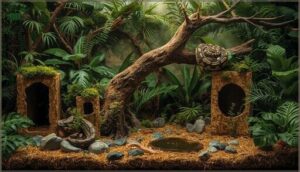
Your snake needs more than just the right temperature and humidity to thrive. A well-enriched habitat gives your pet opportunities to exhibit natural behaviors like climbing, hiding, and exploring their environment.
Let’s look at the specific ways you can transform a basic enclosure into a stimulating home that keeps your snake both physically and mentally healthy.
Providing Hides and Climbing Structures
Your snake’s mental health depends on secure refuges and vertical exploration opportunities. Install at least two hides on opposite enclosure ends—one near warmth, another in cooler zones—to encourage natural territory use.
For arboreal species, anchor textured climbing structures like cork bark securely at varied heights. Terrestrial snakes prefer low-profile hiding spots with broad entrances.
Proper refugium placement and texture variety dramatically reduce stress during routine handling.
Adding Live Plants and Habitat Decor
Live plants transform your reptile terrarium into a vibrant ecosystem. Select non-toxic species like pothos or snake plants that tolerate humidity while creating microhabitats with shaded zones. Position plants strategically in your snake enclosure design to improve habitat design without blocking basking areas.
Smart decor placement promotes snake behavior:
- Quarantine new plants for two weeks to verify they’re pest-free before introduction
- Wipe foliage clean of pesticide residues that could harm your snake
- Prune regularly to prevent overgrowth that restricts airflow and movement
Environmental Enrichment and Sensory Stimulation
Beyond decor, sensory toys and enrichment opportunities spark natural snake behavior. Rotate textured hides—bamboo, cork bark, smooth stone—to maintain novelty. Environmental complexity means adding branches at different heights while preserving open space for thermoregulation and humidity control.
Monitor your snake’s response closely. Habitat diversity shouldn’t overwhelm—remove items causing stress. Smart enrichment strategies in snake enclosure design balance stimulation with security, creating reptile habitat creation that fosters wellbeing.
| Enrichment Type | Example Items | Behavioral Benefit |
|---|---|---|
| Textural Variety | Cork bark, river stones, fabric hides | Encourages exploration and slithering |
| Vertical Structures | Branches, climbing vines, ledges | Promotes natural climbing instincts |
| Novel Scents | Safe herbs, substrate changes | Stimulates foraging behaviors |
Top 9 Products for Snake Comfort
Choosing the right products makes all the difference in creating a habitat where your snake can truly thrive. From terrariums that maintain proper humidity to bedding that mimics natural environments, each product fulfills a specific purpose in your snake’s comfort and health.
Here are nine essential products that experienced keepers rely on to keep their snakes healthy and content.
1. Repti Zoo Glass Terrarium Habitat
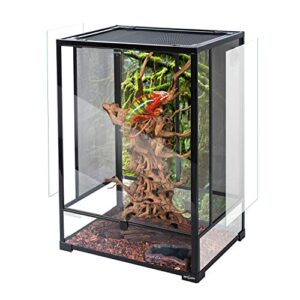
The Repti Zoo Glass Terrarium offers a flexible snake habitat with dimensions up to 24″L x 18″W x 36″H, giving you clear visibility while maintaining enclosure security. You’ll appreciate the front-opening double-hinged door for safer maintenance and the switchable side panels—toggle between mesh for ventilation or glass for thermal regulation and humidity control.
The waterproof base accommodates substrate heaters, while integrated screen tops balance airflow. This reptile terrarium design suits small to medium snakes when you’re planning your snake enclosure setup and maintenance routine.
| Best For | Reptile keepers looking for a tall, versatile glass enclosure with customizable ventilation options for arboreal or climbing snakes that need good visibility and easy front access. |
|---|---|
| Primary Use | Reptile/Amphibian Housing |
| Material | Glass |
| Dimensions | 24″L x 18″W x 36″H |
| Weight | Not Specified |
| Ease of Cleaning | Easy Access Design |
| Ventilation Features | Screen Ventilation |
| Additional Features |
|
- Front-opening double doors with screen vents make feeding and cleaning safer and easier than top-entry tanks
- Switchable side panels let you adjust between mesh for airflow or glass for better heat and humidity retention
- Waterproof raised base works well with under-tank heaters and prevents moisture damage to your furniture
- Door locking mechanism can be finicky and may not seal perfectly, leading to gaps at top and bottom
- Assembly instructions aren’t always clear, especially for the side panels, which can make setup frustrating
- May need extra weatherstripping or modifications to fully seal gaps and maintain stable temperature and humidity
2. Reptile Clamp Lamp Fixture
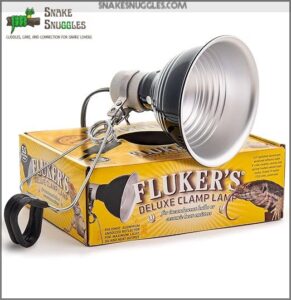
Once your enclosure is set up, proper heating and temperature control become critical for your snake’s health. The Fluker’s Reptile Clamp Lamp Fixture delivers reliable thermal regulation with its 75-watt capacity and ceramic socket compatible with incandescent bulbs and heat emitters.
You’ll benefit from the safety clamp that secures the 5.5-inch aluminum fixture to your terrarium, while the on/off switch simplifies temperature regulation. Mount it strategically to create your heat gradient, but monitor placement carefully—this fixture can get hot with high-wattage bulbs, requiring thoughtful lamp safety practices and electrical maintenance.
| Best For | Snake owners who need an affordable, adjustable heat source that creates proper temperature gradients in small to medium terrariums. |
|---|---|
| Primary Use | Heating/Lighting |
| Material | Aluminum/Plastic |
| Dimensions | 6.5″W x 6″H |
| Weight | 1 pound |
| Ease of Cleaning | N/A |
| Ventilation Features | N/A |
| Additional Features |
|
- UL-approved ceramic socket handles multiple bulb types including heat emitters and compact fluorescents for flexible heating options
- Safety clamp and adjustable positioning let you fine-tune your heat gradient without drilling into the enclosure
- Lightweight aluminum construction at just 1 pound makes it easy to reposition as your snake’s heating needs change
- Can overheat with high-wattage bulbs, requiring careful monitoring and potentially a separate thermostat for safety
- 5.5-inch diameter limits effectiveness in larger or deeper terrariums where heat distribution becomes uneven
- Some users report bulb blowouts and quality control issues that may require replacement units or careful bulb selection
3. Exo Terra Reptile Glass Terrarium
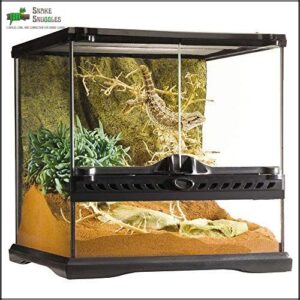
For outstanding snake enclosures that combine reptile safety with practical glass care, the Exo Terra Reptile Glass Terrarium stands out with its 12x12x12-inch footprint and front-opening dual doors.
You’ll appreciate the patented ventilation system that enhances humidity control while maintaining consistent airflow. The raised frame accommodates heating equipment seamlessly, supporting thorough reptile care and husbandry.
This adaptable terrarium excels for smaller species, offering secure closures and waterproof construction that simplifies terrarium maintenance. It’s a proven solution for implementing effective snake habitat ideas and exotic pet care management practices.
| Best For | Keepers of small reptiles, amphibians, or invertebrates like crested geckos and tarantulas who want a compact, easy-to-clean enclosure with secure access and good ventilation. |
|---|---|
| Primary Use | Reptile/Amphibian Housing |
| Material | Glass |
| Dimensions | 12″W x 12″D x 12″H |
| Weight | 13.2 Pounds |
| Ease of Cleaning | Easy to Clean |
| Ventilation Features | Front Window Ventilation |
| Additional Features |
|
- Front-opening dual doors with locks make feeding and maintenance simple while preventing escapes
- Raised bottom frame fits substrate heaters easily and the waterproof base protects your furniture
- Patented ventilation system balances airflow and humidity better than fully sealed enclosures
- May struggle to hold humidity for tropical species without added equipment like misters or covers
- Styrofoam background isn’t very durable and can deteriorate over time
- Heavy glass construction makes it tough to move around, and some customers report receiving damaged units during shipping
4. Exo Terra Outback Terrarium
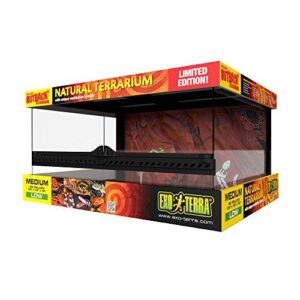
When your terrestrial snake needs authentic outback-inspired housing, this 25×19.6×13.3-inch reptile terrarium delivers both aboriginal artwork and practical function.
You’ll benefit from the stainless steel screen cover with twist locks that prevent escape while managing humidity levels effectively. The unique ventilation system maintains a proper temperature gradient, and front-opening doors simplify enclosure maintenance without stressing your pet.
The included 3D rock background adds visual depth, though you should secure substrate carefully since the styrofoam backing can occasionally flake during setup.
| Best For | Reptile owners looking for a medium-sized terrarium with unique outback-themed design for terrestrial species like bearded dragons, leopard geckos, or small snakes. |
|---|---|
| Primary Use | Reptile/Amphibian Housing |
| Material | Stainless Steel/Glass |
| Dimensions | 25″ x 19.6″ x 13.3″ |
| Weight | 0.01 Ounces |
| Ease of Cleaning | Easy Access/Maintenance |
| Ventilation Features | Unique Ventilation System |
| Additional Features |
|
- Front-opening doors with secure locking system make feeding and cleaning easy without disturbing your pet from above
- Stainless steel screen top with twist locks provides excellent ventilation while preventing escapes
- Hand-painted 3D aboriginal rock background adds visual interest and creates a naturalistic environment right out of the box
- Durability concerns reported by some customers, with glass arriving cracked or broken during shipping
- Styrofoam background can be noisy when animals move against it and may flake off over time
- Top screen may sag under the weight of heavy lighting equipment, and cord holes are only in the back which limits setup flexibility
5. Carolina Custom Large Glass Terrarium
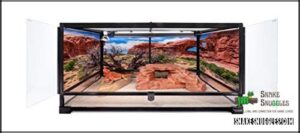
When larger snakes need premium visibility and spacious housing, you’ll appreciate this 36x18x18-inch glass terrarium that prioritizes both function and aesthetics. The waterproof base tray protects against spills during snake acclimation and routine glass maintenance, while the full steel screen mesh top handles ventilation systems effectively.
You can easily monitor temperature gradient and humidity levels through clear sides, and the key-lock security prevents escape attempts. Though terrarium assembly requires patience and the hinged doors occasionally need adjustment for ideal humidity control, this reptile terrarium offers outstanding value for ball pythons and similar species.
The included 3-sided backgrounds help reduce stress during your snake’s adjustment period.
| Best For | Snake keepers who want a roomy, transparent enclosure with excellent visibility for monitoring larger species like ball pythons or bearded dragons without sacrificing security. |
|---|---|
| Primary Use | Reptile/Amphibian Housing |
| Material | Glass |
| Dimensions | 35.9″ x 17.9″ x 18″ |
| Weight | 60.4 Pounds |
| Ease of Cleaning | Easy to Clean |
| Ventilation Features | Full Steel Screen Top |
| Additional Features |
|
- Waterproof base tray catches spills and makes cleanup straightforward, especially helpful during water bowl changes or when your snake soaks
- Clear glass sides let you easily track temperature gradients and check on your snake without disturbing them, while the full mesh top provides solid ventilation
- Key-lock doors and sturdy construction prevent escape attempts, giving you peace of mind with active or curious snakes
- Door hinges and locks can be finicky—some users report the mechanism doesn’t always work smoothly or open fully depending on rack placement
- Assembly takes patience, and the screen top can be tricky to secure properly during initial setup
- Not ideal for species needing high humidity since you may need to modify the screen top to maintain consistent moisture levels
6. Natural Coconut Fiber Reptile Bedding
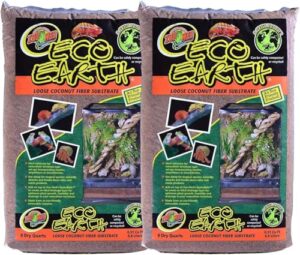
Coconut fiber substrate is an excellent choice for your snake’s habitat, offering excellent humidity control while keeping the enclosure clean and odor-free. This natural material, derived from coconut husk, encourages your pet’s digging instincts without causing respiratory irritation.
The light-colored fibers make daily spot-cleaning straightforward, as waste is easily visible. To prevent mold growth, ensure proper ventilation and allow the substrate to dry between cleanings.
Replace the substrate every 1-4 weeks, depending on your enclosure size. Always verify you’re using untreated, organic formulations to ensure the best hygiene and safety for your snake.
| Best For | Snake owners who want a natural, absorbent bedding that supports burrowing behavior while keeping humidity levels stable and odors under control. |
|---|---|
| Primary Use | Terrarium Substrate |
| Material | Coconut Fiber |
| Dimensions | 16″ x 15″ x 5.5″ |
| Weight | 6.4 Pounds |
| Ease of Cleaning | Easy to Vacuum |
| Ventilation Features | N/A |
| Additional Features |
|
- Excellent moisture retention helps maintain proper humidity for tropical species while absorbing waste and reducing odors effectively.
- Soft texture encourages natural digging and burrowing instincts without creating respiratory irritation from dust.
- Easy spot-cleaning thanks to light-colored fibers that make waste visible, plus it’s compostable after use.
- Can develop mold in high-humidity setups without adequate ventilation, requiring regular monitoring and drying between cleanings.
- May compact over time and needs fluffing or replacement every 1-4 weeks to maintain proper aeration.
- Some products arrive dry or may contain pesticides, so you’ll need to verify you’re getting untreated, organic formulations.
7. Organic Coconut Reptile Bedding Substrate
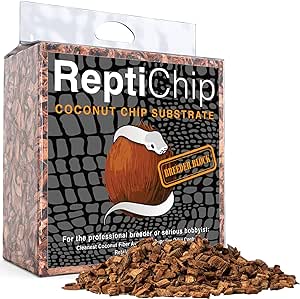
When your snake needs a tropical-style habitat, organic coconut bedding substrate delivers both humidity control and excellent odor absorption. This compressed brick expands to 10 pounds of dust-free material, which means you won’t irritate your pet’s respiratory system during setup.
The neutral pH naturally resists fungal growth when you maintain proper ventilation. You’ll want to create a 2–3 inch layer for comfortable burrowing, then plan for spot cleaning weekly and complete replacement every 4–6 weeks to guarantee ideal reptile hygiene.
| Best For | Snake owners who need high humidity levels and want a natural, dust-free substrate that supports burrowing behavior while controlling odors. |
|---|---|
| Primary Use | Terrarium Substrate |
| Material | Coconut Chips |
| Dimensions | Variable (expands) |
| Weight | 10 lbs (expanded) |
| Ease of Cleaning | Pleasant-Smelling |
| Ventilation Features | N/A |
| Additional Features |
|
- Expands from a compact brick to 10 pounds of bedding, making it economical and easy to store
- Retains moisture well to create tropical environments while naturally absorbing waste odors
- Dust-free formula with neutral pH reduces respiratory issues and resists mold when properly maintained
- Can be dusty during the initial expansion process, requiring good ventilation or a mask
- Requires regular maintenance with full replacement every 4–6 weeks, which adds to ongoing costs
- Doesn’t clump together well, so it may not work for reptiles that prefer firm, stable burrows
8. Natural Forest Floor Bedding Substrate
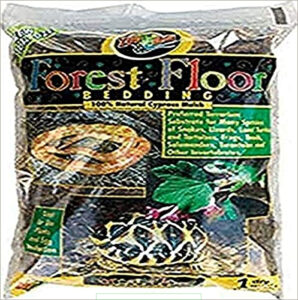
When you want to replicate your snake’s native environment, natural forest floor substrate creates a remarkably realistic habitat that encourages instinctive burrowing and stress reduction. This substrate material holds humidity exceptionally well—critical for species from tropical regions—while its varied texture provides sensory stimulation that paper-based options simply can’t match.
You’ll need to maintain a 2–4 inch substrate depth for ideal burrowing, spot-clean daily to remove waste, and replace the entire bedding every 6–12 months to prevent mold growth in your reptile terrarium.
| Best For | Snake owners who want to recreate a natural habitat for tropical or burrowing species while maintaining proper humidity levels. |
|---|---|
| Primary Use | Terrarium Substrate |
| Material | Cypress Mulch |
| Dimensions | 18″ x 12″ x 6″ |
| Weight | 10.6 Pounds |
| Ease of Cleaning | Easy Spot Clean |
| Ventilation Features | N/A |
| Additional Features |
|
- Retains moisture exceptionally well, making it ideal for snakes and reptiles that need higher humidity without constant misting.
- Mimics the natural forest floor environment, which helps reduce stress and encourages natural burrowing behaviors.
- Provides good value with easy spot-cleaning for daily maintenance.
- Can be hard to spot waste due to the dark color and texture, making thorough cleaning more challenging.
- May arrive with large chunks or debris that need to be removed before use.
- Requires complete replacement every 6–12 months and carries some risk of mold or pest issues if humidity isn’t properly managed.
9. Natural Cypress Reptile Bedding Mulch
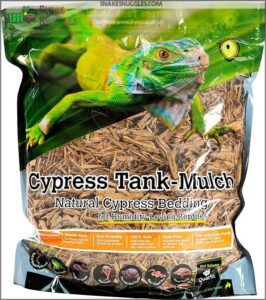
Cypress mulch brings natural aroma and impressive moisture retention to your snake habitat ideas, though you’ll need to verify it’s free from pesticides and additives before use. This substrate material excels at humidity management for tropical species, but monitor your snake closely for respiratory distress—cypress oils can irritate sensitive respiratory systems.
Maintain 2–3 inch substrate depth for proper reptile hygiene, spot-clean waste daily, and replace completely every 1–3 months depending on moisture levels. Source from reputable reptile care suppliers to guarantee cypress safety and minimize mold risk.
| Best For | Reptile owners with humidity-loving species like ball pythons, iguanas, and frogs who want a natural substrate that controls moisture and odor. |
|---|---|
| Primary Use | Terrarium Substrate |
| Material | Cypress Mulch |
| Dimensions | 5″ x 13.5″ x 14″ |
| Weight | 1.95 Pounds |
| Ease of Cleaning | Easy to Clean |
| Ventilation Features | N/A |
| Additional Features |
|
- Excellent moisture retention helps maintain tropical humidity levels without constant misting
- Made from sustainable cypress timber byproduct that’s free from chemicals and parasites
- Low dust and quick-drying properties make cleanup easier than many alternatives
- Natural cypress oils can irritate respiratory systems in sensitive snakes
- Higher cost compared to basic bedding options like paper or aspen
- Requires complete replacement every 1–3 months and careful monitoring for mold growth
Frequently Asked Questions (FAQs)
What signs indicate my snake is stressed?
Watch for rapid tongue flicking, hissing, or frozen immobility—stress signals often tied to environmental factors.
Tremors, tail rattling, and erratic movements reveal deeper health indicators requiring immediate attention to your snake’s welfare and psychological needs.
How often should I feed my snake?
Feeding schedules depend on your pet’s age and species. Juveniles need meals every 5 to 7 days, while adult snakes thrive on feeding every 7 to 14 days, preventing obesity and supporting healthy growth rates.
Can different snake species live together safely?
You’d think snake compatibility would be simple, but interspecies aggression and predator-prey dynamics make cohabitation risky.
Different species need separate enclosures—territorial behavior, temperature conflicts, and feeding competition create dangerous stress for your pet snakes.
What illnesses commonly affect pet snakes?
Respiratory issues, skin infections, and parasites rank among the most common snake health concerns. Bacterial diseases like mouth rot and fungal infections also threaten reptile health, requiring prompt veterinary attention and improved enclosure management.
How do I safely handle my snake?
Always support your snake’s entire body when lifting, using calm movements to minimize stress.
Wash hands before and after handling, and avoid sessions during shedding or within 48 hours post-feeding to prevent regurgitation.
Conclusion
Respiratory infections account for nearly 40% of all veterinary visits for captive snakes, and most cases trace back to improper temperature or humidity control.
When you learn how to create a comfortable environment for pet snakes using measurable parameters—thermal gradients between 75-90°F, humidity ranges specific to your species, and substrates that don’t trap moisture—you’re not just preventing disease. You’re building a habitat where your snake’s physiology works as evolution designed it.