
This site is supported by our readers. We may earn a commission, at no cost to you, if you purchase through links.
Most snake bites happen during handling—not from wild encounters or aggressive animals, but from pet owners who don’t know how to support their snake’s body correctly. Your ball python or corn snake isn’t trying to hurt you, but incorrect handling triggers defensive responses that both stress your pet and put you at risk.
The difference between a calm, confident snake and a nervous one often comes down to how you distribute its weight and read its body language. Learning to hold your pet snake properly transforms handling from a tense guessing game into a comfortable routine that strengthens your bond and keeps both of you safe.
Table Of Contents
- Key Takeaways
- Preparing to Hold Your Pet Snake
- When and How Often to Handle Snakes
- Approaching and Picking Up Your Snake
- Safe Handling Techniques for Pet Snakes
- Emergency and Hygiene Best Practices
- Frequently Asked Questions (FAQs)
- What is the proper way to hold a snake?
- Do pet snakes like being held?
- How do I properly pick up my pet snake?
- Can I handle my snake when I first get it?
- Can children safely handle pet snakes unsupervised?
- How do different snake species vary in temperament?
- What body language indicates a snake feels secure?
- Should I handle my snake during breeding season?
- How does temperature affect snake handling behavior?
- Conclusion
Key Takeaways
- Most snake bites occur during handling mistakes rather than wild encounters, with improper body weight distribution and missed stress signals triggering defensive responses in otherwise calm pet snakes.
- Successful handling requires supporting one-third to one-half of the snake’s body length with open palms positioned at the mid-section, never gripping the head or tail which causes injury and panic.
- Wait 24 to 48 hours after feeding before handling and avoid interaction during shedding cycles when clouded eyes and dulled skin indicate heightened stress and reduced vision.
- Reading body language like hissing, tight coiling, or rapid breathing prevents bites by signaling when to postpone sessions, while calm tongue flicks and loose S-curves indicate a secure, comfortable snake.
Preparing to Hold Your Pet Snake
Before you reach into your snake’s enclosure, you need to take a few simple steps to protect both yourself and your pet. Proper preparation reduces stress for your snake and minimizes the risk of bites or handling accidents.
Understanding safe feeding practices is another essential part of keeping your snake calm and healthy during routine care.
Here’s what you should do first to guarantee a safe and smooth handling session.
Washing Hands and Personal Hygiene
Wash your hands with mild, fragrance-free soap and warm water for at least twenty seconds before picking up your snake. This removes food smells and oils that might trigger a feeding response.
Skip scented lotions and strong perfumes—they can stress your pet’s sensitive chemical receptors.
Keep nails trimmed and clean to prevent accidental scratches.
If soap isn’t available, use alcohol-based hand sanitizer with at least sixty percent alcohol.
Choosing Proper Safety Gear
After cleaning your hands, select glove materials suited to your snake’s temperament. Lightweight disposable gloves prevent bacterial transfer but offer no bite resistance. Thick gloves or specialized safety gloves with puncture-resistant layers protect against defensive strikes.
Pair protective clothing like long sleeves with a snake hook for nervous individuals. Eye protection and face shields matter when cleaning enclosures or working with larger species.
Make sure to review safety precautions for handling snakes before beginning any handling.
Creating a Calm Environment
Once you’ve geared up, prepare a quiet space away from TVs and loud appliances. Keep noise below 60 decibels to prevent startling your snake through ground vibrations.
Use soft, indirect lighting rather than harsh overhead bulbs—bright glare triggers defensive postures. Maintain room temperature in the low to mid 70s Fahrenheit so your snake doesn’t lose body heat quickly.
Gentle touch and calm lighting support stress reduction during safe handling sessions. For even safer handling, make sure to check out proper snake enclosure setup tips.
When and How Often to Handle Snakes

Knowing when to handle your snake matters just as much as knowing how. Too much interaction can stress your pet, while too little can make it defensive or unpredictable.
That’s why learning proper handling techniques is essential for building trust without overwhelming your snake.
Let’s cover the timing and frequency that keeps both you and your snake comfortable.
Ideal Handling Frequency
Most snake care guides recommend handling your pet snake one to two times per week, but your reptile’s individual species needs and temperament matter more than any fixed rule. During the taming phase, some keepers work with defensive snakes for 15 minutes daily using protective gear, while calm adults may handle longer weekly sessions without issue.
- Species Needs: Corn snakes often do well with 5 to 10 minute sessions one to two times weekly, while some boas tolerate hour-long handling less frequently.
- Session Duration: Cap most handling at 15 to 30 minutes to prevent temperature loss and stress, especially with smaller snakes.
- Taming Phase: After your snake eats reliably, begin with short sessions every few days, then adjust frequency as confidence builds.
- Stress Signals: Reduce handling if your snake refuses food, hides more, or becomes defensive—these signs mean you’re overdoing it.
- Keeper Lifestyle: Match your snake handling routine to your schedule and your snake’s behavior, not an arbitrary calendar.
Timing Around Feeding and Shedding
Wait at least 24 to 48 hours after feeding schedules before snake handling to protect digestive health and reduce regurgitation risk. Larger prey items require 2 to 4 days of rest.
During shedding cycles, avoid handling when eyes cloud or skin dulls—pre-shed behavior signals reduced vision and heightened stress.
Post-feed handling and interrupting active sheds both disrupt your pet snake’s natural processes, so time snake care sessions around these critical windows.
Recognizing When to Avoid Handling
Reading snake body language helps you catch stress signals before they escalate into defensive behavior. A hissing, striking, or tightly coiled snake tells you to stop and give space.
- Skip handling when your snake shows defensive snakes postures like hidden heads, rapid breathing, or mock strikes
- Avoid interaction if you notice health issues such as lethargy, respiratory distress, or unexplained weight loss
- Environmental factors like incorrect temperatures or recent enclosure changes increase stress and warrant rest periods
- Handler readiness matters—postpone sessions when you feel rushed, unwell, or have prey scent on your hands
Watch for signs of distress and adjust your approach to keep both you and your snake safe.
Approaching and Picking Up Your Snake
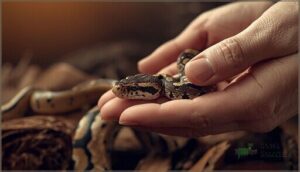
Moving too fast or grabbing wrong can stress your snake or trigger a defensive bite. The way you approach and lift matters just as much as how you hold.
Follow these steps to pick up your snake with confidence and care.
Safe Approaching Techniques
Approach from the side or slightly behind instead of looming from above, which can trigger defensive reactions. Open the enclosure slowly and pause briefly before extending your hand. This calm approach lets your snake register your presence without panic.
Use tactile signals by gently touching the snake’s body mid-section with your hand or a hook. This consistent handling signal teaches your snake that feeding time isn’t starting. Proper snake holding begins with environmental control—dim lights, quiet rooms, and stable temperatures reduce stress. Reading snake body language prevents bites and builds trust through safe snake handling techniques focused on respect and patience.
| Visual Cues | What It Means |
|---|---|
| Slow, smooth movement | Relaxed and ready for handling |
| Rapid head pulling | Defensive; wait before touching |
| Steady tongue flicks | Calmly exploring environment |
| Tight coiling | Stressed; postpone handling session |
Lifting and Supporting The Snake’s Body
Your hands form the foundation for safe snake handling—proper body support prevents injury and stress. Slide your first hand beneath the middle third of the snake’s body, then add your second hand under the next section to create a balanced hold. This gentle lifting technique distributes weight evenly across the spine.
- Support at least one-third to one-half of the snake’s total length at all times
- Use both hands in a loose, open grip that never squeezes or pinches
- Keep the body close to your chest and arms instead of dangling in midair
- Follow the snake’s natural movement with a hand-over-hand motion for continuous support
- Never lift by the head or tail—this strains vertebrae and causes defensive reactions
Safe Handling Techniques for Pet Snakes
Once your snake is in your hands, how you hold it matters as much as how you picked it up.
Supporting the body correctly prevents stress and keeps both you and your snake safe during handling.
Let’s cover the key techniques that make every interaction smooth and secure.
Proper Grip and Body Support
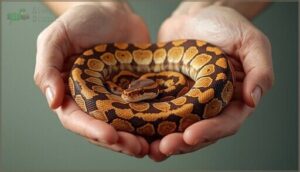
Think of your hands as living branches that cradle rather than clench. Use open palms to scoop from underneath, applying light, even pressure that merely sustains weight. Sustain one-third to one-half of the snake’s body length at any time, spacing both hands along its frame to distribute the load. When your snake tenses, relax your grip slightly instead of squeezing tighter.
Support your snake with open palms like living branches, distributing its weight across both hands while relaxing your grip when it tenses
| Grip Technique | Why It Works |
|---|---|
| Open palms scooping underneath | Prevents the snake from feeling trapped or pinched |
| Light, even pressure across body | Avoids bruising muscles or damaging spine and ribs |
| Supporting 1/3 to 1/2 of body length | Gives the snake a secure, stable feeling |
| Both hands spaced along frame | Distributes weight so no single point carries all pressure |
| Relaxing grip when snake tenses | Reduces defensive reactions and helps it settle |
Full support methods matter because snakes rely on you to act like solid branches. Let as much of their body rest along your arms, hands, or lap while handling. Large snakes over eight feet often need a second person so their full body stays sustained. Keep the snake’s body in gentle curves instead of sharp bends to protect the spine. Allow the animal to drape across both forearms or an arm and your torso for several contact points. A relaxed hand-over-hand motion lets the snake glide from one hand to the other, moving at its own pace while you follow and adjust. These proper snake-holding and snake-handling techniques guarantee snake safety through gentle grip and careful body support with essential safety precautions.
Avoiding The Head and Tail

Your snake’s head and tail signal danger zones during every handling session. Reaching for the head triggers defensive bites because snakes interpret that motion as a predator attack. Grabbing the tail alone stresses the spine and sparks panic thrashing.
Focus your midsection grip on the middle third of the body instead. This gentle handling approach keeps pet snake stress low, ensures safe restraint, and protects both handler and animal through proper snake body support.
Using Tools for Nervous or Large Snakes
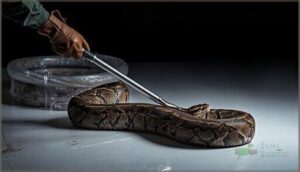
Some snakes need more than bare hands. Snake hooks and tongs give you safe distance from nervous animals—90 to 120 centimeters keeps your face well away from strikes. Large constrictors respond better to restraint tubes and transfer containers during health checks.
Protective gear like thick leather gloves blocks painful bites, though specialized layers stop venomous fangs. These snake handling tools protect both handler and animal when calm, direct contact isn’t enough.
Emergency and Hygiene Best Practices

Even with careful handling, accidents can happen, and hygiene lapses can lead to health risks for both you and your snake. Knowing how to respond quickly to bites and maintaining strict cleanliness standards will keep everyone safe.
Here’s what you need to do when things go wrong and how to prevent contamination during routine handling.
Responding to Bites or Accidents
Even calm pet snakes can bite when startled or stressed, so your emergency plan matters.
Rinse nonvenomous bites under running water, then wash with soap. Apply firm pressure with gauze to control bleeding. Remove rings or tight clothing before swelling starts.
For large constrictors or signs of severe injury—rapid swelling, numbness, deep wounds—seek medical care immediately to prevent complications.
Maintaining Cleanliness After Handling
After you’ve handled your pet snake, wash your hands with soap and warm water for at least 20 seconds to prevent disease spread. Scrub exposed forearms and any bare skin that touched the animal. Remove rings and bracelets before handling to avoid trapping bacteria underneath.
If clothing contacted waste, launder it promptly. These hygiene practices protect your family from Salmonella and keep everyone safe.
Keeping Handling Areas Safe and Sanitary
Proper hand hygiene must extend to your handling area design and surface sanitation. Clean every table, mat, or counter the snake touched with hot soapy water, then apply diluted bleach or a reptile-safe disinfectant for 10–15 minutes.
Follow these disinfection protocols:
- Wipe visible debris with dedicated brushes or sponges.
- Spray disinfectant and let it sit before rinsing.
- Dry surfaces completely to remove chemical residue.
- Keep handling areas separate from kitchens and food prep zones.
These waste management and reptile hygiene practices safeguard your family’s health and support long-term pet snake care.
Frequently Asked Questions (FAQs)
What is the proper way to hold a snake?
Support your reptile companion with both hands to distribute weight evenly. Slide one palm beneath the mid-body section while the other steadies the posterior third, ensuring proper body alignment and gentle support throughout safe handling techniques.
Do pet snakes like being held?
Pet snakes don’t bond with humans or seek affection. They tolerate handling as a neutral experience, focusing on safety and support rather than enjoyment.
Watch for snake stress signs to gauge comfort during snake handling sessions.
How do I properly pick up my pet snake?
Lifting your snake starts with a confident yet calm approach from the side. Scoop gently beneath the middle third of its body, supporting weight evenly with both hands while avoiding sudden jerks or overhead reaches.
Can I handle my snake when I first get it?
Wait 5 to 7 days after bringing your snake home. Let it settle in before regular handling.
A brief first inspection is fine, but avoid stress during initial acclimation.
Watch for readiness signs before starting snake handling techniques.
Can children safely handle pet snakes unsupervised?
Never allow children to handle pet snakes unsupervised. Age restrictions and supervision needs exist because kids under five face serious infection risks, while older children lack the risk assessment skills to recognize snake stress signals.
How do different snake species vary in temperament?
Species temperament varies wildly—even within the same clutch. Ball pythons curl defensively, corn snakes flee, hognoses bluff dramatically, while water snakes strike readily.
Handling techniques must adapt to each snake’s behavior and defensive postures.
What body language indicates a snake feels secure?
A secure grip shows through loose S curves, steady tongue flicks, and calm breathing.
Gentle movement between your hands, relaxed posture without rigid coiling, and low head position signal comfort rather than stress signals or defensive behavior.
Should I handle my snake during breeding season?
Hormones surge during breeding season, making many snakes more defensive and stressed when handled. Limit handling to necessary care, especially with gravid females, and watch for seasonal aggression or breeding behavior patterns.
How does temperature affect snake handling behavior?
Temperature directly changes snake behavior during handling. Warm snakes show increased alertness and faster defensive shifts, while cool handling reduces activity.
Heat stress risks escalate quickly, so maintaining ideal temperature ensures safer reptile care and predictable snake safety.
Conclusion
Thousands of snake bites could be prevented with proper technique. When you learn how to hold a pet snake correctly—supporting its body, reading its signals, and respecting its boundaries—you transform a potentially dangerous situation into a safe, predictable routine.
Your snake won’t suddenly become aggressive when handled with confidence and care. Master these fundamentals, practice consistently, and you’ll build trust that makes every interaction smoother. Good handling protects both you and your pet for years to come.
- https://www.petmd.com/reptile/general-care/how-to-pick-up-a-snake
- https://www.reptiles.swelluk.com/help-guides/aggressive-snake-handling-guide/
- https://www.instructables.com/how-to-hold-a-snake/
- http://reptileintelligence.blogspot.com/2018/03/understanding-snake-body-language.html
- https://thewebinarvet.com/blog/snake-handling-gives-me-the-shivers-how-to-handle-snakes-correctly