This site is supported by our readers. We may earn a commission, at no cost to you, if you purchase through links.

Snakes don’t die from starvation nearly as often as they die from their owners trying too hard. Overfeeding, handling a snake minutes after it eats, offering prey that’s too large — these aren’t rare rookie mistakes. They’re the norm, and most keepers don’t realize the damage until a regurgitation event or a chronic digestive issue shows up.
The good news: snake feeding errors are almost entirely preventable once you understand what your animal actually needs. A ball python and a corn snake don’t share the same schedule, the same prey size, or the same tolerance for disruption. Species matters. Age matters. Body condition matters.
Getting these dos and don’ts right is what separates keepers who struggle from those whose snakes feed reliably, grow steadily, and thrive for decades.
Table Of Contents
- Key Takeaways
- Do Choose Species-Appropriate Prey in The Right Size
- Do Prepare and Offer Frozen-Thawed Prey Safely
- Do Match Feeding Frequency to Your Snake’s Age, Species, and Body Condition
- Don’t Overfeed, Handle Too Soon, or Use Unnecessary Supplements
- Do Monitor Appetite, Weight, Regurgitation, and Other Feeding Problems
- Frequently Asked Questions (FAQs)
- How often are you supposed to feed a pet snake?
- Do snakes remember who feeds them?
- How do you know when a pet snake is hungry?
- How long can my pet snake go without food?
- What not to do when feeding a snake?
- What is the best way to feed a pet snake?
- How long not to touch a snake after feeding?
- How to know if a pet snake is hungry?
- How often should I feed my pet snake?
- How long should I not touch my snake after feeding?
- Conclusion
Key Takeaways
- Matching prey size to your snake’s midsection girth and feeding frequency to its age and species is the foundation of safe, effective snake husbandry — get these wrong, and everything else compounds.
- Frozen-thawed prey is the gold standard: thaw it overnight in the fridge, warm it to body temperature in a sealed bag, and always use tongs to keep your hands out of strike range.
- Your snake needs 24–48 hours of complete undisturbed rest after every meal — handling too soon is one of the most common causes of regurgitation and chronic digestive problems.
- Skip the supplements and trust whole prey: a properly sized, species-appropriate diet already delivers complete nutrition, and unnecessary additives create imbalances that are harder to fix than a straightforward feeding adjustment.
Do Choose Species-Appropriate Prey in The Right Size

What you feed your snake matters as much as how often you feed it. Getting prey selection right means understanding both species-specific nutritional needs and safe sizing guidelines. Two key factors will shape every feeding decision you make.
Misjudging either factor can lead to serious problems, from nutritional deficiencies to dangerous overfeeding—risks explored in depth in this guide to snake feeding health risks and consequences.
Whole-Prey Nutrition
A whole-prey diet delivers what muscle meat alone never can — complete nutritional balance from organs, bone, and fur.
Whole prey delivers complete nutrition that muscle meat alone can never provide
- Organs and liver provide fat-soluble vitamins
- Bone supplies essential dietary calcium
- Fur and feathers aid normal gut processing
- Prey selection shifts fat and micronutrient content
- Prey age and body condition affect your snake’s feeding routine
That’s the whole point of whole prey.
Safe Prey Sizing
Nutrition quality only lands if the prey fits. The standard prey sizing guideline: match prey girth to your snake’s midsection. Too thick, and swallowing stalls, risking mouth or neck injury. Too thin for juvenile snakes, and growth slows from inadequate caloric intake. As your snake grows, size up prey gradually across successive meals rather than jumping sizes abruptly.
If meals start feeling like guesswork, the signs of a healthy snake appetite can help you tell a normal feeder from one that needs attention.
If you’re ever unsure whether a lump appeared during feeding, reviewing signs and causes of snake jaw injuries can help you catch problems before they escalate.
Do Prepare and Offer Frozen-Thawed Prey Safely
Frozen-thawed prey is the best choice for snake feeding, removing the bite risks and parasites that live prey carries. Getting it right comes down to two things: proper thawing and warming and the tools you use to present it safely. Here’s what you need to know before that next meal.
Thawing and Warming

Before offering frozen-thawed prey, confirm it’s fully thawed throughout. Partial thawing leads to feeding refusal and digestive problems. Refrigerator thawing overnight is the safest prey handling approach.
Afterward, warm it in a sealed bag submerged in warm (not hot) water until it reaches comfortable body-surface warmth. Too cool, your snake may refuse. Too hot risks tissue degradation and poor feeding safety.
For a full breakdown of hide placement and temperature-humidity balance, ball python warm hide and humidity setup tips walks you through dialing in conditions that encourage confident feeding behavior.
Feeding Tools and Hygiene

With prey warmed and ready, always use feeding tongs. Proper prey handling keeps your hands out of strike range and cuts down on accidental bites.
After feeding, spot-clean spilled fluids from the feeding environment immediately. Leftover residue invites bacterial growth. Wash tongs with hot water and detergent, disinfect, and dry fully. Consistent feeding hygiene protects your snake and prevents contamination.
A reptile-safe enclosure disinfectant spray makes quick work of post-feeding cleanup without leaving residues that could harm your snake.
Do Match Feeding Frequency to Your Snake’s Age, Species, and Body Condition

Think of feeding frequency as a living variable, not a fixed rule. Hatchlings need meals every 5 to 7 days because they’re in active growth phases. Most adults, depending on snake species and metabolism, thrive on 10 to 14 day intervals, though arboreal species with higher activity levels may need adjustments.
Watch your snake’s weight consistently on the same scale. If body condition is declining, shorten the interval. If your snake’s gaining too fast, lengthen it. Prey size guidelines factor in here too: a snake eating appropriately sized meals every 10 days rarely needs supplemental calories.
Shedding also disrupts appetite. Many snakes refuse food pre-shed, and that’s completely normal. Resume your regular feeding schedule after the shed completes, not before.
Don’t Overfeed, Handle Too Soon, or Use Unnecessary Supplements

Even well-intentioned keepers make these three mistakes routinely. Overfeeding is the most common, and it compounds fast when feeding frequency isn’t adjusted for your snake’s age, size, and body condition.
Avoid these pitfalls:
- Feeding too large or too often overwhelms digestion before prior meals fully process
- Handling within 48 hours post-meal raises regurgitation risk
- Whole-prey diets meet most nutritional needs without routine dietary supplements
- Unnecessary supplements create imbalances that are harder to fix than a simple diet adjustment
- Specialized diets for hatchlings and juveniles differ from adult schedules; don’t conflate them
Skip supplements unless your vet prescribes them. Your snake doesn’t need a multivitamin. It needs appropriate prey, consistent scheduling, and undisturbed time to digest after each meal.
Do Monitor Appetite, Weight, Regurgitation, and Other Feeding Problems
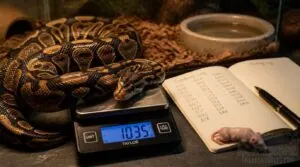
Tracking your snake’s appetite and weight isn’t optional—it’s how you catch problems before they become emergencies. A simple feeding log and a gram scale will tell you more than guesswork ever could. Here are the key monitoring habits every snake keeper should build into their routine.
Meal and Weight Tracking
Good data beats good guesses. Log every feeding date, prey weight in grams, and whether your snake actually struck. A digital gram scale for reptiles makes it easy to log precise prey weights consistently, so your records stay meaningful over time.
Weigh weekly on the same scale, same container, same time of day, and skip weigh-ins during active sheds.
Use prey-to-body-weight percentage to keep meal sizes consistent as your snake grows.
Log skipped feeds and regurgitations as distinct entries, never zeros.
Veterinary Warning Signs
Some feeding mistakes are recoverable. These aren’t.
- Regurgitation after consecutive meals means a vet visit, not another feeding attempt.
- Missing feeding response cues alongside sunken eyes signals dangerous dehydration.
- Open-mouth breathing is a respiratory emergency.
Track body condition weekly. A sudden drop in hunger signs, from reliable striker to total refusal, warrants a call to your vet.
Frequently Asked Questions (FAQs)
How often are you supposed to feed a pet snake?
How often you feed depends on species, age, and body condition. Hatchlings and juveniles need more frequent meals than adults. Most adult snakes thrive on weekly to biweekly schedules, guided by appetite and stable weight.
Do snakes remember who feeds them?
Like Pavlov’s dog, your snake gradually associates your scent with food. Chemosensory recognition builds steadily over weeks, making your feeding routine more reliable and predictable. Swap handlers and you’ll likely see a slower feeding response.
How do you know when a pet snake is hungry?
How do you know when a pet snake is hungry? Watch for increased tongue-flicking and active orientation toward prey scent. A truly hungry snake sustains attention on food rather than quickly retreating to its hide.
If a hungry snake mistakes your hand for prey, here’s how to get a snake to stop constricting using gentle, tail-first unwinding.
How long can my pet snake go without food?
The answer varies by species, age, and body condition. A well-fed adult snake can comfortably fast for several weeks; growing juveniles need more frequent feeding. Persistent weight loss during any fast warrants immediate veterinary attention.
What not to do when feeding a snake?
Skip live prey. Even a frightened rodent can seriously injure your snake. Never offer oversized meals, and don’t handle your snake within 24–48 hours post-feeding. Microwaving frozen prey creates dangerous uneven hot spots, risking regurgitation.
What is the best way to feed a pet snake?
Offer prekilled frozen prey thawed to body temperature, using feeding tongs for safety. Match prey size to your snake’s girth, follow a consistent feeding schedule, and allow 48 hours for proper digestion before handling again.
How long not to touch a snake after feeding?
Dinner’s done, but your snake isn’t ready for company just yet. Wait 24–48 hours post-meal before handling. Physical disturbance during digestion risks regurgitation, particularly after larger meals or for snakes with inconsistent feeding response history.
How to know if a pet snake is hungry?
Your snake’s active exploration, tongue flicking, and striking posture around their usual feeding window are reliable hunger cues. Adults usually eat every 10–14 days; juveniles need weekly meals. Always judge appetite against their normal schedule.
How often should I feed my pet snake?
Feeding frequency hinges on age and species: young snakes usually eat every 5–7 days; adults every 10– Always watch body condition closely, too—a visibly slim snake needs more meals, an overweight one needs fewer.
Since appetite and meal size also shift with the seasons, it helps to know what bull snakes eat at each stage of life before planning your feeding schedule.
For a species like the bull snake, this guide to what bull snakes eat breaks down how prey size and variety should change from hatchling to adult.
How long should I not touch my snake after feeding?
Picture your snake attempting a full marathon immediately after a huge Thanksgiving dinner. That’s basically what you’re asking. Wait 24–48 hours post-meal before handling. Stress triggers regurgitation, and that’s one feeding mistake you can’t undo.
Conclusion
What separates a snake that thrives for twenty years from one that barely makes it to two? Consistency and close attention to detail.
Mastering the basics of feeding a pet snake dos and don’ts isn’t complicated, but it does demand real commitment. Right prey size, careful thawing, correct feeding schedules, and a strict hands-off window after meals are the pillars every keeper needs. Your snake can’t ask for better care. You have to choose it.