This site is supported by our readers. We may earn a commission, at no cost to you, if you purchase through links.

A feeding strike lands in under half a second. Your fingers, if you’re holding prey by hand, don’t stand a chance. That’s the reality every snake keeper eventually learns, and it’s why knowing what to look for in snake feeding tools matters more than most beginners expect.
The wrong tongs do more than slip off a thawed mouse. Cheap aluminum corrodes in humid enclosures, dull jaws lose their grip after a few dozen feedings, and a too-short handle puts your knuckles uncomfortably close to an enthusiastic feeder.
The right tools change everything. Here’s how to pick them.
Table Of Contents
- Key Takeaways
- Essential Snake Feeding Tools to Consider
- Prioritize Feeding Tong Safety Features
- Match Tong Length to Snake Size
- Compare Materials, Jaws, and Handles
- Clean and Maintain Feeding Tools
- Top 7 Snake Feeding Tools
- Frequently Asked Questions (FAQs)
- What are the best feeding tongs for snakes?
- How to know what size prey to feed a snake?
- What material can snakes not bite through?
- What are the best long feeding tongs for snakes?
- How often should feeding tongs be replaced?
- Can I use regular kitchen tongs instead?
- Are curved or straight jaws better for tall tanks?
- How do I feed aggressive snakes safely with tongs?
- Do rubber tong tips pose a risk if swallowed?
- Conclusion
Key Takeaways
- Choose stainless steel feeding tongs with cushioned, serrated jaws and non-slip ergonomic grips, since cheap aluminum corrodes in humid enclosures and dull jaws lose grip after a few dozen feedings.
- Match tong length to your snake’s size—roughly 6–8 inches for snakes under 12 inches, 10–12 inches for mid-size, and 14–16 inches or more for large species—to keep your hands safely outside the strike zone.
- Maintain hygiene and safety through a strict routine: wipe tools after every feeding, disinfect weekly with 70% isopropyl alcohol, inspect monthly for wear, and replace tongs every 12–18 months or when tips crack, serrations smooth, or metal pits.
- Present prey at the right temperature with an infrared thermometer, never use bare hands or kitchen tongs, and inspect rubber tips before each use since cracked tips pose an ingestion risk to your snake.
Essential Snake Feeding Tools to Consider
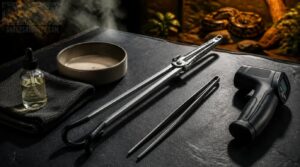
Start your toolkit with the right gear and you’ll feed with confidence every time. Snake feeding tongs top the list: they keep your hands a safe 12–18 inches from fangs while presenting prey naturally. Choose stainless steel tools over aluminum, which corrodes quickly in humid enclosures.
If you’re unsure which length or tip style suits your species best, this beginner’s guide to snake feeding tongs breaks down the options so you can grab the right pair the first time.
Beyond tongs, a few extras round things out. A reliable infrared thermometer helps you verify prey temperature, since snakes strike more willingly at properly warmed food. A dedicated feeding bowl or feeder station keeps meals contained and hygienic.
Don’t overlook feeding safety basics: long tweezers for small species, and tool sterilization supplies like non-abrasive soap and mineral oil for post-meal cleanup. Skip bare hands entirely; even docile snakes strike when food is near. With the right tools, you stay in control and your snake stays healthy.
Prioritize Feeding Tong Safety Features

Not all feeding tongs are built to keep you safe, so you’ll want to know exactly which features matter before you buy. The right pair puts safe distance between you and your snake while gripping prey securely through every strike. Here are the five features I always check first, in the order you should weigh them.
Choose Proper Tong Length
Because tong length determines your safety distance, match it to your snake’s size. Small snakes under 30 cm need roughly 15 cm tongs; medium (30–120 cm) need 20–28 cm; large species demand 30 cm or more.
Too short invites bites; too long sacrifices precision and causes hand fatigue reduction losses. Test reach against your snake’s strike zone before buying.
Prefer Cushioned Serrated Jaws
Once you’ve nailed the length, look at the jaw tips. Serrated crosshatch jaw tips paired with foodgrade silicone rubber tips grip slippery prey firmly without crushing tissue or damaging delicate teeth. That cushioning spreads pressure evenly, so your snake strikes confidently and you keep control.
Why this matters for you:
- Fewer dropped prey means fewer re-strike injuries
- Softer contact protects growing fangs
- Less escape risk during feeding
- Predictable grip every session
Check cushion condition regularly. Cracks or peeling mean replacement time, usually after 3–6 months of use. Serration depth should align with your snake’s tooth pitch; mismatched edges bite into the cushion itself, compromising grip security and safety distance when it matters most.
Select Non-Slip Handles
Great jaws won’t help if the grip slips mid-offer. Look for a nonslip grip with ergonomic TPR-overmolded grips that keep your forefinger and thumb locked in, even when wet or slimy from thawed prey.
An ergonomic grip design also cuts fatigue during long sessions, so you stay steady and in control from first strike to release.
Demand Rustproof Construction
Rust is the silent enemy of your feeding tools. Humid vivariums accelerate corrosion fast, so choose stainless steel with high chromium content for genuine corrosion resistance. Skip chrome-plated imitations; once coatings chip, rust spreads quickly.
Look for a sealed pivot joint that blocks moisture, and wipe tools dry after every feeding. Pair that with a consistent tool maintenance routine, and your tongs will last years.
Check Strength And Durability
When you’re handling a hungry snake, your tongs must never fail. Choose stainless steel with welded joints, which outlast riveted seams under repeated stress.
For more guidance on picking your first pair, this beginner’s guide to choosing feeding tongs breaks down grip styles, lengths, and safe handling tips.
A locking ratchet mechanism and sealed pivot joint keep jaws aligned through 1,000+ cycles. For tool durability in humidity, 316-grade offers better corrosion resistance over 304.
Inspect hardened tips regularly, since dulling after roughly 50–100 captures compromises your grip and safety.
Match Tong Length to Snake Size

Because a mismatched tool turns a routine meal into a struggle, getting tong length right is one of the simplest wins in reptile feeding. Measure your snake from snout to vent, then match the tool to that body length, roughly 0.5 to 1.0 times its size.
- Small snakes (under 12 inches): use 6–8 inch tongs for precise control.
- Mid-size snakes (12–24 inches): 10–12 inches keeps your hands safely back.
- Large snakes (over 24 inches): 14–16 inches prevents overreach and jaw strain.
For juveniles and constrictors, choose the shorter end of each range; it limits overreach and wrapping risk. Whatever you pick, run a dry test with a dummy prey item first. Feeding safety improves every time you log your results.
Compare Materials, Jaws, and Handles
Think of your tongs as an extension of your arm. The right build makes that extension feel natural.
Stainless steel leads the pack: corrosion-resistant, strong, and perfect for humid enclosures. Aluminum alloys cut weight but can deform under a determined strike, so skip them for larger species. Titanium offers superb strength-to-weight, though you’ll pay a premium.
For jaws, a serrated grip with rubber tips balances security and gentleness. Micro-serrations hold slippery prey without crushing, while cushioned inserts protect delicate scales. Avoid hard, bare-metal jaws entirely.
Hand grips matter more than you’d expect. An ergonomic handle design with a 15–25 degree bend reduces wrist fatigue during long sessions, and knurled or rubberized textures keep control when things get wet. A locking ratchet mechanism adds one-handed convenience, letting you secure prey without white-knuckling the grip.
Match these three elements to your species, and you’ll handle every feeding with confidence.
Clean and Maintain Feeding Tools
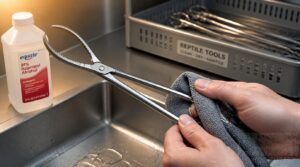
Your tongs touch raw prey, snake saliva, and substrate, then go back in the drawer. That’s why hygiene protocols matter as much as any purchase decision.
Your feeding tongs touch raw prey, saliva, and substrate before heading back to the drawer, so strict hygiene matters as much as any tool you buy
Here’s what poor maintenance actually costs you:
- Corroded jaws that fail mid-feed
- Bacteria transferred between enclosures
- Cracked grips that slip at the worst moment
- Misaligned tongs that injure your snake
- Costly replacements you didn’t budget for
After every feeding, wipe your tongs down with a dedicated brush-free cloth and dry them completely. Weekly, follow full disinfection protocols: disassemble reusable parts, clean with 70% isopropyl alcohol, and air-dry 5–10 minutes before reassembly.
Make feeding tool inspection a monthly habit. Check screw tightness, hinge wear, and jaw alignment; misalignment increases injury risk. Replace worn jaws promptly.
Proper storage means a dry, ventilated case, ideally in labeled trays separate from other reptile gear. Skip chlorine-based cleaners on metal, which cause pitting. Log every cleaning date for traceability. Consistent equipment maintenance keeps both you and your snake safe.
Top 7 Snake Feeding Tools
Now that you know what separates a great feeding tool from a dangerous one, let’s put that knowledge to work.
I’ve rounded up seven standout options that cover everything from tongs to feeder bowls, each chosen with safety and practicality in mind. You’ll get the honest pros and cons for every pick, so you can match the right tool to your snake’s size and your setup.
1. Penn-Plax Reptology Turtle Pier
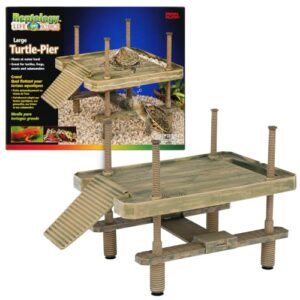
Yes, it’s a turtle pier, but hear me out: this platform earns a spot in any semi-aquatic snake or amphibian setup. The Penn-Plax Reptology Turtle Pier (model REP603) measures 16"D x 11"W x 8"H, with a ramp extending to 20.5", and its four adjustable pylons raise it anywhere from 3" to 16" above the tank floor.
Setup is straightforward. Fill the built-in gravel bin for counterweight, mount the suction cups, and level everything on the tank base to prevent tipping. You can place food directly on the platform so shy feeders eat without you hovering nearby.
Know its limits, though. Suction cups can fail, and heavier animals may sink the platform or dislodge the ramp. Skip direct sunlight, since plastic warps under prolonged UV, and rinse with warm water only, never solvents.
| Best For | Semi-aquatic keepers with turtles, frogs, newts, salamanders, or snakes in 20-gallon-plus tanks who want an adjustable, out-of-water basking and feeding platform. |
|---|---|
| Primary Material | Plastic |
| Weight | 1.6 lbs |
| Primary Use | Basking platform |
| Reptile Safe | Yes |
| Terrarium Compatible | Yes |
| Easy Cleaning | Yes |
| Additional Features |
|
- Adjustable pylons (3" to 16") let the platform sit just above the waterline in a wide range of tank depths
- Built-in gravel bin and docking ramp add stability and easy access for climbing animals
- Doubles as a basking spot, feeding station, and hideout for multiple species
- Suction cups can break easily or fail to hold the platform securely
- Platform may sink or the ramp may fall off when heavier animals climb on
- Mixed feedback on size and stability depending on tank setup
2. Aqueon QuietFlow 75 LED PRO Filter
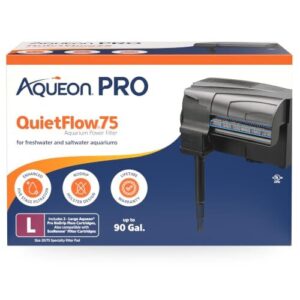
Another crossover pick, but if you keep semi-aquatic snakes like garters, this filter matters. The Aqueon QuietFlow 75 LED PRO runs 5-stage filtration with dense floss, carbon, and a Bio-Holster supporting beneficial bacteria in tanks up to 90 gallons. Its self-priming pump restarts after power outages, and the NoDrip cartridge design keeps water changes tidy.
Maintenance is simple: rinse the floss biweekly, replace carbon every four to six weeks. Downsides? Proprietary cartridges add cost, and the non-serviceable impeller means replacement if the motor buzzes.
| Best For | Keepers of semi-aquatic reptiles like garter snakes who need a reliable, self-priming filter for larger tanks housed in quiet living spaces. |
|---|---|
| Primary Material | Plastic/Metal |
| Weight | 3.8 lbs |
| Primary Use | Aquarium filtration |
| Reptile Safe | Yes |
| Terrarium Compatible | Yes |
| Easy Cleaning | Moderate |
| Additional Features |
|
- 5-stage filtration with a Bio-Holster that supports beneficial bacteria
- Self-priming pump automatically restarts after power outages
- NoDrip cartridge design keeps water changes tidy
- Proprietary cartridges require frequent, ongoing replacement costs
- Some users report motor noise or buzzing over time
- Impeller is not serviceable or replaceable if damaged
3. Snake Feeding Tongs 15 Inch Stainless Steel
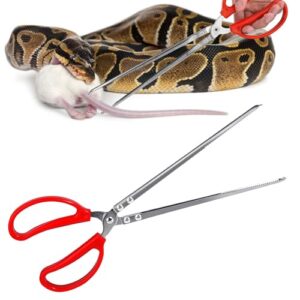
Now we’re back on dry land with a dedicated feeding tool. Vodolo’s 15-inch stainless steel tongs feature cushioned serrated jaws that grip slippery rodents without crushing them, and the silicone-sleeved handle keeps your grip steady during wet feedings. At 6.74 ounces, they’re balanced and comfortable.
Watch the edges, though: some users report the metal can cut skin on light contact, and the action feels stiff at first. Still, for mid-sized colubrids and small boids, they’re a solid, rustproof workhorse.
| Best For | Reptile keepers with mid-sized snakes or lizards who need a safe, rustproof feeding tool that keeps their hands well clear of the terrarium. |
|---|---|
| Primary Material | Stainless steel and silicone |
| Weight | 6.74 ounces |
| Primary Use | Feeding tongs |
| Reptile Safe | Yes |
| Terrarium Compatible | Yes |
| Easy Cleaning | Yes |
| Additional Features |
|
- Serrated jaws and silicone-sleeved handle provide a secure, non-slip grip on slippery prey
- 15-inch length keeps a safe distance between you and your snake during feedings
- Doubles as a handy tool for aquarium cleaning and picking up debris
- Metal edges can be sharp enough to cut skin on light contact
- Stiff action makes controlled feeding difficult for some users
- Tongs may bend or misalign after prolonged use
4. Duedusto 16 Inch Snake Feeding Tongs
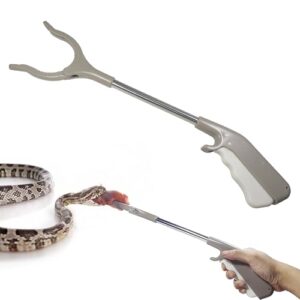
If 15 inches feels a touch short for your setup, Duedusto’s 16-inch tongs add just enough reach. You get dual grip zones with textured rubber tips, so everything from pinky mice to larger prey stays secure without crushing. The trigger-style handle gives you one-handed control, and at 5.3 ounces, they’re light enough for precise wiggling.
The trade-off? Rubber tips can get gouged if your snake strikes the tool instead of the prey. Inspect them regularly and replace when chewed up.
| Best For | Snake owners who want a bit more reach for feeding everything from pinky mice to larger prey, especially with ball pythons and boas. |
|---|---|
| Primary Material | Stainless steel and plastic |
| Weight | 5.3 ounces |
| Primary Use | Feeding tongs |
| Reptile Safe | Yes |
| Terrarium Compatible | Yes |
| Easy Cleaning | Yes |
| Additional Features |
|
- Dual grip zones with textured rubber tips hold prey securely without crushing
- Lightweight at 5.3 ounces, making it easy to wiggle prey naturally
- Trigger-style handle allows comfortable one-handed control
- Rubber tips can be gouged when snakes strike the tool instead of the prey
- Mostly plastic construction apart from the metal rod
- Requires a firm grip to keep prey from slipping
5. WOLEDOE Snake Feeding Tongs
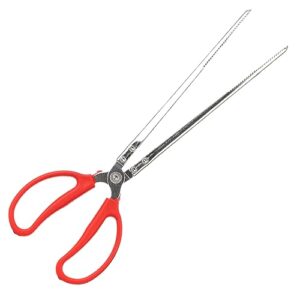
WOLEDOE’s feeding tongs land right between the two we’ve covered: a 15-inch stainless steel build at 6.74 ounces, with non-slip plastic grips for confident control. The serrated jaws grip prey firmly, and the length suits ball pythons and corn snakes beautifully.
Fair warning: that weight can feel clunky with smaller snakes, and squeezing too hard on frozen prey leaves marks. Wiggle gently rather than clamping.
The rust-resistant steel grips humid terrariums well. Just dry thoroughly after disinfecting, and check jaw alignment before each feeding session.
| Best For | Snake keepers with ball pythons or corn snakes who want a safe feeding distance and a firm grip on prey. |
|---|---|
| Primary Material | Stainless steel |
| Weight | 6.74 ounces |
| Primary Use | Feeding tongs |
| Reptile Safe | Yes |
| Terrarium Compatible | Yes |
| Easy Cleaning | Yes |
| Additional Features |
|
- 15-inch length keeps hands safely away from strikes
- Serrated jaws grip prey firmly
- Rust-resistant stainless steel holds up in humid terrariums
- Heavier and clunkier than ideal for smaller snakes
- Serrated edges can damage frozen prey if squeezed too hard
- Design can feel awkward during use
6. Reptile Resin Corner Feeder Bowl
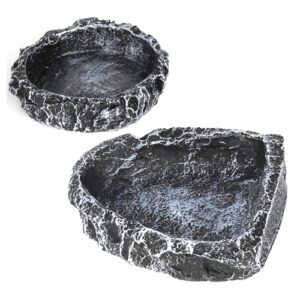
A corner feeder bowl earns its spot by working smarter, not harder. The Reptile Resin Corner Feeder Bowl is crafted from food-grade resin with a smooth, nonporous surface that resists stains and bacteria, plus a simulated rock texture your reptile will appreciate. Its thick stable base prevents tipping, and at 5.3 x 2.36 x 4.1 inches, it tucks neatly into enclosure corners.
To use it well:
- Rinse weekly with water or wipe with a cloth.
- Offer dry foods; avoid moisture-heavy prey.
Be aware: some owners find it small for adults, and chipping has been reported.
| Best For | Keepers of juvenile or smaller reptiles like leopard geckos, young bearded dragons, tortoises, and snakes who want a space-saving, natural-looking feeding bowl that fits snugly into terrarium corners. |
|---|---|
| Primary Material | Resin |
| Weight | 9.14 ounces |
| Primary Use | Feeding dish |
| Reptile Safe | Yes |
| Terrarium Compatible | Yes |
| Easy Cleaning | Yes |
| Additional Features |
|
- Food-grade resin with a smooth, nonporous surface that resists stains and bacteria
- Simulated rock texture blends naturally into habitat decor
- Thick, stable base prevents tipping, and the corner design saves enclosure space
- Size may be too small for adult reptiles
- Some reports of chipping and questionable durability
- At 9.14 ounces, heavier than expected despite its compact size
7. Automatic Reptile Food Water Feeder
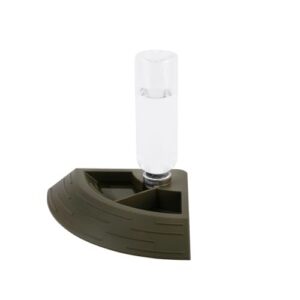
If you’re away often, this feeder keeps fresh water available without daily refills. It holds 8.6 oz (255ml) in a screw-secured bottle that won’t tip, and its right-angle corner design with anti-skid stair saves precious terrarium floor space. At 7 x 7.5 inches and under six ounces, it suits bearded dragons, geckos, snakes, and turtles.
Wash it with neutral detergent and hot water before first use. Note it’s plastic-only and best for small reptiles, not large species.
| Best For | Small reptile owners like those with bearded dragons, geckos, snakes, or turtles who travel often or want to save terrarium space. |
|---|---|
| Primary Material | Plastic |
| Weight | 5.93 ounces |
| Primary Use | Food and water dish |
| Reptile Safe | Yes |
| Terrarium Compatible | Yes |
| Easy Cleaning | Yes |
| Additional Features |
|
- Screw-secured water bottle prevents tipping and keeps water fresh without daily refills
- Corner design with anti-skid stair maximizes terrarium floor space
- Lightweight (under six ounces) and suits a wide range of small reptile species
- Made of plastic only, which may be less durable than other materials
- Not suitable for large reptile species
- Requires washing with neutral detergent and hot water before first use
Frequently Asked Questions (FAQs)
What are the best feeding tongs for snakes?
The best feeding tongs are stainless steel, length-matched to your snake, with lightly serrated, cushioned jaws and non-slip grips. Prioritize durability, rustproof construction, and safe clearance beyond the bite zone.
How to know what size prey to feed a snake?
Knowing what size prey to feed starts with your snake’s girth: offer prey no wider than its midbody, roughly 80–90% for constrictors. Use feeding tongs, maintain safe strike zone distance, and adjust gradually.
What material can snakes not bite through?
Good news first: your snake’s teeth can’t touch stainless steel tongs. Even strong constrictors can’t puncture hardened metal, though rubber tip integrity matters—replace chewed tips promptly to protect both jaws and grip.
What are the best long feeding tongs for snakes?
What are the best long feeding tongs for snakes? Choose stainless steel longhandled tongs with cushioned serrated jaws, non-slip grips, and locking joints. For constrictors, prefer 16–24 inches, improving feeding safety measures and feeding accuracy.
How often should feeding tongs be replaced?
Replace feeding tongs every 12–18 months with frequent use. Never stretch beyond two years; bending risk climbs sharply. Watch for smooth serrations, chipped tips, or pitting—those mean replace immediately, regardless of age.
Can I use regular kitchen tongs instead?
Grabbing a snake with kitchen tongs is like catching a fish with a fork: technically possible, dangerously wrong. Kitchen tongs lack bite protection, slip on slimy snake mouths, and carry food contamination risks.
Choose purpose-built snake feeding tongs instead.
Are curved or straight jaws better for tall tanks?
Curved jaws generally win in tall tanks, gripping angled prey near walls with less slippage. Choose straight jaws only when your snake strikes dead-center, vertically aligned targets. Maintain your strike zone safety distance either way.
How do I feed aggressive snakes safely with tongs?
Feeding aggressive snakes safely means using blunt-tipped feeding tongs, keeping 5 body lengths away, presenting prey 20–25 cm from the head, and never working alone during snake handling.
Do rubber tong tips pose a risk if swallowed?
Yes, rubber tips can pose a real ingestion risk. If they crack, fragment, or detach during feeding, your snake may swallow debris. Inspect rubber tips before every use, and replace worn ones immediately for reptile feeding safety.
Conclusion
A keeper I know took a hit from a 6-foot boa using cheap 10-inch tongs. One upgrade later, a 24-inch stainless pair with cushioned jaws, and feeding day became routine. That’s the difference. When you know what to look for in snake feeding tools, you’re not just buying equipment; you’re buying confidence, safety, and calm feedings for years. Choose well, maintain them faithfully, and your hands will thank you.
- https://petwave.com.au/blogs/our-blog-2/essential-equipment-for-feeding-your-snake
- https://www.reddit.com/r/ballpython/comments/1o1s1il/please_recommend_your_favorite_tongs_for_feeding
- https://www.reptiles.swelluk.com/reptile-supplies/reptile-food-and-feeding/reptile-feeding-equipment/reptile-feeding-tongs