This site is supported by our readers. We may earn a commission, at no cost to you, if you purchase through links.

Most snake owners notice something’s off before they can explain why. The shed that came in two weeks instead of six. The one that never fully came off.
A healthy snake follows a rhythm—growth drives shedding, and shedding reflects health. When that rhythm breaks, the enclosure, diet, or the snake itself is usually sending a signal worth reading.
Irregular snake shed frequency isn’t just an inconvenience; it’s a diagnostic clue. Understanding what’s driving the disruption—whether it’s low humidity, a parasite load, or a hormonal imbalance—puts you in a position to fix it before it compounds.
Table Of Contents
- Key Takeaways
- What is Irregular Snake Shed Frequency?
- Normal Shedding Frequency by Age and Species
- Key Causes of Irregular Shedding
- Environmental Factors Affecting Shedding
- Health Issues Linked to Shedding Problems
- Diet and Nutrition’s Impact on Shedding
- Managing and Preventing Irregular Shedding
- When to Seek Veterinary Care
- How to Help Your Snake Shed Successfully
- Top 3 Products for Shedding Support
- Frequently Asked Questions (FAQs)
- Conclusion
Key Takeaways
- Irregular shedding is a diagnostic signal, not just an inconvenience — humidity below 50%, temperature gradients outside the 75–92°F range, and parasite loads are the most common fixable triggers.
- Age and species define what’s normal: hatchlings shed every 2–4 weeks, adults just 2–8 times yearly, so knowing your snake’s baseline is the only way to spot a real problem.
- Retained eye caps, skin lesions, or shed intervals jumping erratically aren’t wait-and-see situations — they warrant a vet call, as delayed treatment risks necrosis, vision damage, or systemic illness.
- A consistent shed log is your most practical early-warning tool — tracking dates and shed quality turns vague concern into data you can actually act on.
What is Irregular Snake Shed Frequency?
Shedding is one of the clearest windows into your snake’s overall health. When the timing feels off — too frequent, too sparse, or just inconsistent — something in their environment or body is usually signaling a problem.
If your snake is soaking more than usual, it might actually be a humidity issue — understanding why snakes soak in their water bowls can help you figure out whether it’s the shed or the setup that needs fixing.
A snake’s shedding pattern is a health barometer — when the timing shifts, something is wrong
Here’s what irregular shedding actually looks like, why it matters, and how to spot it early.
Definition of Irregular Shedding
Irregular snake shedding — clinically known as dysecdysis — means your snake’s ecdysis process is failing in some way. Normal ecdysis produces one clean, inside-out piece of skin. Dysecdysis causes fragmented sheds, retained patches, or erratic shedding cycles that don’t match your snake’s age or species.
These shedding cycle abnormalities directly threaten skin health and often signal something deeper is off. Understanding the reptile skin issues can help identify the root cause of dysecdysis in snakes.
Signs Your Snake’s Shedding Pattern is Abnormal
Spotting shedding cycle abnormalities early makes all the difference in snake health. Watch for these key shedding indicators:
- Frequency shifts — Adult ball pythons shedding every 2 weeks instead of the normal 4–6 signals a problem.
- Physical shedding problems — Dark specks near the eyes, skin lesions, or fragmented sheds point to mites or infection.
- Behavioral changes — Increased soaking or extended hiding beyond 14 days flags disrupted shedding cycles.
Why Consistent Shed Cycles Matter
Consistent shedding rhythms aren’t just routine — they’re a window into your snake’s overall health. Each complete shed renews keratin layers, clears parasites, and restores heat-sensing pits. Disrupted shed cycle benefits disappear fast when cycles go off track. Understanding the snake’s shedding skin process is vital for maintaining its health.
| Benefit | Healthy Cycle | Irregular Cycle |
|---|---|---|
| Scale Renewal | Full, clean shed | Fragmented, retained patches |
| Snake Skin Health | Parasite-free scales | Mite buildup risk |
| Growth Patterns | Steady size progression | Constricted or stunted growth |
Normal Shedding Frequency by Age and Species
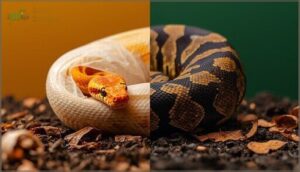
Shedding frequency isn’t one-size-fits-all — it shifts considerably depending on your snake’s age and species. A hatchling corn snake and an adult ball python are operating on completely different biological timelines.
Here’s what normal actually looks like across different life stages and common species.
Shedding Patterns in Hatchlings, Juveniles, and Adults
Age shapes your snake’s shedding cycle more than almost anything else. A hatchling can shed up to 15 times in its first year — that’s pure growth rate at work.
Here’s what to expect across life stages:
- Hatchlings shed every 2–4 weeks
- Juveniles shed every 4–8 weeks
- Adults shed 2–8 times yearly
Matching your care to each stage protects long-term snake health.
Species-specific Shedding Frequency
Species shedding patterns vary more than most owners expect. Ball pythons shed every 4 to 6 weeks as juveniles, slowing to just a few times yearly as adults. Corn snakes follow a similar rhythm — every 4 to 6 weeks young, dropping to every 3 months at maturity.
Understanding these shed cycle variations by snake species helps you spot reptile health problems early.
Typical Shed Timelines
Typical shed timelines follow a predictable rhythm once you know what to look for. Hatchlings cycle every 2 to 4 weeks — growth patterns at that stage are aggressive. Juveniles slow to 4 to 6 weeks. Most adults complete their shedding cycle just 3 to 6 times yearly.
Age factors and species variance both shape these windows, and environmental influence can shift them noticeably.
Key Causes of Irregular Shedding
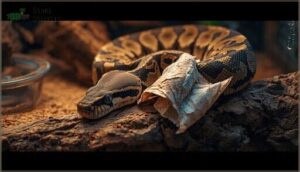
When a snake’s shed cycle goes off track, something in its world has usually shifted. The cause could be environmental, nutritional, or health-related — and pinning it down is the first step toward fixing it.
Here are the three most common triggers worth looking at.
Environmental Factors (humidity, Temperature)
Your snake’s enclosure is basically its entire world — and when the climate inside goes wrong, the shedding cycle pays the price first.
Humidity control and temperature gradients are the two biggest environmental levers you control. Humidity levels between 50–70% keep skin pliable. For corn snakes, target 65–75%. Poor enclosure setup — wrong light cycles, unstable heat — disrupts snake shedding in ways that compound fast.
Watch for these warning signs of climate management failure:
- Shed coming off in ragged patches instead of one clean piece
- Eye caps or tail tips staying stuck after the rest releases
- Basking zone dropping below 88–90°F, slowing normal metabolism
- Humidity readings below 50% during active shedding phases
- No temperature gradient — just one flat, uniform warmth throughout
Environmental science and ecology remind us: snakes evolved in specific microclimates. Replicate that, and shedding usually takes care of itself.
Nutritional Deficiencies
What your snake eats directly shapes how well it sheds. Vitamin imbalance — especially low vitamin A — causes retained patches and thickened skin. A mineral deficit in calcium disrupts shed cycles through hormonal interference. Protein malabsorption weakens new skin formation entirely.
These nutrient disorders and dietary insufficiency issues are fixable, but they require honest evaluation of your feeding routine and prey quality.
Health Conditions and Stress
Illness and chronic stress are often the hidden drivers behind shedding problems and solutions that never quite stick. Four health issues to watch closely:
- Parasites like mites irritate skin, triggering frequent incomplete sheds
- Respiratory issues and fungal infections disrupt normal ecdysis cycles
- Skin lesions signal active infections needing immediate attention
- Hormonal imbalance from stress alters shed timing unpredictably
Environmental Factors Affecting Shedding
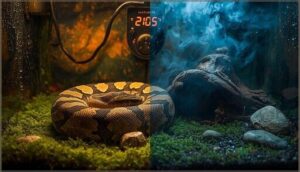
Your snake’s enclosure isn’t just a home — it’s the engine behind every shed. Small changes in humidity, temperature, or lighting can throw the whole cycle off. Here’s what to look at first.
Importance of Humidity Control
Humidity is the single biggest factor you can control to support a clean shed cycle. Most snakes need 50 to 70 percent humidity, but ball pythons want 60 to 80 percent when shedding starts.
Drop below 40 percent, and you’re looking at dysecdysis — stuck, patchy skin that won’t release cleanly. Humid hides packed with damp sphagnum moss solve this fast, boosting local moisture to 80 to 90 percent right where your snake needs it.
Temperature Gradients and Shedding
Getting humidity right matters — but temperature does the heavy lifting in ecdysis. Your snake needs a real thermal gradient: 88–92°F on the warm side, 75–80°F on the cool end. That 10–15°F spread drives the metabolic processes that loosen old skin. Without it, shedding cycles stall.
Here’s what poor gradient setup actually costs your snake:
- Retained eye caps from sub-75°F cool zones
- Fragmented, patchy sheds caused by impaired enzyme activity
- Delayed ecdysis cycles stretching days beyond normal
- Dehydration-driven brittle skin when temps exceed 95°F
- Disrupted temperature control triggering brumation-like metabolic shutdowns
Light Cycles and Enclosure Setup
Temperature isn’t the only variable running your snake’s internal clock. Light cycles matter too. A consistent 12–14-hour photoperiod maintains the hormonal rhythms that keep shedding cycles on track.
Irregular lighting — random schedules, night-time brightness, or missing UVB exposure for diurnal species — can quietly disrupt those cues.
Good enclosure design puts hides on the darker side and uses timers for reliable photoperiod management.
Health Issues Linked to Shedding Problems

Sometimes the environment isn’t the problem — your snake’s body is. Health issues can quietly throw off shedding cycles long before other symptoms appear.
Here are the key conditions worth knowing about.
Parasites and Skin Infections
Parasites and infections are among the most disruptive causes of shedding problems. Mite infestations — especially Ophionyssus natricis — trigger irregular, coarse sheds and leave white debris in water bowls.
Bacterial infections cause blister disease along the underside, while fungal diseases like Snake Fungal Disease produce scabs and premature sheds.
Tick parasites and protozoan impacts further compromise skin health, so inspect every shed carefully.
Metabolic or Hormonal Disorders
Beyond external invaders, internal imbalances quietly disrupt your snake’s shedding cycles. Hormonal disorders — particularly thyroid issues — are a prime example. Hyperthyroidism can push shedding to every 10–14 days, often with muscle wasting and heightened appetite. Hypothyroidism creates the opposite chaos.
Watch for these metabolic disorder red flags:
- Shedding more than once every two weeks
- Unexplained weight loss between sheds
- Lethargy paired with shedding cycle abnormalities
- Calcium deficiency signs indicating metabolic bone disease
These endocrine problems directly compromise your snake’s integumentary system.
Signs of Underlying Illness
Shedding irregularities rarely happen in isolation — they’re often your snake’s way of waving a red flag.
| Symptom | Linked Condition | Urgency Level |
|---|---|---|
| Respiratory issues, wheezing | Bacterial pneumonia | High |
| Skin lesions, blisters | Fungal/bacterial infections | High |
| Eye problems, retained caps | Dehydration, low humidity | Moderate |
| Parasite infestations, dark specks | Ophionyssus natricis mites | High |
| Shedding cycle abnormalities | Hormonal or metabolic disorder | Moderate |
Infection symptoms affecting the integumentary system compound quickly. Don’t wait.
Diet and Nutrition’s Impact on Shedding

What your snake eats plays a bigger role in shedding than most owners realize. Nutrient gaps, overfeeding, and poor feeding schedules can all throw off a healthy shed cycle.
Here’s what you need to know about diet and how to adjust it.
Essential Nutrients for Healthy Shedding
What your snake eats directly shapes how well it sheds. Nutrient deficiency — even a subtle one — can throw off the entire cycle. Key nutrients that support healthy snake shedding include:
- Vitamin Balance: Vitamin A prevents dry skin and retained eye caps
- Amino Acid Role: Lysine and glycine build new epidermal tissue
- Mineral Supplements: A 2:1 calcium-phosphorus ratio keeps scales firm
- Dietary Additives: B complex powders applied 5 days pre-shed improve clean molts
- Vitamin E: Protects skin cells from damage before the shed begins
Whole prey naturally covers most of this nutrition — but watch for gaps.
Overfeeding and Rapid Growth
Overfeeding triggers rapid growth issues that directly disrupt snake shedding. When your snake gains 2–3 inches monthly, its skin can’t keep pace — fragmented, incomplete sheds follow.
Organ damage effects compound this: fatty liver disease impairs the hormones regulating shed cycles. Skin stretch problems and obesity complications mean stuck sheds become routine.
Proper diet and nutrition aren’t optional — they’re foundational.
Adjusting Diet to Improve Shed Cycles
Small diet tweaks can reset a disrupted shed cycle faster than you’d expect.
- Maintain Calcium Balance at a 2:1 ratio by dusting prey weekly with calcium powder (no D3 for indoor setups)
- Rotate prey — mice, rats, chicks — for Prey Rotation and Nutrient Optimization
- Support skin health through Fatty Acid Role: whole prey delivers essential omega-3 and omega-6
- Add Vitamin Supplements supplying 4,000 IU/kg vitamin A to prevent dry, fragmented sheds
Managing and Preventing Irregular Shedding

Managing irregular shedding isn’t just about reacting when something goes wrong — it’s about building habits that keep problems from starting.
The good news is that most issues are preventable with a few consistent practices. Here’s what actually has an impact.
Monitoring and Recording Shed Frequency
Think of your shed log as an essential signs chart. Start with basic record keeping: snake name, species, and hatch date, then log every pre-shed observation and post-shed completion status.
Consistent frequency tracking lets you run a shed cycle analysis across months. When data trending reveals shedding cycle abnormalities — like intervals jumping from 42 to 90 days — you’ll catch problems early.
Adjusting Habitat Conditions
Your enclosure setup directly drives shedding cycle abnormalities when husbandry falls short. Three habitat adjustments make the biggest difference for snake health:
- Humidity Levels — Keep ambient humidity at 50–70%; spike to 70–80% for 24–72 hours when pre-shed signs appear.
- Temperature Control — Maintain a gradient: 85–92°F warm side, 75–80°F cool side.
- Substrate Choice — Use cypress mulch or coconut husk to stabilize humidity naturally.
Stress Reduction Techniques
Habitat fixes matter, but chronic stress quietly sabotages even perfect humidity readings. Calming environments start with placement — keep enclosures in low-traffic rooms, away from kitchen noise and foot traffic.
| Stress Reduction Method | Application |
|---|---|
| Gentle Handling | Short sessions every few days |
| Secure Hides | Two hides minimum per enclosure |
| Consistent Routines | Fixed feeding and check schedules |
Snake habituation takes time. Respect it.
When to Seek Veterinary Care
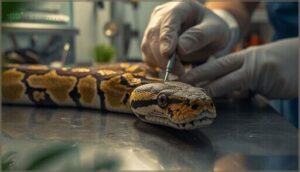
Some shedding issues don’t resolve with a humidity boost or a diet tweak — they’re signaling something deeper. Knowing when to stop troubleshooting at home and call a reptile vet can make a real difference in your snake’s outcome.
Here’s what to watch for, what a vet will check, and how treatment usually works.
Warning Signs Needing Immediate Attention
Some warning signs demand a vet call — not a wait-and-see approach.
- Retained eye caps lasting more than one shed cycle risk permanent vision damage
- Tail constriction from stuck shed can cause necrosis within 48 hours
- Skin infections showing redness, pus, or foul odor signal bacterial spread
- Prolonged lethargy beyond one week post-shed points to systemic illness
- Extreme dehydration paired with sunken eyes and incomplete sheds requires urgent care
Diagnostic Tests for Irregular Shedding
Once your vet suspects something deeper is driving your snake’s shedding cycle abnormalities, expect a targeted diagnostic workup. A fecal exam catches internal parasites like ascarids. Blood work checks thyroid levels and organ function. Skin scraping identifies mites or fungal species. PCR testing confirms infections like Ophidiomyces. Tissue biopsy resolves chronic lesions.
| Test | What It Detects |
|---|---|
| Fecal Exam | Internal parasites disrupting nutrient absorption |
| PCR Testing | Fungal or viral infections causing shedding problems |
Treatment Options From Reptile Vets
Once diagnostics point to a cause, treatment moves fast. For mites, vets use ivermectin or permethrin to clear infestations and normalize shedding cycle abnormalities within two to three cycles. Bacterial infections often need ceftazidime injections.
Vetericyn spray aids reptile health between visits by cleaning patchy sheds. Your vet’s advice, paired with the right reptile medication, is what actually resolves the pattern.
How to Help Your Snake Shed Successfully
Most shedding problems are fixable once you know what to do. A few targeted adjustments to your snake’s environment and routine can make a real difference.
Here’s what actually helps when your snake is struggling to shed.
Assisting With Stuck Shed

Stuck shed isn’t just cosmetic — retained skin can cut off circulation, especially on tail tips and eye caps. Before attempting shed removal, soften the area first. Rushing scale separation on dry skin tears new scales underneath.
- Wrap your snake in a warm, damp towel (80–85°F) for 20–30 minutes
- Apply mineral oil to stubborn patches for gentle skin lubrication
- Roll a wet Q-tip over retained pieces to lift edges
- Use blunt tweezers only on already-loose shed edges
Addressing shedding cycle abnormalities early prevents compounding damage during ecdysis.
Using Humid Hides and Bathing
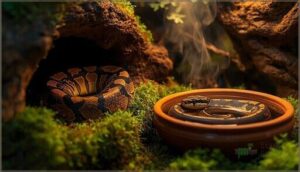
A well-built humid hide does most of the heavy lifting for snake shedding support. Pack damp sphagnum moss one-third to half full inside a plastic container, targeting 65–75% internal humidity. Only use Snake Soaking — 80–90°F water, 10–20 minutes — when stuck shed appears.
| Humid Hide Tips | Bathing Techniques | Humidity Control |
|---|---|---|
| Cut entry hole 1–1.5x body width | Water temp: 80–90°F | Enclosure: 40–60% |
| Sphagnum moss, wrung-out sponge texture | Limit to 10–20 minutes | Hide during shed: 60–70% |
| Smooth all entry edges | Provide rubbing surface inside tub | Monitor with hygrometer probe |
| Replace moss every 2–4 weeks | Dry gently after soak | Mist moss every 1–2 days |
| Position at mid-to-cool enclosure end | Avoid routine bathing | Max 80% to prevent mold |
Safe Handling During Shedding

Back off the moment you notice shedding signs — cloudy eyes mean hands-off time. Gentle handling protects your snake when it’s most vulnerable.
Follow these snake care and maintenance rules:
- Limit contact to tank maintenance only during the shedding cycle
- Wear puncture-resistant gloves if handling becomes unavoidable
- Keep post shed care sessions to 10–15 minutes maximum
- Resume full snake support only after a complete, one-piece shed
Top 3 Products for Shedding Support
The right products can make shedding a lot less stressful — for both you and your snake. A few well-chosen tools go a long way toward keeping humidity up, skin healthy, and stuck sheds from becoming a recurring problem.
Here are three worth keeping in your care kit.
1. Zilla Reptile Shedding Bath Solution
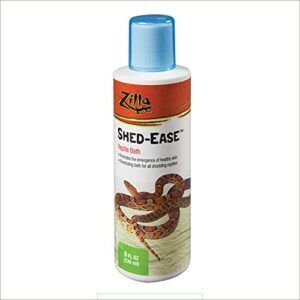
Zilla’s Reptile Shedding Bath Solution is a straightforward tool when humidity adjustments alone aren’t enough. Add 10 ml to 16 oz of lukewarm water, soak your snake for 20 minutes, and the aloe vera formula gets to work softening retained skin.
It’s allergen-free, fragrance-free, and safe for hatchlings through adults. Use filtered or distilled water — tap water’s chlorine and heavy metals can cause irritation.
If shedding issues continue after consistent use, that’s your cue to call a vet.
| Best For | Reptile owners dealing with stuck sheds or stubborn shedding issues on lizards and snakes at any life stage. |
|---|---|
| Price Range | Paid (physical) |
| Format | Physical liquid |
| Target Audience | Reptile owners |
| Primary Use | Reptile care |
| Accessibility | Widely available |
| Content Type | Care product |
| Additional Features |
|
- Aloe vera formula gently softens retained skin without harsh chemicals
- Allergen-free and fragrance-free, so it’s safe for sensitive reptiles from hatchlings to adults
- Flexible use — works as a soak or diluted into a light spray
- It’s a concentrate, not a ready-to-use spray, so it takes a bit of prep
- Tap water is a no-go — you’ll need filtered or distilled water every time
- Won’t fix severe shedding problems tied to underlying health issues
2. Vimy Underground

Vimy Underground takes a different approach — it’s a 47-minute documentary, not a care product. It explores the discovery of a WWI tunnel system near Vimy Ridge, where Canadian and British soldiers sheltered before battle. Walls covered in carvings, names, and portraits make it a striking historical record.
It’s available free on Tubi and the Roku Channel, or rentable on Prime Video. At $1.99 to rent, it’s an affordable watch — just unrelated to snake shedding support.
| Best For | History buffs and documentary lovers who want an affordable, fascinating look at WWI underground life near Vimy Ridge. |
|---|---|
| Price Range | Paid ($1.99) |
| Format | Digital download |
| Target Audience | Gamers/explorers |
| Primary Use | Entertainment |
| Accessibility | Affordable access |
| Content Type | Interactive content |
| Additional Features |
|
- Only $1.99 to rent — easy impulse watch
- Covers genuinely rare historical ground (literally underground)
- The soldier carvings and portraits give it a personal, emotional depth
- Free streaming options mean some viewers may not find $1.99 worthwhile
- Very niche subject matter — limited appeal outside history enthusiasts
- At 47 minutes, it’s a short watch that may leave you wanting more depth
3. America’s Most Dangerous Highway

America’s Most Dangerous Highway" doesn’t belong on this list — and that’s not a typo. It’s a media title covering U.S. highway safety, with no connection to reptile care or shed support.
No humidity benefits. No skin-softening properties. Nothing your snake needs. It appears here likely due to a data error.
If you’re building a shedding support kit, skip this one entirely and focus on proven options like humid hides, proper substrate, and veterinarian-recommended shed aids.
| Best For | Anyone curious about U.S. highway safety or planning to drive one of America’s most notorious roads. |
|---|---|
| Price Range | Free ($0) |
| Format | Digital media |
| Target Audience | Drivers/educators |
| Primary Use | Education |
| Accessibility | Free access |
| Content Type | Informational content |
| Additional Features |
|
- Free to access, so there’s no barrier to checking it out
- Covers a genuinely important safety topic that affects real drivers
- Could be a solid educational watch for anyone interested in road infrastructure
- Format isn’t clear upfront, so you’re not sure if it’s a video, article, or something else
- No way to verify how accurate or up-to-date the information is
- Highlights the problem but may not offer much in the way of real solutions
Frequently Asked Questions (FAQs)
Where do snakes go in October?
In October, snakes seek shelter in hibernacula — caves, rock crevices, rodent burrows, and even crawl spaces near homes.
They’re preparing for brumation, basically a metabolic slowdown triggered when temperatures dip below 60°F.
Can shedding frequency predict a snakes lifespan?
Shedding frequency alone can’t predict lifespan. It mainly reflects age, growth rate, and current health.
Think of it as one piece of a larger puzzle — useful context, not a definitive forecast.
Do wild snakes shed differently than captive ones?
Yes, they do. Wild snakes follow seasonal rhythms, shedding more in warm months and slowing down in winter.
Captive snakes shed more consistently year-round, driven by stable temperatures and regular feeding.
How does brumation affect a snakes shedding cycle?
Brumation slows metabolism to roughly 5% of normal, basically pausing your snake’s shed cycle. Expect intervals stretching up to six months.
Once it warms and feeds post-brumation, a fresh shed follows within two weeks.
Does a snakes color change after each shed?
Not usually. After a clean shed, your snake’s new skin often looks brighter and glossier — but the pigments haven’t changed. That fresh glow is just healthy skin finally visible again.
Conclusion
Shedding signals something deeper—and smart snake owners know to listen. Irregular snake shed frequency isn’t random noise; it’s your snake’s most reliable way of saying something’s wrong.
Fix the humidity. Dial in the temperatures. Track every shed date. When the pattern breaks, investigate early rather than waiting for complications to compound.
Your snake can’t speak, but its skin always tells the truth. Learn to read it.
- https://a-z-animals.com/animals/snake/how-often-do-snakes-shed/
- https://animalhotels.com/gb/blog/reptiles-and-amphibian/snake-skin-why-and-how-often-do-snakes-shed-their-skin
- https://www.reptiles-planet.com/en/post/snake-shedding-stages-common-problems-and-solutions
- https://www.furrycritter.com/pages/health/snakes/shedding_cycle_abnormalities.htm
- https://enviroliteracy.org/animals/why-is-my-snake-having-a-hard-time-shedding/