This site is supported by our readers. We may earn a commission, at no cost to you, if you purchase through links.
Your hands reach into dark spaces dozens of times a day—under decks, into woodpiles, beneath rocks. Most of the time, you find what you’re looking for. But in snake country, one of those reaches could end with fangs puncturing your palm.
Hand and arm bites account for roughly 70% of all venomous snakebites in the United States, and they’re almost always preventable. The stakes are high: venom injected into your hands can cause permanent tissue damage, loss of function, or worse.
Whether you’re a herpetologist handling specimens, a homeowner doing yard work, or a hiker exploring rocky terrain, protecting your hands from snake bites requires the right combination of gloves, techniques, and awareness.
Table Of Contents
- Key Takeaways
- Why Protecting Your Hands From Snake Bites Matters
- Understanding Snake Behavior and Strike Zones
- Essential Hand Protection Techniques in The Wild
- Top 10 Snake Bite Proof Gloves
- 1. Rapicca Animal Handling Gloves
- 2. WZQH Leather Welding Gloves
- 3. Tylulikaty Animal Handling Gloves
- 4. V Cheetong Snake Bite Proof Gloves
- 5. Lurmmue Heat Resistant Leather Gloves
- 6. Surfante Animal Handling Gloves
- 7. Aowpfvv Animal Handling Gloves
- 8. Bite Proof Animal Handling Gloves
- 9. Schwer Cut Resistant Work Gloves
- 10. Moutclmb Animal Handling Gloves
- Choosing The Right Snake Bite Protection Gloves
- Safe Hand Practices for Snake Owners
- Emergency Response for Hand Snake Bites
- Frequently Asked Questions (FAQs)
- Do they make snake bite proof gloves?
- Can copperheads bite through leather gloves?
- What gloves will thorns not go through?
- How often should protective gloves be replaced?
- Do snake bite proof gloves work underwater?
- Are there seasonal patterns for hand snake bites?
- Can gloves protect against all venomous snake species?
- Conclusion
Key Takeaways
- Most hand and arm bites are preventable since they account for roughly 70% of all venomous snakebites in the U.S., typically occurring when people reach into unseen spaces without using tools or proper protection.
- Snake bite proof gloves made from Kevlar, aramid fibers, or heavy leather offer puncture resistance but aren’t 100% foolproof—no glove can guarantee complete protection against all venomous species, especially those with long fangs like gaboon vipers.
- The safest approach combines proper equipment (hooks, tongs, and protective gloves), smart hand positioning (keeping hands outside one full body length from a snake’s head), and visual inspection before reaching into dark spaces like woodpiles or rock crevices.
- Immediate response after a hand bite matters critically—remove jewelry right away to prevent circulation loss from swelling, keep the hand at heart level, call emergency services immediately, and avoid common mistakes like applying tourniquets, ice, or cutting the wound.
Why Protecting Your Hands From Snake Bites Matters
Your hands are at serious risk when you’re out in snake country. Studies show that between 35 and 61 percent of all snakebites happen to the upper extremities, with fingers and hands taking the biggest hit.
That’s why knowing how to identify the most poisonous snake in the US can help you stay alert and keep your hands protected in high-risk areas.
Understanding why your hands are so vulnerable helps you make smarter choices about protection and prevention.
Upper Extremity Snakebite Statistics and Risk
Your hands face real danger in snake country. National data shows that roughly half of all venomous snake bites strike the upper extremity—your wrists, hands, and fingers. In some regions, that figure jumps to 82 percent.
Most of these bites come from rattlesnakes, which account for over 4,000 incidents annually—though keeping rattlesnakes as pets raises serious safety and legal concerns.
Males account for nearly two thirds of these incidents, with summer evenings presenting peak risk. Snake bite prevention starts with understanding these patterns.
For more details on common envenomation symptoms and treatment, consult current medical guidelines.
Common Scenarios Leading to Hand Bites
Most hand bites happen when you reach where you can’t see. Clearing rocks or firewood without tools puts your fingers inches from hidden snakes.
Before moving anything outdoors, check common snake hiding spots like woodpiles, rock crevices, and dense brush where they rest unseen.
Handling or moving snakes accounts for 40 percent of occupational bites—all to the fingers. Outdoor hazards multiply when you probe holes, lift debris, or grab branches blindly.
Slow, deliberate hand positioning when handling snakes safely reduces defensive strikes, especially during transfers or routine care.
Snake habitats overlap with routine tasks, turning everyday actions into wilderness risks without proper hand safety. Being aware of venomous snake prevention methods is essential for anyone spending time outdoors.
Consequences of Untreated Snake Bites to Hands
Delaying treatment transforms a painful bite into permanent damage. Venom from venomous snakes triggers rapid tissue necrosis in your fingers, destroying muscle and skin within hours.
Untreated snake venom destroys finger tissue within hours, turning a painful bite into permanent disability
- Nerve damage leaves hands numb or paralyzed
- Compartment syndrome cuts blood flow, requiring amputation
- Systemic complications like kidney failure threaten your life
- Chronic disability steals grip strength for decades
Snake bite prevention protects more than skin—it preserves your independence.
Understanding Snake Behavior and Strike Zones
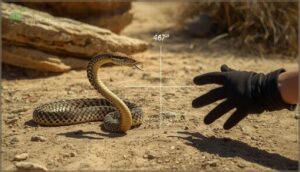
Before you can protect your hands, you need to understand how snakes actually behave when they feel threatened. Knowing their strike range and how they react to movement helps you avoid putting your hands in danger.
If a strike does happen despite your precautions, knowing proper snake bite first aid can make a critical difference while you get to a hospital.
Let’s look at the key behaviors that determine when and where a snake might strike.
How Snakes Perceive Threats and React
Snakes don’t see you as a meal—they see you as a giant predator, and their first instinct is almost always to get away. They rely on vibrations and heat more than sight to detect threats. When cornered, their snake defense kicks in—either freezing, fleeing, or striking. Understanding this threat perception helps you avoid triggering a defensive bite.
| Snake Behavior | What Triggers It | Your Best Move |
|---|---|---|
| Freezing | Sudden movement nearby | Stop and back away slowly |
| Fleeing | Clear escape route available | Let it leave—don’t chase |
| Striking | Cornered or stepped on | Keep hands back, use tools |
Venomous snakes strike only when they feel trapped. Their reaction time is lightning-fast, but they’d rather save their venom for prey. That’s why calm, deliberate movements around reptiles matter—you’re working with their animal behavior, not against it.
Strike Range and Hand Placement Risks
A coiled rattlesnake can lunge about two-thirds of its body length—often reaching 16 to 27 inches—in under 90 milliseconds. That’s faster than you can pull your hand back.
Studies show that 44 percent of bites hit the wrist, hand, or fingers because people reach into strike distance without realizing it.
Snake bite proof gloves and animal handling gloves offer critical hand protection when you’re working near serpents, but your best bite prevention is simple: keep your hands outside one full body length from any snake’s head.
Identifying High-Risk Hand Positions Near Snakes
Your hand’s position relative to a snake matters more than distance alone. Certain placements trigger defensive postures and increase venomous snake behavior risks, even with animal handling gloves.
Watch for these high-risk encounters and snake strike zones:
- Directly above the snake’s body – mimics predator attacks
- Within the frontal arc near the head – prime strike territory
- In blind spots – tall grass, crevices, or under logs
- During rapid movements – teasing or sudden gestures provoke strikes
Essential Hand Protection Techniques in The Wild

Your hands are often the first thing a snake will strike if you’re not careful in the wild. Most hand bites happen when people reach into places they can’t see or try to move objects without thinking.
Here are four practical techniques that’ll keep your hands safe when you’re out exploring snake country.
Using Tools Instead of Bare Hands
You don’t need to touch a snake to move it safely. Snake hooks let you lift and support the body from a distance, while tongs grip the snake without your hands getting close.
These animal handling tools dramatically cut bite risk—studies show 44 percent of snakebites involve hands or fingers.
Use proper tong handling methods with gentle pressure, and always keep hooks as backup protective gear options when working around reptiles.
Proper Hand Positioning When Moving Objects
When you’re clearing brush or moving firewood, your hands need to stay on top surfaces—never wrap fingers around edges where snakes hide. Visual scanning comes first: check both sides before you lift. Use safe lifting techniques that keep your hands offset from ground-level gaps. Stabilize boards with a boot or stick before grabbing them.
Even with RAPICCA animal handling gloves or other protective clothing, object stabilization and proper hand placement beat rushing every time.
Safe Practices When Navigating Snake Habitats
Staying on well-defined trails is your first line of outdoor safety in snake habitat. Avoid tall grass and rocky debris piles where reptiles rest. Use a walking stick to probe ahead—it warns snakes and protects your hands.
Scan the ground constantly, especially near logs and ledges. Protective clothing and visual inspection reduce snake bites markedly. Never hike barefoot or reach blindly into brush.
What to Do Before Reaching Into Dark Spaces
Dark recesses hide snakes more often than open ground. Before you reach anywhere your eyes can’t see, follow this protocol:
- Shine a flashlight into crevices, log hollows, and debris piles—visual inspection reveals concealed reptiles before contact occurs.
- Probe with a rake or stick first—dark space probing alerts hidden snakes and keeps your hands safe.
- Wear snake bite proof gloves and protective clothing—animal handling gloves add a puncture-resistant barrier against fangs.
Proper lighting considerations and hand placement prevent most bites.
Top 10 Snake Bite Proof Gloves
The right gloves can make a real difference when you’re working outdoors or handling animals in snake-prone areas. While no glove offers 100 percent protection against every venomous snake, puncture-resistant materials like heavy leather and Kevlar greatly reduce your risk of fang penetration.
Here are ten gloves that provide solid hand protection when you need an extra layer of safety.
1. Rapicca Animal Handling Gloves
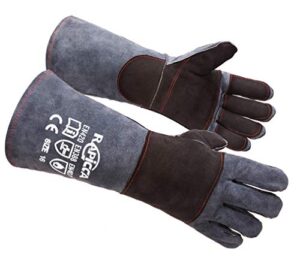
You’ll find solid Hand Protection in RAPICCA Animal Handling Gloves, built from top-grain cowhide with Kevlar-reinforced double leather on fingers and palms. These Snake Bite Proof Gloves stretch 16 inches up your forearm, giving you coverage where strikes often land.
The thick Leather Durability resists punctures from fangs while maintaining enough flex for Animal Handling tasks. They’re puncture-resistant and bite-resistant—designed for Snake Bite Prevention when you’re working with reptiles or traveling through snake country.
The Glove Materials won’t stop every species, but they offer real Snake Bite Protection for most encounters.
| Best For | Veterinarians, animal handlers, and reptile enthusiasts who need reliable hand and forearm protection from bites, scratches, and punctures while handling dogs, cats, birds, and snakes. |
|---|---|
| Primary Material | Cowhide leather |
| Bite Resistance | Yes |
| Scratch Resistance | Yes |
| Heat Resistance | Yes |
| Length | 16 inches |
| Use Case | Multi-purpose handling |
| Additional Features |
|
- 16-inch length with reinforced Kevlar double leather on high-risk areas provides solid bite and puncture resistance for most common animals
- Multi-functional design works beyond animal handling—useful for gardening, grilling, and other tasks requiring heat and cut resistance
- Backed by a 90-day satisfaction guarantee with replacement or full refund if defective or damaged
- Bulky construction limits fine motor skills and dexterity, making delicate tasks harder to perform
- One-size design fits large hands well but may be too big for people with smaller hands
- Won’t withstand bites from very powerful animals like large dogs with strong jaws, lions, or crocodiles
2. WZQH Leather Welding Gloves
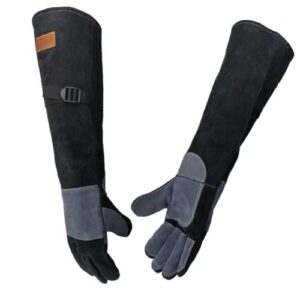
WZQH Leather Welding Gloves offer serious Puncture Resistance with 1.2mm thick cowhide and Kevlar-reinforced stitching on palms and fingers. These Snake Bite Proof Gloves weren’t designed specifically for reptiles, but the Leather Thickness and multi-layer construction provide real Venomous Snake Protection when you’re in the field.
You’ll get 16 to 23.6 inches of Hand Protection up your forearm—longer than most Animal Handling Gloves.
The Glove Materials combine heat-resistant layers with double-leather reinforcement, making them adaptable for both Welding Safety and Snake Bite Protection in rough terrain.
| Best For | Welders, animal handlers, and outdoor workers who need heavy-duty hand and forearm protection against heat, bites, scratches, and punctures in demanding environments. |
|---|---|
| Primary Material | Cowhide leather |
| Bite Resistance | Yes |
| Scratch Resistance | Yes |
| Heat Resistance | Yes |
| Length | 16+ inches |
| Use Case | Multi-purpose handling |
| Additional Features |
|
- Thick 1.2mm cowhide leather with Kevlar stitching and double-layer reinforcement on high-wear areas provides exceptional durability and resistance to punctures, cuts, and animal bites
- Extended 16 to 23.6-inch coverage protects hands and forearms from welding sparks, hot debris, snake bites, and animal scratches better than standard-length gloves
- Multi-layer construction with heat-resistant materials handles temperatures up to 932°F, making them versatile for welding, forging, grilling, and other high-heat tasks
- Limited dexterity due to thick leather construction may make precise tasks or handling small objects difficult for some users
- Sizing can be inconsistent with manual measurement variations, and gloves may run large for people with smaller hands
- Strong leather smell and lack of formal puncture ratings mean protection against high-pressure snake fangs isn’t scientifically quantified, so safe handling practices are still essential
3. Tylulikaty Animal Handling Gloves

Tylulikaty Animal Handling Gloves give you 23 inches of Hand Protection from fingertip to mid-forearm—critical coverage when you’re moving brush or checking equipment where snakes hide. The cow split leather with Kevlar-reinforced palms resists punctures better than single-layer designs.
These Snake Bite Proof Gloves weigh 1.31 pounds and include cotton lining for comfort during extended field work.
You’ll find them useful for Animal Handling across cats, dogs, and reptiles, though they’re marketed more broadly than specialized Snake Bite Prevention gear.
| Best For | People who work with animals professionally or handle reptiles and need extended arm protection without breaking the bank. |
|---|---|
| Primary Material | Leather with Kevlar |
| Bite Resistance | Yes |
| Scratch Resistance | Yes |
| Heat Resistance | No |
| Length | 23.59 inches |
| Use Case | Animal handling |
| Additional Features |
|
- 23-inch coverage protects your entire forearm, not just your hands, which matters when you’re dealing with snakes or aggressive animals
- Kevlar-reinforced leather adds puncture resistance where you need it most—on the palms and back of hand
- Cotton lining keeps your hands from getting too sweaty during long sessions, unlike purely synthetic options
- No standardized bite-force ratings, so you’re taking the manufacturer’s word on protection levels
- One-size-fits-all approach means they might be loose on smaller hands or tight on larger ones
- Some users report quality control issues like defects or thinner material than expected
4. V Cheetong Snake Bite Proof Gloves
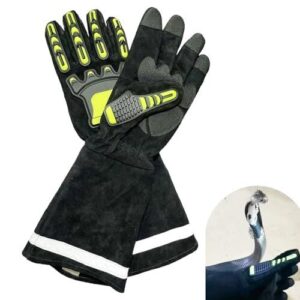
V Cheetong Snake Bite Proof Gloves use full-area Kevlar construction that covers your hands and wrists with puncture-resistant material rated for professional bite protection. The Kevlar Technology delivers high tensile strength that stops fangs from penetrating, though the short wrist length means you’ll need precise hand positioning when working near agile species.
The double-layer split grain leather reinforcement adds durability where strikes usually land—across your palm and fingers. At 18 inches long and 1.43 pounds, they balance coverage with reasonable mobility for fieldwork.
| Best For | Professionals handling venomous snakes, reptiles, or aggressive animals who need maximum bite protection with Kevlar reinforcement. |
|---|---|
| Primary Material | Kevlar and leather |
| Bite Resistance | Yes |
| Scratch Resistance | Yes |
| Heat Resistance | No |
| Length | 18 inches |
| Use Case | Snake and reptile handling |
| Additional Features |
|
- Full-area Kevlar construction provides professional-grade puncture resistance against snake fangs and sharp teeth
- Double-layer split grain leather adds extra durability in high-impact zones where bites typically occur
- 18-inch length offers solid forearm coverage for most handling situations
- Short wrist length leaves minimal room for error when working with fast-moving or agile snakes
- Gloves arrive stiff and require break-in period before fingers move comfortably
- May not fit larger adult male hands properly, limiting effectiveness for some users
5. Lurmmue Heat Resistant Leather Gloves
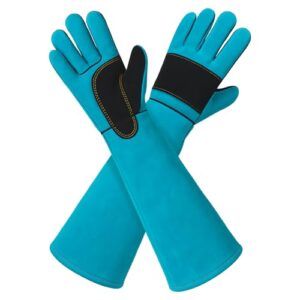
Lurmmue’s 23.6-inch gloves prioritize heat resistance over dedicated snake bite prevention tips, so you won’t find puncture testing certifications here. Heat resistance reaches 932°F, but that strength doesn’t translate to fang penetration resistance.
The split cowhide leather construction manages welding sparks and BBQ work well, offering general animal handling gloves protection through thick glove materials and double-layer palm reinforcement. While marketed for reptile use, these aren’t technically snake bite proof gloves—laboratory protocols explicitly warn against relying on standard leather durability alone with venomous species.
For serious hand protection around hot snakes, combine these with hooks and safe distance.
| Best For | Welders, blacksmiths, and BBQ enthusiasts who need extreme heat protection and occasional animal handling capability, but not serious reptile or venomous snake work. |
|---|---|
| Primary Material | Leather |
| Bite Resistance | Yes |
| Scratch Resistance | Yes |
| Heat Resistance | Yes – up to 932°F |
| Length | 23.6 inches |
| Use Case | Welding and animal handling |
| Additional Features |
|
- Exceptional 932°F heat resistance makes these ideal for welding, forge work, and high-temperature tasks where most gloves would fail.
- The 23.6-inch length provides full forearm coverage that protects against sparks, embers, and scratches from pets or non-venomous animals.
- Double-layer reinforced palm and split cowhide construction deliver solid durability for heavy-duty use over time.
- Not certified for snake bite protection despite reptile marketing—relying on these alone with venomous species is unsafe.
- Sizing runs large for many users, with reports of oversized fingers and palms that reduce dexterity and precision grip.
- Thick leather construction traps heat and moisture, making extended wear uncomfortable and sweaty.
6. Surfante Animal Handling Gloves
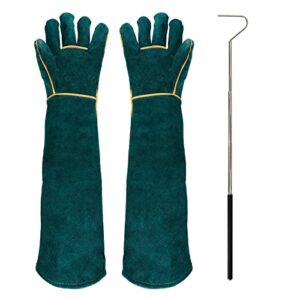
Surfante’s 23-inch cowhide gloves bundle a retractable stainless steel snake hook with your hand protection—convenient if you’re just starting out with reptile handling tips. The thickened leather offers scratch and bite resistance for smaller animals, though the hook itself bends under pressure from larger snakes.
These animal handling gloves work well for household reptile tasks and general wildlife encounters, but don’t expect laboratory-grade snake bite proof gloves performance. The soft liner adds comfort, yet field studies show 61 percent of bites strike fingers, so you’ll need proper technique alongside any protective clothing.
| Best For | Beginners handling smaller reptiles, birds, or household pets who want basic bite and scratch protection with a bonus snake hook included. |
|---|---|
| Primary Material | Thickened cowhide |
| Bite Resistance | Yes |
| Scratch Resistance | Yes |
| Heat Resistance | Yes |
| Length | 23 inches |
| Use Case | Animal handling with hook |
| Additional Features |
|
- Bundled retractable snake hook makes it a convenient starter kit for new reptile handlers
- Thickened cowhide with soft liner balances protection and comfort for everyday animal tasks
- Long 23-inch sleeves shield your forearms during handling, welding, or gardening
- Snake hook bends easily and isn’t sturdy enough for larger or heavier reptiles
- Gloves run snug, so they may not fit comfortably if you have larger hands or arms
- Not reliable for bigger snakes or animals with strong bites since the leather isn’t heavy-duty grade
7. Aowpfvv Animal Handling Gloves
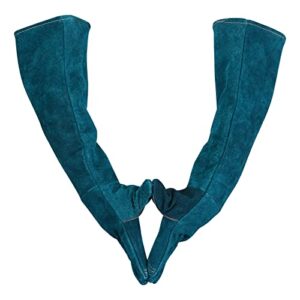
Aowpfvv Animal Handling Gloves stretch 23.6 inches up your forearm, wrapping hands and wrists in top-grain cowhide with double-reinforced finger palms—solid protection when you’re managing domestic animals or garden work. The cotton lining keeps you comfortable, though these gloves lean toward durability over precision.
Field data shows hands take the brunt of bites, so you’ll appreciate the thick leather during pet grooming or handling nervous wildlife.
Don’t mistake these for snake bite proof gloves rated for venomous species—manufacturers make no such claims, and no independent lab tests back that level of protection.
| Best For | Pet owners, groomers, and veterinary staff who need reliable protection from bites and scratches when handling domestic animals like cats and dogs. |
|---|---|
| Primary Material | Cowhide leather |
| Bite Resistance | Yes |
| Scratch Resistance | Yes |
| Heat Resistance | Yes |
| Length | 23.6 inches |
| Use Case | Animal handling |
| Additional Features |
|
- Extended 23.6-inch length shields both hands and forearms from bites and scratches during animal handling
- Double-reinforced leather on fingers and palms adds extra durability where you need it most
- Cotton lining provides comfort during extended wear while maintaining puncture resistance
- Thick construction sacrifices dexterity, making precision tasks difficult
- Can become uncomfortably hot during prolonged use
- Not rated for venomous snake handling despite some marketing suggesting reptile use
8. Bite Proof Animal Handling Gloves
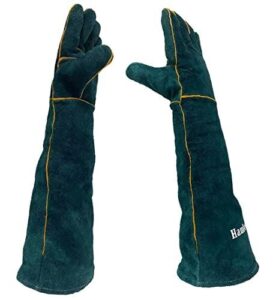
Many snake bite proof gloves claim puncture resistance through thick leather and Kevlar reinforcement, and lab tests confirm denim layers can cut venom delivery by 60 to 66 percent during rattlesnake strikes. These bite resistant animal handling gloves usually stretch to your forearms with multi-layer construction—cowhide exterior, Kevlar-reinforced palms, cotton padding—designed for hand protection during reptile work.
You’ll find RAPICCA animal handling gloves and VCHEETONG snake bite proof gloves using similar glove materials, but remember: even professional-grade safety features won’t stop every strike from large venomous species.
| Best For | Veterinarians, animal control workers, zoo staff, and reptile handlers who need forearm protection from bites and scratches when working with small to medium aggressive animals. |
|---|---|
| Primary Material | Cowhide and Kevlar |
| Bite Resistance | Yes |
| Scratch Resistance | Yes |
| Heat Resistance | Yes |
| Length | 23.7 inches |
| Use Case | Animal handling |
| Additional Features |
|
- Multi-layer construction with cowhide leather and Kevlar reinforcement provides genuine puncture resistance, with some models tested to EN388 level 4 standards
- Extended gauntlet design covers both hands and forearms up to 23.7 inches, protecting the areas most at risk during close animal handling
- Research shows denim and textile layers can reduce venom delivery by 60-66% in rattlesnake strikes, making them effective barriers for venomous snake encounters
- Thick materials reduce tactile sensitivity, which can make it harder to handle animals gently and may increase risk of applying excessive force
- Not suitable for large or extremely powerful animals like big dogs, lions, or crocodiles—the gloves have clear limits against high bite forces
- Sizing inconsistencies mean some users find the gloves too large or too small, and durability depends heavily on proper care and usage patterns
9. Schwer Cut Resistant Work Gloves
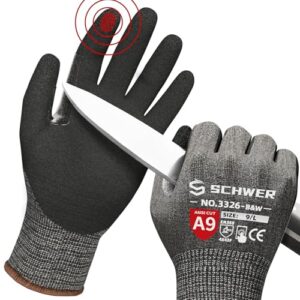
Schwer cut-resistant work gloves might seem like an odd choice for snake bite prevention, but their ANSI A9 rating and metal wire reinforcement offer serious hand protection against sharp hazards. You’ll get HPPE-polyester-spandex construction with reinforced thumb areas and sandy nitrile coating for grip.
These gloves excel at cut resistance—not puncture resistance—so they won’t stop fangs during a direct strike. They’re best for clearing brush or moving debris in snake habitats where you need dexterity and protection from thorns, glass, or metal edges rather than dedicated venomous snake safety.
| Best For | Workers who need top-tier cut protection while handling sharp materials like metal, glass, or wood—not for direct snake bite defense, but useful for brush clearing in snake territory. |
|---|---|
| Primary Material | HPPE and metal wire |
| Bite Resistance | No – cut resistant |
| Scratch Resistance | No |
| Heat Resistance | No |
| Length | Standard |
| Use Case | Cut protection work |
| Additional Features |
|
- ANSI A9 cut resistance with metal wire reinforcement provides the highest level of protection against slicing hazards
- Touchscreen compatible and breathable design keeps hands functional and comfortable during extended wear
- Reinforced thumb and non-slip coating offer durability and grip for demanding tasks like construction and metal fabrication
- Not puncture-resistant, so they won’t stop snake fangs or concentrated stabs from sharp points
- May run small and aren’t waterproof, limiting use in wet or cold conditions
- Overkill for fine dexterity tasks—better suited for heavy-duty work than precision handling
10. Moutclmb Animal Handling Gloves
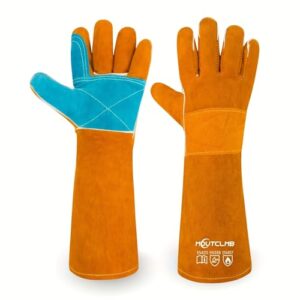
You’ll find Moutclmb animal handling gloves marketed with 17.7-inch double-layered leather construction for hand protection during pet grooming and restraint work. These gloves use thick cowhide with extended cuffs to shield your forearms from scratches and minor bites when working with cats, dogs, and small mammals.
However, they lack standardized puncture resistance ratings like EN 388 for snake bite prevention. While the reinforced leather offers decent protection against defensive pet reactions, don’t rely on these as certified snake bite proof gloves—they’re designed for general animal handling equipment needs, not venomous snake safety.
| Best For | Pet owners, groomers, and veterinary staff who need protection from scratches and minor bites during routine handling of cats, dogs, and small mammals. |
|---|---|
| Primary Material | 100% Leather |
| Bite Resistance | Yes |
| Scratch Resistance | Yes |
| Heat Resistance | No |
| Length | 17.7 inches |
| Use Case | Pet handling |
| Additional Features |
|
- 17.7-inch extended cuffs provide full forearm coverage beyond what standard gloves offer
- Double-layered leather construction with reinforced padding protects against common pet scratches and defensive nipping
- Affordable multipurpose design works for pet handling, grooming, and light outdoor tasks
- No standardized puncture resistance ratings (EN 388 or ANSI), so protection levels aren’t verified by independent testing
- Bulky leather construction reduces fine motor control, making it harder to grip small items or perform delicate tasks
- Not suitable for handling animals with powerful bites or as certified protection against venomous snakes
Choosing The Right Snake Bite Protection Gloves
Not all snake bite protection gloves are created equal. The right pair depends on what you’re doing, where you’re going, and what level of risk you’re willing to accept. Here’s what you need to think about before making your choice.
Material Considerations for Maximum Protection
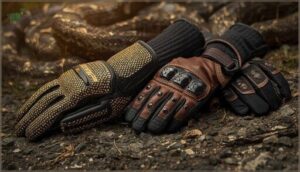
When selecting snake bite proof gloves, you’ll want materials that deliver serious puncture resistance. Kevlar and aramid fibers offer tensile strength five times that of steel, making them excellent puncture-resistant choices.
Heavy leather provides solid abrasion protection and moderate bite resistance, while layered constructions combine these protective layers for maximum defense.
Glove thickness matters, but material selection and fabric durability determine your real protection level against fangs.
Fit and Dexterity Requirements
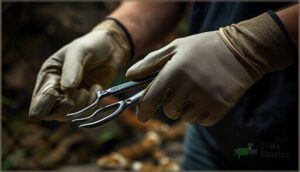
Protective materials won’t help if your gloves don’t fit right. Snake bite proof gloves need snug finger flexibility without gaps at the wrist—loose gloves catch on enclosures and ruin your control.
You’ll face a trade-off: thicker puncture resistant layers mean bulkier hands and slower movements. Test your grip with hooks and tongs before fieldwork, because even bite resistant animal handling gloves lose value when you can’t use them properly.
Puncture Resistance Standards and Ratings

Glove materials undergo puncture testing, where steel probes push through fabric at controlled speeds. Standards like EN 388 and ANSI ISEA 105 assign resistance levels based on the force required to penetrate, helping you compare safety gloves.
Snake bite proof gloves with higher ratings mean better arm protection. However, these standardization methods use probes, not actual fangs. Bite resistant doesn’t guarantee fang-proof.
Length and Coverage for Different Activities
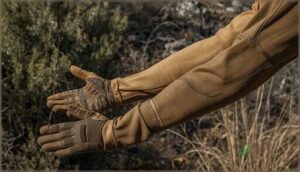
Material ratings won’t protect you if your forearm sits exposed. Puncture-resistant gloves need proper cuff designs and gauntlet length to cover vulnerable skin. Look for mid-forearm coverage when you’re crawling through brush or reaching into crevices.
Activities at chest height require durable palms while preserving grip.
Pair safety gloves with protective sleeves during high-risk situations where bite-resistant hand coverage alone falls short.
Safe Hand Practices for Snake Owners

If you keep snakes at home, your hands face unique risks that don’t exist in the wild. Institutional safety protocols exist for a reason—most hand bites happen during routine feeding and cleaning.
Here are the core practices that will keep your hands safe around captive snakes.
Never Placing Hands Inside Venomous Snake Enclosures
You never put your hands inside a venomous snake enclosure—period. Institutional safety guidelines exist for a reason: hands are vulnerable, and venomous species strike faster than you can react.
Use long tools like hooks to interact with your snake from outside the cage. Keep lids secured except during supervised procedures, and always maintain protective barriers between your hands and the animal.
Using Hooks and Tongs for Snake Handling
Hooks and tongs keep you about 1.5 meters from a snake’s head—well beyond strike range. Grip the body gently with tongs at mid-length to control movement without injuring ribs or spine. Slide a hook under one-third of the snake’s body, supporting its weight while directing the head away from your hands. For larger venomous species, use two hooks together.
These handling tools are your primary defense in reptile handling and venomous control.
Two-Person Safety Protocols for Venomous Species
Working with venomous snakes demands two qualified handlers at all times. One person controls the animal with hooks and tongs while the other oversees enclosure doors, transfer containers, and emergency equipment.
This dual handler role setup ensures that during venomous snake encounters, someone can immediately activate emergency response planning if a bite occurs. Your safety protocol training should assign clear teamwork best practices—who secures the snake, who calls for help, and who retrieves antivenom information.
Proper Enclosure Management to Minimize Hand Exposure
Keep enclosure lids secured and closed except during active procedures—your hands should never hover over or reach into an open cage containing a venomous snake. Design enclosures with secure lids and lockable access points to prevent accidental openings during routine care.
- Use feeding ports or slide doors that keep your hands outside the main enclosure during meals
- Wear puncture resistant animal handling gloves even when working near closed venomous storage units
- Position cage latches away from strike zones to protect fingers during routine maintenance
Emergency Response for Hand Snake Bites

Even with the best precautions, snake bites can happen, and how you respond in those first critical minutes makes a real difference. Your hands are particularly vulnerable, and quick, informed action can prevent serious complications.
Here’s what you need to do immediately after a hand bite, when to get help, and how to prepare before you ever need it.
Immediate First Aid Steps
If a snake bites your hand, stay calm and call emergency services immediately—that’s your first move. Remove rings and bracelets right away to prevent circulation loss from swelling.
Keep your hand at heart level and limit movement to slow venom spread. Cover the bite with a clean, dry dressing.
Don’t cut, suck, or ice the wound; these harm tissue without removing venom.
When to Seek Medical Attention
All suspected venomous snake bites require emergency medical response, even if symptoms seem mild. Seek immediate care if you notice:
- Pain, swelling, or discoloration spreading from the bite within hours
- Systemic symptoms like nausea, dizziness, weakness, or breathing difficulty
- Rapid swelling crossing your wrist or elbow—a sign of severe envenomation
Don’t wait for symptoms to worsen. Early antivenom treatment prevents irreversible tissue damage.
What Not to Do After a Bite
After a snake bite, your first-aid instincts might do more harm than good. Avoid tourniquets—they cut off blood flow and worsen tissue damage without stopping venom spread. Don’t slash or apply suction to the wound; you’ll increase infection risk without removing toxins.
Skip ice, which causes frostbite, and never delay emergency medical response by trying unproven remedies. Get professional help immediately.
Preparing an Emergency Action Plan
But don’t just react—prepare before you ever step outside. Your emergency action plan can save a life when seconds count. Build your response planning around these safety measures:
- Assign roles: designate who calls 911, gives first aid, and drives
- Identify the nearest hospital with antivenom ahead of time
- Pack a first aid kit with splints and bandages
- Share your route and expected return with someone home
- Practice evacuation strategies with your hiking partners
Test your outdoor safety tips regularly through mock drills.
Frequently Asked Questions (FAQs)
Do they make snake bite proof gloves?
Yes, several manufacturers produce specialized animal handling gloves with bite-resistant materials like Kevlar and heavy leather. However, they’re puncture-resistant, not truly bite-proof—no glove guarantees 100% protection against all venomous snake bites.
Can copperheads bite through leather gloves?
Here’s the sharp truth: copperhead snakes can puncture standard leather gloves. Their fangs measure 1 to 2 millimeters—often longer than typical cowhide thickness—allowing penetration when sufficient strike force lands directly on your hand.
What gloves will thorns not go through?
Full grain cowhide leather gloves and those with Kevlar or high-density polyethylene provide excellent thorn resistance. Look for EN 388 or ANSI puncture ratings—Level 2 manages most gardening thorns effectively.
How often should protective gloves be replaced?
Think your gloves last forever? They don’t. Replace snake bite proof gloves immediately after any bite, visible damage, or loss of puncture resistance.
Inspect before each use and discard worn animal handling gloves—your hand safety depends on it.
Do snake bite proof gloves work underwater?
Snake bite proof gloves haven’t been tested underwater, so their puncture resistant performance in aquatic conditions remains uncertain.
Water resistance and fang penetration dynamics differ markedly from dry-land scenarios where animal handling gloves are certified.
Are there seasonal patterns for hand snake bites?
Yes, snake bites peak during warmer months when venomous snakes are most active. Seasonal bite trends show increased hand injuries from spring through early fall, with regional variations based on climate factors and geographic risks.
Can gloves protect against all venomous snake species?
No glove offers 100 percent protection against all venomous snakes. Large rattlesnakes and gaboon vipers with long fangs can penetrate even professional-grade snake bite proof gloves under certain conditions.
Conclusion
Your hands evolved to explore the world—not to gamble with fangs hiding in it. Protecting your hands from snake bites doesn’t require paranoia, just preparation: proper gloves, tools instead of bare fingers, and awareness of where snakes rest.
Most bites happen because someone reached first and looked second. Break that habit, respect strike zones, and your hands will keep doing what they do best—building, creating, discovering—without ever meeting venom.