This site is supported by our readers. We may earn a commission, at no cost to you, if you purchase through links.
A single ball python sold for over $65,000. Not a rare jungle cat, not an exotic bird with a century-long lifespan—a snake that fits in your forearm.
That price tag belongs to the Sunset morph, a recessive gene project that took breeders years to crack and produces a burnt-orange coloration unlike anything else in the hobby.
Rare and expensive ball python morphs operate in a market driven by genetics, patience, and serious collector demand.
Understanding what separates a $300 snake from a $30,000 one comes down to lineage, breeding odds, and visual impact—and knowing the difference puts you in control of every purchase you make.
Table Of Contents
- Key Takeaways
- Rare Ball Python Morph Basics
- Top Rare and Expensive Morphs
- Why These Morphs Cost More
- Breeding Challenges Behind Premium Morphs
- Buying Rare Morphs With Confidence
- Frequently Asked Questions (FAQs)
- What is the rarest morph of ball python?
- What snake is worth $100,000?
- What is a holy grail ball python?
- How to tell if a snake likes you?
- What health issues affect scaleless ball pythons?
- How long does breeding a designer morph take?
- Can rare morphs breed with wild-type pythons?
- What permits are needed for breeding ball pythons?
- Do rare morphs have different care requirements?
- Do rare morphs require special humidity or temperature?
- Conclusion
Key Takeaways
- Morph value isn’t about looks alone — it’s driven by genetics, breeding odds, and verified lineage, which is why a Sunset or Lavender Albino Piebald can fetch tens of thousands while a standard ball python sells for a few hundred.
- Double and triple recessive projects take years to produce, with some pairings giving you just a 1-in-16 shot at the visual combo you’re chasing, so patience and precise record-keeping aren’t optional.
- Before spending serious money, always request full lineage documentation, clutch photos, and a written breeder guarantee — missing any of these is a red flag you can’t afford to ignore.
- Rare morphs don’t need special care, but scaleless lines demand tighter humidity control and albino animals need consistent eye monitoring to stay healthy long-term.
Rare Ball Python Morph Basics
Not every ball python looks the same, and that’s exactly the point. Behind each unique color and pattern is a genetic story — one that determines whether a snake sells for a few hundred dollars or tens of thousands.
From common recessive genes to complex designer combos, the full spectrum of what’s possible is mapped out in this complete guide to ball python morphs and their genetics.
Here’s what you need to understand before we get into the morphs that are turning heads and commanding serious money.
What a Ball Python Morph Is
A ball python morph isn’t a different species — it’s a genetic variation within the same species, produced through selective breeding and mutation origin events. Color changes, pattern alterations, and unique combinations define them.
Ball pythons exhibit the largest known color-pattern variation among reptiles.
Here’s what makes morphs distinct:
- Genetic variation shifts color, pattern, or both
- Albino removes dark pigment entirely
- Breeding genetics lock in heritable traits
- Genetic morphs can appear from a single mutation
How Rare Morphs Differ From Wild Type
wild-type ball pythons follow a predictable brown-and-gold pattern.
rare ball python morphs break that entirely. Albino wipes out dark pigment. Piebald drops unpredictable white patches. Clown restructures the pattern from the head down.
These aren’t minor color shifts — they’re deep genetic expression changes affecting pattern variations, color shifts, and even physical anomalies like scale texture or growth differences that separate them from any standard specimen.
Recessive, Dominant, and Codominant Genes
Genetics control everything about morph value.
A Recessive Gene Role, like piebald, only shows when your snake carries two copies — one from each parent.
That Het Carrier Concept means visual animals can hide in plain sight for generations.
Dominant Gene Display works differently: one copy is enough to show the trait immediately.
Health issues such as head wobble disorder are common in certain morphs.
- Super Form Difference: two copies of an incomplete dominant gene create a stronger, cleaner visual than one
- Gene Copy States determine whether a snake produces, carries, or passes nothing
- Genetic diversity in ball pythons expands every time a selective breeding program stacks compatible traits
Why Some Morphs Stay Uncommon
morphs stay uncommon because the barriers behind them are quietly immense. Habitat Needs, Hidden Genetics, and Trade Restrictions all work against consistent production.
Breeder Costs climb fast when Welfare Concerns demand specialized care.
Even with professional breeding experience and a disciplined selective breeding program, Genetic diversity in ball pythons doesn’t guarantee results — Captive breeding practices and Ball python morph selection still depend on time, odds, and patience.
How Rarity Affects Collector Demand
Rarity turns a snake into a status symbol fast. When captive breeding practices keep supply tight, exclusivity appeal drives collector demand well beyond what the animal’s genetics alone might justify.
Market hype can ignite urgency driving buyers to act before listings disappear. In the pet reptile market, the trust factor around proven lineage seals the deal — and that’s what separates serious ball python morph selection from impulse buying.
Top Rare and Expensive Morphs
Some ball pythons aren’t just pets — they’re financial assets wrapped in scales. The morphs below sit at the top of the market, where genetics, pattern, and lineage push prices into territory most collectors never expect.
Here’s what’s commanding serious money right now.
Sunset Ball Python
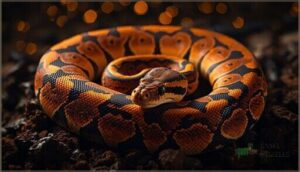
Sunset ball python is one of those morphs that stops people mid-scroll. First produced in 2012, this recessive gem delivers rich burnt orange tones, Flame Pattern Dynamics along the sides, and signature Bubbly Dorsal Markings that no wild type can match.
That premium look comes with a price bump—check out ball python genetics: visual morph vs. het pricing to understand why visuals like the Sunset routinely fetch two to three times what a het carrier costs.
For your collection or captive breeding program, maintain an Ideal Heat Range of 88–92°F, use a clean Substrate Choice, and watch collectors compete for display-ready animals in today’s pet reptile market.
Monsoon Ball Python
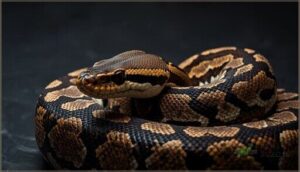
If the Sunset turns heads, the Monsoon stops the room.
This recessive morph throws a dense Raindrop Pattern across the body — fine speckles scattered like static over your snake’s base color — while its Head Shape Impact gives the silhouette a chaotic, almost otherworldly edge.
Color Integration with other visual genetics unlocks serious Pattern Variations, making captive breeding projects endlessly rewarding for collectors chasing genetic diversity in reptile retail.
Scaleless Ball Python
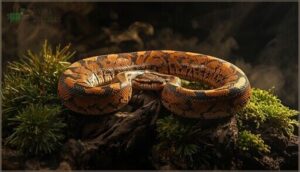
The Scaleless ball python isn’t just a morph — it’s a structural mutation that rewrites what a ball python can look like. That smoother Skin Texture changes how color and pattern hit the eye in ways scaled animals simply can’t match.
Humidity Management and Enclosure Design both need tighter attention, since Shedding Issues and Health Monitoring demands are real.
Premium combos from any serious captive-bred online reptile store reflect that extra investment.
Stranger Ball Python
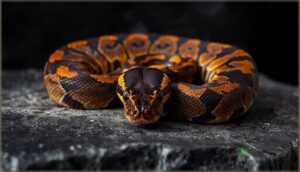
IRES Origins trace back to 2012, when IRES Reptiles first cracked the Stranger Genetics code — an incomplete-dominant morph with Visual Markings that stop people cold: dark chocolate heads, burnt orange alien heads, and heavy blushing throughout.
Project Evolution has built real Combo Pairings, especially Stranger Clown.
Among captive-bred ball pythons for sale today, pricing reflects combo depth more than the base gene alone.
Lavender Albino Piebald
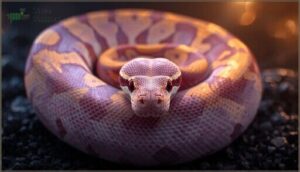
Few morphs in snake breeding carry the weight of the Lavender Albino Piebald — also called the Dreamsicle. The Lavender Distinction matters here: this is not standard Albino; it’s a separate gene line producing rich Color Palette Evolution from lavender and orange hatchlings into stunning adults with Ruby Red Eyes and bold white contrast.
- Double recessive genetics make captive-bred production rare
- Reptile husbandry and vermiculite incubation demand precision across multi-year projects
- Current Price Spread runs $650 to a recorded $40,000
- Ball Pythons for sale under this name command premium collector attention
Blue-Eyed Leucistic Combos
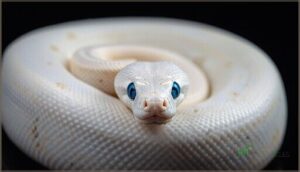
Blue-Eyed Leucistic combos hit differently than most white morphs. With BELs, Eye Color Variation does the heavy lifting — vivid cobalt eyes against a clean white body create a look that stops collectors cold.
Lesser Mojave crosses show Pattern Subtleties and Modifier Effects that shift head shading slightly, making each captive-bred animal genuinely unique.
Breeding BELs rewards patience. Ball Pythons for sale in this category regularly top six thousand dollars.
High-end Clown Combos
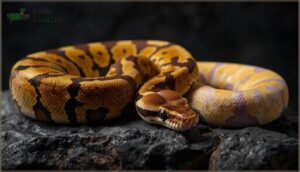
Clown Pattern Effects go deeper than most keepers expect. The clown gene strips side spotting and sharpens the dorsal stripe — then breeders stack Brightening Gene Stacks like banana, Desert Ghost, or Orange Dream on top, pushing color hard.
Double Recessive Clown projects and Designer Clown Lines built on captive‑bred stock drive Clown Breeding Goals into premium territory. Ball Pythons for sale in these combos, backed by Reptile health guarantees, regularly clear several thousand dollars.
Premium Piebald Designer Combos
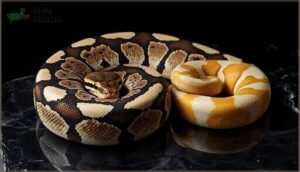
Piebald combos hit differently when you stack a second recessive behind that white. White Patch Aesthetics and Clean Boundary Demand are what serious collectors chase—clean lines where pigment stops and white begins.
- Head Pigmentation Retention stays bold in premium lines
- Pedigree Pattern Prediction guides mate selection across generations
- Wobble Monitoring protects long-term breeding value
- captivebred stock with a reptile health guarantee backs every Ball Pythons for sale listing
Blue eyed leucistic and banana pieds with verified lineage command top dollar.
Holy Grail Ball Python Discussions
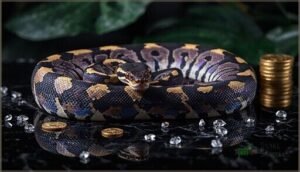
The holy grail label gets thrown around a lot, but serious collectors know it means something specific — a multi-gene project so rare that private sales can clear six figures.
Breeder Collaboration Networks, Grail Provenance Documentation, and Market Timing Strategies all factor into landing one.
Your reptile health guarantee, Live Arrival Guarantee, and 7-day health coverage still apply, even at these heights.
Which Morph is Considered Rarest
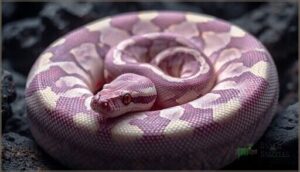
If you’d crown one morph the rarest, the Lavender Albino Piebald earns that title through sheer allele stacking complexity and premium expression — rarity dynamics that push private sale records past forty thousand dollars.
Emerging genes and precise rarity metrics keep this morph out of most programs entirely.
Serious herpetology collectors understand: you don’t stumble into one, you plan generations ahead.
Why These Morphs Cost More
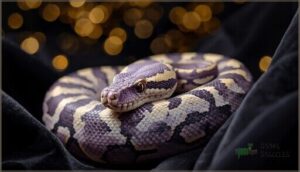
The price tag on a rare ball python isn’t random — it reflects years of careful work, calculated odds, and genetics that don’t come together often. Several factors stack up to push certain morphs into four- and even five-figure territory.
Rare ball python prices reflect years of calculated breeding, long odds, and genetics that rarely align
Here’s what actually drives those numbers.
Limited Supply and Slow Project Development
Rare morphs don’t just appear overnight — breeding programs move slowly by design. Genetic verification alone can add months before a new animal is market-ready, and seasonal breeding windows limit when clutches even happen.
Breeder geography matters too, since top lineages stay concentrated among a handful of specialists. Economic barriers keep new breeders out, and lineage purity demands mean fewer animals make the cut.
Multi-gene Designer Combinations
When three or more genes stack into one animal, you’re no longer buying a morph — you’re buying a project.
Epistatic effects can suppress or enhance traits unexpectedly, while modifier genes shift pattern edges in ways even experienced breeders can’t fully predict.
Genetic linkage complicates pairings further, and cryptic variation between males and females means stabilizing new lines takes seasons.
That complexity commands serious money.
Visual Impact, Color, and Pattern Uniqueness
Looks can drive price just as hard as genetics. Premium morphs earn their value partly through what collectors see the moment they open the box.
- Color Harmony — cream bases with scarlet or cobalt accents create striking contrast that draws reptile community reviews and testimonials almost instantly.
- Pattern Geometry — crisp boundary edges, inversion effects, and stripe contrast give males and females a visual signature no two animals share.
- Eye Markings — orbital rings ranging from copper to electric blue become focal points that serious collectors won’t overlook.
Proven Lineage and Genetic Accuracy
Lineage paperwork is the backbone of rare morph pricing. Verified Pedigrees, DNA Phenotyping, and Digital Ledgers don’t just sound impressive — they confirm what you’re actually buying.
Serious breeders back every sale with Genetic Integrity documentation, signed records, and cross-checked parentage. Breeder Transparency, strong Customer Support, and reptile community reviews and testimonials all reinforce long-term success in captivity and genuine animal welfare.
Breeding Odds for Recessive Projects
Recessive projects don’t move fast — and Punnett Square Ratios make that clear. When two carriers pair, you’re looking at roughly 25 percent odds per clutch.
Carrier Frequency, Clutch Size Impact, and Incubation Temperature Effects all shape your actual yield.
Pedigree Tracking Methods and Premium Vermiculite Egg Incubation Medium help protect every egg, but rare visuals still demand patience, multiple seasons, and serious investment.
Sex, Age, and Breeder Reputation
Beyond genetics, price climbs based on sex, age, and who bred the animal. Females grow larger and produce eggs — that alone raises the ask. Mature animals with proven breeding value cost more than hatchlings.
Breeder Transparency, Health Guarantees, Live Arrival Guarantee, and 7‑day health coverage all signal quality:
- Sexing Accuracy confirmed post-second shed
- Maturity Value tied to breeding history
- Aftercare Guidance for long-term success in captivity
- Customer support active within the reptile community
- Documented lineage protecting your investment
Record-setting Sales and Private Market Pricing
Private market pricing tells the real story. The first Sunset ball pythons fetched around $65,000 — peak sale prices that shocked the hobby.
One Sunset Puzzle drew standing bids of $150,000.
Project edge pricing like that reflects exclusivity, not hype.
Premium lineage records, Live Arrival Guarantee, and 7-day health coverage separate serious sellers from the rest when money this significant changes hands.
Breeding Challenges Behind Premium Morphs
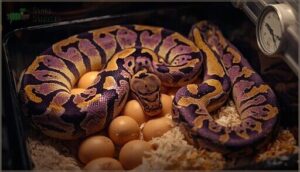
Getting a premium morph from concept to clutch isn’t a quick process — it takes years of planning, careful pairing, and a lot of patience.
There are real challenges behind every high-dollar snake you see listed for sale, and understanding them changes how you look at the price tag.
Here’s what breeders actually deal with to produce these animals.
Long Timelines to Produce Rare Visuals
Producing rare visuals isn’t something that happens in a single season. Multi-year cycles are the norm, with seasonal limitations cutting your breeding windows down to just a few months each year.
Generational delays stack on top of that, especially when genetic drift quietly shifts trait expression. Add reproductive issues like small clutch sizes, and your timeline stretches further than most new keepers expect.
Double Recessive and Triple-gene Projects
Double recessive work demands serious Het Pairing Plans and Carrier Line Tracking from day one. When both parents carry hidden recessives, only 1 in 16 eggs produce the visual combo you’re chasing.
- Triple Gene Stacking adds a third layer, requiring Probability Modeling across multiple seasons
- Genetic Record Keeping prevents costly mismatches between incompatible lines
- Verified parental genetics outperform appearance-based assumptions every time
Holdbacks and Low Hatch Rates
Even with the best pairings locked in, low hatch rates, and smart Holdback Selection can quietly drain your project momentum. Genetic Odds work against you — a het-to-het pair gives just a 25% shot at a visual per egg. If you need a visual female specifically, that drops to 12.5%.
| Factor | Challenge | Impact |
|---|---|---|
| Clutch Viability | Small clutches limit options | Fewer holdback candidates |
| Breeder Space | Females need 2–3 years to mature | Rack overcrowding risk |
| Incubation Factors | Temperature swings hurt embryos | Reduced hatch success |
That’s why breeders using fast overnight shipping and 7-day health coverage — like Cold-Blooded Prime’s customer loyalty programs — sell surplus holdbacks rather than let collection sprawl kill cash flow.
Genetic Compatibility and Trait Stacking
Stacking genes the right way starts with locus compatibility — knowing which alleles can interact at the same genetic position. Allele interaction determines whether your pairing produces a super form or just a normal-looking het.
Heterozygote ratios shift fast when you add a second recessive, so your gene pairing strategies need to account for that before you ever set up a breeding group.
Health Concerns Tied to Certain Lines
Rare lines carry real tradeoffs — Genetic Health Tradeoffs that don’t always show at the time of purchase. Watch for these warning signs in premium projects:
- Shedding Issues from retained skin around eyes or vents
- Deformity Risks like jaw misalignment in tight gene pools
- Incubation Sensitivity causing Growth Delays in hatchlings
- Temperament shifts linked to compromised development
That’s why enclosure humidity control, consistent pet snake care, and 7-day health coverage matter for long-term success in captivity.
Why Some Projects Remain Breeder-only
Some projects never leave the breeding room — not because breeders are hoarding, but because High Cost Barriers, Limited Founder Stock, and Complex Trait Validation make releasing animals too risky.
Market Saturation Risk is real. Regulatory Import Restrictions limit replacement stock if lines fail.
For long-term success in captivity, breeders protect proven animals, since snake temperament and pet snake care standards depend on genetics, you simply can’t rebuild overnight.
Buying Rare Morphs With Confidence
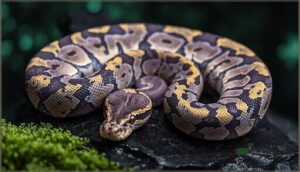
Spending serious money on a rare morph means you need more than good instincts — you need the right questions. Knowing how to read a listing, verify genetics, and match a morph to your goals separates confident buyers from expensive mistakes.
Here’s what to look for before you commit.
How to Verify Genetics Before Purchase
Before you wire money for a four-figure snake, verify what you’re actually buying. Request full lineage documentation and a written breeder guarantee review that names every gene — visual or het. Ask for clutch photo verification to confirm the stated pairing.
Shed DNA testing through labs like Rare Genetics Inc locks in results scientifically. Community morph identification forums give you a fast second opinion from experienced eyes.
Red Flags in Rare Morph Listings
Spotting trouble in a rare morph listing before you commit is the difference between a trophy animal and a costly mistake.
- Genetics Mismatch — If the visible traits don’t match the claimed morph, walk away.
- Photo Authenticity — Demand fresh, full-body photos of the exact snake.
- Missing Lineage — No hatch date, parentage, or feeding history means unverifiable genetics.
- Price Anomalies — Suspiciously low prices on high-end morphs often signal misidentification or scams.
- Seller Responsiveness — Vague answers or hostility to basic questions breaks trust fast.
Price Range Expectations by Morph Type
Once you’ve checked for red flags, knowing the actual numbers helps you shop with authority.
Visual vs. het animals can differ dramatically — a visual Sunset female runs around $1,000, while a het Sunset sits closer to $350.
Combo price spreads widen further with stacked genes.
Market fluctuations and quality grading also shift values, so tracking current listings before committing is worth your time.
Choosing Between Investment and Pet Value
Knowing the numbers is only half the equation — you also need to decide what you’re buying it for. Pet-focused purchase rewards you with temperament, handling ease, and long-term captivity success.
Investment animal demands documented genetics and breeding profitability potential.
Market volatility is real, so don’t let a striking pattern override your actual goals.
Best Morphs for Collectors Vs Beginners
Your keeper goals shape everything here. Beginners thrive with entry-level morphs like pastels or hets — stable genetics, manageable care demands, and forgiving snake temperament and handling. Collectors chase genetic complexity, documented lineage, and long-term success in captivity.
- Pastel or Spider: affordable, widely available
- Clown or Piebald: strong collector priorities, moderate complexity
- Sunset or Monsoon: high investment, breeder-level dedication
- Blue-Eyed Leucistic: stunning display animal, backed by 7-day health coverage through trusted online reptile retail and shipping
Frequently Asked Questions (FAQs)
What is the rarest morph of ball python?
The Sunset morph holds the crown for rarity, driven by genetic bottleneck limitations and founder effect breeding constraints that keep supply critically low and collector preference trends consistently pushing demand skyward.
What snake is worth $100,000?
No single snake has a fixed $100,000 price tag, but ultra-rare market combos like Lavender Albino Piebald have privately sold near that range when high-value genetics, exclusive breeder partnerships, and limited edition projects align perfectly.
What is a holy grail ball python?
A holy grail ball python combines Lavender Clown genetics to produce neon coloration with premium contrast.
These grail breeding projects are the peak of market rarity, commanding six to seven-figure prices among serious collectors.
How to tell if a snake likes you?
Relaxed posture, slow tongue flick patterns, calm exploration behavior, and strong handling tolerance all signal trust.
When your snake moves freely without hissing, that’s comfort — a foundation for long-term success in captivity.
What health issues affect scaleless ball pythons?
Scaleless ball pythons face real health hurdles. Heat pit loss can disrupt feeding stress responses, while shedding complications and scale rot risk rise without proper humidity.
Diligent care drives long-term success in captivity.
How long does breeding a designer morph take?
A designer morph project rarely wraps up in a single season.
Between female maturity age, a predictable seasonal breeding cycle, incubation duration of roughly 54 to 60 days, and clutch frequency of once per year, most projects run two to four years minimum.
Can rare morphs breed with wild-type pythons?
rare morphs can breed with wild-type pythons. Allele compatibility determines the outcome — recessive traits may stay hidden in offspring, while dominant genes show immediately.
Genetic testing methods confirm what each parent carries.
What permits are needed for breeding ball pythons?
Breeding ball pythons commercially means dealing with layers of rules.
You’ll need a State Breeder License, CITES Export Permit for international sales, and Lacey Act Compliance for interstate shipping — plus solid Recordkeeping Requirements and Business Tax Registration.
Do rare morphs have different care requirements?
Not really.
Rare morphs follow the same Temperature Gradient, humidity sensitivity, and feeding schedule as any ball python. Watch for Shedding Issues in scaleless lines, and always monitor Eye Health in albino animals.
Do rare morphs require special humidity or temperature?
No, rare morphs don’t need special humidity or temperature. Environmental Consistency matters most — keep your Temperature Gradient at 86–95°F warm side, 72–80°F cool side, and Humidity Monitoring steady at 50–60%.
Conclusion
The field of rare and expensive ball python morphs is a treasure trove waiting to be explored.
Understanding the genetics, breeding challenges, and market dynamics enables you to make informed decisions.
Whether you’re a collector or a hobbyist, knowing what drives value ensures you don’t overpay or miss out on hidden gems.
With this knowledge, you’re equipped to navigate the market confidently, turning your passion into a rewarding investment.
The journey doesn’t end here—it’s just beginning.