
This site is supported by our readers. We may earn a commission, at no cost to you, if you purchase through links.

Most reptiles die from bad heating—not neglect. Cold bellies slow digestion to a crawl, and a snake that can’t process its last meal becomes a sick snake fast.
That single fact trips up more beginners than any other part of reptile keeping. The fix isn’t complicated, but it does require the right gear placed correctly.
Reptile heat mats for beginners can be a minefield—cheap options skip thermostats, wrong sizes cook substrates unevenly, and one overlooked safety feature can mean a thermal burn your pet can’t escape.
The ten picks ahead cut through the noise.
Table Of Contents
- Key Takeaways
- Why Reptile Heat Mats Are Essential for Beginners
- Key Features to Look for in Heat Mats
- Choosing The Right Size and Placement
- Top 10 Reptile Heat Mats for Beginners
- 1. Aiicioo 8W Reptile Heating Pad
- 2. Aiicioo Reptile Terrarium Heating Pad
- 3. BN LINK Reptile Heat Pad
- 4. iPower Reptile Terrarium Heating Pad
- 5. PeSandy 20W Reptile Heating Pad
- 6. LUCKY HERP Reptile Heat Pad Terrarium
- 7. Pawfly Reptile Heat Pad with Thermostat
- 8. ReptiKing Reptile Heat Pad
- 9. iPower Reptile Heat Mat Digital Thermostat Combo
- 10. Fluker’s Reptile Heat Mat
- Safe Installation and Maintenance Tips
- Frequently Asked Questions (FAQs)
- Do reptile heating pads go in or under the tank?
- Can I leave the heat mat on all the time?
- What temperature should a heat mat be for reptiles?
- Can heat mats be used with aquatic reptiles?
- How long do reptile heat mats typically last?
- Are heat mats safe for baby or juvenile reptiles?
- Can two heat mats run in one enclosure?
- Do heat mats work during winter or cold climates?
- Conclusion
Key Takeaways
- Without belly heat from a properly sized mat, your reptile can’t digest food or fight off illness — getting this right isn’t optional, it’s the whole foundation of keeping them alive and healthy.
- Never run a heat mat without a thermostat, because unchecked heat causes burns, your reptile can’t escape and damage you won’t see until it’s too late.
- Cover only one-third to one-half of the enclosure floor so your reptile can move between a warm zone and a cool retreat, just like it would in the wild.
- The best beginner mat isn’t the priciest one — it’s the one matched to your tank size, paired with a thermostat, and placed right under where your animal actually rests.
Why Reptile Heat Mats Are Essential for Beginners
Reptiles can’t warm themselves the way you and I do — they depend entirely on their environment to stay healthy. Getting the heat right in your enclosure isn’t optional; it’s the foundation of good reptile care.
If you’re unsure where to start, this guide on reptile habitat temperature control breaks down exactly what your specific species needs to thrive.
every beginner should know before picking a heat mat.
The Role of Heat Mats in Reptile Health
Heat mats do more than just warm your enclosure — they’re the backbone of reptile health.
Without belly heat, digestion slows, metabolism drops, and your reptile becomes sluggish and vulnerable.
Proper thermoregulation enhances immune function, activity enhancement, and even wound healing.
A good mat creates the thermal gradient your animal needs to thrive, making temperature control non‑negotiable from day one.
Choosing an energy-efficient heat source can lower electricity costs.
Importance of Temperature Regulation for Snakes
Temperature regulation isn’t just a comfort thing — it directly controls your snake’s digestion efficiency, immune function, and activity levels.
- Snakes digest best at 28–32°C
- Poor heat doubles waste passage time
- Cool temps spike stress hormones fast
- Immune response weakens without steady warmth
- Consistent warmth promotes longevity
Get this wrong, and your snake pays the price. Research shows that digestive rate depends on temperature.
Creating a Thermal Gradient in Enclosures
Your snake can’t thrive in a flat, uniform temperature — it needs options. A solid thermal gradient gives it control over its own body temperature, just like it would have in the wild.
A snake without a thermal gradient is a snake without control over its own survival
| Zone | Temperature | Purpose |
|---|---|---|
| Basking Zone Placement | 32–38°C | Digestion and activity |
| Ambient Middle | 26–30°C | Change buffer |
| Cool Retreat Design | 24–27°C | Rest and cooling |
Thermostat Probe Positioning between the mat and glass keeps heat distribution steady. Use Gradient Monitoring Techniques — check both ends twice daily — to maintain reliable snake enclosure temperature control and support natural reptile thermoregulation. Substrate Conductivity Choice matters too: tile warms quickly, coir holds heat longer.
Risks of Improper Heating for Reptiles
gradient wrong, and things go south fast. Thermal Burns can destroy skin layers within days — and you won’t even see the damage until it’s too late.
On the flip side, Hypothermia Effects slow your reptile’s heart and metabolism dangerously. Respiratory Infections creep in around 70°F.
Poor heating also triggers Digestion Failures and Heat Stress Signs like open-mouth breathing. Temperature monitoring and safe placement aren’t optional.
Key Features to Look for in Heat Mats

Not all heat mats are created equal, and picking the wrong one can put your reptile at real risk.
Before you spend a single dollar, there are a few key things worth knowing. Here’s what to look for when narrowing down your options.
Thermostat Compatibility and Temperature Control
A thermostat is your heat mat’s best friend — and your reptile’s safety net. Without proper thermostat compatibility, even a quality mat can overheat.
Different Thermostat Types handle this differently: on/off models cycle power, while dimming and pulse proportional types offer steadier temperature control. Smart Probe Placement Strategies, Wattage Matching to your mat’s rating, Calibration Techniques, and Alarm Settings complete reliable temperature monitoring and thermostat integration for heat mats.
Safety Features to Prevent Overheating
Overheating is a real risk — but the right mat fights back by design. Look for these built-in safety features:
- Thermal Cutoff shuts the mat off automatically near 50°C
- Self-Regulating Elements (PTC carbon fiber) cap heat naturally
- Certified Safety Marks (UL, CE, GS) confirm independent testing
- Overheat Design Limits keep surface temps around 100°F
- Airflow Gap Design prevents heat from trapping under the tank
Waterproof and Chew-resistant Designs
Your heat mat needs to survive more than just heat. Look for a PVC coating and IP67 sealing — brands like VIVOSUN and BN‑LINK meet that standard, meaning you can scrub them under running water without worry.
A chew‑proof surface and flexible durable material protect against curious reptiles.
Adhesive waterproof backing keeps everything firmly in place through humidity cycles.
Energy Efficiency and Power Ratings
Wattage matters more than most beginners realize.
A 4W mat supports a small gecko tank just fine, while a 20W covers 40–50 gallon setups.
PTC Self-Regulation and Carbon Fiber Efficiency mean smarter power use — no constant full‑blast running.
Thermostat Cycling cuts usage roughly in half.
Daily Cost Analysis shows an 8W pad costs pennies daily.
Follow heat mat size and wattage guidelines, and you’ll nail energy efficient design from day one.
Choosing The Right Size and Placement
Getting the size and placement right can make or break your heat mat setup.
Too small and your reptile won’t have enough warmth — too large and you’re creating a heat trap with no escape. Here’s what you need to know before picking yours.
Matching Heat Mat Size to Enclosure Dimensions

Getting enclosure measurement right is the foundation of a good snake enclosure setup.
A 20‑gallon tank has a 30‑by‑12‑inch floor — so your heating pad size should match accordingly.
Material conductivity matters too: glass needs more coverage than wood.
Factor in substrate depth and species‑size matching, and you’ll nail proper heat‑mat placement from day one.
The One-third to One-half Rule for Coverage

Think of it like a Goldilocks rule for your snake enclosure setup. Cover one-third to one-half of the enclosure floor — no more. This Coverage Ratio creates proper Heat Distribution, giving your reptile a warm side near 85–90°F and a cool side around 75–80°F.
Species Suitability and Enclosure Shape matter here: Ball pythons do great with a 6×11-inch mat, maintaining solid Safety Margins and temperature control without overheating risks.
Wattage Considerations for Various Species

Size isn’t everything — wattage matters just as much.
Leopard Gecko Wattage sits around 8 watts for a 10‑20 gallon tank, while Ball Python Power needs 16 watts for a 30‑40 gallon setup.
Corn Snake needs to top out at 20 watts; Bearded Dragon Heat stays at 8‑12 watts supplementally.
Crested Gecko Wattage? Just 4‑8 watts.
Always pair species‑specific heating needs with a thermostat.
Impact of Substrate Type on Heating Effectiveness

heat mat matters more than you’d think. Substrate thickness alone can drop surface temps by 15–20 degrees.
Stick to 1–2 inch layers for the best heat distribution.
Dry, fine-particle substrates like aspen improve thermal conductivity, while moist coconut fiber traps heat below the surface.
Bioactive soil depth over 3 inches? Skip the mat entirely — overhead heat wins there.
Top 10 Reptile Heat Mats for Beginners
Now that you know what to look for, it’s time to put that knowledge to work.
These ten heat mats cover a range of sizes, budgets, and features — so there’s something here for almost every beginner setup. Let’s take a closer look at each one.
1. Aiicioo 8W Reptile Heating Pad
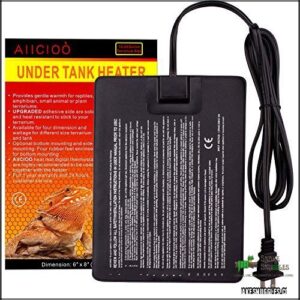
The Aiicioo 8W Reptile Heating Pad is a solid starting point for anyone setting up their first 10–20 gallon tank. It runs on a standard 120-volt outlet, uses a nichrome wire element for steady, even warmth, and sticks to the outside of your glass enclosure with a permanent adhesive backing.
Rubber feet raise the tank slightly so heat doesn’t build up underneath. At only 8 watts, it won’t spike your electric bill — just reliable belly warmth, day and night.
| Best For | Reptile owners setting up a 10–20 gallon glass tank for heat-loving pets like bearded dragons, snakes, or turtles. |
|---|---|
| Wattage | 8W |
| Voltage | 120V |
| Material | Glass, Plastic |
| Thermostat Included | No |
| Adhesive Backing | Yes |
| Tank Compatibility | 10-20 gallon |
| Additional Features |
|
- Runs 24/7 at a steady 104–122°F without spiking your energy bill
- Flexible mounting — stick it to the bottom or side depending on your setup
- Durable nichrome wire element with a strong adhesive that stays put
- Only works on glass tanks — not safe for plastic, acrylic, or water setups
- No thermostat included, so you may need a separate controller to regulate temps
- At 8 watts, it may not be enough heat for larger or cooler-running enclosures
2. Aiicioo Reptile Terrarium Heating Pad
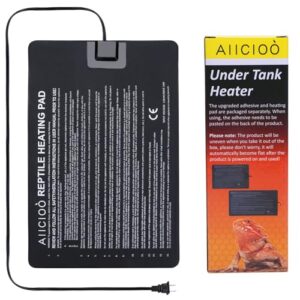
If your tank runs a bit bigger, the 16-watt version steps things up nicely.
At 14 by 8 inches, it’s built for 30–40 gallon setups and delivers steady warmth between 104°F and 122°F through the glass wall.
The PVC shell wipes clean easily, and the upgraded adhesive won’t melt or slip under normal operating temperatures.
Just remember — it doesn’t include a built-in thermostat, so pair it with one to keep your reptile’s warm side dialed in perfectly.
| Best For | Reptile and amphibian owners with medium 30–40 gallon tanks who need reliable, energy-efficient under-tank heating. |
|---|---|
| Wattage | 16W |
| Voltage | 120V |
| Material | PVC |
| Thermostat Included | No |
| Adhesive Backing | Yes |
| Tank Compatibility | 30-40 gallon |
| Additional Features |
|
- Delivers steady, even heat between 104°F and 122°F with no hot spots
- Thin, lightweight PVC build is easy to clean and simple to mount
- Works for a wide range of setups — snakes, lizards, turtles, hermit crabs, even seedlings
- No built-in thermostat, so you’ll need to buy one separately
- Adhesive loses its grip if you remove and reattach it
- Not suitable for plastic, acrylic, or water-based tanks
3. BN LINK Reptile Heat Pad
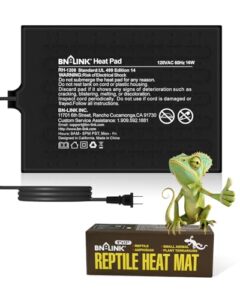
Budget-friendly doesn’t have to mean basic.
The BN LINK Reptile Heat Pad measures 12 by 8 inches and runs at 16 watts — a solid match for 10 to 20 gallon terrariums.
It delivers consistent heat between 104°F and 122°F, covering roughly one-third of your enclosure to build that all-important thermal gradient.
The waterproof surface wipes down in seconds, and the adhesive grip holds firm.
Like most heat mats, you’ll want a separate thermostat to dial in precise temperatures safely.
| Best For | Budget-conscious reptile owners looking for a simple, reliable heat source for small to mid-sized terrariums housing turtles, lizards, frogs, or snakes. |
|---|---|
| Wattage | 16W |
| Voltage | 120V |
| Material | Plastic |
| Thermostat Included | No |
| Adhesive Backing | Yes |
| Tank Compatibility | Glass terrariums |
| Additional Features |
|
- Waterproof and easy to wipe clean, so messes don’t become a hassle
- Strong adhesive keeps it firmly in place on glass terrariums
- Energy-efficient at just 16 watts — won’t spike your electricity bill
- No built-in temperature control — you’ll need a separate thermostat for safe use
- Once it’s stuck, it’s stuck — the adhesive isn’t made for repositioning
- Heat output may feel underwhelming in cooler rooms without extra help
4. iPower Reptile Terrarium Heating Pad
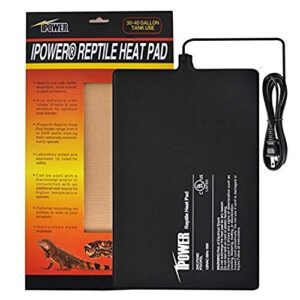
The iPower Reptile Terrarium Heating Pad is a quiet workhorse that earns its spot in any beginner’s setup. At 8 by 12 inches and 16 watts, it’s built for 20 to 30 gallon tanks.
The PTC heating film spreads warmth evenly across the glass, so you won’t get cold patches. It’s waterproof, UL listed, and comes with 3M adhesive for a firm stick. Pair it with a thermostat — your snake will thank you.
| Best For | Beginners setting up a terrarium for reptiles, amphibians, or small animals who need a reliable, energy-efficient heat source. |
|---|---|
| Wattage | 16W |
| Voltage | 120V |
| Material | Not specified |
| Thermostat Included | No |
| Adhesive Backing | Yes (3M) |
| Tank Compatibility | Various terrariums |
| Additional Features |
|
- PTC heating film spreads warmth evenly — no annoying cold spots on the glass
- Energy efficient at just 16 watts, and the 6-foot cord gives you decent flexibility with placement
- Versatile enough for reptiles, seed germination, home brewing, and more
- Fire risk if not mounted correctly — a thermostat is pretty much a must-have
- The adhesive can struggle to grip certain surfaces securely
- Not great for setups that need very low temperatures
5. PeSandy 20W Reptile Heating Pad
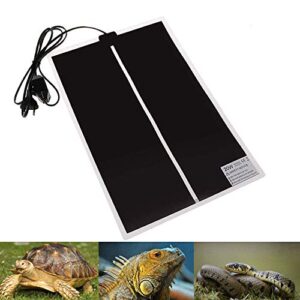
If you need more coverage without sacrificing safety, the PeSandy 20W Reptile Heating Pad steps up nicely. At 16.5 by 11 inches, it fits medium to larger enclosures comfortably.
The slow-heating design takes about 30 minutes to reach full warmth — that’s actually a good thing. No hot spots, no sudden temperature spikes.
The dial controller lets you adjust heat for day and night cycles.
It’s non-adhesive, so repositioning is simple. Works under glass tanks or mounted on vivarium sides.
| Best For | Reptile owners with medium to large enclosures who want reliable, even heat distribution with flexible day and night temperature control. |
|---|---|
| Wattage | 20W |
| Voltage | Not specified |
| Material | Not specified |
| Thermostat Included | Yes (dial) |
| Adhesive Backing | No |
| Tank Compatibility | Various terrariums |
| Additional Features |
|
- Large 16.5 x 11 inch surface covers bigger tanks without needing multiple mats
- Slow-heating design eliminates hot spots, keeping your animals safe
- Dial controller makes it easy to dial in the right temp for day and night cycles
- No digital display makes precise temperature settings a bit of a guessing game
- The dial indicator is small and hard to read at a glance
- No adhesive means you may need tape or extra materials to keep it in place
6. LUCKY HERP Reptile Heat Pad Terrarium
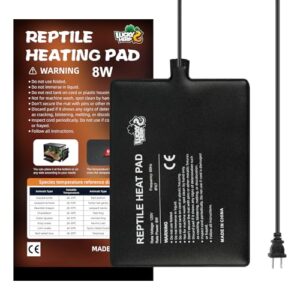
The LUCKY HERP Reptile Heat Pad keeps things refreshingly simple — and that’s exactly what beginners need. It uses waterproof PVC construction, so cleanup is quick and the material holds up over time.
The adhesive backing bonds well to glass tanks over 3mm thick, which covers most standard terrariums.
At 8W, it’s energy‑efficient and heats up fast. The dual temperature protection system adds a real safety net against overheating.
Small, reliable, and no‑fuss — it’s a solid starter pick.
| Best For | Beginner reptile owners who want a simple, affordable heating solution for turtles, lizards, snakes, or hermit crabs in a standard glass terrarium. |
|---|---|
| Wattage | 8W |
| Voltage | Not specified |
| Material | PVC |
| Thermostat Included | No |
| Adhesive Backing | Yes |
| Tank Compatibility | Glass terrariums |
| Additional Features |
|
- Waterproof PVC makes it easy to clean and built to last
- Dual temperature protection keeps things safe and prevents overheating
- Energy-efficient 8W design heats up quickly without running up your power bill
- Adhesive can loosen as it warms up, which means it may not stay put on glass tanks
- You only get one shot at placing it — the backing doesn’t re-stick if you peel it off
- May need extra tape or support to stay securely attached over time
7. Pawfly Reptile Heat Pad with Thermostat
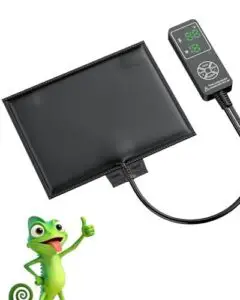
The Pawfly Heat Pad bundles a built-in thermostat right into the package — no separate purchase needed. That’s a real win for beginners.
It covers the 8 x 5.9 inch sweet spot, fitting 10–20 gallon enclosures well, and runs at just 7W to keep energy costs low.
The digital display shows Fahrenheit or Celsius, and the three-button interface makes temperature adjustments quick and painless.
Overheat protection kicks in automatically if things run too hot.
Simple, complete, and ready to go.
| Best For | Beginner reptile owners who want an all-in-one heating solution for mid-sized enclosures without buying extra gear. |
|---|---|
| Wattage | 7W |
| Voltage | Not specified |
| Material | Not specified |
| Thermostat Included | Yes (digital) |
| Adhesive Backing | Not specified |
| Tank Compatibility | Various terrariums |
| Additional Features |
|
- Thermostat is included right out of the box — no separate purchase needed
- Digital display makes it easy to dial in the exact temperature in F or C
- Low 7W draw keeps your electricity bill from taking a hit
- Center of the pad runs hotter than the edges, so placement matters
- Built-in thermostat can be off, meaning you may want to double-check with a separate probe
- Too small for larger enclosures, so it won’t work for every setup
8. ReptiKing Reptile Heat Pad
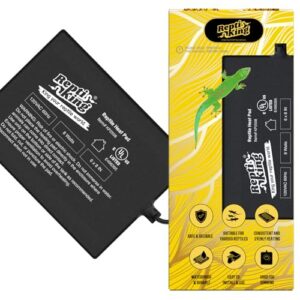
The ReptiKing Heat Pad keeps things refreshingly simple. It’s an 8W pad built for small enclosures up to 10 gallons, covering just enough floor space to create a solid warm zone without cooking your whole setup.
The waterproof construction manages humidity without complaint, and the adhesive backing makes installation genuinely painless.
One real heads-up: it doesn’t include a thermostat. You’ll need to pair it with one separately.
For beginners watching their budget, it’s a solid, no-frills starting point.
| Best For | Beginner reptile owners on a budget who need a simple, reliable heat source for a small enclosure. |
|---|---|
| Wattage | 8W |
| Voltage | Not specified |
| Material | Not specified |
| Thermostat Included | No |
| Adhesive Backing | Yes |
| Tank Compatibility | Glass enclosures |
| Additional Features |
|
- Waterproof and durable, so humidity won’t cause problems over time
- Adhesive backing makes setup quick and easy — no tools needed
- Energy-efficient 8W draw keeps running costs low
- No built-in thermostat, so you’ll need to buy one separately to avoid overheating
- Only covers a small area, which won’t cut it for larger tanks
- Not safe for acrylic enclosures, which limits where you can use it
9. iPower Reptile Heat Mat Digital Thermostat Combo
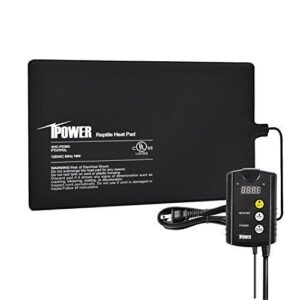
If a missing thermostat was your sticking point with the ReptiKing, the iPower combo solves that right out of the box.
You get the 8×12 inch, 16W heat mat paired with a digital thermostat that controls temperatures between 40°F and 108°F — enough range for most common reptile setups.
The PTC heating film spreads warmth evenly across the mat, no hot spots. Built‑in error codes alert you if something goes wrong.
It’s genuinely beginner‑friendly without cutting corners.
| Best For | Beginners setting up their first reptile or amphibian tank who want reliable temperature control without buying a thermostat separately. |
|---|---|
| Wattage | 16W |
| Voltage | 120V |
| Material | Not specified |
| Thermostat Included | Yes (digital) |
| Adhesive Backing | Yes (3M) |
| Tank Compatibility | Various terrariums |
| Additional Features |
|
- Comes with a digital thermostat right out of the box — no guessing on temps
- Wide temperature range (40°F–108°F) covers most common reptile and small animal setups
- PTC heating film distributes heat evenly, so no annoying hot spots
- Some users have had trouble with the mat’s adhesive not sticking well over time
- The thermostat can make a clicking noise that bothers some people
- Probe placement really matters — put it in the wrong spot and your readings will be off
10. Fluker’s Reptile Heat Mat
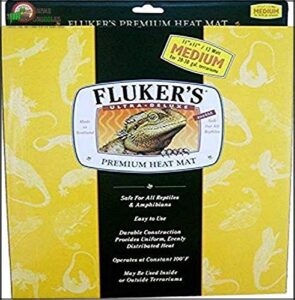
Fluker’s keeps things refreshingly simple. The Premium Heat Mat runs at a steady 100°F surface temperature, pushing ultra-long wavelength infrared heat directly into your substrate — exactly where ground-dwelling reptiles need it most.
It comes in five sizes, from a 2W mini up to a 35W jumbo, so you can match it to your tank without guessing. No thermostat included, though — you’ll want to grab one separately.
Pair it right, and it’s a reliable, no-fuss foundation for any beginner setup.
| Best For | Beginner reptile owners who need a simple, affordable heat source for small to medium enclosures housing snakes, lizards, or hermit crabs. |
|---|---|
| Wattage | Not specified |
| Voltage | Not specified |
| Material | Chloroprene |
| Thermostat Included | No |
| Adhesive Backing | No |
| Tank Compatibility | Various enclosures |
| Additional Features |
|
- Made in the US with durable chloroprene material that spreads heat evenly across the surface
- Flexible mounting options — stick it under or on the side of the tank, no adhesive required so you can reuse it
- Works great with a thermostat to dial in a steady temperature gradient for your pet
- Doesn’t include a thermostat, which you’ll really need to avoid overheating risks
- The actual heating surface is smaller than the listed 11″x11″ dimensions — those plastic edges add up
- May not cut it for larger tanks or setups with thick substrate layers
Safe Installation and Maintenance Tips

Getting your heat mat set up correctly makes a bigger difference than most beginners expect.
A few simple habits — right from the start — can protect your reptile and extend the life of your equipment.
Here’s what you need to know before plugging anything in.
Proper Mounting and Placement Techniques
Getting placement right makes all the difference. For Under Tank Mounting, clean the glass with isopropyl alcohol, then roll the mat from one edge to avoid bubbles. A Corner Riser Setup lifts the tank a quarter‑inch for airflow. Here’s what to remember:
- Cover only one-third to one-half of the floor
- Use Adhesive Application Tips: press firmly on corners and cord areas
- Side Mounting Ventilation keeps heat from building up dangerously
- Respect Heat Mat Coverage Limits — never cover the full floor
- Position under the warm hide only, following heat mat placement for best temperature gradient
Integrating Thermostats and Thermometers
Once your mat is mounted, plug it into the thermostat — then plug the thermostat into the wall. That’s your Wiring Safety Practices foundation.
| Setting | Beginner Option | Higher-level Option |
|---|---|---|
| Thermostat Type | On/Off | Pulse vs On/Off |
| Probe Placement Strategies | Warm hide surface | Reptile body level |
| Dual Thermometer Calibration | Warm + cool ends | Hide + open warm zone |
| Alarm Alert Systems | Basic cutoff | Phone alerts |
| Temperature Probe | Fixed via vent slot | Secured with clip |
Thermostat use with heat mats keeps temperature monitoring accurate and heat safety considerations for reptile heating front of mind throughout heat mat installation and setup.
Regular Cleaning and Inspection Routines
Keeping your heat mat clean is easier than you think — and it protects your reptile long‑term. Build these habits now:
- Wipe down the surface every one to two weeks (Surface Wipe Frequency matters)
- Follow a Power Down Procedure before touching anything
- Do Wear Damage Checks monthly — cracks or bubbles mean trouble
- Stick to a Substrate Replacement Schedule every four to six weeks
- Use reptile-safe Disinfectant Application only — never soak the mat
Troubleshooting Common Heat Mat Issues
Something feels off with your heat mat?
Start with the basics: confirm there’s no Power Failure by testing the outlet first.
Check Thermostat Calibration — a misplaced probe throws everything off.
Use an infrared thermometer for Hot Spot Detection.
Watch for Substrate Insulation slowing heat transfer.
Any buzzing, burning smell, or visible Wiring Faults?
Unplug it immediately.
Frequently Asked Questions (FAQs)
Do reptile heating pads go in or under the tank?
Almost every beginner gets this wrong. Most heating pads go under the tank, not inside it.
Outside mounting reduces burn risk and lets the glass act as a natural buffer for safer heat transfer.
Can I leave the heat mat on all the time?
Yes, you can — but only with a thermostat. Without one, continuous operation risks dangerous overheating. A thermostat manages temperature monitoring automatically, keeping your reptile safe around the clock.
What temperature should a heat mat be for reptiles?
Most reptiles need a warm side between 31–34°C (88–93°F) for ideal belly heat. Species-specific ranges matter — ball pythons prefer 88–90°F, while corn snakes do fine around 82–86°F.
Can heat mats be used with aquatic reptiles?
Walk on thin ice here — heat mats aren’t built for water. Mount one outside the glass only, never submerged. Always use a submersible heater for proper water temperature regulation instead.
How long do reptile heat mats typically last?
Most heat mats last 1 to 3 years. Brand lifespan varies — premium mats outlast budget ones.
Watch for failure signs like uneven heating or adhesive lift. Usage cycles and material durability both affect longevity.
Are heat mats safe for baby or juvenile reptiles?
They can be — but only with the right setup.
Burn risk is real for hatchlings, so always use thermostat calibration, proper substrate thickness, and built-in safety features to protect your juvenile species’ needs.
Can two heat mats run in one enclosure?
Yes, two heat mats can run in one enclosure — just keep the combined wattage under your thermostat’s load limit.
Smart dual mat gradient benefits and wiring safety practices make it completely doable.
Do heat mats work during winter or cold climates?
They work, but with limits. In rooms below 65°F, mats struggle to maintain a proper thermal gradient alone. Pair them with overhead heat for reliable temperature control during cold months.
Conclusion
Heat rises, but so does confidence—once you’ve matched the right mat to your setup, the guesswork disappears.
The best reptile heat mats for beginners aren’t the flashiest or most expensive; they’re the ones paired with a thermostat, sized correctly, and placed where your animal actually rests.
Get those three things right, and your reptile gets a stable, safe environment.
That’s not a small win—it’s the whole foundation of healthy keeping.
- https://exo-terra.com/products/heating/substrate-heaters/heat-mat-4w/
- https://www.reptileknowledge.com/reptile-pedia/should-heat-mats-go-on-the-bottom-or-side-of-the-tank
- https://en.wikipedia.org/wiki/Reptile
- https://www.nps.gov/subjects/biodiversity/reptiles.htm
- https://nationalzoo.si.edu/animals/reptiles-and-amphibians