This site is supported by our readers. We may earn a commission, at no cost to you, if you purchase through links.
Your ball python’s substrate isn’t just bedding—it’s the foundation of its entire microhabitat. The wrong choice can lead to respiratory infections, scale rot, or dangerous impaction, while the right one promotes healthy shedding and natural behaviors.
Between maintaining 50-60% humidity, preventing bacterial growth, and ensuring your snake can burrow safely, you’re juggling several critical factors at once. Some popular reptile substrates for ball pythons excel at moisture retention but become mold factories without proper maintenance. Others stay clean but dry out your enclosure within hours.
The key is matching substrate properties to your python’s biological needs and your husbandry routine—a balance that requires understanding both what works and what poses hidden risks.
Table Of Contents
- Key Takeaways
- Key Factors in Choosing Ball Python Substrate
- Popular Substrate Materials for Ball Pythons
- Substrates to Avoid for Ball Pythons
- Top 9 Substrates for Ball Pythons
- 1. Natural Aspen Pet Bedding Material
- 2. Natural Cypress Reptile Bedding Mulch
- 3. Natural Aspen Snake Bedding Supply
- 4. Natural Forest Floor Bedding Substrate
- 5. Natural Coconut Fiber Reptile Bedding
- 6. Coconut Fiber Reptile Substrate Blocks
- 7. Organic Coconut Reptile Bedding Substrate
- 8. Scott Blue Shop Towels
- 9. Riare Coconut Husk Reptile Substrate
- Maintenance Tips for Ball Python Substrates
- Frequently Asked Questions (FAQs)
- Conclusion
Key Takeaways
- Substrate choice directly impacts your ball python’s respiratory health, humidity regulation, and shedding success, with wrong materials causing scale rot, impaction, or respiratory infections while proper options support natural burrowing and stable 50-60% humidity levels.
- Coconut fiber and cypress mulch excel at moisture retention and odor control but require vigilant mold monitoring, while aspen shavings offer dust-free comfort with easier cleaning yet need supplemental misting to maintain adequate humidity.
- Avoid sand, cat litter, cedar, pine, and walnut shells entirely—these substrates cause serious health risks including intestinal blockages, toxic respiratory damage from aromatic oils, and abrasive injuries to delicate tissue.
- Daily spot-cleaning combined with complete substrate replacement every 4-6 weeks prevents bacterial buildup and maintains the stable microhabitat your python needs, with calibrated hygrometers essential for tracking humidity gradients throughout the enclosure.
Key Factors in Choosing Ball Python Substrate
Choosing the right substrate for your ball python isn’t just about comfort—it directly affects their health, behavior, and how well they thrive in captivity. You need to balance humidity needs with safety, cleanliness, and the snake’s natural instinct to burrow and explore.
Choosing the right substrate directly affects your ball python’s health, behavior, and ability to thrive in captivity
Let’s look at the key factors that’ll help you make the best choice for your setup.
Humidity Retention and Regulation
Humidity control starts with your reptile substrate choice. Ball pythons thrive when humidity levels stay around 50–60%, rising to 65–70% during sheds. Coconut fiber and cypress mulch retain moisture better than paper-based options, stabilizing your enclosure. Substrate depth of 2–3 inches buffers swings between misting cycles.
Moisture management becomes easier when you pair humidity-retentive materials with proper ventilation and burrowing support. Effective scientific study methods are also essential for understanding the importance of humidity control in reptile enclosures.
Odor and Waste Absorption
Absorbency Tests show coconut fiber and aspen hold liquid waste better than paper, reducing surface odor. Pairing absorbent bedding with the right enclosure humidity—critical for healthy ball python temperature and humidity balance—helps maintain a clean, comfortable habitat between deep cleans.
Waste Management depends on particle size—fine substrates trap fecal matter while coarse reptile bedding lets you spot-clean faster. Choosing the best substrate for boa constrictors means balancing easy cleanup with materials that won’t irritate their airways or skin.
Odor Control improves when you pair substrate with daily removal and proper Humidity Effects monitoring, since damp conditions accelerate Microbial Growth and smell buildup in your enclosure.
Safety and Non-Toxic Materials
Beyond managing odor and moisture, you need a substrate that won’t poison your ball python. Toxic Material Risks lurk in volatile compounds that irritate respiratory tissue, so Chemical Free reptile bedding protects reptile health better than scented alternatives. Safe Handling starts with three Non Toxic Options:
- Aspen shavings—dye-free and low-dust for ball python care
- Coconut fiber—pesticide-free reptile substrate with minimal fumes
- Paper towels—unscented, chemical-free reptile bedding for quarantine setups
Support for Burrowing and Natural Behaviors
A safe ball python substrate should also encourage the burrowing your snake craves. Natural substrates like coconut fiber or cypress mulch let your python dig tunnels that stay standing, mimicking forest floors.
Here’s how substrate variety affects behavior:
| Feature | Effect on Burrowing | Example Substrate |
|---|---|---|
| Burrow Depth | Allows secure hideaways | Coconut fiber (2–4 inches) |
| Tunnel Stability | Maintains burrow walls | Cypress mulch |
| Natural Texture | Triggers exploration | Reptile substrate blends |
Deeper layers create humidity gradients your ball python uses to self-regulate.
Ease of Cleaning and Maintenance
You’ll likely spend more time cleaning than you expect, so choose wisely. Paper-based substrates allow rapid waste removal with simple scoops, while cypress mulch needs full replacement every four to eight weeks depending on humidity control and tank maintenance routines.
High-absorbency options reduce odor control concerns and extend intervals between deep cleaning. Substrate moisture levels directly affect maintenance schedules and your reptile substrate selection strategy. For a complete breakdown of moisture-retaining materials and cleaning frequency, check out this guide to ball python bedding options.
Popular Substrate Materials for Ball Pythons
Now that you know what to look for in a substrate, let’s explore the most common materials used for ball pythons. Each option has its own strengths and trade-offs depending on your snake’s needs and your maintenance preferences. Whichever substrate you choose, remember that knowing how often to change snake substrate helps you maintain a clean, healthy environment for your ball python.
Here’s a closer look at five popular choices that work well in captivity.
Aspen Shavings
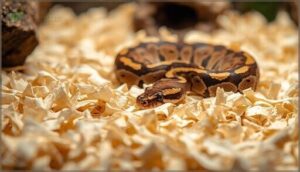
Aspen shavings rank among the most popular reptile substrates for ball pythons, and for good reason. You’ll find aspen benefits include low dust levels, reasonable humidity control, and a soft texture that aids snake comfort during movement. Here’s what makes aspen work:
- Fine texture encourages natural burrowing behaviors
- Absorbs moisture and waste odors effectively
- Widely available as “aspen snake bedding
- Requires shaving depth of 2-4 inches minimum
- Needs substrate replacement every 4-6 weeks to prevent mold
Cypress Mulch
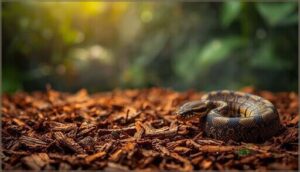
Cypress mulch delivers outstanding humidity control for your ball python’s enclosure, making it ideal for maintaining that vital 50-60% range. This reptile substrate retains moisture better than aspen while offering natural antimicrobial properties that keep odors in check. Pair it with essential snake habitat accessories like hides and water dishes to create a thriving environment your python will love.
You’ll want a substrate depth of 2-4 inches to support burrowing behaviors. One caveat: cypress care requires regular monitoring to prevent mold in humid snake enclosures.
Coconut Fiber and Husk
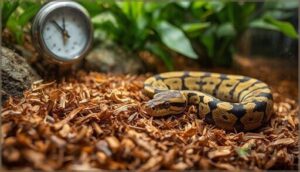
Coconut fiber and coconut husk rank among the best reptile substrate choices for your ball python because of their exceptional fiber absorbency and husk hydration properties. These coconut benefits include excellent moisture retention that stabilizes humidity levels, plus natural coconut odor control.
You’ll find substrate selection straightforward with compressed blocks or loose bedding, though husk maintenance requires monitoring to prevent mold in damp conditions.
Paper-Based Substrates
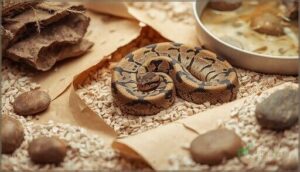
Paper-based substrates offer you a no-fuss, budget-friendly option that puts reptile safety first. These reptile bedding choices deliver solid absorbency rates and moisture control, making substrate selection simple for your ball python.
You’ll appreciate the eco-friendliness of recycled paper products, plus their low dust profile protects respiratory health. Replace them frequently to maintain hygiene and prevent odor buildup.
Reptile Carpet
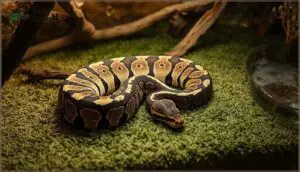
If you’re looking for a reusable, low-maintenance option, reptile carpet delivers a clean surface that promotes snake comfort and safe thermoregulation. This reptile flooring won’t mold like aspen or other organic substrates, making reptile hygiene easier to manage.
You’ll need weekly cleaning to control odor, but the durable fabric withstands frequent washing. Reptile carpet works best in smaller enclosures where your ball python prefers solid footing over burrowing.
Substrates to Avoid for Ball Pythons
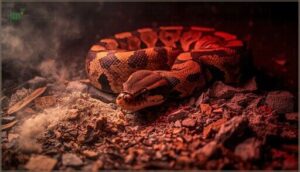
Not all substrates are safe for your ball python. Some materials pose serious risks like impaction, respiratory issues, or chemical toxicity that can harm your snake’s health.
Let’s cover the substrates you should steer clear of to keep your pet safe and healthy.
Sand and Cat Litter
These materials pose serious ingestion risks and should never line your ball python’s enclosure. Sand impaction occurs when particles accumulate in the digestive tract, while cat litter dangers include clumping clay that expands internally.
Consider these litter hazards:
- Sand substrates abrade delicate tissues and block intestinal passages when swallowed during feeding.
- Clumping cat litter forms concrete-like masses inside your snake’s body.
- Scented products contain toxic substances that irritate respiratory systems through chemical exposure.
Stick with aspen or other proven reptile bedding instead.
Cedar and Pine Shavings
Cedar and pine shavings release aromatic oils with phenols that cause respiratory issues in ball pythons. These health hazards include liver damage and airway inflammation from a chemical composition your snake can’t tolerate. Even “kiln-dried” versions pose toxicity risks.
Choose aspen or reptile-specific substrate blends instead—they provide safe reptile bedding without volatile compounds that threaten your ball python’s long-term wellness.
Walnut Shell Substrate
Walnut shell substrate carries serious toxicity risks for your ball python. This reptile bedding creates multiple hazards you should avoid:
- Ingestion problems lead to intestinal blockages when your snake mistakes sharp fragments for prey
- Gastro issues develop from abrasive particles damaging digestive tract linings
- Shell hazards include choking risks in younger ball pythons
- Respiratory dangers emerge from fine dust particles irritating airways
Choose reptile-specific substrate blends instead—they won’t threaten your snake’s health with these documented complications.
High-Dust or Chemically Treated Materials
Beyond obvious dangers like walnut shells, you’ll face hidden threats from dusty or treated bedding.
High-dust substrates irritate your python’s airways and trigger respiratory distress—even normally safe coconut fiber becomes problematic when it creates airborne particles.
Pesticide-treated materials or recycled bedding with chemical residues introduce toxic exposure through skin contact.
Stick with untreated aspen, cypress mulch, or properly processed coconut fiber for material safety.
Top 9 Substrates for Ball Pythons
Now that you know what to avoid, let’s look at substrates that actually work well for ball pythons. Each option below offers different benefits depending on your setup and your snake’s specific needs.
You’ll find natural materials that support humidity, budget-friendly choices for easy maintenance, and specialty substrates designed with burrowing behaviors in mind.
1. Natural Aspen Pet Bedding Material
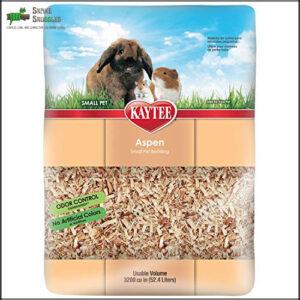
Natural aspen shavings offer a soft, non-toxic bedding that’s nearly dust-free—perfect for keeping your ball python’s respiratory system healthy. This substrate absorbs waste well and controls odor, while its loose texture encourages natural burrowing instincts when layered 2–3 inches deep.
Aspen doesn’t retain moisture as strongly as coconut fiber, so you’ll need to monitor humidity closely and mist when needed. It’s widely available, easy to spot-clean, and gentle on delicate scales.
Just replace it every 4–6 weeks to prevent mold and maintain a fresh, safe environment for your reptile.
| Best For | Ball python owners who want a natural, low-dust bedding that supports burrowing behavior and is gentle on respiratory health. |
|---|---|
| Material Type | Aspen Wood |
| Weight | 6.5 lbs |
| Odor Control | Yes |
| Humidity Retention | Low |
| Natural Product | Yes |
| Ease of Cleaning | Easy |
| Additional Features |
|
- Nearly dust-free formula minimizes respiratory irritation and keeps the air clean for sensitive snakes
- Soft, loose texture encourages natural digging and exploring while being gentle on scales
- Excellent absorbency controls odor and makes spot-cleaning quick and easy
- Requires careful humidity monitoring since it doesn’t retain moisture as well as alternatives like coconut fiber
- Needs full replacement every 4–6 weeks to prevent mold growth in humid conditions
- Can be pricier than paper-based options, and some bags may contain larger wood pieces or slight dust
2. Natural Cypress Reptile Bedding Mulch
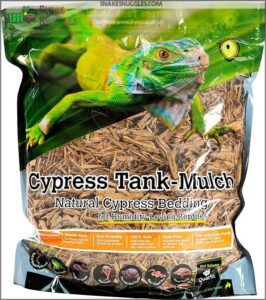
Cypress mulch substrate retains moisture longer than paper-based options, helping you maintain the 50–60% humidity ball pythons need without constant misting. Its fibrous texture absorbs waste effectively and accommodates shallow burrowing behavior when layered 2–4 inches deep. You’ll find it visually appealing and dust-free when properly rinsed before use.
Monitor ventilation to prevent mold in damp spots, and perform regular spot cleaning to remove feces. Replace the entire substrate every 2–3 months to keep odors low and your reptile’s environment healthy and comfortable.
| Best For | Ball python keepers who want a natural-looking substrate that holds humidity well and supports burrowing without the constant misting required by paper bedding. |
|---|---|
| Material Type | Cypress Wood |
| Weight | 1.95 lbs |
| Odor Control | Yes |
| Humidity Retention | High |
| Natural Product | Yes |
| Ease of Cleaning | Easy |
| Additional Features |
|
- Retains moisture longer than paper substrates, making it easier to maintain the 50–60% humidity ball pythons need
- Allows for natural burrowing behavior when layered deep enough and has a forest-floor appearance many keepers prefer
- Absorbs waste effectively and controls odors better than some alternatives when kept clean
- Requires more frequent monitoring for mold growth, especially in enclosures with poor ventilation
- Needs to be rinsed before use to remove dust that could irritate your snake’s respiratory system
- Costs more than paper or aspen bedding and requires full replacement every 2–3 months
3. Natural Aspen Snake Bedding Supply
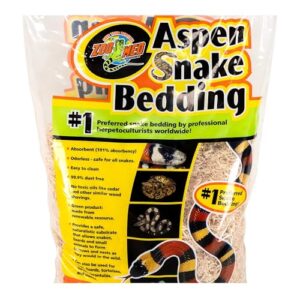
Aspen bedding provides your ball python with a soft, absorbent substrate that encourages natural burrowing behavior while effectively controlling odor. This renewable wood material is 99.9% dust-free and free from the toxic oils found in cedar or pine, ensuring safe respiratory health for your pet.
You’ll appreciate its 191% absorbency rating, which makes spot cleaning daily waste easier. Layer the bedding 2–4 inches deep to encourage digging, and replace it completely every 2–3 months.
Keep humidity below 60% when using aspen, as higher moisture levels can promote mold growth and reduce its performance in your reptile’s habitat.
| Best For | Ball python owners who want a natural, absorbent bedding that supports burrowing behavior and keeps odors under control in low-to-moderate humidity setups. |
|---|---|
| Material Type | Aspen Wood |
| Weight | 2.15 lbs |
| Odor Control | Yes |
| Humidity Retention | Low |
| Natural Product | Yes |
| Ease of Cleaning | Easy |
| Additional Features |
|
- Highly absorbent with a 191% rating, making daily spot cleaning quick and easy
- Free from toxic oils and 99.9% dust-free, so it’s safe for your snake’s respiratory health
- Encourages natural digging and burrowing, which helps reduce stress and keeps your ball python active
- Doesn’t handle high humidity well—can develop mold if moisture levels stay above 60%
- Some customers report more dust than expected, despite the dust-free claim
- Needs full replacement every 2–3 months, which can add up in cost over time
4. Natural Forest Floor Bedding Substrate
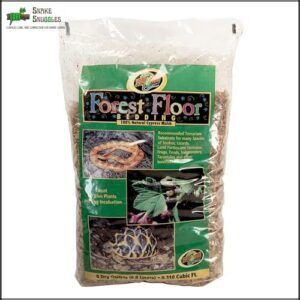
Zoo Med Forest Floor Bedding mimics the leaf litter and organic textures your ball python would encounter in the wild, supporting both humidity control and burrowing behavior. This substrate blend combines cypress mulch, sphagnum moss, and soil particles to create a microbial balance that naturally reduces odor.
You’ll want to maintain a substrate depth of 2–4 inches to allow tunneling while monitoring moisture levels to prevent mold. It retains humidity better than aspen shavings substrate but requires regular spot cleaning and periodic turnover to keep the environment fresh and safe.
| Best For | Ball python keepers who want a naturalistic setup that supports humidity needs and allows burrowing behavior, especially in drier climates where moisture retention is challenging. |
|---|---|
| Material Type | Cypress Mulch |
| Weight | 0.3 kg |
| Odor Control | Yes |
| Humidity Retention | High |
| Natural Product | Yes |
| Ease of Cleaning | Moderate |
| Additional Features |
|
- Mimics natural forest floor conditions with a mix of cypress mulch, leaf litter, and soil that encourages natural behaviors like burrowing and foraging
- Retains moisture effectively to maintain enclosure humidity levels, which is critical for proper shedding and respiratory health
- Natural microbial activity helps control odor better than synthetic alternatives while creating a visually appealing habitat
- Can be dusty out of the package and may require rinsing and drying before use to prevent respiratory irritation
- Harder to spot waste compared to lighter substrates, so you’ll need to rely on smell checks and more frequent spot cleaning
- Requires ongoing moisture monitoring and occasional misting to prevent it from drying out completely, adding to maintenance time
5. Natural Coconut Fiber Reptile Bedding
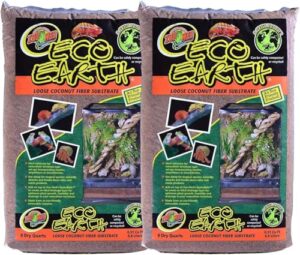
If you’re looking for a reptile substrate that balances humidity control with eco-friendly options, coconut fiber substrate delivers on both fronts. This natural substrate choice maintains 60–70% relative humidity when layered 1–3 inches deep, supporting your ball python’s shed cycles and burrowing behavior without causing respiratory irritation.
Coconut fiber benefits include excellent absorbency for odor management, biodegradable composition, and cushioning that protects delicate scales during tunneling. You can even rinse and reuse portions between cleanings, making it both practical and sustainable for long-term enclosure maintenance.
| Best For | Reptile owners who need a natural, humidity-retaining substrate for ball pythons, geckos, or other tropical species that burrow and require stable moisture levels. |
|---|---|
| Material Type | Coconut Fiber |
| Weight | 6.4 lbs |
| Odor Control | Yes |
| Humidity Retention | High |
| Natural Product | Yes |
| Ease of Cleaning | Easy |
| Additional Features |
|
- Maintains 60–70% humidity at 1–3 inch depths, perfect for healthy sheds and comfort
- Low dust and aromatic oil-free, reducing respiratory irritation compared to wood shavings
- Biodegradable and partially reusable after rinsing, making it eco-friendly and cost-effective
- Some batches arrive dry and require pre-moistening before use
- May need supplemental humidity sources to keep moisture stable over time
- Packaging errors reported with customers receiving one pack instead of the advertised two-pack
6. Coconut Fiber Reptile Substrate Blocks
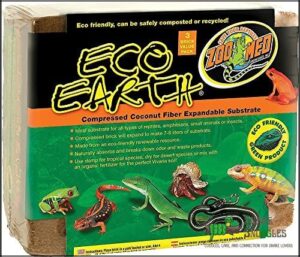
Block hydration transforms compact coconut fiber substrate into 7–8 liters of workable bedding that facilitates both humidity control and burrowing assistance for your ball python. You’ll need to rehydrate each brick with warm water, allowing substrate expansion before layering it 2–4 inches deep in the enclosure.
This coconut fiber reptile substrate maintains stable moisture levels for shed cycles while offering a dust-free, non-toxic surface. Regular stirring prevents compaction, and the biodegradable material delivers coconut fiber benefits including natural odor absorption and reusable gardening applications after replacement.
| Best For | Ball python owners who want a natural, humidity-friendly substrate that supports burrowing behavior and simplifies odor control through composting or reuse. |
|---|---|
| Material Type | Coconut Husks |
| Weight | 3.9 lbs |
| Odor Control | Yes |
| Humidity Retention | High |
| Natural Product | Yes |
| Ease of Cleaning | Moderate |
| Additional Features |
|
- Expands into 7-8 liters of workable bedding per brick, maintaining stable 50-60% humidity levels ideal for shedding cycles
- Made from all-natural coconut husks with no synthetic additives, offering a dust-free and non-toxic surface for your snake
- Naturally absorbs odors and waste while remaining compostable or reusable in gardens after replacement
- Requires careful hydration to avoid soggy substrate that can promote mold growth or overly high humidity
- May become compacted or matted over time, requiring regular stirring and maintenance to preserve burrowing structure
- Not suitable for ball pythons requiring lower humidity environments, as the substrate retains significant moisture
7. Organic Coconut Reptile Bedding Substrate
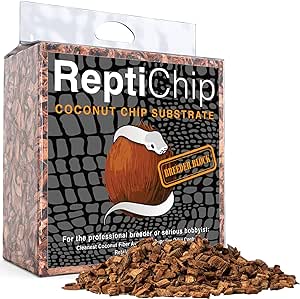
Certified organic coconut reptile bedding substrate delivers a chemical-free environment while supporting reptile humidity control and natural burrowing behaviors in your ball python enclosure. These unbleached coconut fiber products expand from compressed blocks into 10 pounds of loose bedding that maintains substrate moisture management for consistent shed cycles.
You’ll appreciate the eco-friendly materials that absorb waste and control odors without producing harmful dust. The coconut husk texture encourages digging, and its non-toxic composition protects your snake if accidentally ingested during feeding.
| Best For | Ball python owners who want a natural, chemical-free substrate that maintains humidity levels and supports their snake’s instinct to burrow and hide. |
|---|---|
| Material Type | Coconut Chips |
| Weight | 10 lbs expanded |
| Odor Control | Yes |
| Humidity Retention | High |
| Natural Product | Yes |
| Ease of Cleaning | Easy |
| Additional Features |
|
- Expands from a compact brick into 10 pounds of bedding, making storage easy and giving you plenty of material for multiple enclosure changes
- Absorbs waste and controls odors naturally while retaining moisture to help your ball python shed properly
- Safe if accidentally eaten during feeding since it’s organic, unbleached, and free from toxic chemicals or additives
- Can get dusty when you’re hydrating the brick, so you might want to expand it outside or wear a mask
- Doesn’t clump together well, which makes it tricky for snakes that like to create stable burrows
- Needs regular spot cleaning and full changes to prevent mold, especially if you keep the enclosure on the humid side
8. Scott Blue Shop Towels
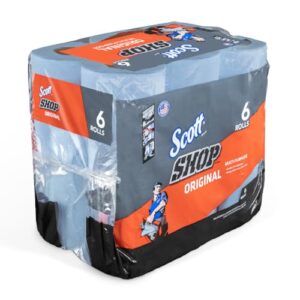
Paper towels offer a temporary substrate option, but Scott Blue Shop Towels aren’t ideal for ball python bedding despite their absorbency. These industrial-grade towels contain cellulose fibers designed for workshop cleanups, not reptile safety.
You’ll face contamination risk from loose lint that your snake might ingest, plus the non-fiber material can irritate delicate scales during movement.
While they work for quick spill control or wrapping during transport, coconut fiber and cypress mulch remain better choices for primary enclosure substrate that meets humidity needs and allows natural burrowing behaviors.
| Best For | Snake owners needing temporary cleanup material or transport wrapping, not suitable as primary ball python substrate. |
|---|---|
| Material Type | Cypress Mulch |
| Weight | 10.6 lbs |
| Odor Control | Yes |
| Humidity Retention | High |
| Natural Product | Yes |
| Ease of Cleaning | Easy |
| Additional Features |
|
- High absorption makes them effective for quick spill cleanup in and around enclosures
- Durable enough to handle multiple uses before disposal
- Easy to replace and monitor for waste removal
- Loose fibers pose ingestion risk and can irritate your snake’s scales
- Not designed for reptile safety or prolonged skin contact
- More expensive than purpose-made reptile substrates that support natural behaviors
9. Riare Coconut Husk Reptile Substrate
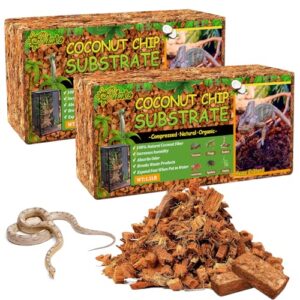
Riare Coconut Husk Reptile Substrate gives you natural coconut fiber chunks that ball pythons can burrow through comfortably. This compressed coconut fiber substrate expands when moistened, creating a soft bedding layer that holds humidity well during shed cycles.
You’ll get odor control and waste absorption from the organic material, though you should watch for mold if conditions stay too damp. Some users report finding clay or string pieces mixed in, so sort through the substrate before adding it to your enclosure.
Regular spot-cleaning and proper ventilation keep this reptile substrate safe and functional.
| Best For | Ball python owners who want a natural, humidity-holding substrate that supports burrowing behavior and controls odors between cleanings. |
|---|---|
| Material Type | Paper |
| Weight | 3.79 lbs |
| Odor Control | No |
| Humidity Retention | Low |
| Natural Product | No |
| Ease of Cleaning | N/A |
| Additional Features |
|
- Expands when moistened to create a soft, burrow-friendly bedding layer that holds humidity well during shed cycles
- Natural coconut fiber effectively absorbs waste and controls odors in the enclosure
- Compressed packaging makes it easy to store and use as needed
- Some batches contain impurities like clay, string, or plastic pieces that require sorting before use
- Can develop mold quickly if humidity levels aren’t monitored and controlled properly
- Moisturizing and expanding the compressed substrate can be messy and time-consuming
Maintenance Tips for Ball Python Substrates
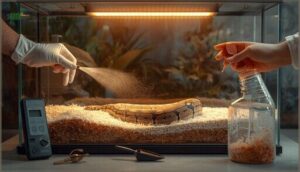
Keeping your ball python’s substrate clean isn’t complicated, but it does require consistency. A good maintenance routine prevents odor buildup, controls bacteria, and keeps humidity levels where they need to be.
Here are four essential practices that’ll help you maintain a healthy enclosure for your snake.
Daily Spot Cleaning and Waste Removal
You’ll want to remove waste and soiled bedding daily to keep your ball python’s home fresh and safe. Regular substrate maintenance prevents odor buildup and maintains proper humidity levels, especially with absorbent materials like coconut fiber.
Essential daily care includes:
- Inspect the enclosure each morning for feces and urates
- Use dedicated cleaning tools to scoop out contaminated substrate
- Replace only the soiled patches to minimize disturbance
- Wash hands and sterilize tools between cleaning sessions to prevent pathogen transfer
Deep Cleaning and Substrate Replacement
Every 4–6 weeks, you’ll need to strip out all bedding and sanitize the enclosure with a reptile-safe disinfectant for thorough odor control and waste removal. Allow 24 hours for complete drying before restocking fresh substrate.
This deep cleaning cycle maintains proper humidity levels and prevents bacterial buildup, ensuring your reptile habitat design fosters long-term health and comfort.
Monitoring Humidity and Mold Prevention
Check humidity levels daily with a calibrated hygrometer placed at multiple heights to catch microclimates inside hides and substrate layers. Coconut fiber and similar materials need uniform moisture—not pooling—to prevent mold while supporting proper humidity control.
Spot-clean waste immediately, boost ventilation between cleanings, and watch for darkening substrate or musty odor that signals mold prevention efforts should escalate to full replacement.
Safe Handling and Disinfection Practices
Always wear disposable gloves when handling soiled substrate, and wash hands thoroughly afterward to maintain hygiene protocols.
Use reptile-safe disinfection methods on all surfaces, allowing proper contact time before rinsing completely.
Regular cleaning schedules—daily spot-cleaning paired with weekly deep disinfection—support waste management, odor control, and stable humidity levels.
These personal protection steps safeguard both reptile health and your own wellbeing during routine maintenance.
Frequently Asked Questions (FAQs)
Can I mix different substrate types together?
Mixing substrates isn’t recommended for ball pythons. Different materials create unpredictable humidity control and microclimates, complicate cleaning routines, and may cause burrowing issues or chemical interactions that stress your snake and promote mold growth.
How does substrate affect feeding response or appetite?
Dusty bedding can irritate your ball python’s airways, suppressing appetite signals. Meanwhile, substrates that stabilize humidity around 50–60% support healthy digestion rates and consistent feeding cues, keeping snake health on track.
What substrate works best for breeding ball pythons?
For ball python care during breeding, choose substrates like coconut fiber or cypress mulch that maintain 60-70% humidity, support nesting materials and burrowing depth, and guarantee egg safety without harsh chemicals or excess dust.
Do hatchlings need different substrate than adults?
Yes, hatchlings need finer coconut fiber or paper-based bedding with higher humidity retention for proper shedding.
Adults tolerate coarser substrates and require greater substrate depth to support natural burrowing behavior as they grow.
How do I transition my snake to new substrate?
Contrary to popular belief, abrupt substrate changes won’t immediately harm your ball python, but gradual introduction over 7-14 days minimizes stress.
Blend old bedding with new, monitor snake behavior closely, and maintain consistent enclosure humidity throughout the shift timing process.
Conclusion
The smallest detail in your enclosure—your choice of reptile substrates for ball pythons—creates the biggest impact on your snake’s respiratory health and behavior. Now you understand how humidity retention, particle safety, and maintenance demands intersect with your python’s biological needs.
You’ve identified which materials support natural burrowing while preventing bacterial growth. Apply these guidelines to your specific setup, monitor your snake’s response during sheds and feeding cycles, and you’ll establish the stable microhabitat your ball python requires to thrive year-round.
- https://www.sciencedirect.com/science/article/pii/S0749208123000268
- https://elsevier.blog/sub-points-outlining-organization/
- https://academichelpexpress.blog/2024/08/please-use-the-bulleted-points-and-the-rubric-below-to-guide-your-work-your-pa/
- https://pmc.ncbi.nlm.nih.gov/articles/instance/9553038/bin/pone.0275964.s005.docx
- https://www.scribd.com/document/356795007/Research-Methods-Knowledge-Base