This site is supported by our readers. We may earn a commission, at no cost to you, if you purchase through links.

Most reptile keepers discover bioactive setups the hard way—by building one that smells like a swamp within three months.
The culprit is almost never the animals or the plants.
It’s the substrate layering underneath, where stagnant water, compacted soil, and the wrong microbial conditions quietly collapse the whole ecosystem.
Reptile substrates for bioactive setups carry more responsibility than simple bedding: they regulate humidity, anchor plant roots, feed beneficial microbes, and process waste continuously.
Get the layers right, and the enclosure basically maintains itself.
Get them wrong, and no cleanup crew can compensate.
Table Of Contents
- Key Takeaways
- Essential Qualities of Bioactive Reptile Substrates
- Key Substrate Materials for Bioactive Setups
- Step-by-Step Guide to Substrate Layering
- Top 9 Substrates for Bioactive Reptile Enclosures
- 1. Josh’s Frogs Tropical Plant Soil Mix
- 2. Duedusto Reptile Terrarium Substrate Barrier
- 3. Riare Expanded Clay Terrarium Substrate
- 4. Exo Terra Bioactive Volcanic Substrate
- 5. Zilla Jungle Mix Terrarium Bedding
- 6. Josh’s Frogs Tropical Bioactive Substrate
- 7. ZeeDix Coconut Fiber Substrate Reptiles
- 8. BugzyBug Isopod Bioactive Substrate Mix
- 9. Zoo Med Tropical Bioactive Substrate Kit
- Maintaining Healthy Bioactive Substrate
- Frequently Asked Questions (FAQs)
- Can I mix different substrate types together safely?
- How often should bioactive substrate be completely replaced?
- Whats the ideal substrate depth for burrowing species?
- Can bioactive substrate be reused in new enclosures?
- How often should bioactive substrate be fully replaced?
- Can bioactive substrates work in desert reptile enclosures?
- What lighting do live plants in substrates need?
- Are bioactive setups safe for juvenile reptiles?
- How do temperatures affect substrate microbial activity?
- Conclusion
Key Takeaways
- Correct substrate layering — drainage at the bottom, bioactive mix above, leaf litter on top — determines whether your enclosure thrives or collapses into stagnant, smelly failure.
- Each material pulls its own weight: LECA drains excess water, coconut coir holds 60–80% humidity, activated charcoal neutralizes ammonia, and sphagnum moss buffers moisture — use them together, not interchangeably.
- Your cleanup crew (springtails and isopods like Trichorhina tomentosa or Porcellionides pruinosus) only works if the substrate supports it — the right pH range of 6.0–7.0, stable humidity, and adequate organic matter are non‑negotiable prerequisites.
- A well‑built bioactive substrate rarely needs full replacement — with daily spot cleaning, quarterly leaf litter refreshes, and microbial inoculant boosts every 4–6 months, the system can run 10+ years without a complete overhaul.
Essential Qualities of Bioactive Reptile Substrates
Not every substrate works for a bioactive setup — the right one has to pull double duty, keeping your reptile comfortable while actively supporting a living ecosystem.
Finding that balance is easier when you start with bioactive-ready snake substrates built for naturalistic vivariums — ones already vetted for structure, moisture retention, and cleanup crew compatibility.
There are a few non-negotiable qualities you’ll want to check off before committing to any mix. Here’s what to look for.
Moisture Retention and Drainage Balance
Your bioactive substrate needs to do two things at once: hold moisture and excess water escape. A 2–4 inch LECA drainage depth manages the overflow, while coconut coir’s moisture capacity keeps the upper soil consistently damp. Moss acts as a humidity buffer, leaf litter maintains a stable microclimate, and proper ventilation and humidity control prevent saturation. Substrate barriers keep these layers working independently.
coconut husk substrate holds the most moisture of any option.
Support for Beneficial Microorganisms
Drainage manages the water, but your soil quality determines what lives in it.
A crumbly substrate full of microbial air pockets lets oxygen reach beneficial microbes, while moisture gradient zones give different organisms the right conditions to thrive.
The rhizosphere nutrient hotspot around plant roots concentrates microbial activity, and pH stabilization strategies keep conditions near neutral.
Cleanup crew synergy with isopods and springtails rounds out solid ecosystem management.
Including springtails control mold enhances the self‑regulating balance of the vivarium.
Compatibility With Live Plants
Your soil does more than anchor roots — it feeds them. A well-built bioactive substrate keeps pH balance between 6.0 and 7.0, supporting plant species selection like pothos and ferns without root burn. Moisture Retention stays at 60–70% in tropical setups, giving microorganisms stable conditions to drive nutrient cycling through the root zone.
- Coconut coir sustains nitrogen and potassium in the soil for 6–12 months
- Light Requirements influence which plants can root effectively at different substrate depths
- Charcoal buffers pH fluctuations, keeping levels steady between 6.2 and 6.8
Odor and Waste Management
Good substrate doesn’t just grow plants — it keeps smells in check too.
Activated charcoal neutralizes ammonia and hydrogen sulfide before they build up, while a proper drainage layer stops stagnant water that triggers foul odors.
Your cleanup crew drives microbial decomposition, converting waste into nutrients.
Together, these odor-absorbing additives and beneficial microbes maintain ecosystem balance without requiring constant intervention.
Suitability for Different Reptile Species
Not every reptile thrives in the same mix. Reptile habitat creation starts with matching your substrate to your species:
- Arid species substrate — Leopard geckos need 70% topsoil and 30% play sand, at least 4–5 inches deep for burrowing depth requirements.
- Tropical species substrate — Crested geckos use 60% organic topsoil and 40% sand with coco coir.
- Species-specific cleanup crew — Dwarf white isopods suit arid setups; powder blue isopods handle tropical ones.
Key Substrate Materials for Bioactive Setups
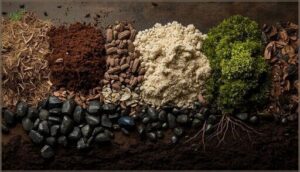
The materials you choose for your bioactive substrate do most of the heavy lifting — they determine how well your enclosure drains, holds moisture, and sustains life at the microbial level. Each material brings different to the mix, and knowing what each one does helps you build a substrate that actually works for your specific species.
Here are the key materials worth understanding before you start layering.
Coconut Fiber and Coir Blends
Coconut fiber substrate is one of the most reliable foundations for bioactive systems. Coir absorbs up to 10 times its dry weight in water, maintaining humidity between 60 and 80 percent for tropical species.
pH range of 5.8 to 6.8 facilitates microorganism activity, making bioactive substrate selection straightforward.
Standard coir blend ratios combine 20 percent coir, 40 percent topsoil, and 10 percent worm castings for natural habitat creation.
Sphagnum Moss and Peat Moss
Sphagnum and peat moss each pull serious weight in a bioactive substrate setup. Sphagnum holds up to 20 times its dry weight in water, making it essential for moisture retention, shedding assistance, and quarantine humidity management. Its natural acidity suppresses mold without chemicals.
Peat blends into your reptile substrate base for natural habitat creation, supporting microfauna habitat and egg incubation media where consistent dampness matters most.
Forest Soil and Leaf Litter
Forest soil and leaf litter form the biological heart of any bioactive substrate. Together, they deliver moisture retention at 70–80% humidity in tropical setups, drive nutrient cycling through microbial activity, and support the microfauna food chains that keep your terrarium substrate self‑cleaning.
- Species compatibility — suits ball pythons, dart frogs, and burrowing snakes
- Natural hiding — leaf litter creates stress‑reducing microhabitats
- Plant support — decomposing leaves feed live plants without fertilizers
Expanded Clay Balls and Mineral Additives
Expanded Clay Balls are the drainage foundation most serious keepers overlook.
These 4–16 mm porous spheres retain 10–20% water as a reservoir while channeling excess moisture away instantly — giving your bioactive substrate ideal water retention capacity without waterlogging roots.
They’re pH neutral, supporting pH stabilization across soil layers, and their thermal insulation properties help regulate enclosure temperature.
Mineral additives round out the nutrient profile with a mineral nutrient boost that your live plants and microfauna both depend on.
Layering for Drainage and Bioactivity
Layering isn’t decoration — it’s the backbone of ecosystem management and balance. Your drainage layer should sit 0.5 to 2 inches deep, with barrier material choice determining how cleanly moisture gradients form between zones.
Stack substrate texture layers deliberately: drainage at the bottom, bioactive substrate above, then leaf litter on top.
Place microfauna after planting, roughly one to two cultures per square foot, so moisture retention stabilizes before they establish.
Step-by-Step Guide to Substrate Layering
Getting the layers right is what separates a thriving bioactive setup from one that stays perpetually soggy or dry.
Each layer fulfills a specific purpose, and the order you build them in matters more than most people expect.
Here’s exactly how to do it, step by step.
Preparing The Drainage Layer
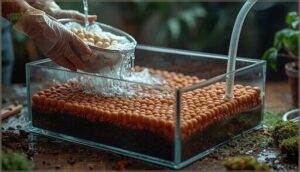
Getting the drainage layer right is the foundation of every successful bioactive substrate setup. Start by rinsing clay balls thoroughly until the water runs clear — this removes dust that clogs airflow. Aim for 2.5 to 3 inches of depth for stable moisture retention and ecosystem maintenance.
- Rinse LECA or expanded clay with fast‑running water using a mesh colander
- minimum 1‑inch depth for tropical setups; 2.5 inches for most bioactive substrate builds
- PVC siphon drain setup at the base for easy water flow testing and excess removal
- Soak rinsed clay after drainage layer sterilization to kickstart microbial colonization
Installing a Substrate Barrier
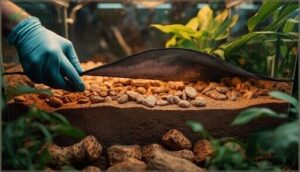
Once your drainage layer is set, lay your substrate barrier directly on top — this mesh material keeps soil and microfauna out of the clay while letting water pass freely. Cut it slightly oversized for edge sealing against the walls.
Placement technique matters: no sagging, no gaps. Run basic maintenance checks during terrarium maintenance to confirm moisture control stays balanced across the bioactive substrate.
Mixing and Adding The Bioactive Base

With your barrier in place, mix your bioactive substrate in a tub — base ratio tweaking starts here.
For humid builds, combine 50–60% organic topsoil with 20–30% coco coir, then fill the rest with bark and moss. Texture consistency checks are simple: moistened mix should clump without dripping. Pre-moistening technique matters — lightly dampen before adding to avoid waterlogged pockets.
Applying Leaf Litter and Moss
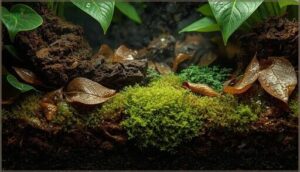
Once your bioactive substrate base is packed in, the top layers do the finishing work.
- Leaf Litter Sterilization — boil for 2–3 minutes, cool completely
- Choose Leaf Litter Types like magnolia (3.5–7 inches) or live oak for natural variation
- Apply 0.5–1 inch over the Bioactive Substrate surface
- Moss Placement Techniques — press Live Moss patches firmly onto the base
- Moss Layer Thickness of 1–2 inches for Moss Moisture Retention supporting 70–90% humidity in your Bioactive Setup
This mirrors the Natural Habitat forest floor, refining your Terrarium Substrate Selection from the ground up.
Introducing Cleanup Crew and Microorganisms
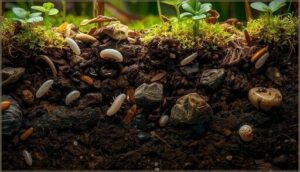
Now it’s time to bring your bioactive substrate to life. Seed microbial inoculants like BioShot directly into the substrate immediately after setup — one packet per six quarts activates beneficial fungi and bacteria quickly.
Follow with springtail introduction two to four weeks later, scattering 1,000+ springtails across the moist surface. Complete your isopod selection — dwarf whites or tropical greys work well — adding 25–50 per gallon once humidity stabilizes.
Top 9 Substrates for Bioactive Reptile Enclosures
Picking the right substrate can make or break your bioactive setup, so the options below were chosen with real ecosystem performance in mind.
Each one brings something specific to the table — whether that’s drainage, microbial support, or moisture control.
Here are nine substrates worth considering for your next build.
1. Josh’s Frogs Tropical Plant Soil Mix
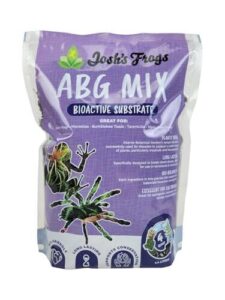
Josh’s Frogs ABG Mix has earned its reputation for good reason.
This 4-quart blend follows the Atlanta Botanical Gardens’ proven recipe, combining moss, bark, coconut fiber, and sand into a structure that holds moisture without becoming waterlogged.
It jumpstarts microfauna populations — springtails and isopods establish quickly because beneficial fungi are already present.
Compatible with crested geckos, tree frogs, chameleons, and tropical invertebrates, it facilitates direct planting and lasts several years before needing full replacement.
| Best For | Hobbyists setting up bioactive terrariums or vivariums for tropical animals like crested geckos, tree frogs, or tarantulas. |
|---|---|
| Substrate Type | Bioactive soil mix |
| Primary Use | Terrarium/vivarium |
| Plant Support | Yes |
| Humidity Control | Moderate |
| Animal Compatibility | Geckos, frogs, tarantulas |
| Package Weight | 2.09 lbs |
| Additional Features |
|
- Follows the trusted Atlanta Botanical Gardens recipe, so you know it actually works for tropical plants and animals
- Breaks down slowly, meaning you won’t need to replace it for years — and it helps cut down on tank maintenance
- Comes ready to support springtails and isopods right out of the bag, which is a huge plus for bioactive builds
- Only 4 quarts, so it won’t stretch far if you’re working with a larger enclosure
- The price-to-volume ratio feels a bit steep for what you get
- May contain hitchhikers like snails or earthworms, which won’t suit every setup
2. Duedusto Reptile Terrarium Substrate Barrier
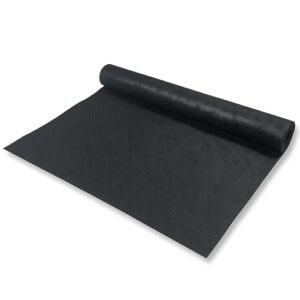
A clean drainage layer only stays clean if your substrate can’t contaminate it. The Duedusto Substrate Barrier does exactly that — it sits between your bioactive mix and the false bottom, blocking soil particles while letting water and air move freely.
Each pack includes two 36.2" x 18.9" mesh sheets you can cut to fit any enclosure.
The non-toxic synthetic fabric resists rot and won’t break down in humid conditions.
For geckos, frogs, or mantises, it keeps your entire layered system functioning the way it should.
| Best For | Bioactive terrarium keepers who want to protect their drainage layer and house small animals like geckos, frogs, or mantises in a clean, well-functioning enclosure. |
|---|---|
| Substrate Type | Mesh separator |
| Primary Use | Terrarium/vivarium |
| Plant Support | Indirect |
| Humidity Control | Indirect |
| Animal Compatibility | Geckos, frogs, mantises |
| Package Weight | 0.18 lbs |
| Additional Features |
|
- Keeps substrate out of the drainage layer so your false bottom stays clean and functional longer
- Easy to trim and fit — works with most terrarium shapes and sizes
- Breathable mesh lets water and air flow through without trapping moisture where you don’t want it
- You’ll need to cut it to size, which adds a small prep step before setup
- May not work well with very fine substrates that could still slip through the mesh
- Only suited for indoor enclosures, so it’s not a fit for outdoor builds
3. Riare Expanded Clay Terrarium Substrate
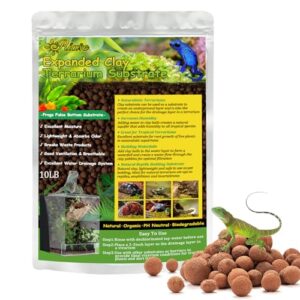
Your drainage layer is only as good as what fills it. Riare’s expanded clay balls — ranging from 4 to 16 mm in diameter — create a stable, porous false bottom that pulls excess water away from your bioactive substrate before root rot or waterlogging becomes a problem.
The pH‑neutral clay won’t interfere with soil chemistry, and it actively helps beneficial microbes. A 10‑pound bag covers a standard 48 × 24 inch enclosure, and you can rinse and reuse it indefinitely.
| Best For | Reptile and amphibian keepers building bioactive setups who need a reliable, reusable drainage layer that won’t mess with their soil chemistry. |
|---|---|
| Substrate Type | Clay pebbles |
| Primary Use | Terrarium/vivarium |
| Plant Support | Yes |
| Humidity Control | High drainage |
| Animal Compatibility | Reptiles, amphibians |
| Package Weight | 10 lbs |
| Additional Features |
|
- PH neutral and porous, so it supports healthy roots and beneficial microbes without throwing off your substrate balance
- Fully reusable — just rinse it off and it’s good to go again, which saves money over time
- Works across a wide range of setups, from terrariums and vivariums to aquaponics and rearing chambers
- The pebbles can float, which makes them tricky to work with in fully aquatic or heavily watered enclosures
- Needs a good rinse before use to clear out dust and debris
- A single 10 lb bag might not be enough for deeper drainage layers, so larger enclosures could require buying more than one
4. Exo Terra Bioactive Volcanic Substrate
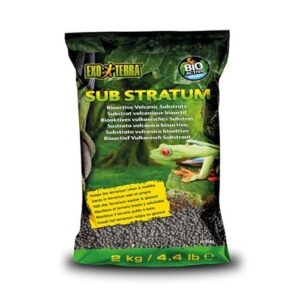
Few substrates pull double duty the way Exo Terra’s Bioactive Volcanic Substrate does. Sourced from the foothills of Japan’s Aso Volcano, it’s a natural Andisol — mineral‑dense volcanic soil packed with calcium, nitrogen, potassium, and phosphorus. Live Bacillus bacteria activate on contact with waste, breaking down ammonia before odors build up. Its porous structure drains freely while still supporting strong root growth.
Use it as a standalone 1–2 inch layer, a drainage base, or mixed into your existing bioactive blend.
| Best For | Reptile keepers and plant lovers who want a natural, low-maintenance substrate that handles odor control and drainage at the same time. |
|---|---|
| Substrate Type | Volcanic bioactive soil |
| Primary Use | Terrarium/vivarium |
| Plant Support | Yes |
| Humidity Control | Moderate |
| Animal Compatibility | Reptiles |
| Package Weight | 4.4 lbs |
| Additional Features |
|
- Live Bacillus bacteria break down ammonia on contact, so smells don’t get a chance to build up
- Nutrient-rich volcanic soil supports both plant roots and animal life — great for true bioactive setups
- Porous structure drains well while still holding enough structure for strong root development
- Costs more than basic substrates, which adds up if you’re filling a large enclosure
- Can stain surfaces, so handle it carefully during setup
- May not suit every plant type or setup — some specialized terrariums might need a different mix
5. Zilla Jungle Mix Terrarium Bedding
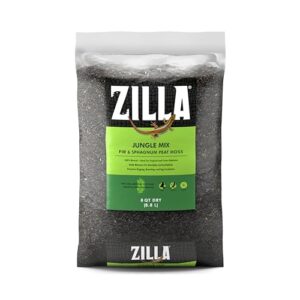
Zilla Jungle Mix keeps things simple without cutting corners. It’s a 100% organic blend of aged Douglas fir bark and sphagnum peat moss — two materials that work together naturally to mimic a forest floor.
The peat holds moisture well, while the bark adds structure and airflow. It’s best suited for frogs, toads, rainforest geckos, and tropical snakes.
Spread it 1–2 inches deep and spot‑clean daily.
One caveat: it can dry out within 24–30 hours, so misting regularly isn’t optional.
| Best For | Tropical reptile owners keeping frogs, toads, rainforest geckos, or snakes who want a natural, organic substrate that supports humidity and instinctive behaviors. |
|---|---|
| Substrate Type | Bark and peat mix |
| Primary Use | Terrarium/vivarium |
| Plant Support | Yes |
| Humidity Control | High absorption |
| Animal Compatibility | Frogs, geckos, snakes |
| Package Weight | 5.8 lbs |
| Additional Features |
|
- 100% organic blend of Douglas fir bark and sphagnum peat moss that naturally mimics a forest floor
- Holds moisture well and helps maintain the humidity levels tropical reptiles need
- Encourages natural behaviors like digging, nesting, and burrowing
- Dries out fast — sometimes within 24–30 hours — so you’ll need to mist consistently
- The larger, sharper bark pieces make it a poor fit for salamanders
- May need to be mixed with another substrate to get the best results
6. Josh’s Frogs Tropical Bioactive Substrate
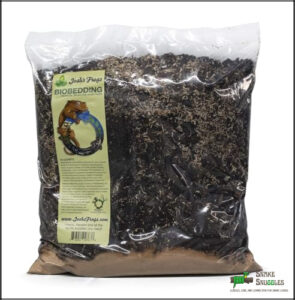
Josh’s Frogs Tropical BioBedding takes a engineered approach than simple bark-and-peat mixes. It blends coconut fiber, moss, cork bark, sand, and beneficial fungi into a chunky, nutrient-rich base that jumpstarts your cleanup crew from day one.
Springtails and isopods settle in fast.
It holds moisture well enough for crested geckos and day geckos without constant misting, and terrestrial plants root directly into it.
One 10-quart bag covers a standard 10-gallon setup. Stir the surface weekly to keep waste cycling properly.
| Best For | Tropical pet owners — think crested geckos, tree frogs, and tarantulas — who want a low-maintenance, natural-looking setup that actually works long-term. |
|---|---|
| Substrate Type | Bioactive soil mix |
| Primary Use | Terrarium/vivarium |
| Plant Support | Yes |
| Humidity Control | High |
| Animal Compatibility | Geckos, frogs, tarantulas |
| Package Weight | 5.75 lbs |
| Additional Features |
|
- Blends coconut fiber, moss, cork bark, sand, and fungi into a rich base that gets your cleanup crew (springtails, isopods) going right away
- Holds moisture well, so you’re not constantly misting to keep humidity up
- Bioactive design means the substrate can last years with proper microfauna — fewer full cleanouts
- May arrive dry and need re-moistening before it’s ready to use
- Not a great fit for snakes or pets prone to mites, since it can introduce pests
- Needs regular surface stirring and ongoing care to keep the bioactive properties doing their thing
7. ZeeDix Coconut Fiber Substrate Reptiles
Where Josh’s Frogs leans on complexity, ZeeDix keeps things straightforward.
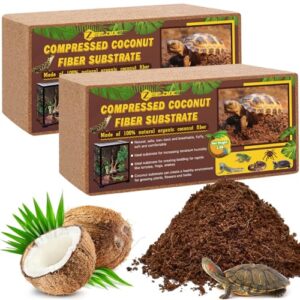
Each pack contains two compressed coconut coir bricks — each about 7.8 × 3.9 inches and weighing 1.4 pounds — that expand into loose, breathable bedding after soaking in 4 to 5 liters of water for roughly five minutes.
The low pH and balanced EC make it safe for live plants and beneficial microbes. It absorbs waste quickly, controls odor, and maintains stable humidity — a solid base layer for snakes, lizards, and frogs alike.
| Best For | Reptile and amphibian owners who want a simple, affordable substrate that works well for moisture-loving pets like frogs, snakes, and lizards — and doubles as a planting medium. |
|---|---|
| Substrate Type | Coconut fiber |
| Primary Use | Terrarium/vivarium |
| Plant Support | Yes |
| Humidity Control | High retention |
| Animal Compatibility | Snakes, frogs, lizards |
| Package Weight | 2.81 lbs |
| Additional Features |
|
- Expands quickly from a compact brick, so it’s easy to store until you need it
- Naturally absorbs waste and odors, keeping enclosures fresher between cleanings
- Low pH and balanced EC make it safe for live plants and beneficial microbes
- Needs a proper rinse before use, or it can carry a noticeable earthy smell
- Retains moisture, so it’s a poor fit for pets that need dry conditions
- Some users have run into mold or bugs, especially if ventilation in the enclosure isn’t great
8. BugzyBug Isopod Bioactive Substrate Mix
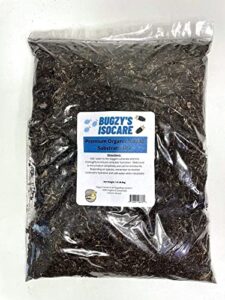
If ZeeDix is your straightforward base layer, BugzyBug’s Isopod Bioactive Substrate Mix is where things get alive. This 4-quart blend combines peat moss, decayed hardwood, bat guano, earthworm castings, and sphagnum moss — all laced with limestone calcium powder that benefits molting isopods and burrowing millipedes throughout the entire column, not just at the surface.
Organic matter stays biologically active for extended periods without full replacement. Pairs well with leaf litter to complete a functioning cleanup crew habitat.
| Best For | Hobbyists who want a ready-to-go, biologically rich substrate that keeps isopods, millipedes, and other cleanup crew thriving with minimal upkeep. |
|---|---|
| Substrate Type | Volcanic bioactive soil |
| Primary Use | Terrarium/vivarium |
| Plant Support | Yes |
| Humidity Control | Moderate |
| Animal Compatibility | Reptiles |
| Package Weight | 8.8 lbs |
| Additional Features |
|
- Packed with natural ingredients like bat guano, earthworm castings, and sphagnum moss that keep the habitat genuinely alive and active.
- Holds moisture well, so you’re not constantly misting to keep humidity where it needs to be.
- Encourages natural burrowing and nesting behaviors, which means happier, healthier isopods.
- Four quarts goes fast — larger enclosures will likely need multiple bags, which adds up quickly.
- Some buyers have run into packaging issues like ripped plastic or unsealed Ziploc bags on arrival.
- No larger bag sizes available, which is frustrating if you’re setting up a bigger vivarium.
9. Zoo Med Tropical Bioactive Substrate Kit
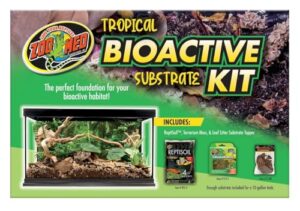
Zoo Med takes a different approach with its Tropical Bioactive Substrate Kit — instead of a single ingredient, you get a complete three-layer foundation in one box.
ReptiSoil blends humus, peat moss, sand, and carbon to handle moisture and bacterial activity simultaneously. North American sphagnum moss sits on top to slow humidity loss, and Catappa leaf litter finishes the surface, feeding microbes while sheltering your cleanup crew. It fills a standard 10‑gallon enclosure and suits tropical lizards, amphibians, and invertebrates well.
| Best For | Hobbyists setting up a tropical bioactive terrarium for reptiles, amphibians, or invertebrates who want a ready-to-layer substrate system without hunting down each component separately. |
|---|---|
| Substrate Type | Peat-based bioactive mix |
| Primary Use | Terrarium/vivarium |
| Plant Support | Yes |
| Humidity Control | Moderate |
| Animal Compatibility | Isopods, small animals |
| Package Weight | 0.8 lbs |
| Additional Features |
|
- Comes with three complementary layers — ReptiSoil, sphagnum moss, and Catappa leaves — so you’re not piecing things together from scratch
- ReptiSoil’s blend of humus, peat, sand, and carbon handles both moisture retention and microbial support at once
- Catappa leaf litter does double duty: feeds beneficial microbes and gives your cleanup crew somewhere to hide
- No tank included, so "starter kit" is a bit of a stretch if you’re truly starting from zero
- May not cover everything a bioactive setup needs, depending on the species you’re keeping
- Not a great fit for arid or desert species — this one’s built for tropical environments only
Maintaining Healthy Bioactive Substrate
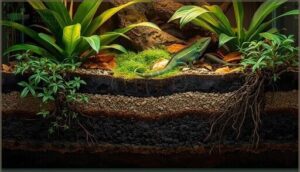
A thriving bioactive substrate doesn’t run on autopilot — it needs consistent attention to stay balanced.
Humidity, compaction, cleanup crew health, and plant growth all send signals worth paying attention to. Here’s what to watch for and how to respond as your enclosure matures.
Monitoring Humidity and Moisture Levels
pulse of your bioactive substrate — ignore it and the whole system suffers.
Use a digital hygrometer with smart probe placement strategies: position one probe near the substrate surface and another mid‑enclosure for accurate microclimate mapping. Check readings daily, log humidity trends weekly, and run moisture gradient testing by pressing two inches deep.
consistent environmental control keeps your cleanup crew thriving.
Preventing Compaction and Degradation
Compaction sneaks up on even the best-managed bioactive substrate.
Rake the top inch biweekly and poke skewer holes monthly to restore oxygen flow — your aeration mix design depends on it.
Mesh barrier selection and drainage layer depth keep structure intact below.
Rotate your cleanup crew seasonally, refresh leaf litter quarterly, and adjust moisture control to maintain environmental control as the substrate settles.
Supporting Cleanup Crews and Plant Growth
Your cleanup crew and plants work as a single system — neglect one and the other suffers. Isopod species selection matters here: powder blues (Porcellionides pruinosus) thrive at 60–80% humidity, while dwarf whites (Trichorhina tomentosa) handle deep substrate waste processing. Pair them with springtails for complete microbial food web coverage.
Neglect your cleanup crew or plants, and both suffer — they thrive only as one system
- Springtail aeration benefits: tunneling improves water penetration by 20%, optimizing the moisture gradient throughout your bioactive substrate
- Leaf litter nutrient release: decaying oak and magnolia leaves feed microorganisms and support mycorrhizal fungi that drive plant growth
- Isopod feeding: supplement with leaf litter quarterly to sustain active colonies without overfeeding
- Springtail population health: check under bark weekly — visible clusters confirm your ecosystem is balanced
Recognizing and Addressing Substrate Issues
Your bioactive substrate tells you when something’s wrong — you just need to know the signals.
White fuzzy patches signal early mold detection, while rotten egg smells point to anaerobic drainage failure requiring immediate moisture control.
Compaction signs include cracked surfaces and shallow plant roots.
For pest indicators like fungus gnats, inspect new plants before introduction.
Odor reduction starts with substrate barriers and improved airflow.
Adjusting Substrate as The Ecosystem Evolves
A living ecosystem never stays the same — and your substrate management needs to evolve with it.
- Root Expansion Management: Add 1–2 inches of fresh soil annually as roots compact the topsoil, and loosen the upper 2 inches every 3 months.
- Cleanup Crew Balancing: Replenish oak leaf litter biweekly once isopod populations mature.
- Moisture Gradient Tuning: Reduce misting frequency by 20 percent after month four as plants stabilize humidity naturally.
- Microbial Inoculant Scheduling & Organic Matter Refresh: Apply BioShot boosters every 4–6 months and add 10 percent fresh coir annually to prevent nutrient lockup across your reptile habitat.
Frequently Asked Questions (FAQs)
Can I mix different substrate types together safely?
Yes, you can mix substrate types safely.
Focus on pH compatibility, microfauna balance, and material synergy — like blending coir with topsoil — to avoid impaction risk and support a thriving bioactive terrarium setup.
How often should bioactive substrate be completely replaced?
Think of a well-run bioactive substrate like a forest floor — it doesn’t reset every season.
With terrarium maintenance tips and a healthy cleanup crew, full replacement timing rarely comes before a decade.
Whats the ideal substrate depth for burrowing species?
Species-specific depth matters more than most keepers realize.
Leopard geckos need at least 4 inches, while adult tegus require 8 or more to maintain burrow stability and natural microclimate zones below the surface.
Can bioactive substrate be reused in new enclosures?
Reusing bioactive substrate is possible, but it’s not a free pass.
Species compatibility, pathogen sterilization, and microfauna transfer all determine whether the move facilitates sustainable terrarium keeping or quietly imports problems into your next habitat creation.
How often should bioactive substrate be fully replaced?
In a well-maintained bioactive substrate, full replacement is rarely necessary. With daily spot cleaning and an active cleanup crew, your setup can run 10+ years without a complete overhaul.
Can bioactive substrates work in desert reptile enclosures?
Desert bioactive setups absolutely work — you just have to think in layers, not limits. An arid substrate mix keeps the surface dry while burrow humidity control maintains 90–100% moisture below.
What lighting do live plants in substrates need?
Live plants in a bioactive setup need full-spectrum light at 6500K, with PAR levels between 100 and 400 μmol/m²/s depending on species.
Run a 12-hour photoperiod using dimmable LED fixtures for consistent environmental control.
Are bioactive setups safe for juvenile reptiles?
Bioactive setups can be safe for juveniles, but only with strict quarantine protocols, humidity management, and daily health monitoring to reduce impaction risks and parasite transmission before moving young reptiles.
How do temperatures affect substrate microbial activity?
Microbial growth peaks between 25 and 30°C — the ideal temperature range for your bioactive substrate. Below 10°C, decomposition nearly stalls. Above 35°C, heat-induced community shifts reduce bacterial diversity substantially.
Conclusion
A chain is only as strong as its weakest link—and in a bioactive enclosure, that link is almost always the substrate. Every layer you build, from the drainage base to the leaf litter on top, either holds up or undermines everything living above it.
Choosing and layering reptile substrates for bioactive setups isn’t a one-time task; it’s a foundation decision that echoes through every humidity reading, every plant root, and every cleanup crew colony you’ll ever introduce.
- https://www.reptiles.swelluk.com/help-guides/what-is-a-bioactive-reptile-set-up/
- https://www.neherpetoculture.com/substratesvivarium
- https://www.thedefiantforest.com/blogs/news/the-ultimate-guide-to-clean-up-crew-isopods-for-bioactive-vivariums
- https://tarantulaswild.com/terrariums-for-burrowing-species/
- https://uk.trustpilot.com/review/www.reptilecentre.com