This site is supported by our readers. We may earn a commission, at no cost to you, if you purchase through links.
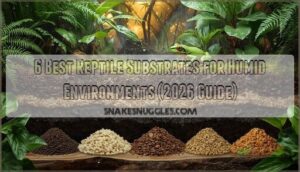
Your frog just developed a respiratory infection, and after an expensive vet visit, you discover the culprit wasn’t bad luck—it was your substrate choice all along. Tropical and semi-tropical reptiles need substrates that maintain 60-80% humidity consistently, but picking the wrong one can create bacterial breeding grounds or dangerous dry pockets that stress your pet.
The good news? Modern reptile substrates for humid environments have come a long way from the days of newspaper and towels. From coconut fiber that holds moisture like a champ to bioactive soil mixes that create mini ecosystems, today’s options let you dial in the perfect humidity while keeping your scaly (or not-so-scaly) friend healthy and thriving.
Table Of Contents
Key Takeaways
- Choose substrates like coconut fiber, sphagnum moss, or bioactive soil mixes that maintain 60-80% humidity without creating bacterial breeding grounds or waterlogged conditions that stress your reptile.
- Replace humid substrates every 1-3 months and spot-clean daily to prevent mold growth, while monitoring moisture levels with hygrometers placed at both surface and deeper layers.
- Avoid cedar, pine, calcium sand, and walnut shells entirely—these materials release toxic phenols, cause impaction, or create respiratory problems that worsen in humid environments.
- Mix substrates strategically (like 60:40 coconut fiber to sphagnum moss) and layer them to create customized humidity zones that support both your reptile’s natural behaviors and any bioactive cleanup crew.
Best Substrate Types for Humid Environments
Choosing the right substrate for humid environments isn’t just about keeping things damp—it’s about creating a balanced ecosystem your reptile will actually thrive in.
Each substrate type brings its own strengths to the table, from moisture retention to digging support, and understanding these differences helps you make the best call for your setup.
Let’s break down the five main substrate types that work wonders in high-humidity habitats.
Coconut Fiber – Benefits and Drawbacks
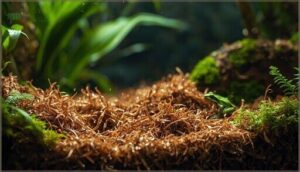
Coconut fiber stands out among reptile substrates for its outstanding moisture retention—perfect for tropical environment species! This renewable material assists natural reptile behavior through its loose texture, encouraging digging while maintaining stable humidity levels. Choosing between coconut fiber and other options like sand or bioactive mixes depends on your reptile’s natural habitat—explore the key differences between reptile substrate types to find the right match.
Key considerations for coconut fiber:
- Fiber density affects substrate aeration and burrowing resistance
- Moisture management requires monitoring to prevent mold growth
- Humidity control stays consistent without frequent re-watering
Trust me, proper maintenance keeps your setup thriving! Regular auditing processes, like those using methodological rigor, can help verify the accuracy of information regarding reptile care.
Sphagnum Moss – Moisture Retention and Aesthetics

Sphagnum moss brings serious moisture retention power to tropical environment setups! This substrate mixing champion holds water like nobody’s business while creating that lush, natural look your reptiles crave.
The humidity control stays rock-solid, and the soft texture encourages natural reptile behavior—think hiding spots and comfy rest areas. Plus, it reduces dust and evaporation when layered on top of other reptile substrates! If you’re exploring other options or want to compare materials, check out this guide on choosing the right substrate for snake health to see how different choices stack up.
For further learning, users can explore language resources.
Peat Moss – Eco-Friendliness and PH Balance
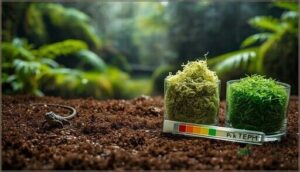
Peat moss works wonders for moisture retention, but here’s the catch—it’s not the greenest choice! Harvesting disrupts wetland ecosystems, so look for sustainably sourced options or eco-friendly alternatives like coconut coir.
This substrate naturally sits acidic (pH 3.0-5.5), which affects your enclosure chemistry:
- Test pH levels before adding sensitive species
- Mix with neutralizing substrates if needed
- Monitor humidity closely to prevent mold growth
Choose wisely for your reptile’s health and our planet! An affordable snake habitat setup doesn’t mean sacrificing quality—you can create a safe, comfortable space using budget-friendly and eco-conscious materials.
Bark Chips – Humidity and Visual Appeal
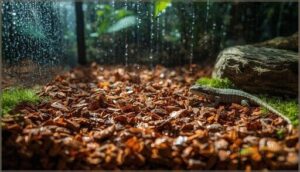
Looking for that forest-floor vibe? Bark chips deliver stunning visual aesthetics while holding surface moisture longer than loose substrates! They’re perfect for temperate setups, but here’s the deal—substrate depth matters.
Coarser chips promote better drainage and humidity control, while fine bark can compact. Just watch for mold under high humidity and rinse new bark chips before use to reduce dust! For more tips on building a thriving setup, check out these reptile habitat design ideas that balance aesthetics with ecosystem health.
Soil Blends – Customization for Humidity Control

Want the supreme control over humidity? Custom soil blends let you dial in moisture balance perfectly! Start with a coconut fiber or peat-free base, then layer in moss for surface retention or adjust texture for drainage. (https://snakesnuggles.com/how-to-maintain-proper-humidity-for-snakes/) becomes much easier when your substrate mix includes the right balance of moisture-wicking and water-holding materials.
Bioactive substrates work great here—you’re creating microclimates your reptile will love. Test depth moisture with a probe and tweak your blend until humidity calibration matches your species’ needs!
Top 6 Reptile Substrates for Humidity
Now that you know what types of substrates work best for humid environments, let’s look at some specific products that really deliver.
I’ve narrowed it down to six solid options that maintain moisture without turning into a swampy mess. Each one brings something unique to the table, so you can pick what works best for your scaly friend’s setup.
1. Reptile Soil Substrate Bedding
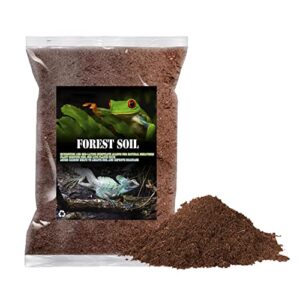
Ever watched your tropical reptile struggle with shed issues? That’s often a humidity problem, and the right reptile substrate makes all the difference! BNOSDM’s reptile soil substrate tops my list for moisture levels that actually last.
This coconut fiber-based option gives you excellent humidity control while supporting natural reptile behavior like digging and burrowing. The soil composition includes scientifically processed materials that break down waste efficiently.
I’ve found that substrate depth around 2-3 inches works perfectly for most species, and it’s compatible with bioactive substrates too!
| Best For | Reptile owners with tropical species like geckos, chameleons, or snakes who need reliable humidity control and a natural substrate that encourages burrowing behavior. |
|---|---|
| Material Type | Coconut fiber substrate |
| Humidity Control | Maintains humidity |
| Natural Behavior | Stimulates digging behavior |
| Suitable Animals | Reptiles and amphibians |
| Volume/Size | 5 liters |
| Plant Compatible | Can be reused as fertilizer |
| Additional Features |
|
- Excellent moisture retention keeps humidity stable for days, reducing the need for constant misting and helping prevent shedding problems
- Scientifically processed to break down waste naturally, making cleanup easier and creating a healthier environment for your reptiles
- Can be reused as plant fertilizer after use, making it an eco-friendly choice that doesn’t just go to waste
- You’ll need to replace it every 3-6 months, which adds up cost-wise especially for larger enclosures
- Some bags contain small debris or inconsistent particle sizes that require sorting before use
- May require more substrate than you’d expect to achieve proper depth, potentially doubling your initial purchase
2. Exo Terra Plantation Soil
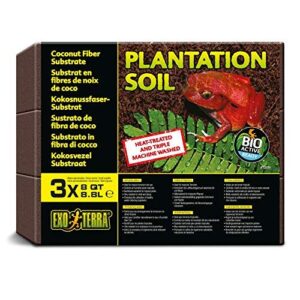
If your tropical setup needs a substrate that holds moisture, Exo Terra Plantation Soil is a solid pick! This 100% natural compressed coconut husk substrate expands to 8 quarts and creates the humidity control your reptiles crave.
I’ve found that substrate depth of several inches works wonders for terrarium design, especially in bioactive systems where plants need nutrients.
The moisture retention capabilities reduce your misting schedule while supporting natural digging behaviors—though watch for mold if ventilation isn’t adequate!
| Best For | Tropical reptile keepers who need a natural substrate that holds moisture well and supports bioactive setups with live plants. |
|---|---|
| Material Type | Compressed coconut husk fiber |
| Humidity Control | Increases humidity |
| Natural Behavior | Stimulates burrowing behavior |
| Suitable Animals | Reptiles and amphibians |
| Volume/Size | 8 quarts per pack |
| Plant Compatible | Nutritional planting soil |
| Additional Features |
|
- Expands to 8 quarts from a compact brick, making it economical and easy to store
- Excellent humidity retention reduces how often you need to mist your terrarium
- Safe for live plants and encourages natural digging and burrowing behaviors
- Can develop mold if your enclosure doesn’t have good airflow
- Takes some effort to break apart and hydrate—expansion can be slow
- More fibrous than soil-like, which may track into water bowls and create mess
3. Zoo Med Creature Soil
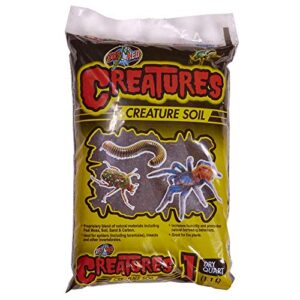
Zoo Med Creatures Creature Soil brings together peat moss, soil, sand, and carbon in one proprietary blend that actually works for humidity management! This loose, organic reptile substrate holds moisture levels steady while encouraging natural burrowing support—perfect for tarantulas, millipedes, and salamanders.
The substrate depth you’ll need depends on your reptile habitat size (one quart goes quickly), but it’s excellent for bioactive systems and bioactive substrates where plants thrive. Just watch for mold in super-humid setups, and you’re golden for humidity control!
| Best For | Keepers of tropical reptiles, tarantulas, millipedes, and other humidity-loving species who want a natural substrate that supports burrowing and bioactive setups. |
|---|---|
| Material Type | Peat moss blend |
| Humidity Control | Increases humidity |
| Natural Behavior | Promotes burrowing behaviors |
| Suitable Animals | Spiders and invertebrates |
| Volume/Size | 1 quart |
| Plant Compatible | Great for live plants |
| Additional Features |
|
- Holds moisture well and maintains consistent humidity levels with regular misting
- Encourages natural digging and burrowing behaviors with its loose, organic texture
- Works great in bioactive terrariums and supports live plant growth
- One quart size is pretty small and won’t cover larger enclosures without buying multiple bags
- Can develop mold in high-humidity setups if airflow isn’t adequate
- May contain small branches or wood pieces that need to be picked out before use
4. Hamiledyi Reptile Vermiculite Bedding
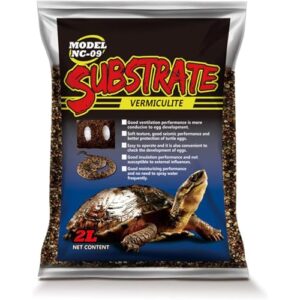
Hamiledyi Reptile Vermiculite Bedding offers outstanding humidity control through natural mineral-based moisture retention—trust me, your tropical species will thank you! At just $12.99 for 2L, this non-toxic substrate maintains consistent moisture levels without waterlogging, perfect for egg incubation and burrowing reptiles like snakes and frogs.
The vermiculite substrate aids reptile health by preventing dehydration while maintaining breathability. Just monitor moisture weekly to prevent mold in bioactive substrates. Pro tip: some bags arrive partially full, so check before setup!
| Best For | Reptile owners needing moisture-retentive substrate for tropical species, egg incubation, or humidity-loving amphibians like frogs and salamanders. |
|---|---|
| Material Type | Natural vermiculite |
| Humidity Control | Good moisturizing properties |
| Natural Behavior | Natural habitat |
| Suitable Animals | Reptiles and amphibians |
| Volume/Size | 2.1 quarts |
| Plant Compatible | Not specified |
| Additional Features |
|
- Natural vermiculite mineral offers excellent water retention while staying breathable, preventing dehydration during hibernation or incubation
- Non-toxic and odorless material creates a safe, comfortable habitat for delicate species like hatchlings and burrowing reptiles
- Versatile substrate works well for terrariums, breeding setups, and bioactive enclosures at an affordable $12.99 price point
- Some customers report bags arriving partially filled, reducing the actual volume you get for the price
- Requires weekly moisture checks in humid setups to prevent mold growth and maintain proper conditions
- Small pebble-like texture may pose ingestion risks for certain species if particle size isn’t appropriate
5. Bioactive Reptile Terrarium Soil Mix
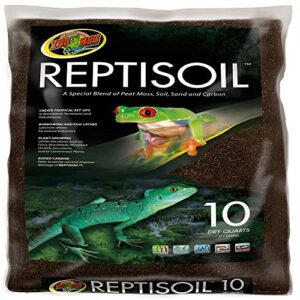
Bioactive terrariums create self-sustaining ecosystems where microbe balance and soil composition work together like a well-oiled machine! This reptile substrate usually blends coconut fiber, sphagnum moss, and clay minerals to support beneficial microfauna while maintaining humidity regulation naturally. The ecosystem stability comes from live plants and detritivores cycling nutrients—pretty cool, right?
Bioactive terrariums blend coconut fiber, moss, and minerals to create self-sustaining ecosystems where microbes and plants cycle nutrients naturally
These terrarium substrates excel at moisture retention without waterlogging, though you’ll need to monitor for mold growth in high-humidity setups. Bioactive maintenance involves top-dressing rather than complete replacement, preserving your established bioactive ecosystems. Source from reputable suppliers to avoid pesticide contamination!
| Best For | Reptile keepers looking to create naturalistic, self-sustaining enclosures for tropical species like amphibians, box turtles, and moisture-loving invertebrates. |
|---|---|
| Material Type | Coconut husk |
| Humidity Control | Suitable for terrariums |
| Natural Behavior | Ideal for burrowing animals |
| Suitable Animals | Burrowing animals |
| Volume/Size | 3.6 quarts |
| Plant Compatible | Suitable for live settings |
| Additional Features |
|
- Maintains humidity naturally while supporting live plants and beneficial bacteria that reduce odors and cycle nutrients
- Allows natural behaviors like burrowing and egg laying with a structure that won’t waterlog or compact easily
- Creates a low-maintenance ecosystem where microfauna break down waste, reducing the need for frequent substrate changes
- Can be dusty out of the package and may require rinsing or settling before use
- More expensive than basic substrates and requires careful sourcing to avoid pesticides or contaminants
- Needs regular monitoring for mold growth and pH balance to keep the bioactive system stable
Josh’s Frogs ABG Mix Tropical Plant Soil
When you’re ready to level up your bioactive terrariums, Josh’s Frogs ABG Mix stands out! This tropical plant care powerhouse blends coconut husk fiber, sphagnum moss, and organic components for outstanding humidity management. The reptile soil composition aids microfauna support while maintaining moisture retention—perfect for tropical environments!
- Designed specifically for bioactive setups with live plants
- Higher moisture-holding capacity than standard reptile substrates
- Aids beneficial microfauna populations naturally
- Reduces complete replacement frequency in humid enclosures
Key Features of Humidity-Retentive Substrates
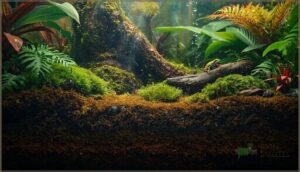
Not all humid substrates are created equal—some hold moisture like a dream while others turn into a soggy mess. The best options share a few key traits that make humidity management easier and keep your reptile comfortable. Let’s break down what separates the winners from the wannabes!
Moisture Retention Capabilities
You’ll want a substrate that holds water without turning into a swamp! Coconut fiber and sphagnum moss are champions here—they maintain moisture for days while resisting that dreaded waterlogged feeling. Substrate depth matters too; deeper layers (2-3 inches) slow evaporation rates markedly. Here’s what I’ve found works:
| Substrate Type | Water Holding Capacity |
|---|---|
| Sphagnum Moss | Excellent—retains surface moisture longest |
| Coconut Fiber | High—evaporates slower than loose materials |
| Vermiculite Blends | Very Good—maintains stable humidity levels |
| Peat-Based Mixes | Good—stores moisture but may compact |
Trust me, choosing substrates with strong moisture retention means less daily misting and more consistent humidity for your reptile!
Support for Digging and Burrowing Behaviors
Deep substrate layers (5-6 inches) let your reptile dig tunnels that actually stay put! Coconut fiber excels here—it holds burrows together without collapsing, especially when slightly moist.
I’ve found that burrowing behavior skyrockets when humidity regulation meets digging enrichment. Loose, grainy textures prevent impaction while encouraging natural excavation.
For burrowing safety, avoid sharp particles that can irritate during tunnel complexity construction.
Ease of Cleaning and Maintenance
Keeping your humid enclosure fresh doesn’t have to feel like a chore! Substrate sifting and spot-cleaning 2–3 times weekly prevent mold without total overhauls. Trust me, dust management matters—moisture control keeps particles grounded during cleaning.
- Low-dust substrates reduce respiratory irritation during maintenance
- Coarse materials simplify vacuum-compatible cleaning tools usage
- Moisture adjustments prevent waterlogged zones that foster fungal growth
- Replacement schedules (every 1–3 months) maintain ideal substrate safety
- Removable top layers simplify enclosure maintenance in humid habitats
Choose substrates that tolerate routine washing without compaction—your sanity depends on it!
Compatibility With Bioactive Setups
Beyond moisture alone, bioactive terrarium maintenance depends on substrates that nurture beneficial bacteria and microfauna support. You’ll need natural substrates with pH stability—acidic spikes kill isopods fast! Inert-nutrient mixes promote bioactive cycling without toxic buildup.
Choose substrates designed for bioactive ecosystems—your reptile substrate selection makes or breaks the system!
| Feature | Why It Matters |
|---|---|
| Microfauna Support | Isopods and springtails thrive in safe, chemical-free substrates |
| Nutrient Balance | Feeds plants without spiking harmful ammonium levels |
| pH Stability | Prevents acidity swings that crash bioactive ecosystems |
| Proper Depth | Allows burrowing without compacting surface layers |
| Substrate Safety | Non-toxic materials protect your cleanup crew long-term |
Substrate Safety and Health Considerations
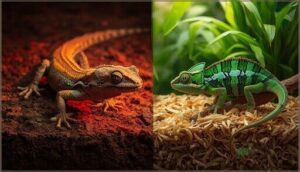
Your substrate choice can make or break your reptile’s health—seriously, some materials out there are downright dangerous. I’ve seen too many keepers unknowingly use substrates that cause impaction, respiratory issues, or chemical burns.
Let’s talk about what to avoid and how to minimize the risks that could harm your scaly friend.
Avoiding Harmful and Unsafe Substrates
Not all substrates play nice with humidity! Cedar and pine shavings release toxic phenols that damage your reptile’s lungs—especially dangerous in humid setups where aromatics concentrate.
Skip calcium sand and walnut shells, too; they cause impaction and nasty cuts. Avoid anything with dyes, fragrances, or sketchy additives.
Stick with natural, tested options like coconut fiber, and your scaly friend will thank you!
Minimizing Dust, Chemicals, and Impaction Risks
Even natural substrates carry hidden risks you shouldn’t ignore! Dust, sneaky chemicals, and impaction can sneak up fast in humid setups.
Here’s how to stay ahead:
- Dust Reduction – Rinse coconut fiber and sphagnum moss before use to cut airborne particles.
- Chemical Testing – Buy from trusted brands with clear safety data.
- Impaction Prevention – Match particle size to your reptile’s feeding habits and monitor substrate moisture religiously!
Maintenance Tips for Humid Reptile Habitats
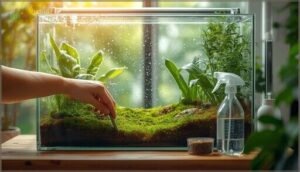
Keeping a humid reptile habitat healthy isn’t just about choosing the right substrate—you’ve got to stay on top of maintenance too! Trust me, a little regular care goes a long way in preventing problems like mold, funky odors, and humidity swings that stress out your scaly friend.
Here are the key maintenance strategies that’ll keep your reptile’s environment fresh, safe, and perfectly balanced.
Routine Spot Cleaning and Substrate Replacement
You’ll want to spot clean daily—trust me, removing waste and uneaten food keeps humidity from turning into a mold factory! Wipe corners with reptile-safe disinfectant weekly for thorough enclosure maintenance. Replace soggy substrate immediately, and schedule full changes every 4–8 weeks depending on waste load.
During shedding periods, increase substrate replacement frequency to support your reptile’s health checks and comfort!
Preventing Mold and Odor Build-Up
High humidity doesn’t have to mean funky smells or fuzzy mold colonies! Here’s how to keep your coconut fiber and substrate sanitization game strong:
- Remove waste daily – Uneaten prey and feces fuel microbial balance chaos and odor control nightmares.
- Allow drying periods – Let soil quality shine between misting sessions to prevent waterlogged mold prevention disasters.
- Boost airflow – Fans or vents combat humidity management challenges and moisture retention gone wrong.
- Use antimicrobial substrates – Choose materials that naturally resist mold while supporting reptile substrate health.
- Replace proactively – Swap out sections before odors announce themselves!
Monitoring Humidity and Adjusting Substrate Moisture
Think of humidity sensors as your reptile’s personal weather station! Place digital hygrometers at both the substrate surface and deeper layers to catch those sneaky moisture gradients. Calibrate them regularly—trust me, inaccurate readings lead to disaster.
When coconut fiber feels too dry, add distilled water gradually until you hit that sweet spot of moisture retention. Daily checks keep humidity regulation on point!
Mixing Substrates for Optimal Results
Want to boost your humidity game? Try blending coconut fiber with sphagnum moss at a 60:40 ratio—you’ll boost moisture retention by up to 25%! Layering works wonders too: place a shallow sphagnum moss cap over deeper coconut fiber to slash evaporation.
Mixing ratios and humidity layers give you total customization options, especially in bioactive substrates where different zones support both your reptile and cleanup crew!
Frequently Asked Questions (FAQs)
How often should I completely replace humid substrate?
You’ll want to swap out moisture-loving reptile substrate every one to three months—more often if you spot mold or funky smells!
Humidity levels and spot cleaning habits directly impact replacement frequency.
Can I reuse substrate after cleaning and drying?
Reuse isn’t recommended, trust me! Fresh substrate materials are safer after cleaning your reptile enclosure.
Even with thorough sterilization, residual contaminants and impaction risks from dust remain—plus, you’ll disrupt the microbial balance critical for humidity and health.
What humidity levels do different reptile species need?
Tropical rainforest reptiles thrive at 70–90 percent humidity, while desert species need just 20–40 percent. Semi-aquatic friends require sustained levels above 60 percent.
Always verify targets against species-specific husbandry guides for ideal reptile health!
Do live plants help maintain humidity in terrariums?
Live plants actively boost humidity through plant transpiration and evapotranspiration rates. They create helpful terrarium microclimates with elevated moisture levels.
Just watch that humidity balance—you’ll want proper ventilation to prevent mold growth.
How do I prevent bacterial growth in moist substrates?
Keep substrate moisture balanced—never soaking wet—to prevent anaerobic pockets where bacteria thrive.
Regular spot-cleaning, proper airflow, and using reptile-safe disinfectants on surfaces help maintain hygiene practices without compromising your pet’s health!
Conclusion
Here’s the thing: your frog’s health and your peace of mind both hinge on the same decision—choosing the right substrate.
When you nail the humidity balance with quality reptile substrates for humid environments, you’re not just preventing infections; you’re creating a thriving ecosystem where your pet can exhibit natural behaviors.
Trust me, investing in proper substrate now beats emergency vet bills later. Your tropical buddy deserves a home that feels like home.
- https://academichelpexpress.blog/2024/08/please-use-the-bulleted-points-and-the-rubric-below-to-guide-your-work-your-pa/
- https://x.com/godofprompt/status/1990526288063324577
- https://www.sciencedirect.com/science/article/pii/S0749208123000268
- https://www.scribd.com/document/683678057/Academic-Research-Manual-V1-1-April-2016
- https://www.onelook.com/?loc=olthes1&w=subpoint