This site is supported by our readers. We may earn a commission, at no cost to you, if you purchase through links.
A water bowl that’s too deep can drown a small gecko overnight. It sounds alarmist, but reptile keepers learn this lesson the hard way more often than anyone wants to admit.
In compact enclosures, every accessory carries more weight—there’s less room to correct a poor choice, and your reptile interacts with the same objects repeatedly throughout the day. The water dish sits at the center of that equation, affecting hydration, hygiene, and even thermoregulation for species that soak.
Choosing the right reptile water bowls for small enclosures means weighing material safety, bowl dimensions, and cleaning demands before you ever place one inside a tank. The picks ahead cut through the noise.
Table Of Contents
Key Takeaways
- A water bowl that’s too deep can drown small reptiles overnight, so keep water depth at 1–2 cm and choose bowls with built-in exit ramps or steps.
- Material matters more than most keepers realize — low-quality plastic leaches BPA and phthalates, so stick with food-grade resin or glazed ceramic for safe, easy-to-clean options.
- In a small enclosure, your bowl’s footprint should cover only 10–20% of the floor space, leaving room for hides, a basking spot, and natural movement.
- Clean the bowl daily with hot water and disinfect weekly with diluted chlorhexidine — biofilm builds fast, and a dirty dish is one of the easiest health risks to prevent.
Key Features of Water Bowls for Small Enclosures
Not every water bowl works well in a small enclosure — size, material, and design all matter more than you’d think.
Getting the fit right takes a bit of research, and choosing the right water bowl size for corn snakes can save you a lot of trial and error.
Before you buy, it helps to know what separates a good bowl from one that creates more problems than it solves. Here are the key features worth looking for.
Importance of Bowl Size and Depth
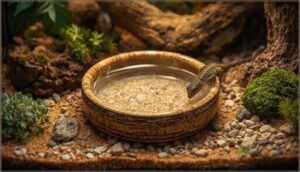
Size and depth aren’t minor details — they directly shape your reptile’s hydration needs and safety. For small enclosures, a bowl that occupies roughly 10 to 20 percent of the floor space keeps enclosure compatibility balanced.
Shallow water, around 1 to 2 centimeters, fosters soaking behavior patterns without drowning risk. Proper water volume control means your animal drinks comfortably and stays safe.
Choosing water bowls with the correct dimensions is one example of understanding species-specific enclosure requirements.
Material Safety and Non-porous Surfaces
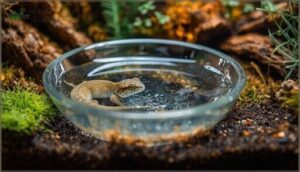
Material choice matters just as much as dimensions. Poor-quality plastic can leach BPA and phthalates into standing water — real toxic material risks for your animal’s health.
Poor-quality plastic can leach BPA and phthalates into your reptile’s water, making material choice a matter of safety
That’s why food grade resin and BPA free options are worth prioritizing. Non porous coatings resist bacteria and biofilm, making bowls easy to clean and reducing chemical leaching over time. Durable construction keeps surfaces crack-free and safe.
For ideal pet safety, consider choosing bowls made from durable non-porous resin to resist bacteria and simplify cleaning.
Stability and Spill Prevention
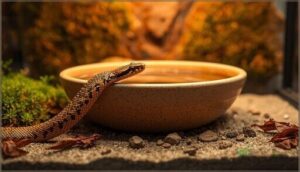
Even the safest materials won’t help if the bowl tips and soaks your substrate. Good reptile water bowls rely on low center gravity and stable base shapes to stay put.
Wider, heavier resin bowls use smart bowl weight distribution and spill resistant design to resist tipping prevention — even when curious snakes nose underneath. Durable construction and nonporous surfaces keep stability reliable long-term.
Natural Aesthetics for Bioactive Habitats
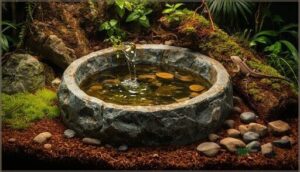
Beyond staying put, a water bowl should look like it belongs. Rock Bowl Designs with Natural Color Schemes and Texture Details blend into Bioactive Terrariums rather than standing out as plastic add-ons.
Naturalistic Terrarium Design depends on Visual Enrichment and Habitat Integration — earth-tone Reptile Water Bowls with molded stone surfaces turn functional Reptile Hydration Systems into harmonious Terrarium Accessories your animals actually feel comfortable approaching.
Smooth Edges for Reptile Safety
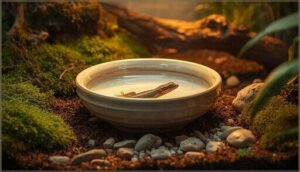
Sharp edges on reptile water bowls are a real injury risk — and one that’s easy to overlook. Edge Safety Features and Bowl Material Selection both matter here.
If a bowl is already cracked or rough around the rim, no amount of scrubbing will fix it — check out this guide on keeping your snake’s water bowl safe and clean before a small chip turns into a real problem.
Rounded, smooth-rimmed designs protect against mouth cuts, skin abrasions, and eye injuries when your animal investigates the bowl. Ceramic, resin, or polished surfaces give you Smooth Surface Benefits that support safe water access and keep reptile hydration systems safer long-term.
How to Choose The Right Water Bowl
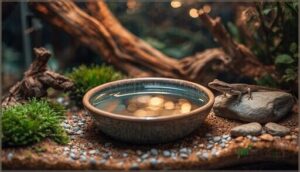
Picking the right water bowl isn’t complicated, but a few key factors can make a real difference for your reptile’s health and comfort.
Size, material, ease of cleaning, and price all play a role in finding a good fit for your setup.
Here’s what to think about before you buy.
Matching Bowl Size to Your Reptile Species
Not every reptile drinks the same way, and choosing the wrong bowl depth is a real animal safety risk. A hatchling snake needs a shallow reptile water bowl it can exit easily, while ball pythons need room to soak fully.
Matching reptile species needs through species research protects reptile hydration and water quality, making small animal care far more effective.
Ensuring Compatibility With Small Enclosures
In small enclosures, your bowl’s footprint matters as much as its function. Space Optimization starts with keeping the dish under 4×4 inches so Enclosure Layout still has room for hides and a basking spot. Smart Tank Dynamics depend on reptile water bowls that don’t crowd movement or block airflow.
- Keep Water Depth at 1 inch or less for hatchlings
- Place bowls in a front corner to preserve open floor space
- Choose terrarium water solutions with wide, stable bases to prevent tipping
- Match reptile hydration solutions to your reptile’s natural behavior patterns
Evaluating Ease of Cleaning and Maintenance
A bowl that’s hard to clean is a bowl that stays dirty. When doing a reptile water bowl comparison, bowl materials make all the difference — glazed ceramic and quality resin don’t absorb bacteria, so sanitization techniques like a quick soak and rinse actually work.
Stick to maintenance schedules that pair daily water changes with weekly scrubbing, and hygiene standards stay effortlessly consistent.
Durability and Long-term Value
A cheap bowl that warps or peels within weeks isn’t saving you money — it’s costing you more.
Material Testing consistently shows that solid resin and glazed ceramic reptile water bowls offer real Bowl Longevity and Wear Resistance, staying structurally sound through years of daily use.
When you factor in Surface Durability and Cost Analysis, investing once in long-lasting pet enclosure supplies and reptile enclosure essentials simply makes sense.
Balancing Price and Quality
You don’t need to spend a fortune to get quality, but going too cheap usually backfires. Basic plastic reptile water bowls start around $3–$8, while branded resin options — the kind with non-porous, food-safe surfaces — run $7–$15.
That small price gap delivers real Cost Efficiency: better reptile hydration and hygiene, easier water dish maintenance for reptiles, and bowls that actually last.
Top Reptile Water Bowls for Small Enclosures
Finding the right water bowl doesn’t have to be a guessing game. These four options cover different needs, budgets, and enclosure setups, so there’s likely something here that fits your situation.
Here’s a closer look at each one.
1. Exo Terra Reptile Water Dish
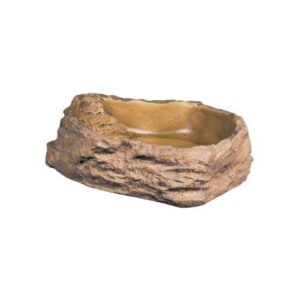
The Exo Terra Reptile Water Dish is a dependable choice for small enclosures, and it earns that reputation through thoughtful design. Made from food-grade resin, it won’t leach harmful substances into your reptile’s water. The non-porous interior resists bacteria buildup and cleans up quickly with a brush and mild soap.
Built-in safety steps help prevent drowning for smaller animals and feeder insects alike. Its realistic rock finish blends naturally into bioactive setups without looking out of place.
| Best For | Reptile, amphibian, and insect owners who want a safe, easy-to-clean water dish that looks natural in their setup. |
|---|---|
| Material | Plastic |
| Drowning Prevention | Safety steps included |
| Easy Cleaning | Non-porous smooth surface |
| Natural Design | Terrarium-integrated look |
| Multi-Species Use | Reptiles, amphibians, insects |
| Multi-Function | Water dish or soaking |
| Additional Features |
|
- Food-grade resin means no harmful stuff leaching into the water, and the smooth surface wipes clean in seconds.
- Safety steps are a nice touch — smaller animals and feeder insects won’t get stuck and drown.
- The rock finish actually looks the part in a bioactive or naturalistic terrarium.
- It’s on the bigger side, so it might crowd a smaller enclosure or feel like too much for tiny animals.
- In desert tanks, it can bump up humidity more than you’d want.
- At 1 kg, it’s a bit hefty — not a big deal, but worth knowing if you’re doing frequent water changes.
2. Zoo Med Reptile Rock Water Dish
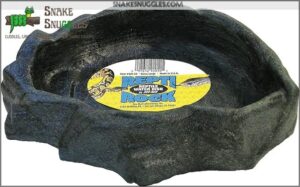
Another solid option worth considering is the Zoo Med Repti Rock Water Dish. It’s made from 100% recycled plastic with a smooth, non-porous surface that won’t trap bacteria between cleanings. The molded interior walls slope gradually, so smaller reptiles can climb in and out without trouble.
It comes in multiple sizes — from extra small up to extra large — which makes it easy to match the dish to your animal’s actual needs. Durable enough to handle frequent disinfection without degrading over time.
| Best For | Reptile and amphibian owners who want a natural-looking, easy-to-clean water dish that works for a range of species and tank sizes. |
|---|---|
| Material | Stone |
| Drowning Prevention | Safety steps included |
| Easy Cleaning | Non-porous smooth surface |
| Natural Design | Terrarium-integrated look |
| Multi-Species Use | Reptiles, amphibians |
| Multi-Function | Water dish or soaking |
| Additional Features |
|
- Made from 100% recycled plastic with a non-porous surface that resists bacteria and stains — easy to disinfect and keep clean.
- Molded stairs help smaller reptiles and amphibians climb in and out safely, reducing drowning risk.
- Comes in multiple sizes and has a realistic rock look that blends naturally into any terrarium setup.
- Some buyers find the dish smaller than expected, so double-check the dimensions before ordering.
- Color ships in assorted options, so you won’t always get to pick the exact shade.
- Can develop a slimy residue if you skip regular cleanings — not a dealbreaker, but worth keeping in mind.
3. Zoo Med Reptile Water Dish
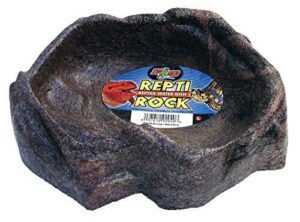
If you want something built for smaller tanks, the Zoo Med Reptile Water Dish delivers where it counts. The extra small model measures roughly 5.5 by 5.5 inches with a 1-inch height — easy to tuck into a compact enclosure without eating up floor space.
The wide, stable base keeps it from tipping when your reptile leans over the rim. It’s also made from 100% recycled plastic, so cleaning is straightforward and the dish holds up through repeated disinfection without warping.
| Best For | Reptile owners who want a natural-looking, easy-to-clean water dish that’s safe for smaller animals like baby bearded dragons or tree frogs. |
|---|---|
| Material | Plastic |
| Drowning Prevention | Molded stairs included |
| Easy Cleaning | Non-porous smooth surface |
| Natural Design | Realistic rock design |
| Multi-Species Use | Reptiles, amphibians, birds |
| Multi-Function | Watering solution |
| Additional Features |
|
- The realistic rock design blends right into a terrarium without looking out of place
- Made from 100% recycled plastic, so it’s easy to clean and holds up well over time
- Molded stairs help prevent smaller reptiles and amphibians from drowning
- It’s pretty lightweight, so an active reptile can tip it over without much effort
- The sticker label may leave behind sticky residue when you peel it off
- Needs daily cleaning to keep bacteria from building up
4. Flushbay Reptile Bathing Pool Feeding Dish
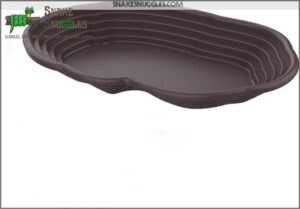
For reptiles that need more room to stretch out and soak, the Flushbay Reptile Bathing Pool Feeding Dish steps up. At 15.35″ x 10.63″, it’s the largest option here, with a built-in textured ramp so your animal can walk in and out without struggling over a steep edge.
The single-molded, non-porous ABS plastic keeps bacteria from settling into seams. It doubles as a feeding dish, though that means more frequent rinsing to stay on top of hygiene.
| Best For | Reptile owners with larger species like tortoises, turtles, or big lizards that need real room to soak and move around. |
|---|---|
| Material | Plastic |
| Drowning Prevention | Molded stairs included |
| Easy Cleaning | Non-porous smooth surface |
| Natural Design | Realistic rock design |
| Multi-Species Use | Reptiles, amphibians |
| Multi-Function | Water and soak bowl |
| Additional Features |
|
- Huge 15.35″ x 10.63″ footprint gives reptiles plenty of space to fully stretch out and bathe
- Built-in textured ramp makes it easy for reptiles to get in and out on their own
- Non-porous ABS plastic resists bacteria buildup and holds up over time
- The size can eat up a lot of space in smaller enclosures
- Shallow depth won’t work well for reptiles that need to fully submerge
- Crevices in the design can be tricky to scrub clean, especially with regular use
Maintenance Tips for Reptile Water Dishes
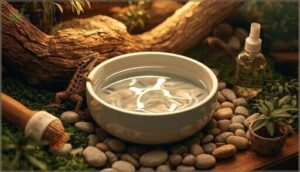
Keeping your reptile’s water dish clean isn’t complicated, but it does require consistency. A few simple habits can prevent bacteria buildup, protect your animal’s health, and extend the life of the bowl.
Here’s what you need to know to stay on top of it.
Daily Water Replacement and Cleaning Routines
Fresh water isn’t optional — it’s the foundation of reptile hydration. Replace water in your reptile water bowl every 24 hours, since daily water replacement removes waste, shed skin, and substrate before they compromise water quality.
During each daily rinsing, scrub the bowl lightly with hot water. Consistent freshwater management keeps your water dishes clean and your reptile drinking safely.
Preventing Bacteria and Mold Buildup
Consistency is your best defense against bacterial growth prevention failures. Even with daily rinsing, biofilm — that slippery slime lining your reptile water bowl — builds fast without deeper hygiene practices. Nonporous material resists it, but won’t stop it alone.
Keep water quality high with these five disinfection methods:
- Scrub weekly with a dedicated brush to break up biofilm control buildup
- Use diluted chlorhexidine (1:32) for hygienic surfaces
- Let disinfectant sit several minutes before rinsing
- Rinse thoroughly until no odor remains
- Rotate two water dishes to allow complete drying between uses
Monitoring for Wear and Replacing When Needed
Vigilance is what separates a safe enclosure from a hidden hazard. Run your fingers along the interior weekly for crack detection, and tap ceramic bowls — a dull thud means trouble.
Watch for discoloration signs like milky plastic or flaking glaze, and perform leakage tests overnight. Sharp edges demand immediate discard.
For durability and enclosure hygiene, swap your reptile water dish every six months.
Frequently Asked Questions (FAQs)
Can reptiles drown in small water bowls?
Yes, they can. Even a shallow reptile water bowl becomes a drowning risk if the water depth exceeds your reptile’s shoulder height, especially for neonates and species-specific risks like terrestrial geckos.
How often should I disinfect water bowls?
Disinfect your reptile water bowl once a week for solid bacteria control.
If your pet soaks often or defecates in the dish, don’t wait — clean it immediately to protect reptile health.
Do reptiles drink water or absorb it?
Most reptiles drink with their mouths, not their skin. The skin absorption myth is widespread, but cloacal hydration and passive water absorption are minimal.
Oral drinking remains the primary reptile hydration strategy.
Can water bowls double as feeding dishes?
Many water bowls can double as feeding dishes, but cross contamination is a real risk.
Non-porous bowl materials make cleanup easier, so wash thoroughly after each feeding before refilling with fresh water.
What water temperature is safe for reptiles?
Getting water temperature wrong can wreck your reptile’s health overnight.
For safe soaking and reptile hydration, keep water between 70–85°F, matching your enclosure’s thermal gradients to support proper temperature control and reptile care.
Conclusion
A single wrong bowl can undo months of careful husbandry in one bad night. The right reptile water bowls for small enclosures do more than hold water—they support hydration, reduce bacterial risk, and fit the physical limits of a compact habitat.
Material, depth, and stability aren’t optional considerations; they’re the foundation of a functional setup. Choose deliberately, clean consistently, and your reptile’s enclosure will work as hard for them as you do.
- https://www.nomoy-pet.com/news/the-ultimate-guide-to-reptile-bowls-choosing-the-best-for-your-scaly-friends/
- https://www.visionproducts.us/products/categories/bowls-hides/
- https://www.fussycat.co.uk/pages/cat-water-fountain-ceramic-wireless-ceramic-vs-plastic
- https://www.blvd.vet/blog/how-often-you-should-clean-your-pets-food-and-water-bowl
- https://currumbinvetservices.com.au/the-importance-of-proper-reptile-care-maintaining-an-appropriate-environment/