This site is supported by our readers. We may earn a commission, at no cost to you, if you purchase through links.
Most people can’t identify a venomous snake bite until symptoms are already escalating. That window between the bite and the first serious warning sign can be minutes—and those minutes matter.
Venom from pit vipers and coral snakes works differently, but both demand the same thing from you: fast, accurate recognition. Knowing the difference between a harmless scratch and a neurotoxic puncture wound isn’t just useful knowledge—it’s the kind that saves lives.
These snake bite warning signs, ranked by severity, give you a clear action plan when panic wants to take the wheel.
Table Of Contents
- Key Takeaways
- Key Early Signs of a Snake Bite
- Moderate Snake Bite Warning Symptoms
- Severe Snake Bite Danger Signals
- Identifying Venomous Snake Bite Characteristics
- What to Do Immediately After a Snake Bite
- When to Seek Urgent Medical Attention
- Frequently Asked Questions (FAQs)
- What are the first signs of a snake bite?
- What are the 7 principles of snake bite management?
- Where on the body are snake bites most common?
- What are the symptoms of a silent killer snake bite?
- How is antivenom administered in a hospital setting?
- Who faces the highest risk of serious snake bites?
- How can you prevent snake bites outdoors?
- How many people die from snake bites annually?
- Conclusion
Key Takeaways
- Two deep puncture marks, burning pain, and swelling within 30 minutes are your clearest early signs that venom is in your system.
- Symptoms like tingling that spreads, muscle weakness, or blurred vision mean the venom is hitting your nervous system — don’t wait to see if it gets worse.
- Breathing trouble, a weak or racing pulse, and signs of shock are emergencies; call 911 immediately and don’t drive yourself.
- Antivenom works best within six hours of a bite, so your one job after getting bitten is to get to an ER fast — everything else is secondary.
Key Early Signs of a Snake Bite
A snake bite can happen fast, and the first few minutes matter more than most people realize.
Knowing exactly what to do in those first moments can make a real difference, and this guide on copperhead snake bites in dogs breaks it down clearly.
Your body usually sends clear warning signals right away — if you know what to look for. Here are the key early signs to watch for.
Visible Puncture Marks or Fang Wounds
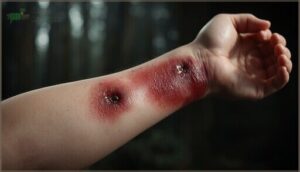
The first clue a venomous snake has bitten you is often what you see, not just what you feel. Fang mark patterns tell a story. Venomous snakes usually leave one or two deep puncture wounds — your venom entry points — spaced roughly half an inch to two inches apart.
- Puncture mark size matters: larger, distinct holes suggest a venomous bite
- A single fang mark can still mean venom was injected
- Nonvenomous bites leave shallow, arc-shaped scratches — not isolated puncture wounds
For more on how to spot and react to these injuries, review the detailed signs of snake bites in pets.
Immediate Pain, Redness, or Swelling
Beyond the fang marks, your body reacts fast. Pain hits within seconds — burning, throbbing, not a simple sting.
Redness symptoms and swelling patterns appear within 15 to 30 minutes at the bite wound, then climb the limb. These venom effects signal real envenomation.
Stabilizing pain management starts with keeping still and staying calm while help is on the way. Learn more about the neurological risks and antivenom approaches explained in this detailed guide to coral snake venom effects.
Bleeding or Bruising at The Bite Site
Bleeding and bruising symptoms around fang marks aren’t just cosmetic — they signal venom effects on blood clotting. Viper venom can break down clotting proteins, causing slow, persistent oozing from puncture wounds that won’t stop even with pressure.
Watch for spreading purple discoloration up the limb. That’s tissue damage beginning. Both symptoms demand emergency response and immediate wound care — don’t wait.
Moderate Snake Bite Warning Symptoms
Once the initial shock of a bite settles, a second wave of symptoms can start creeping in — and these ones are harder to ignore.
Your body is telling you something serious is happening, and knowing what to watch for can make a real difference.
Here are the moderate warning signs that signal you need help now.
Nausea and Vomiting
Nausea and vomiting are classic symptoms that can appear within minutes after a snake bite. Don’t underestimate them — venom’s role includes disrupting your gut and nervous system directly.
These symptoms often accompany spreading swelling and dizziness. Repeated vomiting raises your dehydration risk fast. If you can’t keep fluids down after a bite, that’s an emergency — get treatment immediately.
Tingling or Numbness Around The Bite
That pins-and-needles feeling around a bite isn’t random — it’s your nerves reacting to venom effects in real time. Tingling or numbness (paresthesia) is one of the earliest local symptoms of envenomation, especially with neurotoxic reactions from coral snakes.
If that tingling spreads quickly, it’s a sign to act fast — these snake bite first aid essentials walk you through exactly what to do while help is on the way.
Watch for these warning signs:
- Numbness spreading up the limb from the bite
- A “fallen asleep” sensation signaling possible nerve damage
- Tingling worsening within hours, requiring immediate paresthesia treatment
Muscle Weakness or Twitching
Muscle twitching after a venomous snake bite isn’t just a tremor — it’s your nervous system under attack. Neurotoxin effects from coral or rattlesnake envenomation can trigger myokymia symptoms: fine, rippling muscle contractions beneath the skin.
This myotoxic damage can progress fast. Without treatment, snake bite symptoms escalate from localized muscle twitching and neurological symptoms to paralysis progression. Don’t wait.
Severe Snake Bite Danger Signals
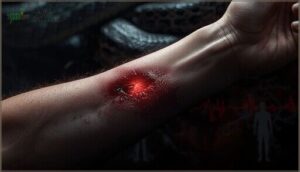
Some snake bite symptoms go beyond discomfort — they’re signs your body is in serious trouble.
When the venom hits hard, it can affect your heart, lungs, and nervous system all at once. Here’s what to watch for when a bite crosses into dangerous territory.
Difficulty Breathing or Labored Breaths
Breathing trouble is one of the most urgent snake bite symptoms you can face. Early Breath Changes — like struggling to finish a sentence — can escalate fast.
Watch for these respiratory symptoms of snake envenomation:
- Labored breathing that worsens within minutes
- Noisy Respiration like stridor or wheezing
- Shallow breaths from Neurotoxic Paralysis
- Hoarse voice or throat tightness
- Chest skin pulling inward with each breath
Don’t wait.
Rapid Heart Rate or Weak Pulse
Your heart doesn’t lie. After a venomous bite, heart rate changes can appear within minutes — your body’s distress signal firing hard.
| Signal | What It Means | Urgency |
|---|---|---|
| Rapid heart rate | Venom effects on circulation | High |
| Weak pulse | Early circulatory failure | Critical |
| Irregular rhythm | Cardiac distress | Emergency |
Don’t dismiss a racing or fading pulse — it’s a medical emergency requiring immediate pulse monitoring and hospital care.
Anaphylaxis or Shock Symptoms
Anaphylaxis after a venomous snake bite can hit fast — and hard. Your skin may flush suddenly, hives spread across your body, and your lips swell within minutes. These allergic reactions signal venom effects triggering a systemic collapse.
Shock symptoms follow: plummeting blood pressure, cold clammy skin, confusion, and faintness. This is a medical emergency. Don’t wait — call 911 immediately.
Blurry Vision or Seizures
Blurry vision after a venomous snake bite isn’t just discomfort — it’s your nervous system sounding an alarm. Neurotoxic effects from coral snakes can cause eye muscle weakness within hours. Seizure triggers often signal brain injury symptoms from venom disrupting blood flow.
Watch for:
- Sudden vision loss or double vision
- Drooping eyelids
- Uncontrolled shaking or seizures
- Confusion or unresponsiveness
Get antivenom. Now.
Identifying Venomous Snake Bite Characteristics
Not every snake bite looks the same, but venomous ones tend to leave behind specific clues. Knowing what to look for can help you or someone nearby make faster, smarter decisions.
Here are the key characteristics that point to a venomous bite.
Presence of Two Distinct Fang Marks
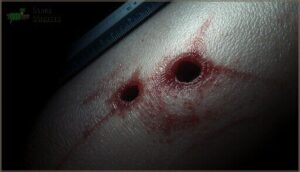
Two distinct puncture wounds are one of the clearest signs of venomous snake bites. Fang mark identification matters — those two deeper holes, usually 0.5 to 2 inches apart, tell you a lot.
Bite wound assessment starts here. Don’t scrub the area. Photograph it instead. That image aids snake bite identification and management and helps clinicians estimate the snake’s size and potential venom load.
Swelling That Spreads Quickly
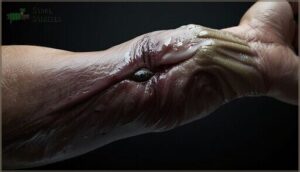
Beyond fang marks, watch swelling — it’s one of the most telling signs of envenomation. With venomous snakes, swelling often starts within 15–30 minutes and spreads fast.
- Swelling timeline matters: progression past one joint signals moderate-to-severe venom effects
- Tissue damage causes skin to look shiny, bruised, or blistered
- Symptoms worsening over hours mean the envenomation isn’t slowing down
Mark the swelling’s edge. Note the time. That information helps doctors act fast.
Heat Sensing Pits or Vertical Pupils on Snake (if Seen)

If you got a look at the snake, check for two things: small pit-like openings between the eye and nostril — that’s pit organ anatomy at work, designed to detect body heat — and vertical, slit-like pupils.
Both are strong markers in pit viper identification. Not every venomous snake has these features, but if you spot them, tell the ER team immediately.
What to Do Immediately After a Snake Bite
Getting bitten by a snake bite is terrifying, but what you do in the next few minutes actually matters.
Panic is your biggest enemy right now — it speeds up your heart rate and moves venom faster through your body. Here’s exactly what to do.
Remain Calm and Limit Movement
Your heart rate drives venom spread. The faster it beats, the quicker venom moves through your bloodstream.
Stay still, keep the bitten limb supported at or below heart level, and focus on calm breathing — slow inhale, longer exhale. Mental clarity matters too: clear thinking helps you follow proper first aid steps and avoid panicking, which is critical with venomous snakes and snake bite symptoms escalating fast.
Remove Tight Clothing and Jewelry
As swelling sets in, anything snug on the bitten limb quickly becomes a tourniquet risk. Constriction prevention starts the moment the bite happens.
Remove these immediately:
- Rings and bracelets
- Watches and fitness bands
- Tight sleeves or socks
- Boots near the bite
Jewelry removal is non-negotiable in snake bite first aid — swollen tissue traps metal, and emergency medical response teams may need cutters to free it.
Wash The Wound Gently and Cover With Gauze
Rinse the bite with clean, running water for 30 to 60 seconds — no scrubbing, no harsh chemicals like hydrogen peroxide or iodine. This gentle cleaning method keeps the tissue intact.
Pat dry, then apply sterile gauze loosely over the wound. Proper gauze application is simple snake bite first aid: cover it, don’t compress it, and leave the rest to medical professionals.
Seek Emergency Medical Help Promptly
Call 911 now. Don’t drive yourself — venom can cause dizziness or fainting fast. Emergency Response starts the moment paramedics arrive, not when you walk into a clinic.
Follow this Snake Bite Protocol:
- Call 911 and describe your snake bite symptoms clearly.
- Note the exact bite time — Timely Intervention depends on it.
- Request Urgent Care at an ER, not a walk-in clinic.
- Tell staff everything — antivenom works best within six hours.
When to Seek Urgent Medical Attention

Some snake bite symptoms can escalate fast — and knowing when to stop waiting is critical.
If you notice any of the following, don’t hesitate and don’t drive yourself. These are the signs that mean it’s time to get to an emergency room right now.
Progressive Swelling or Severe Pain
Pain that spreads fast — and swelling that won’t stop — are two of the clearest symptoms of snake envenomation you can’t ignore.
| Swelling Patterns | Pain Management Priority | Risk of Tissue Damage |
|---|---|---|
| Spreads past bite within 30 min | Severe, burning pain at rest | Necrosis begins within hours |
| Reaches joint within 3–4 hours | Worsens despite immobilization | Compartment Syndrome develops |
| Whole limb involved by 8 hours | Out of proportion to wound | Amputation risk increases |
These swelling and pain milestones signal a medical emergency. Don’t wait — venomous snake bites demand immediate Emergency Response.
Signs of Shock or Fainting
Shock can arrive fast and quietly. Watch for Pale Skin, sudden Dizziness Symptoms, or Consciousness Changes — these aren’t anxiety, they’re signs your circulation is failing.
Weakness Signs like buckling knees, Mood Shifts from restless to unresponsive, and hypotension (low blood pressure) can spiral into coma or paralysis within minutes. If someone faints even once after a bite, treat it as an emergency.
Difficulty Breathing or Swallowing
Breathing difficulty after a venomous snake bite isn’t just discomfort — it’s your airway sending a distress signal. Swelling can narrow your throat within minutes, turning swallowing problems into full Airway Obstruction fast.
Neurotoxic venom quietly paralyzes breathing muscles, making Respiratory Failure possible before you realize how serious things are. Any Breathing Difficulty, choking, or Asphyxiation Risks from these toxic effects of snake envenomation demand emergency care immediately.
Neurotoxic venom can silently paralyze your breathing before you realize you’re in danger
Symptoms Worsening Within Minutes to Hours
Even a minor bite can flip fast. Rapid venom spread means systemic reactions — dizziness, vomiting, swelling creeping past a joint — can appear within 30 minutes to 2 hours.
Local tissue damage, hematologic changes, and neurotoxic effects from venomous snake bites often worsen quietly before becoming obvious. Don’t wait to see how snake bite symptoms evolve. Worsening is your signal to act now.
Frequently Asked Questions (FAQs)
What are the first signs of a snake bite?
Two small puncture marks and sudden burning pain are your first clues.
Snake bite symptoms appear fast — redness, warmth, and swelling signal venom effects beginning. Don’t wait to recognize poisoning signs.
What are the 7 principles of snake bite management?
Snake bite management comes down to seven core principles: stay calm, immobilize the limb, remove tight items, avoid harmful remedies, arrange rapid transport, support breathing and circulation, and administer antivenom under medical supervision.
Where on the body are snake bites most common?
Most bites land on your feet and ankles, or your hands and fingers if you handle snakes.
Lower limb bites and hand injuries account for the majority of body bite patterns seen clinically.
What are the symptoms of a silent killer snake bite?
A silent snake bite — like coral snake bites — can fool you.
Venom effects appear hours later: blurred vision, muscle weakness, and labored breathing. Don’t let the calm fool you. Seek emergency response immediately.
How is antivenom administered in a hospital setting?
In a hospital, antivenom is given through an IV line — usually 4–6 vials diluted in saline and infused over 1–2 hours. Emergency treatment protocols adjust the antivenom dosage if symptoms keep worsening.
Who faces the highest risk of serious snake bites?
Rural Workers, Agricultural Laborers, and those in Poor Communities face the highest risk.
Outdoor Enthusiasts, Elderly Individuals, and outdoor workers also rank high — especially without proper prevention strategies or quick access to care.
How can you prevent snake bites outdoors?
Stick to clear trails, wear boots and long pants, and tap ahead with a walking stick.
Never handle a snake you spot. These simple outdoor safety habits cut your risk dramatically.
How many people die from snake bites annually?
The numbers don’t lie — globally, venomous snake bites kill an estimated 81,000 to 138,000 people annually.
In the U.S., that drops to just five deaths per year, thanks to fast access to antivenom.
Conclusion
Every second after a venomous bite is a clock that doesn’t reset. Recognizing snake bite warning signs early isn’t about staying calm under pressure—it’s about knowing what your body is telling you before it starts screaming.
Two puncture marks, spreading swelling, tingling that creeps past the wound—these aren’t subtle hints. They’re urgent signals. Don’t wait for symptoms to worsen before you act. Get medical help fast. That decision is the only one that matters.
- https://www.redcross.org/take-a-class/resources/learn-first-aid/venomous-snake-bites
- https://www.cdc.gov/niosh/outdoor-workers/about/venomous-snakes.html
- https://pmc.ncbi.nlm.nih.gov/articles/PMC4925324/
- https://www.vcuhealth.org/news/snake-bite-warning-signs-and-first-aid/
- https://www.mayoclinic.org/first-aid/first-aid-snake-bites/basics/art-20056681