
This site is supported by our readers. We may earn a commission, at no cost to you, if you purchase through links.
Most snakes thrive in silence, but their habitats tell a different story. Missed spots of waste, hidden soil breakdown, and the faint trace of ammonia can signal brewing trouble that the eye often overlooks.
The surprising truth? Daily spot cleaning can cut fecal bacteria by nearly half, dramatically reshaping your snake’s health landscape. Small changes—like swapping out damp bedding or tracking humidity shifts—act as early interventions, halting disease long before symptoms appear.
Mastering snake cage maintenance isn’t about chasing flawlessness. It’s about tuning into subtle signals, building control, and sustaining a healthy environment your snake can depend on.
Table Of Contents
Key Takeaways
- Daily spot cleaning and weekly sanitation routines significantly reduce harmful bacteria, disease risk, and odors in your snake’s enclosure.
- Monitoring and managing temperature, humidity, and ventilation directly prevent mold, stress, and respiratory issues for your snake.
- Promptly removing waste, changing water, and inspecting for illness each day sustain your snake’s health and support rapid intervention if problems arise.
- Choosing appropriate substrate and using reptile-safe cleaners make long-term maintenance easier while protecting your snake from hidden health hazards.
Why Regular Snake Cage Maintenance Matters
A clean enclosure isn’t just about appearances—it’s the foundation of your snake’s long-term health and well-being. Without consistent maintenance, waste accumulates, harmful bacteria multiply, and your snake faces increased risk of infection and stress.
A clean enclosure is the foundation of your snake’s long-term health, preventing bacterial buildup, infection, and stress
Understanding why each cleaning task matters helps you prioritize care and catch potential problems before they escalate.
Preventing Bacterial Growth and Disease
Daily spot cleaning reduces fecal bacteria by up to 40%, while weekly full sanitation lowers pathogen loads by 30–50%. You’ll cut surface bacterial counts by 22–35% with consistent snake cage cleaning routines. Reptile-safe disinfectants and proper sanitation methods prevent mouth rot, scale rot, and respiratory infections.
These hygiene practices form your first line of defense in disease prevention and infection reduction, safeguarding your snake’s enclosure hygiene.
Effective study habits, such as reviewing AP study guides, can also be applied to learning about proper snake care and maintenance.
Reducing Stress and Promoting Health
Just as consistent cleaning reduces the risk of mouth rot and scale rot, it also lowers snake stress. You’re not just maintaining Reptile Enclosure Hygiene—you’re supporting behavioral wellness. Effective Snake Enrichment and Environmental Control lead to healthier, calmer animals. Prioritize these:
- Stress Reduction
- Health Monitoring
- Snake Enrichment
- Daily Spot Cleaning
These steps keep your snake’s health on track. Understanding the main theme analysis techniques is essential for effective communication about snake care.
Eliminating Odors and Waste Buildup
Beyond the peace of mind that comes with a calm, thriving snake, you’ll want Enclosure Hygiene strategies that handle odors and waste before they become overwhelming.
Effective Odor Control Methods—like regular Snake Cage Cleaning, Daily Spot Cleaning, and Substrate Replacement—reduce ammonia and bacterial buildup.
For experienced keepers, Bioactive Cleaning and ReptileSafe Disinfectants keep persistent odors and waste at bay.
Daily Snake Cage Care Tasks
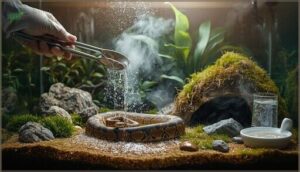
Caring for your snake each day means taking a few important steps to keep their environment clean and healthy. These small daily habits set the foundation for your pet’s long-term well-being. Here’s what should be part of your regular routine.
Spot Cleaning Feces, Urates, and Shed Skin
Spot cleaning your snake cage every day is the backbone of enclosure hygiene. Fecal removal, shed skin collection, and managing urates immediately can reduce ammonia and urine odor. Use dedicated cleaning tools, reptile-safe disinfectants, and toss waste properly.
This daily spot cleaning routine cuts bacterial buildup and makes substrate replacement and long-term waste management much easier—giving your snake a safer, healthier home.
Checking and Refilling Water Bowls
You should always prioritize Water Bowl Hygiene as part of your Snake Cage Maintenance. Replace all water at least once every 24 hours, rinsing bowls with hot water to reduce contamination. Daily Refill Protocols and Water Bowl Cleaning are central to ideal Reptile Enclosure Hygiene.
Thoughtful Bowl Placement Tips—such as elevating the dish—minimize substrate fouling. Fresh Water Access aids hydration monitoring.
Inspecting for Signs of Illness or Injury
Every day you perform Snake Health Checks, scan for Illness Symptoms and Injury Detection markers—lethargy, discharge, or scale discoloration. Prompt Veterinary Care reduces progression risk by roughly 32%. Prioritize Reptile Health Monitoring for Disease Prevention and Animal Welfare:
- Assess body posture and movement patterns.
- Check mouth, eyes, and cloaca for swelling or ulcers.
- Note appetite changes or weight loss.
- Inspect skin for wounds or shedding issues.
- Document breathing quality and behavior shifts for Reptile Health and Hygiene and superior Pet Snake Care.
Weekly and Monthly Cleaning Routines
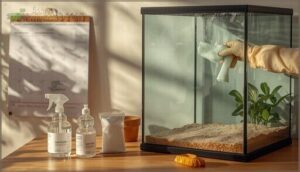
While daily spot cleaning keeps waste under control, weekly and monthly routines address the deeper issues that impact your snake’s long-term health. These scheduled cleanings target bacterial buildup, substrate breakdown, and equipment function—areas that won’t show problems immediately but can lead to respiratory infections, scale rot, or temperature instability if neglected.
Here’s what you need to prioritize on a weekly and monthly basis to maintain a truly hygienic enclosure.
Wiping Down Tank Walls and Accessories
Weekly tank wall disinfection cuts bacterial load by 30–50%, helping you maintain enclosure hygiene and protect your snake from scale rot and respiratory infections. Use reptile-safe disinfectants for surface cleaning, wiping down all accessories to prevent pathogen buildup.
These biosecurity measures, paired with daily spot cleaning, establish effective accessory sanitizing routines. Proper tank maintenance and cleaning reduce disease risks markedly, ensuring a healthier habitat for your animal.
Replacing Soiled Substrate and Bedding
Think of fresh bedding as your front-line defense. Substrate replacement isn’t just about cleanliness—it’s about controlling humidity and reducing odors that can harm reptile enclosure hygiene. For best results:
- Use suitable bedding materials with proper substrate depth.
- Swap out soiled sections during daily spot cleaning.
- Change all bedding weekly to limit bacteria in bioactive systems and standard setups alike.
Disinfecting Water Bowls and Decorations
How effective is your Snake Cage Cleaning routine without proper Accessory Disinfection? Fresh water alone won’t protect your reptile. Disinfection Methods matter: chlorine-based sanitizers used for Bowl Cleaning achieve over 99% Pathogen Reduction in five minutes. For Decoration Disinfecting, soak items briefly in reptile-safe disinfectants. Consistent practice maintains Snake Enclosure Hygiene. Compare common approaches below.
| Disinfection Method | Result |
|---|---|
| Chlorine Sanitizer | 99.9% germ reduction in 5 min |
| Quat Ammonium | Safe at 22–28°C, minimal residue |
| Sodium Hypochlorite | 98% fewer pathogens, 5 min soak |
| Daily Cleaning | Sustains low microbial counts |
| Accessory Disinfection | Prevents scale rot, mouth rot, odors |
Monitoring Temperature and Humidity Levels
When was the last time you checked your snake’s climate monitoring tools? Precision matters: Thermal gradients and reliable humidity sensors are your greatest allies in reptile care. Missed readings risk mold and respiratory issues. Don’t leave it to chance—establish this five-point weekly protocol for ideal temperature control and humidity monitoring:
- Inspect all sensors for accuracy.
- Confirm temperature gradients.
- Review digital logger data.
- Calibrate your hygrometer.
- Adjust thermal control equipment.
Choosing and Maintaining Substrate
Choosing the right substrate keeps your snake healthy and your enclosure safe. There are several options, and each comes with its own benefits and maintenance needs. Here’s what you should know before picking the best fit for your setup.
Best Substrate Options for Snake Health
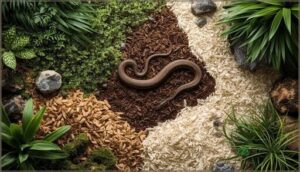
Substrate selection sits at the heart of reptile health and enclosure design. Cypress mulch, coconut fiber, and aspen shavings each offer unique benefits for snake health, including improved humidity control and fewer respiratory issues.
Well-chosen substrate materials support appropriate temperature gradients, promote healthy snake behavior, and, in bioactive systems, create a self-sustaining base that elevates overall wellness and ease of maintenance.
How Often to Change Bedding
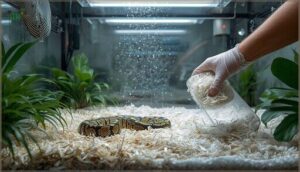
Good substrate choices only go so far if bedding frequency and sanitation schedules aren’t on track. Bedding replacement should fit your snake’s waste management needs, changing out soiled substrate during weekly cleaning or when over 25% is visibly dirty.
In high humidity setups, more frequent substrate replacement can improve humidity control and keep your reptile enclosure cleaner and healthier.
Using Enzymatic Cleaners for Odor Control
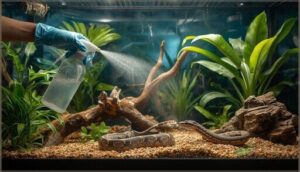
When waste builds up or humidity runs high, enzyme application works wonders for odor reduction. Enzymatic efficacy comes from specialized blends that disrupt biofilm and lower ammonia in your reptile enclosure.
These reptilesafe disinfectants are safe on most surfaces and, with a cleaning schedule of every few days, keep your bioactive tank fresh without risk to your snake or its habitat.
Advanced and Bioactive Enclosure Maintenance

Once your snake’s basic setup is running smoothly, it’s time to contemplate sophisticated care strategies. Some enclosures go beyond the basics and offer unique benefits for both you and your snake.
Here’s what you’ll want to know about maintaining these specialized environments.
Cleaning Techniques for Bioactive Setups
Bioactive Cleaning shifts the focus: you’re not scrubbing away nature, but guiding it. Microbe Management keeps odor down by breaking waste into harmless components, while even Substrate Depth lets these tiny allies work throughout your bioactive tank.
Stick to a spot cleaning schedule—removing feces or urates—so your snake habitat maintenance team (the microbes) remains effective, and odors stay low.
Managing Humidity and Temperature Automation
Consistent climate management is central to sophisticated husbandry. Reliable automation systems for thermal control and humidity management—such as automated mist systems and precise temperature gradients—simplify daily routines and reduce stress for your snake.
Environmental monitoring tools bring peace of mind, allowing quick response to any fluctuations. Humidity control and monitoring together support healthy sheds, stable hydration, and long-term welfare in modern enclosures.
When to Perform Full Vs. Spot Cleaning
Routine spot cleaning removes waste and protects your snake from bacterial spikes—often cutting microbial loads by up to 50% when you act within 24 hours. Full substrate replacement every 4–12 weeks slashes bacterial populations by 60% and addresses saturation, odor, and persistent pathogens.
Your cleaning schedules should adapt to humidity levels, visible waste, and behavioral cues:
- Spot clean feces and urates daily to minimize bacterial control issues.
- Replace substrate monthly in moderate conditions, or every 1–2 weeks in high-humidity setups.
- Schedule weekly maintenance to wipe walls and disinfect water bowls.
- Monitor saturation and odor as triggers for full tank sanitation.
Timely waste removal and strategic substrate replacement safeguard reptile habitat maintenance, ensuring your snake tank remains a healthy, low-stress environment.
Frequently Asked Questions (FAQs)
How do I safely handle my snake during cleaning?
Safe snake handling during cleaning relies on firm but gentle snake restraint, using tools like hooks or gloves to minimize stress.
Limit handling time, guarantee escape prevention, and monitor for signs of distress or injury to protect snake health.
What cleaning products are safe for snake enclosures?
Picture a clear stream after rain—that’s your goal with snake cage cleaning.
Use safe disinfectants, enzyme cleaners, non-toxic reptile sanitizers, or gentle detergents to maintain tank sanitation, ventilation, and a truly sanitary environment for reptile care.
How can I prevent mold growth in the tank?
To prevent mold growth in the tank, prioritize humidity management, frequent substrate maintenance, powerful ventilation systems, and daily tank sanitation.
Consistent humidity monitoring and bioactive solutions together with ventilation and hygiene support a reliably sanitary environment.
What are signs of improper cage ventilation?
Improper cage ventilation leads to elevated ammonia levels, rising humidity, and stagnant air exchange rates. You’ll notice mold growth on substrate, blocked ventilation gaps, and clear respiratory stress—such as wheezing, frequent mouth gaping, or labored breathing in your snake.
How do I minimize stress during cage rearrangement?
After gradually rearranging a ball python’s enclosure over two weeks, I noticed fewer stress signs and normal feeding resumed.
Use gradual rearrangement, maintain hiding spots, and keep environmental enrichment consistent for effective stress reduction and smooth cage acclimation.
Conclusion
Ironically, the hallmark of expert snake cage maintenance is how invisible your efforts become. When you invest daily attention, ammonia odors don’t stand a chance and bacterial “mysteries” rarely arise.
Your snake flourishes not due to grand gestures, but because quiet, consistent routines—dusting corners, adjusting substrates, hovering with a watchful eye—shape the difference between a thriving habitat and disaster.
The reward? A healthy, alert snake, and the confidence that mastery means spotlessness without drawing applause.