This site is supported by our readers. We may earn a commission, at no cost to you, if you purchase through links.

A corn snake that stops eating, rubs its snout raw, or sits in its water bowl for hours isn’t misbehaving. It’s responding to a failing environment. Small husbandry mistakes compound fast, and by the time visible symptoms appear, the damage is already done.
Maintaining snake tank health isn’t about flawlessness, but it does require consistency. The wrong substrate traps ammonia. A single thermometer misses the microclimates your snake actually lives in. A water bowl that’s never tested can harbor invisible pathogens.
These tips give you a practical system to stay ahead of the problems before your snake pays the price.
Table Of Contents
- Key Takeaways
- Choose Proper Tank Size and Substrate
- Regulate Temperature, Humidity, and Lighting
- Follow a Consistent Tank Cleaning Routine
- Provide Clean Water and Safe Enrichment
- Monitor Tank Conditions and Snake Health
- Frequently Asked Questions (FAQs)
- How often does a snake tank need to be cleaned?
- Can I leave my snake alone for a week?
- How often should I mist my snake tank?
- Are pet snakes hard to take care of?
- How do you keep a snake tank safe?
- How to care for a snake?
- Do snakes need to be cleaned?
- What happens if you prolong cleaning a snake’s tank?
- What do you need for a snake tank?
- Can a snake tank be a good home for a pet?
- Conclusion
Key Takeaways
- Behavioral warning signs like feeding refusal, snout rubbing, or prolonged water bowl soaking are environmental red flags, not personality quirks, and they signal problems that have likely been building for some time.
- Your snake’s enclosure needs a layered cleaning routine — daily waste removal, weekly bowl scrubbing, and a full monthly disinfection — because bacterial and ammonia buildup accelerates far faster than most owners expect.
- A single thermometer and one humidity reading give you a false sense of control; place two thermometers across the thermal gradient and a mid-tank hygrometer to capture the microclimates your snake actually uses.
- Over 70% of captive reptile deaths trace back to preventable husbandry failures, meaning consistent, scheduled checks matter far more than reacting once visible symptoms appear.
Choose Proper Tank Size and Substrate

Space and tank size set the tone for everything that follows. For adult corn snakes, you’ll need a 40-55 gallon enclosure at minimum. Larger species require 75-125 gallons to allow full-body movement. Reevaluate proper enclosure size whenever your snake reaches 75% of the current tank length, and upgrade before it runs out of room.
If you’re still deciding on a species, browsing popular pet snake types by adult size can help you plan the right enclosure before you even bring one home.
Substrate selection shapes your snake’s daily comfort. Use a moisture-retentive substrate like cypress mulch or coconut coir, 2-4 inches deep for smaller snakes and 4-6 inches for larger ones. Both options support burrowing and help regulate humidity. A bioactive substrate also works if you monitor it regularly for mold and waste buildup. Avoid cedar and pine shavings since their volatile compounds will irritate your snake’s airway.
Regulate Temperature, Humidity, and Lighting
Your snake’s survival depends on getting the environment right. Temperature, humidity, and lighting each need to stay within a specific range to keep your snake healthy. Here’s what to know before you set anything up.
Species-Specific Environmental Ranges

For every species, your setup must reflect species-specific needs precisely. Desert snakes don’t need the same humidity levels as tropical ones. Desert species do fine at 30-40%, but tropicals need 70-80%.
Getting that balance right matters more than most keepers realize, especially during shed cycles — using a reptile fogger to support healthy snake shedding can be a practical way to maintain tropical humidity levels without constant manual misting.
Getting these ranges right is especially important for snakes showing signs of distress—recognizing severe pain in snakes can help you catch humidity-related health issues before they escalate.
Your temperature gradient must cover a basking zone and a cool retreat. Match your substrate selection and environmental control to these ranges. Wrong conditions suppress appetite and stress your snake.
Monitoring Tank Microclimates
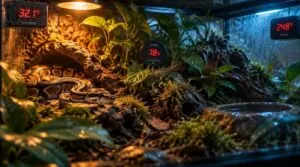
Setting those ranges is only half the job. Your tank’s actual microclimate can differ from what your thermostats report. Place two thermometers across the temperature gradient and a digital hygrometer mid-tank to track humidity levels. Check readings twice daily.
Glass enclosures concentrate radiant heat at substrate level, distorting the thermal gradient, so run infrared spot checks weekly to catch cold spots.
Follow a Consistent Tank Cleaning Routine
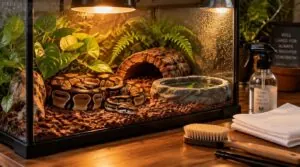
A dirty tank is one of the fastest ways to compromise your snake’s health. Consistent cleaning keeps bacteria, mold, and parasites from taking hold before you notice a problem.
Your routine breaks down into three key timeframes: daily and weekly upkeep, monthly deep cleaning, and proper disinfection methods.
Each tier works together to prevent bacterial buildup, as outlined in this complete snake water bowl cleaning guide covering everything from quick daily rinses to thorough disinfection sessions.
Daily and Weekly Upkeep
Ammonia from waste hits harmful levels in hours. Spot clean waste daily with a scoop and don’t skip refilling the water bowl each morning.
Your cleaning schedule should include weekly spot cleaning: sift the top substrate layer, scrub the water bowl, and check enrichment for wear. Consistent enclosure hygiene, alongside deep cleaning monthly, stops bacterial buildup from threatening your snake.
Monthly Deep Cleaning
Once a month, your cleaning schedule demands a full enclosure hygiene reset. Remove your snake first, then unplug heat sources and ventilate for 15 to 20 minutes.
Pull all substrate and decor within ten minutes to check for mold or insect activity. Don’t return your snake until at least 24 hours after the monthly deep clean.
Reptile-Safe Disinfection
When disinfecting, only use reptile-safe disinfectants confirmed to kill common pathogens. Keep surfaces visibly wet for the full labeled contact time; shorter exposure leaves viable microbes. Rinse thoroughly before your snake re-enters.
Residues in porous hides are a real risk. Never mix reptile-safe cleaners with other products. A strict one-way workflow keeps your tank sanitation reliable and your snake safe.
Provide Clean Water and Safe Enrichment
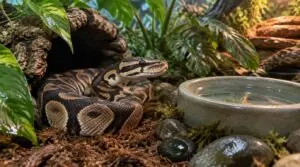
Snakes in stagnant water develop skin infections up to three times faster than those with daily changes. Your water bowl needs dechlorinated water, refreshed every 24 hours. In hotter tanks, daily changes aren’t optional.
- Place the bowl away from basking spots to keep water cool.
- Use glass or reptile-grade ceramic to resist bacteria.
- Keep depth under 2 cm for small snakes, 7 cm for larger species.
- Anchor naturalistic decor to prevent entrapment or ingestion.
- Test ammonia, nitrite, and pH weekly; target 0 ppm ammonia and pH 6.5–7.5.
Simple enrichment techniques work best. Floating cork hides and smooth rocks let your snake explore without risk. For handling safety, wash your hands before and after any tank interaction to avoid cross-contamination.
Monitor Tank Conditions and Snake Health
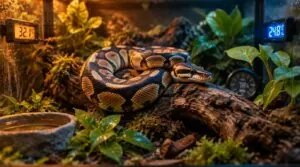
Studies show snakes can mask illness for weeks before visible symptoms appear, making consistent health monitoring more valuable than reactive care.
Snakes mask illness for weeks, making routine health monitoring far more valuable than reactive care
Use two independent thermometers to track your warm and cool zones separately. One reading misses the microclimates your snake uses for temperature regulation. Check humidity where your snake actually rests, not just at tank level.
Watch behavior closely. Feeding refusal, irregular exploration, and stuck shed often signal problems before anything looks visibly wrong. Correlate behavioral and shed changes with your temperature and humidity readings.
Keep a simple log. Track your cleaning schedule alongside humidity management notes to catch patterns like odor spikes or condensation buildup early. Schedule annual veterinary care even when your snake appears healthy. Pairing your log with a digital reptile hygrometer controller makes it easy to spot humidity trends before they turn into health issues.
Frequently Asked Questions (FAQs)
How often does a snake tank need to be cleaned?
Your cleaning schedule depends on waste output. Spot clean feces and urates daily. Do weekly snake tank cleaning for water bowls and all hotspots. Plan a monthly deep cleaning for full disinfection and odor control.
Can I leave my snake alone for a week?
You can leave your snake entirely alone indefinitely, supposedly. A week does work if your feeding schedule is set, water bowl full, temperature control locked, ventilation stable, and your secure tank won’t fail on you.
How often should I mist my snake tank?
Mist only when your hygrometer shows humidity dropping below your species’ target range. There’s no fixed schedule. Your enclosure’s ventilation, substrate depth, and the current season all determine how often that actually needs to happen.
Pairing your hygrometer readings with solid snake tank humidity and temperature management practices — like keeping the water bowl away from heat sources — helps you maintain a stable environment without constant intervention.
Are pet snakes hard to take care of?
Think of your snake as a living barometer. It registers every lapse in your care. Nail temperature control, humidity monitoring, and substrate safety consistently, and reptile husbandry becomes predictable, not difficult. It just takes discipline.
How do you keep a snake tank safe?
Keep your snake safe by getting temperature control, humidity control, and substrate safety right from the start. Provide secure hiding spots and proper lighting. Spot-clean daily, deep-clean monthly, and check for mold or sharp edges.
How to care for a snake?
Caring for a snake means controlling temperature gradients, maintaining proper humidity, offering clean water and hides, cleaning the tank regularly, and feeding on a consistent schedule.
Do snakes need to be cleaned?
Snakes are surprisingly self-cleaning animals. Your snake doesn’t need bathing; your enclosure does. Spot clean waste daily, control substrate odor, and prevent bacteria buildup through consistent cleaning frequency.
What happens if you prolong cleaning a snake’s tank?
Delaying tank cleaning lets bacteria buildup accelerate fast. Waste chemistry shifts, raising irritant levels your snake breathes. Parasites complete more life cycles. You’ll face scale rot, respiratory issues, and odors that partial cleaning won’t fix.
What do you need for a snake tank?
You’ll need a secure enclosure with proper ventilation, a layered substrate, dedicated hiding spots, a reliable thermometer, and a clearly defined warm and cool temperature zone for your snake to regulate its body heat effectively.
Can a snake tank be a good home for a pet?
Yes, a snake tank can be a thriving home with the right habitat setup, temperature monitoring, humidity control, and hiding spots to keep your snake healthy and secure.
Providing the correct essential snake tank components, such as heating devices, substrate, and water bowls, ensures your snake stays comfortable and stress-free.
Conclusion
Studies show that over 70% of captive reptile deaths are linked to preventable husbandry failures. Maintaining snake tank health doesn’t require flawlessness. It requires consistency. The same variables, checked on the same schedule, keep your snake out of trouble.
A failing habitat rarely announces itself all at once. It drifts. Small corrections, made early, are what separate a thriving snake from a sick one. Trust the system you’ve built, and check it every single week.